
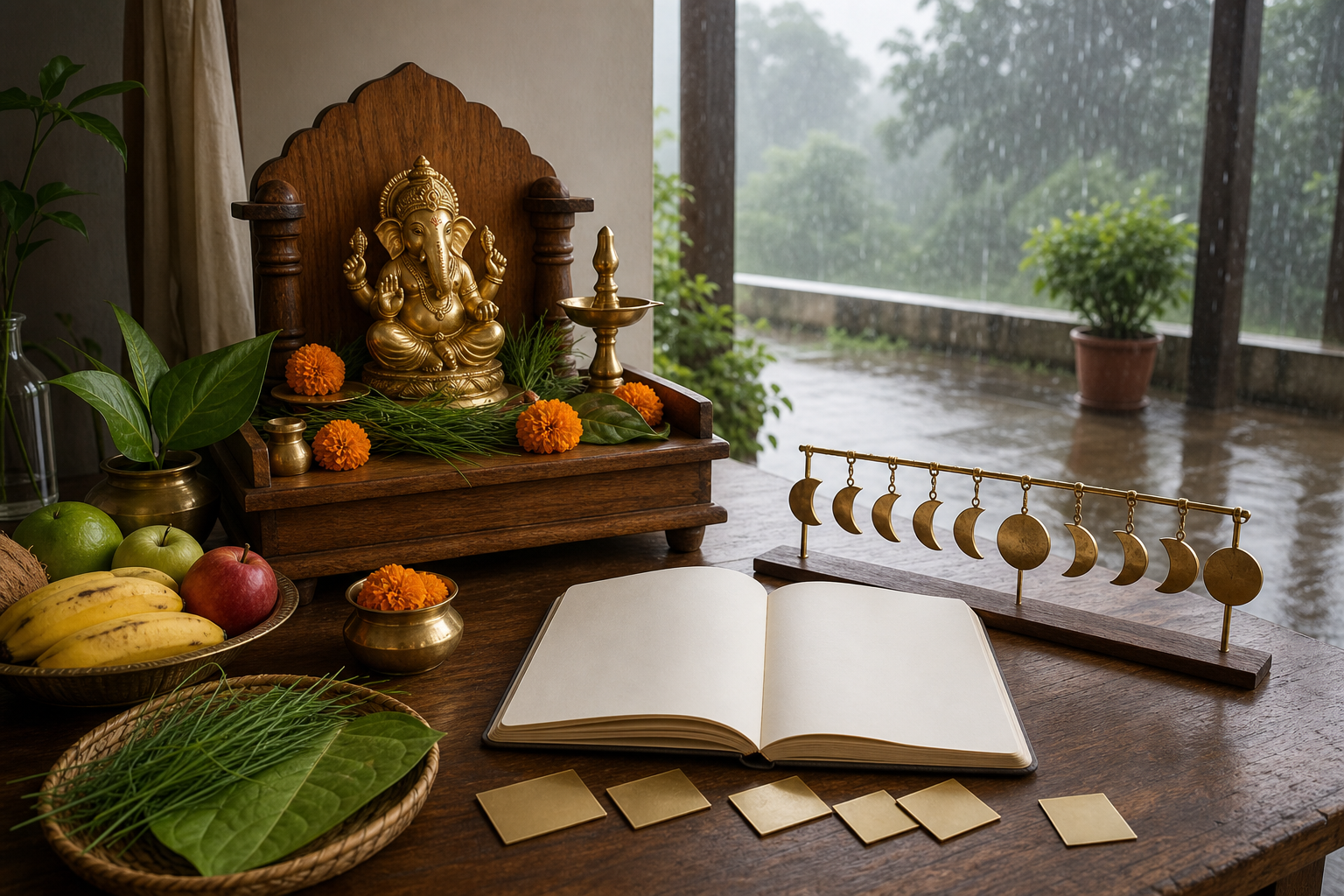
You probably do not need another festival list with every date treated as equally relevant to every household. You need to know which Bhadrapada dates to reserve, which vrats belong to particular regional or family traditions, and what must be checked before you request leave, invite relatives or make a sankalpa.
The observances covered here run from August 30 to September 20, 2026. The busiest stretch is September 14-19: Ganesh Chaturthi is followed by two distinct Panchami observances, then Dubri Satam and Omkar Ashtami. Put the civil dates into your calendar now, but confirm the applicable tithi and ritual timing for your location before treating them as final.
Bhadrapada 2026 dates to mark
Use this table as a planning sheet, not as a substitute for your local panchanga. A civil date tells you when to protect time; the tithi, local lunar convention and inherited practice tell you how the observance is actually kept.
| Civil date | Observance or calendar point | What distinguishes it | What to do now |
|---|---|---|---|
| August 30 | Bada Itvaar | The first of the Bhadrapada Sunday observances dedicated to Surya Bhagavan, with worship of the cow and calf also belonging to the tradition. | Reserve the morning and decide whether you will observe at home or join a family or temple arrangement. |
| September 3 | Krishna Paksha Saptami | In most regions, Shashthi continues until 3:44 AM, followed by Saptami. This is a useful reminder that a tithi changes independently of midnight. | Do not export this clock time to another city. Check the panchanga calculated for your own location. |
| September 6 | Bada Itvaar | The second Sunday in the recurring Surya observance. | If you intend to keep the sequence, block this date along with the other Sundays rather than planning one isolated puja. |
| September 13 | Bada Itvaar | The third Bhadrapada Sunday. | Protect the time before the dense September 14-19 sequence begins. |
| September 14 | Ganesh Chaturthi, or Ganesh Choth | This date follows from Sama Pancham falling on the day after Ganesh Chaturthi. | Keep preparations for Chaturthi separate from any Panchami vrata planned for the following day. |
| September 15 | Sama Pancham | Observed on Bhadarvi Sud Pancham, especially among agricultural families in Gujarat. | Ask whether this is part of your family or community tradition instead of assuming that every Panchami observance has the same procedure. |
| September 15 | Vishwamitra Jayanti | Brahmarshi Vishwamitra is commemorated on the same civil date. The observance is often associated with Bhadrapada Shukla Panchami, or Rishi Panchami. | Create a separate calendar entry. A shared date does not turn this commemoration and Sama Pancham into one rite. |
| September 18 | Dubri Satam | A Shukla Saptami vrata dedicated to Dubri Mata, kept mainly in Rajasthan and other western regions. Mothers observe it for their children’s well-being. | If your household keeps it, confirm the customary materials and sequence with the person who transmitted the vrata. |
| September 19 | Amkari Aatham, Omkar Ashtami or Oamkari Ashtami | A vrata dedicated to Shiva, Parvati and Ganesha. It is associated with married women and may be maintained as an eight-year observance. | Do not begin a multiyear sankalpa from a bare date listing. First confirm the inherited procedure and continuity expected in your tradition. |
| September 20 | Bada Itvaar | The fourth Sunday in the weekly sequence that begins on August 30 and continues through September. | Keep it visible when planning the September 19 Ashtami observance; the two commitments fall on consecutive days. |
Read the date and the tithi as two different kinds of information

A Gregorian date is a logistical container. A tithi is the lunar basis of the vrata. Confusion begins when the convenient container is mistaken for the religious rule.
September 3 makes the distinction concrete. Shashthi lasts until 3:44 AM in the calendar information available for most regions, and Saptami follows. The day’s ordinary name does not reveal that transition. Nor does a time calculated for one place automatically govern Toronto, London, Singapore or another city in Bharat. Sunrise and the lunar calculation have to be applied locally.
Bhadrapada can also be named and bounded through different regional lunar-calendar conventions. That is why a vrata may be unmistakably part of Bhadrapada within one household’s calendar while a person using another convention describes the surrounding dates differently. This is not a defect in the Dharmic calendar. It is a reason to identify which calendar your family, sampradaya or temple actually follows.
Before fixing an observance, ask four precise questions:
- For our city, on which civil date does the relevant tithi prevail at the required time?
- If the tithi touches two civil dates, what rule does our family or sampradaya use to select the observance day?
- Is this a household vrata, a regional custom, a temple celebration or some combination of these?
- What are the required times for sankalpa, puja and completion of the vrata, if those timings form part of our practice?
A screenshot showing only a festival name and date cannot answer those questions. Save the locality and calendar convention with the date so that you do not have to reconstruct the decision later.
Keep regional observances distinct instead of flattening them
Bada Itvaar is a weekly discipline
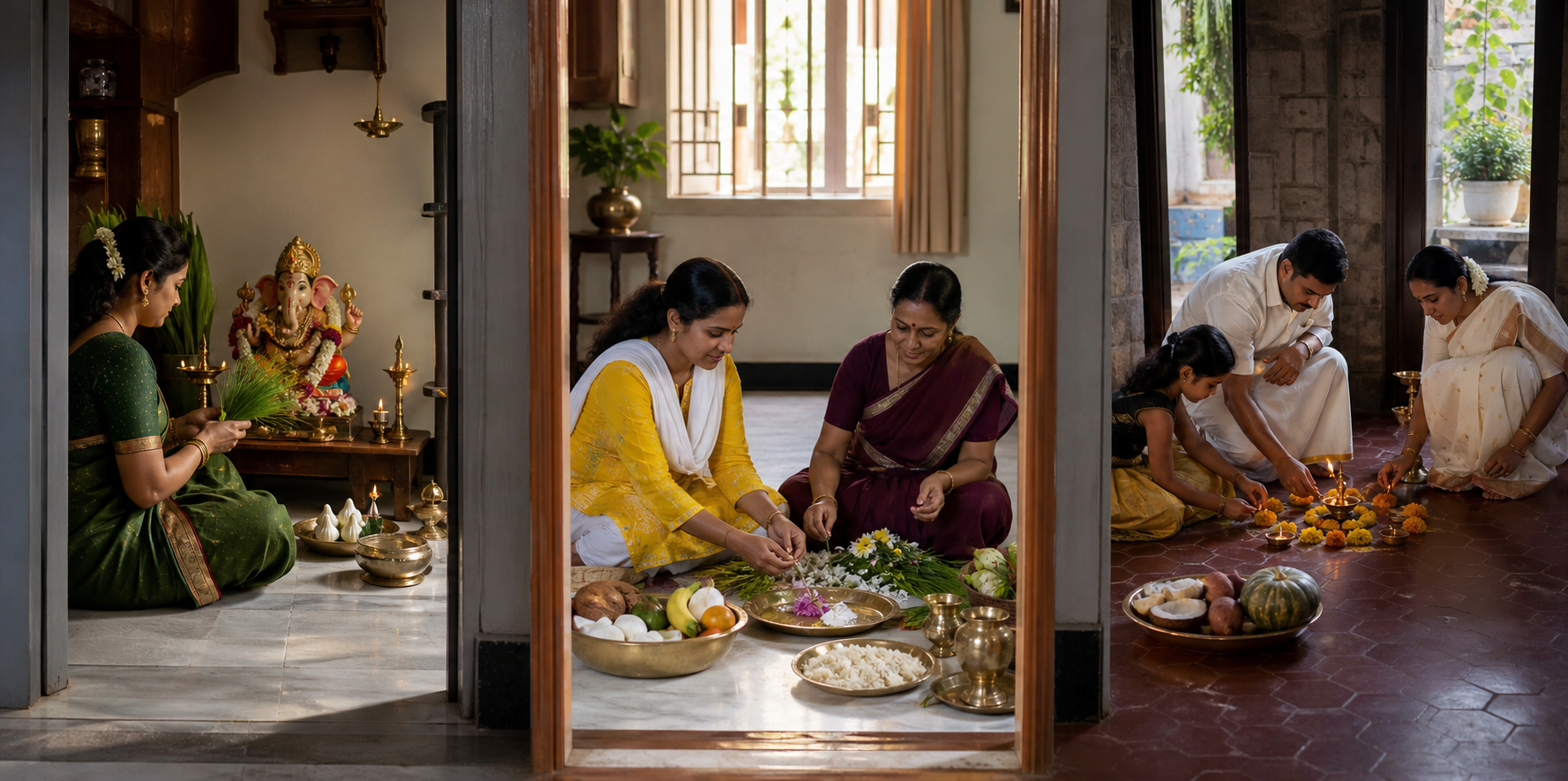
Bada Itvaar belongs to the Sundays of Bhadrapada in the North Indian Hindi-calendar setting. Its focus is Surya Bhagavan, with the cow and calf also worshipped. The practical mistake is to record only the first Sunday and lose the recurring character of the vrata.
Place August 30, September 6, September 13 and September 20 into your calendar as one series. If access to the customary setting or materials is uncertain, ask your family elder, temple or acharya how the practice is maintained in your circumstances. Do not quietly invent a substitute and then pass it on as the tradition itself.
September 15 carries two different Panchami identities
Sama Pancham is rooted especially in Gujarat and has a strong association with agricultural families. Vishwamitra Jayanti commemorates one of ancient Bharat’s renowned rishis and is linked with Shukla Panchami or Rishi Panchami. They meet on September 15, but their meanings and communities of practice are not interchangeable.
Label the calendar entries separately. If your family keeps Sama Pancham, record that name and regional connection. If you plan a Vishwamitra commemoration, record that intention on its own. A single generic label such as “Panchami puja” erases exactly the information the next generation will need.
Dubri Satam and Omkar Ashtami carry different commitments
Dubri Satam is centered on Dubri Mata and is kept by mothers for the well-being of their children, particularly in Rajasthan and parts of western Bharat. Omkar Ashtami turns toward Shiva, Parvati and Ganesha and may involve an eight-year discipline for married women. Calling both of them simply “women’s fasts” would discard the deity, purpose, region and duration that make each vrata intelligible.
Family members who are not taking the vrata can still protect the observance by handling travel, meals, childcare or other scheduling demands. Support the vrata without rewriting who takes its sankalpa or what that sankalpa means.
Turn the calendar into a workable household plan
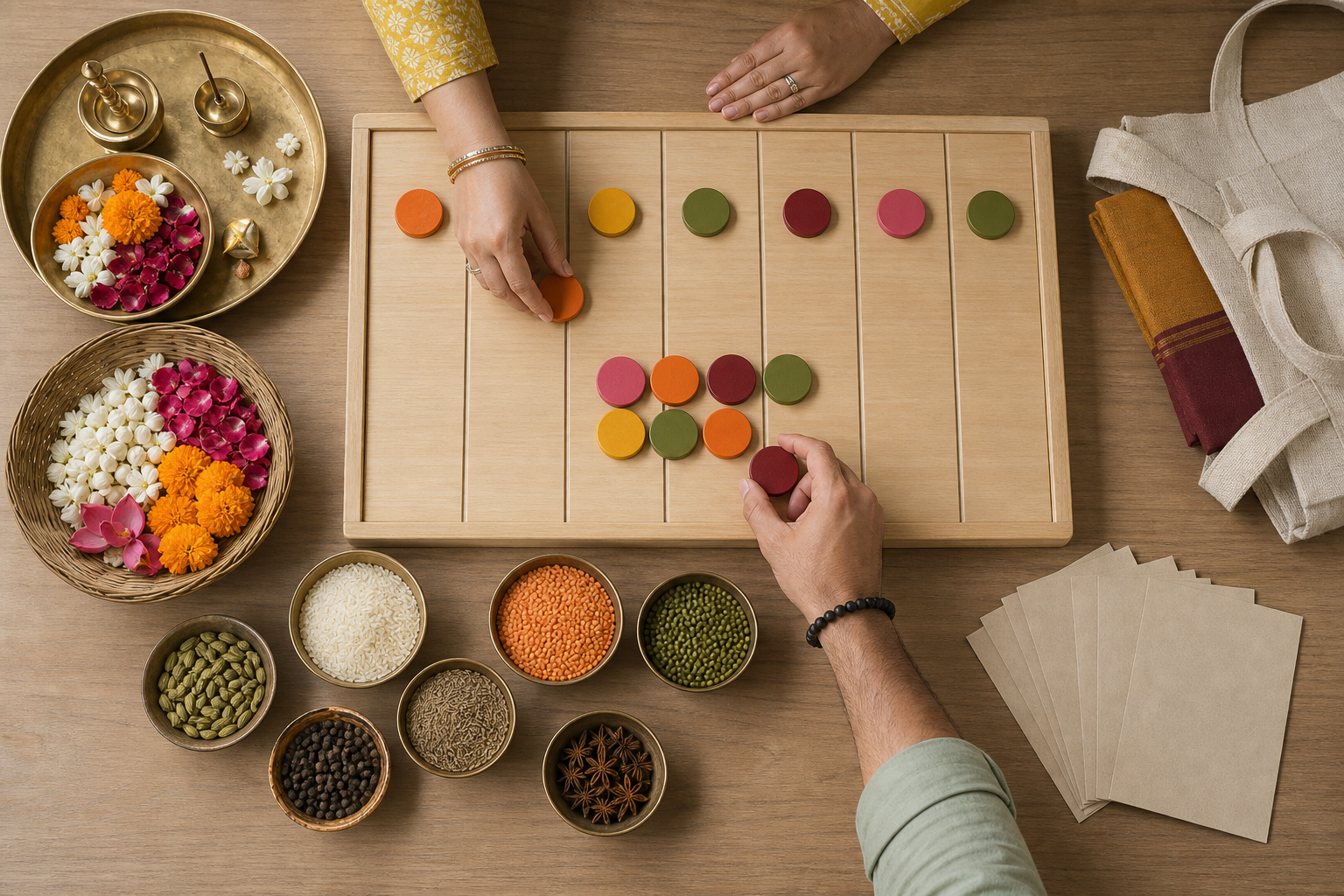
The safest planning method separates three decisions: whether the observance belongs to your tradition, which local date applies, and what practical commitment you are making. Work through them in that order.
- Mark every candidate date. Enter August 30; September 3, 6, 13, 14, 15, 18, 19 and 20. Label September 3 as a panchanga checkpoint rather than a festival.
- Add the lunar identity. Record Shukla Panchami beside Sama Pancham and Vishwamitra Jayanti, Shukla Saptami beside Dubri Satam, and Ashtami beside Omkar Ashtami. This prevents the civil date from becoming detached from the vrata.
- Assign a status. Use “observe,” “attend” or “learn.” “Observe” means the vrata belongs to your practice; “attend” means you will join a temple or community event; “learn” means you are studying a regional tradition without claiming to perform it.
- Verify locally before making irreversible plans. Confirm the date with the panchanga, temple or acharya used by your household before booking travel or announcing a gathering.
- Record continuity. Treat the four Bada Itvaar Sundays as one sequence. If considering the eight-year Omkar Ashtami vrata, clarify the full commitment before the first sankalpa.
- Preserve the reason for the decision. In the calendar note, include the tithi, location, regional name, family custom and person consulted. That small record will be more useful next year than another unexplained date.
This method also helps families in the diaspora. You can retain the regional name and inherited meaning while calculating the observance for the place where you actually live. Continuity does not require pretending geography has no effect on a lunar calendar.
Key takeaways
- The busiest planning period is September 14-19, beginning with Ganesh Chaturthi and ending with Omkar Ashtami.
- September 15 holds both Sama Pancham and Vishwamitra Jayanti; keep them as distinct observances even though they share a civil date.
- Bada Itvaar is a Sunday sequence: August 30, September 6, September 13 and September 20.
- Dubri Satam is especially associated with Rajasthan and western Bharat, while Sama Pancham is especially associated with Gujarat’s agricultural families.
- A civil date is useful for scheduling, but local tithi timing and inherited practice govern the vrata.
- An eight-year observance should be understood before it is begun, not reconstructed after the sankalpa.
Start by entering the dates with their full regional names, then send one focused set of questions to the elder, temple or acharya whose calendar your household follows. Once the local tithi decisions are confirmed, you will have a Bhadrapada plan that is both practical and faithful to the tradition you are actually keeping.
References
- Hindu Pad – Amkari Aatham 2026 | Omkar Ashtami Vrat
- Hindu Pad – Sama Pancham 2026
- Hindu Pad – Dubri Satam 2026
- Hindu Pad – Bada Itvaar, Vrat on Sundays in Bhadrapada Month
- Hindu Pad – Rishi Vishwamitra Jayanti
- Hindu Blog – September 3 2026 Tithi – Panchang – Hindu Calendar – Good Time – Nakshatra – Rashi
