
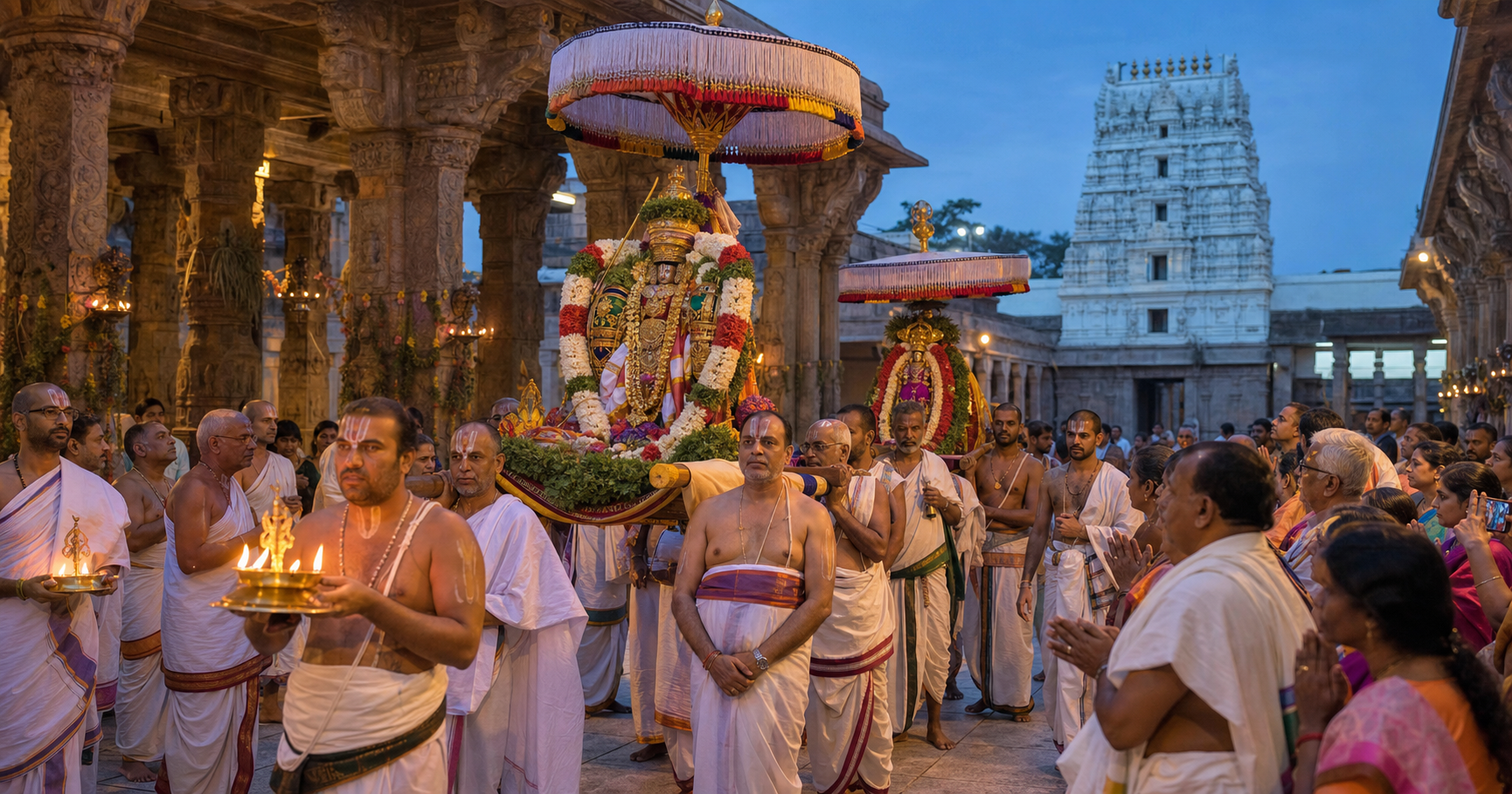
If you are deciding whether to visit Govindarajaswamy Temple for Shravana Upakarma, build your morning around one fixed point: the observance falls on 28 August 2026, and the ceremonial procession of Sri Govindaraja Swamy and Sri Krishna Swamy is scheduled for 6:30 a.m. That is the ritual time, not a suggested arrival time.
You also need to decide what you are going there to do. Witnessing the temple observance and performing your own lineage-specific Upakarma are related acts of Dharma, but they are not interchangeable. Making that distinction before you leave will prevent the most common misunderstanding about the day.
Key takeaways for 28 August 2026
- Sri Govindaraja Swamy Temple in Tirupati will observe Shravana Upakarma on 28 August 2026.
- The observance coincides with Shravana Pournami.
- A ceremonial procession involving Sri Govindaraja Swamy and Sri Krishna Swamy is scheduled for 6:30 a.m.
- The temple observance will be conducted according to Agama traditions.
- Treat 6:30 a.m. as the beginning of the stated ceremony. Plan to be settled before then, and verify entry, darshan and other operational arrangements separately.
Why the Agama setting matters
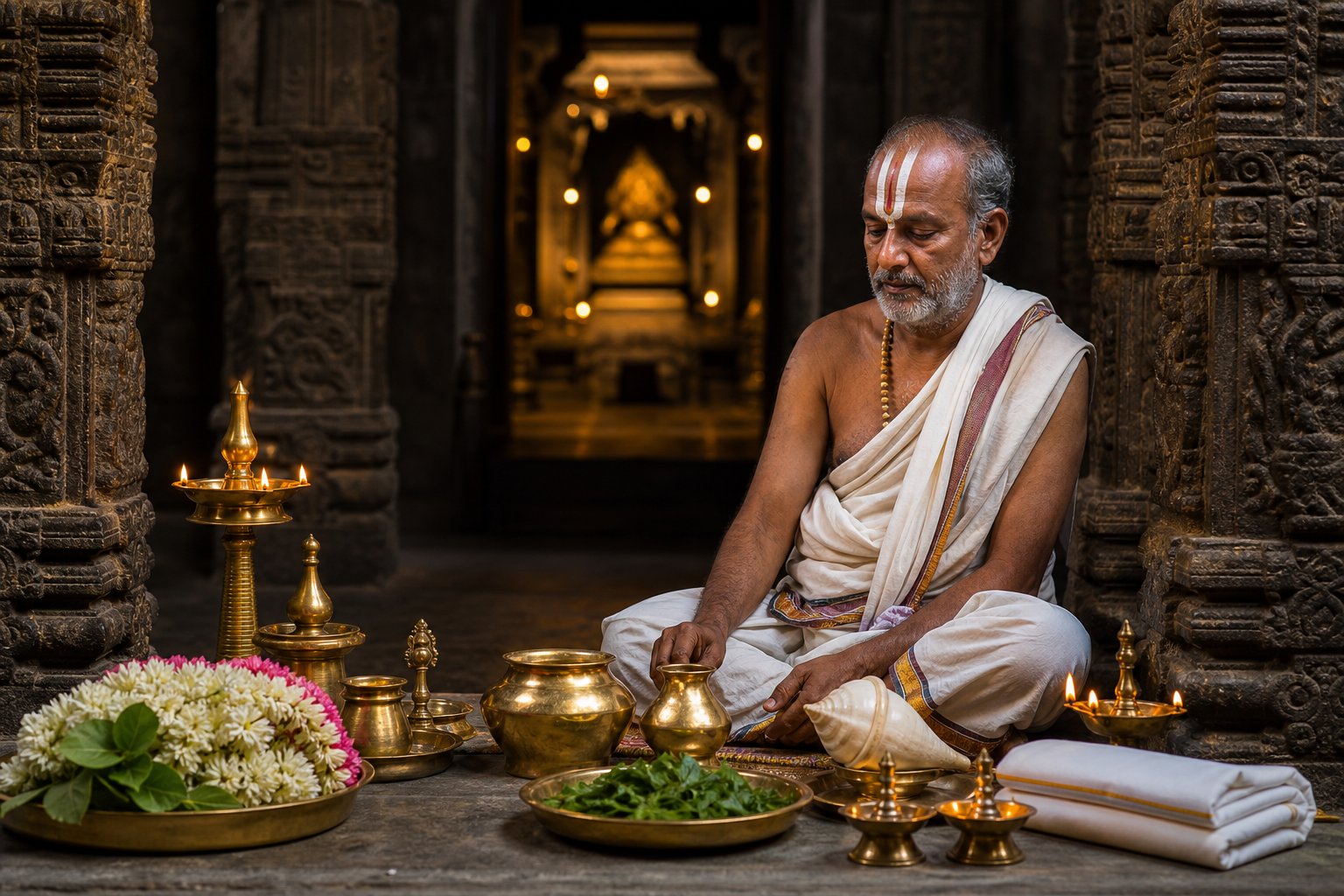
Shravana Upakarma is associated with renewal: for lineages that observe it, the occasion renews sacred-thread discipline, Vedic study and the responsibilities connected with them. Its purpose is not merely to replace a thread. The outer act points toward a renewed commitment to learning, conduct and inherited duty.
At Govindarajaswamy Temple, however, you are entering an Agama-governed temple setting. Agama traditions order the worship, movement and ceremonial service of the deities. The public procession is therefore part of the temple’s liturgical life; it should not be treated as pageantry added around a private domestic rite.
This distinction changes how you attend. Make space for the procession, follow the directions given inside the temple and avoid turning the path of the deities into a place for hurried photography. If photography is important to you, ask first and follow the rules in force at the temple. Darshan takes priority over obtaining an image.
Choose your role before you leave home
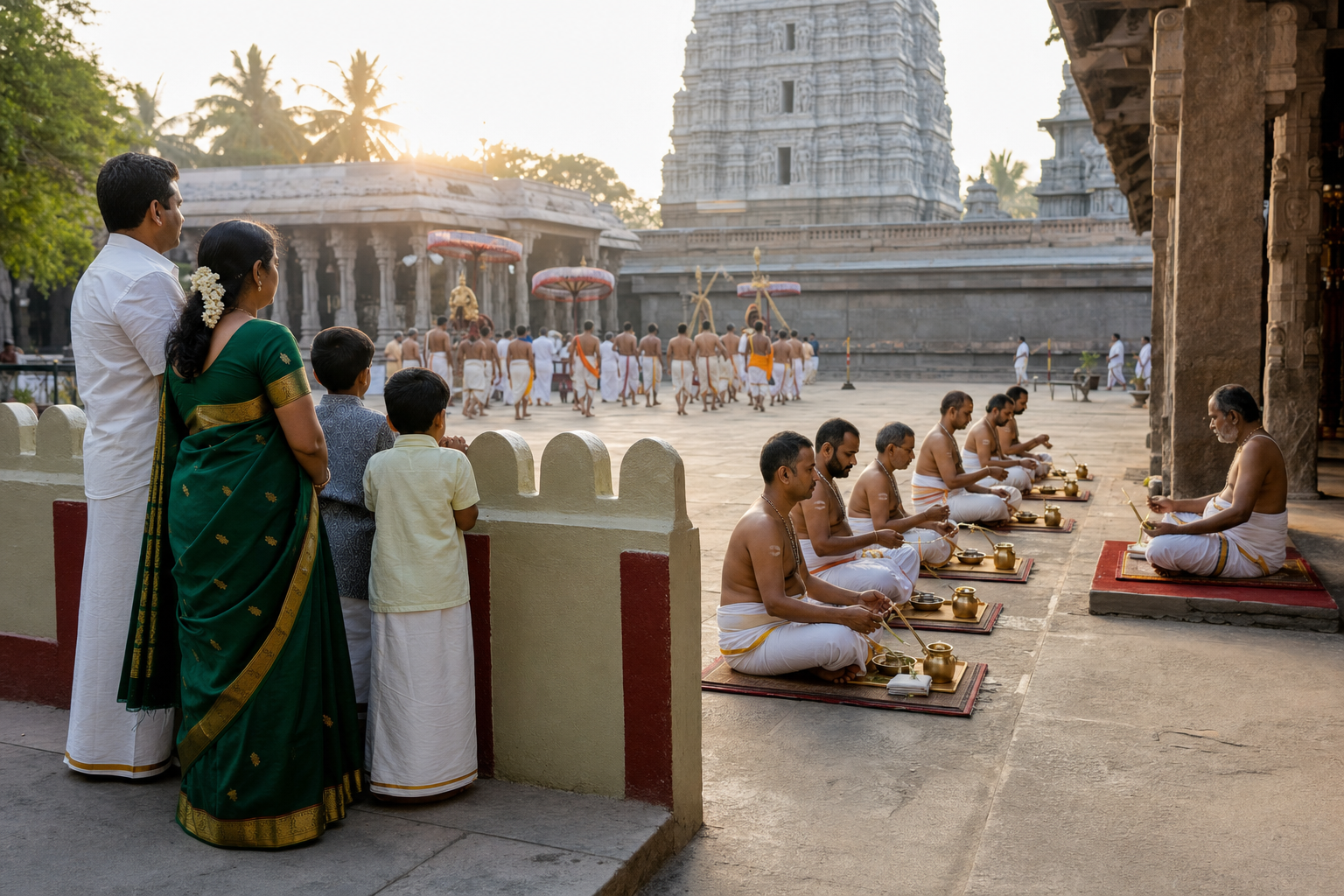
If you are going for darshan and the procession
Your practical task is straightforward: reach the correct temple, be in place before the 6:30 a.m. procession and attend without obstructing the ritual movement. You do not need to imitate every action you see. Watch attentively, remember that both Sri Govindaraja Swamy and Sri Krishna Swamy participate, and let the temple’s own order guide you.
Do not assume that the stated procession time describes the entire day’s programme. If you also need ordinary darshan, a particular seva, prasadam arrangements or information about entry queues, confirm those details through current temple information before travelling. One confirmed ritual time cannot answer every operational question.
If you intend to perform your personal Upakarma
Do not use the temple procession as a substitute for instructions belonging to your family tradition. Personal Upakarma practice can depend on Veda-shakha, sutra, sampradaya, family custom and the guidance of an acharya or purohita. The applicable sankalpa, mantras, sequence and required materials should come from that tradition, not from a generic checklist.
Before the morning of 28 August, confirm three things with the person who guides your observance: whether this is the date your lineage follows, what preparatory and ritual steps apply to you, and which materials you should have ready. If you have not received those instructions, attending the temple can still be an act of devotion, but you should not automatically count witnessing the procession as completion of a personal obligation.
Plan the morning backwards from 6:30 a.m.
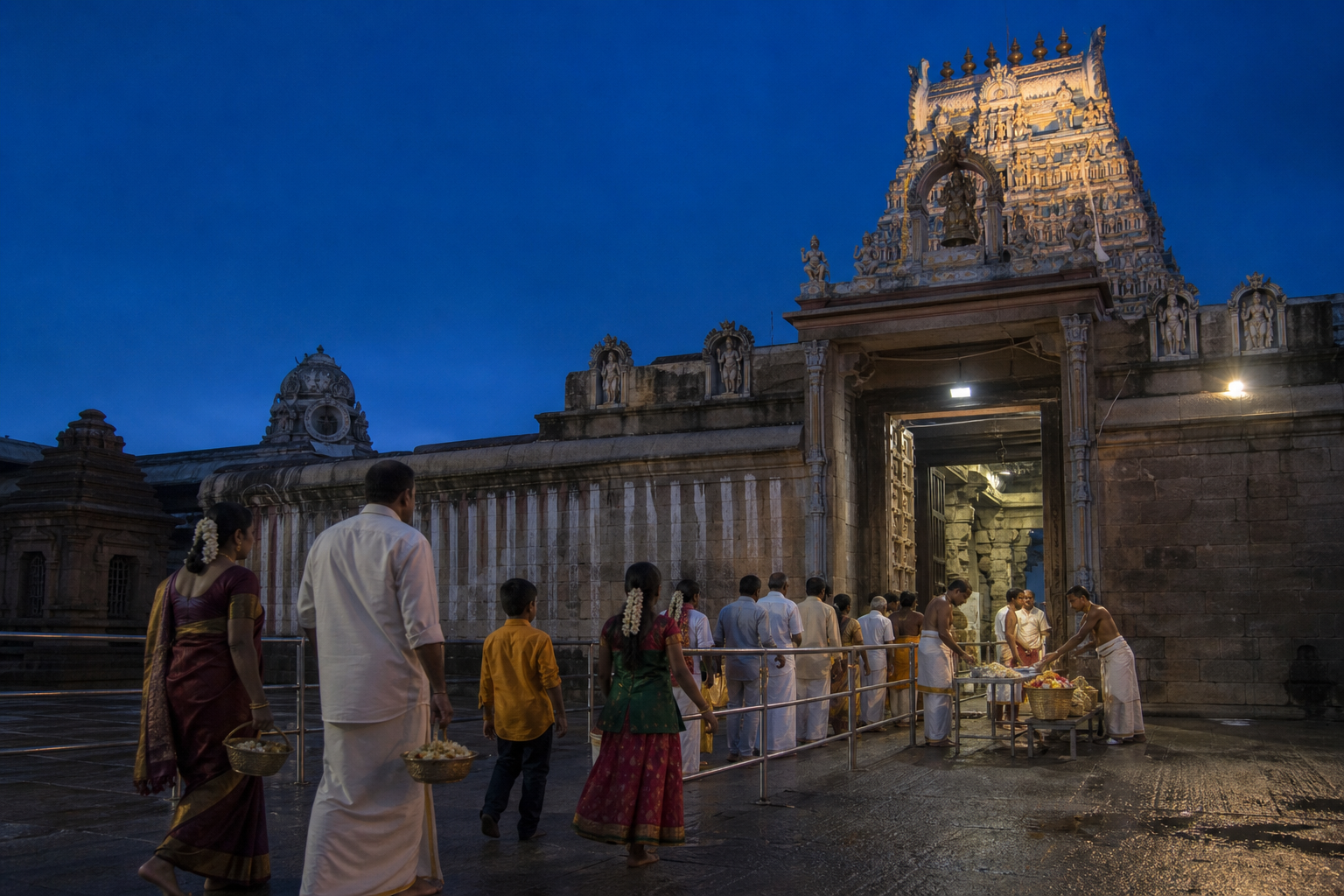
The useful planning question is not, “Can I reach Tirupati by 6:30?” It is, “Can I be ready to witness the procession before 6:30?” Arrival in the city, arrival at the temple and being settled for the ceremony are three different moments.
- Set your own arrival point before the ritual time. Work backwards from 6:30 a.m. and allow for your journey, temple entry and finding an appropriate place. No universal buffer suits every visitor, so base it on your actual route and circumstances.
- Check current access details. Confirm the entry route, any security restrictions, darshan arrangements and whether the ceremonial timing has changed. Do this close enough to your visit that the information is useful.
- Keep personal ritual preparation separate. If you are performing Upakarma under priestly or family guidance, obtain the prescribed materials beforehand. Do not assume that the temple procession supplies or replaces what your observance requires.
- Dress for worship and an early temple visit. Choose clean, modest clothing that you can manage comfortably, and account for the temple’s footwear arrangements.
- Protect the ritual space. Keep your phone quiet, do not step into the procession’s path and follow on-site directions even if they require you to change where you stand.
Do not make these four assumptions
- “The ceremony starts at 6:30, so arriving at 6:30 is enough.” It is not. Arriving at the stated starting time leaves no margin for entry or positioning.
- “The temple date automatically settles my family observance.” Use 28 August for this temple event. Confirm your personal Upakarma date through the tradition you actually follow.
- “Seeing the procession completes my personal rite.” Temple participation and lineage-specific practice should not be collapsed into one act without guidance from your acharya or purohita.
- “A procession is mainly a viewing opportunity.” In an Agama setting, the movement of the deities belongs to worship. Attend as a devotee first and an observer second.
Put 28 August 2026 in your calendar, work backwards from the 6:30 a.m. procession and confirm any practical details not covered by that timing. If you also bear a personal Upakarma responsibility, obtain lineage-specific guidance before the day. You will then arrive prepared for the observance that is actually taking place, without confusing temple worship with a private ritual commitment.
References
