

If you saw that Bharat intends to establish its own space station by 2035, you may be wondering how much has actually been approved, what could reach orbit first, and whether this is a firm programme or merely an aspirational headline. The precise answer is encouraging but narrower than the headline: the programme has government backing and an approved first module, while the completed station remains a goal that must be earned through successive engineering milestones.
The date to watch first is December 2028, the target for launching BAS-01. If you want to judge the programme seriously, separate that near-term module from the larger 2035 objective and ask for evidence appropriate to each stage.
The 2026 statement confirms continuity, not a fresh sanction
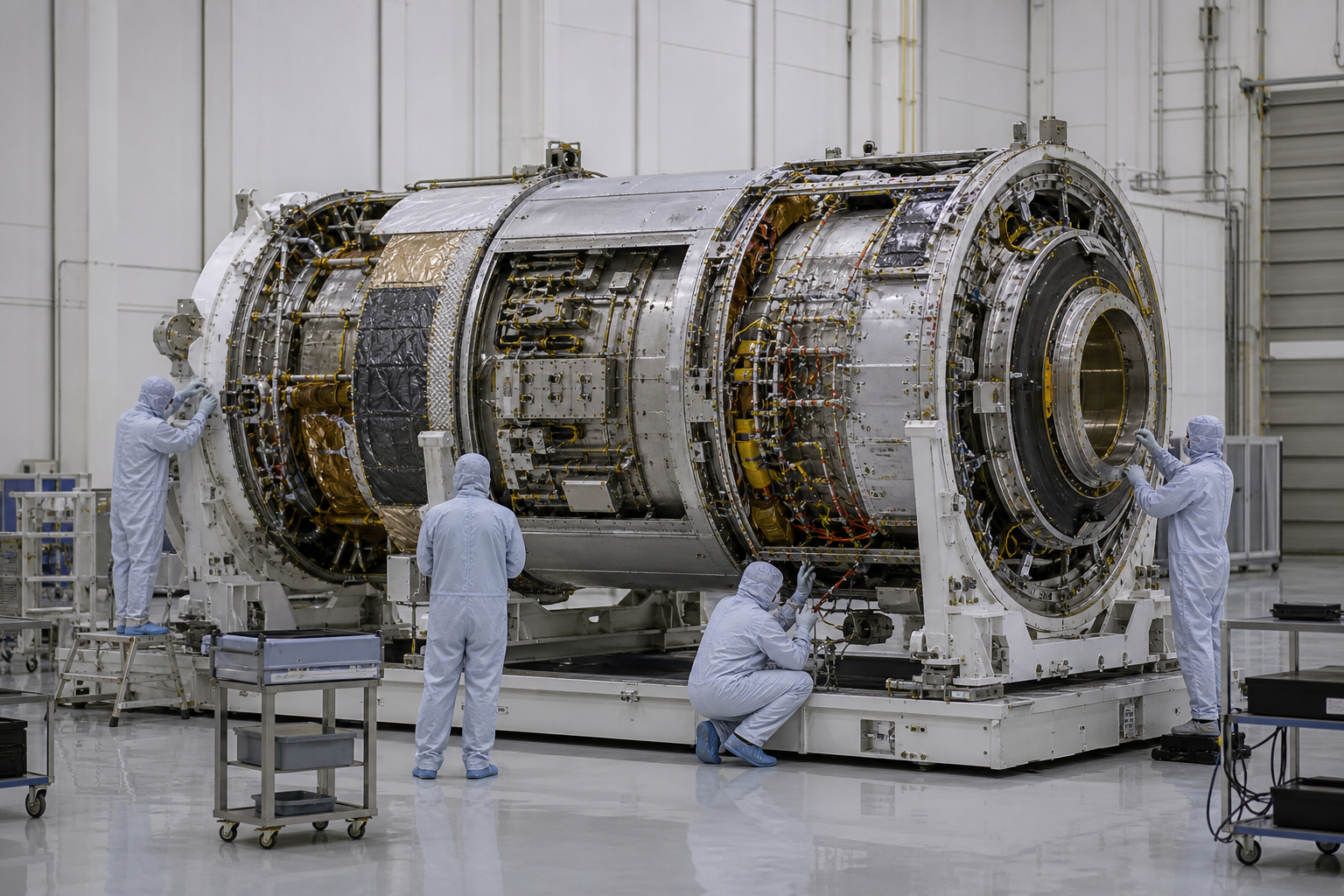
ISRO Chairman and Department of Space Secretary Dr V. Narayanan reaffirmed the Bharatiya Antariksha Station commitment on August 23, 2026, during the third National Space Day at the Space Applications Centre. He confirmed that the first module has been approved and the station is intended to be established by 2035.
That reaffirmation matters because large space programmes depend on political and budgetary continuity. It does not, however, mark the original approval. The Union Cabinet had already sanctioned the expanded programme on September 18, 2024. That decision enlarged the scope of the Gaganyaan Human Spaceflight Programme to include BAS-01 and added Rs 11,170 crore to the programme’s budget.
This distinction prevents two opposite errors. The first is to dismiss BAS as nothing more than a speech: Cabinet approval, an expanded programme and an allocated budget move it beyond an unauthorised proposal. The second is to speak as though approval means the station is nearly complete. It does not. Approval authorises the work; engineering, testing, launch and orbital operation must still demonstrate that the work succeeded.
When you encounter a new BAS headline, identify the verb. “Approved,” “designed,” “manufactured,” “qualified,” “launched” and “commissioned” describe different levels of progress. A restated deadline shows continuity of intent. A completed qualification test would show technical progress. A successful launch would establish something else again. Treating those verbs as interchangeable produces either premature celebration or needless cynicism.
Four dates and figures answer different questions

The BAS timeline becomes much easier to understand when each date is tied to a specific decision or deliverable. The 2028 and 2035 targets are not rival versions of the same promise.
| Date or figure | What it applies to | How you should read it |
|---|---|---|
| September 18, 2024 | Union Cabinet approval expanding Gaganyaan to include BAS-01 | The formal programme and funding decision |
| August 23, 2026 | Public reaffirmation by the ISRO chairman | Confirmation that the approved direction and 2035 goal remain in place |
| December 2028 | Targeted orbital launch of BAS-01 | The first major hardware deadline, not the completion date for the whole station |
| 2035 | Goal for establishing the Bharatiya Antariksha Station | The programme-level destination, dependent on the intervening sequence of work |
BAS-01 is described as the foundational or base module. A space station is an orbital system operated over time, not simply an object sent up by one rocket. Station operations generally require power, thermal management, communications, guidance, life support, docking, ground control, maintenance, logistics and emergency planning to work together. Launching a foundational module is therefore a beginning with real engineering significance, not a synonym for completing the entire station.
The two budget figures also require disciplined reading. Roughly Rs 1,763 crore has been allocated to the base module, BAS-01. The additional Rs 11,170 crore belongs to the expanded Gaganyaan programme. You should not describe Rs 1,763 crore as the price of the completed 2035 station, and you should not automatically describe the entire Rs 11,170 crore addition as a BAS-only construction bill. They refer to different scopes.
This scope check is especially useful when numbers circulate without context. Before accepting a claim that BAS is either unusually cheap or excessively costly, ask what the quoted amount covers: one module, the expanded human-spaceflight programme, launch services, testing, ground systems or the eventual station as a whole. A number detached from its scope cannot support a serious conclusion.
Why BAS-01 matters more than another grand announcement
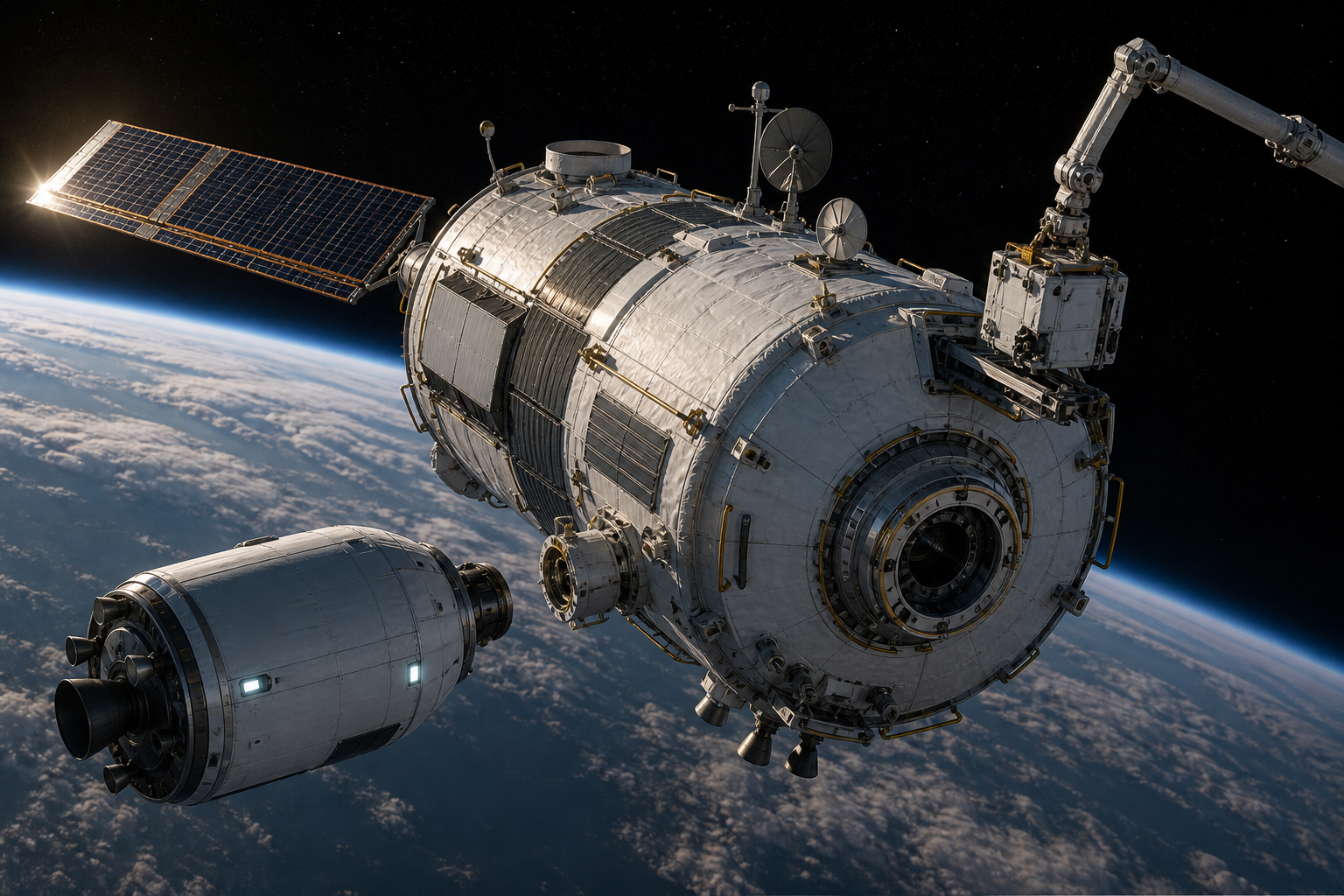
The practical significance of BAS-01 is that it converts a distant national objective into a nearer engineering object with a name, an allocation and a launch target. That gives citizens, engineers, educators, industry and policymakers something more concrete to evaluate than the year 2035 alone.
It also shows why BAS should be understood as an extension of Bharat’s human-spaceflight capability rather than an isolated prestige object. The Cabinet placed BAS-01 within the expanded Gaganyaan programme. That programme relationship matters because an inhabited orbital platform depends on more than station hardware. Human transportation, crew safety, mission control, docking, reliable communications and recovery all belong to the wider capability chain.
A durable space station would represent a shift from conducting individual human-spaceflight missions to sustaining an orbital system. The demanding word here is “sustaining.” A station must remain usable after the spectacle of launch has passed. Components must be monitored, supplies planned, faults managed and missions coordinated repeatedly. The measure of national capacity is therefore not only whether hardware reaches orbit, but whether Bharat can operate, service and use it productively.
That changes how you should think about the station’s value. National pride is legitimate, particularly when a Bharatiya name marks sovereign scientific ambition. But the name and flag cannot substitute for an operating purpose. The strongest case for BAS will rest on the capabilities it creates and the work performed through them.
- Human-spaceflight continuity: Does the programme develop repeatable crewed operations rather than a single demonstration?
- Scientific utility: Are credible experiments, access processes and research objectives being prepared for the orbital platform?
- Engineering depth: Are life support, docking, power, communications and other critical systems being qualified as an integrated whole?
- Industrial capacity: Is the work deepening Bharatiya competence across specialised suppliers, manufacturing and testing?
- Operational autonomy: Will Bharat be able to plan and conduct missions around its own priorities and readiness?
- Institutional learning: Are procedures, ground teams and safety disciplines becoming durable capabilities rather than temporary arrangements?
These are evaluation questions, not outcomes that should be assumed in advance. A station becomes strategically and scientifically important through its actual use. Keeping that distinction clear allows you to support the national ambition without turning every projected benefit into an accomplished fact.
You should also treat unconfirmed technical details as open questions. Final module count, station mass, orbital altitude, crew capacity, mission duration and experiment roster should not be filled in from speculation. Wait for formal specifications and note whether later statements refer to BAS-01 or to the completed station configuration. Confusing the two is one of the easiest ways to spread an impressive but unsupported claim.
A practical scorecard for every BAS progress update
You do not need to be an aerospace engineer to distinguish substantive progress from a recycled headline. Use the following scorecard whenever ISRO, the government, industry or the media provides a BAS update.
<!– wp:list {