
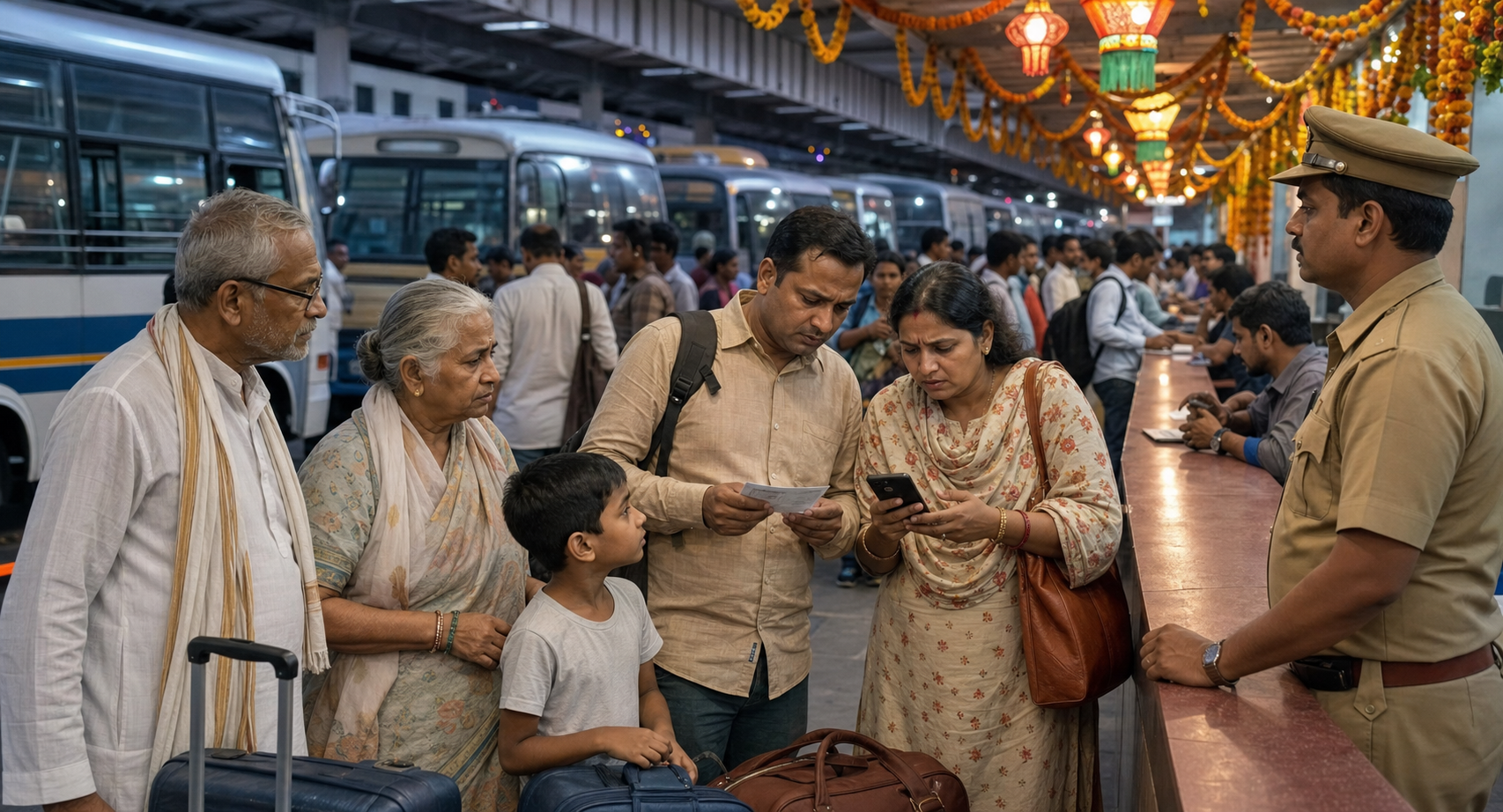
When the fare for your journey home rises as a festival approaches, you face two questions at once: is the price merely high, or has the operator crossed a published limit? And if you pay because you cannot miss the journey, what will you need to challenge the charge later?
Fair regulation does not require every ticket to remain at an ordinary-season price. It requires operators and authorities to tell you, before you commit, how the festival price was set, which rule applies, and where you can obtain a prompt remedy. That matters because millions of people travel home during festivals while demand is urgent and available capacity is constrained.
Key takeaways
- An expensive ticket is not automatically an unlawful ticket. Compare the same route, date, boarding point, destination, bus class, and fee structure before drawing a conclusion.
- A useful festival-fare rule must publish its dates, covered services, baseline fare, permitted increase, and complaint channel before the booking rush begins.
- Save the complete fare screen, ticket, invoice, payment reference, operator name, service details, and any applicable official notice. A price complaint without these details is difficult to verify.
- Ask for a precise remedy: the difference between the amount charged and the permitted amount, plus correction of any wrongly imposed fee.
- Fare limits work best when governments also add buses, coordinate special trains, license temporary services, and improve connections to major terminals.
First decide whether the fare is high, opaque, or non-compliant

These are three different problems, and your response should depend on which one you encounter.
- A high fare is above what you expected, but it may still fall within the applicable rule and may reflect the bus class or service conditions you selected.
- An opaque fare cannot be understood before payment. The final screen may add compulsory charges, obscure the operator’s price, or fail to explain why two apparently similar services cost different amounts.
- A non-compliant fare exceeds a ceiling or permitted increase that actually covers that service, route, date, and vehicle class.
A screenshot showing that a ticket is expensive proves the displayed price; it does not, by itself, prove a violation. Tie your comparison to like-for-like journeys and to the rule that governs them. A sleeper service should not be compared casually with an ordinary seated bus, and a ticket from a different boarding point may include a different route segment.
Before paying, work through this sequence:
- Confirm the operator’s legal or trading name rather than relying only on the booking platform’s label.
- Record the journey date, departure time, boarding point, destination, bus type, and seat category.
- Open the price breakdown and distinguish the operator fare from taxes, platform charges, insurance, or other additions.
- Look for an official festival-period notice applicable to the state, route, and service class. Note its effective dates and any exclusions.
- Compare the all-in compulsory amount with the permitted amount. Do not treat an optional add-on as part of the operator’s base fare, but do challenge an add-on that was presented as optional and charged without your choice.
- Save the evidence before the screen changes or the service sells out.
Also check the cancellation terms before booking. A regulated fare does not necessarily protect you from a separate cancellation deduction, and cancelling first may weaken a straightforward overcharge claim. If the journey matters more than the disputed difference, you can preserve the evidence, travel, and pursue the monetary remedy afterward.
A workable fare rule must be knowable before families book

Vague warnings against profiteering leave passengers guessing and make honest operators unsure of what they may charge. Authorities need to convert the principle of fairness into a rule that can be checked from an ordinary ticket.
- Declare the festival window. Publish the first and last dates covered. If different routes have different peak periods, identify them rather than announcing an undefined seasonal restriction.
- Define the baseline. State whether the permitted price is tied to a notified fare, an operator’s previously published fare, or another declared benchmark. Require comparisons within the same vehicle and service class.
- Publish the permissible movement. Passengers should be able to determine the maximum charge without reverse-engineering a dynamic-pricing system.
- Require an all-in compulsory price. The first displayed figure should not become misleading through unavoidable charges added at the final payment stage. The ticket and invoice should separate each component.
- Cover booking platforms as well as operators. A ceiling is ineffective if one party sets the fare while another introduces opaque mandatory fees.
- Preserve a time-stamped price record. Authorities need to know what was offered, when it was offered, and what the passenger ultimately paid.
- Publish the remedy. The notice should identify the grievance portal or helpline, the evidence required, and the authority empowered to direct a refund.
The rule should leave room for legitimate differences between ordinary, air-conditioned, sleeper, and other clearly defined services. Otherwise, a ceiling intended to protect budget passengers may blur the distinction between basic transport and optional premium service. The answer is not an unexplained exemption. It is a separate, publicly stated band for each covered class.
Timing is equally important. Publishing a ceiling after the main booking rush may help with refunds, but it cannot help a student decide whether the fare on the screen is valid. The baseline, festival window, service classifications, and complaint route should be announced far enough in advance to guide the purchase itself.
Build a complaint that can produce a refund

A useful complaint is not simply “the fare was too high.” It allows a reviewer to reproduce the comparison and calculate the claimed difference.
Keep one complaint packet containing:
- the ticket or booking confirmation;
- the complete invoice and price breakdown;
- the payment reference;
- the operator and booking-platform names;
- the route, boarding point, destination, departure time, bus class, seat, and travel date;
- screenshots showing the displayed fare and the time it was captured;
- the relevant official fare notice or a precise reference to it;
- your calculation of the permitted fare, amount paid, and difference claimed; and
- copies of messages exchanged with the operator or platform.
Start with a written request to the operator or platform so there is a traceable record. Identify the exact booking, cite the applicable limit, show the calculation, and request repayment of the excess. If the response does not resolve the issue, submit the same packet through the official transport grievance channel for the relevant jurisdiction. Keep each complaint number and response.
Separate distinct claims. An amount above a regulated ceiling, an undisclosed mandatory charge, a failed cancellation refund, and a service that did not operate are not the same dispute. Combining them into a general allegation makes it harder for the reviewer to identify the correct remedy.
If departure is imminent, do not turn a financial dispute into a confrontation at a crowded terminal. Preserve the evidence and use the formal channel unless your immediate safety is at risk. When sharing screenshots publicly or with third parties, conceal payment credentials, identity numbers, personal phone numbers, and any scannable ticket code. Send unredacted material only through a channel you have verified as official.
Price control fails without more seats and visible enforcement
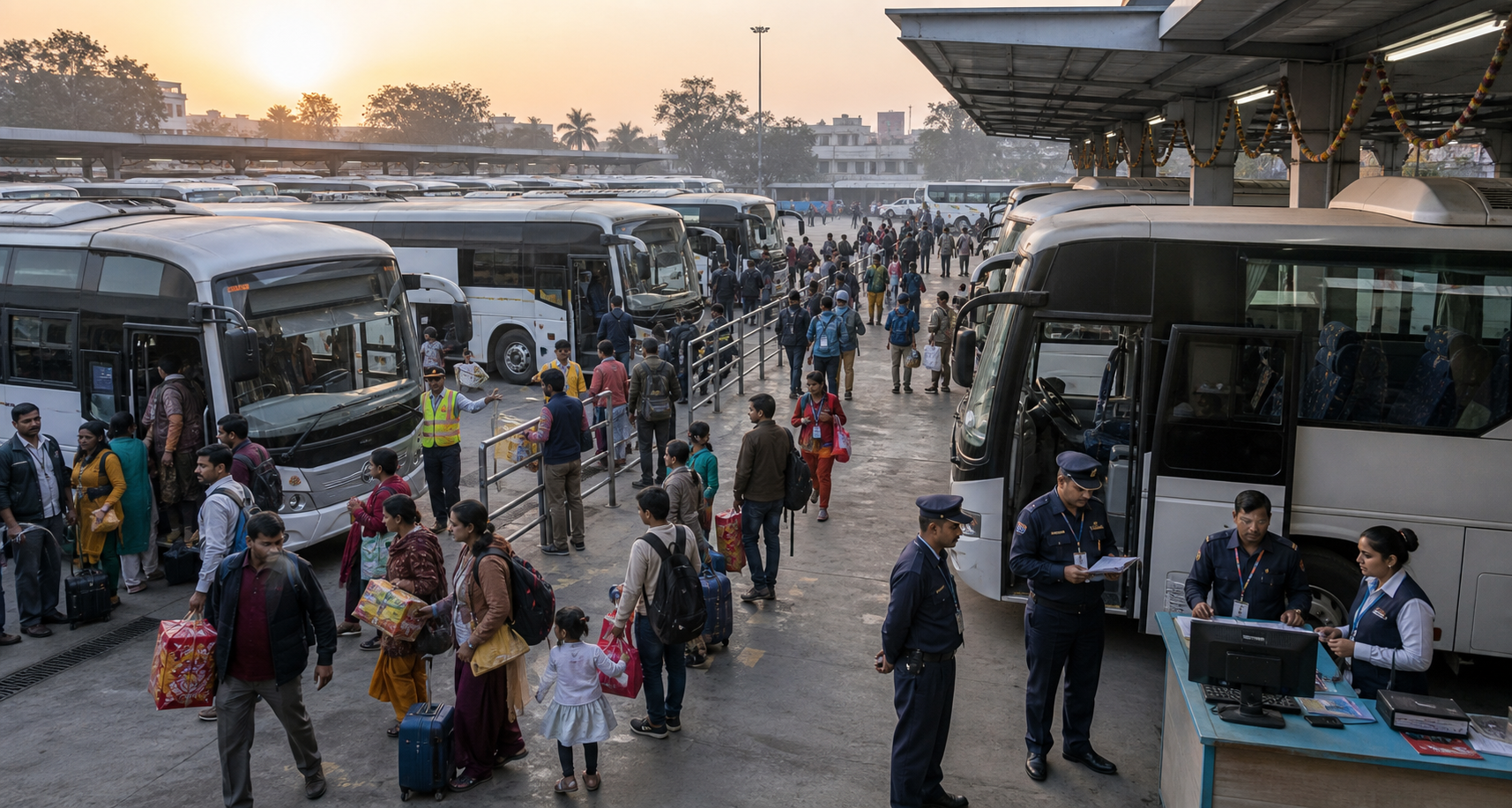
Add capacity before the peak dates
Festival demand is predictable. Authorities therefore have an opportunity to act before terminals become crowded and tickets scarce. Additional state transport buses, special trains, and properly licensed temporary bus services can absorb part of the surge. Pre-announced schedules matter because capacity that passengers cannot find or book does little to moderate the market.
Extra services should be visible through accessible booking channels and connected to practical last-mile transport at major arrival and departure points. Coordination also prevents a familiar mismatch: seats may exist on one mode or from a nearby terminal while passengers continue paying more because they cannot discover or reach that alternative.
This supply response protects more than passengers. A fare ceiling that makes additional service uneconomic can discourage operators from adding buses precisely when they are needed. Temporary permits, clear service standards, and priority opportunities for operators with good compliance records can expand capacity without abandoning price discipline.
Make each transaction auditable
Enforcement should follow the transaction from offer to journey. Ticket data shows what was sold. E-invoices show what was charged. Payment records show what was collected. GPS logs can help establish whether the licensed service operated on the declared route and time. Used together, these records allow authorities to distinguish an isolated mistake from repeated overcharging.
Complaints should also be triaged by urgency. A passenger facing an unresolved charge before departure needs a quick verification route; a completed journey may be handled through a documented refund process. Repeated violations warrant audits and penalties, while compliant operators can be recognised through priority consideration for special-service permits.
Enforcement summaries should be public enough to answer basic questions: which rule was breached, what remedy passengers received, and whether repeat conduct attracted a stronger response. That transparency deters abuse and helps responsible operators see that compliance is not a commercial disadvantage.
For Hindu, Buddhist, Jain, and Sikh families, a festival journey may carry duties that an ordinary leisure trip does not: returning to elders, joining community observances, and keeping traditions alive across generations. Students, migrant workers, and households on fixed budgets should not have to choose between that continuity and an opaque last-minute charge. Fair fares, adequate capacity, and quick redress are therefore parts of festival infrastructure, not competing priorities.
If you are travelling, start by saving the complete fare and the rule that applies before you pay. If you shape transport policy, publish the festival window, price method, additional services, and refund channel before bookings accelerate. That is the point at which fairness can still guide the journey rather than merely compensate for harm afterward.
References
