
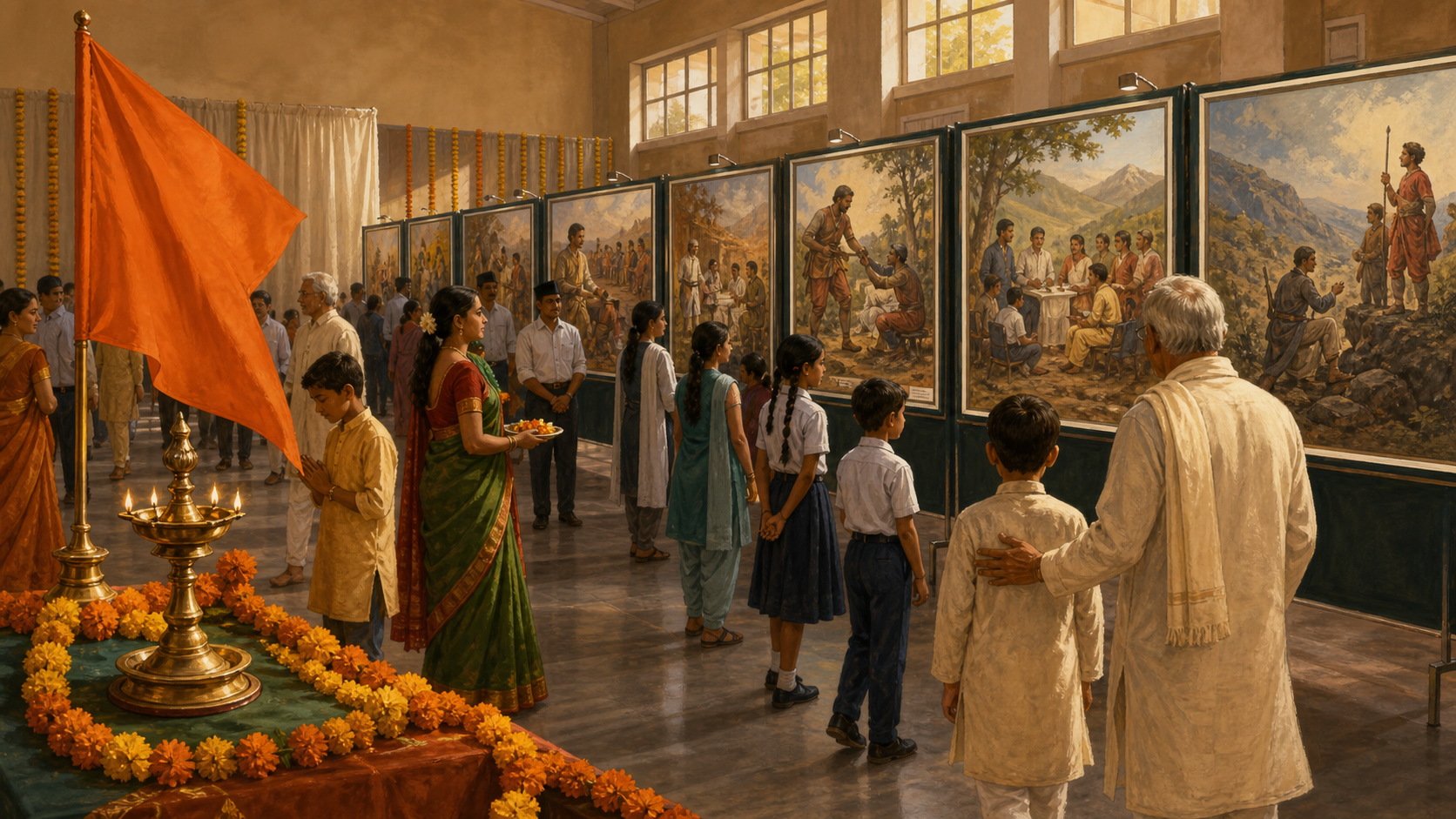
If you came looking for what made the RSS Vijayadashami observance in Worli worth attention, the answer is not scale or spectacle. It is the decision to place historical memory inside a living festival.
The Hindu Janajagruti Samiti picture exhibition gave families, students, and elders a way to move from the victory of dharma over adharma to the choices through which people serve a nation. That combination offers a practical model for attending, discussing, or organizing a community celebration with lasting value.
Key takeaways
- The Worli programme joined an RSS Vijayadashami observance with an HJS exhibition about national heroes and revolutionaries.
- Vijayadashami becomes more than an annual ceremony when you connect dharma to a present duty, discipline, or act of seva.
- Read a historical panel as a chain of context, choice, consequence, and public value rather than as a famous name to memorize.
- Families learn more when children, adults, and elders ask different kinds of questions instead of silently walking past every display.
- Shared dharmic values can support dialogue among Hindus, Buddhists, Jains, and Sikhs without pretending that their teachings or practices are identical.
Vijayadashami becomes useful when symbolism leads to conduct
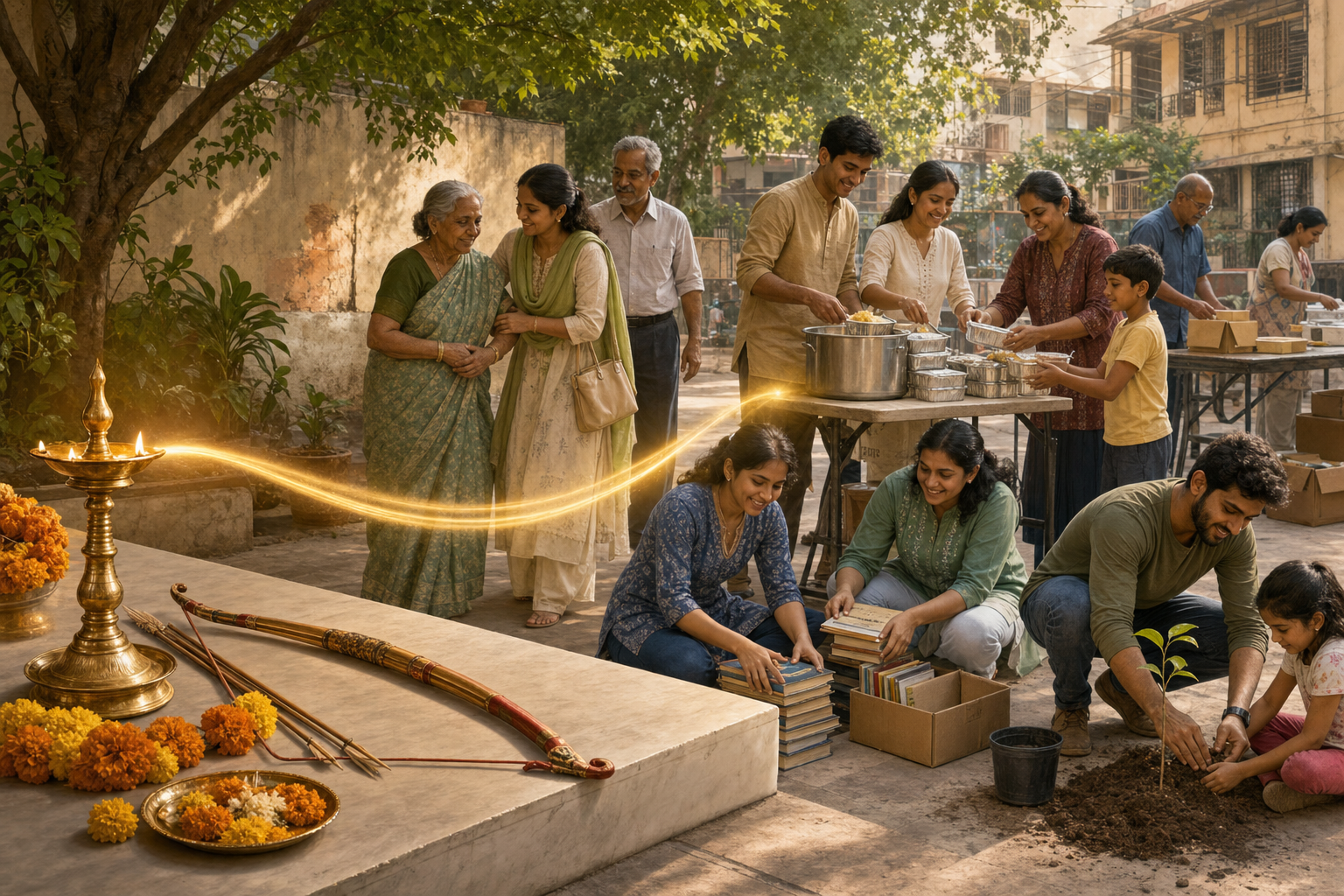
As the culmination of Navaratri, Vijayadashami marks the triumph of dharma over adharma. The familiar language can become decorative, however, unless you ask what it requires after the celebration ends. Dharma is not affirmed merely by applauding its victory; it is affirmed through judgement, restraint, courage, and responsibility.
Use three questions to keep that moral vocabulary concrete:
- What is the actual wrong? Name the deception, injustice, neglect, or loss of memory at issue. Do not turn every disagreement into adharma.
- What discipline does the response require? Courage without self-command can become anger, while conviction without study can repeat slogans it cannot defend.
- Who benefits from the action? A dharmic resolution should reach beyond personal display. Look for the family, neighbourhood, institution, or neglected memory that your effort can serve.
This is where the exhibition belonged within the celebration. Pictures and short historical accounts made an ethical ideal visible through human decisions. The festival supplied the question—how does dharma prevail?—while the lives on display offered material with which visitors could think about possible answers.
You can apply the same test to your own participation. If you leave only with photographs of the gathering, the experience remains commemorative. If you leave with a historical question to investigate and a form of service to undertake, the observance has begun to shape conduct.
Read each hero as a chain of choices, not a framed name
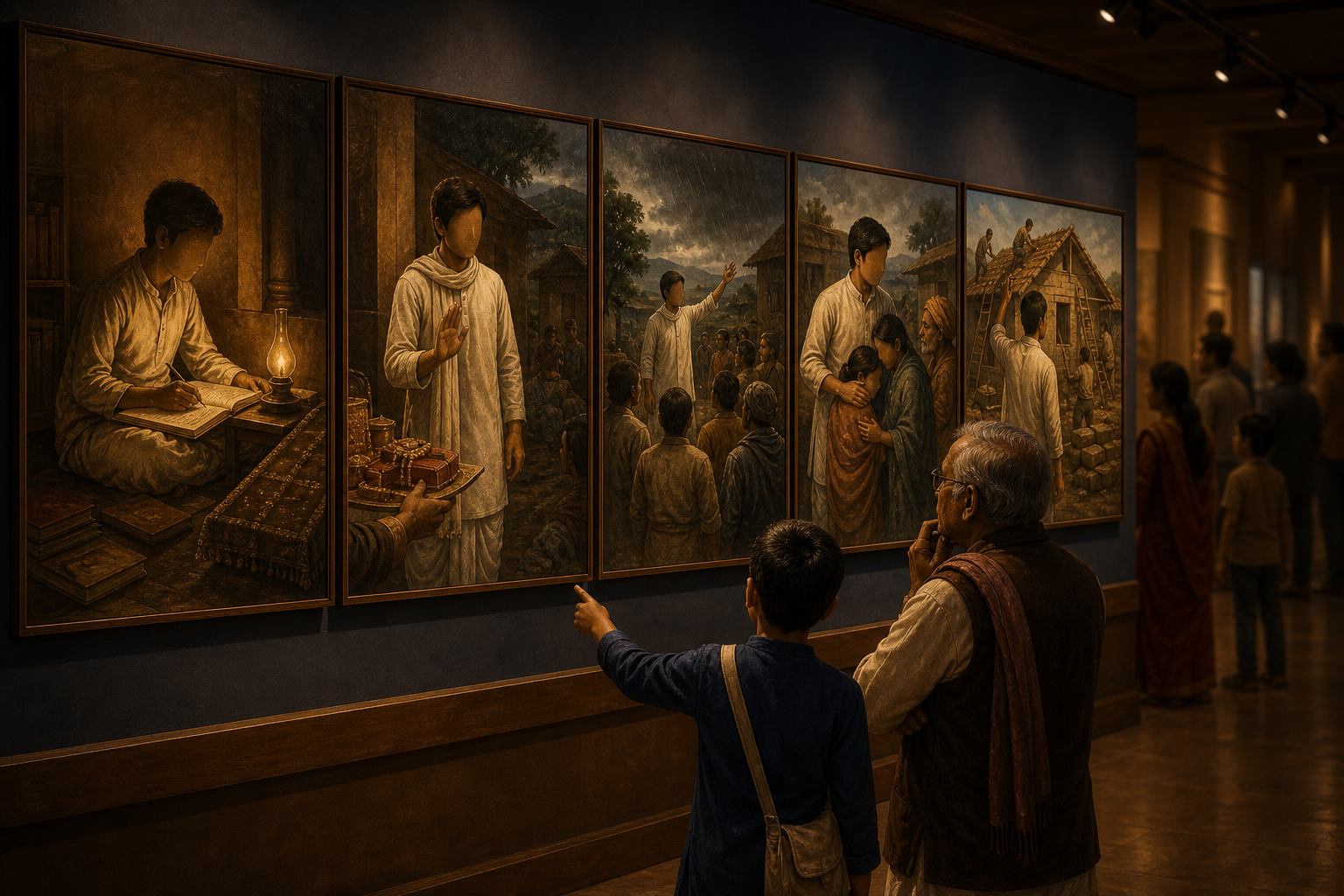
The HJS display used concise biographies, visual timelines, and archival imagery. That format is approachable, but it also creates a temptation to move quickly, recognize a name, and mistake recognition for knowledge.
Slow down at a smaller number of panels. For each person, extract five things:
- Context: What public condition or historical problem did this person face?
- Choice: What did the person decide to do rather than merely believe?
- Method: Was the contribution political, intellectual, social, organizational, spiritual, or another form of service?
- Consequence: What changed, and what did the choice demand from the person?
- Public value: Which quality—courage, integrity, scholarship, discipline, sacrifice, or seva—made the life worth remembering?
This approach matters because national service is wider than a single kind of heroism. The Worli exhibition connected its figures with freedom, reform, and social uplift. A revolutionary may confront political domination, while a reformer challenges a destructive social habit and a public servant builds an institution. The methods differ, but each life can be examined through responsibility and consequence.
Keep your historical judgement active as well. An archival photograph gives a person and period immediacy, but it does not prove every claim made beside it. Check whether a panel supplies chronology, identifies the event shown, and distinguishes a documented action from later praise. If you are organizing an exhibition, add readable references rather than relying on the authority of an old image.
The goal is neither reflexive suspicion nor uncritical hero worship. It is informed gratitude: understand what the person did, why it mattered, and which part of the example can responsibly guide action now.
Turn a family visit into an intergenerational conversation
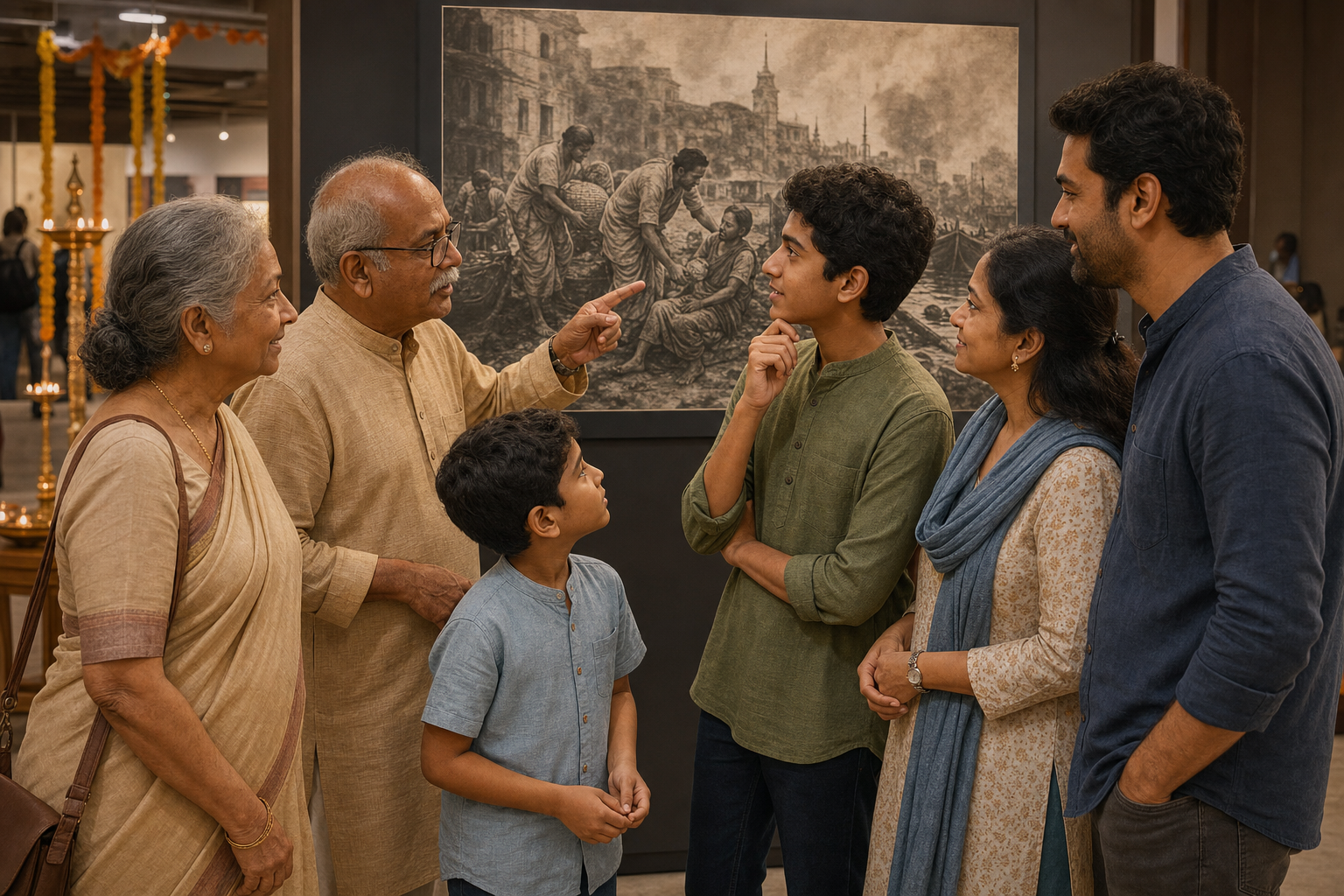
A public exhibition can become an informal classroom because different generations notice different things. Students may follow the visual sequence quickly. Adults may supply political or social context. Elders may connect a displayed event with inherited family memory. None of those contributions is sufficient on its own, but together they can produce a richer reading.
Give each person a role instead of asking the group whether it “liked” the exhibition:
- Ask a younger visitor to retell one panel in their own words, without reading its caption aloud.
- Ask an adult to identify the problem, decision, and consequence in that account.
- Invite an elder to add remembered teaching or family history, while clearly distinguishing inherited memory from a verified historical record.
- Let the group choose one claim or episode to examine further after returning home.
A useful conversation does not end with “Was this person brave?” Ask what made the action brave, what alternatives were available, who carried the risk, and whether the same virtue would look different under present conditions. Those questions teach moral reasoning rather than rehearsed admiration.
The same care is needed when discussing dharmic unity. Hindus, Buddhists, Jains, and Sikhs can meet around compassion, responsibility, self-discipline, seva, nonviolence, and community welfare. Yet shared vocabulary does not make distinct traditions interchangeable. Their scriptures, authorities, practices, and interpretations remain their own.
For a constructive discussion, begin with a shared public question rather than a claim that every tradition teaches exactly the same doctrine. Ask how each path understands disciplined action, the restraint of harm, service to others, or courage in the face of injustice. That method creates common ground without demanding sameness.
Build community programmes that produce a next step
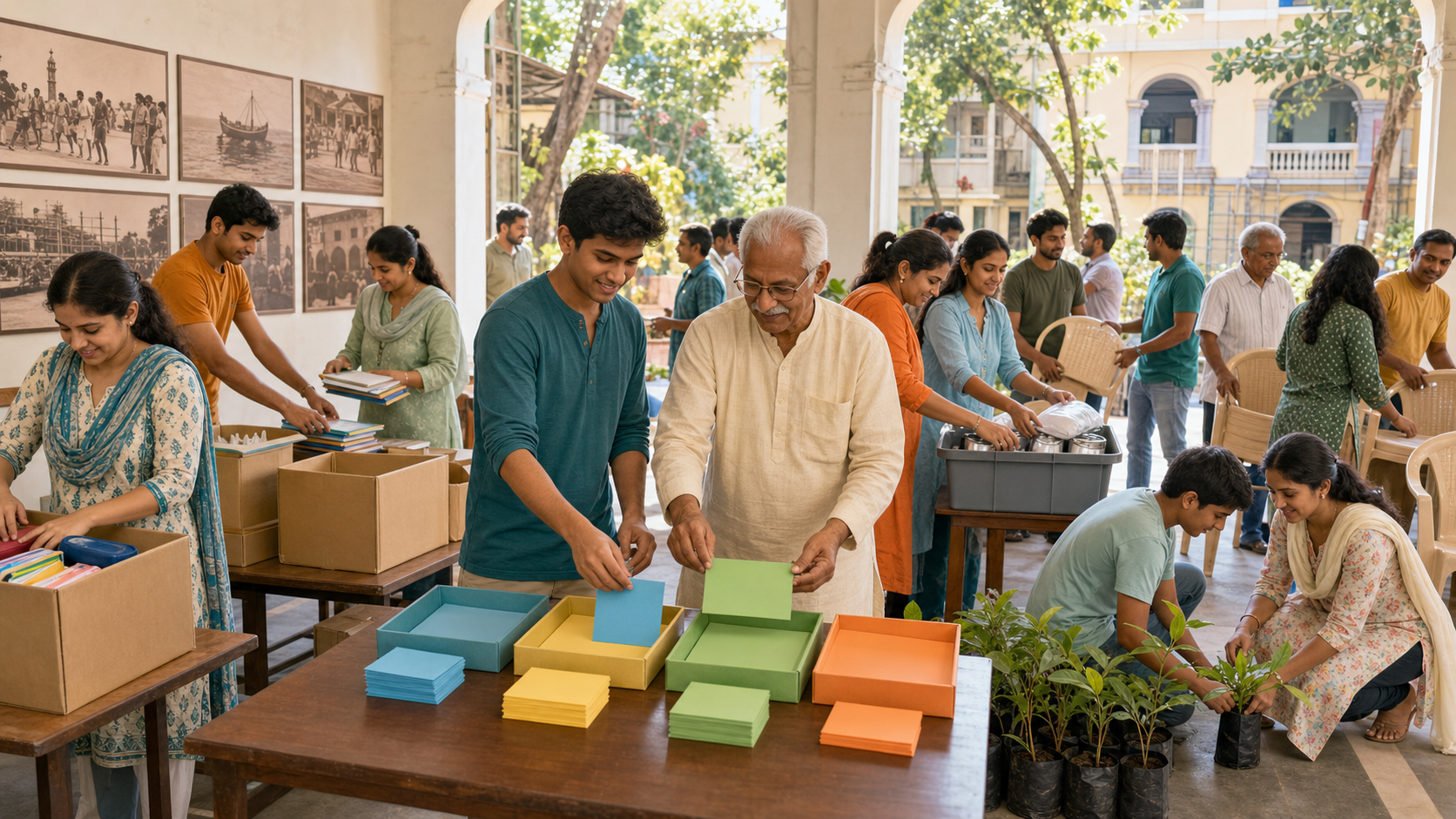
The practical lesson of the RSS–HJS collaboration in Worli is that a festival gathering can carry both ritual meaning and civic education. The celebration brings people together; careful curation gives them something consequential to examine together.
If your shakha, temple, cultural association, school group, or neighbourhood committee wants to adapt the model, design the exhibition around the visitor’s movement from attention to action:
- State the governing question. “How did people defend freedom, pursue reform, or advance social welfare?” gives the display more coherence than a miscellaneous wall of admired personalities.
- Use a consistent panel structure. Pair a concise biography with a legible chronology, a clearly identified image, the person’s public contribution, and references that visitors can follow.
- Show more than one form of service. Include intellectual work, reform, institution-building, public courage, and social uplift alongside direct political struggle when the historical record supports them.
- Write for mixed ages. The main account should be understandable without specialist knowledge, while references should allow an interested student or adult to go deeper.
- Add a discussion prompt. Ask visitors to identify the choice that defined the life, not merely the virtue later attached to the name.
- Create an exit action. Offer a concrete route into reading, heritage preservation, local volunteering, or another suitable form of seva. Inspiration without a next step fades quickly.
Resist two common failures. The first is overcrowding: so many names are included that no life receives serious attention. The second is moral simplification: every figure is described with the same handful of virtues, leaving visitors unable to explain what anyone actually did. Selection, context, and evidence make a smaller exhibition more valuable than a larger collection of praise.
When you next attend such a programme, choose one figure, one historical question, and one present responsibility. Verify an episode that caught your attention, discuss the value it embodies, and match that value with a local act of seva. That is how Vijayadashami can continue after the ceremonial gathering has ended.
References
