
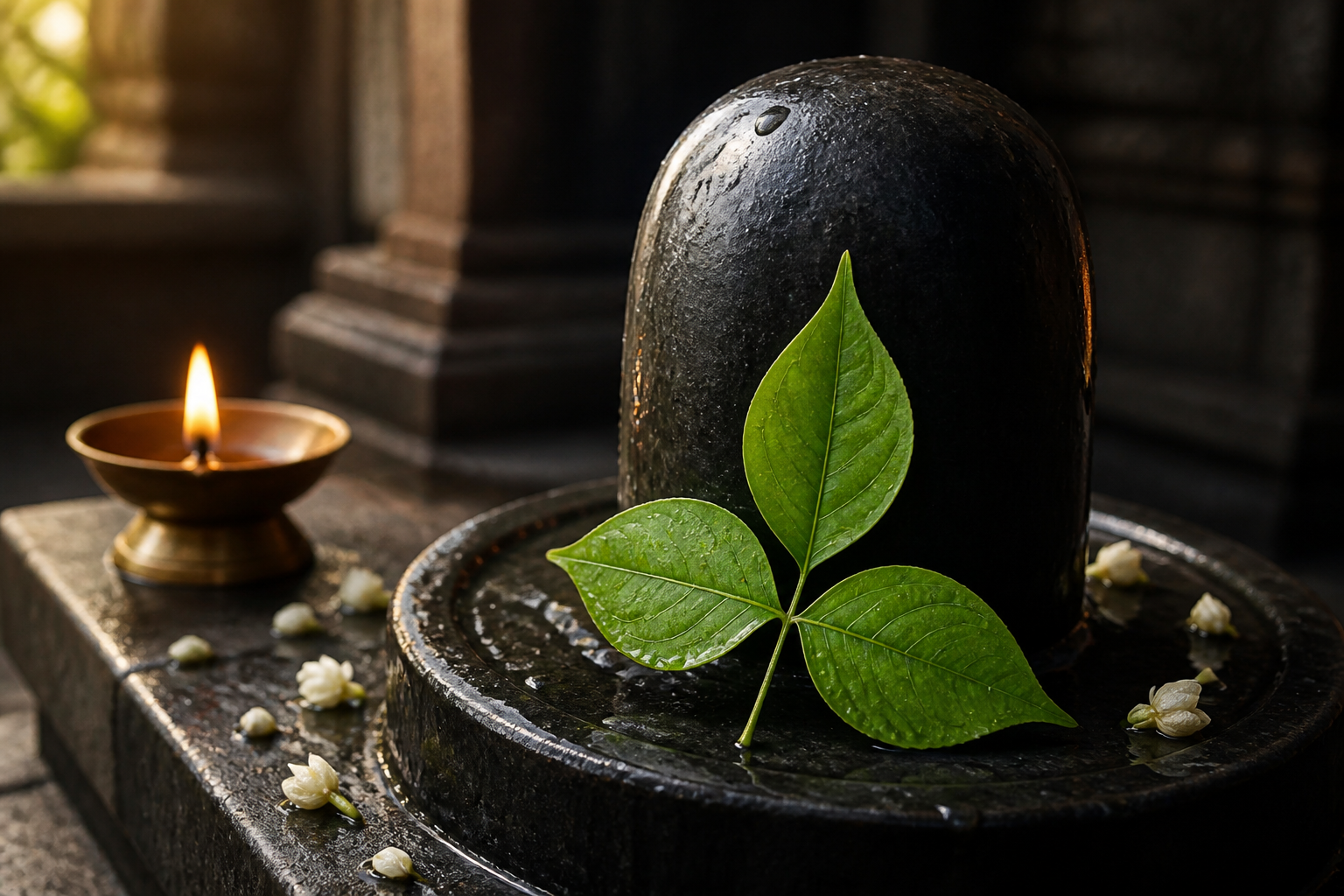
You have Bilva leaves for Shiva puja, but the instructions around them may feel more complicated than the offering itself. Which leaves should you choose? Does the day matter? And does Bilva’s place in Ayurveda mean the leaves are safe to use as medicine?
The practical answer is simple: offer a fresh, intact trifoliate leaf with cleanliness, attention, and respect for the tree. Keep medicinal use separate from ritual use. That distinction lets you preserve both the sanctity of the offering and the seriousness of Ayurveda.
Why the three Bilva leaflets matter in Shiva worship
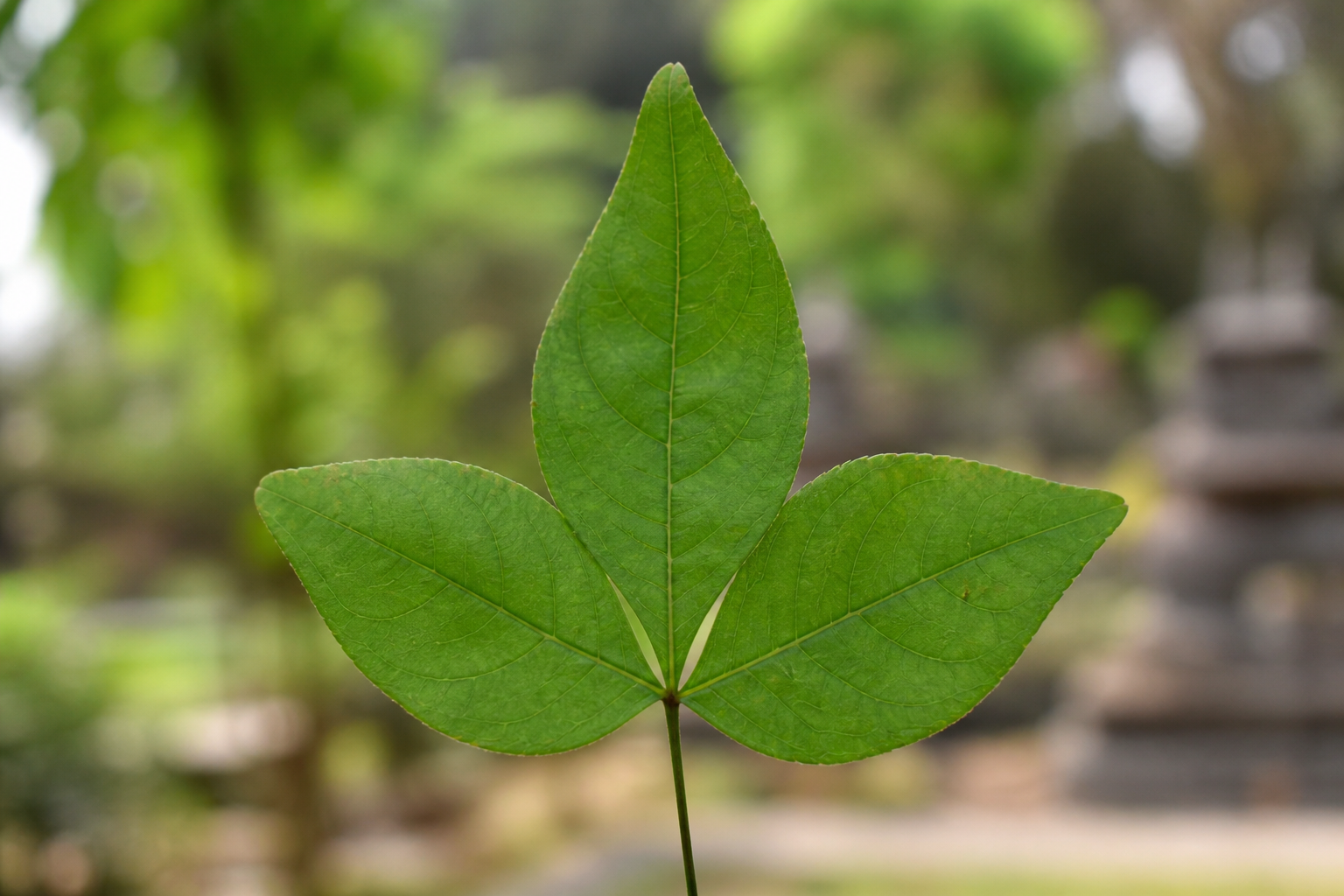
Bilva, also called Bel and botanically known as Aegle marmelos, is especially associated with Shiva worship. Its familiar leaf consists of three leaflets joined as one cluster. The Shiva Purana belongs to the devotional background in which Bilva Patra is esteemed as an auspicious and purifying offering to the Shivling.
The three leaflets carry several related interpretations. They are commonly associated with Shiva’s three eyes, the three gunas of sattva, rajas, and tamas, and a threefold refinement of thought, speech, and action. These meanings should be treated as complementary contemplative readings, not as rival definitions requiring you to select only one.
The form of the leaf gives you something concrete to bring into the puja. Before offering it, look at the three leaflets and examine three parts of your own conduct: What thought needs to become clearer? What word should be spoken more carefully? What action needs correction? The offering then becomes more than the placement of a sacred object. It becomes a small act of self-discipline.
This is also why an elaborate quantity of leaves is less important than an attentive offering. The ritual’s depth comes from the relationship between the symbol, your intention, and your conduct after the puja.
A simple and respectful way to offer Bilva Patra
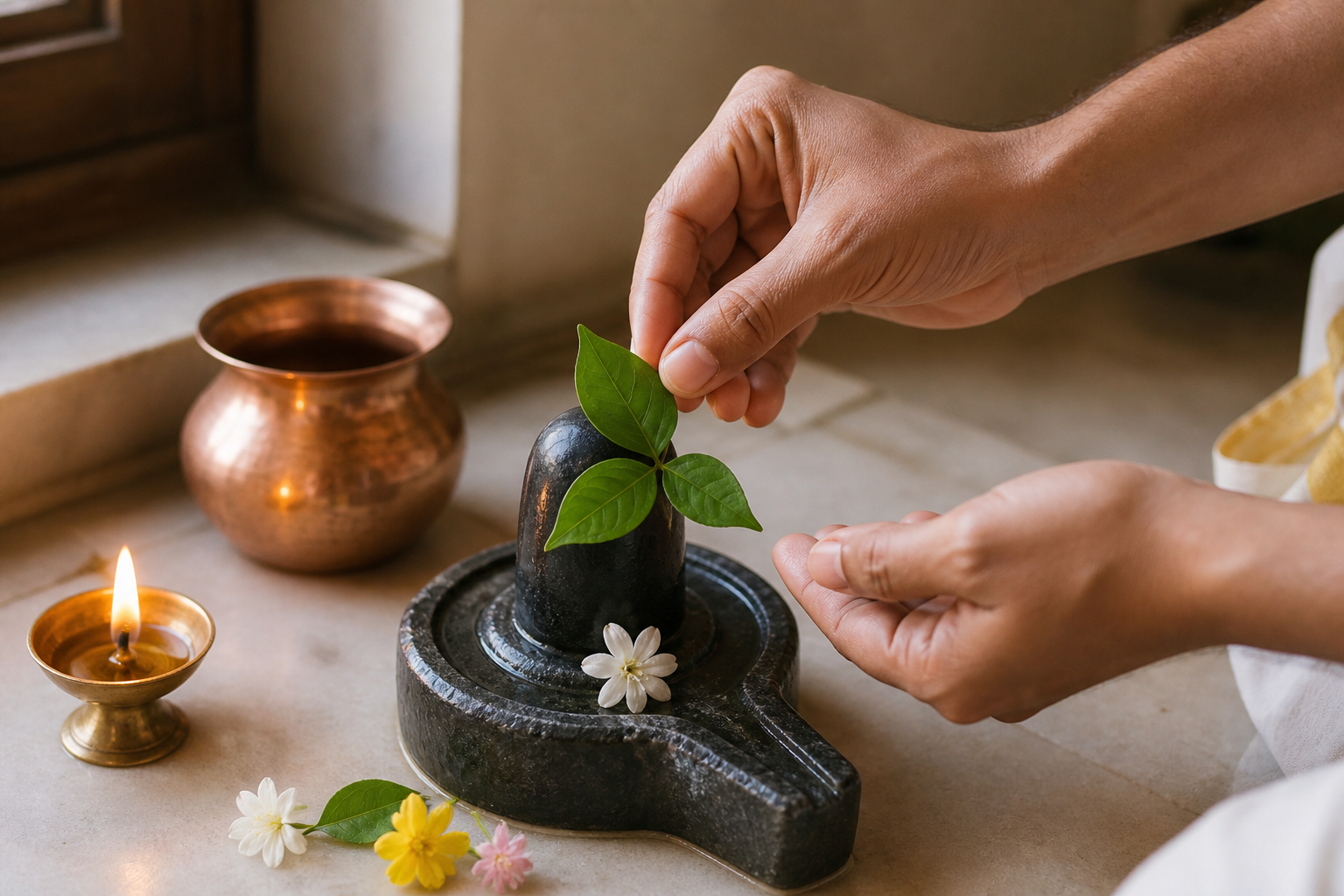
If your family, sampradaya, or temple has a prescribed procedure, follow that living tradition. If you do not have such instructions, use this restrained household practice:
- Select the leaf carefully. Choose a fresh, intact cluster with three leaflets. Freshness and wholeness express care; there is no need to turn minor natural variation into anxiety.
- Rinse it gently. Use clean water to remove dust while keeping the cluster intact.
- Prepare your intention. Pause before the offering. You may dedicate the three leaflets to clearer thought, measured speech, and ethical action.
- Offer it calmly. Place the Bilva Patra on the Shivling without rushing. If mantra is part of your practice, you may repeat “Om Namah Shivaya.” A quiet offering made with attention is also meaningful.
- Complete the observance according to your household or temple custom. Practices concerning previously offered leaves can vary, so follow the established custom where you worship.
Mondays, Pradosha, and Maha Shivaratri are widely observed occasions for offering Bilva Patra. You do not need to postpone sincere worship until a major festival, however. A simple practice that fits your regular puja is more sustainable than a complicated observance you cannot maintain.
You may also encounter customary statements involving Sunday or Dwadashi. Such instructions are sometimes repeated without clarifying whether they concern plucking, offering, or another part of the observance. Treat an incomplete rule as incomplete. Ask your family elder, temple priest, or lineage teacher before changing an established practice on the basis of a brief online claim.
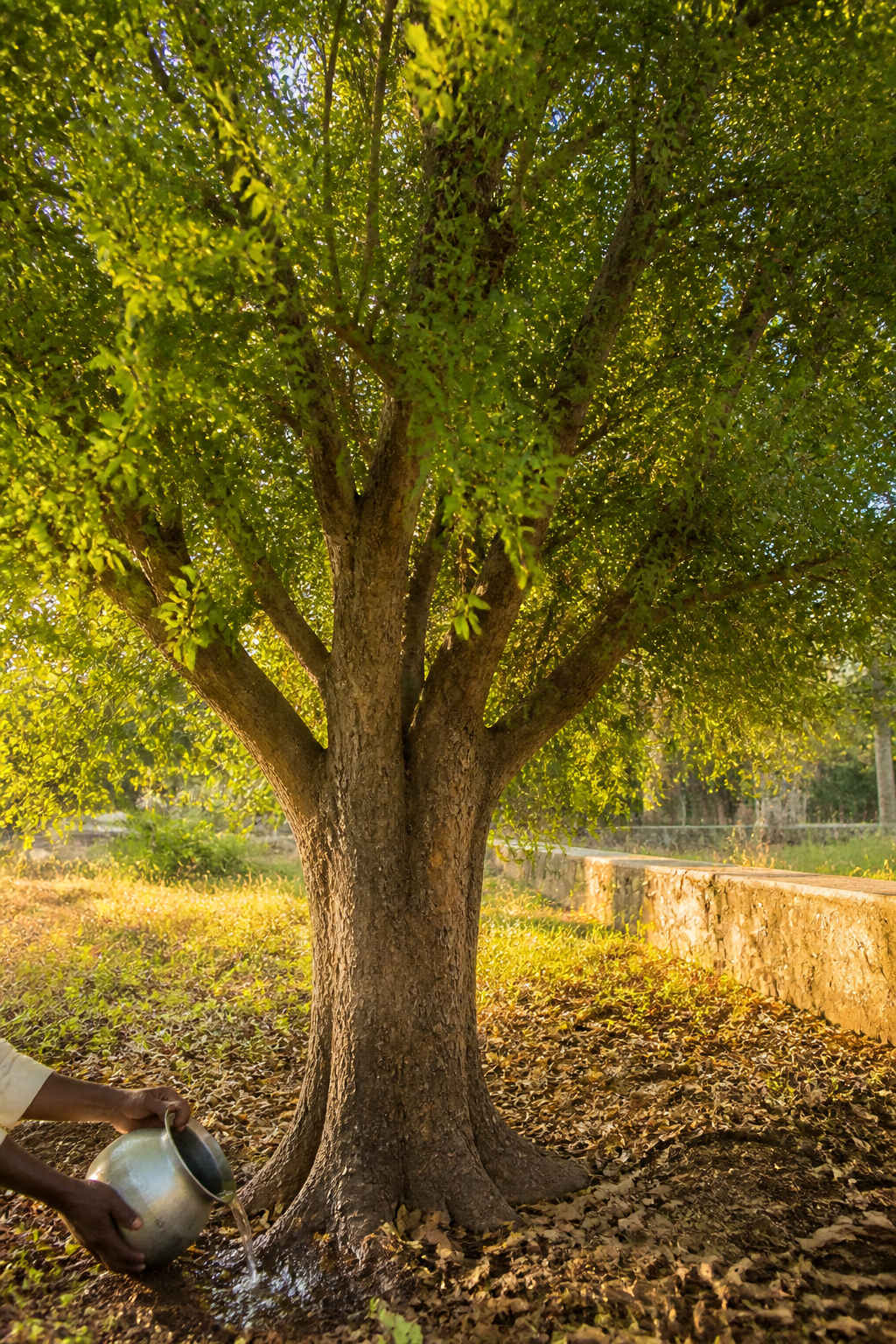
Respect for Bilva begins before the leaf reaches the altar. Take only what you intend to use, avoid breaking branches, and do not damage a tree merely to satisfy a ritual schedule. If no suitable leaf is available without harming the tree, wait or obtain one responsibly. Ecological restraint is part of the offering, not an inconvenience outside it.
Let the offering continue after the puja
A Bilva offering can easily become mechanical: find three leaflets, rinse them, place them, and move on. The symbolism of thought, speech, and action gives you a way to prevent that. Choose one small discipline to carry into the day.
- Thought: Notice one recurring judgement or agitation before you act on it.
- Speech: Delay one unnecessary harsh response and replace it with accurate, measured words.
- Action: Complete one duty you have been avoiding, or repair one harm that is within your power to repair.
Do not choose an abstract vow that disappears as soon as the puja ends. Choose an observable action for that day. When the same discipline is renewed regularly, the three leaflets become an anchor for ethical practice rather than a symbol you admire only at the altar.
Care for the Bilva tree extends the same discipline outward. Hindu reverence for sacred trees stands alongside the Buddhist honoring of the Bodhi tree, the Jain commitment to ahimsa toward living beings, and the Sikh emphasis on responsible relationship with nature. These traditions are not identical, but they converge on a useful principle: devotion does not grant permission to be careless with the life that supports the devotion.
What Bilva’s Ayurvedic reputation does and does not mean
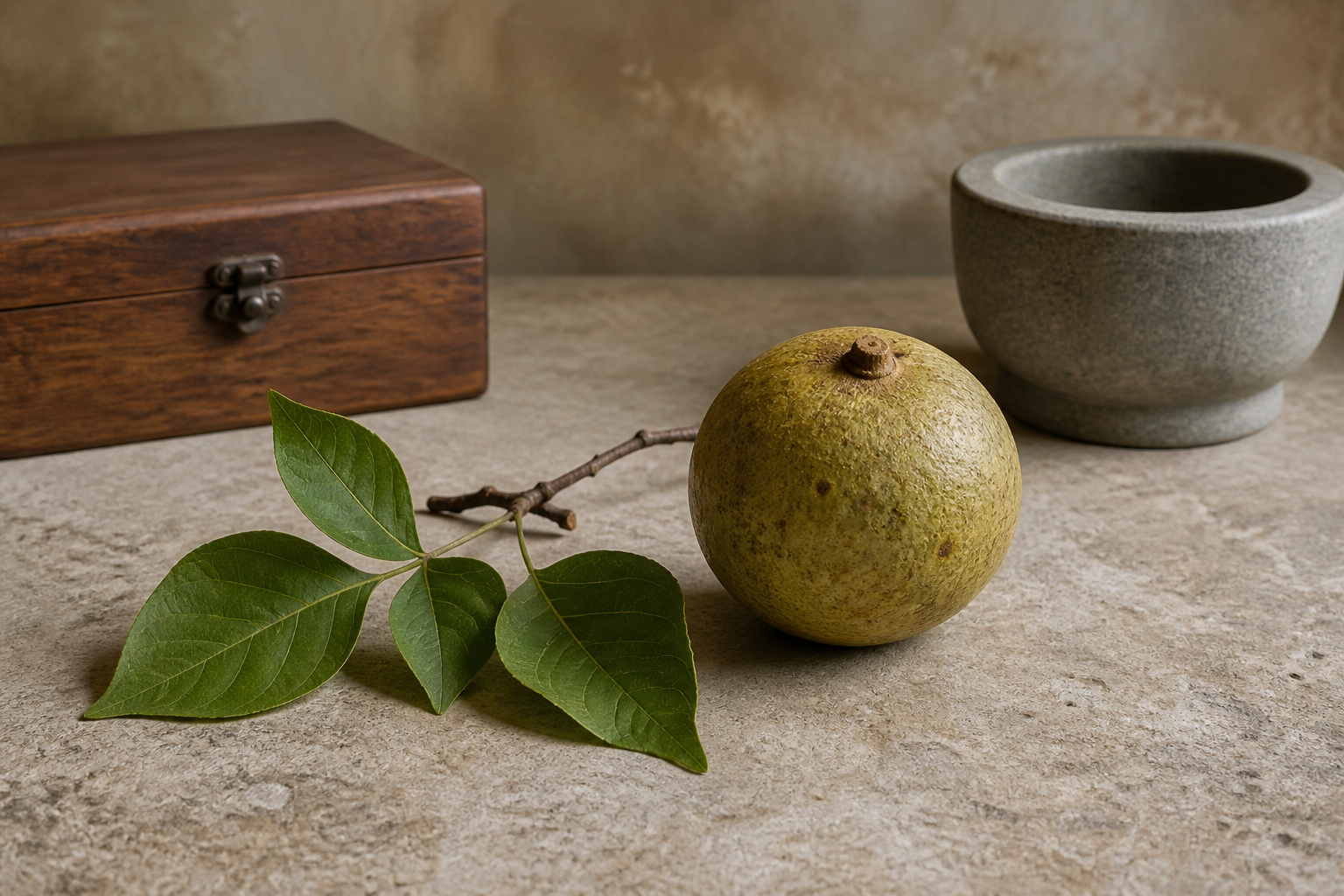
Bilva has a recognized place in Ayurvedic tradition, but the plant part matters. The fruit is especially associated with digestive balance, while the leaf has traditionally been discussed in terms such as cooling and cleansing. Those descriptions belong to a medical system in which the person’s condition, the selected plant part, the preparation, the dose, and the duration all matter.
A sacred reputation is not a dosage instruction. It does not tell you whether to use a fresh leaf, a dried preparation, an extract, or no Bilva treatment at all. It also does not establish that a preparation is safe for your particular symptoms, medicines, or health conditions. Fruit and leaf should not be treated as interchangeable simply because they come from the same tree.
If your purpose is worship, use the leaf as an offering. If your purpose is treating a health problem, consult a properly qualified Ayurvedic practitioner, and involve an appropriate medical clinician when symptoms are persistent, severe, or already under treatment. Do not drink a homemade Bilva-leaf preparation or stop prescribed care merely because the leaf is revered in puja. Ritual significance cannot substitute for individualized medical assessment.
This distinction does not diminish Ayurveda. It respects it. Ayurveda is more than attaching a broad benefit to a sacred plant; it requires judgement about what is appropriate for a particular person and situation.
Key takeaways
- Choose a fresh, intact Bilva cluster with three leaflets, rinse it gently, and offer it to the Shivling with steady attention.
- Use the three leaflets to examine thought, speech, and action, then carry one specific correction into the rest of your day.
- Mondays, Pradosha, and Maha Shivaratri are widely observed occasions, but your family or lineage practice should guide details and calendar rules.
- Pluck responsibly: take only what you need and never damage the Bilva tree for the sake of an offering.
- Keep ritual and medicinal use distinct. Bilva’s Ayurvedic standing does not provide a safe preparation or dose for self-treatment.
For your next Shiva puja, begin with one sound leaf and one realistic discipline. Offer the leaf carefully, name the correction you will practice, and let your treatment of the Bilva tree reflect the reverence you bring to the Shivling.
References
