

You recognize Ayutthaya, Singapore and Garuda as names with Dharmic roots. But what do those echoes actually prove? Were they left by an Indian empire, borrowed as prestigious symbols, or created through a deeper exchange of ritual, literature and political ideas?
You can answer that question without reducing Sanskrit’s history either to cultural conquest or to a collection of accidental similarities. The key is to identify what travelled, who adopted it, what purpose it served and what the surviving evidence can support.
What travelled, and why rulers wanted it
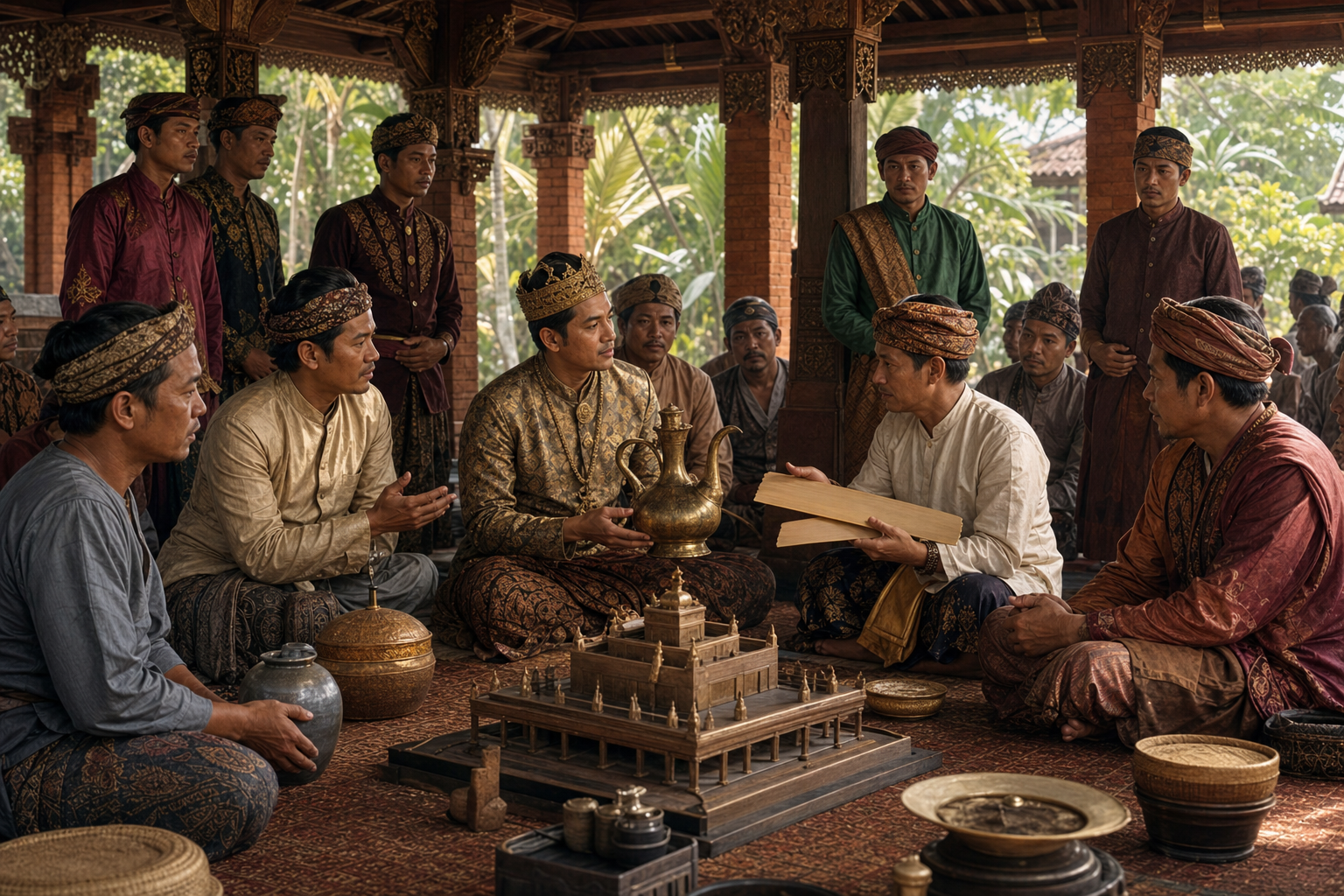
Sanskrit’s transregional expansion was not the spread of one empire, one population or one everyday language. It was the growth of a learned medium that could be used across political boundaries. A ruler, ritual specialist, poet or monk could participate in a recognizable intellectual world without surrendering a local language or identity.
This distinction is essential. A Sanskrit inscription proves that someone with the necessary learning and patronage produced Sanskrit for a particular setting. It does not prove that the surrounding population spoke Sanskrit at home. In the same way, a locally spoken language written in a Brahmi-derived script is not thereby Sanskrit. Language, script, literature, ritual and political symbolism may travel together, but they are not interchangeable.
Historians use the term Sanskrit Cosmopolis for the broad cultural zone in which Sanskrit supplied a shared language of cultivated expression. A cosmopolis is not an imperial department with a capital and frontier. Its coherence comes from repeatable forms: royal titles, literary conventions, ritual knowledge, epic models, cosmological concepts and ways of turning authority into public words.
For a local ruler, Sanskrit offered several advantages at once. It connected a court to a wider field of learning. It supplied an elevated political vocabulary. It allowed kingship to be presented within a cosmic and moral order. When accompanied by ritual experts and monumental writing, it also made royal claims durable: a ceremony ended, but its stone inscription remained.
Prestige, however, should not be mistaken for innocence. Local rulers could adopt Sanskrit willingly and still use it to intensify hierarchy. Purnavarman’s identification with Vishnu and the carving of royal footprints into stone were not decorative acts. They made a political argument about the ruler’s status. Sanskrit did more than reflect power in such settings; it helped power present itself as sacred and universal.
This is the narrower and better-supported meaning of expansion without conquest. No Indian territorial empire is needed to explain the Sanskrit monuments of Borneo or Java. That does not mean that every act of adoption was socially equal, or that languages elsewhere always spread peacefully. It means that the mechanism visible in these cases was local patronage, ritual and prestige rather than foreign occupation.
Read the evidence in layers, not as one sweeping map
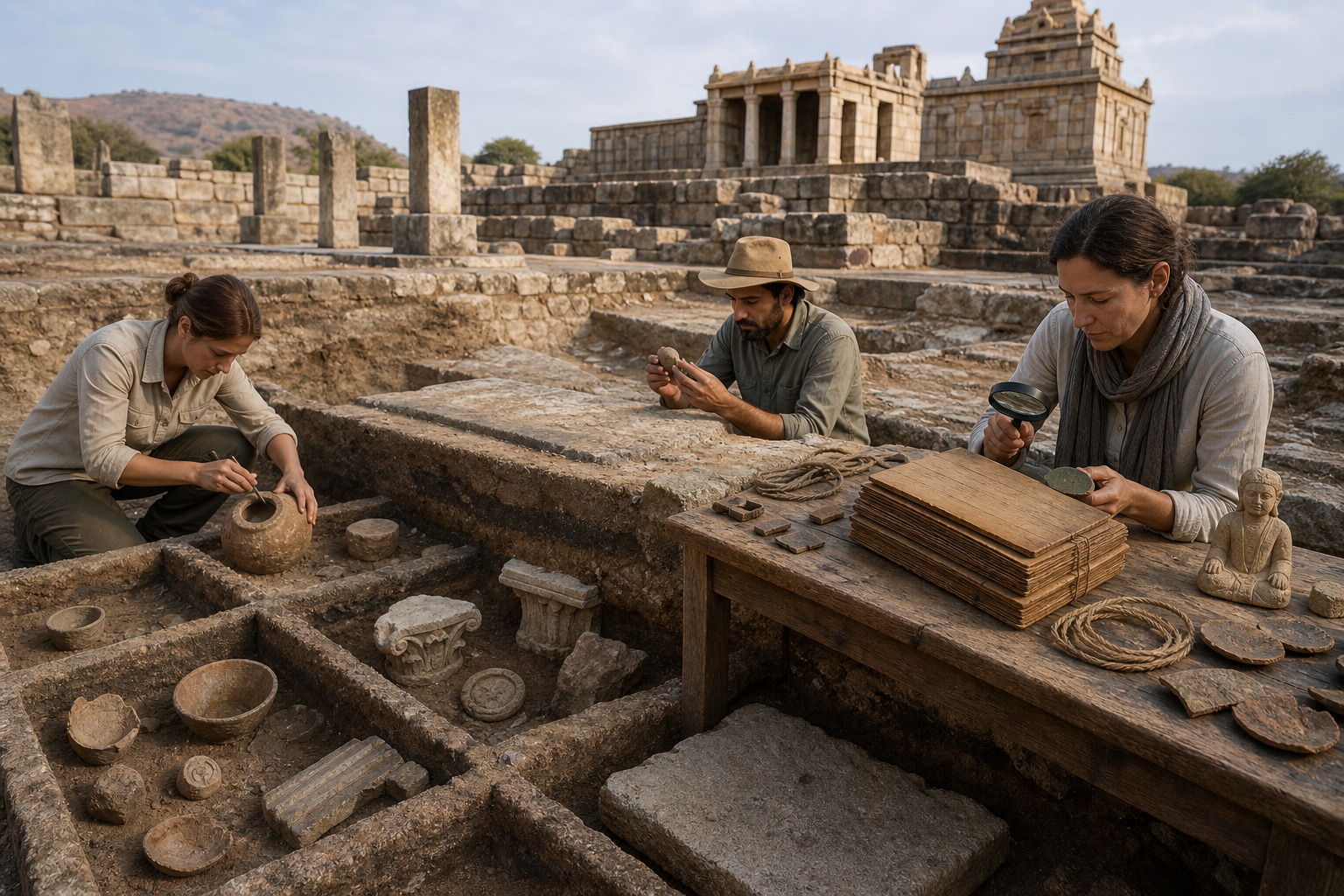
Western Asia offers a clue, not a complete migration route
In the fourteenth century BCE, the Mitanni ruled a Hurrian-speaking population in northern Syria. Their elite milieu preserved Indo-Aryan divine names and technical vocabulary: Mitra, Varuna, Indra and the Nasatyas appeared as witnesses in a treaty with the Hittites, while horse-training terminology included number forms related to the Indo-Aryan linguistic tradition.
Precision matters here. It is safer to call this Indo-Aryan linguistic and religious evidence than to treat it as an example of fully developed classical Sanskrit. It establishes the presence of a related elite vocabulary in West Asia. It does not, by itself, establish the direction of population movement, the location from which every speaker came or an imperial route running from Bharat to Syria.
When you encounter Mitanni evidence in a debate about Sanskrit or Indo-Aryan origins, ask what the evidence directly contains. A divine name, numeral or equestrian term is important. It is still not a complete historical itinerary. Refusing to make it carry more than it can bear strengthens the case rather than diminishing it.
Borneo shows Sanskrit joined to ritual and royal memory
Far to the east, Mulavarman commemorated Vedic-style rites in upriver Borneo through seven sacrificial posts and a Sanskrit inscription. He compared himself with Yudhishthira and recorded a claimed gift of 90,000 cattle to Brahmins. The number belongs to the king’s commemorative claim; the historical point does not depend on treating royal praise as a modern audited record.
The monument reveals a connected package: a local patron, Brahmin ritual specialists, Vedic forms, epic memory, writing and a language suited to royal commemoration. Sanskrit was not floating through the region as a list of borrowed words. It was embedded in an event that joined sacrifice, generosity and kingship.
Read such an inscription as an intentional political act. Ask why this ruler wanted to be compared with Yudhishthira, why a donation was preserved in stone and which audience could understand the reference. Those questions reveal more than simply counting Sanskrit words.
Java shows language being used to construct sovereignty
Purnavarman placed a Sanskrit proclamation on a large riverside boulder near modern Jakarta. He presented himself as a great king whose footprints resembled those of Vishnu and had a pair of footprints carved beside the inscription.
The text and image worked together. The words supplied the claim; the stone gave it public permanence; the footprints made divine comparison visible. This is why an inscription should never be treated as a transparent report of social reality. It tells you what a ruler wanted to establish about himself. That desire is itself valuable evidence.
Scripts reveal infrastructure, not necessarily spoken Sanskrit
Brahmi supplied the structural basis for writing traditions that developed across much of pre-Islamic Southeast Asia, including Khmer, Javanese, Thai, Lao, Kawi and Cham scripts. This may be Sanskrit’s most easily overlooked legacy. A language of prestige helped carry a technology of literacy, and communities then adapted that technology to their own needs.
Do not collapse the two layers. A Sanskrit composition can be written in different scripts. A Brahmi-derived script can also carry a local language. If you are examining an inscription, identify the language and the script separately before drawing a cultural conclusion.
Place names preserve memory, but they cannot date themselves
Some Sanskrit inheritances remain visible without entering a museum. Singapore preserves Simhapura, the lion city. Ayutthaya recalls Ayodhya. Indonesia’s national airline bears the name Garuda. In what is now Laos, the fifth-century ruler Devanika adopted the title Maharajadhiraja and called a ceremonial reservoir beside his palace Kurukshetra.
These names demonstrate durable cultural memory, not Indian political possession. A Sanskrit-derived toponym does not tell you, on its own, when the name was adopted, who selected it or whether Sanskrit was spoken locally. Use names as leads. Then look for dated inscriptions, court titles, textual transmission or ritual evidence that can explain the connection.
Monks, translators and local patrons made the traffic two-way

The expansion cannot be understood as Bharat broadcasting while the rest of Asia merely received. Learners travelled toward Indian centres of scholarship. Manuscripts moved outward. Translators rebuilt texts in new linguistic worlds. Southeast Asian courts and religious centres became active nodes rather than passive endpoints.
Kumarajiva, the son of an Indian Brahmin and a Central Asian princess, became an exceptionally valued translator of Sanskrit works into Chinese. Xuanzang later travelled roughly six thousand miles from China to Nalanda, remained there for years and returned to Xi’an with manuscripts. The Great Wild Goose Pagoda was built to house the Sanskrit library he brought back. By the late seventh century, Yijing’s stop in Sumatra also placed the island within the routes used by Buddhist scholar-monks.
These journeys correct two common assumptions. First, Sanskrit did not belong only to a Hindu royal setting. The language also carried Buddhist learning across Central, East and Southeast Asia. Second, translation was not a lesser afterlife of an Indian original. Translators needed command of concepts, grammar and the receiving language; their work enabled Sanskrit thought to become meaningful in another civilization.
The Khmer world offers an equally important form of local ownership. In 967 CE, Yajnavaraha, a senior adviser at Angkor, tutor to the crown prince and accomplished Sanskrit scholar, began building the pink-sandstone sanctuary now known as Banteay Srei. It was his private foundation rather than a royal commission, and its intricate programme expressed a developed Sanskrit cosmology.
By this stage, Sanskrit culture was not merely an imported badge attached to a foreign-facing court. A Khmer intellectual could use it to shape a personal religious foundation. That is a deeper form of expansion: ideas have been learned, selected and recreated within local life.
When you trace a Sanskrit work beyond Bharat, therefore, follow both directions of movement. Ask who travelled to learn, who copied the manuscript, who translated it, who funded the temple or monastery and how the receiving culture changed the material. A straight arrow on a map hides the people who made transmission possible.
How to test a claim about Sanskrit influence
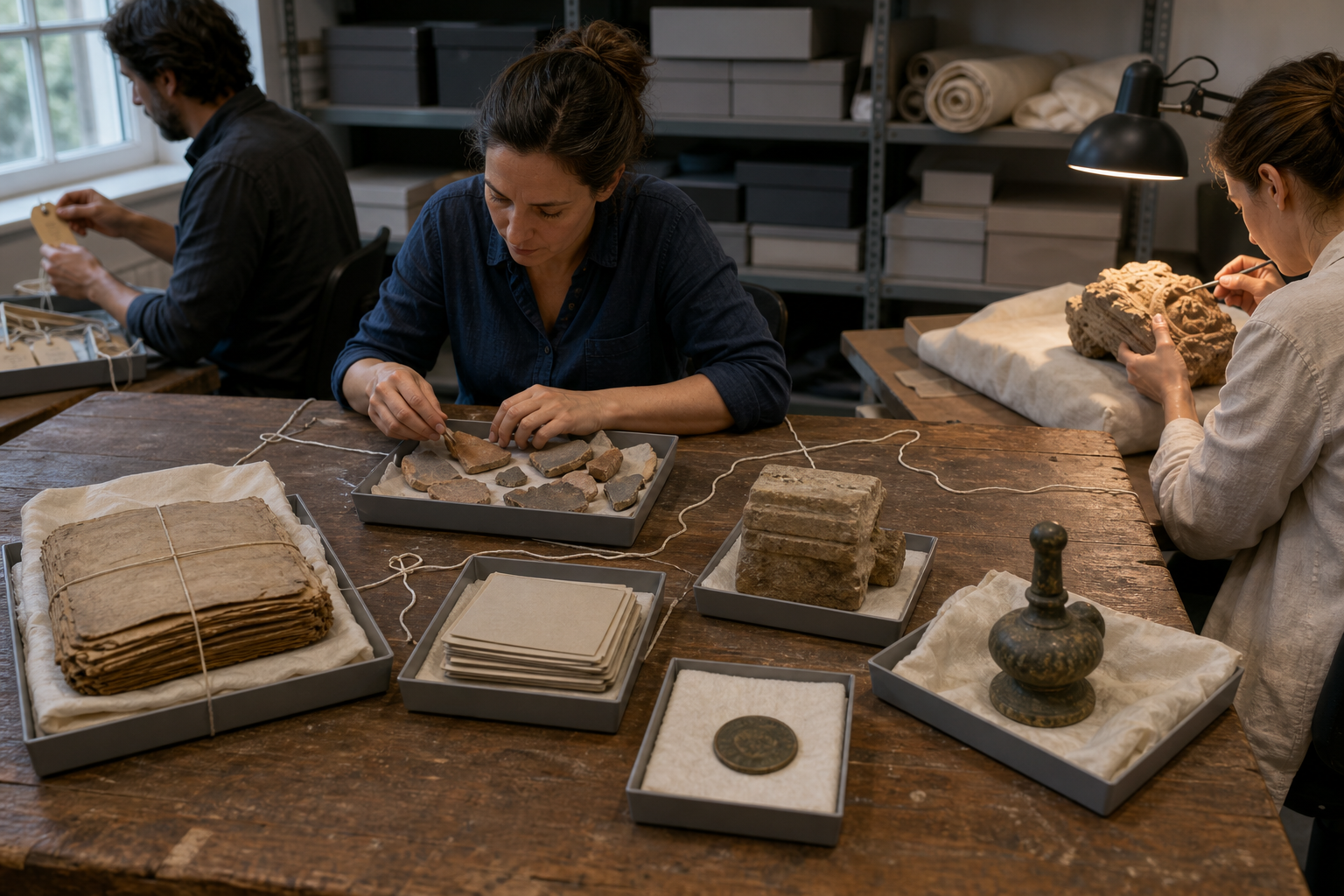
Claims about ancient influence often fail because several kinds of evidence are treated as though they prove the same thing. Use the following distinctions before accepting either a triumphalist claim or a dismissive one.
| Evidence you find | What it can establish | What it cannot establish alone |
|---|---|---|
| A dated Sanskrit inscription | A patron and trained writer used Sanskrit for a specific public, religious or political purpose | That the general population spoke Sanskrit or that an Indian state ruled the region |
| A Brahmi-derived script | A writing technology was adopted and locally developed | That every text in the script is Sanskrit |
| A Sanskrit-derived royal title or place name | Sanskrit prestige or cultural memory influenced naming | The date, route or social depth of the influence |
| A shared deity, epic figure or cosmological motif | A recognizable idea entered a local religious or political vocabulary | That local belief and practice were identical to those in Bharat |
| A traveller, manuscript or translation | A scholarly network connected particular places | Political subordination to the place from which the text came |
Start with the object, date and location
An inscription attached to a monument is stronger evidence than a modern resemblance between two words. Record what the object is, where it was found and how securely it is dated. If a claim provides only an etymology but no dated context, treat it as a clue awaiting corroboration.
Identify the person who made the choice
Mulavarman, Purnavarman and Yajnavaraha did not occupy the same role. Two used Sanskrit to articulate kingship; one used a Sanskrit cosmology in a private religious foundation. Naming the patron prevents the vague claim that an entire country simply became Sanskritized at one moment.
Separate presence from prevalence
One inscription securely establishes presence. It does not measure how common the language was. To argue prevalence, you would need a wider body of material across places, purposes and periods. This distinction is especially important when elite monuments are the evidence, because stone preserves courtly choices more readily than ordinary speech.
Look for the mechanism of transmission
Do not write conquest into a gap merely because a cultural form travelled a long distance. Look for the actual carrier: ritual specialists, a royal court, monks, translators, merchants, manuscripts or maritime connections. Different carriers explain different results. A monk can move a text without moving an army; a court can import a title without replacing its subjects’ language.
Treat adaptation as evidence, not corruption
A local version does not become historically worthless because it differs from an Indian form. Adaptation identifies the agency of the receiving culture. Purnavarman’s stone footprints, Devanika’s Kurukshetra reservoir and Yajnavaraha’s Khmer sanctuary show Sanskrit materials being placed into distinct political and physical landscapes.
This method produces a more defensible account of Bharat’s influence. It recognizes the scale of Sanskrit’s reach while leaving room for Southeast Asian, Central Asian and Chinese actors to be authors of their own history.
Key takeaways
- Sanskrit’s cultural range was much larger than the territorial frontier of any Indian empire.
- The Mitanni material preserves Indo-Aryan names and technical vocabulary in West Asia, but it does not by itself settle a complete migration route.
- Mulavarman and Purnavarman show local rulers using Sanskrit ritual, epic memory and divine symbolism to formulate authority.
- A Brahmi-derived script is evidence of adapted writing infrastructure; it does not automatically make the language Sanskrit.
- Place names are useful traces of memory, but dated inscriptions and identifiable patrons provide stronger historical anchors.
- Monks, translators and students made the network multidirectional, while local patrons transformed Sanskrit materials within their own societies.
The next time you meet a Sanskrit name or Dharmic image beyond Bharat, begin with the surviving object and work outward: identify its language, script, date, patron, audience and route of transmission. That discipline does not make Sanskrit’s achievement smaller. It lets you see how a learned language became a shared Asian inheritance without turning every connection into an empire.
References
