
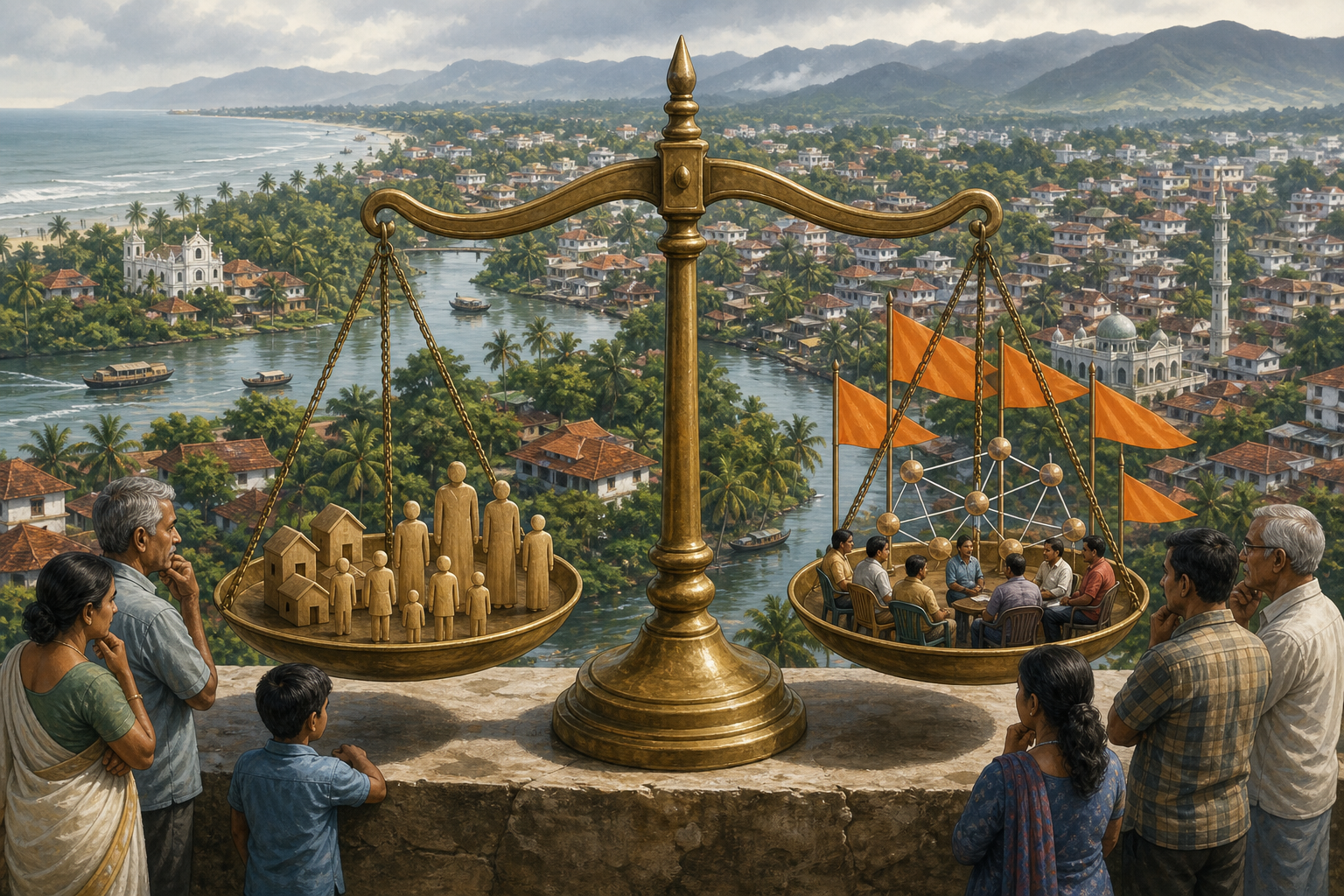
If you came here asking whether Kerala’s changing demography explains the expansion of Hindutva, the honest answer is: not by itself. Population patterns, religious identity and political organisation can affect one another, but they are not interchangeable.
Your practical task is to separate measurable change from political interpretation. That lets you defend Hindu interests with clearer eyes: neither dismissing a legitimate demographic concern nor converting an unverified claim into suspicion of an entire community.
Read a demographic claim before reacting to it
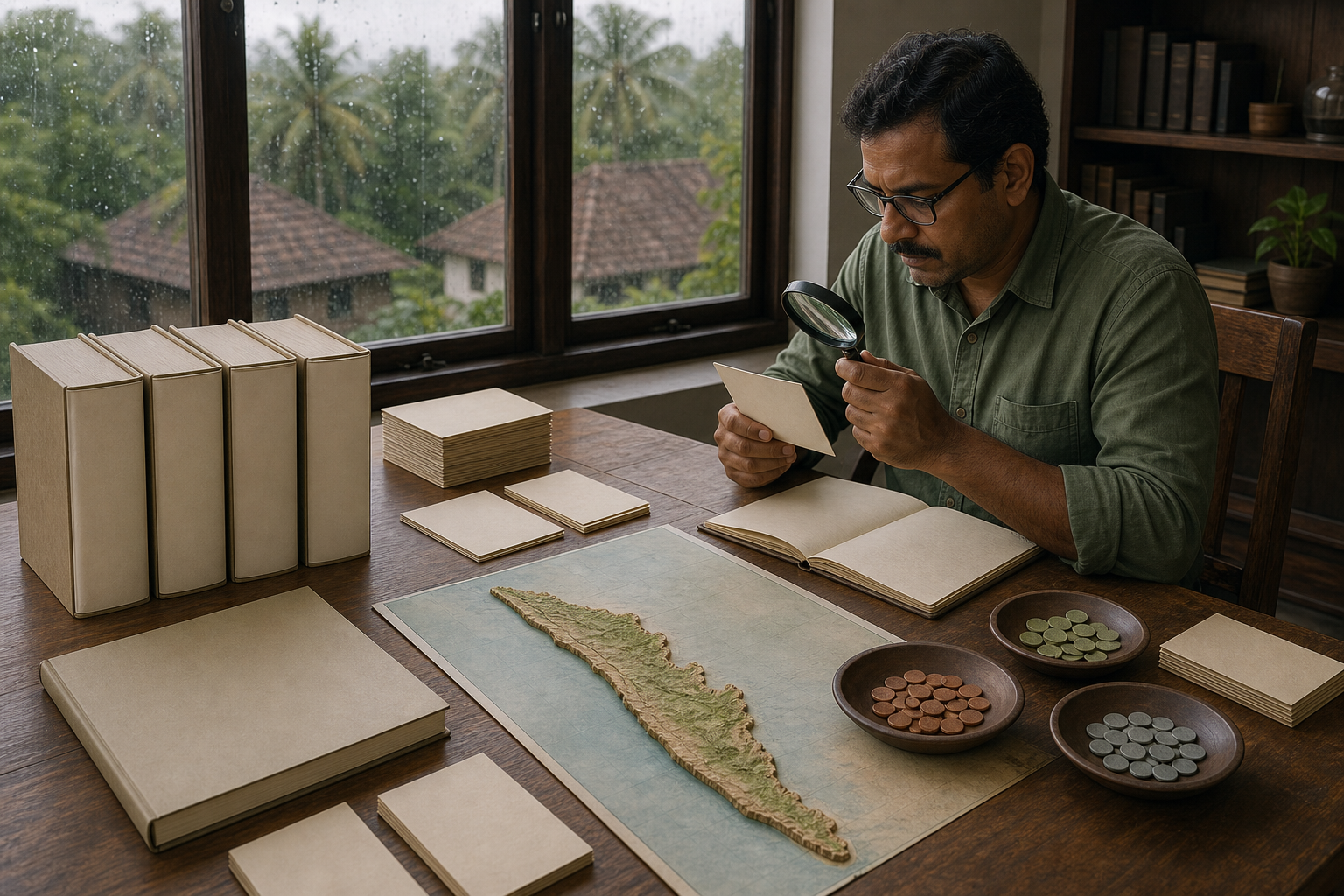
“Demographic change” can refer to several different things. It may mean a change in the number of people, a change in their share of a larger population, migration into or out of a locality, a difference in age structure, religious conversion, or the concentration of communities in particular places. Those processes do not have the same causes or political consequences.
A Hindu population can grow in absolute numbers while declining as a percentage of the total. A statewide share can remain comparatively steady while particular localities change sharply. A district-level pattern can arise from migration without establishing anything about conversion or fertility. Unless a claim identifies the measure, period, geography and mechanism, it is a concern to investigate rather than a conclusion to circulate.
When someone tells you that Kerala’s religious balance is changing, ask five questions before accepting the political interpretation:
- Is the claim about head count, population share, age structure or geographic concentration?
- What are the starting and ending periods?
- Does it concern Kerala as a whole, a district, a constituency, a panchayat or a neighbourhood?
- Is the proposed mechanism birth, death, migration, conversion or a change in how identity is recorded?
- Does the evidence measure that mechanism directly, or is the explanation being inferred from the final pattern?
This discipline matters even when you agree with the underlying concern. A strong case survives precise questions. A weak one usually retreats into undefined phrases such as “rapid decline” or “complete transformation.” Repeating the weak version makes serious Hindu advocacy easier to dismiss.
Measure Hindutva expansion separately from population change
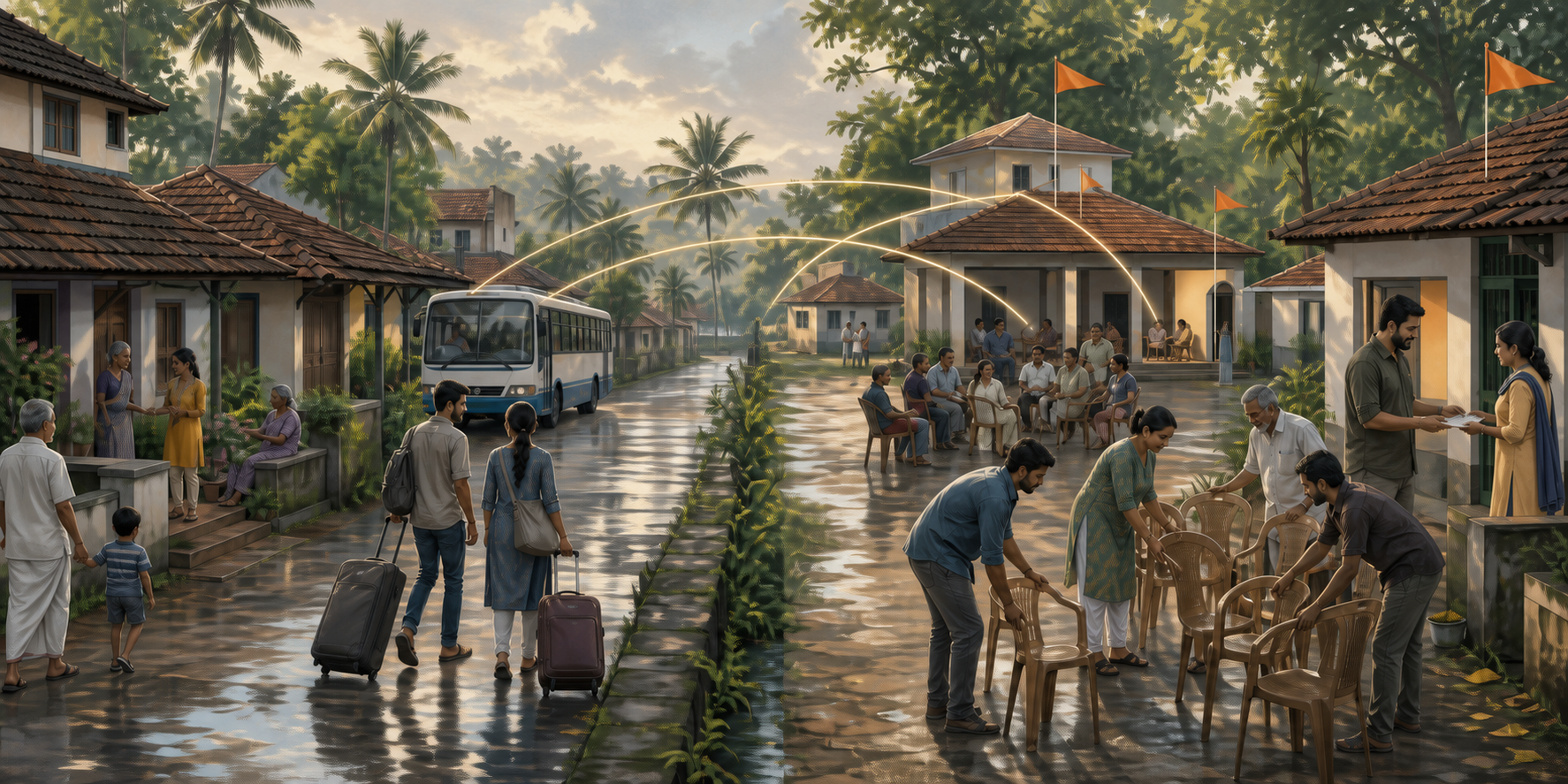
Hindutva can expand without a corresponding demographic shift. Political consciousness grows through organisation, cultural confidence, sustained local work, institutional trust and the ability to turn shared concerns into public participation. Demography may influence that process, but it does not mechanically produce it.
You therefore need to define what “expansion” means. Electoral support is one measure. Organisational presence is another. Participation in temple, cultural or service activity is a third. Public willingness to speak in a Hindu civilisational vocabulary is yet another. One can increase while another remains limited.
For example, a locality may have an active cultural network but little electoral influence. Another may vote for a Hindutva-aligned candidate without developing durable Hindu institutions. A third may show visible religious participation that never becomes party-political. Calling all three the same phenomenon prevents you from seeing what has actually been built and what remains fragile.
Use four separate indicators when assessing a locality:
- Continuity: Does organised activity continue between elections and moments of controversy?
- Depth: Are families, women, young people, elders and different Hindu traditions participating, or does activity depend on a narrow circle?
- Institutional capacity: Can local organisations manage accounts, maintain spaces, teach tradition, serve the community and resolve internal disputes?
- Public effect: Does participation influence civic priorities, cultural confidence or electoral behaviour in a way that can be observed?
This distinction changes strategy. If the weakness is cultural transmission, an election campaign will not repair it. If the weakness is institutional governance, louder rhetoric will not create trust. If support appears only during a crisis, the need is year-round organisation rather than another temporary mobilisation.
What the phrase “Sangh villages” can and cannot establish
From Kanyakumari to Kerala’s so-called “Sangh villages,” one pro-Hindutva interpretation sees a visible transformation in southern India’s political geography. The phrase is meaningful as political shorthand, but it is not by itself a demographic measurement.
A “Sangh village” might refer to strong organisational activity, a durable support base, visible cultural work, electoral performance or some combination of these. Unless the speaker states the criterion, you cannot compare one such village with another or determine whether the label represents a lasting change.
The label can still direct your attention to the right level of analysis. Statewide narratives often hide the local character of political organisation. A movement becomes durable through repeated work among real households and institutions, not through a statewide percentage alone. But local visibility must be tested for depth: who participates, what continues after an election, which institutions function and whether leadership survives a change of personalities.
Be equally careful with the word “village.” A politically cohesive village is not proof that an entire district has moved in the same direction. Nor does one highly visible locality establish a continuous corridor across southern India. Treat the label as a prompt for local verification, not as a substitute for it.
Use a six-step audit for claims about your locality
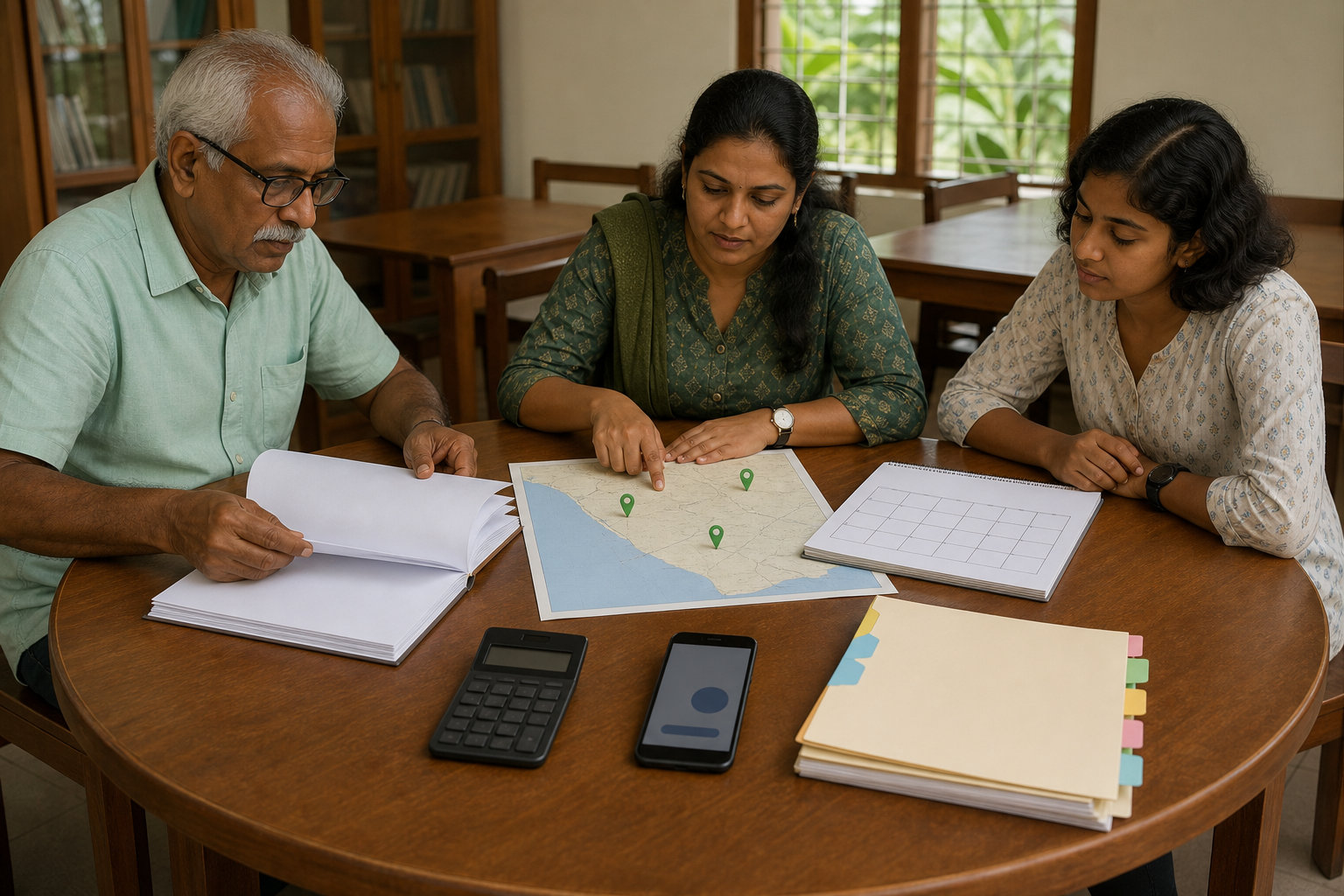
If demographic change or Hindu political organisation is becoming a concern where you live, build a small evidence file before choosing a response. It does not need to be elaborate. It does need to keep facts, inferences and political judgements in separate columns.
- Rewrite the claim precisely. Replace “Hindus are disappearing” with the exact proposition being made: which population measure, which locality and which period? If that cannot be done, the claim is not ready for public use.
- Record the evidence behind each number. Note who produced it, what population it covers, when it was collected and whether the categories remained consistent. A forwarded graphic without this chain should not guide strategy.
- Separate observation from mechanism. A change in religious share is an observation. Migration, fertility or conversion are possible explanations. Do not present an explanation as established until the evidence distinguishes it from the alternatives.
- Compare like with like. Do not use a ward-level anecdote to prove a statewide trend. Do not compare a population count from one boundary with a later count from a differently defined boundary. Do not treat attendance at a religious event as a population census.
- Test political growth independently. Record organisational continuity, participation, institutional strength and public effect. This reveals whether Hindutva has developed a durable base or only a moment of heightened visibility.
- Match the response to the verified problem. Use cultural education for a transmission gap, transparent institution-building for an organisational gap, lawful civic participation for a political gap and careful demographic inquiry for an unresolved population claim.
Keep unverified allegations about named people or families out of public circulation. A rumour about conversion, migration or communal intent can expose innocent people to harassment while destroying the credibility of legitimate concerns. Record what can be established, use lawful channels for case-specific wrongdoing and resist the pressure to make a dramatic claim before the evidence is ready.
Also avoid using proxies as if they were direct measurements. Electoral behaviour, school enrolment, property transactions, attendance at worship and the visibility of religious buildings may raise questions, but each measures something different. None automatically establishes the size, growth or intention of a religious population.
Key takeaways for building durable Hindu strength
- Do not treat population share, geographic concentration and political influence as the same variable.
- Require a defined period, place, measure and mechanism before repeating a demographic claim.
- Assess Hindutva through continuity, depth, institutional capacity and public effect, not visibility alone.
- Use “Sangh village” as a hypothesis about local organisation, not as a demographic category or proof of a statewide trend.
- Strengthen Hindu society through cultural transmission, competent institutions, service and lawful civic participation.
- Reject collective blame. It weakens factual analysis, endangers neighbours and gives opponents an easy reason to disregard genuine concerns.
A pro-Hindu response should begin with something more demanding than alarm: the patient construction of capacity. Temples and cultural bodies need transparent administration. Young people need access to history, philosophy and living practice rather than slogans alone. Local organisations need records, succession plans and useful work that continues when no election or controversy is commanding attention.
You do not have to choose between demographic vigilance and civil peace. Both require accurate categories, proportionate action and refusal to turn neighbours into abstractions. Start with one locality, define what you are trying to measure, and build the Hindu institution that would still matter if the political headline disappeared tomorrow.
References
