

Perhaps a manager has told you to remove a Rudraksha. Perhaps a venue has booked a performer whose remarks about Hindu Dharma concern you. Before you react publicly, you need to know what happened, what harm you can establish, and what remedy you actually want.
Religious-respect disputes can move quickly from a private exchange to an employer, an event organiser, the police, and a digital crowd. A disciplined response protects your dignity, makes your complaint harder to dismiss, and reduces the chance that anger will obscure the original wrong.
Name the dispute before choosing the remedy

Not every dispute involving Hindu identity is the same. A restriction on personal observance at work raises different questions from offensive speech at a public performance. A rude remark is not automatically employment discrimination, and an employment decision cannot be answered as though it were merely a debate about taste.
- Personal observance: You are being asked to remove, conceal, or stop wearing a religious object or symbol.
- Adverse treatment: You believe your faith or observance contributed to discipline, dismissal, exclusion, or another concrete consequence.
- Public disparagement: A performer, speaker, advertiser, or institution has used language that you believe denigrates Hindu Dharma, a deity, or Hindu practitioners.
- Public-order concern: The dispute has moved beyond offence into threats, intimidation, confrontation, or a credible risk of disorder.
The distinction is practical. A Hindu employee at Concentrix in Pune filed a police complaint alleging that he had been terminated for wearing a Rudraksha. That is an employment allegation with a claimed material consequence. In Bengaluru, Hindu Janajagruti Samiti said that its representation to police was followed by the cancellation of a Nasif Akhtar comedy show planned for Church Street on 15 August. The group objected to alleged past remarks about Hindu Dharma and Prabhu Shri Ram and raised concerns about religious sentiments and communal harmony. That was a dispute over a public event and its likely effects.
If you misclassify the problem, your remedy will usually miss the point. Asking for a public apology will not restore a lost job. Demanding dismissal may be disproportionate when the immediate issue could be resolved by correcting a policy. Calling every offensive statement a threat can also weaken your credibility when a genuine threat later requires urgent attention.
Key takeaways
- Preserve the exact words, instruction, image, recording, message, or decision before making a public claim.
- Ask who made the decision, under which policy or standard, and for what stated reason.
- Separate what you know from what you infer. Label allegations, disputed facts, and confirmed outcomes accurately.
- Choose a remedy that answers the established harm: clarification, accommodation, correction, apology, review, reinstatement, or formal investigation.
- Use named and accountable channels. Threats, abuse, private-data exposure, and mass harassment damage both the complainant and the wider Hindu cause.
- Remember that a complaint or cancellation records an action, not a final determination that every underlying allegation is true.
If the dispute is at work, build a clean factual record

When a supervisor challenges a Rudraksha, tilak, kara, thread, pendant, or other religious observance, treat the exchange as the beginning of a record. You do not need to turn the first conversation into a constitutional argument. You need to establish the instruction, the reason, the policy, and the consequence.
- Record the exchange promptly. Note the date, place, participants, words used, and any witnesses. Preserve emails, chat messages, meeting invitations, warnings, and relevant policy documents in their original form.
- Ask for the instruction in writing. A neutral question is enough: what must be removed or changed, which workplace rule requires it, and what operational concern is being addressed?
- Explain the observance clearly. State that the item or practice has religious significance for you. Describe the practical accommodation you seek without turning the request into a test of who understands Hindu theology best.
- Examine consistency. Ask how the same rule applies to comparable jewellery, symbols, dress, or personal items. Do not accuse colleagues or collect their private information. The useful issue is whether the stated standard is neutral and consistently applied.
- Offer a narrow solution if one is acceptable to you. A genuine safety or operational concern may sometimes be addressed through placement, size, protective equipment, or another arrangement. You should not offer a modification that defeats the observance, but a workable option can reveal whether the employer is solving a real problem or simply resisting the religious expression.
- Use the formal grievance route. Send a concise chronology, attach the relevant evidence, identify the policy question, and request a specific outcome. Ask for a written response and retain it.
If dismissal, suspension, lost pay, or another serious adverse action has already occurred, preserve the decision letter and employment records before escalating. Laws, procedures, and available remedies depend on the facts and jurisdiction, so seek advice from a qualified employment professional or lawyer before signing a settlement, making irreversible admissions, or missing a formal deadline. Do not secretly record a conversation unless you have confirmed that doing so is lawful in your circumstances.
Keep an important evidentiary distinction in view: filing a police or workplace complaint shows that an allegation was formally raised. It does not, by itself, prove the allegation. You strengthen your position by stating that distinction yourself and then presenting the material that supports your claim.
For a public event, verify first and escalate proportionately
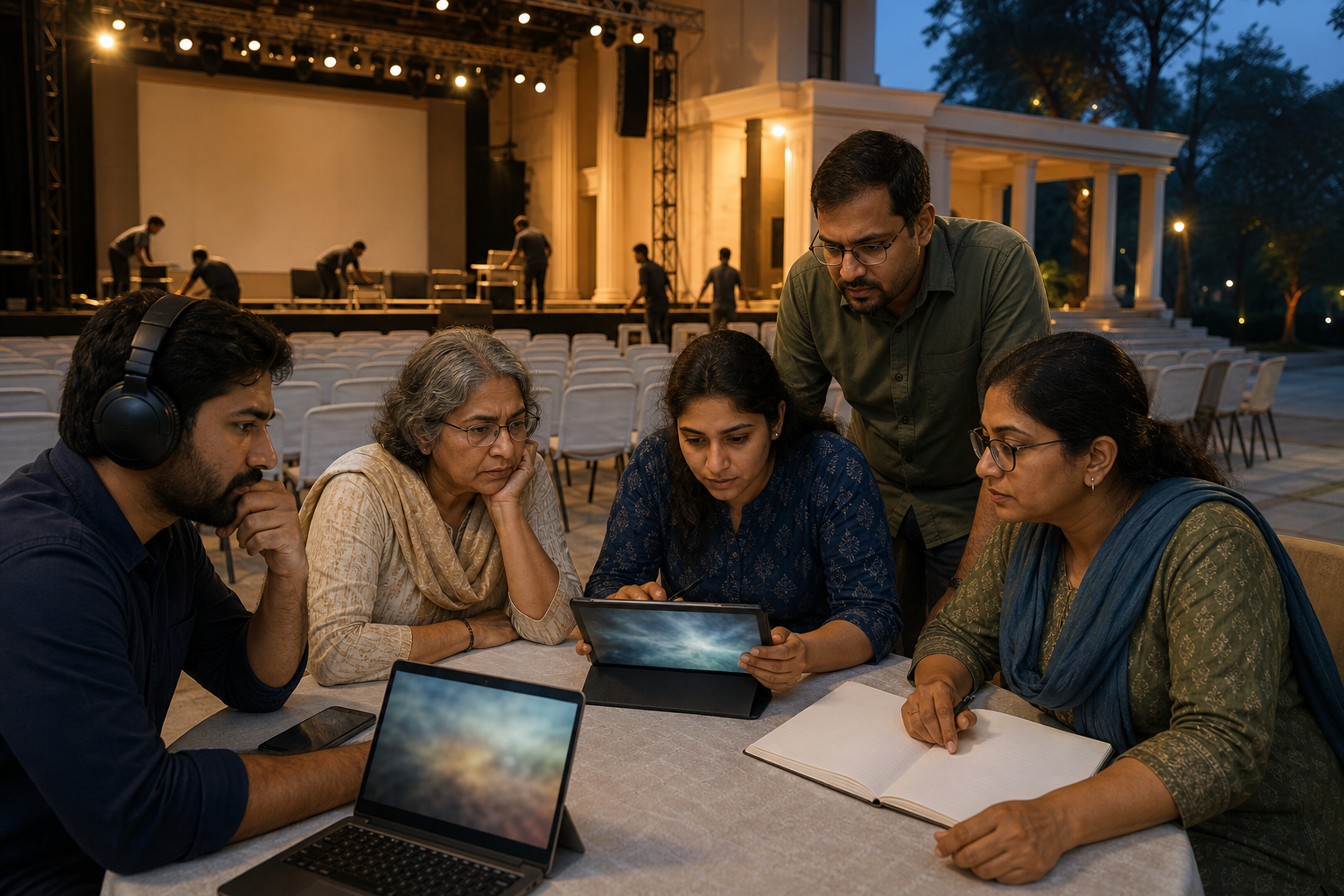
A clipped video or inflammatory caption can produce outrage before anyone has checked the underlying material. If you are considering a representation to a venue, organiser, sponsor, employer, or police authority, preserve the original recording or publication where possible. Record the event name, date, venue, speaker, exact language, surrounding context, and where the material was obtained.
Then identify the nature of the objection. Criticism of a belief, even sharp criticism, is different from degrading worshippers as a group. Satire aimed at a public figure is different from repeated mockery of a deity. Offensive expression is different again from a direct threat or an attempt to provoke confrontation. You can object firmly to each, but the requested remedy should reflect the actual conduct.
- For an unclear or isolated statement: request the complete context, a clarification, or a correction.
- For identifiable denigration: ask the performer and organiser for an apology, withdrawal, right of reply, or review under the venue’s standards.
- For a documented pattern: provide representative examples and ask the organiser, venue, or sponsor to reconsider its association. Do not substitute a pile of repeated screenshots for clear evidence.
- For a concrete safety or legal concern: present the facts to the appropriate authority and seek qualified advice. Avoid declaring that an offence has occurred when that determination has not been made.
A credible representation identifies you, the event, the exact conduct, the supporting material, the harm you anticipate, and the action you request. It should be short enough for a responsible official to understand without searching through slogans or forwarded messages. It should also make clear that you seek a lawful and peaceful response.
The Bengaluru cancellation demonstrates that an institutional complaint can affect an event. It does not create a universal rule that cancellation is the proper remedy for every disputed joke or comment. You still need to ask whether the words have been accurately characterised, whether a less restrictive response would address the harm, and whether the standard would remain fair if another religious community invoked it.
Do not publish private addresses or phone numbers, encourage people to confront a performer at home, or imply violence. Those actions expose individuals to danger, shift attention away from the original conduct, and make a principled Hindu complaint look like collective intimidation.
Use a standard that can survive the next dispute

Hindu religious dignity is not protected by outrage alone. It is protected when institutions know that Hindus will document unequal treatment, ask precise questions, pursue lawful remedies, and refuse to let abuse replace argument. The standard must also be consistent enough to command respect outside the immediate circle of agreement.
- Specificity: Can you identify the exact act or decision, rather than relying on a broad label such as “anti-Hindu”?
- Evidence: Can another person inspect the relevant message, policy, recording, or decision?
- Neutrality: Would you consider the rule fair if it protected a Sikh article of faith, a Jain observance, a Buddhist symbol, or another community’s practice?
- Proportionality: Does the requested response address the harm without demanding an unrelated punishment?
- Accountability: Is the complaint signed, accurate, peaceful, and open to correction if a claimed fact proves wrong?
Respect does not mean immunity from disagreement. A plural city must permit argument about religion. But freedom to argue is not a licence for selective workplace penalties, dehumanisation, or the casual assumption that Hindu symbols and sacred figures deserve less consideration than those of other communities. The durable demand is equal civic seriousness.
If you help run a temple, cultural association, or advocacy group, adopt the same intake discipline before the next controversy arrives. Require the complainant to identify the conduct, evidence, claimed harm, and requested remedy. Mark each claim as alleged, disputed, acknowledged, or resolved. Assign a responsible spokesperson, protect private records, and publish corrections when necessary. That process prevents the loudest message in a group chat from becoming the organisation’s position by default.
The next time Hindu religious respect is challenged, pause before forwarding the accusation. Write down the act, the evidence, the harm, and the remedy. If the case remains clear after that discipline, pursue it firmly through the channel capable of producing the result you seek.
References
- Hindu Jagruti – HJS Success: Nasif Akhtar’s Bengaluru comedy show cancelled following HJS complaint
- Hindu Jagruti – Hindu employee terminated by Concentrix Pune for wearing Rudraksha
