
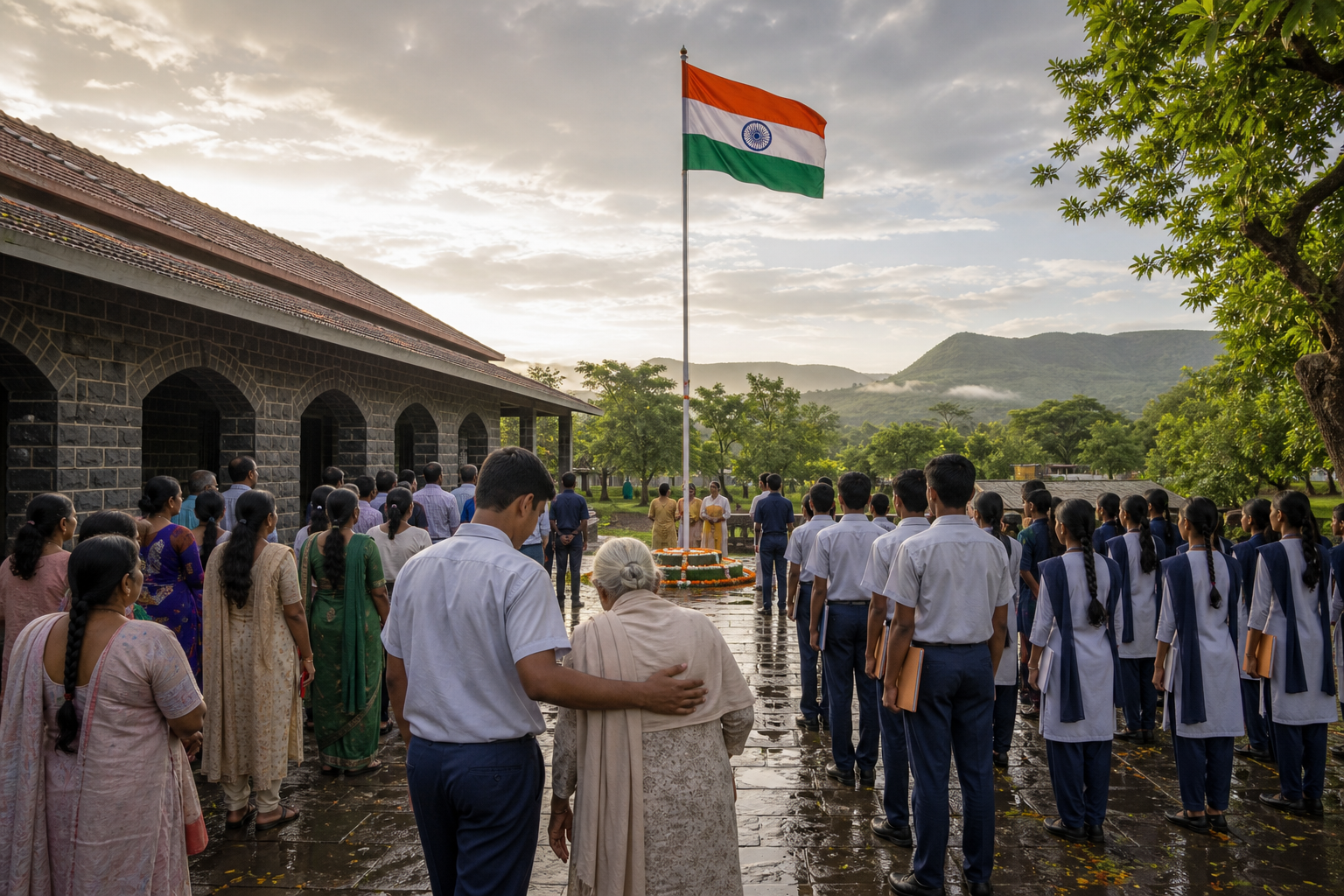
You may already have the flag-hoisting schedule, speeches and cultural programme ready. The harder question is what students and families will carry home after the ceremony ends.
Plan for two visible outcomes: a clearer memory of the people who sacrificed for Bharat’s freedom, and a stronger habit of treating the National Flag with dignity. When both are built into the programme, Independence Day becomes civic education rather than a date observed by routine.
Set two outcomes before you plan the programme
An orderly ceremony can still be educationally thin. Students may stand for the flag, listen to a speech and leave without being asked to understand a sacrifice or accept a responsibility. Avoid that by deciding what the programme must change before choosing its activities.
- Historical memory: A student should be able to identify a revolutionary, describe a decision that person made and explain what the decision cost.
- Civic meaning: The programme should connect political freedom with responsibility, not present independence as a benefit inherited without obligation.
- Respectful conduct: Everyone involved should know who is responsible for the National Flags used at the event and what to do if one is mishandled.
- Continuity: The school or community should name one follow-up activity that keeps the lesson alive after Independence Day.
Use these outcomes as an editing test. If an activity serves neither memory nor conduct, shorten it or remove it. A smaller programme with a clear civic purpose will do more than a crowded schedule in which every item competes for attention.
Turn revolutionary history into a student task
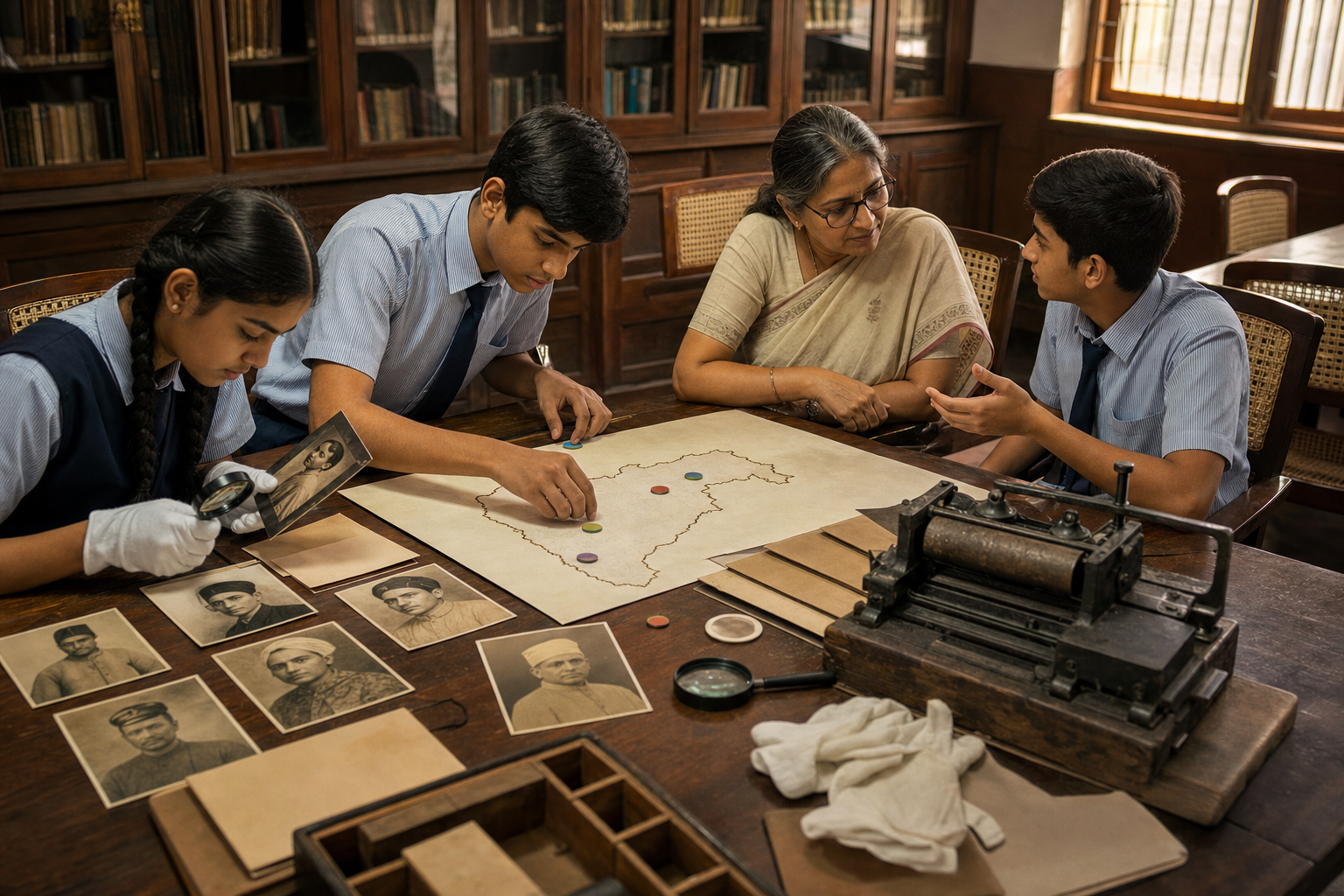
In Chiplun taluka, Kranti Gatha exhibitions across schools introduced more than 300 students to the sacrifices of Bharat’s revolutionaries. The useful model here is not simply the display of historical material. It is the placement of history where students can move through it, examine it and respond to it.
You can adapt that model without turning the exhibition into a wall of names. Build it as a sequence of choices and consequences:
- Write the learning promise first. Complete the sentence, “After viewing this exhibition, a student should understand…” Keep the answer focused on sacrifice, courage and civic duty.
- Give every display the same structure. Identify the person, the challenge, the decision, the sacrifice and the connection to Bharat’s freedom. Consistent structure helps students compare actions rather than merely scan portraits.
- Give students questions before they enter. Ask what the revolutionary chose, what was placed at risk and what present-day duty follows from that sacrifice. A question turns viewing into inquiry.
- Require a short response at the exit. A student can record one name, one sacrifice and one civic duty. This gives the teacher something concrete to review and reveals whether the exhibition communicated its central lesson.
- Carry one theme into the classroom. Use the responses for a discussion, reading activity or student presentation after the celebration. The exhibition then becomes the beginning of learning rather than a temporary decoration.
If your institution uses a Dharmic vocabulary, frame the closing reflection through kartavya and seva: What duty does inherited freedom place upon us, and how can service protect the common good? This gives patriotic feeling a practical moral direction without reducing the programme to slogans.
Do not measure success by attendance alone. Review the exit responses. If students can repeat names but cannot explain a sacrifice or duty, revise the prompts and the display sequence before the next programme.
Treat flag dignity as an operations responsibility
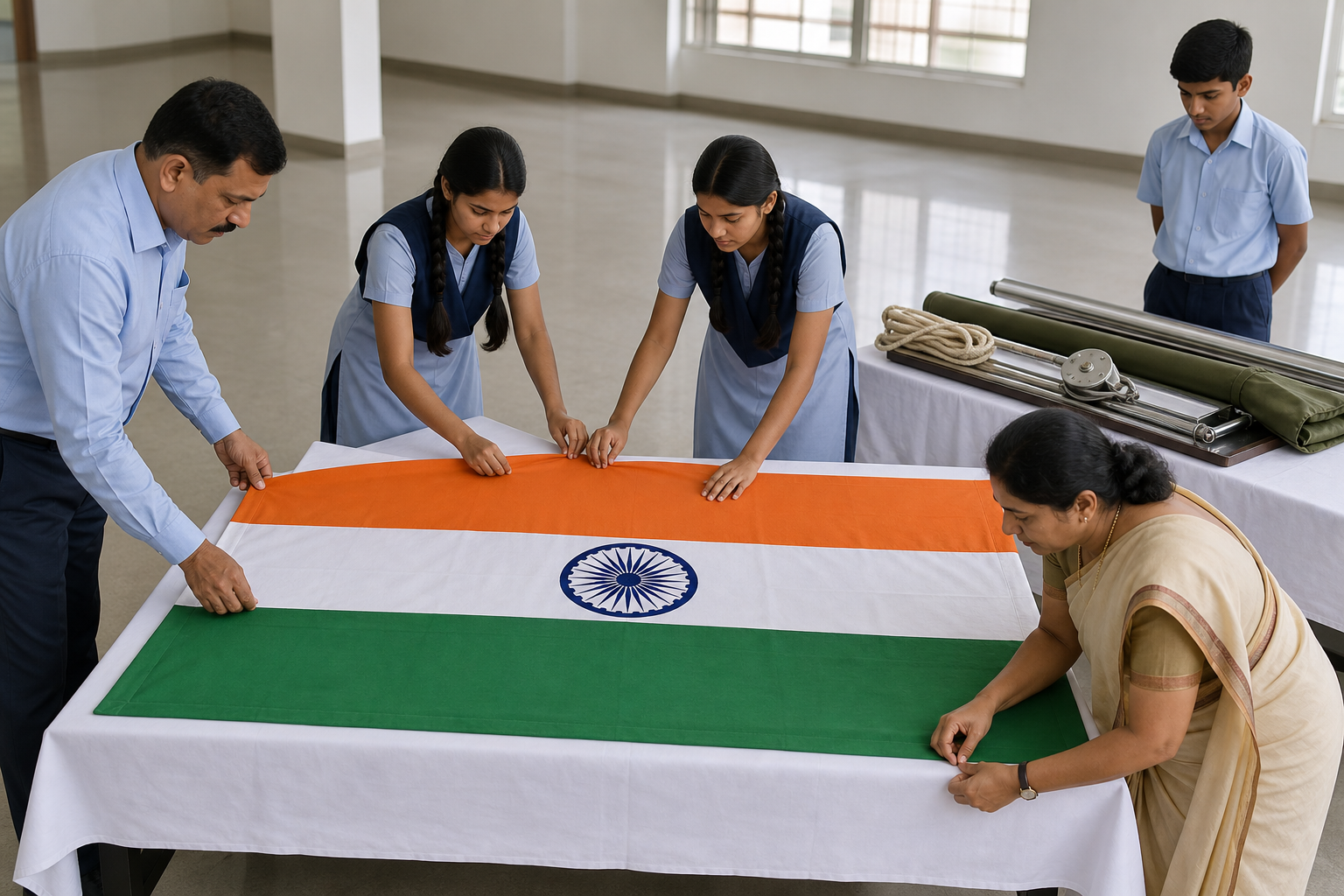
Respect for the National Flag should not depend on a last-minute announcement. The Panhala administration directed administrative and educational bodies to support awareness and strict compliance during Independence Day celebrations. That response points to a practical distinction: reverence may be a shared value, but prevention requires assigned responsibility.
- Before the event: Appoint a named adult custodian for every National Flag and flag-bearing display used by the organisers. Brief staff, students and volunteers on whom to approach if they notice a problem.
- At distribution points: Explain respectful handling when flags are handed out, not after something goes wrong. Place a responsible volunteer wherever organisers issue or receive them.
- During the programme: Keep movement around the principal flag clear. Volunteers should correct careless conduct quietly and direct unresolved concerns to the designated custodian.
- After the programme: Inspect the venue, collect the flags and displays issued by the organisers, and return them to the custodian. Do not assume that responsibility ends with the final announcement.
- When official requirements are unclear: Preserve the item respectfully and ask the appropriate administration or educational authority for direction. Do not improvise a disposal method or turn uncertainty into a public confrontation.
Children should learn respectful conduct, but they should not be made into enforcers. Adults must own the process. If a lapse occurs, secure the flag, correct the immediate situation and use the proper institutional channel. Public shaming distracts from the civic lesson and can make a preventable mistake harder to resolve.
Use administration before a preventable lapse occurs
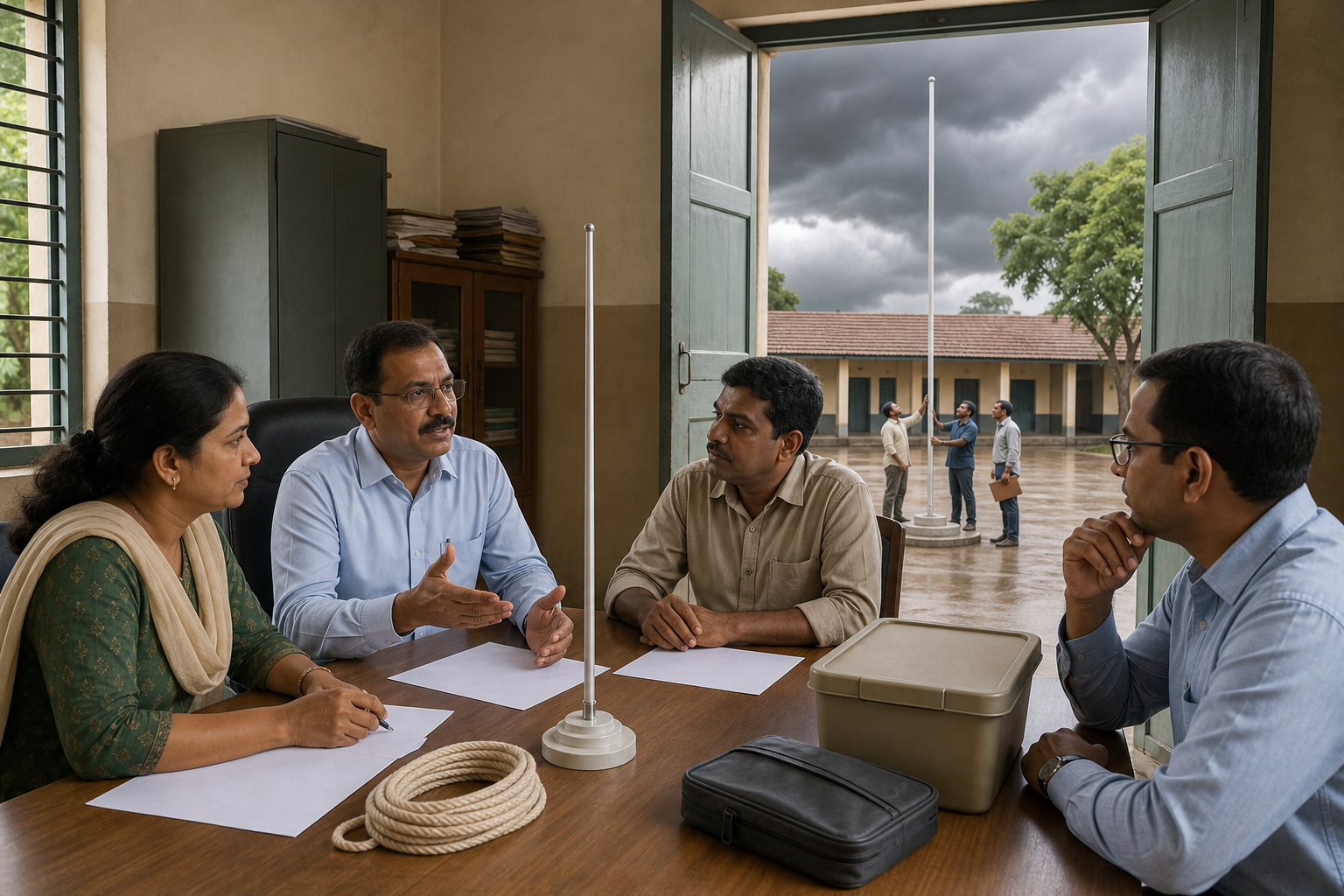
In Panhala, a memorandum was followed by official preventive directions. For a parent group, school committee or local cultural organisation, the lesson is straightforward: raise a specific risk in writing early enough for the responsible office to act.
A useful memorandum does not need inflated language. It needs a clear request. Include:
- the Independence Day programme or area concerned;
- the exact conduct you want the authority to help prevent;
- the awareness measure or administrative instruction you are requesting;
- the schools, offices or organisers that need to receive it;
- the name of the person available for follow-up; and
- a request for acknowledgement so responsibility does not disappear between offices.
Separate the roles clearly. Schools teach expectations. Organisers design respectful procedures. Volunteers model proper conduct. Administrative bodies issue and communicate directions within their authority. When everyone assumes that someone else is responsible, awareness appears in speeches but not in the working plan.
Keep the request nonpartisan and tied to a correctable action. A precise request for awareness, coordination or an assigned contact is easier to implement than a broad demand to promote patriotism. After the event, record what worked and what failed so the next communication can address an observed gap rather than a vague concern.
Key takeaways
- Plan Independence Day around two outcomes: historical understanding and respectful public conduct.
- Turn revolutionary history into an inquiry by asking students about choice, sacrifice and present-day duty.
- Use a short student response to test what the exhibition actually communicated.
- Give one adult explicit responsibility for the National Flags and related displays used by the organisers.
- Raise preventable risks through a specific written request before the event.
- Keep children in a learning role while adults and the appropriate authorities handle correction and compliance.
For your next Independence Day programme, put two statements at the top of the planning page: the historical lesson students must carry away and the flag-respect practice everyone must follow. Assign an owner to each before invitations or decorations are discussed. Civic awareness begins there – in a clear duty that someone is prepared to perform.
References
- Hindu Jagruti Samiti – Kranti Gatha exhibition organised by HJS across Chiplun schools on Independence Day
- Hindu Jagruti Samiti – Panhala administration orders strict measures to prevent disrespect to the National Flag
