
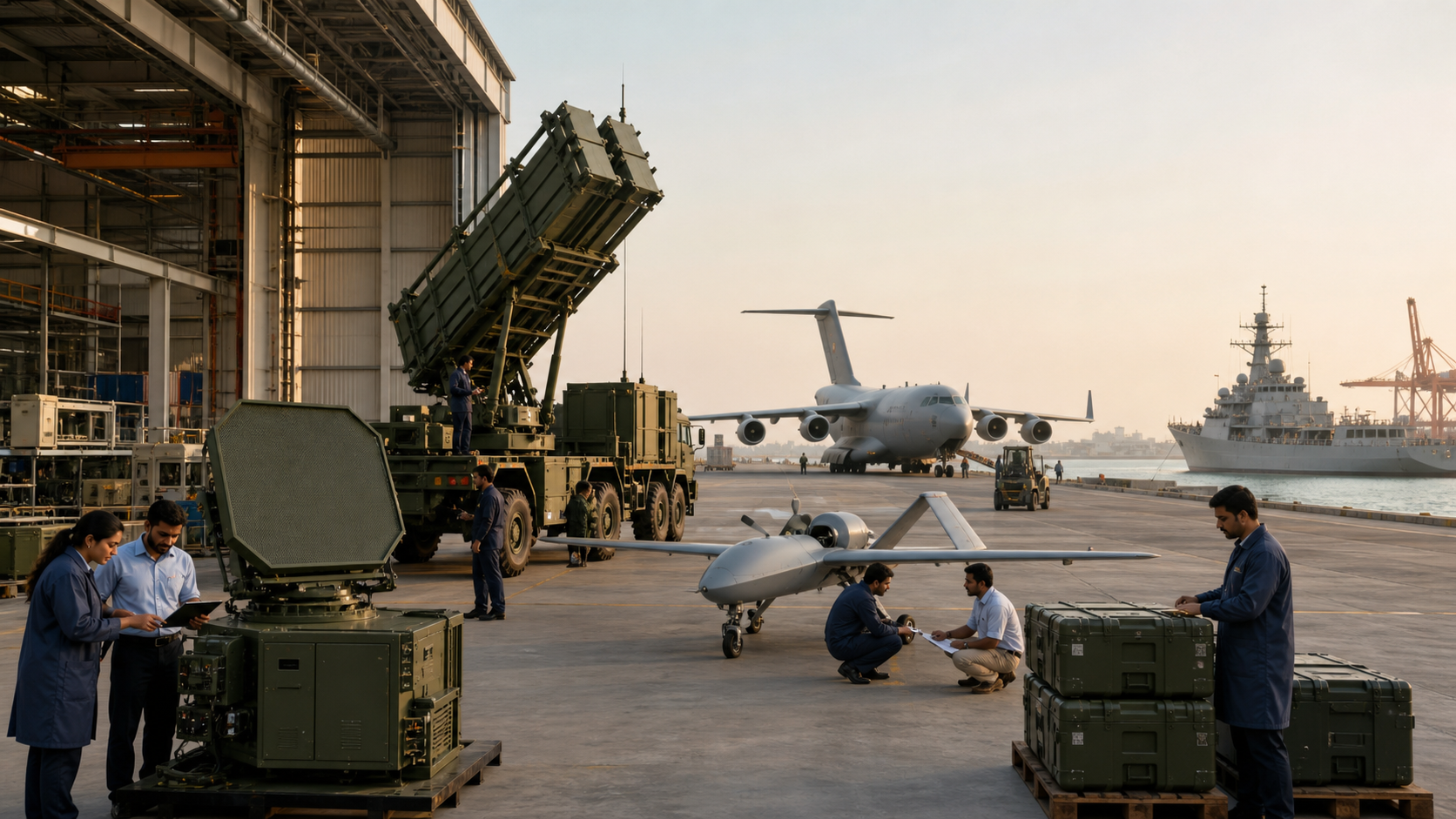
You may want a clean answer: can Bharat really become the world’s largest arms exporter, or is that simply an ambitious political line? The honest answer lies between dismissal and celebration. Bharat has built enough momentum to make the goal credible, but not enough evidence to treat the top position as inevitable.
Defence Minister Rajnath Singh has placed that ambition within a 25-to-30-year horizon. You should read that as a declaration of strategic intent, not a forecast with a guaranteed outcome. The useful question is therefore not whether you believe the slogan. It is whether Bharat is assembling the products, industrial capacity, customer support and geopolitical relationships required to earn the position.
What the 35-fold rise proves, and what it does not
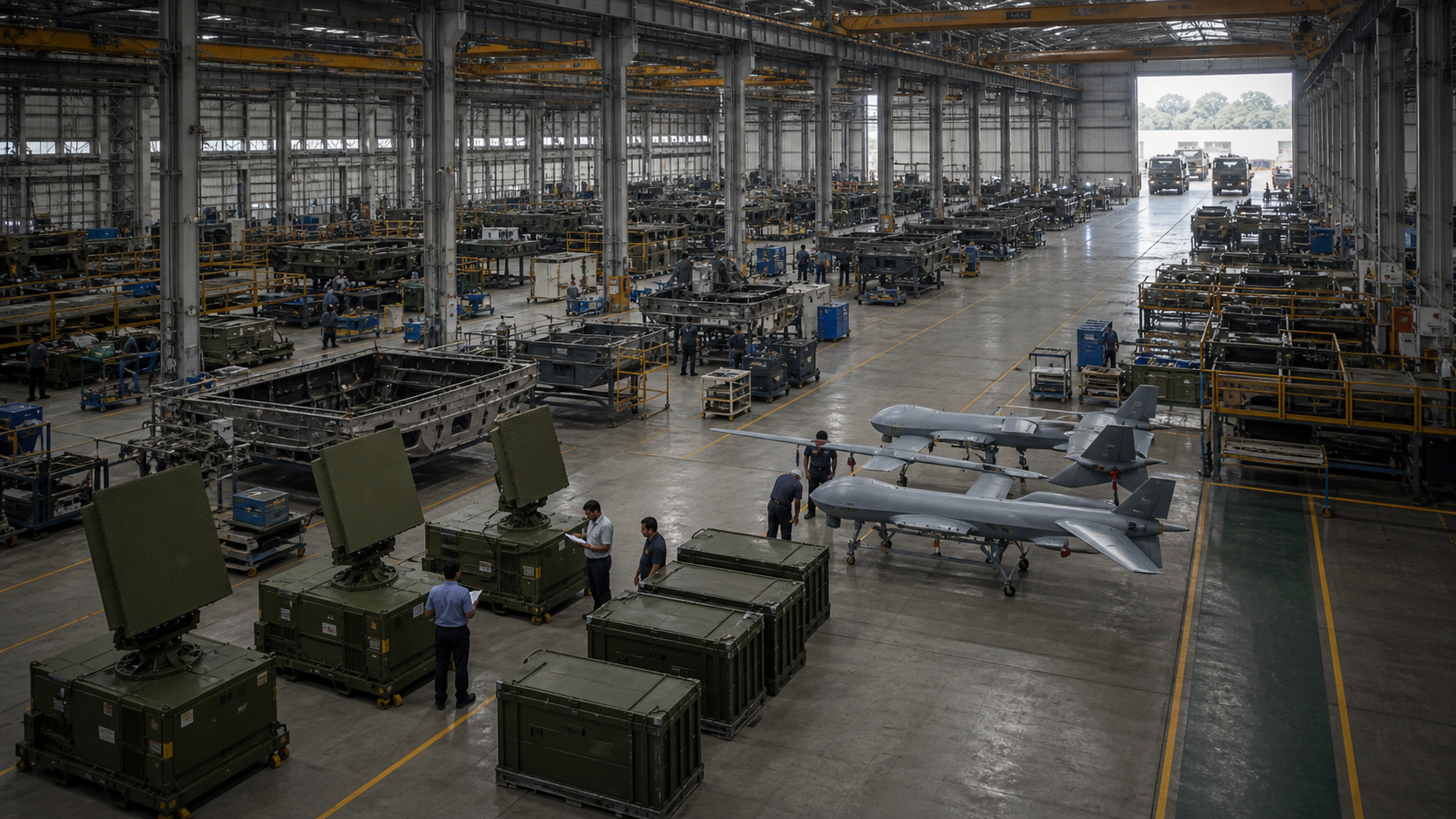
Government figures put Bharat’s defence-export growth at roughly 35-fold over the past decade. That is a consequential change. It shows that defence exports have moved from a peripheral aspiration to an active part of industrial and foreign policy.
But a growth multiplier measures movement from a starting point; it does not establish global rank. It tells you nothing by itself about market share, delivery performance, profit, repeat customers or the durability of overseas support. A country can increase exports rapidly and still remain far behind established suppliers. It can also export more while continuing to import equipment in areas where domestic capacity is incomplete. There is no contradiction in those two conditions existing at once.
This distinction matters because national confidence becomes stronger when it survives precise measurement. A pro-Bharat assessment does not need a lower standard of proof. It needs a higher one. Celebrate the direction of travel, but judge leadership through completed contracts, reliable deliveries and customers willing to return.
Key takeaways
- The 35-fold rise demonstrates acceleration, not global dominance.
- BrahMos, Akash and Pinaka give Bharat identifiable systems around which export relationships can be built.
- International interest is an opening; a delivered and supported contract is the real test.
- Delivery schedules, after-sales support and financing are part of the product, not administrative details added later.
- Private-sector participation can raise industrial capacity, but prototype work must mature into dependable production.
Exportable systems matter more than impressive prototypes
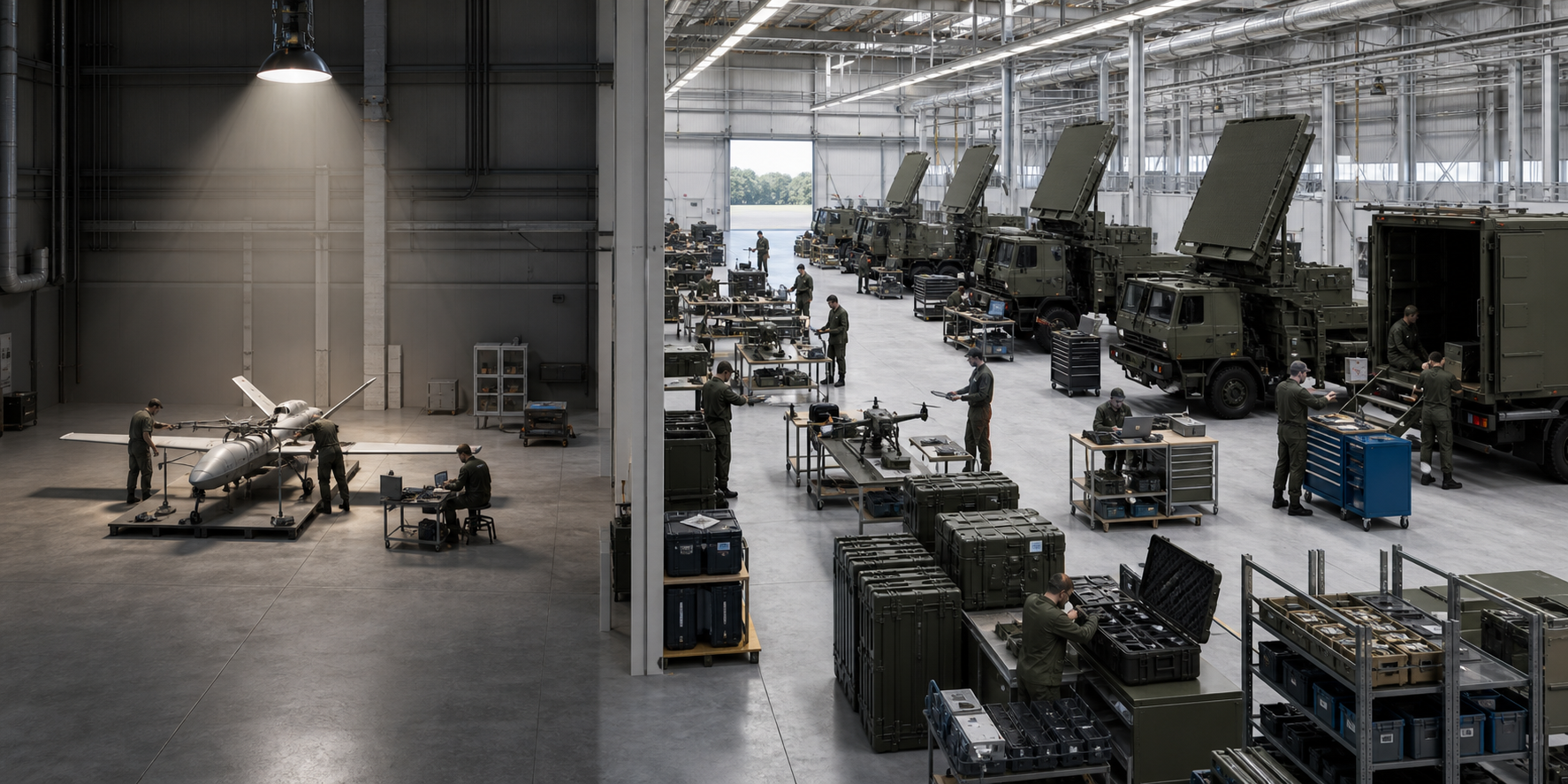
Bharat is no longer trying to sell an abstract promise of future self-reliance. The BrahMos supersonic cruise missile, Akash air-defence system and Pinaka multi-barrel rocket launcher have attracted interest from countries looking for affordable alternatives to Western or Russian equipment. That gives Bharat something essential: recognisable products addressing defined military requirements.
You should still pay close attention to the verb used in every export announcement. Defence headlines frequently compress very different stages into the same impression of success. They should not be treated as equivalent:
- Interest means a potential buyer sees enough value to ask questions or examine an option.
- Evaluation or shortlisting means the system has entered a competitive decision process.
- A signed contract means the buyer has made a financial and strategic commitment.
- Delivery tests whether the manufacturer and government can fulfil that commitment on schedule.
- Continued support or a repeat order shows that confidence survived contact with operational reality.
When commentary jumps directly from interest to market leadership, it erases the hardest work. Do not let those stages blur. If a new announcement does not advance a system from one stage to the next, it may still be encouraging, but it is not yet evidence of a stronger export position.
A flagship system can open doors, but durable leadership also requires a portfolio. Different buyers face different threats, budgets and existing equipment choices. Bharat will become more resilient as an exporter if it can offer useful systems across several categories without allowing any one programme to absorb the industrial attention needed to deliver the rest.
The buyer is purchasing a long-term promise
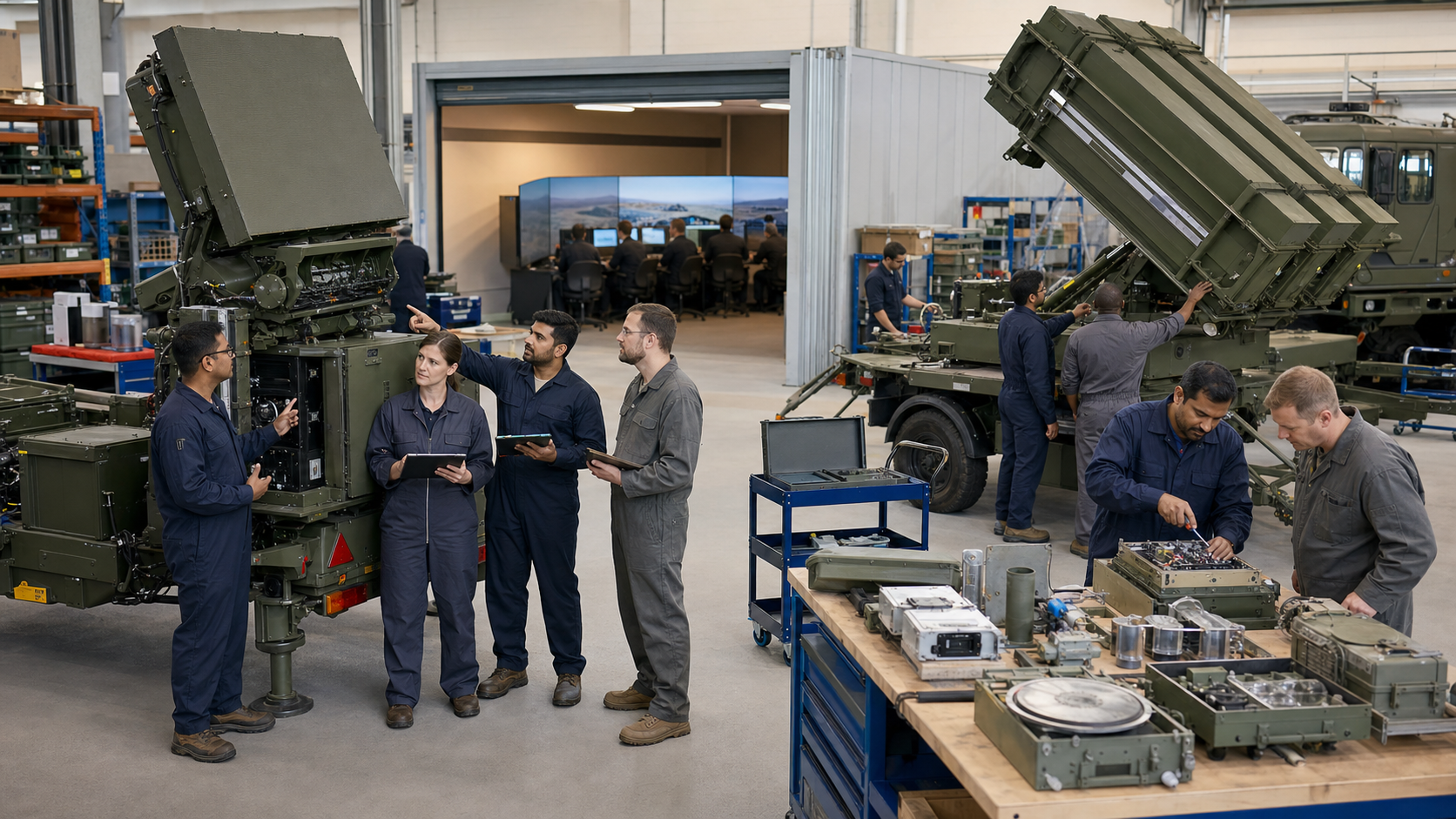
A military buyer does not merely purchase the hardware visible at a parade or demonstration. It purchases confidence that the system will arrive, remain usable and receive support through changing political and operational conditions. This is why reliability, after-sales support, financing and delivery timelines can decide an export contest even when the underlying technology is attractive.
For every claimed breakthrough, ask five practical buyer-side questions:
- Delivery: Can the promised quantity be produced without schedules repeatedly slipping?
- Sustainment: Are spare parts, maintenance processes, technical documentation and trained support available after delivery?
- Financing: Can the customer structure the purchase within its fiscal constraints?
- Continuity: Will upgrades and assistance remain available after political leaders or strategic conditions change?
- Responsiveness: Is there a clear institution responsible when an overseas operator encounters a problem?
These questions are less dramatic than range, speed or firepower, but they determine whether a buyer views Bharat as a dependable strategic partner. An export order that overwhelms production capacity can damage that reputation. A smaller contract fulfilled cleanly can do more for future business than a larger announcement followed by delay.
Financing deserves particular attention. Affordability is not only the listed price of a system. Payment terms, support costs and the buyer’s ability to keep the equipment operational shape the real burden. Bharat’s offer must therefore be commercially usable as well as technically competitive.
Private industry can raise the ceiling, but execution decides
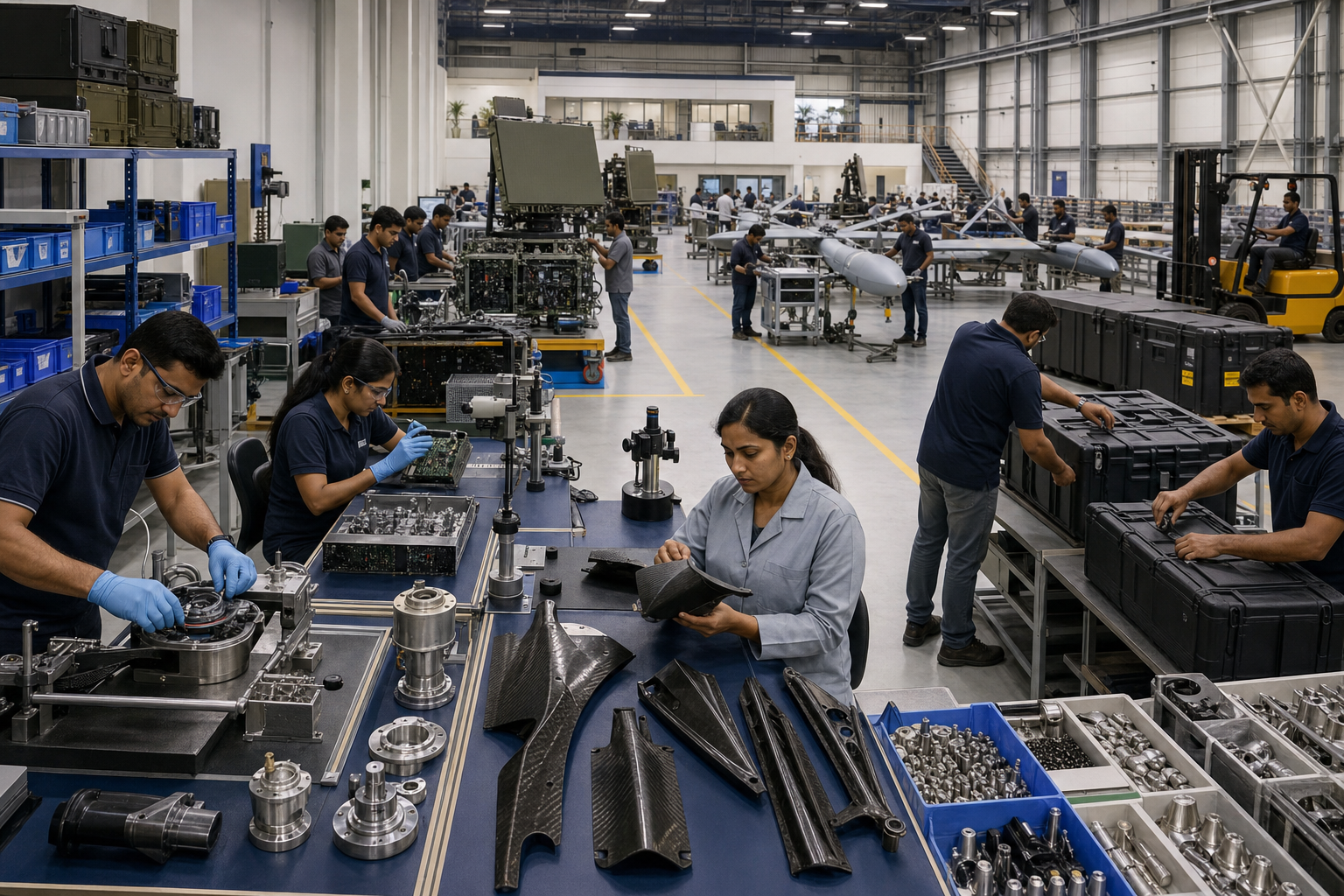
The restructuring of Bharat’s defence-industrial base may prove as important as any individual export. Tata, Larsen & Toubro and Bharat Forge have been shortlisted to build prototypes for the Advanced Medium Combat Aircraft programme. Their participation signals that private manufacturers are being considered for responsibilities once concentrated in public-sector organisations.
Do not mistake that milestone for proof that the AMCA itself is an export success. A prototype programme and a foreign delivery contract answer different questions. The former can demonstrate engineering participation and industrial potential. The latter requires production discipline, customer-specific support and sustained government-to-government confidence.
The deeper value of private participation is the possibility of expanding capacity, introducing more specialised suppliers and distributing responsibility across a broader industrial base. Whether that possibility becomes real depends on what follows the shortlist. Watch whether companies move from one-off prototype assignments into repeatable production roles, whether schedules become more dependable, and whether responsibility for failures is clear rather than diffused among institutions.
Public and private capacity should not be framed as a ritual contest in which one side must displace the other. Bharat needs sustained research and development through the Defence Research and Development Organisation, larger manufacturing capacity and stronger international partnerships. The practical test is whether these parts reinforce one another from design to production to overseas support.
This is also the right way to understand Make in India and Atmanirbhar Bharat. Self-reliance need not mean isolation. International partnerships can add technology, markets or production experience while Bharat develops greater control over the capabilities that make it a dependable supplier. The objective is not to avoid every foreign connection; it is to prevent critical competence from remaining permanently outside Bharat’s hands.
Use this scorecard for the next export announcement
The global arms market is not an open technical competition judged only on specifications and price. The United States leads international arms exports, while France, Russia and European manufacturers retain strong positions supported by accumulated experience, diplomatic reach and strategic alliances.
Bharat’s opportunity lies partly among governments seeking affordable alternatives to those established supply networks. But an alternative becomes a lasting choice only when the customer trusts the supplier’s technology, political reliability and service capacity. Defence exports are therefore instruments of statecraft as well as industrial transactions. Every successful delivery can deepen a strategic relationship; every unresolved support failure can weaken one.
When you assess the next announcement, use this five-part scorecard:
- Status: Is this interest, evaluation, a contract, a delivery or repeat business? Give the greatest weight to the furthest completed stage.
- Product: Is Bharat selling a complete operational capability, a subsystem or merely a component? Each can be valuable, but they do not demonstrate the same industrial depth.
- Execution: Is there evidence that production and delivery are keeping pace with commitments?
- Support: Does the arrangement include a credible path for maintenance, spares, training, upgrades and problem resolution?
- Strategic reach: Does the transaction build a durable relationship or broaden Bharat’s access to a market, rather than standing as an isolated sale?
This method guards against two equally unhelpful reactions. One is cynicism that treats every ambition as empty rhetoric. The other is triumphalism that treats every expression of interest as proof that Bharat has already arrived. Neither helps you understand the work still to be done.
The next time an export headline appears, label its stage before judging its importance. Then watch whether the relationship moves from interest to contract, from contract to delivery, and from delivery to supported service and repeat business. Bharat’s ambition deserves support precisely because it should be held to that demanding standard. The path to leadership will be built through one dependable commitment after another.
References
