

You may have encountered a blunt claim: Pakistan annexed a vast Vanvasi belt during Partition, perhaps even land awarded to India. Before you repeat it, separate the question worth investigating from the verdict that the available evidence does not yet establish.
The defensible question concerns Pakistan’s original legal title over the former Federally Administered Tribal Areas, or FATA. The absence of an identified instrument of accession deserves scrutiny. It is not, by itself, proof of annexation, and it does not establish that the territory belonged to India. Keeping those propositions separate gives you a case that can survive serious examination.
Separate the legitimate question from the legal verdict
Calling an event an annexation does more than say that one state governed or incorporated a territory. It makes a conclusion about how sovereignty was acquired. That conclusion needs a legal rule, an identifiable act, a competent actor and evidence showing why an alternative route to title did not apply.
Two concrete facts establish the scale and later administrative history of the inquiry: Pakistan’s 2017 census reckoning placed former FATA at 27,220 square kilometres, and the territory was merged into Khyber Pakhtunkhwa in 2018. Those facts matter, but neither resolves what happened to sovereignty at Partition.
| Proposition | Status on the presently available evidence | Responsible wording |
|---|---|---|
| Former FATA covered 27,220 square kilometres and was merged into Khyber Pakhtunkhwa in 2018. | Documented factual basis for defining the territory and its later status. | State it as administrative history, not as proof of the original title. |
| No instrument of accession has been identified for former FATA. | A concrete documentary gap that warrants investigation. | Ask which legal mechanism transferred or continued sovereignty, and whether accession was legally required. |
| Pakistan annexed former FATA. | A legal-historical conclusion not established merely by the absence of an accession instrument. | Present annexation as an allegation to be tested, not a settled fact. |
| India received former FATA under the Radcliffe process. | Unsupported by the stated jurisdiction of the Punjab Boundary Award. | Do not use this claim without a different, specifically identified legal instrument. |
This distinction is not a retreat. It locates the actual burden of proof. Anyone alleging annexation must first show why Pakistan needed an instrument of accession for this particular territory, then show that no other valid mechanism transferred or continued authority.
Name the territory before arguing about its ownership
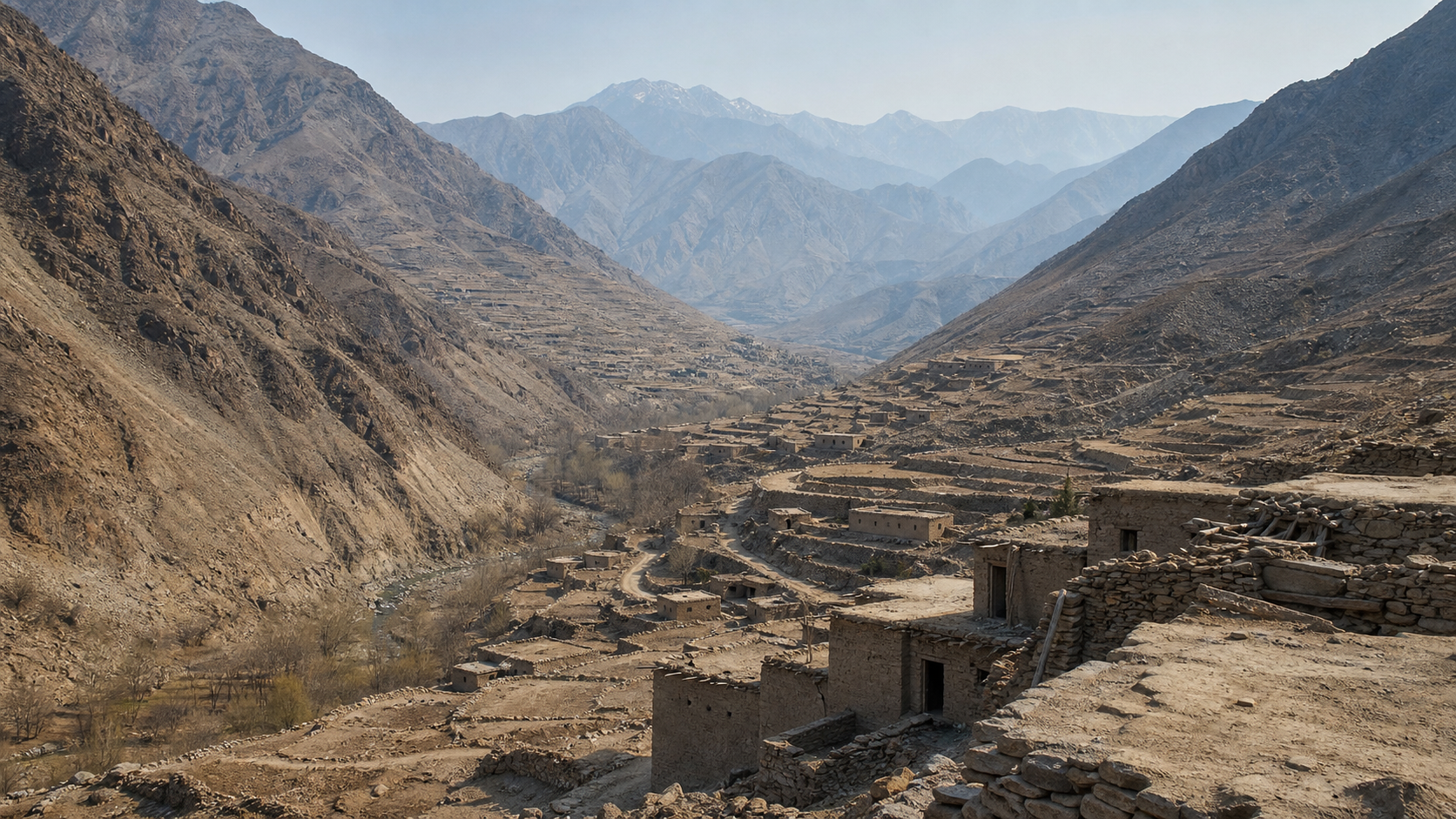
The phrase “Vanvasi territories” carries a civilizational and moral meaning, but it is not a precise historical boundary. If you use it without qualification, readers cannot tell whether you mean former FATA, every tribal region adjoining Afghanistan, or a broader cultural homeland. A legal argument cannot proceed with a moving geographic target.
Begin with “the former Federally Administered Tribal Areas (FATA).” Give the 27,220-square-kilometre figure when scale matters. Use “Vanvasi” to explain the civilizational concern or the importance of local communities, not as a substitute for the territory’s formal name.
Then keep three dates or stages conceptually separate, even when you do not yet possess every underlying record:
- Before Partition: What was the exact constitutional and administrative status of each area later grouped within FATA?
- At the transfer of power: By which rule, order, agreement or succession mechanism did Pakistan claim authority?
- In 2018: What did the merger into Khyber Pakhtunkhwa change within Pakistan’s constitutional structure?
The 2018 merger is relevant to later incorporation. It cannot be projected backward as automatic proof that Pakistan acquired valid title at Partition. The reverse is also true: a late internal merger does not itself prove that the preceding administration was an annexation. It answers a later administrative question, not the foundational one.
Scale must also be kept in its place. An area described as larger than Haryana plainly merits attention, but square kilometres do not prove sovereignty. A census can support the size of the territory. It cannot establish the legality of the route by which a state came to govern it.
Apply a four-part test to the claim of annexation

If you want to research, publish or debate this claim, use the following sequence. Skipping a step usually turns a genuine historical question into an argument from silence.
- Establish the pre-Partition status. Identify the law or constitutional arrangement governing the territory immediately before British authority ended. Determine whether the relevant units were treated as part of a province, frontier agencies, treaty-governed tribal areas, princely territory or another legal category. Do not infer the answer from the later FATA label.
- Identify the transition rule that applied to that status. An instrument of accession was not a universal ceremony required of every territory. Its absence becomes decisive only after you show that this particular legal unit was required or entitled to accede through such an instrument. If Pakistan instead claims administrative or state succession, that route must be named and supported.
- Identify the act and the competent actor. Ask which order, agreement, proclamation, treaty or constitutional provision created or continued Pakistan’s authority. If local tribal institutions possessed a legally recognised role, establish who represented them, what power those representatives held and whether any consent was recorded. Cultural identity alone cannot answer that legal question.
- Separate later control from original title. Trace the first Pakistani acts of administration, any later legal changes and the 2018 merger as distinct evidence. Long administration may be relevant to a territorial argument, but it should not be silently substituted for proof of how title originated.
The decisive issue is therefore not simply, “Where is the accession document?” It is, “What legal mechanism applied, what evidence records it, and why was that mechanism sufficient?” That formulation prevents two opposite errors: assuming Pakistan’s title merely because Pakistan governed the territory, or assuming annexation merely because no accession instrument has yet been produced.
A serious documentary request should seek the following material:
- The final pre-Partition constitutional or administrative instruments defining the relevant frontier territories.
- Contemporary official maps and boundary descriptions, with issuing authority and date clearly identified.
- Transfer-of-power or succession orders that Pakistan relies upon for title.
- Any treaties, agreements, resolutions or recorded decisions involving legally recognised local authorities.
- The earliest Pakistani proclamation or legal instrument asserting jurisdiction over the territory.
- The enactments and constitutional records governing the 2018 merger, kept analytically separate from the 1947 question.
- Archival correspondence showing how British, Pakistani and local officials understood the transfer at the time, rather than only retrospective political descriptions.
For each item, record what proposition it actually proves. A map may show a claimed boundary without proving legal title. A proclamation may show an assertion of authority without proving consent. A treaty may matter only if its parties had the power attributed to them. This claim will be won or lost through the relationship between documents and propositions, not through the number of documents collected.
Until that chain is assembled, the missing accession instrument is a lead, not a verdict. To make absence meaningful, investigators must define where such an instrument should exist, which archives were checked, how the relevant records were catalogued and why another legal mechanism cannot explain the transition.
Drop the Radcliffe claim before it weakens the case

Some versions of the allegation say that Sir Cyril Radcliffe awarded FATA to India. Do not repeat that claim. The Punjab Boundary Award’s jurisdiction did not extend west of Punjab. A boundary authority cannot award territory outside its remit.
Rejecting this argument does not validate Pakistan’s title. It removes a false shortcut and forces the inquiry onto firmer ground: the pre-Partition status of the frontier territories and the legal route by which Pakistan acquired or claimed sovereignty over them.
If evidence for an Indian title exists, it must come from a specifically identified instrument other than the Punjab Boundary Award. Name that instrument, establish the authority that issued it and show how it applied to the exact territory. Without those steps, “awarded to India” is an assertion that gives critics an easy reason to dismiss the wider inquiry.
A pro-Bharat or pro-Dharma position gains strength by discarding folklore early. Respect for Vanvasi peoples does not require turning a documentary question into a predetermined national claim. It requires taking their historical institutions seriously enough to ask whether they held any recognised authority, how their consent was understood and what happened to that authority during the transfer of power.
Key takeaways for making a responsible public case

- The precisely defined territory is former FATA, not an unspecified tribal or Vanvasi belt.
- Its 27,220-square-kilometre size and 2018 merger into Khyber Pakhtunkhwa establish scale and later administration, not the legality of Pakistan’s original title.
- The absence of an identified instrument of accession raises a legitimate question only after the applicable 1947 transition rule is established.
- Annexation remains an allegation unless evidence proves that Pakistan acquired the territory without a valid legal mechanism.
- No presented basis supports saying that the Punjab Boundary Award gave former FATA to India.
- The next useful step is a targeted request for primary legal and archival records, not a louder repetition of the conclusion.
If you need a formulation for public discussion, use this: “Pakistan’s original legal title over former FATA warrants documentary scrutiny. The absence of an identified accession instrument raises a concrete question, but annexation and Indian ownership remain unproved.”
Then ask the person advancing the claim to identify the territory’s pre-Partition status, the transition rule and the instrument on which Pakistan’s authority rested. If those records establish a lawful route, the allegation must be revised. If they establish that a required legal mechanism was absent, the case becomes materially stronger. Put that documentary sequence before the slogan; it is the difference between a provocative claim and one capable of enduring hostile scrutiny.
References
