

If you are a Hindu worker in Jammu and Kashmir, an employer responsible for workers, or a relative waiting for someone to return home, a broad promise to defeat terrorism does not answer the immediate questions. Is the journey to work safe? Who notices a missed check-in? Where should a worker go after receiving a threat? Who calls the family if something happens?
Killings in Kulgam have led Hindu organisations in Kolhapur to demand both urgent protection for migrant Hindu workers and the elimination of terrorist networks. Those goals belong together, but they operate on different timelines. A serious response must protect an exposed worker now while investigators methodically identify, disrupt and prosecute the people who enable terrorism.
Worker protection and counterterrorism run on two clocks
The first clock is immediate. It covers travel, accommodation, communications, emergency reporting and the response to a direct threat. These measures cannot wait for an entire network to be dismantled. Every employer and responsible authority should be able to explain what happens between the moment a danger is reported and the moment the worker reaches a safer place.
The second clock is investigative. It asks who planned the violence, who selected the target, who supplied money or material, who provided shelter or transport, and who warned the attackers about security activity. Arresting the person who carried out an attack may stop one immediate danger. It does not necessarily reveal or disable everyone who made the attack possible.
This distinction matters because a call for the “total elimination” of terror networks expresses a desired outcome, not an operational plan. The demand becomes useful only when it is translated into lawful, testable duties: protect threatened people, preserve evidence, follow support links, arrest suspects on evidence, prosecute offences and review the security failures that exposed the victims.
Neither clock can replace the other. Long investigations do not excuse weak protection today. Escorts, guards or temporary restrictions do not substitute for dismantling an enabling network. Security also cannot mean keeping Hindu workers indefinitely confined or quietly encouraging them to abandon their livelihoods. The aim is safer participation in ordinary life, not a managed retreat from it.
Build a worker-level safety plan before the next warning

A worker should not have to invent a response while frightened or under pressure. Employers, contractors and worker groups can prepare a simple plan around decisions that repeatedly cause confusion during a security incident.
- Assign one accountable contact. Each worker should know whom to call at the workplace and at the accommodation. Official emergency and local police contact details should be saved on the phone and carried on paper in case the device is lost, damaged or inaccessible.
- Set a private check-in protocol. Decide when a worker confirms arrival, who responds to a missed check-in and which authority is contacted if the worker cannot be reached. Keep this information inside a limited group rather than broadcasting locations and routines in public chats.
- Approve travel before departure. Check applicable official advisories and use transport arrangements assessed by the employer or responsible authority. A frightened worker should not improvise a route because of an unverified social-media message or travel alone to investigate a rumour.
- Review accommodation as part of the job. Confirm that entry can be controlled, exterior areas are adequately lit, visitors can be identified and workers know an agreed place to assemble or relocate. Resident names, room assignments and shift details should not be displayed or casually circulated.
- Protect routine information. Avoid public posts that reveal a worker’s live location, daily route, shift, accommodation or expected arrival time. After an incident, do not circulate victims’ identity documents, family details, photographs or addresses without a legitimate need and appropriate consent.
- Pre-agree the response to a direct threat. Do not confront the sender or try to verify the threat personally. Preserve the message or other evidence, contact the police and the designated workplace contact, and follow official guidance about moving to the safer location identified in the plan. Imminent danger requires immediate contact with emergency services.
The employer’s duty does not end after handing workers a telephone number. At each shift change, the responsible supervisor should know who is expected, who has arrived and who is travelling. Any roster should contain only the information needed for safety, be shared only with authorised people and be corrected as soon as work or lodging arrangements change.
If a job requires a worker to remain in a higher-risk location, the cost and coordination of reasonable protective arrangements should not be pushed onto the worker with the least bargaining power. Safe transport, suitable accommodation, functioning communications and emergency relocation are operational responsibilities, not personal luxuries.
What a credible government response must contain
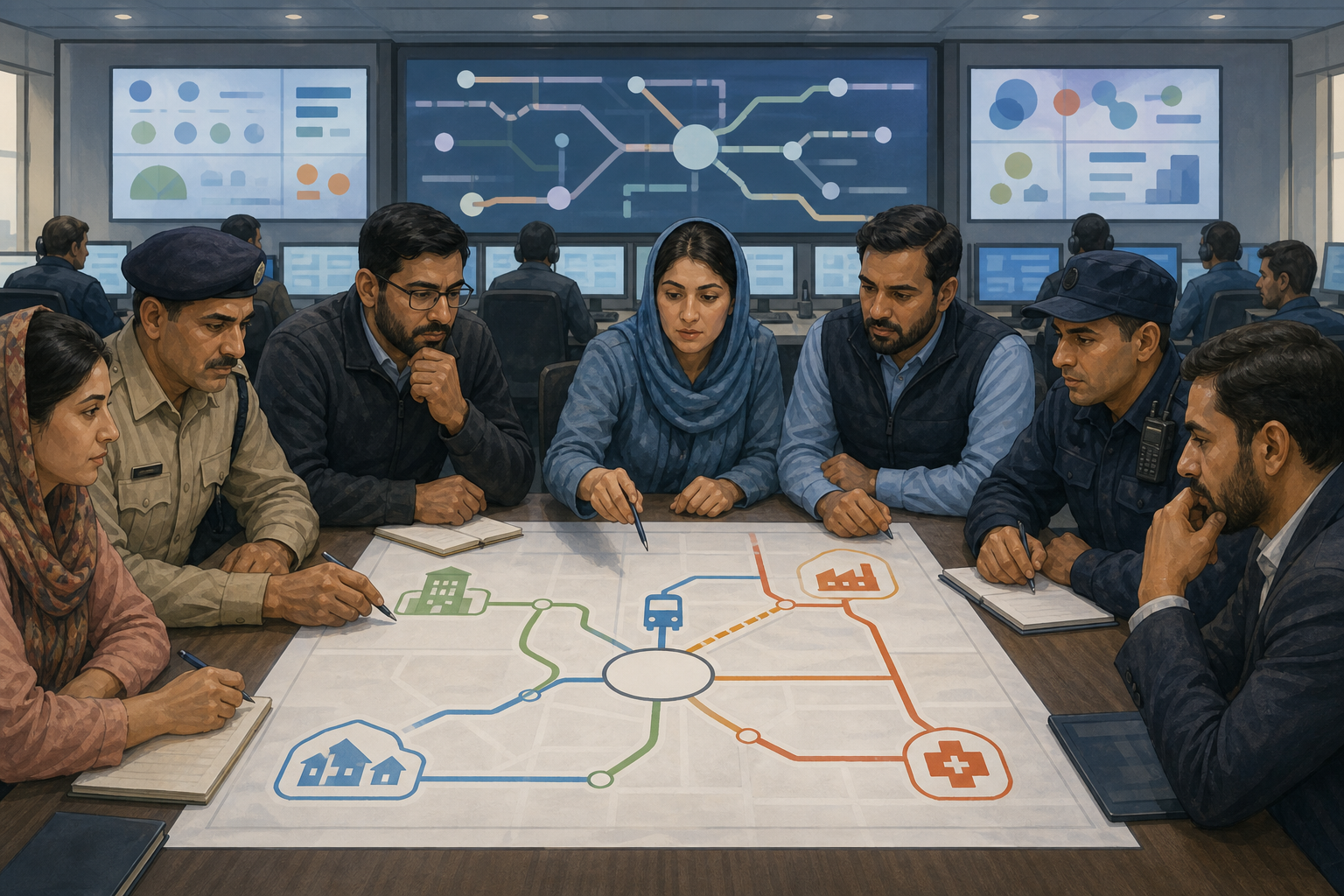
An immediate protective layer
Authorities need a current picture of where exposed workers live, travel and work, but any collection of personal data must be limited and protected. A carelessly distributed list of names or addresses can create another vulnerability. Employers should know which official liaison receives threat reports, how urgent information is authenticated and who can authorise protective changes when risk increases.
Risk assessment must cover the whole routine, not only the worksite. A protected gate offers little reassurance if the journey or accommodation remains unexamined. Depending on the assessed threat, authorities may need to change travel arrangements, increase protection around a location, restrict unnecessary disclosure or move a threatened person. The method should follow verified risk rather than political visibility.
A network-disruption layer
Counterterrorism becomes durable when an attack is investigated as a chain of support rather than an isolated act. Investigators must determine how targets were selected, instructions were transmitted, resources were obtained, movement was enabled and concealment was maintained. These are investigative questions, not permission to assume guilt by neighbourhood, religion or association.
Lawful counterterrorism requires evidence preservation, coordinated intelligence, arrests based on evidence and prosecution through due process. Collective punishment is not a substitute for this work. Apart from its moral and legal costs, indiscriminate action can drive away witnesses, contaminate information and leave the actual organisers undiscovered.
An accountability layer the public can examine
The public cannot reasonably demand disclosure of active operations, informants or tactical plans. It can demand clarity about responsibilities. Workers and families should be told where threats are reported, who acknowledges the report, how families receive verified information, what assistance follows an incident and when protective guidance changes.
After a killing, accountability should ask more than whether additional personnel were deployed. Did an earlier warning go unrecognised? Was a worker’s route or lodging unnecessarily exposed? Did the employer know the reporting procedure? Was the family left to chase several offices for information? Each answer should produce an assigned corrective action rather than another general assurance.
Community advocacy must protect people, not expose them

Public memoranda, delegations and peaceful campaigns can keep worker security from fading after the immediate news cycle. Their value depends on precision. A useful demand names the people to be protected, the authority responsible, the protective gap to be closed, the reporting channel to be established and the point at which progress will be reviewed.
For example, “ensure security” is too broad to verify. A stronger memorandum can ask for an accountable police liaison for affected employers, a confidential threat-reporting route, reviewed travel and accommodation plans, a family-notification protocol, victim assistance and periodic public updates that do not compromise operations. It can separately demand investigation of planners and facilitators, evidence-based arrests and timely prosecution.
Community organisations should also practise information discipline. Do not publish worker rosters, addresses, travel times or unverified screenshots. Do not identify someone as a suspect merely because a forwarded message does so. Pass potentially relevant information to the authorities with its original context intact; public speculation can endanger an innocent person and interfere with a real investigation.
Solidarity should remain centred on the worker and family. Help them reach verified contacts, replace documents through the proper process, obtain lawful assistance, and understand any change to work or accommodation. Do not pressure a frightened person to make a public statement or become the symbol of a campaign. The person at risk retains dignity, privacy and agency.
A pro-Hindu position should be unambiguous about the right of Hindu workers to live and earn without being selected for terror. It should be equally disciplined in rejecting communal retaliation and unsupported accusation. Protecting innocent life and pursuing the actual perpetrators are complementary duties. Confusing an entire population with a terror network weakens both.
Key takeaways
- Immediate worker protection and long-term network disruption are separate tasks, and both must proceed at the same time.
- Every worker needs an accountable contact, a private check-in procedure, an approved travel plan and a pre-agreed response to a direct threat.
- Employers must treat transport, accommodation, communications and emergency relocation as operational responsibilities.
- Authorities should investigate the full enabling chain behind an attack while making arrests and prosecutions depend on evidence and law.
- Community advocacy is strongest when it asks for specific, reviewable actions and keeps personal or operational information private.
If you are responsible for workers, begin by testing one ordinary journey from accommodation to work: identify who knows the route, who confirms arrival, who responds to silence and where a threatened worker goes. If you are drafting a public demand, separate the page into immediate protection and lawful network disruption. That turns justified anger into duties that can be assigned, checked and enforced.
References
