
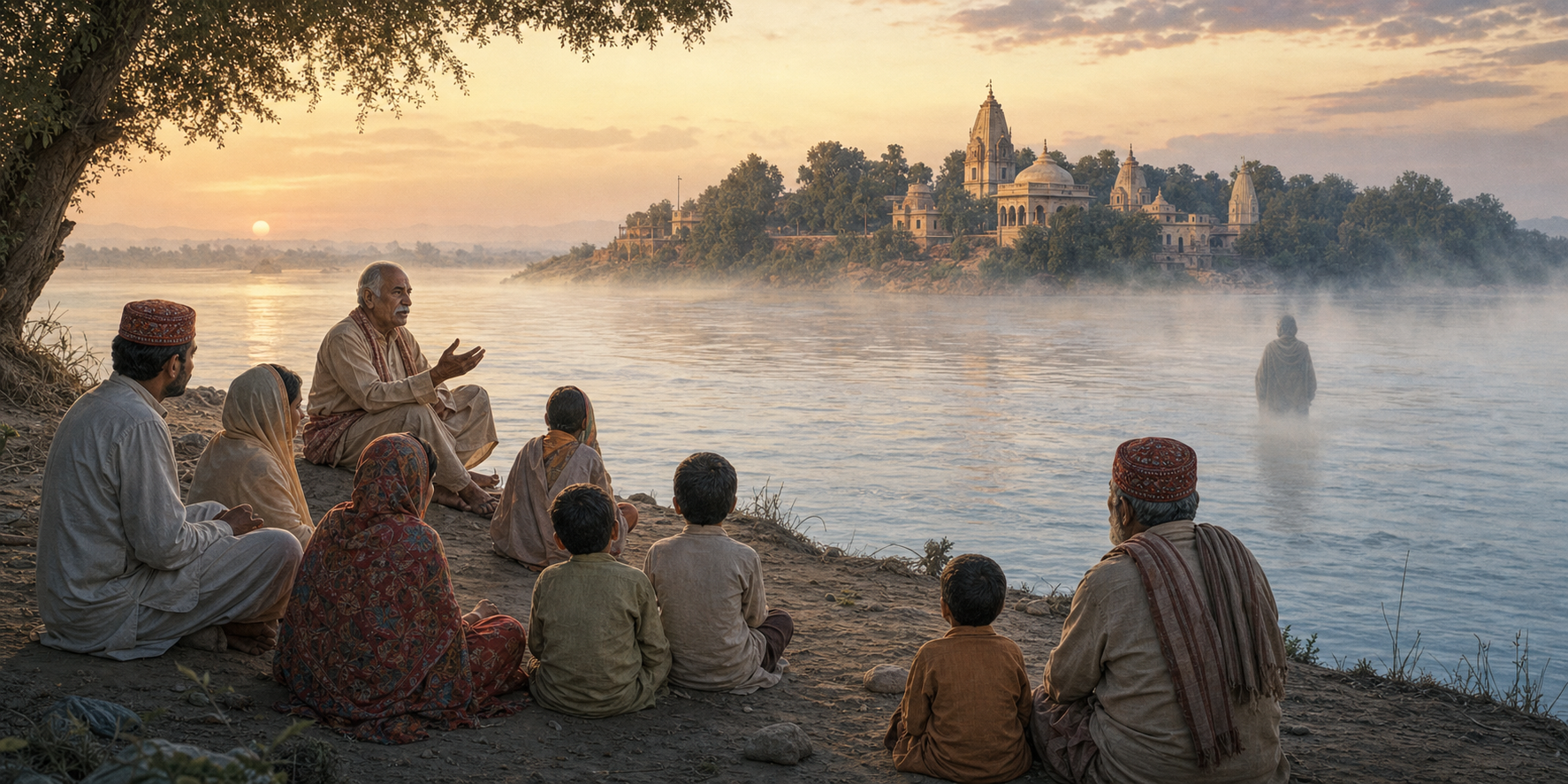
You may have searched for Swami Vankhandi hoping to find a firm chronology, a lineage of teachers, or a conventional history of Sadh Belo. Those details cannot be established from the record available here. What survives is different: a connection between a Hindu spiritual figure, a sacred place-name, and the oral memory of Sindh.
That narrow trail is still valuable, provided you don’t force it to answer questions it cannot answer. It shows how a community carried the memory of Swami Vankhandi through folklore, how that memory crossed from speech into print, and what you can do to preserve similar traditions without turning inherited reverence into unsupported history.
What can safely be said about Swami Vankhandi

The dependable starting point is modest. Swami Vankhandi is remembered in association with Sadh Belo, and that memory appears within a Sindhi folktale preserved in Charles Augustus Kincaid’s Folk Tales of Sind and Guzarat.
Kincaid was a former Indian Civil Service officer and judge. He sought out elders and local residents, listened to their stories, recorded them, and assembled them into collections. Tales later gathered in Folk Tales of Sind and Guzarat had also appeared in periodicals including the Daily Gazette and the Times of India during the 1920s.
This gives us a useful chain of transmission: community narration, collection by a named recorder, periodical publication, and preservation in book form. It does not, by itself, establish when Swami Vankhandi lived, who initiated him, which institutions he founded, or which events attributed to him can be independently verified. If you repeat any of those details, you need evidence beyond the chain described above.
That distinction matters because devotional memory and historical biography do different work. A biography attempts to establish what happened, when it happened, and through which verifiable relationships. A folktale reveals how a person was remembered, which virtues a community attached to that person, and why the memory was worth transmitting. The second is not a defective version of the first. It is another kind of cultural evidence.
Read the folklore without literalising or dismissing it
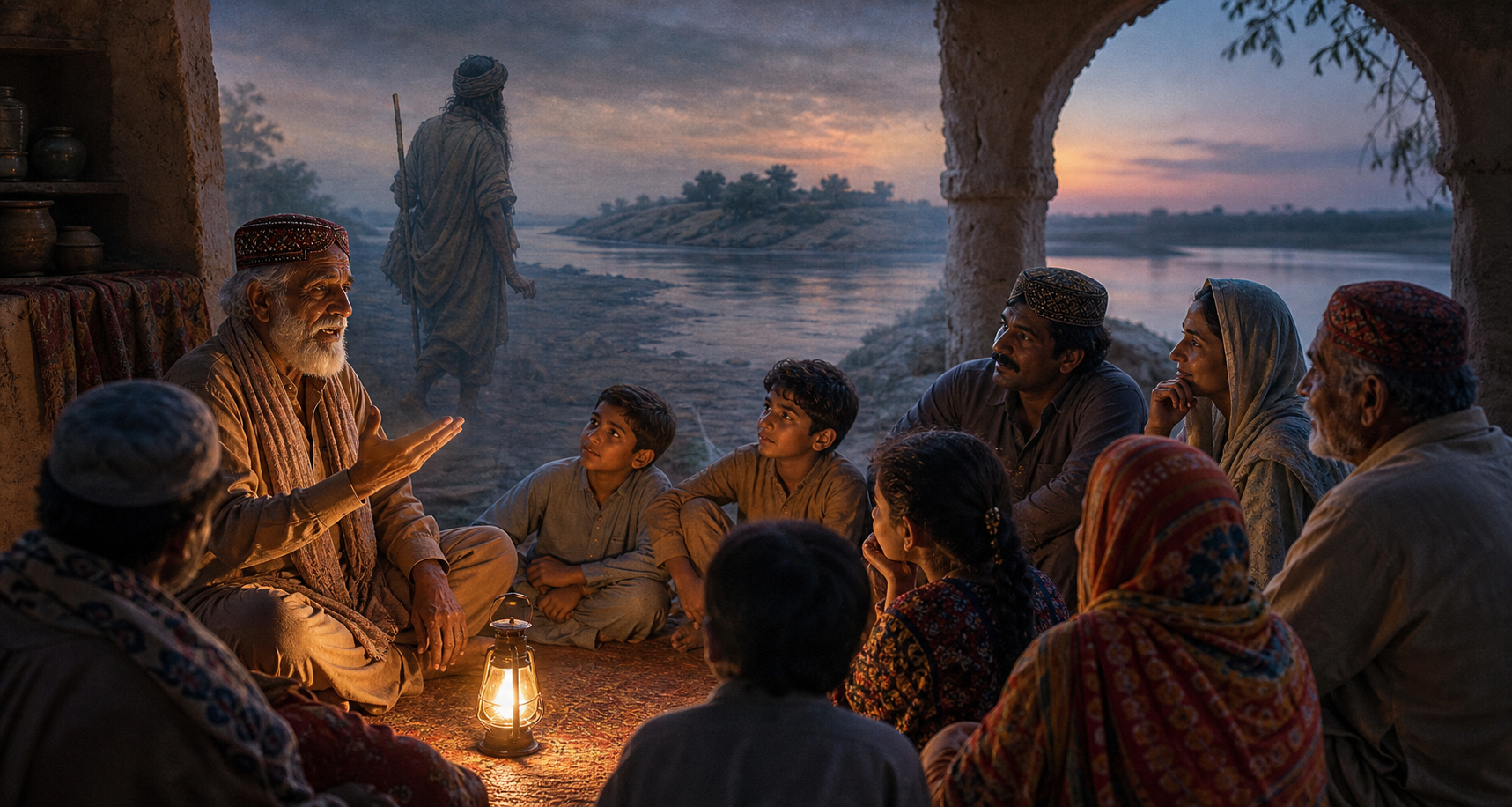
There are two easy ways to mishandle a sacred story. One is to treat every narrative detail as a dated historical event. The other is to dismiss the entire tradition because it does not resemble a modern archival record. Both responses destroy information.
A more disciplined reading separates three layers. First comes the named anchor: Swami Vankhandi and Sadh Belo. Second comes the narrative form: the plot, images, reversals, miracles, moral tests, or memorable sayings through which the tale communicates. Third comes social memory: the reason Sindhi narrators continued to associate this figure and place strongly enough for the story to be heard and recorded.
The first layer gives you a research lead. The second asks for literary and Dharmic interpretation. The third tells you something about community identity. Trouble begins when a claim from one layer is silently moved into another. A moral episode may convey an ideal of renunciation or compassion without functioning as proof of a date. A place-name may preserve a genuine historical association without verifying every later embellishment.
Use precise labels when you discuss the tradition. Write “the Sindhi tradition remembers” when describing inherited narration. Reserve “historical evidence establishes” for a claim supported by an inscription, a dated manuscript, an administrative record, a contemporary letter, or another independently assessable record. If only one version of a tale is available, say so. Without multiple tellings, you cannot know which details were stable across the oral tradition and which may belong to a particular narrator or recorder.
You should also preserve the historical spelling Guzarat when citing Kincaid’s book title. It is part of the bibliographic record, even though readers may expect the modern spelling Gujarat. Quietly modernising a title can make a real book harder to locate in catalogues and digital archives.
How to preserve a Sadh Belo tradition responsibly
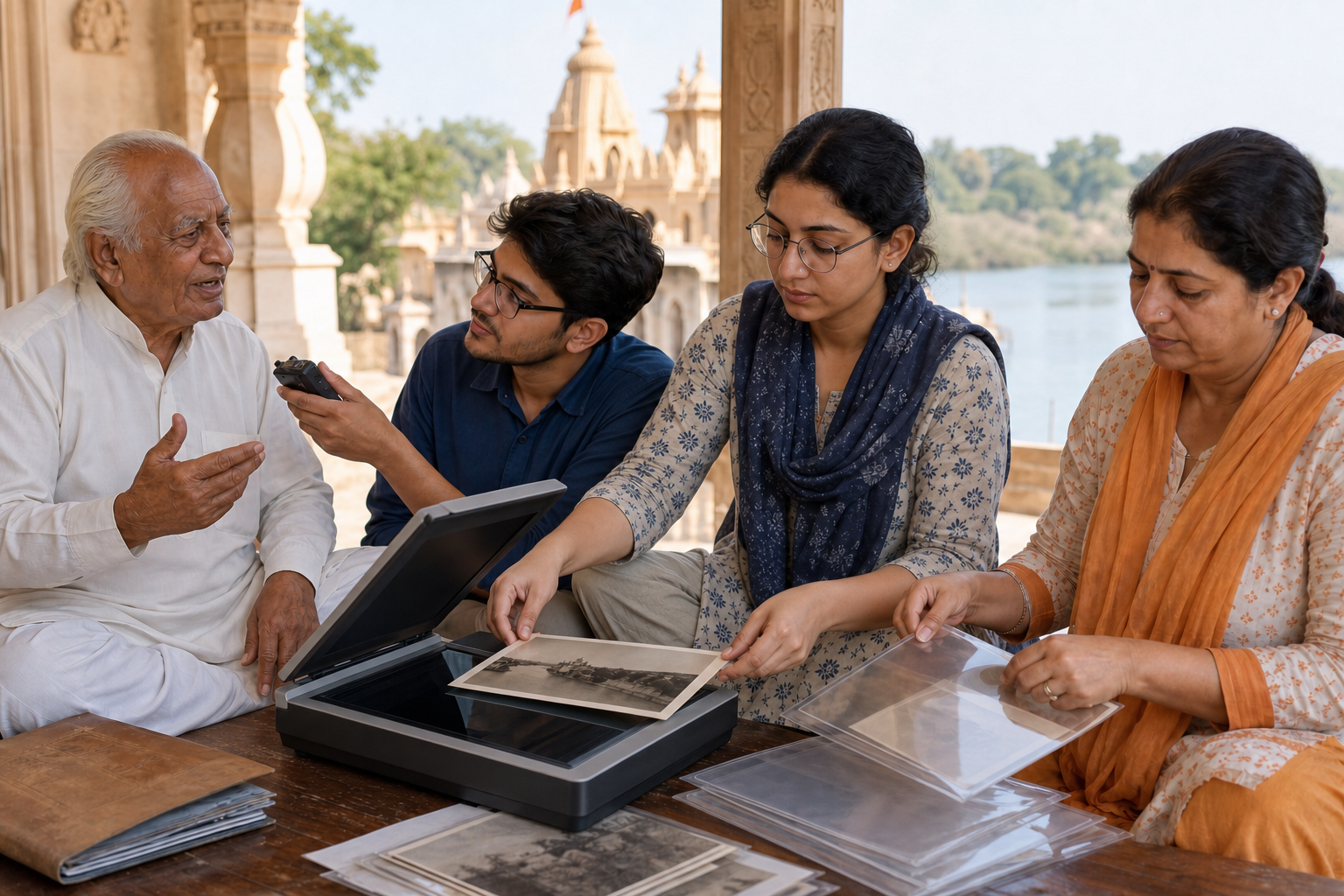
The most useful response to a fragile tradition is not another polished retelling with uncertain additions. It is a small, well-documented archive. If your family or community carries a story about Swami Vankhandi, Sadh Belo, or another Sindhi sacred figure, use this process.
- Record the narration before discussing it. Let the narrator tell the story in the order and language they naturally use. Questions asked too early can reshape the account around what the interviewer expects to hear.
- Write down the chain of custody. Record the narrator’s name, the date and place of recording, the language used, and from whom the narrator learned the story. If publication is intended, obtain clear permission and record any restrictions the narrator requests.
- Keep the original language beside the translation. Transcribe the spoken form as faithfully as possible. Put an English or Hindi translation in a separate field or facing column. Do not silently replace an unfamiliar Dharmic term with a word from another theological system.
- Mark uncertainty inside the record. Distinguish the narrator’s exact words, an uncertain transcription, an editorial explanation, and a later historical note. Square brackets or footnotes can do this without interrupting the story.
- Compare versions before combining them. If two relatives tell the story differently, preserve both accounts. Do not manufacture a seamless “authoritative” version. Repeated elements may reveal the stable core, while differences show how memory travelled through families and places.
- Store more than one usable copy. Keep the audio, transcript, translation, permission note, and descriptive information together. Give a copy back to the narrator or family, and place another with a trusted community archive or institution when appropriate.
This method protects both shraddha and accuracy. Reverence is not weakened by saying where knowledge ends. On the contrary, careful attribution prevents a sacred name from becoming attached to claims that no one can trace.
It also restores part of the setting in which folklore once lived. Shared-family life allowed stories to pass through repetition, correction, and conversation. When that setting weakens, a name may survive while its pronunciation, moral context, local vocabulary, and chain of narrators disappear. Recording those surrounding details is therefore as important as capturing the plot.
Key takeaways for readers and researchers
- The secure core is the remembered association of Swami Vankhandi with Sadh Belo and its preservation through Sindhi folklore.
- Kincaid’s role gives the tradition a traceable route from oral narration to periodicals and then to Folk Tales of Sind and Guzarat.
- A folktale can preserve cultural memory without supplying a complete, independently verified biography.
- Use “tradition remembers” for inherited narrative and stronger historical language only when separate evidence supports it.
- Preserve original recordings, narrator information, language, variants, translations, and editorial notes as distinct parts of the record.
If this memory belongs to your family or community, begin with one elder and one uninterrupted recording. Capture the words as they are spoken before trying to improve, reconcile, or publish them. That single act will do more for the legacy of Swami Vankhandi and Sadh Belo than an elaborate account whose origins no future reader can verify.
References
