
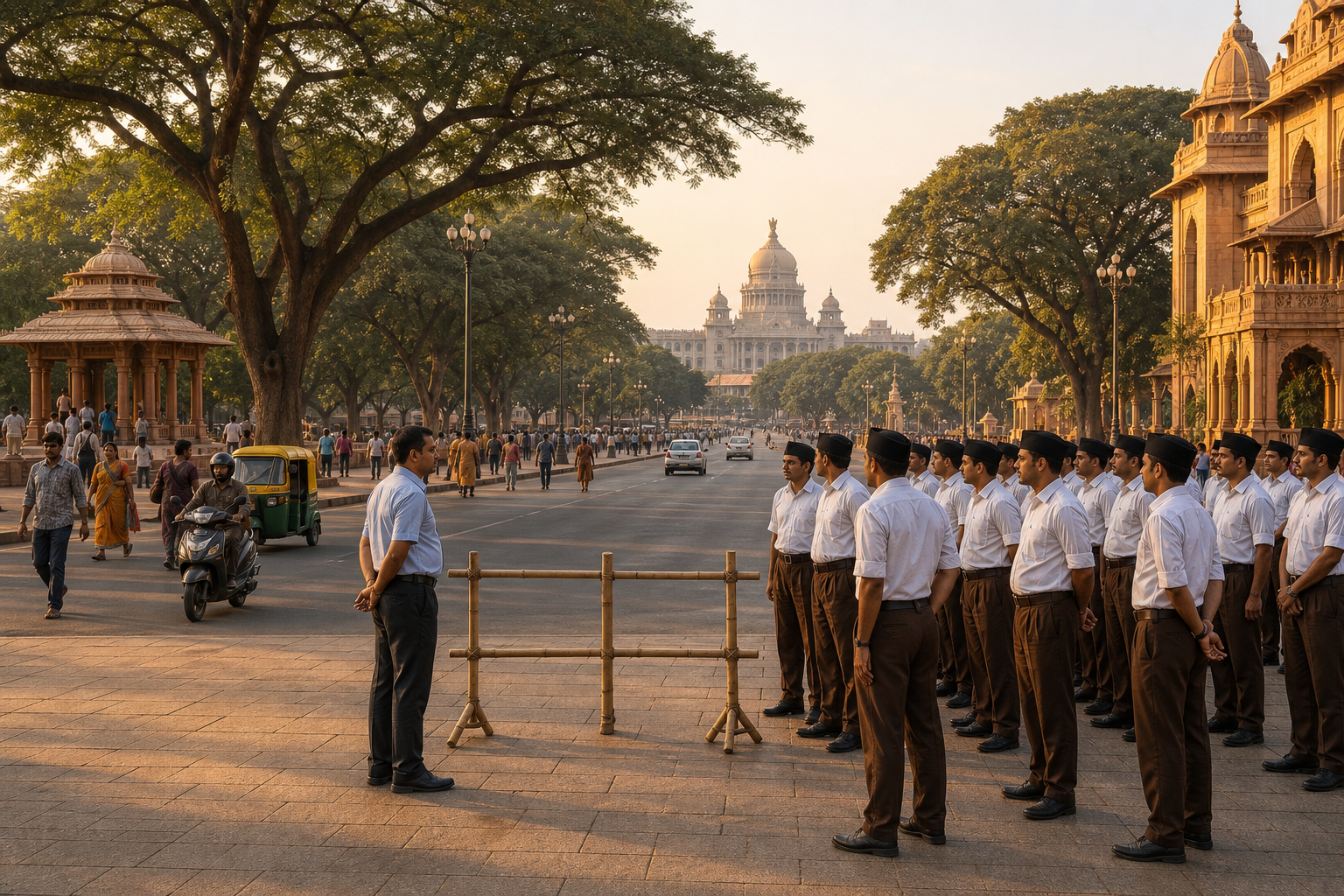
If you organize an RSS baithak or route march in Karnataka, or simply care whether Hindu civic groups receive equal treatment, the practical question is not whether the state may manage public property. It may regulate safety, traffic, crowds, sanitation, and damage to shared assets. The real question is whether those neutral purposes are being administered through clear rules or used as a political veto.
You can answer that question without accepting either side’s slogans. Start with the legal status of the measure, test how permission decisions are actually made, and preserve the records that would reveal unequal treatment.
What Karnataka has proposed, and what it has not
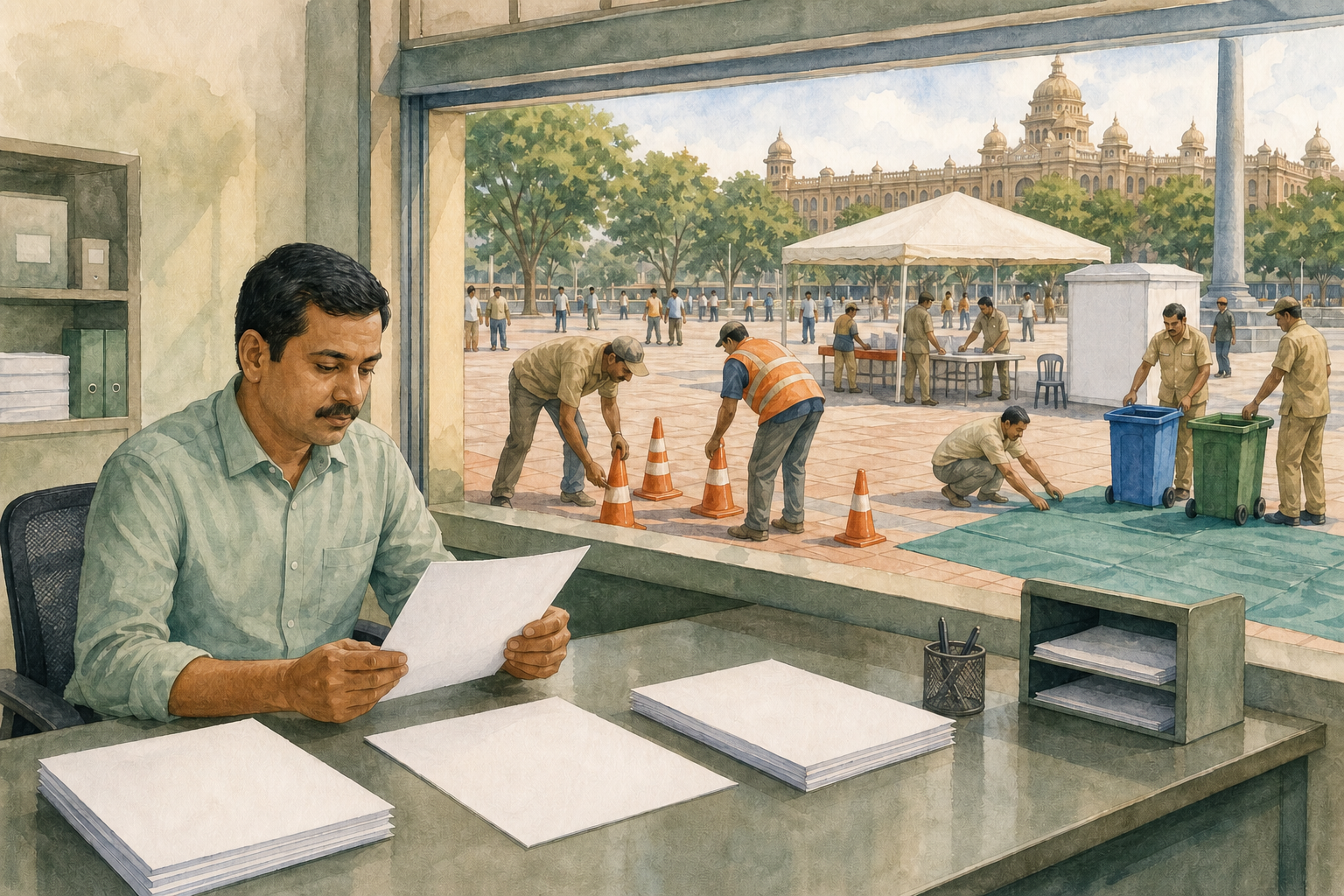
The Karnataka Cabinet has approved the Karnataka Regulation of Use of Government Premises and Public Property Bill, 2026. The proposed framework would require organizations to obtain prior permission for activities on government premises and public property, including parks, playgrounds, roads, and other public assets.
That description matters. A prior-permission system is not, by itself, a ban on RSS activity. It can be an ordinary administrative tool when several groups want the same ground, a procession affects traffic, or an event requires crowd and sanitation arrangements. But it can become a serious civic-freedom problem when the criteria are vague, the authority has unbounded discretion, or politically favored organizations receive approvals that comparable RSS events do not.
The Bill is expected to replace an October 2025 government order that imposed a similar permission requirement and was stayed by the Karnataka High Court. Keep those legal stages separate. Cabinet approval of a Bill is not the same thing as final enactment, and a stay of one government order is not a permanent ruling that every possible permission system is unlawful.
Before planning an event, obtain the current operative instrument from the responsible authority. Do not rely on a minister’s speech, an old application form, or the assumption that the High Court stay leaves every public space unrestricted. The exact rule in force on the event date is the document that controls the immediate administrative question.
The real neutrality test begins after the law is written
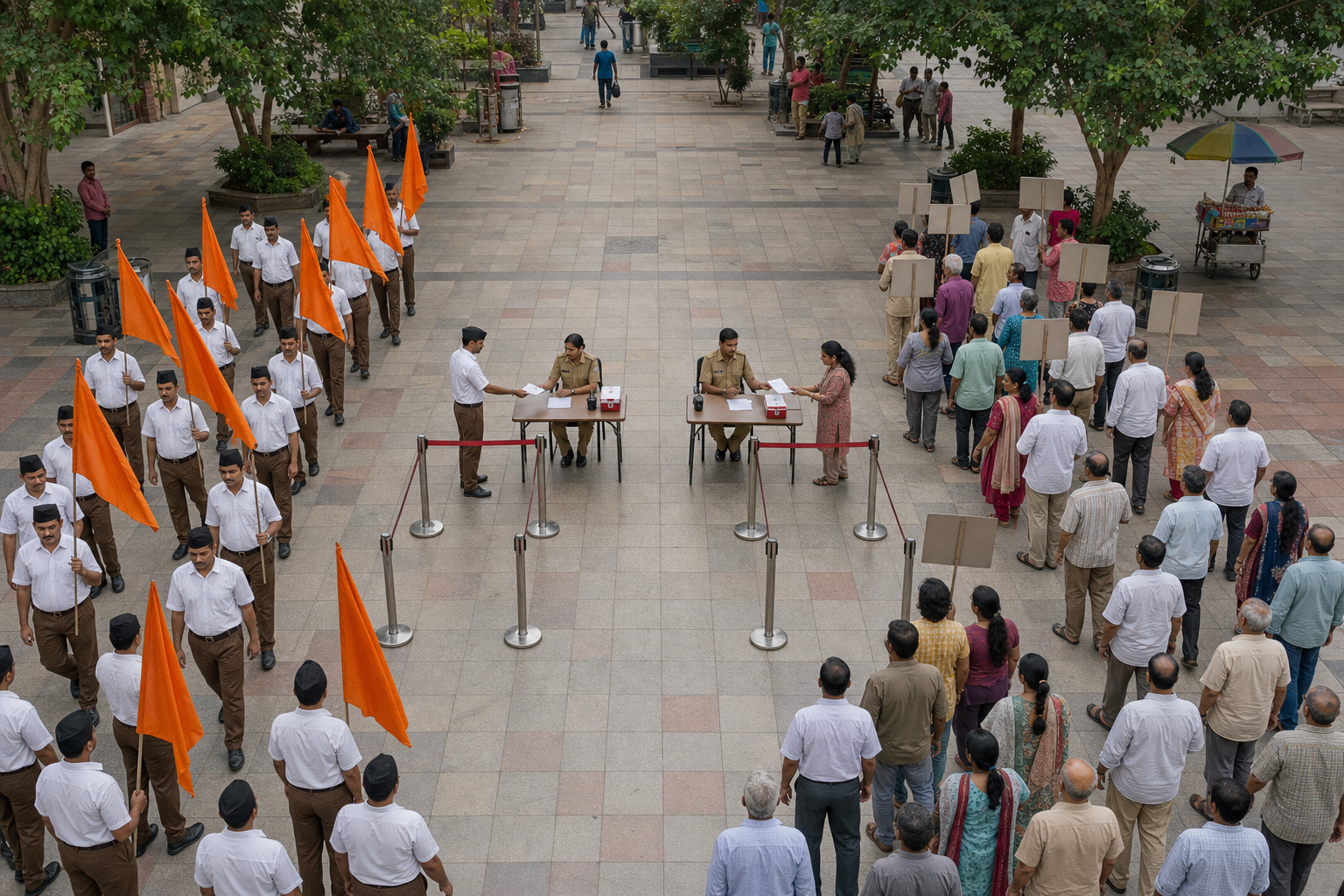
The Karnataka government presents the proposed rule as universal rather than RSS-specific. That claim should be tested through administration, not accepted or rejected solely because of political rhetoric. A law may contain neutral nouns such as organization, event, road, and playground while still leaving room for selective enforcement. Conversely, political disagreement with the RSS does not by itself prove that every permit decision is discriminatory.
Use five questions to distinguish public-space management from a permission raj:
- Are the regulated places and activities defined precisely enough for an organizer to know when permission is required?
- Are decisions tied to objective concerns such as traffic, safety, crowd capacity, sanitation, scheduling conflicts, and protection of public assets?
- Do RSS groups and comparable non-RSS groups face the same forms, filing requirements, decision-makers, conditions, and waiting periods?
- Does the authority give a timely written decision with specific reasons, especially when it refuses permission or imposes burdensome conditions?
- Is there a usable process for review when an organizer believes the decision is mistaken or unequal?
The comparison must be like-for-like. A small indoor meeting is not a sound comparator for a route march that closes roads. Nor should officials compare a large procession by one organization with a neighborhood gathering by another. Match the type of property, expected attendance, duration, route, traffic effect, date, security needs, and requested facilities. Unequal outcomes become meaningful evidence only after those relevant differences have been accounted for.
Pay close attention to unexplained delay. A refusal can be challenged as a refusal; silence until the proposed event date has passed can achieve the same result while avoiding an explicit decision. Record when the application was submitted, which office received it, what additional information was requested, when you supplied it, and when comparable events received answers. A chronology is more useful than a general accusation of bias.
Why the RSS context cannot honestly be removed
The proposed Bill may use general language, but it has emerged amid recurring political conflict over RSS baithaks and sanchalanas. That context justifies scrutiny. It does not, standing alone, prove that the legislation was designed exclusively to suppress the Sangh.
The RSS is also not a temporary campaign assembled to secure occasional access to a park. Established in 1925, it has built a century-old volunteer network whose supporters identify education, rural development, social harmony, environmental work, disaster response, and community service as central parts of its public contribution.
Its own institutional record says swayamsevaks worked across affected villages during the 2010 North Karnataka floods and participated in housing rehabilitation. The organization also reported that 18,842 swayamsevaks attended 95 training camps in 2026, with training touching village development, family awareness, disaster management, and environmental work. These are the RSS’s reported figures and account of its work, not an independent audit, so they should be described with that qualification.
That civic record is relevant to the political framing, but it does not create a legal exemption from neutral public-space rules. The reverse principle matters just as much: political hostility to Hindutva does not erase an organization’s claim to equal administration. Service cannot mean automatic permission, and ideological disfavor cannot mean automatic refusal.
When public debate offers only those two extremes, ask for the missing evidence: the rule, the application, the conditions, the written decision, and the treatment of comparable events. That is where a claim of neutrality either holds or breaks.
What an RSS organizer should document before an activity
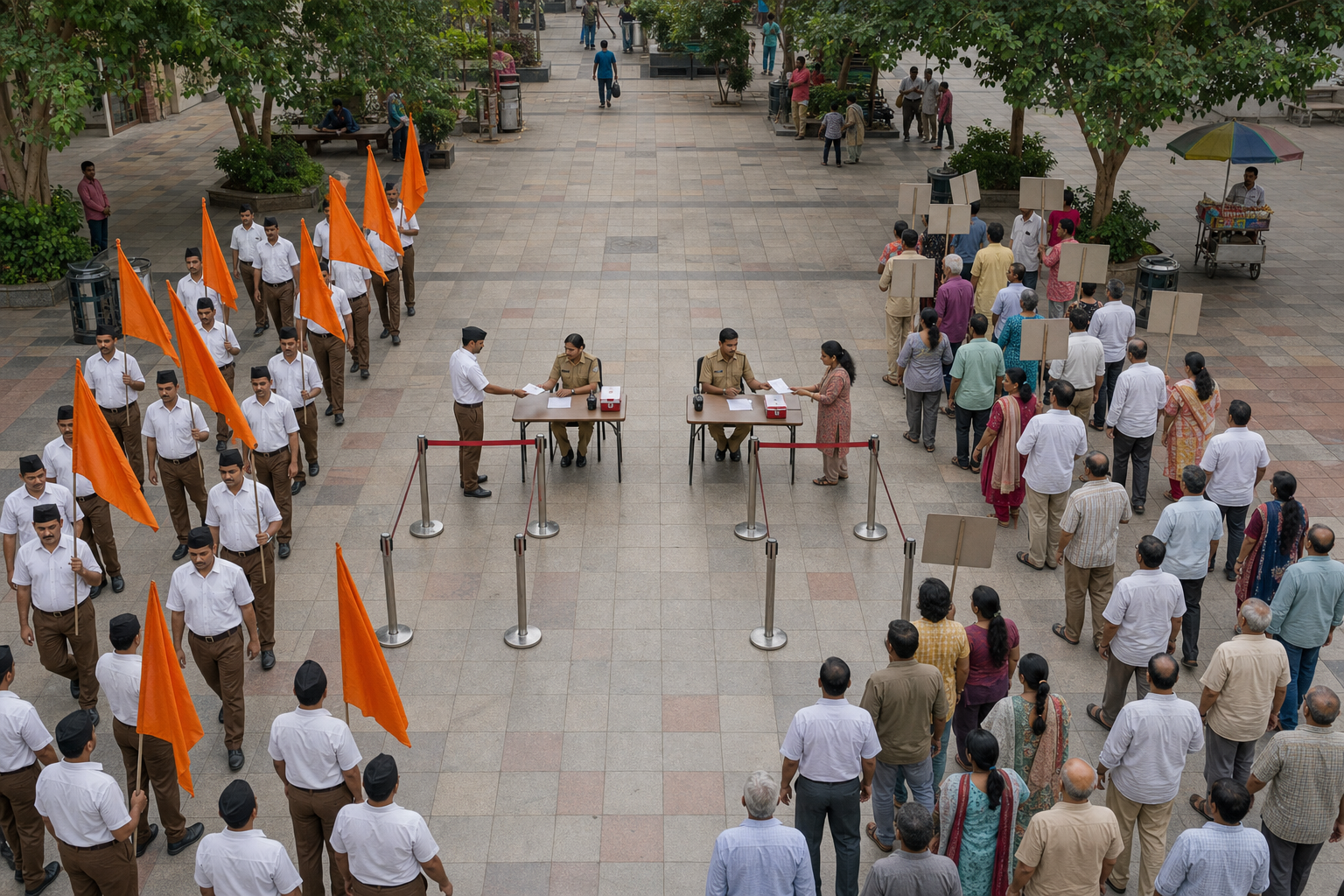
A disciplined application protects the public event and creates a reliable record if the decision later becomes contentious. Treat permission as an administrative file, not an informal conversation with a local official.
- Identify the exact public asset and controlling authority. A road, park, playground, government hall, and school ground may not be managed by the same office.
- Secure the current rule and application requirements. Confirm whether the event, venue, and route fall within the operative permission system rather than relying on the stayed 2025 order or descriptions of the proposed 2026 Bill.
- Describe the activity precisely. Include the proposed date and time, location or route, expected attendance, likely traffic effect, stewarding arrangements, sanitation plan, and how the property will be restored after use.
- Submit in a traceable form. Preserve the complete application, attachments, filing date, acknowledgment, reference number, and the name or designation of the receiving office.
- Answer requests for additional information in writing. If an official asks orally for a change, send a calm written confirmation of what was requested and when you complied.
- Ask for a written decision. If permission is refused, delayed, or burdened with conditions, request the precise reason and the rule on which the authority relies.
- Build only matched comparisons. Record publicly verifiable details of similar events by other organizations, including venue, size, route, date, duration, and conditions, before alleging differential treatment.
- Keep post-event evidence. Photographs of the restored site, sanitation records, and compliance with approved timings can answer later claims that the organization misused public property.
Do not proceed merely because you believe the permission requirement is unconstitutional or politically motivated. An unauthorized event can create legal exposure, public-safety problems, and avoidable conflict for volunteers. If a refusal, condition, or strategic delay threatens an event, take the current instrument and the full paper trail to a Karnataka lawyer who can assess the operative law and the available remedy. Political confidence is not a substitute for case-specific legal advice.
Organizers should also resist turning every routine condition into evidence of persecution. A narrowly tailored traffic diversion or cleanup requirement may be legitimate. The warning signs are inconsistent conditions, irrelevant ideological questions, shifting demands, unexplained silence, reasons unsupported by the applicable rule, or a materially easier process for genuinely comparable organizations.
Key takeaways
- Karnataka’s 2026 measure is a proposed prior-permission framework for government premises and public property, not an express statutory ban on the RSS.
- Public spaces may be regulated for safety, traffic, crowds, sanitation, scheduling, and asset protection, but those criteria must be clear and applied consistently.
- The political conflict surrounding RSS meetings and route marches warrants scrutiny, yet political context alone does not prove discriminatory enforcement.
- The strongest test is comparative administration: the same process, timing, conditions, reasons, and review opportunity for genuinely similar events.
- RSS service work explains why supporters reject attempts to reduce the organization to a political nuisance, but it does not place RSS activities above neutral rules.
- A complete written record protects organizers far better than an undocumented exchange or a broad public allegation.
Before the next baithak or sanchalana, create one file containing the current rule, the complete application, its acknowledgment, every official response, the event-management plan, and any properly matched comparison. If Karnataka’s system is genuinely neutral, that record will show it. If it becomes a selective barrier against the RSS, the same record will make the disparity much harder to conceal.
References
