
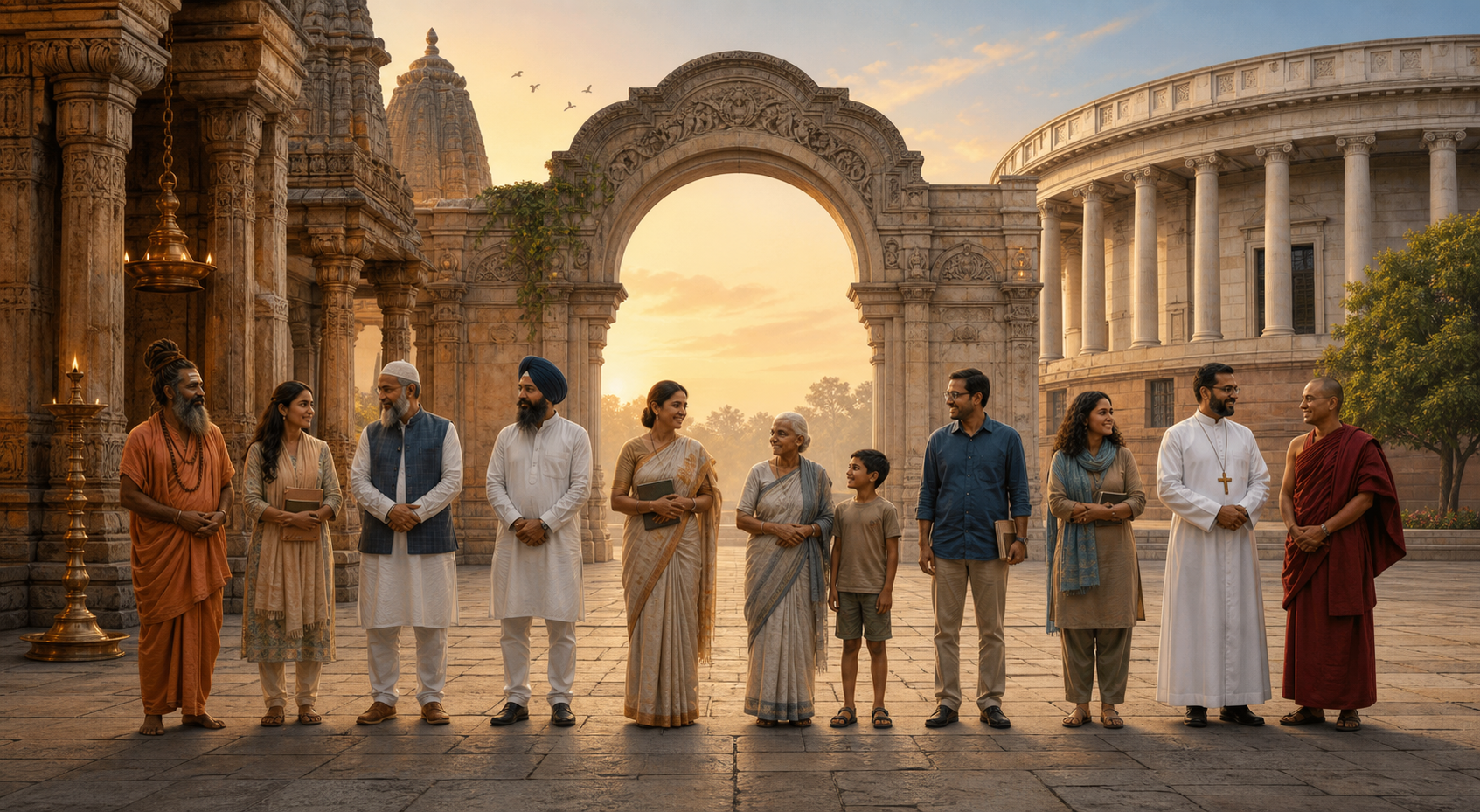
You may want Bharat to recover its Hindu civilizational confidence and still recoil from any state that makes a non-Hindu citizen less Indian. Or you may defend secular government yet resent a version of secularism that treats Hindu memory as a public embarrassment. If that is your dilemma, the slogan-level debate is asking you to choose too early.
The workable answer is conditional. Hindu Rashtra can coexist with India’s secular identity when it names a civilizational character and binds government to equal citizenship, freedom of conscience and limited power. It cannot coexist with secular identity when it becomes a license for religious tests, unequal public rights or coercion. As India marks its 80th Independence Day on 15 August 2026, the call to reclaim Bharat as a Hindu homeland makes this distinction urgent.
First separate the arguments hiding inside the labels

Most disputes about Hindu Rashtra go nowhere because the participants use the same phrase for different political arrangements. One person means civilizational self-respect. Another hears religiously graded citizenship. A third wants institutional reform but has not decided what legal structure should follow. Agreement or disagreement with the phrase tells you very little until its intended meaning is made explicit.
| Expression | Possible meaning | What follows |
|---|---|---|
| Hindu Rashtra | Bharat understands itself as a Hindu civilization shaped by Hindu memory, sacred geography and cultural inheritance. | This can coexist with equal citizenship because a civilizational description does not by itself allocate legal rights. |
| Hindu Rashtra | Public institutions actively protect and transmit Hindu civilizational continuity. | Compatibility depends on the methods used, the freedoms retained and whether comparable cases receive principled treatment. |
| Hindu Rashtra | A citizen’s public status, eligibility or protection varies according to religion. | This conflicts with secular equality and turns cultural confidence into a hierarchy enforced by the state. |
| Secular India | Government does not grade citizens by their theology and protects freedom of conscience. | This is compatible with public recognition of India’s Hindu civilizational inheritance. |
| Secular India | The nation must conceal or depreciate its Hindu inheritance to prove neutrality. | This confuses fair government with cultural amnesia. |
| Secular India | Selective restrictions are described as neutrality even when comparable communities are treated differently. | This fails the secular standard it claims to uphold. |
The most important distinction is therefore between civilizational identity and governmental power. They are separate axes, not opposite ends of one line. A country can publicly acknowledge the civilization that formed it while limiting what officials may do to an individual. It can also proclaim neutrality while administering institutions unevenly. The label alone guarantees neither justice nor injustice.
The 42nd Constitutional Amendment added the word secular to the Preamble, but that textual fact cannot settle the whole dispute. A constitutional word must be translated into rules, procedures and remedies. The practical question is not merely whether India calls itself secular. It is whether an Indian’s treatment by the state changes because of belief, and whether Hindu traditions encounter the same governing principles applied to comparable traditions.
Key takeaways
- You can support Bharat’s Hindu civilizational identity without supporting unequal citizenship.
- Secularism deserves defence when it protects conscience, equal civic standing and restraints on state power. It deserves criticism when it demands cultural erasure or excuses selective treatment.
- Do not endorse or reject Hindu Rashtra until you know the proposed change in law, administration, education or public culture.
- Test every proposal for equal citizenship, freedom of conscience, principled symmetry and safeguards against future abuse.
- A pro-Hindu political programme earns moral authority by protecting Hindu continuity without making anyone’s Indian belonging conditional on theology.
Put every proposal through four practical tests

You do not need to resolve every philosophical question before judging a political proposal. You need to convert the proposal into an operative rule and ask what that rule permits. These four tests expose the difference between a cultural aspiration and a blank cheque for power.
1. The equal-citizenship test
Ask whether religion by itself changes a person’s civic standing. Can every citizen vote, seek public office, obtain ordinary public services and receive the protection of general law on equal terms? If the answer changes solely because a person is Hindu, Muslim, Christian, Sikh, Buddhist, Jain or has no faith, the proposal has crossed from civilizational recognition into religious grading.
This does not mean every institution is identical. A temple, monastery, gurdwara, church, private association and municipal office perform different functions. Different functions may justify different rules. What matters is whether the government can give a public reason tied to that function, apply the reason consistently to comparable cases and allow an affected party to challenge the decision.
When someone says a policy favours Hindus, press for the operative sentence: Who receives what right, benefit or burden, under which criterion? If the answer remains a mood rather than a rule, there is not yet enough substance to support.
2. The freedom-of-conscience test
Dharma cannot be strengthened by manufacturing outward conformity. A government may protect the conditions in which traditions can live: worship, learning, association, transmission, festivals, pilgrimage and care for sacred places. That is different from compelling devotion or authorising officials to determine whether an individual’s inner conviction is acceptable.
Freedom of conscience must include the ability to practise a faith, decline a practice and change one’s convictions without violence or official intimidation. The state may act against coercion, fraud or threats through general law, but identity cannot substitute for evidence. Otherwise a rule advertised as protection becomes a weapon that changes hands whenever political power changes hands.
Use a simple question: Does this measure enlarge the space in which Hindu life can flourish, or does it enlarge the government’s power to police belief? The first can serve civilizational renewal. The second should make a Dharmic society cautious.
3. The principled-symmetry test
Secularism loses credibility when neutrality is asserted but comparable communities meet different standards without a clear reason. Yet formal sameness is not enough. Extending an intrusive control from one community to every community produces equal control, not greater freedom. The better remedy is often to reduce unnecessary control and raise everyone toward a fairer level of autonomy.
Audit a proposed reform with concrete comparisons:
- Public funding: Are eligibility criteria published, relevant to a public purpose and available to comparable institutions?
- Institutional administration: What event triggers government intervention, who makes the finding and how can the institution appeal?
- Heritage protection: Is protection based on cultural significance, vulnerability and public value, or merely on the identity of the community?
- Education: Does the programme teach students about India’s traditions as history, philosophy, literature and living culture, or require devotional assent?
- Exceptions: If two apparently similar cases receive different treatment, is the distinction stated publicly and connected to the purpose of the rule?
Do not demand mechanical sameness where the facts differ. Do demand a principle that can be stated in advance. A government that invents its principle after seeing the identity of the affected group is not administering neutrality.
4. The hostile-successor test
Judge every new power as if it will eventually be used by a government you distrust. This is the most neglected test in identity politics. A sympathetic officeholder may promise restraint, but the office and its legal powers will outlast that person.
If an authority will define acceptable Hindu practice, ask who appoints it, which Hindu traditions are represented, whether reasons must be published and where an appeal goes. If an official may restrict an institution in the name of harmony, ask what evidence is required and whether a court or other independent body can review the action. If an exception is described as temporary, ask for its end condition and review date.
A good intention is not an institutional safeguard. The most Dharmic approach to political power is to remember that rulers have duties, citizens retain standing and no officeholder should be treated as morally infallible. A rule does not become safe merely because people you trust will administer it first.
The pro-Hindu case is strongest when it limits power
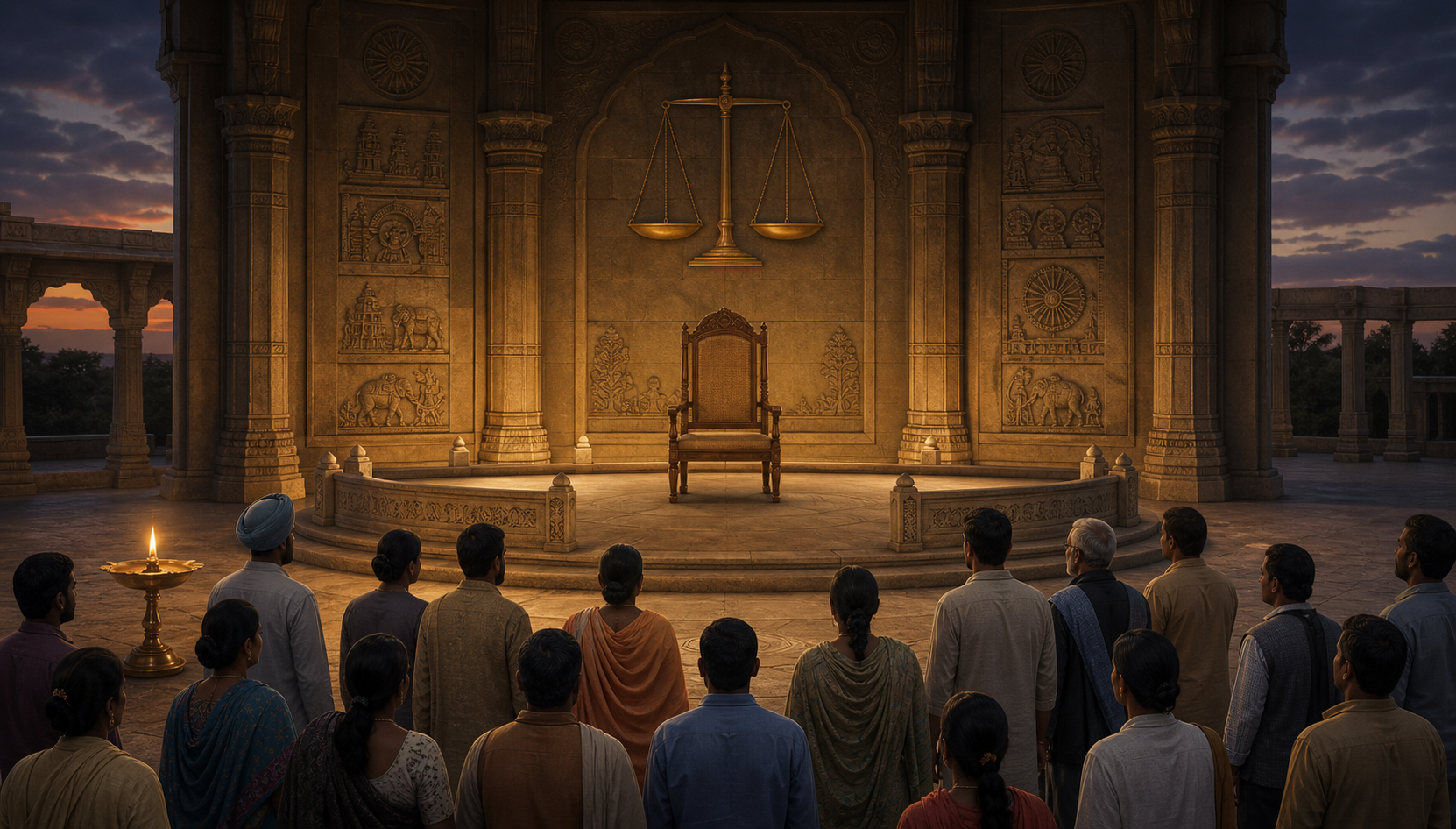
The strongest case for Hindu Rashtra is not simply that Hindus are numerous. Numbers can win an election; they cannot establish the moral character of a state. The stronger case is that Bharat should not have to disguise the Hindu traditions that made much of its cultural world intelligible, and that governmental neutrality should not become a one-way demand for Hindu withdrawal from public memory.
That concern deserves a serious answer. Civilizational continuity is not the same as private belief. It appears in languages, philosophical categories, sacred landscapes, calendars, festivals, artistic forms, family practices and inherited ideas about duty. A state need not pretend that all of this arrived from nowhere. Public acknowledgement becomes dangerous only when officials use it to decide whose citizenship is complete.
A constructive pro-Hindu programme would therefore concentrate on work that remains defensible even when applied under equal civic guarantees:
- Civilizational literacy: Teach Hindu thought, history, literature and cultural practices with intellectual seriousness. Clearly distinguish learning about a tradition from compulsory worship.
- Cultural continuity: Protect languages, festivals, pilgrimage routes, temples, archives, manuscripts and other heritage through transparent criteria and competent stewardship.
- Institutional fairness: Identify an actual asymmetry, compare genuinely similar cases and publish the rule that should govern both.
- Historical honesty: Permit a full account of achievement, destruction, resistance, reform and continuity without assigning inherited guilt to present-day citizens.
- Secure national belonging: Make it possible for a non-Hindu Indian to honour the country’s civilizational inheritance without pretending to accept Hindu theology.
The fourth point is especially important. Historical memory is necessary for cultural maturity, but collective blame is a poor substitute for responsibility. A present citizen should be judged for present conduct. Otherwise the state begins to punish ancestry, and political grievance becomes permanent because no living person can change an ancestor.
The phrase Hindu Rashtra also cannot gain moral credibility by flattening every Dharmic tradition into one administrative label. Hindu, Buddhist, Jain and Sikh communities have related histories and share parts of a civilizational home, but that does not erase their distinctive teachings, institutions or chosen self-understandings. Shared inheritance should support conversation and cooperation, not compulsory absorption.
The same civic principle protects Muslim and Christian citizens. They should not have to surrender theological difference to prove loyalty to India. The state may demand obedience to general law and respect for the equal rights of neighbours. It should not demand devotional agreement. Political belonging must be robust enough to contain religious disagreement.
Supporters of Hindu Rashtra should state their red lines before asking for authority. A serious programme should refuse:
- religion as an automatic qualification or disqualification for ordinary citizenship rights;
- compelled devotional observance by citizens as a test of patriotism;
- collective penalties imposed on a community for an individual’s conduct;
- an unreviewable body empowered to declare which Hindu sects or practices are authentic;
- administrative favour delivered without published criteria, reasons or an appeal mechanism.
Defenders of secular India have corresponding work to do. Repeating the word secular does not answer a documented complaint about unequal administration. They should identify the governing principle, compare like cases and correct unjustified differences. They must also recognise that public Hindu culture is not automatically state coercion. A festival, civilizational name, historical commemoration or respectful teaching about a tradition does not by itself reduce another citizen’s rights.
This is where both camps are tested. The pro-Hindu camp must show that civilizational confidence can live with limits on power. The secular camp must show that equal citizenship does not require Bharat to become culturally anonymous.
Make the debate concrete before choosing a side
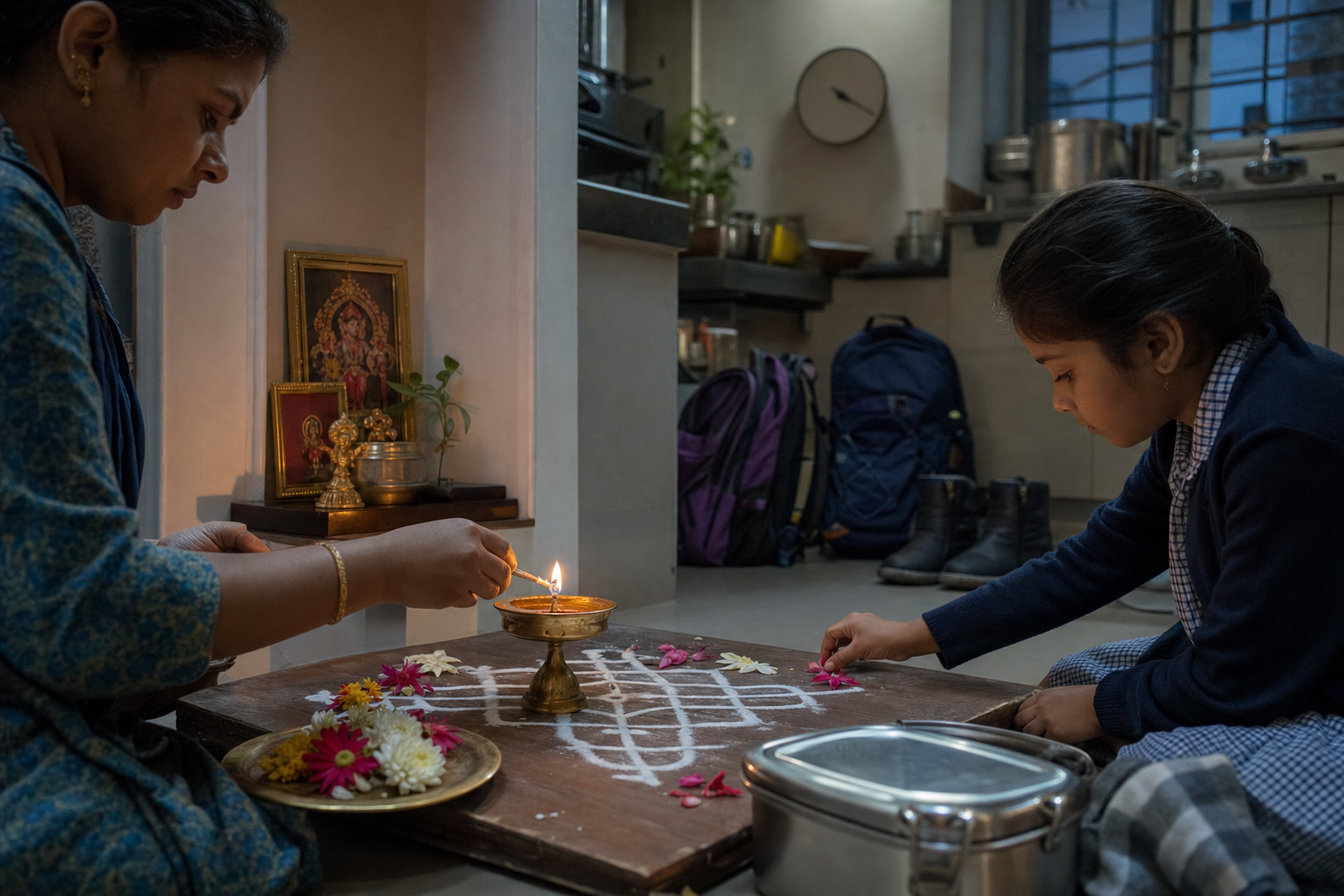
When the next discussion turns into a contest between loyalty and fear, slow it down. Ask for one proposed change at a time. A constitutional description, a school curriculum, rules for religious institutions and a citizenship qualification are not interchangeable. Each creates different powers and therefore needs a separate judgment.
- Ask for the policy sentence. What exactly would be added, removed, permitted or prohibited?
- Name the affected parties. Who gains a freedom, who acquires a duty and who receives enforcement power?
- Apply the four tests. Check equal citizenship, conscience, principled symmetry and protection against a hostile successor.
- Demand the remedy. If an official applies the rule unfairly, where can the citizen or institution challenge the decision?
- Separate symbol from legal effect. A symbolic acknowledgement may express civilizational identity without changing rights. A modest-sounding administrative clause may transfer substantial coercive power.
- State both commitments together. Do not allow anyone to make you choose between Hindu continuity and the equal civic standing of Indians.
If this reflects your position, you can put it plainly: Bharat’s Hindu civilizational character deserves confident public recognition. Every Indian deserves equal citizenship, freedom of conscience and protection from arbitrary state power. Secular government should mean those guarantees, not hostility to Hindu culture. Hindu Rashtra should mean civilizational responsibility, not a confessional hierarchy.
That formulation will not satisfy every partisan. It is still more useful than a slogan because it tells lawmakers, administrators and activists what you will support and what you will refuse. It also exposes evasions. Anyone seeking your support must explain how the proposed institution will operate after friendly leaders are gone.
At your next discussion, decline the forced yes-or-no answer until the definition, policy and safeguards are on the table. Keep civilizational confidence and equal citizenship in the same sentence. A Hindu renewal worthy of dharma should not fear equal civic standing, and a secular India worthy of Bharat should not require civilizational amnesia.
References
