
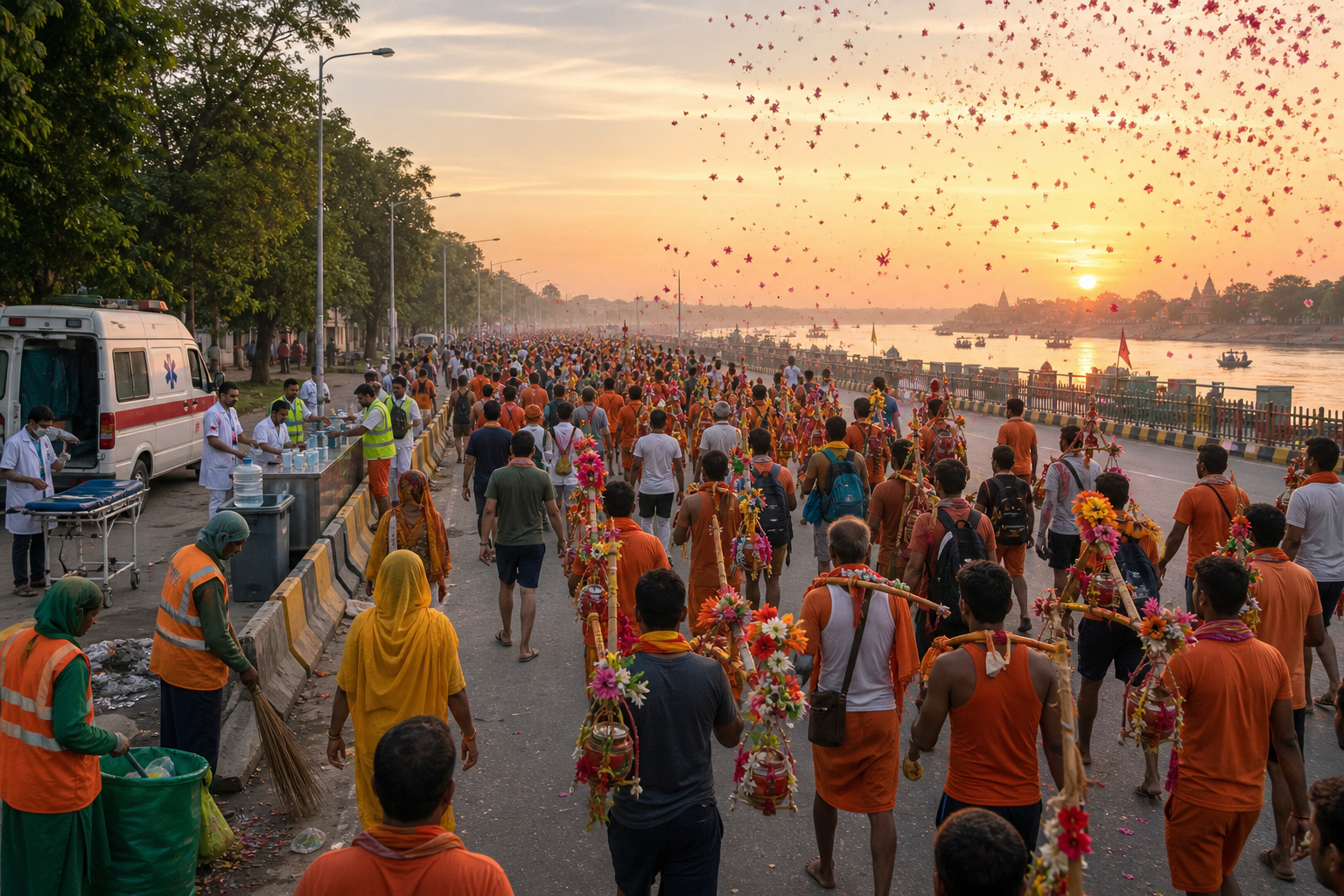
If you are watching officials manage a Kanwar Yatra route and wondering whether you are seeing ordinary public administration or religious patronage, do not begin with the word “support.” It is too vague. Ask what the state actually did, why it did it, who paid for it and whether the same rule could be applied to another large public gathering.
You do not have to choose between erasing Hindu life from public space and defending every ceremonial gesture made by a government. Safe passage, sanitation and emergency planning belong to one category. Official participation in devotional honour belongs to another. Keeping that distinction clear protects both the Kanwar Yatra and the credibility of secular government.
Key takeaways
- Public safety arrangements for a religious procession are not, by themselves, state endorsement of its theology.
- Traffic control, sanitation, medical readiness and communication should be judged by public need, scale and risk.
- Floral showers and similar honours are expressive acts, so they require a stronger and more transparent justification than routine administration.
- Equal treatment does not require identical expenditure on every event; it requires general criteria applied without hostility or favour.
- A pro-Hindu position can defend visible Hindu practice while still opposing compulsory devotion, opaque spending and partisan ownership of a yatra.
State support is not one thing
The 2026 controversy sharpened as the yatra ended on 11 August, with official facilitation since 2014 being accused of weakening the secular foundations of the state. That accusation cannot be evaluated until “facilitation” is unpacked.
For practical purposes, divide state action into three categories:
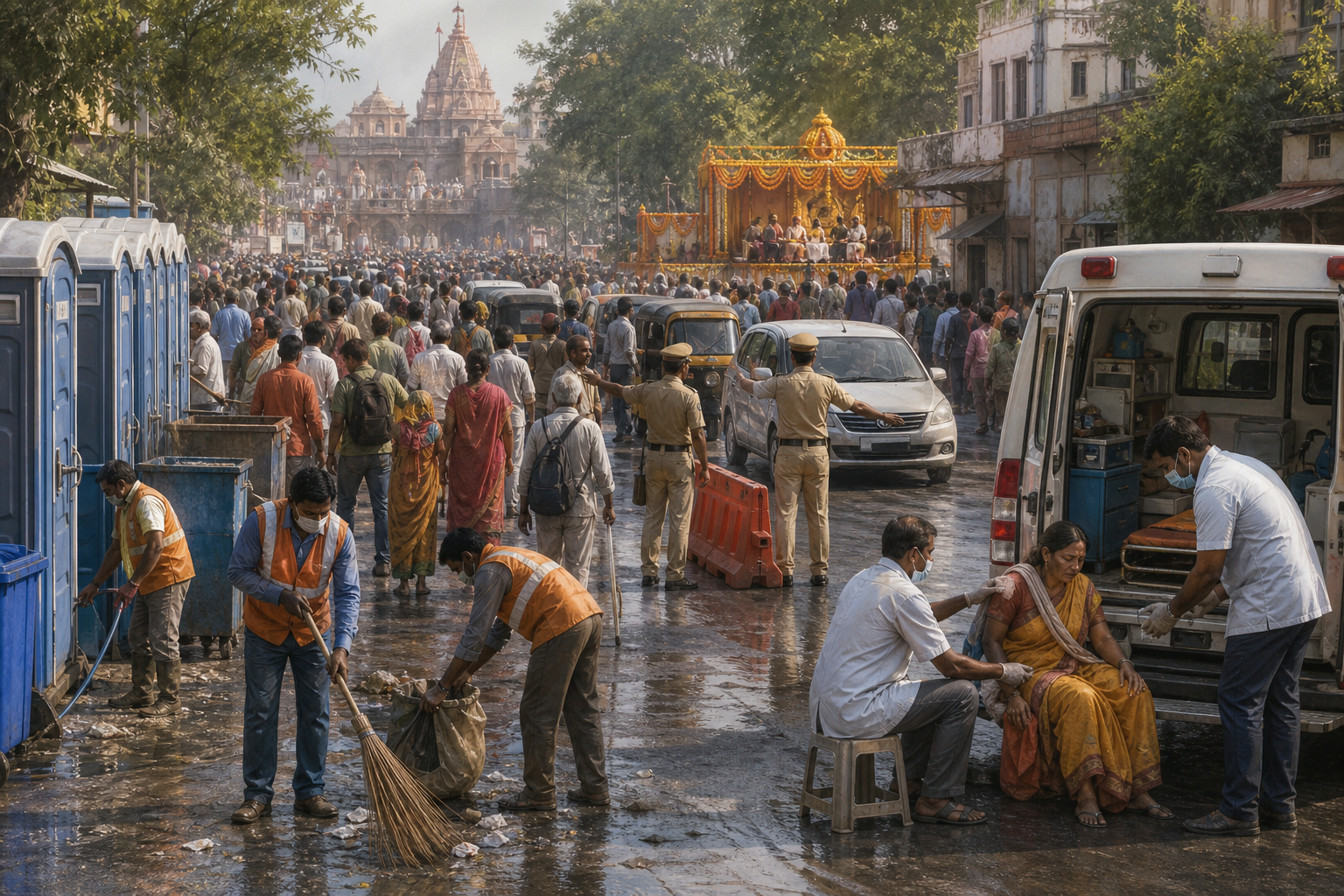
- Essential public administration: route management, traffic diversions, policing, sanitation, emergency access, public information and measures that protect pilgrims, residents and other road users.
- Proportionate civic accommodation: temporary arrangements that make a lawful gathering workable without transferring ownership of the religious observance to the government.
- Ceremonial favour: symbolic honours, devotional messaging or official conduct whose main purpose is to express reverence rather than deliver a public service.
A single yatra can involve all three. Calling the entire package either “administration” or “religious endorsement” hides the decision that actually matters.
Traffic diversions illustrate the first category. A procession affects shared roads whether the state approves of its beliefs or not. Leaving the route unmanaged would not make the state neutral; it would make the state negligent toward pilgrims, commuters, shopkeepers and emergency vehicles. Barricades and route notices serve people outside the yatra as much as those within it.
The same reasoning applies to sanitation and medical readiness. These measures respond to human concentration and foreseeable civic burdens. Their legitimacy rests on function. If the event were a marathon, political rally, cultural festival or gathering of another faith, comparable conditions should activate comparable planning.
Ceremonial honour cannot simply inherit that justification. It may be benign, popular or culturally intelligible, but it is still expressive. A clear defence of the yatra should acknowledge that difference instead of pretending that every government gesture is necessary for crowd management.
Flower showers expose the real disagreement

The debate over floral showers offered to Kanwariyas is difficult precisely because petals do not perform the same civic function as ambulances, toilets or traffic officers. A shower of flowers communicates honour. That does not automatically make it unlawful or hostile to other faiths, but it does make the act a serious test of state neutrality.
Before deciding whether a particular shower crossed the line, ask for the administrative facts:
- Was the act organised in an official capacity or by citizens and community organisations?
- Did public money, government personnel or government equipment make it possible?
- Were employees ordered to participate in devotional expression, or was participation voluntary?
- Was there a written public-purpose justification, or only political celebration?
- Does a general policy permit comparable ceremonial recognition for other major cultural or religious gatherings?
Without those facts, both instant verdicts are premature. A photograph of uniformed officials and falling petals does not reveal the authorising order, the funding route or whether anyone was compelled. Conversely, popularity among pilgrims does not turn an expressive state act into a safety measure.
The strongest pro-Hindu argument is therefore not that flowers have no symbolic meaning. It is that Hindu pilgrims must not be treated as civic intruders merely because their devotion is visible. Kanwariyas are entitled to safety, dignity and equal access to public administration. Criticism becomes suspect when the existence of Hindu worship in shared space is itself treated as the offence.
The strongest secular objection is equally specific. It should identify selective spending, official compulsion or a rule that cannot be generalised. Mere discomfort with a Hindu procession is not a constitutional principle. But neither is public enthusiasm a blank cheque for government patronage.
This precision matters because a loose defence can weaken the yatra. If every ceremonial intervention is described as essential facilitation, critics can portray the entire administrative effort as sectarian. Separating services from symbolism lets you defend indispensable arrangements without becoming responsible for every political gesture attached to them.
Equality requires general rules, not religious erasure

Secularism cannot sensibly mean that the state behaves as though religion has disappeared. A government must deal with the society that exists, including its pilgrimages, processions, festivals and sacred calendars. Neutrality is tested by how it deals with those realities, not by whether it can avoid mentioning them.
At the same time, equality does not mean mechanically spending the same amount or deploying the same number of personnel for every gathering. Events impose different burdens. Route length, attendance, duration, traffic impact, public-safety needs and local conditions can justify different administrative responses. What must remain stable is the rule used to reach the decision.
Use three symmetry tests when someone claims either discrimination or favouritism:
- The comparable-burden test: Would an event creating the same traffic, sanitation and safety demands receive similar civic services?
- The comparable-access test: Can organisers from another community invoke the same policy, submit the same request and receive a reasoned decision?
- The counterfactual test: Would you defend the same official conduct if the religious identity changed but every administrative fact remained the same?
The counterfactual test is especially useful, but it must be applied honestly. You should change the identity, not the scale. Comparing a major procession with a small neighbourhood observance proves little. The right comparison holds civic impact constant and then asks whether the government’s reasoning changes with the faith involved.
You should also distinguish a public official’s personal devotion from the use of public office. A minister visiting as a Hindu citizen is not necessarily the same act as a department directing staff, funds and official machinery toward worship. The relevant questions are capacity, resources and compulsion. Public figures do not cease to have a religious identity, but their personal identity cannot erase their institutional obligations.
This framework also exposes asymmetric secularism. If Hindu processions are repeatedly described as inherently disorderly while comparable disruptions from other public events are treated as ordinary management problems, the language is not neutral. Criticise a blocked ambulance, an assault or property damage as specific conduct. Do not turn the misconduct of an individual into a civil disability for an entire pilgrimage.
The reciprocal duty matters too. Religious purpose does not place a pilgrim above traffic instructions, safety rules or the rights of residents. A confident Hindu defence should be able to condemn proven misconduct without accepting collective vilification. That combination protects the yatra more effectively than either denial or stereotyping.
A five-question audit for any secularism claim
When a video, headline or political speech declares state action either anti-Hindu or anti-secular, run this audit before adopting the conclusion. It works for the Kanwar Yatra and for other religious gatherings.
- Name the exact act. Replace “the government supported the yatra” with a concrete description: police changed a route, a department supplied sanitation, an official attended worship, or public resources were used for a ceremonial welcome. If the act cannot be named, the claim is not ready to evaluate.
- Identify the public purpose. Ask what problem the action was meant to solve. Safety, sanitation and mobility are recognisable civic purposes. Religious honour, electoral messaging and institutional devotion are different purposes, even when they accompany the same event.
- Trace authority and resources. Look for the order, department, budget, personnel and equipment involved. A community-funded welcome and a state-funded ceremony may look similar in a short clip but raise different questions.
- Write the rule in general terms. Try to state a policy without naming Kanwariyas or Hindus. For example: “Large public processions creating specified traffic and safety burdens receive temporary route management.” If the justification works only after the favoured identity is inserted, it is probably patronage rather than neutral administration.
- Check burdens, safeguards and remedies. Ask how residents were informed, how emergency access was preserved, how complaints could be made and whether organisers faced the same conduct expectations imposed on comparable events.
Two types of evidence should change your initial view. Evidence of neutral criteria, documented public need and proportionate deployment strengthens the case for legitimate accommodation. Evidence of compelled devotional participation, opaque ceremonial expenditure or selective access strengthens the case that the state moved from facilitation into favour.
Absence of evidence should not be filled with political instinct. If the administrative record is missing, say that the verdict is provisional. Ask the relevant authority for the order or funding basis, or use the applicable public-information procedure. Calling an act unconstitutional from an image alone is no more rigorous than declaring it neutral because the beneficiaries are Hindu.
Watch the language as carefully as the expenditure. “Pilgrims were protected” describes citizens receiving security. “The state performed devotion” describes institutional religious expression. “The route was regulated” describes administration. “The yatra was patronised” is a conclusion that still needs evidence. Precise verbs often reveal whether a dispute concerns governance, symbolism or prejudice.
A dharmic position should demand dignity without dependency
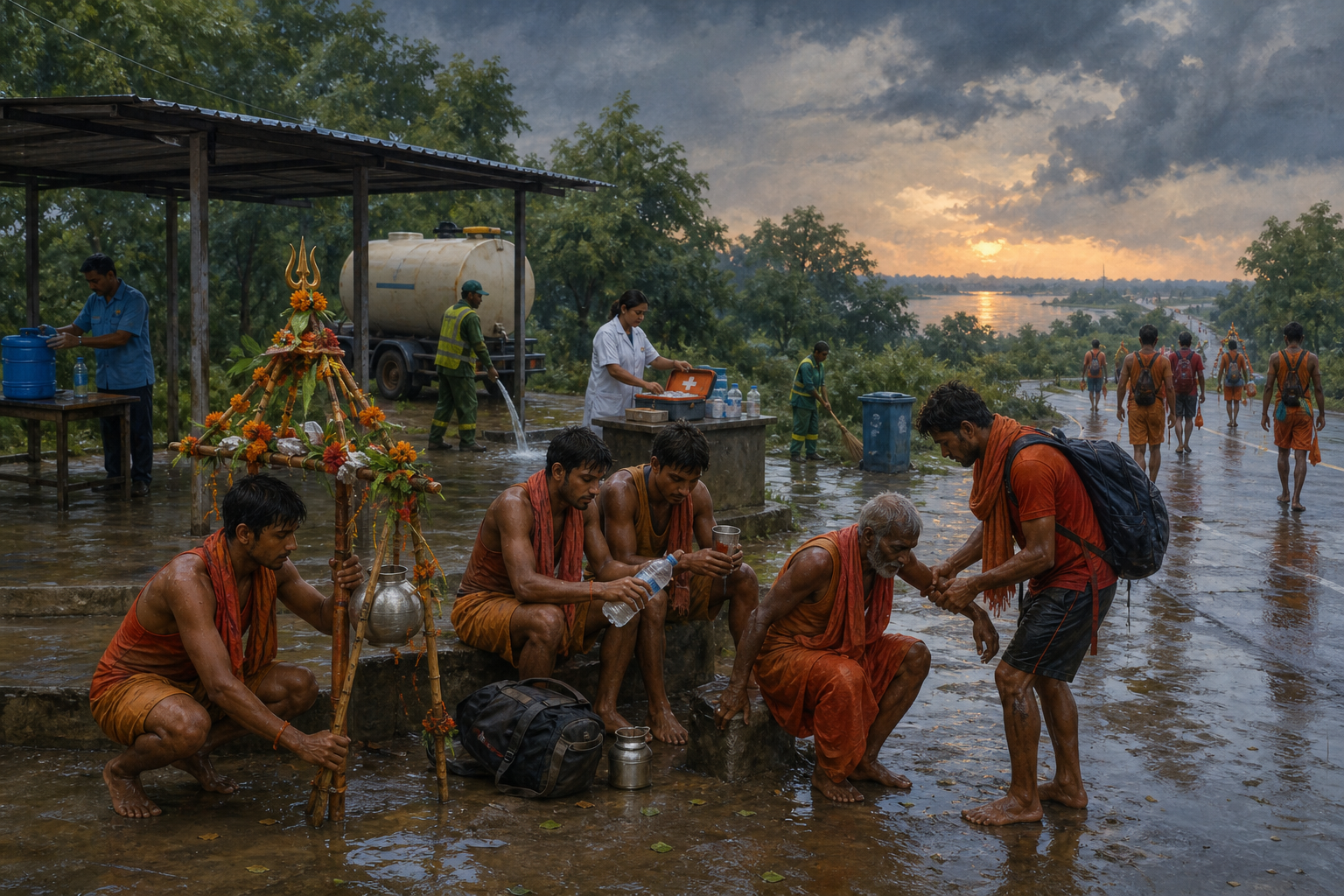
Hindu society does not need to choose between a hostile state and a patronising one. The better demand is a capable state that protects religious freedom, applies public rules fairly and leaves the spiritual ownership of the yatra with the community.
That position has four practical commitments:
- Defend the legitimacy of Hindu public practice. A yatra is not rendered improper merely because it is large, visible or inconvenient to people who do not participate.
- Demand professional administration. Route plans, sanitation, safety communication and emergency access should be designed around actual conditions rather than improvised as political theatre.
- Keep devotion voluntary. No pilgrim needs compulsory official reverence, and no public employee should be made to perform belief as a condition of service.
- Preserve community agency. Temples, religious bodies and voluntary organisations should remain capable of seva without allowing a political party or government department to present itself as the proprietor of the pilgrimage.
This is not a retreat from Hindu civilisational confidence. It is an expression of it. A living tradition does not depend on petals released by officials for its sanctity. Nor should it accept a version of secularism that permits Hindu worship only when it is private, silent and invisible.
The next time a Kanwar Yatra controversy reaches you, write down five things before reacting: the act, the authority, the payer, the public purpose and the comparable rule. If several remain unknown, seek the record. Defend the yatra where government is protecting equal civic freedom, and question the government where public office is being converted into selective religious theatre. That is a more durable settlement than either reflexive outrage or ritualised suspicion of Hindu public life.
References
