
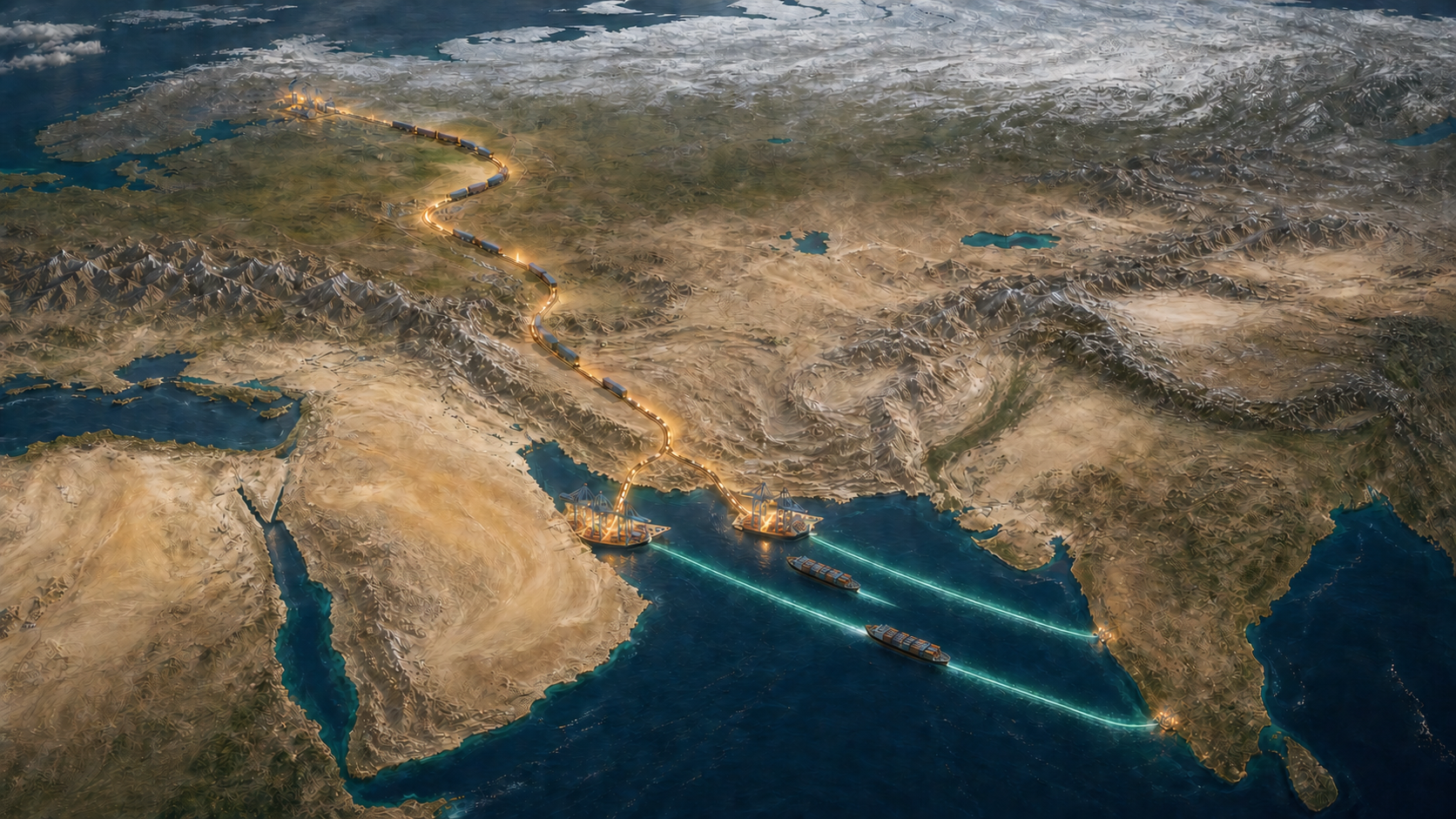
If you are trying to decide whether Russia’s proposed southern access can become a dependable trade route to Bharat, ignore the neatness of the map for a moment. The real test is whether every country in the chain has both the capacity and the political reason to keep India-bound cargo moving.
The answer is narrower than official route lists can make it sound. Iran offers the most plausible southern gateway: Russia can approach it through Kazakhstan and Turkmenistan, connect with the eastern branch of the North-South Transport Corridor, and use Bandar Abbas or Chabahar for the maritime leg to India. An Afghanistan-Pakistan route may support trade with Pakistan, but it should not be counted as reliable access to the Indian market.
Test the whole chain, not the shortest line on the map
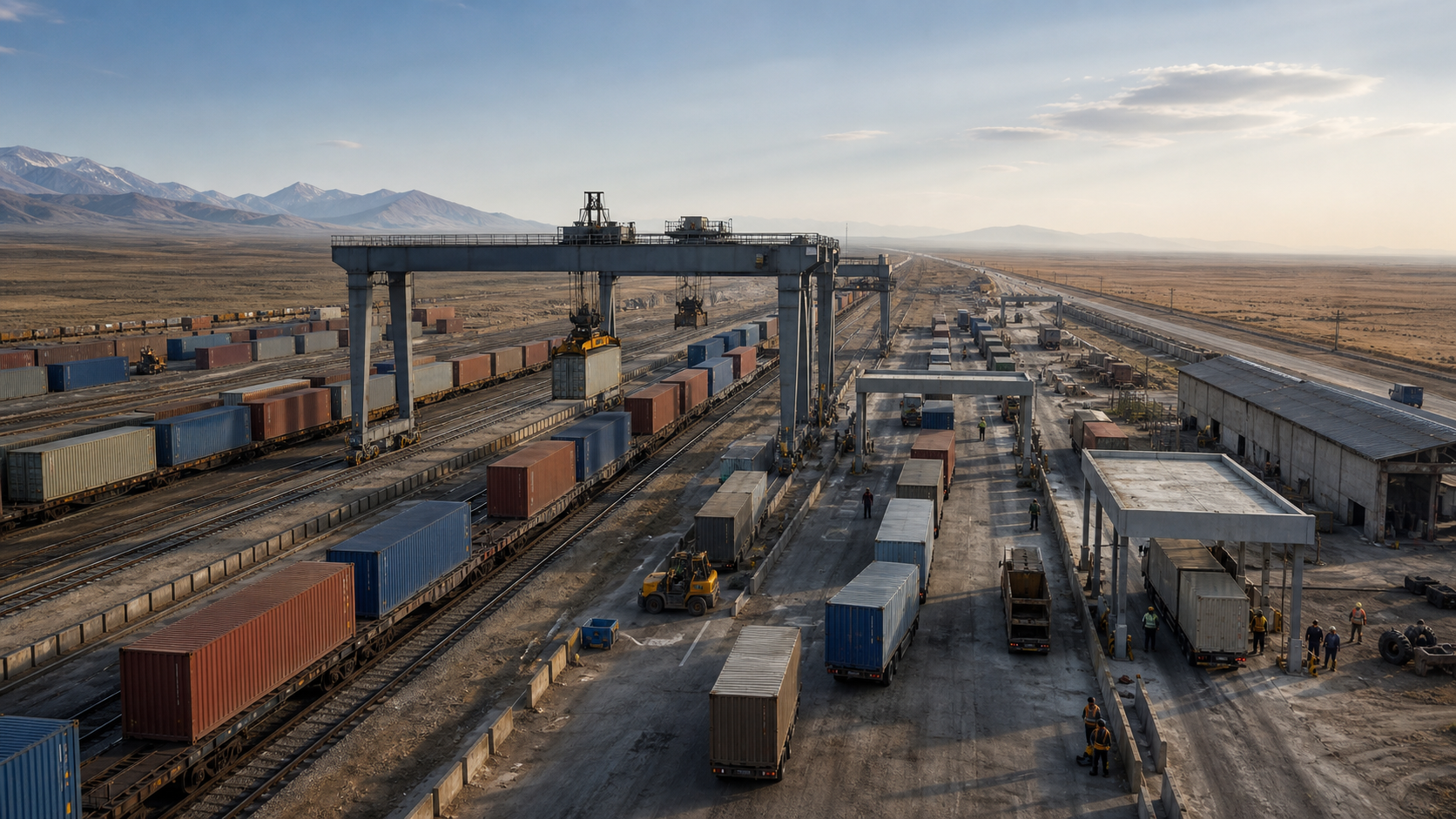
Russia has a practical reason to diversify. The intensification of conflict around the Black Sea has impeded Russian shipping on its way towards India. Russian policymakers have therefore considered railway access to the Indian Ocean through combinations of Turkmenistan, Iran, Afghanistan and Pakistan.
But a list of countries is not yet a corridor. Before treating any proposed route as viable, apply four tests:
- Continuity: Does the chain carry cargo all the way to an Indian gateway, or does it merely reach a neighbouring market?
- Political alignment: Does every transit country benefit from facilitating Russia-India trade, including the final country before the cargo reaches the sea?
- Security: Does the plan depend on borders where conflict or instability can interrupt routine movement?
- Fallback: If the principal transit state or maritime zone becomes unavailable, is there a route that does not reproduce the same vulnerability?
This distinction prevents a common analytical error. A railway can be commercially useful and still fail as a Russia-India corridor. The market it actually reaches matters more than the market named in the announcement.
The Afghanistan-Pakistan option stops at Pakistan
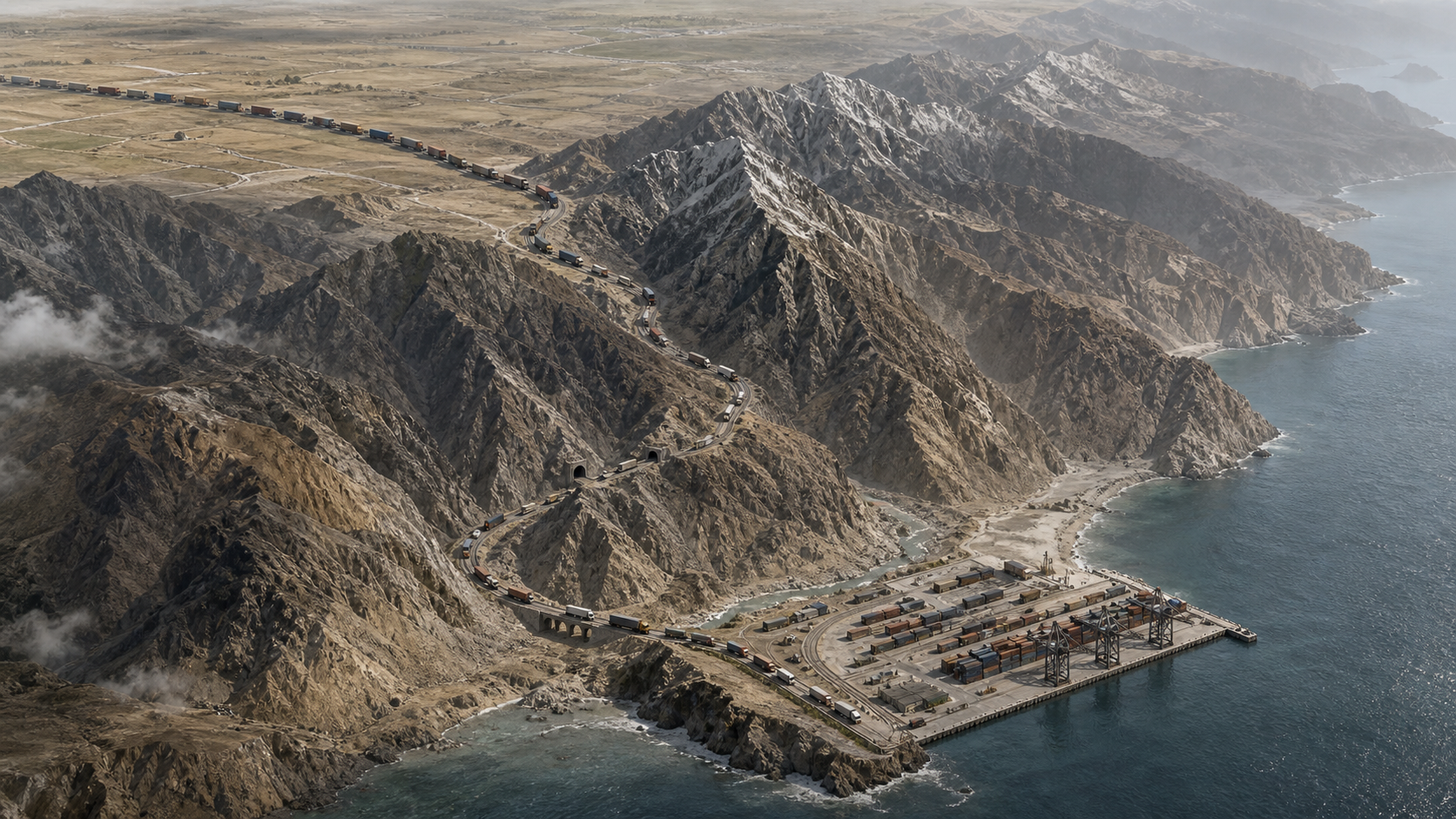
The Trans-Afghan idea has an obvious visual appeal. It points south from Central Asia towards Pakistani ports. Yet its two decisive political handoffs are also its weakest ones.
Afghanistan and Pakistan are locked in what can reasonably be characterised as an undeclared conflict, while Afghanistan remains insecure. That makes the route vulnerable before questions about Indian access even arise. A project assessment that treats those conditions as temporary details is mistaking the central constraint for a scheduling problem.
The next break is strategic. Pakistan is India’s rival, so planners cannot prudently assume that Islamabad will facilitate third-country trade into Bharat. Routing Russian goods through Gwadar would add another political cost: India would be displeased by Russian reliance on a Pakistani port for bilateral trade.
That does not make a Pakistan-facing railway worthless. Pakistan’s population of roughly a quarter-billion represents a substantial market in its own right. It does mean that a route terminating there cannot automatically be described as opening India and Pakistan’s combined market of more than 1.5 billion people. The reachable market is closer to Pakistan alone unless Indian transit is genuinely secured.
If you are evaluating the economics, separate the cases. Model an Afghanistan-Pakistan railway as a route for Russian trade with Pakistan. If projected demand depends on Indian buyers, do not count that demand until a politically credible Pakistan-to-India movement mechanism exists. At present, that assumption is too weak to carry an investment case.
Iran turns the southern concept into a coherent India route
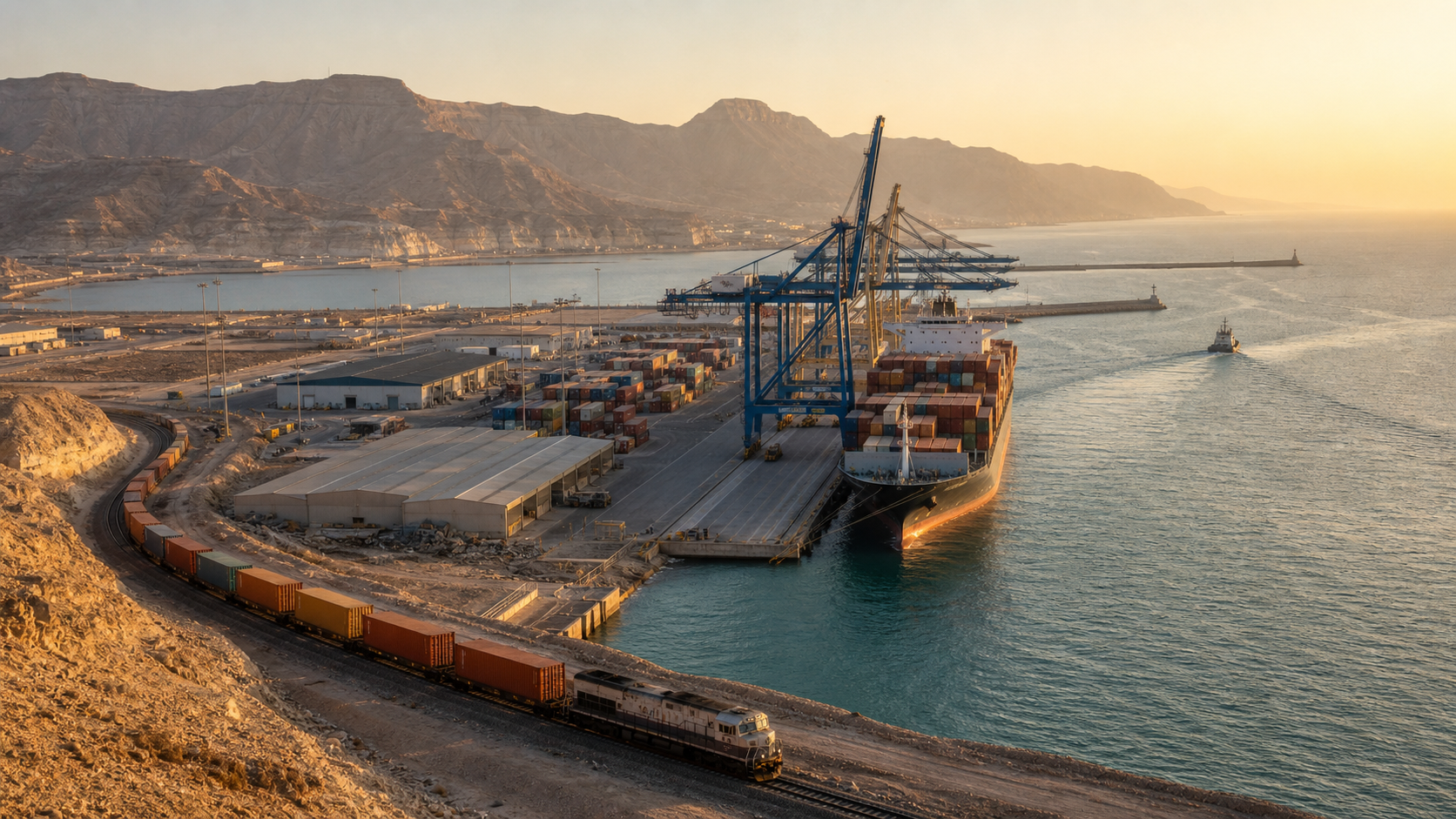
The Iranian option works differently because it does not ask Pakistan to serve as India’s gatekeeper. Its strategic routing concept is straightforward:
- Move Russian cargo south through Kazakhstan.
- Continue through Turkmenistan towards Iran.
- Use the eastern branch of the North-South Transport Corridor across those transit states.
- Reach Bandar Abbas or Chabahar on the Iranian coast.
- Complete the journey by sea to India.
This is the route that best aligns geography with political purpose. It gives Russia access to Iranian ports, gives India a connection that does not pass through Pakistan, and keeps the corridor focused on the bilateral market it is supposed to serve.
The choice of the eastern branch is also a choice about dependence. Passing through Kazakhstan and Turkmenistan allows Russia and Iran to avoid making Azerbaijan the pivotal intermediary. A transit state occupying the only usable link can acquire leverage over schedules, permissions and broader political bargaining. Kazakhstan and Turkmenistan are assessed as more politically dependable for this purpose than Azerbaijan.
That judgement should not be mistaken for a guarantee. Kazakhstan’s reliability has also shown signs of wavering. The practical conclusion is not that the eastern branch is risk-free; it is that its political risk is more manageable than asking Afghanistan and Pakistan to form the final bridge to India.
Geopolitical coherence is only the first screening decision. It identifies where Russia and India should concentrate diplomatic attention, rail coordination and port planning. It does not, by itself, prove that every physical and commercial interface is ready. When you hear that the corridor is advancing, look for evidence tied to the Kazakhstan-Turkmenistan-Iran chain and the named Iranian port rather than accepting generic references to southern access.
Build the fallback around Vladivostok, not Gwadar
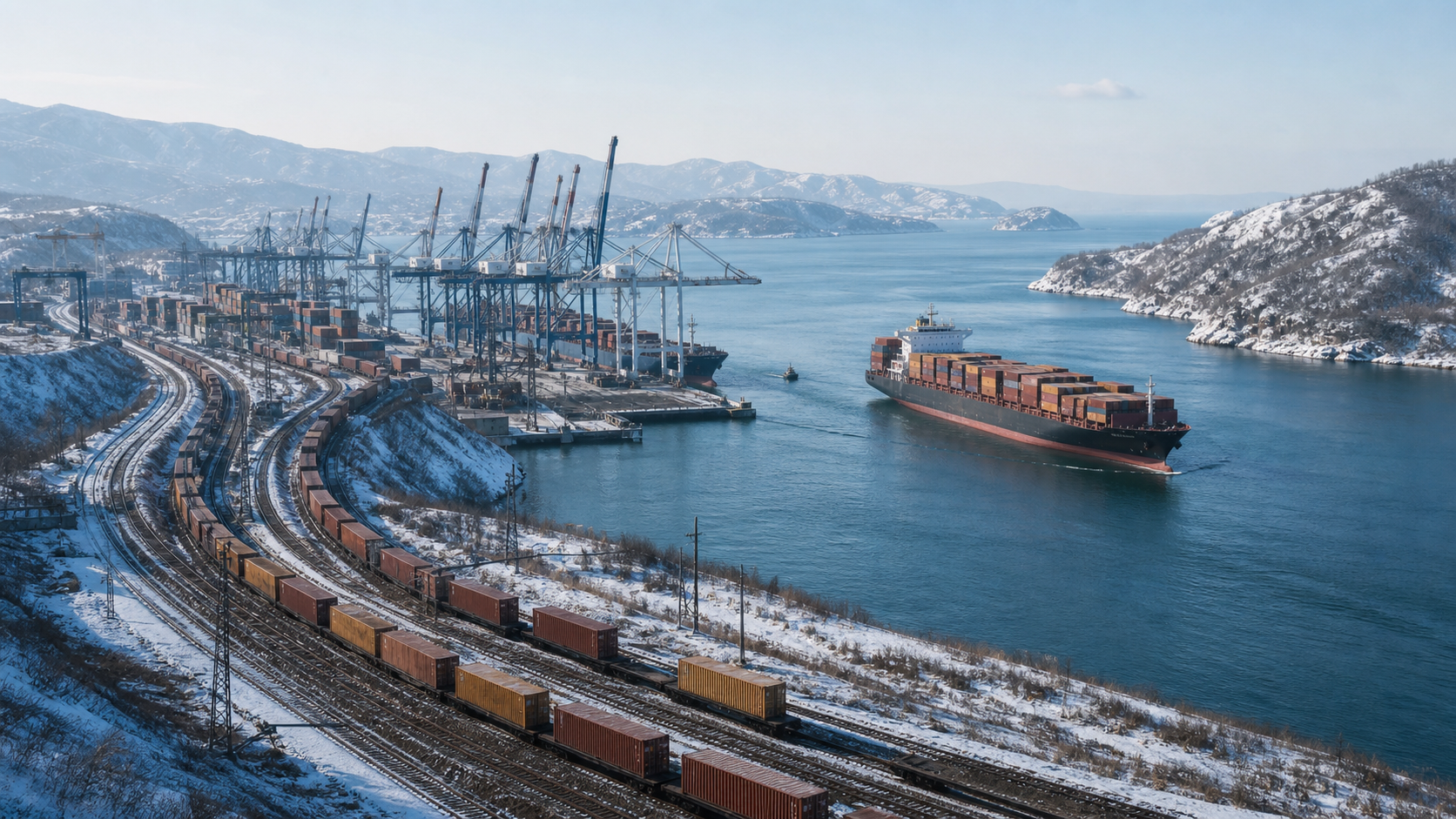
Iran solves the Pakistan problem, but it does not remove every geopolitical exposure. Russian officials have identified risks around both the Bosphorus and the Strait of Hormuz. A sensible corridor policy therefore needs a primary route and a genuinely different contingency.
The routes should be classified by the job each can realistically perform:
- Primary southern route to India: the eastern North-South Transport Corridor through Kazakhstan, Turkmenistan and Iran, followed by shipment from Bandar Abbas or Chabahar.
- Maritime contingency: the Eastern Maritime Corridor from Vladivostok to India if transit through Iran becomes impossible and Black Sea shipping remains too dangerous.
- Separate Pakistan trade route: an Afghanistan-Pakistan connection assessed on Pakistani demand, security and commercial merits.
- Unsuitable substitute for India access: Gwadar or another Pakistani port presented as though arrival in Pakistan automatically produces onward access to Bharat.
A breakdown of the Iranian route through regime change or state collapse is treated as a remote scenario, not the base case. Even so, retaining Vladivostok and the Eastern Maritime Corridor as the fallback is sound planning because it moves the contingency to Russia’s Pacific side. It does not make the backup depend on the same Afghan-Pakistani political chain that weakened the southern alternative.
Key takeaways for evaluating the next corridor announcement
- Do not confuse access to a Pakistani port with access to the Indian market.
- Treat an Afghanistan-Pakistan railway as a Pakistan-focused trade project unless credible Indian transit is secured.
- Look for the eastern North-South Transport Corridor through Kazakhstan and Turkmenistan when a proposal claims to connect Russia with India through Iran.
- Check whether the plan names Bandar Abbas or Chabahar and explains the onward maritime leg to India.
- Keep the Eastern Maritime Corridor through Vladivostok as the distinct fallback if Iran becomes unusable.
- Judge the corridor by the market it can actually reach under existing political relationships, not by the populations added together in a presentation.
The next time a new southern route is announced, redraw it as a chain of dependencies: transit states, conflict points, final port, reachable market and fallback. If the Indian leg quietly depends on Pakistan’s cooperation, the proposal has not yet solved the central problem. If it reaches Iran through Kazakhstan and Turkmenistan and then connects an Iranian port to India, it deserves serious attention as a workable strategic direction.
References
