
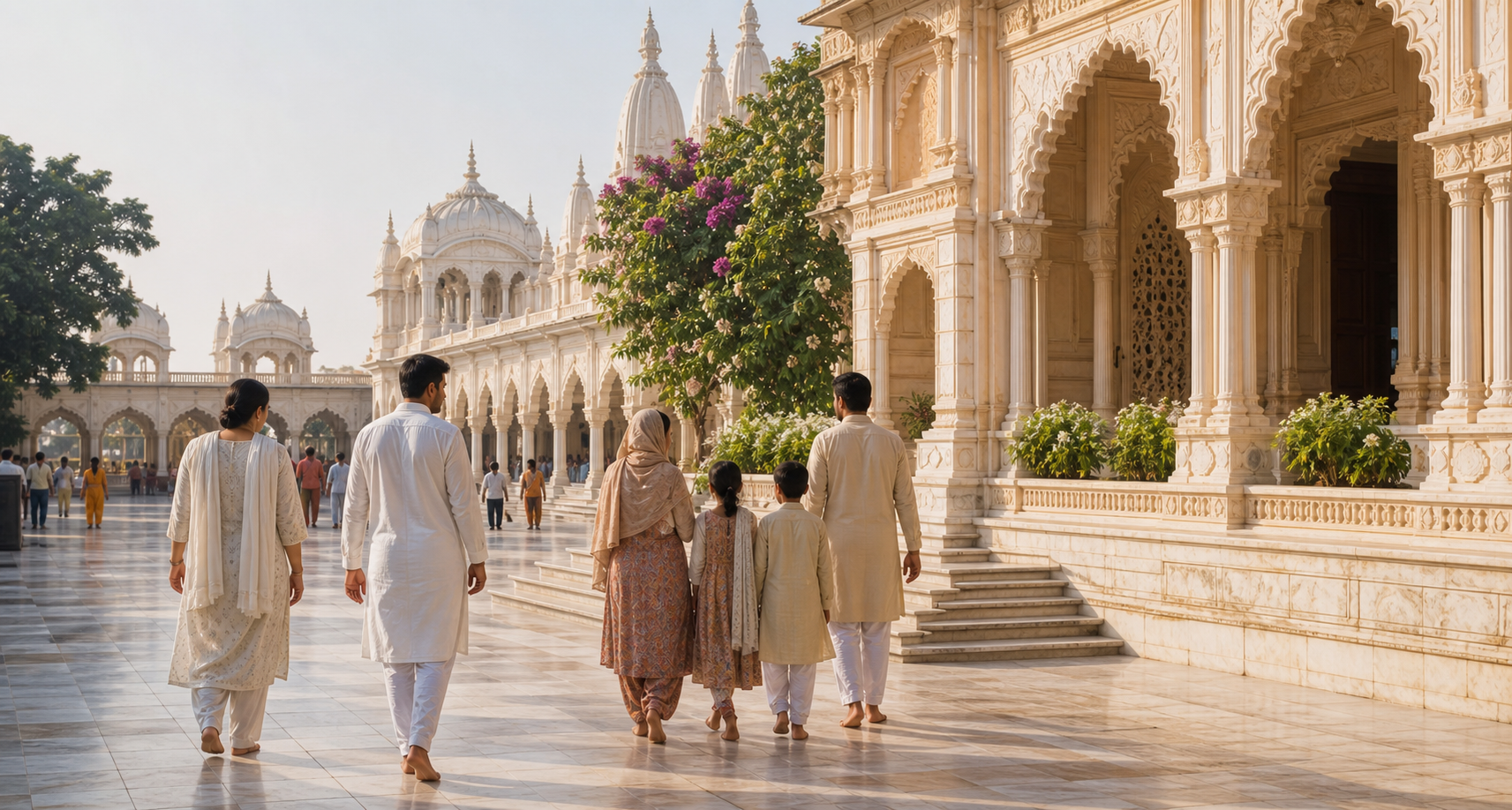
If you are planning darshan at ISKCON Vrindavan, do not leave your clothing and phone arrangements until you reach the entrance. Under the temple’s dress and photography rules, shorts or a sleeveless top can require a change of clothes, while selfies and videos are not permitted inside.
The low-friction plan is simple: arrive in modest, full-length clothing with sleeves, decide in advance how you will comply with the phone restriction, and check your bag before joining the queue. Here is what that means in practice.
Key takeaways for your visit
- Do not wear shorts, half-pants, mini-skirts, sleeveless clothing, or torn jeans.
- Choose modest traditional clothing, or at least an outfit with sleeves and full-length lower garments.
- Photography, selfies, and video recording are prohibited inside the temple.
- Mobile phones and other gadgets are prohibited beyond the security checkpoints, so be ready to follow the procedure given at the entrance.
- If your clothing does not meet the rules, a kiosk near the entrance rents selected traditional garments for INR 30-50, with a refundable security deposit.
- Plastic bags, gutkha, and pan masala are also prohibited within the premises.
Wear an outfit that is clearly acceptable

The safest way to interpret the dress code is through coverage, not through the label attached to an outfit. A garment does not become suitable merely because it is expensive, fashionable, or described as ethnic wear. The expressly prohibited clothing includes sleeveless garments, shorts, half-pants, mini-skirts, and torn jeans.
For men, a sleeved upper garment with full-length, untorn trousers is the straightforward option. A dhoti is also within the traditional clothing envisaged by the temple. For women, a sleeved upper garment with a long skirt or another modest, full-length lower garment avoids the obvious points of difficulty; a dupatta may provide additional coverage where appropriate.
Do not rely on a scarf to turn a sleeveless top into a sleeved garment. Sleeveless clothing itself is on the prohibited list. Likewise, leggings under a mini-skirt or an open layer over shorts may still leave you asking temple staff to make a judgment at the gate. Wear an outfit whose compliance is apparent without explanation.
Torn jeans are specifically excluded; the stated prohibition does not identify every pair of jeans. Even so, full-length, untorn clothing is the less ambiguous choice when you are visiting for worship. If you are travelling with relatives or a tour group, share the rules before everyone gets dressed. One unprepared person can delay the whole group.
Treat your phone as unavailable inside
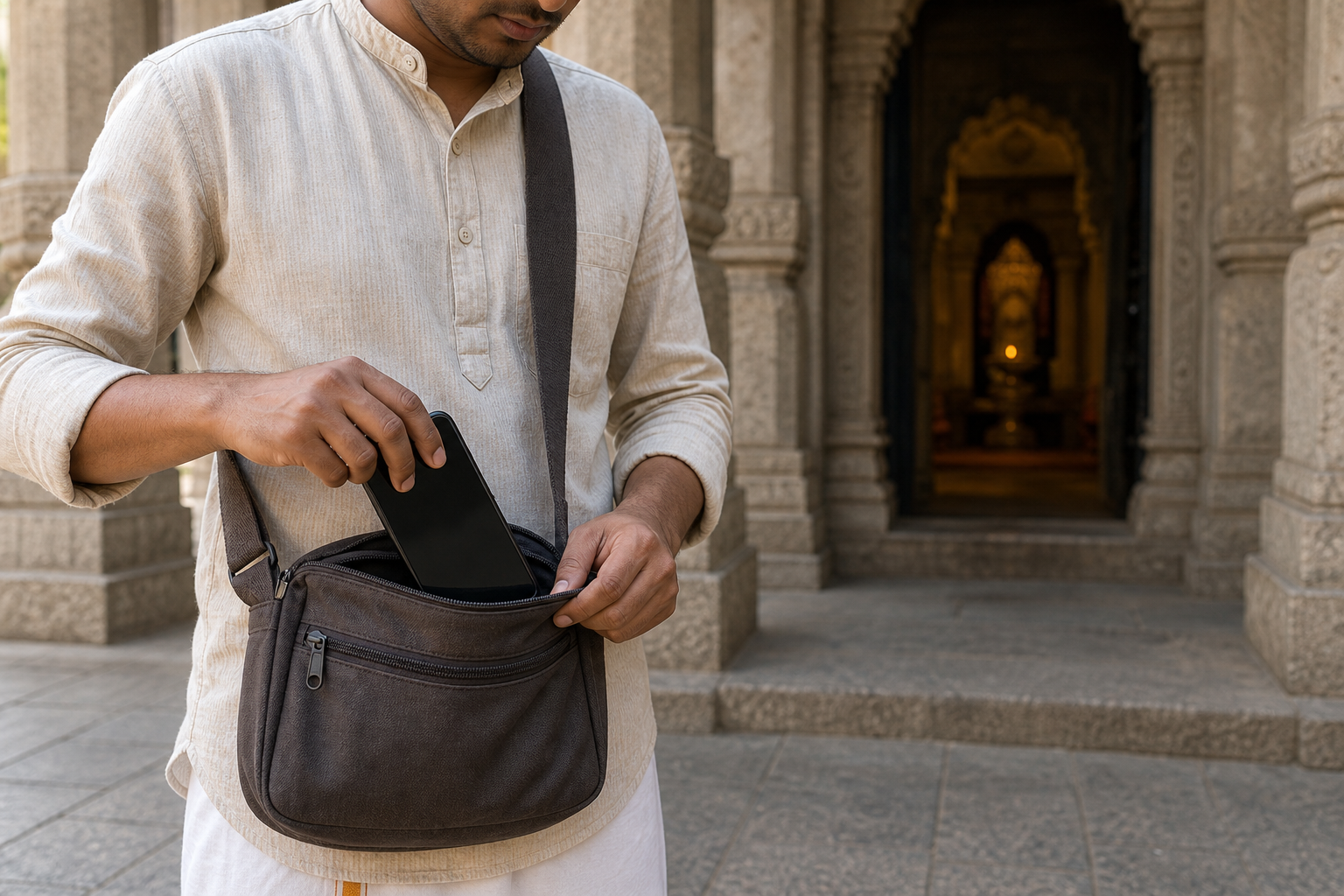
The digital restriction is broader than a ban on flash photography. Photographs, selfies, and video recording are prohibited, and mobile phones and gadgets are not allowed beyond the security checkpoints. Silent mode does not make a quick photograph acceptable, and a short video remains a video.
Complete the small tasks that normally make you reach for your phone before entering:
- Finish necessary calls and messages before joining the entrance queue.
- Save your return address, vehicle details, and any other information you may need after darshan.
- Choose a physical meeting point in case members of your group become separated.
- Tell anyone waiting outside roughly when and where you expect to meet them.
- Follow the device-handling instructions at the security checkpoint rather than assuming that keeping the phone in a pocket is sufficient.
The boundary of a no-photography area is not a good place to negotiate for one last picture. If you are uncertain where the restriction begins or ends, keep the camera closed and ask temple staff. A photograph can be taken elsewhere; another devotee’s darshan should not have to compete with a raised phone, a recording, or a visitor blocking the way.
If you arrive unprepared, use the clothing kiosk properly
The dress code does not necessarily end your visit if you arrive in unsuitable clothing. A rental kiosk near the entrance provides dhotis for men and dupattas or long skirts for women. The stated rental charge is INR 30-50, supported by a refundable security deposit.
Ask the attendant which garment resolves the specific problem with your outfit. A dupatta may help with upper-body coverage, but it does not replace an unsuitable lower garment. A long skirt may resolve shorts or a short hemline, but it does not add sleeves to a sleeveless top. If more than one part of the outfit conflicts with the rules, say so at the beginning.
Before paying, confirm the rental charge, deposit amount, return location, and any token or receipt you must keep. The rental fee and the refundable deposit are different amounts: the latter is temporarily held and should be returned when the garment is given back under the kiosk’s terms. Keep any receipt or token secure until you have completed the return.
The kiosk is a useful fallback, but arriving appropriately dressed remains simpler. It removes a transaction from your visit and lets you move from the entrance toward darshan without first repairing an avoidable clothing problem.
Run this five-minute check before joining the queue
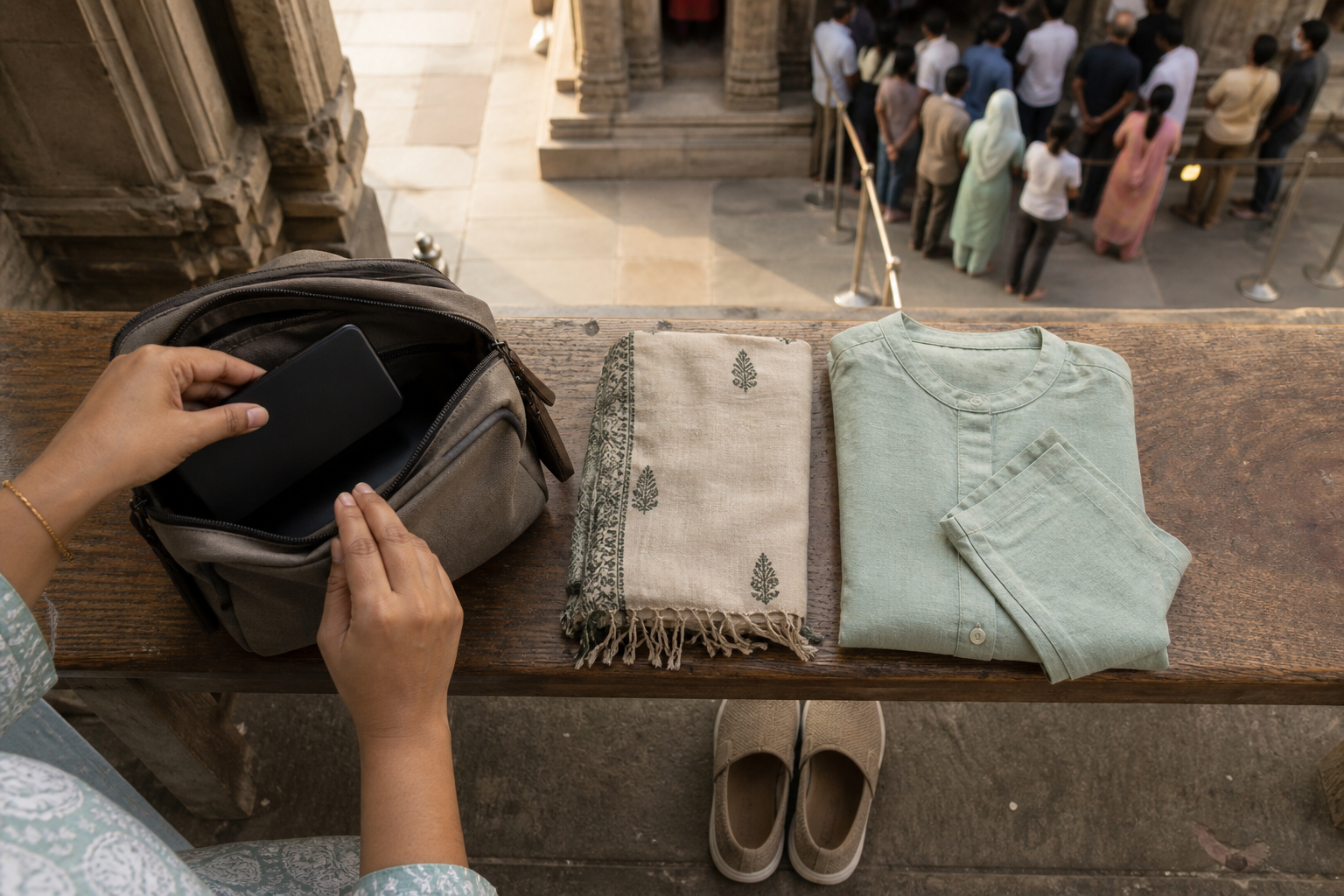
- Look at the whole outfit: sleeves present, lower garment full-length, and no torn jeans.
- Confirm that no member of your group is wearing shorts, half-pants, a mini-skirt, or another expressly prohibited garment.
- Finish calls, messages, navigation, and meeting arrangements before the security checkpoint.
- Remove plastic bags, gutkha, and pan masala from what you plan to carry into the premises.
- If clothing needs to be changed or supplemented, go to the rental kiosk before arguing your case at the entrance.
- Put the camera away and enter with your attention directed toward darshan rather than documentation.
These requirements are not an invitation to turn traditional clothing into another photo opportunity. Their stated purpose is to protect spiritual decorum and reduce distractions inside an active place of worship. The temple understands the physical environment as part of the discipline that supports bhakti, not merely as a scenic setting available for personal content.
You do not need to settle every modern debate about clothing rules before visiting. You only need to recognize that a sacred institution can ask guests to place worship ahead of personal fashion and digital documentation. Wear the compliant outfit from the start, make your phone plan before security, and enter ready for darshan. That is the simplest way to respect the temple and protect the purpose of your own visit.
References
- Dandavats – Clergymen and Devotees Welcome ISKCON Vrindavan’s New Dress Code and Photography Ban
- Streamline Feed – Mathura Temple Bans Sleeveless Clothing and Photography in Strict Traditionalist Sweep
