
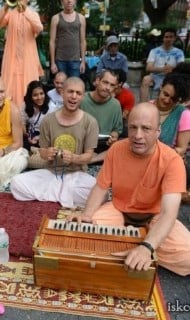
Sri Chaitanya Mahaprabhu’s Harinama Sankirtan Mission unfolds amid New York’s rush hour, where the cadence of city life meets a river of devotion. A kirtan leaderraised in faith through the commitment of devoted parents and the mercy of Srila Prabhupadaguides the flow as the Maha Mantra rises and carries through the streets.
The volume is high and the tempo swift, measured in many beats per minute. Devotees move with the current, synchronized in purpose. Around them, commuters hurry pastfocused, purposeful, and pressed for time. Even when attention remains outward, the soundscape establishes an atmosphere that is both vibrant and contemplative.
In these moments, the inner earthe Soul’s accompliceoften captures what the eyes overlook: Transcendental Sound. Such encounters are quick, yet they retain an Eternal resonance. The scene demonstrates how a brief contact with sacred vibration can linger as calm, clarity, or quiet recognition beneath the surface of a busy day.
Across the dharmic traditions of Hinduism, Buddhism, Jainism, and Sikhism, sacred sound remains a shared contemplative pathway. Whether through kirtan and chanting, mantras, meditative recitations, or Naam remembrance, sound is honored as a vehicle for focus, compassion, and inner transformation. In this light, Harinam Sankirtana and Harinama Sankirtan Mission embody unity in spiritual diversityan open invitation rather than an imposition.
Contemporary research aligns with these lived insights: group singing and rhythmic chanting can synchronize breath, reduce stress, and foster social connection. In an urban setting, such practices become accessible touchpoints for well-being. Even brief exposure to a mantra’s cadence can steady the mind, much like measured breathing anchors attention.
As the kirtan progresses, the tala of mridanga and kartals intersects with the metronome of footsteps and crosswalk signals. For many observers, this convergence feels relatable: the city’s momentum continues, yet a parallel current of stillness becomes palpable. Harinam Sankirtana thus functions as living heritagean ancient practice finding expression within a global metropolis.
Ultimately, these fleeting yet Eternal moments clarify the building blocks of inner coherence: transcendental sound vibration. Anchored in Sri Chaitanya Mahaprabhu’s inclusive vision and nurtured by the Bhakti Tradition, the rising Maha Mantra offers a gentle reminder that sound can heal, harmonize, and unifywithin individuals and across communities.
Inspired by this post on Dandavats.
