
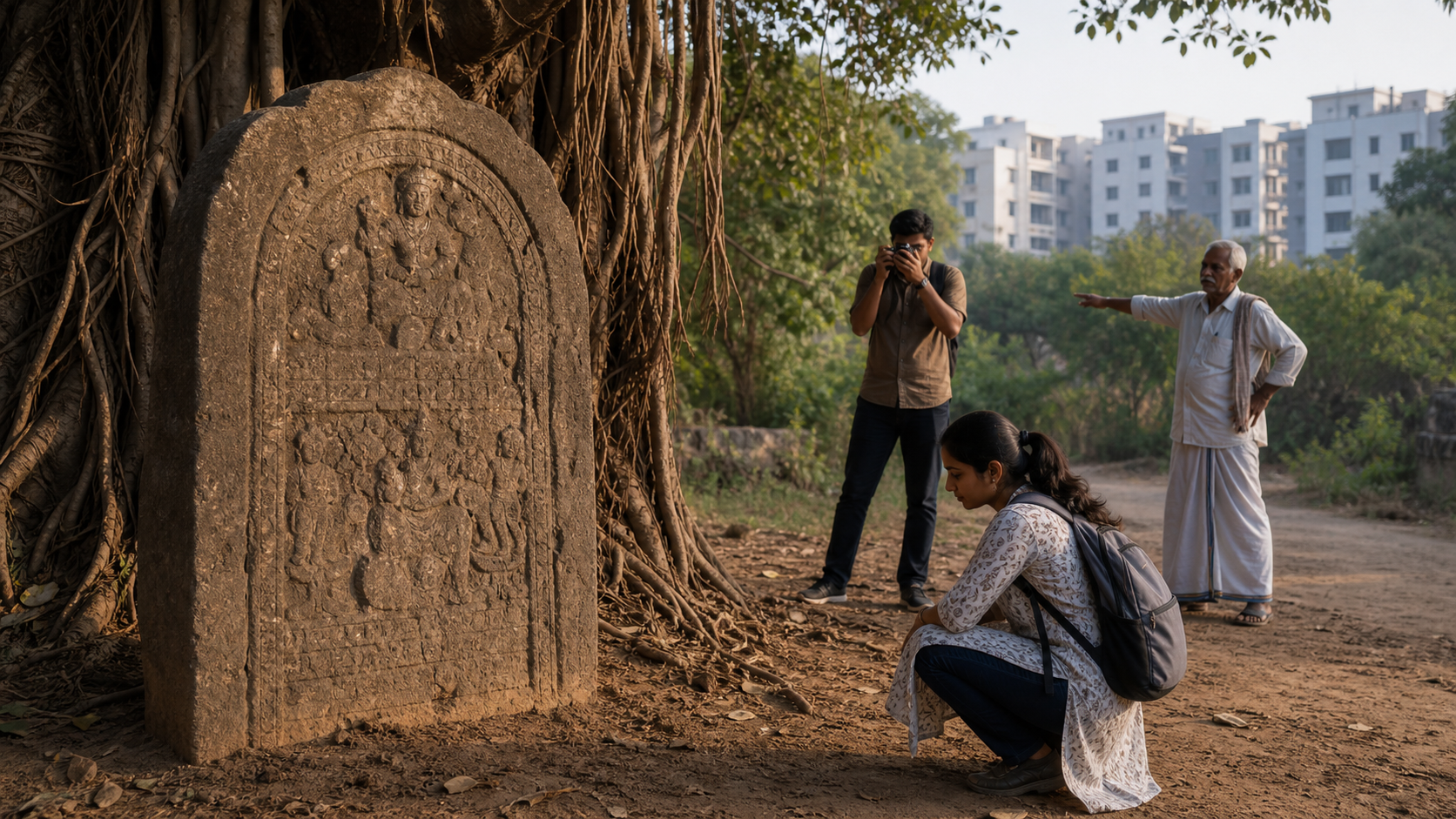
You notice an old hero stone beside an apartment complex, a weathered murti in a temple yard, or a place-name that only the elders can explain. You want to protect it. The danger is that a well-meant cleaning, relocation, renovation, or viral claim may destroy the very evidence that makes it historically valuable.
Your immediate task is not to prove the largest possible story. It is to leave a trustworthy record: what exists, where it came from, what people remember, what remains uncertain, and what now needs protection. That record can turn a neglected object into recoverable historical memory.
Record the evidence before interpreting the object
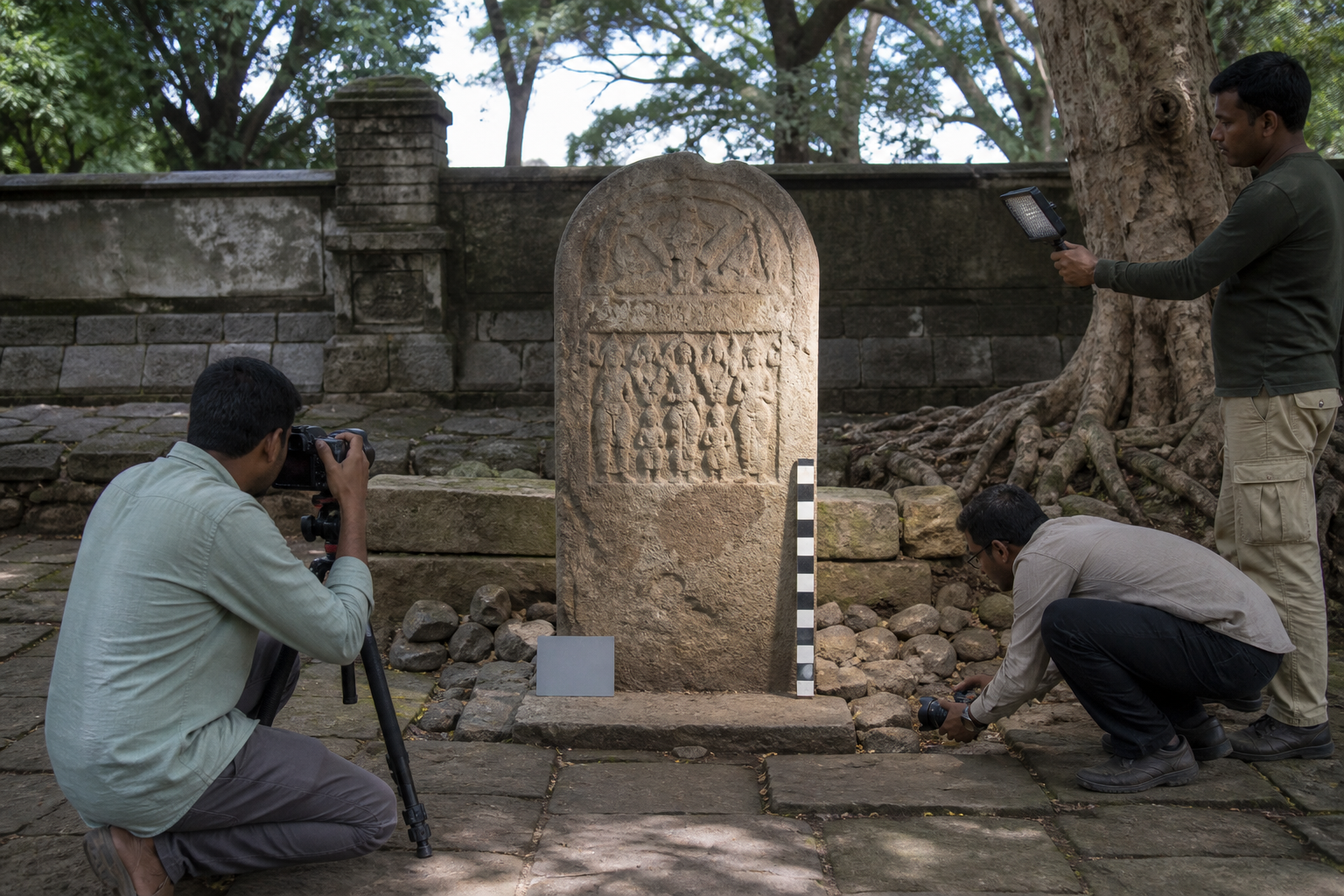
Heritage is often lost in small increments. A stone is shifted to make room for construction. A surface is painted during renovation. A sculpture is cleaned until faint carving marks disappear. An inscription is photographed without its location, scale, or orientation. The object may remain, yet much of its historical value is gone.
Make a non-invasive record before anyone alters the site. Use this sequence:
- Photograph the wider setting. Include the road, shrine, water body, compound, old wall, vegetation, and nearby structures that explain where the object sits.
- Photograph the object from every safely accessible side. Add close views of carvings, inscriptions, tool marks, cracks, repairs, missing portions, staining, and surface wear.
- Record orientation and scale without placing anything on the object. A scale marker may be positioned beside it if doing so requires no contact or disturbance.
- Write down the location, date of documentation, local name, current custodian, present use, and whether anyone says the object was moved. Preserve variant spellings instead of silently standardising them.
- Describe only what you can see in the initial condition note. A ship, seated figure, weapon, animal, line of writing, or broken edge is an observation. The identity or historical meaning of that feature belongs in a separate interpretation field.
- Ask before recording oral testimony. Keep the speaker’s words distinct from your transcription, translation, and comments.
Do not wash, oil, scrape, chalk, paint, trace, take a rubbing from, excavate around, or lift an unfamiliar artefact. Those acts can remove surface evidence, worsen fractures, or destroy archaeological context. If it is loose, unstable, or exposed to immediate damage, restrict disturbance and seek a qualified archaeologist or conservator through the responsible custodian or authority. Ownership and heritage rules vary by place, so uncertainty about legal status is another reason not to move it yourself.
Eksar in Borivali West shows why context matters. Six Viragals, or hero stones, are preserved within Club Aquaria, while the Eksar Gaon Devi Temple remains another anchor of the older landscape. Moti Chandra dated the Viragals to the eleventh century. Their carved panels include warriors, royal or commanding figures, ascent to Indraloka, and ships engaged in battle. The maritime imagery acquires greater meaning when read beside Eksar’s relationship to the Sopara port, about 38 kilometres away.
A close photograph can preserve the carving, but it cannot by itself preserve the relationship among the stones, temple, settlement, coastline, and former route to the port. When you document a threatened place, photograph those relationships before modern construction makes them impossible to see.
Protect four layers, not just the visible stone
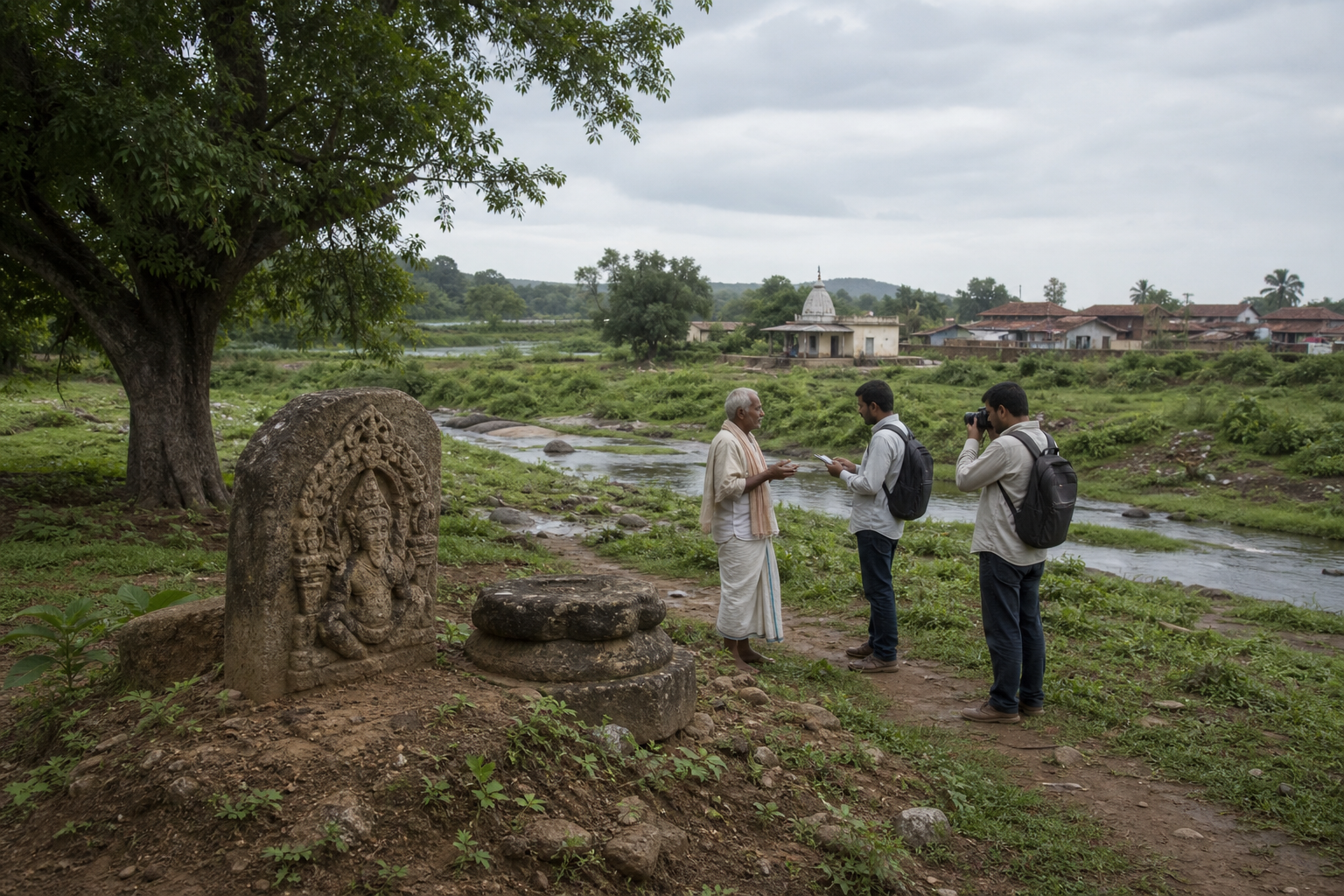
A monument is the most visible layer of heritage, but it is not the whole inheritance. A serious preservation effort keeps four connected layers in view.
| Layer | What can disappear | What you should record |
|---|---|---|
| Material object | Carving, inscription, pigment, construction method, repairs, and signs of damage | Images, measurements taken without harm, a condition description, and changes observed over time |
| Place and provenance | Original position, orientation, route, water system, neighbouring structures, and chain of custody | A location record, site sketch, wider photographs, known movements, and the names of custodians |
| Living practice | Ritual, festival, performance, craft, oral name, family duty, local vocabulary, and community use | Consent-based testimony, recordings where permitted, translations, ritual calendars, and practitioner names |
| Historical interpretation | The reasoning that connects an object to a period, polity, deity, event, trade route, or cultural exchange | Each claim, the evidence supporting it, competing readings, the level of certainty, and unresolved questions |
This wider view is especially important for Hindu temples. A temple may unite architecture, murti worship, pilgrimage, patronage, music, storytelling, craft, festival routes, local obligations, and community memory. Destruction can therefore erase much more than masonry. Neglect can produce a similar break more slowly, as practice ends, vocabulary disappears, and younger residents cease to know why a place mattered.
Somanatha Devalaya, rebuilt in 1951 after repeated destruction, embodies civilisational resilience. It also teaches a harder lesson: reconstruction and uninterrupted continuity are not identical. A rebuilt structure cannot automatically recover every local custom, archive, performance lineage, or network of knowledge that earlier destruction dispersed. The survival of forms such as Natyamelas and Harikata demonstrates how people can carry cultural memory even when buildings suffer.
When you assess a temple, ask two different questions. What material fabric must be conserved? What living knowledge must be transmitted? Photographing a shrine without recording its festival, hereditary service, oral account, associated art, or local name saves only part of it.
Truthful preservation also requires accurate language about destruction. Not every loss was accidental, and deliberate attacks on sacred places should not be dissolved into vague phrases about change. But precision strengthens memory. Record the evidence for each episode, distinguish destruction from reuse or later neglect, date separate phases where possible, and avoid turning several distinct events into one unsupported claim.
Separate what is visible from what is inferred
Historical memory becomes fragile when an attractive interpretation is repeated as though it were a directly visible fact. The remedy is not to avoid interpretation. It is to show the reader where observation ends and inference begins.
The silver dish associated with the Lampsacus Hoard offers a useful model. The hoard was unearthed near Lapseki, the site of ancient Lampsacos, and objects from the collection are now divided among the British Museum, the Louvre, and the Istanbul Archaeological Museum. The large dish held in Istanbul visibly depicts a seated woman, a chair associated with elephant tusks, and Indian flora and fauna. Those features can be described before assigning the woman an identity.
In 1943, Sri Vasudeva Sharan Agarwala argued that the figure represented India as Bharata Mata. His identification gives the object civilisational significance as a Greek rendering of Bharat, but it remains a scholarly interpretation and should retain his name and reasoning whenever it is presented. Calling the figure Bharata Mata without that qualification would make a debated identification look like a label inscribed on the dish itself.
Use a simple claim ladder in every caption, community display, website entry, or museum proposal:
- Visible: describe the material feature that another observer can inspect.
- Documented: give the known find-place, custody history, movement, date, or associated record.
- Remembered: identify a local account as oral memory and retain the speaker’s wording and relationship to the place.
- Inferred: name the person or tradition responsible for the interpretation and explain the evidence connecting it to the object.
- Unresolved: state competing readings or missing evidence instead of choosing a certainty the record does not support.
This discipline does not weaken a Dharmic account of history. It makes that account harder to dismiss. Bharat’s cultural and commercial reach is best demonstrated through objects whose imagery, provenance, custody, and interpretations remain visible to scrutiny.
Build a memory file that another person can inherit
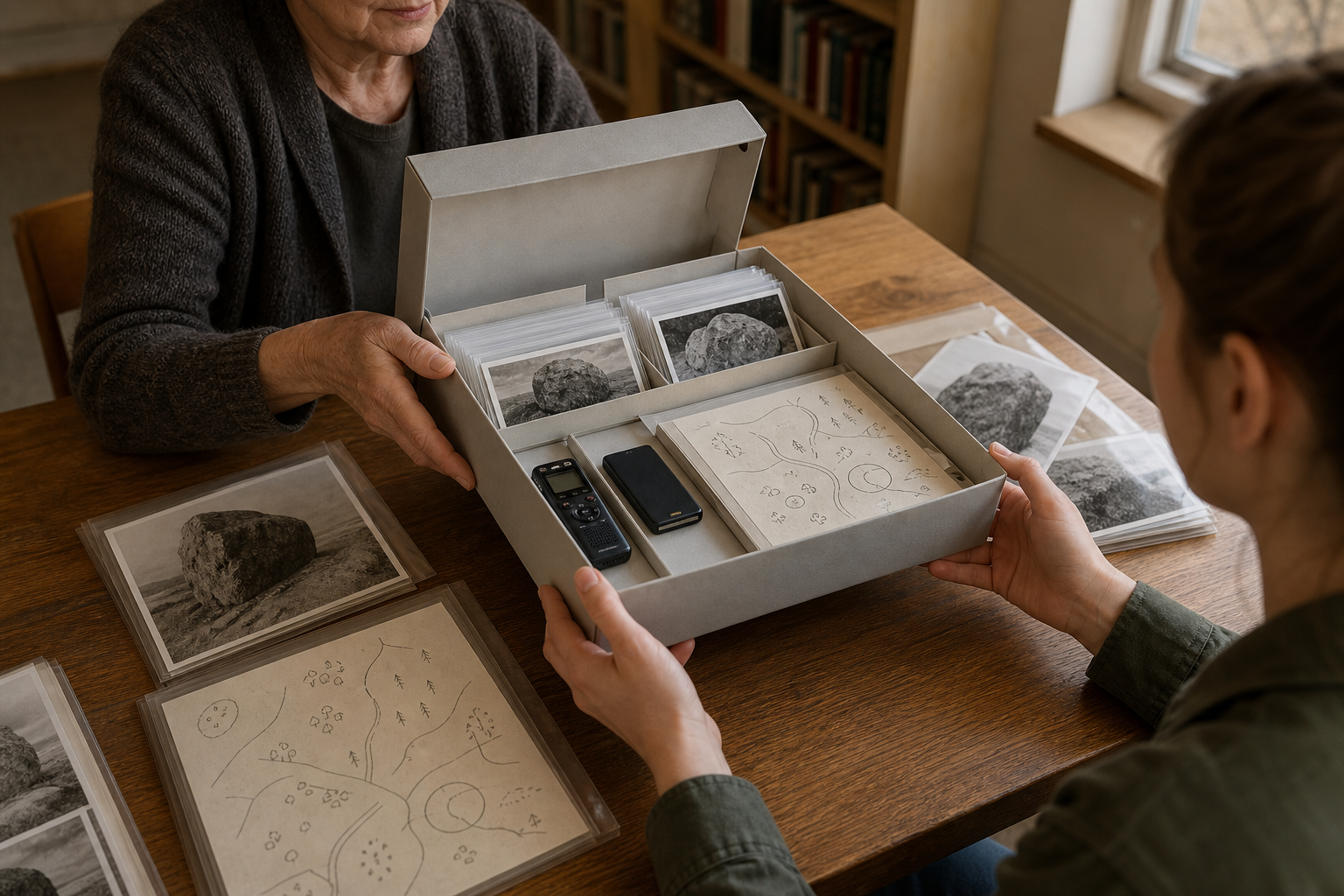
A folder of unnamed photographs is not an archive. It depends on the memory of the person who took them, and that memory is exactly what preservation is meant to outlast. Create a compact heritage file that a resident, temple trustee, scholar, conservator, or descendant can understand without you standing beside them.
Include these components:
- Identity sheet: a working name, local names, alternate spellings, object type, present location, custodian, and present religious or community use.
- Site record: a map or sketch, orientation, access route, surrounding features, known earlier position, and any reported relocation.
- Image register: stable file names linked to captions that state the view, feature, date, photographer, and whether the image is an untouched original or an edited copy.
- Condition record: cracks, loss, flaking, leaning, water exposure, vegetation, repairs, nearby construction, vandalism, and other visible risks. Do not diagnose treatment unless you are qualified to do so.
- Testimony log: the speaker’s name if permission is given, relationship to the site, language used, recording date, consent terms, transcript, translation, and clearly marked additions by the recorder.
- Claim register: each historical claim, its supporting observation or record, its certainty, possible alternatives, and the next question that needs checking.
- Custody and action log: whom you notified, what was requested, what reply arrived, and every intervention made to the site or object.
- Access and risk note: what may be shared publicly, what should remain with trusted custodians, and whether exact location data could increase theft or vandalism risk.
Keep original photographs unchanged. Make edited or annotated versions as separate files. Store the complete record in a durable format and maintain a backup away from the device used during fieldwork. Give a copy to an appropriate local custodian rather than leaving the only record in a private account that may later become inaccessible.
Oral memory deserves the same care as stone. Ask concrete questions: What did elders call this place? Was the object always here? Which ritual, festival, family, ruler, battle, route, or occupation was associated with it? What physical changes does the speaker remember? Who else holds a different version? Do not pressure several memories into one neat narrative. Variants may reveal different periods, communities, or functions.
Transcription and translation can change meaning. Retain the original language where permission allows, mark uncertain words, and do not replace a local Dharmic term with a broad English category merely for convenience. A future researcher may recognise a significance that the first recorder missed.
Choose protection that does not create another loss
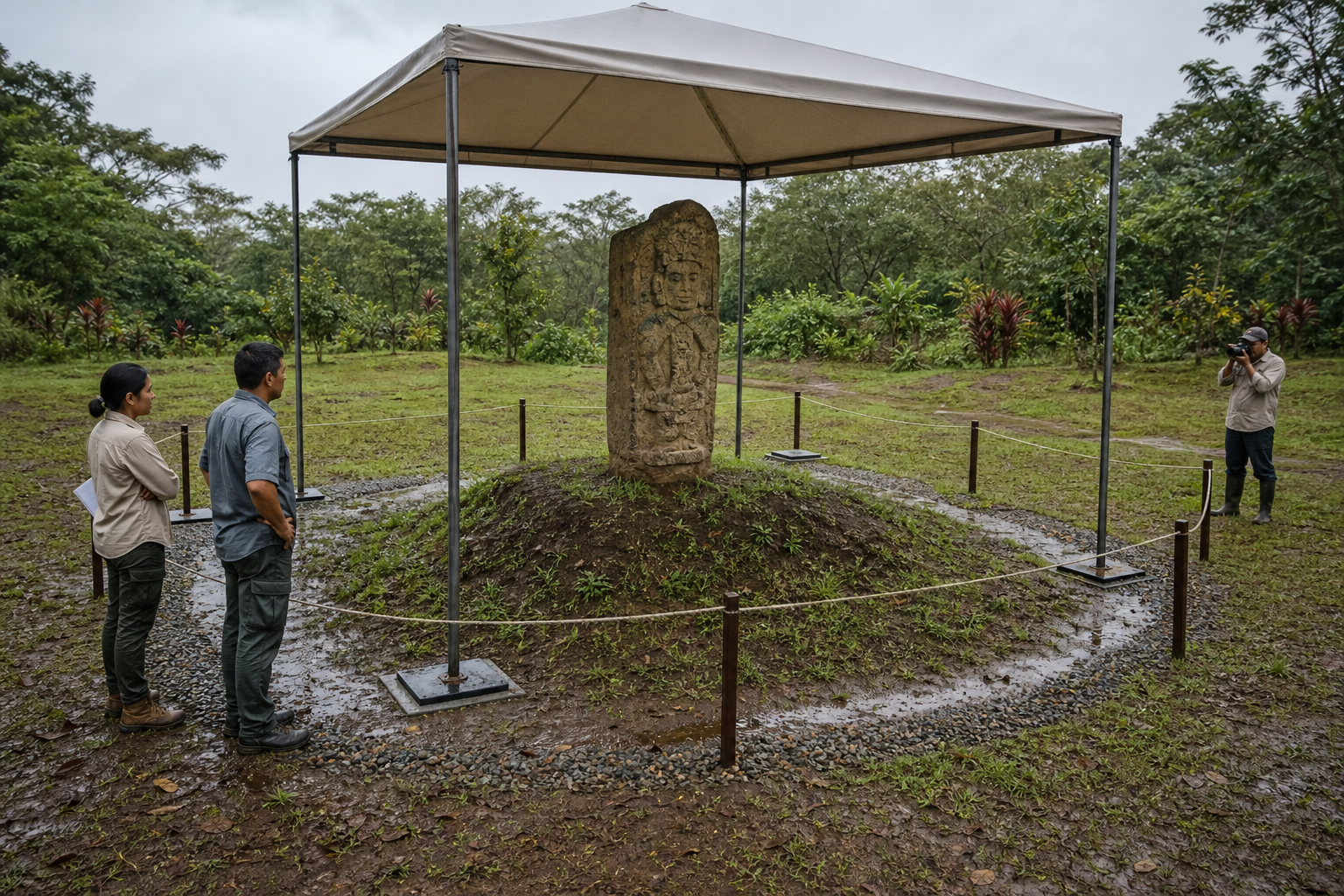
Once the record exists, decide what protection the place actually needs. A museum is not automatically the right destination for every old stone. Relocation may protect an artefact from theft, weather, structural collapse, or unavoidable construction, but it can also sever orientation, ritual use, community custody, and archaeological context. In-situ protection is preferable when the risk can be controlled and the object can remain safely accessible.
Move through preservation in stages:
- Stop avoidable harm. Discourage touching, painting, cleaning, climbing, dumping, and unreviewed repair. Do not apply cement, chemicals, metal fasteners, oil, or coatings as a do-it-yourself solution.
- Identify custody. Determine who manages the land, shrine, residential compound, temple, or collection. Record competing claims instead of choosing an owner informally.
- Request a condition assessment. Ask a qualified professional to identify urgent structural or material risks and to specify what must not be done.
- Secure interim protection. A controlled perimeter, drainage correction, monitored access, or temporary shelter may be appropriate, but each measure must avoid contact damage and should follow competent advice.
- Decide between in-situ care and relocation. Compare physical risk, sacred use, original context, security, community access, and the ability of the proposed institution to conserve and display the object responsibly.
- Interpret it honestly. Provide local names, physical description, historical setting, evidence, scholarly interpretations, uncertainty, and the voices of the community connected to the place.
- Keep the memory active. A local-language panel, school visit, community walk, catalogue, digital record, oral-history programme, or revival of an associated practice can reconnect residents without altering the object.
If relocation becomes necessary, record the original position, orientation, surrounding features, removal method, receiving custodian, transport, and new storage location before the move occurs. Without that chain of custody, a protected artefact may become an object with a broken biography.
Publicity should come after risk assessment, not before it. Social media can attract volunteers and official attention, but an exact location can also advertise an unguarded object. Share enough evidence to support the preservation request while restricting sensitive coordinates and security details when theft or vandalism is plausible.
Make a specific request to the responsible body. Ask for acknowledgement of the object, a professional inspection, interim protection, cataloguing, and a written decision about conservation and access. Attach the identity sheet, condition record, location context, selected photographs, and custody log. If demolition, unauthorised removal, or a disputed ownership claim is imminent, preserve evidence without obstructing the site and obtain local legal advice before taking confrontational action.
Key takeaways
- Document the setting and condition before cleaning, moving, renovating, or interpreting anything.
- Preserve the material object, its place, its living practices, and the history of claims made about it.
- Separate what is visible, documented, remembered, inferred, and unresolved.
- Keep original files unchanged and build a memory file that can be understood without its creator.
- Do not assume museum relocation is always safer; compare physical security with the loss of context and community access.
- Ask authorities or custodians for specific actions, and limit public location details when disclosure could endanger the object.
Choose one vulnerable place you already know. Make a careful, non-invasive record, identify its custodian, and place a copy where the community can inherit it. Preservation begins when concern becomes evidence that someone else can verify, protect, and pass forward.
References
- DharmaRenaissance Blog — Discovering Bharata-Mata: A Greek Silver Dish’s Hidden Treasure
- DharmaRenaissance Blog — Unveiling the Impact of Hindu Temple Destruction
- DharmaRenaissance Blog — Discover the Lost Heritage of Eksar’s Hero Stones
