
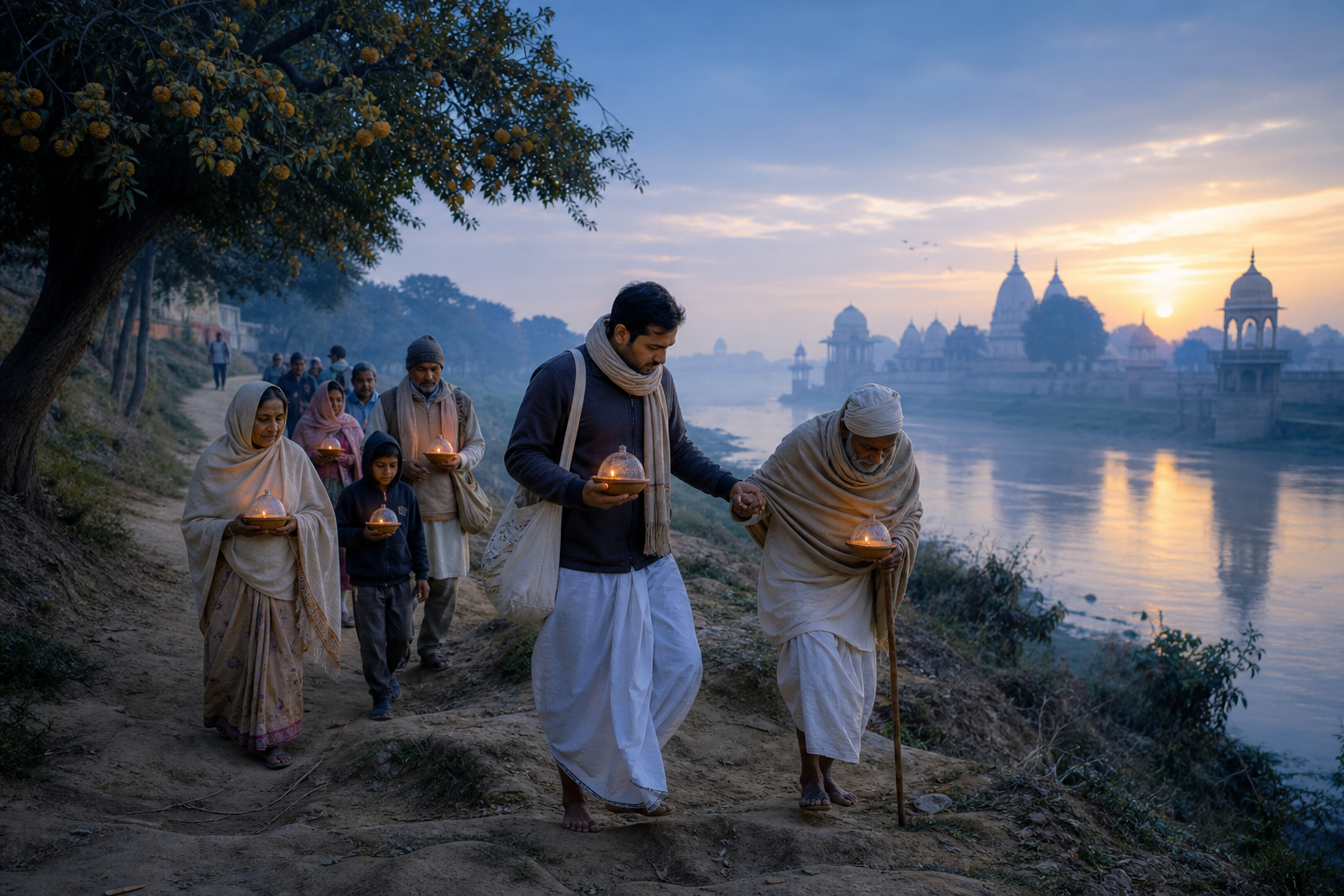
You may arrive in Braj with a route, a list of sacred places, and sincere intentions, yet still wonder how to keep the pilgrimage from becoming religious sightseeing. Kartik can become crowded with plans even when its real work is to simplify your attention.
A sound approach is to choose one sustainable vow, let each place ask something of your conduct, and carry every sacred remembrance into a concrete act. That gives you a way to practise Kartik whether you are walking through Braj or observing the month at home.
Choose a Kartik vow you can keep on a difficult day
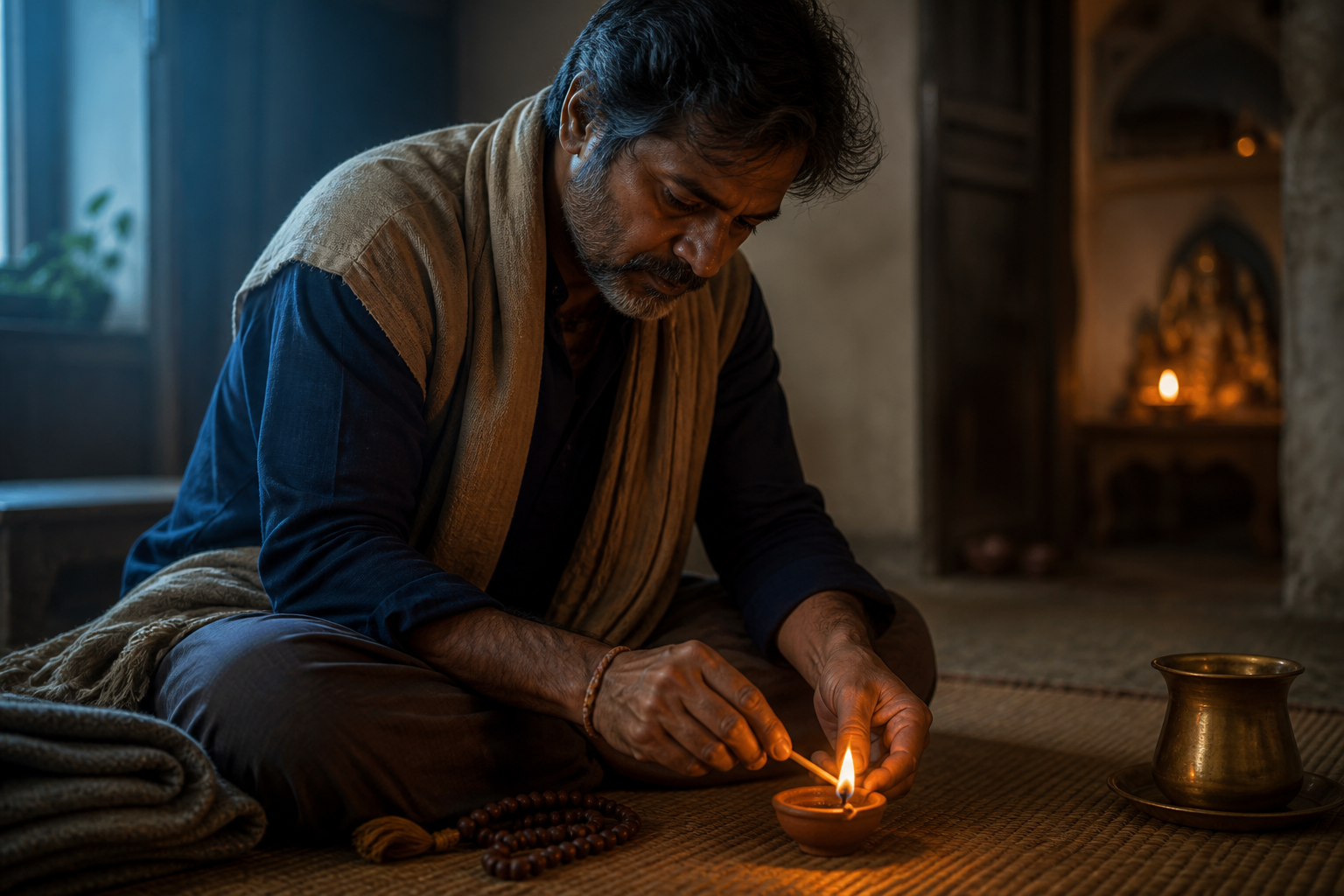
Kartik is traditionally approached as a period of intensified sadhana, vrata, reflection, and remembrance. Its lamps, dawn practices, mantra-japa, and acts of service are useful precisely because they bring attention back to what is being postponed. The month’s deeper challenge is captured by a simple recognition: human life becomes purposeful when impermanence changes how we act now, not merely how we think about death.
Do not begin by constructing the most demanding schedule you can imagine. A vow that survives only on quiet days will probably disappear under travel, fatigue, family duties, or work. Define a minimum practice that remains possible when the day goes badly, then treat anything beyond it as an offering rather than a requirement.
- Write the purpose in one sentence. For example: “During Kartik, I will interrupt postponement by remembering Krishna before beginning the day’s work.” The purpose keeps the practice from turning into a scorecard.
- Choose one measurable minimum. Fix a realistic period of japa, recitation, quiet breathing, study, or lamp offering. If your lineage or teacher has given you a standard, follow that rather than inventing a competing one.
- Attach it to a dependable cue. Dawn, the first lamp at dusk, or the moment before sleep is easier to remember than “whenever there is time.”
- Decide what happens after a missed day. Resume at the next cue. Do not turn one lapse into permission to abandon the month, and do not use punishing excess to compensate for it.
Your vow need not be food-based. Ahimsa, restraint from unnecessary consumption, a daily act of dana or seva, making amends, and disciplined speech can all give the month an ethical centre. If fasting would conflict with your health, medication, age, pregnancy, or necessary work, choose a non-food discipline and seek appropriate guidance rather than treating physical risk as proof of devotion.
Other Dharmic traditions approach impermanence through their own distinct languages and disciplines: Buddhist anicca, Jain anitya-bhavana, and Sikh remembrance of the Akal while living in hukam. These should not be collapsed into interchangeable theology. They do, however, sharpen the same practical question for a Hindu observing Kartik: if time is uncertain, which duty, reconciliation, or act of service should no longer be deferred?
Walk through Braj as a participant, not a collector
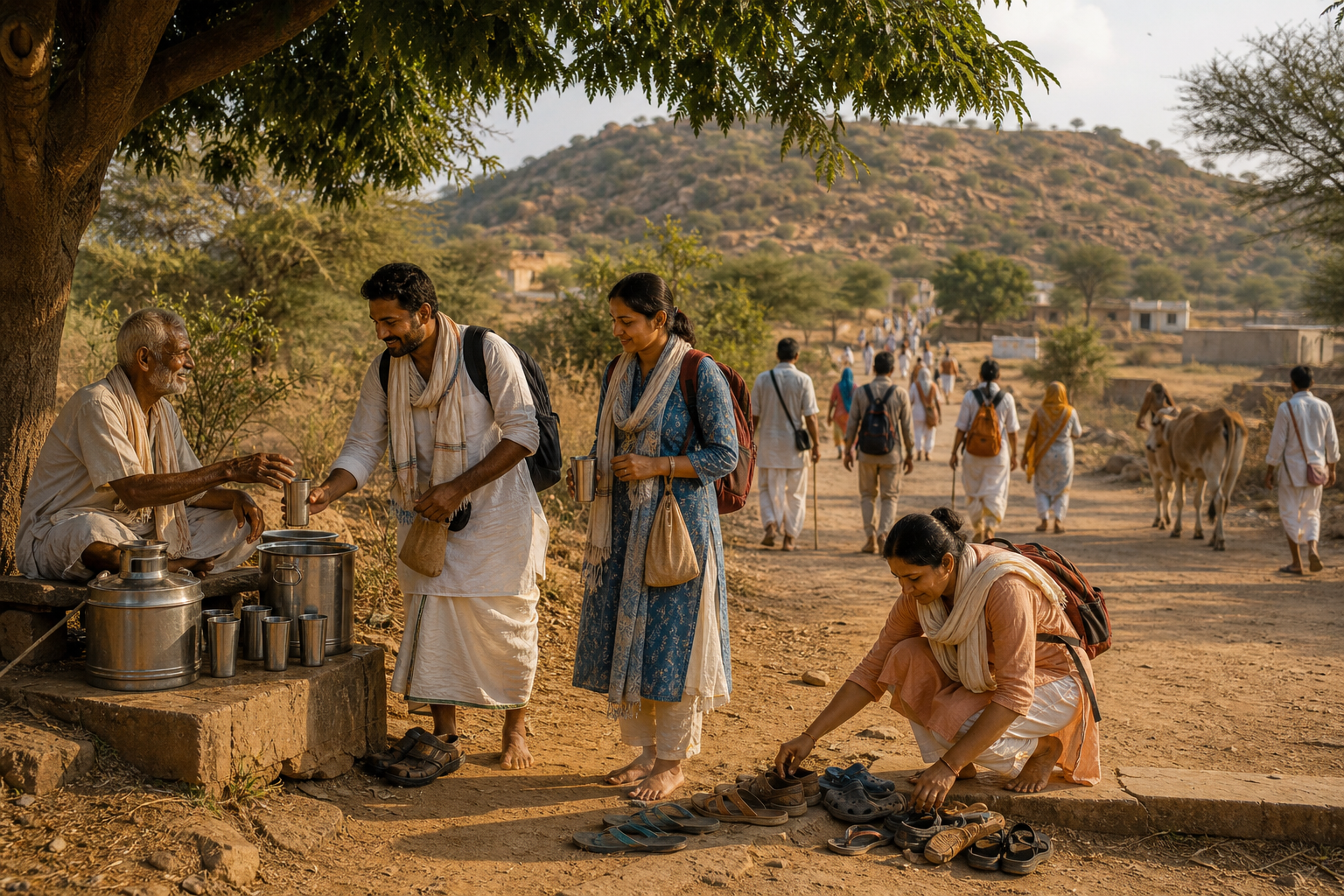
Braj is not a backdrop assembled for a visitor’s spiritual experience. It is a living sacred geography sustained by worshippers, residents, caretakers, pilgrims, inherited stories, and ordinary work. Your conduct toward those people and places is part of the parikrama.
The Radhakund-to-Deeg leg of the 2025 Vrajmandal Parikrama offers a useful pattern. Radhakund carries a profound association with Sri Krishna’s bhakti traditions, while Deeg extends the journey into Braj’s historical and cultural landscape. Movement between them can join devotion, cultural memory, communal walking, and personal discipline. Because that was a 2025 route, treat it as a devotional example rather than a current logistical promise; verify present routes and local conditions before travelling.
Give every important stop a before, during, and after. This prevents a long itinerary from dissolving into a succession of photographs and hurried darshan.
- Before entering, name the association. Recall why the place is sacred and what relationship, lila, teacher, or community it asks you to remember. If you do not know, listen or read before reaching for the phone.
- During the visit, choose one mode of attention. Join kirtan when appropriate, recite softly, perform japa, or remain deliberately silent. Constantly switching between conversation, photography, and prayer weakens all three.
- On leaving, name one obligation. Ask, “What should be different in my speech, service, consumption, or treatment of another person because I came here?” Write down one answer before the next stop.
The walking rhythm matters too. Kirtan creates shared remembrance; soft recitation gives the mind a devotional object; silence allows what has been heard to settle. You do not need to fill every kilometre with sound. Agree on stretches for each mode, especially when travelling with a group, so that collective enthusiasm does not erase another pilgrim’s need for attention or rest.
Plan for bodily capacity without making hardship the measure of sincerity. Carry adequate water and simple provisions, respect the pace of children and elders, and allow rest before exhaustion turns into impatience. Follow local directions concerning entry, offerings, dress, photography, and access. Keep shared spaces clean, ask before photographing people or rituals, and do not leave residents or caretakers to manage the waste produced by your devotion.
Frugality is valuable here because it reduces distraction and pressure on the commons. It does not mean arriving unprepared or expecting others to supply what you deliberately omitted. Bring what you genuinely need, consume carefully, and let simplicity free attention for remembrance and seva.
Turn sacred memory into inherited responsibility
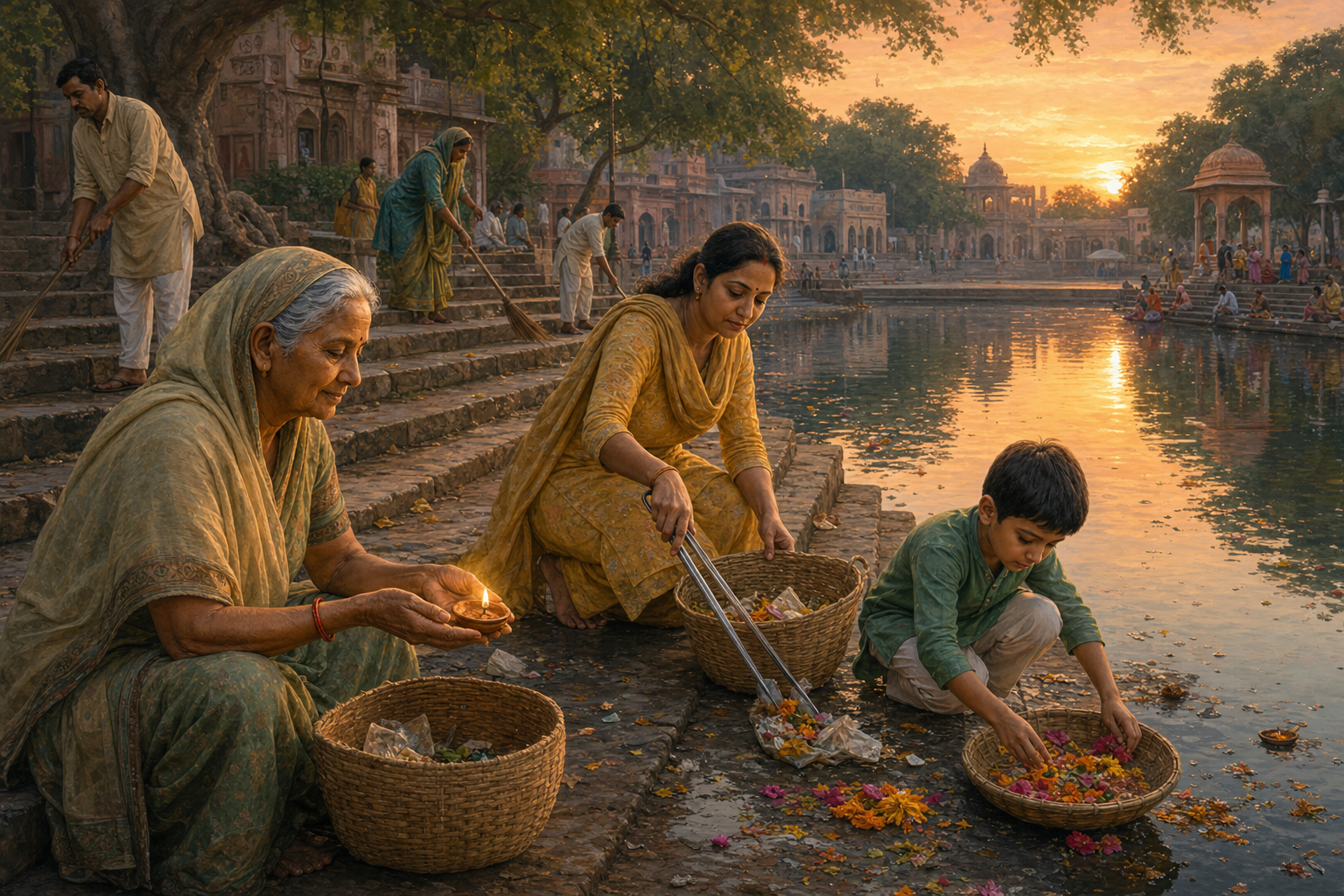
Sacred memory is more than recalling a date or repeating a revered name. It places you inside a relationship: someone received a teaching, embodied it, transmitted it, and made your present practice possible. Memory becomes devotional when you accept responsibility for what reaches the next person.
Sri Viracandra, also remembered as Virabhadra Prabhu or Virabhadra Goswami, is traditionally associated with the ninth day of Kartik’s dark fortnight. Chaitanya-charitamrita, Adi 11.8-12, recognizes him as the greatest branch after Nityananda Prabhu and describes an expansive network of branches and sub-branches. The image is practical: a lineage remains alive through people who study, sing, serve, teach, welcome, and transmit.
Use a four-part memory practice whenever Kartik brings a teacher, acharya, devotee, or sacred event to mind:
- Name: Whom or what are you remembering?
- Relationship: Through which teacher, lineage, place, text, or community does that memory reach you?
- Quality: What form of devotion or service does the remembrance illuminate: humility, kirtan, study, compassion, hospitality, courage, or faithful transmission?
- Obligation: What will you do within the next day so that the memory does not end with you?
The last question is the test. Your act might be reading the named passage carefully, helping with a community observance, cleaning a shared worship space, calling an elder whose knowledge you have neglected, making an overdue apology, or teaching a child why a name is being remembered. Choose an act small enough to complete before the next evening lamp.
This also changes how you hear lineage language. “Branches” do not merely prove the historical importance of a figure. They ask whether devotion is producing nourishment beyond the self. A branch that seeks honour but offers no shade, fruit, teaching, or service has misunderstood the metaphor.
Make the pilgrimage portable without pretending place does not matter
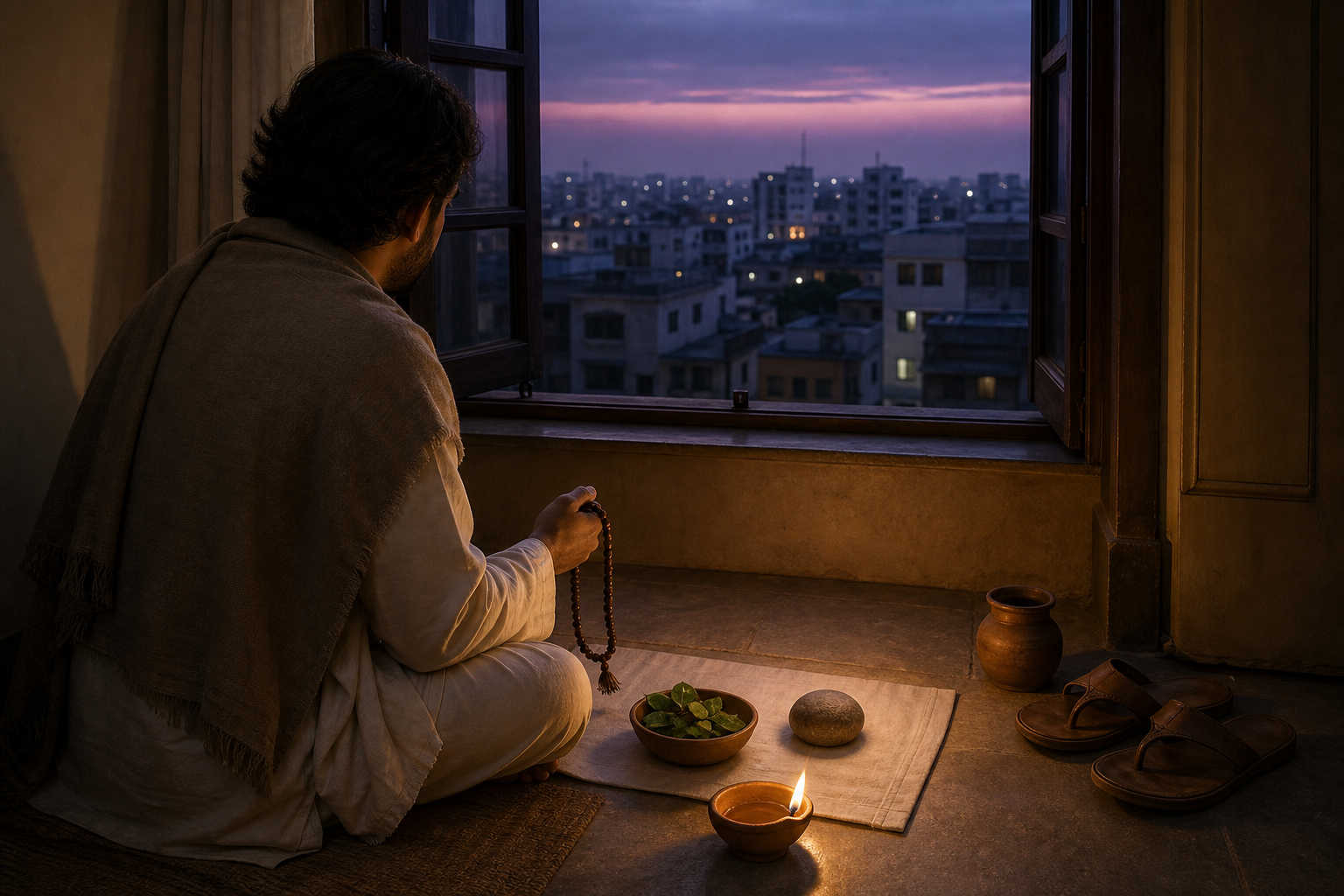
You may not be able to travel to Braj this Kartik. Cost, health, care duties, distance, or work can make pilgrimage impractical. Home practice is not a declaration that sacred geography is irrelevant, and it should not be presented as identical to walking through a living tirtha. It is a way to remain answerable to the same devotional purpose until travel becomes possible.
Build a simple daily arc rather than trying to imitate an entire pilgrimage programme:
- At dawn: clean the practice space, remember your Kartik purpose, and complete the minimum japa, prayer, breathing, or study you chose.
- During the day: keep one ethical restraint visible. It may concern harmful speech, unnecessary acquisition, waste, anger, or neglect of a specific duty.
- At dusk: offer a lamp safely, recall one Braj association, person, or teaching, and sit quietly long enough to notice what the day actually did to your attention.
- Before sleep: ask what you postponed despite knowing it mattered. Give the answer a time on the next day’s schedule instead of carrying it as another vague intention.
Add one recurring act of seva that reaches beyond your private practice. Help an elder attend an observance, contribute to a shared meal, support the upkeep of a sacred or community space, reduce waste, or give time to someone carrying a burden alone. The point is not to simulate travel. It is to prevent devotion from shrinking into a private mood.
Reflection on death can make this routine honest. Ask, “If time were shorter than I assume, which unfinished duty would trouble me most?” Then choose the smallest honourable action available now. If such reflection intensifies acute grief, panic, or despair, do not force it as an austerity; seek support from a trusted spiritual elder and a qualified mental-health professional.
If your household includes Hindu, Buddhist, Jain, or Sikh practices, honour each on its own terms. Shared commitments to disciplined attention, non-harm, truthful conduct, remembrance, and service can make room for mutual respect. They do not require you to erase the distinctive meanings of Krishna bhakti, anicca, anitya-bhavana, Akal, or hukam.
Key takeaways for your Kartik practice
- Choose one Kartik vow with a clear purpose, a realistic daily minimum, a dependable cue, and a simple rule for resuming after a lapse.
- On pilgrimage, give every major place a before, during, and after: learn its association, attend in one deliberate mode, and leave with one obligation.
- Treat residents, caretakers, fellow pilgrims, and shared spaces as part of the sacred geography, not as background to your experience.
- Complete one concrete act within a day of remembering a teacher, lineage, place, or sacred event.
- If you cannot reach Braj, keep a portable rhythm of dawn practice, ethical restraint, evening remembrance, and outward-facing seva without claiming that home and tirtha are identical.
- Let impermanence clarify the next duty. The value of Kartik is not how much spiritual activity you accumulate, but what you stop postponing.
Before the next Kartik lamp, write one sentence naming your vow and one action that will carry sacred memory into another person’s life. If you later walk through Braj, take that sentence with you. It is a better compass than a crowded list of stops.
References
- Dandavats – Complete Kartik 2025 Inspirations: Master Time’s Secret and Transform Fear of Death
- Dandavats – Discover Virabhadra Goswami’s Sacred Appearance: Essential Insights from C.c. Adi 11.8-12
- Dandavats – Complete Day 07 Guide: Radhakund to Deeg – Discover the Transformative Vrajmandal Parikrama 2025
