
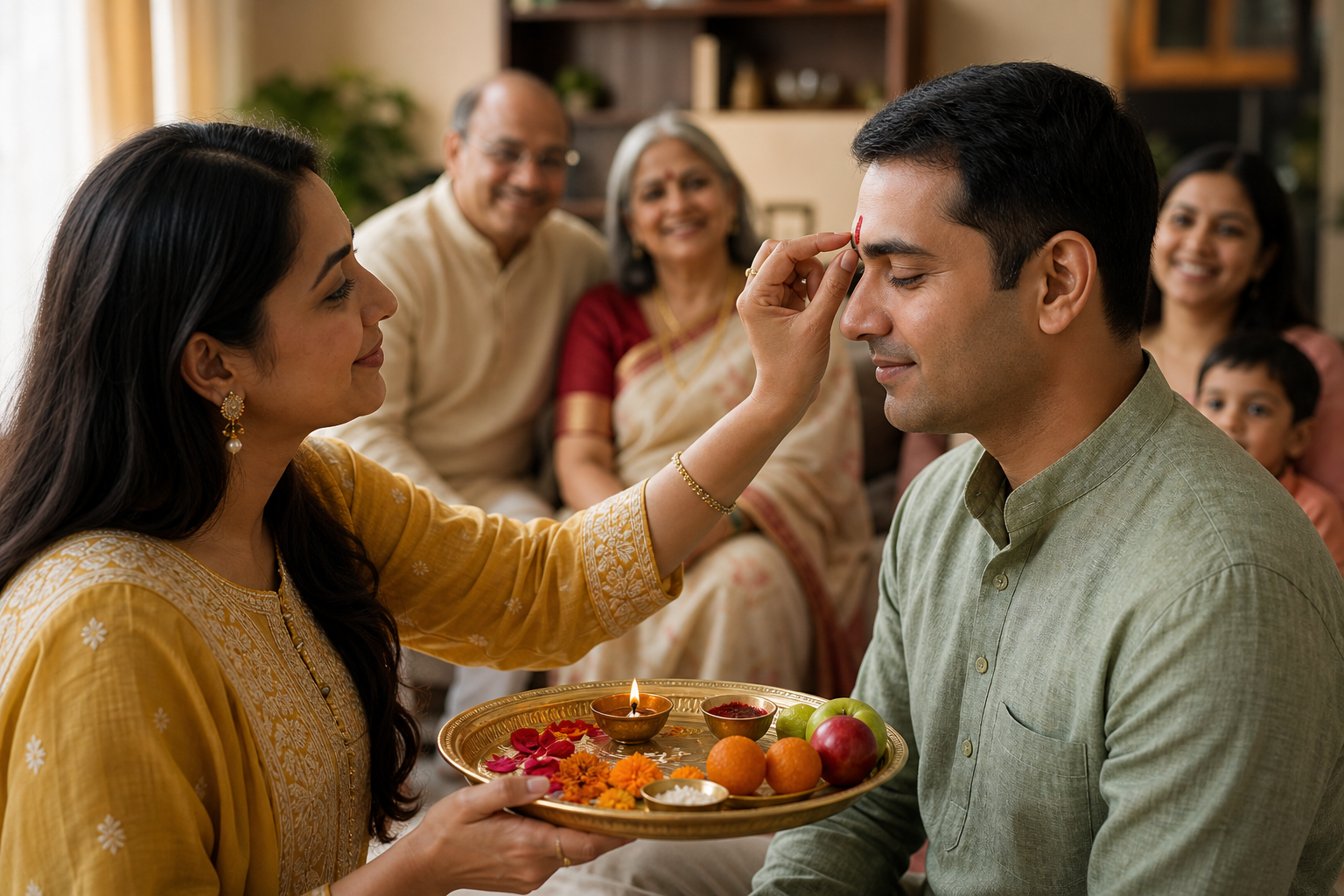
You are hosting the sibling ceremony, but your family does not agree on what to call it. One relative expects Bhai Phota, another says Bhau Beej, and a Nepali cousin remembers a seven-colour Bhai Tika. These names belong to the same festival family, but the customs attached to them are not interchangeable.
You do not need to decide which version is correct. Keep the shared dharmic structure, let inherited family practice determine the forehead mark and food, and agree in advance about timing. That approach protects both unity and regional memory.
Key takeaways for planning the observance
- Bhai Dooj is observed on Kartika Shukla Dwitiya. The civil-calendar date changes from year to year, so use a Panchang calculated for the city where the ceremony will be led.
- The widely shared sequence is a welcome, a lamp or aarti, a sacred forehead mark, a blessing, sweets or a meal, and a reciprocal gift or promise of support.
- Roli-kumkum, sandalwood phota and saptarangi tika are not merely decorative alternatives. Each carries a regional and familial identity, so ask what your household actually uses.
- For a mixed-region family, choose one base ceremony and incorporate the other lineage deliberately. Do not combine every visible custom into an improvised pan-Indian ritual.
- The lasting observance begins after the tilak: turn the language of protection into one specific act of respectful, practical support during the coming year.
One ritual grammar holds the regional forms together
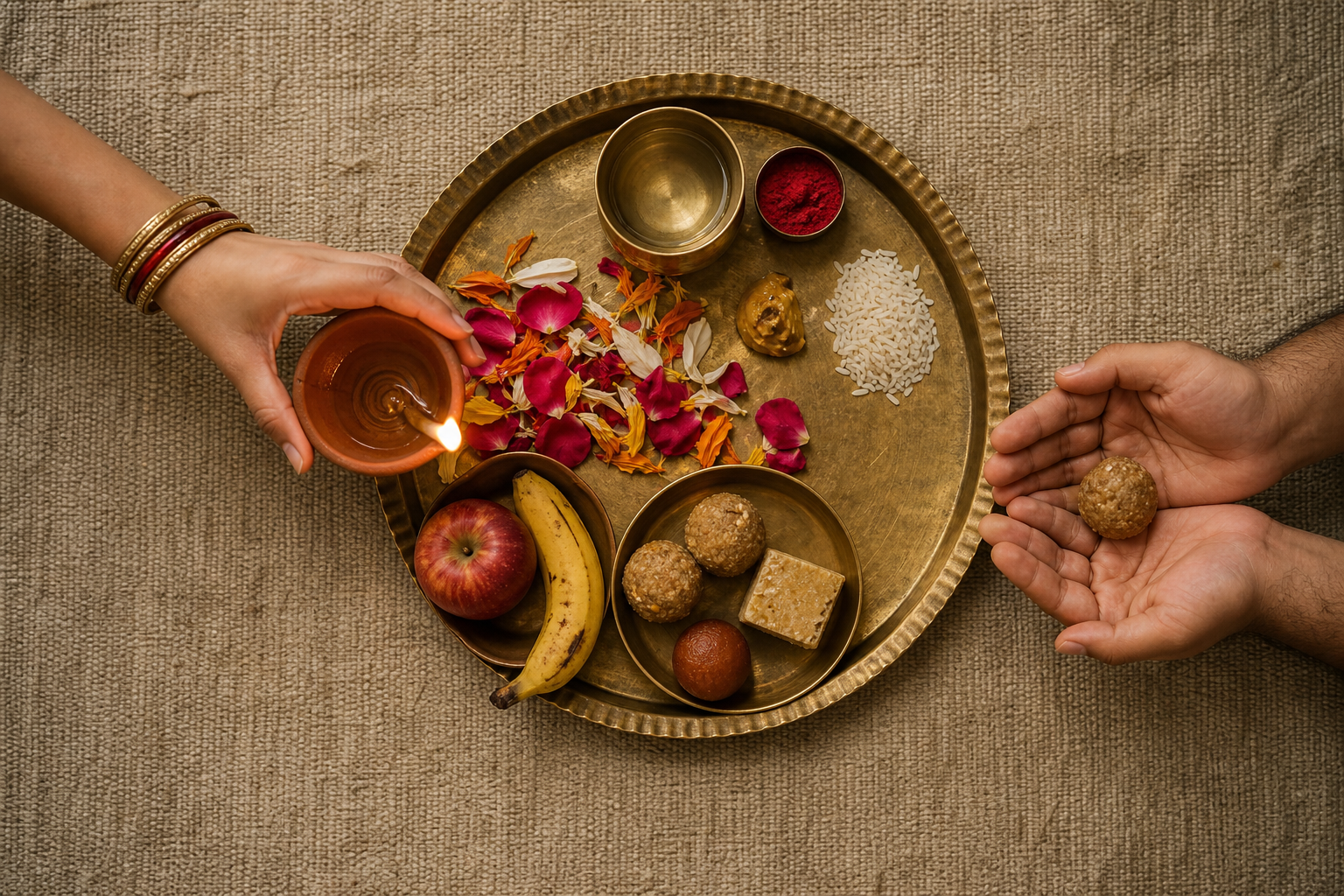
The best-known katha concerns Yama and his sister Yamuna. Yamuna welcomes her brother, performs aarti, places a sacred mark on his forehead and serves him a meal. Yama responds with a boon connecting the visit with protection, prosperity and well-being. The order matters: hospitality and affection are enacted before protection is promised.
This is why Bhai Dooj is more than an exchange of sweets and presents. It ritualises sambandha, the relationship itself, and places it inside dharma. The traditional ceremony gives the sister the role of welcoming and blessing her brother. The brother receives that blessing with gratitude, offers a gift and renews his responsibility to stand by her with respect and compassion.
The five-part structure you can preserve
- Prepare a set-apart place. Clean the space and arrange the diya, flowers, forehead-mark materials and food before the participants sit down.
- Welcome the brother. The welcome may include aarti, a lamp offering or another gesture received through the family tradition.
- Apply the regional mark. This could be roli-kumkum, a sandalwood or ghee-based phota, or the multi-coloured tika associated with Nepal. Use the form your family recognises.
- Speak the blessing and share food. The prayer traditionally seeks health, longevity, well-being and ethical strength. Sweets or a prepared meal make hospitality part of the rite rather than an afterthought.
- Answer the blessing with responsibility. A thoughtful gift is customary, but it should represent gratitude rather than conclude the obligation. The brother’s conduct during the year gives the promise its credibility.
Protection is a duty, not authority over a sister
The word protection can be misunderstood when it is detached from daya and respect. A brother does not acquire control over his sister’s movements, choices or voice because he has received tilak. Dharmic protection means being dependable when help is wanted, opposing mistreatment, sharing family burdens fairly and honouring her agency.
A present cannot substitute for that conduct. If you want the ceremony to change something real, let each sibling name one form of support that would matter in the coming year. A precise commitment is more valuable than a grand but undefined promise.
Regional names preserve distinct family memories
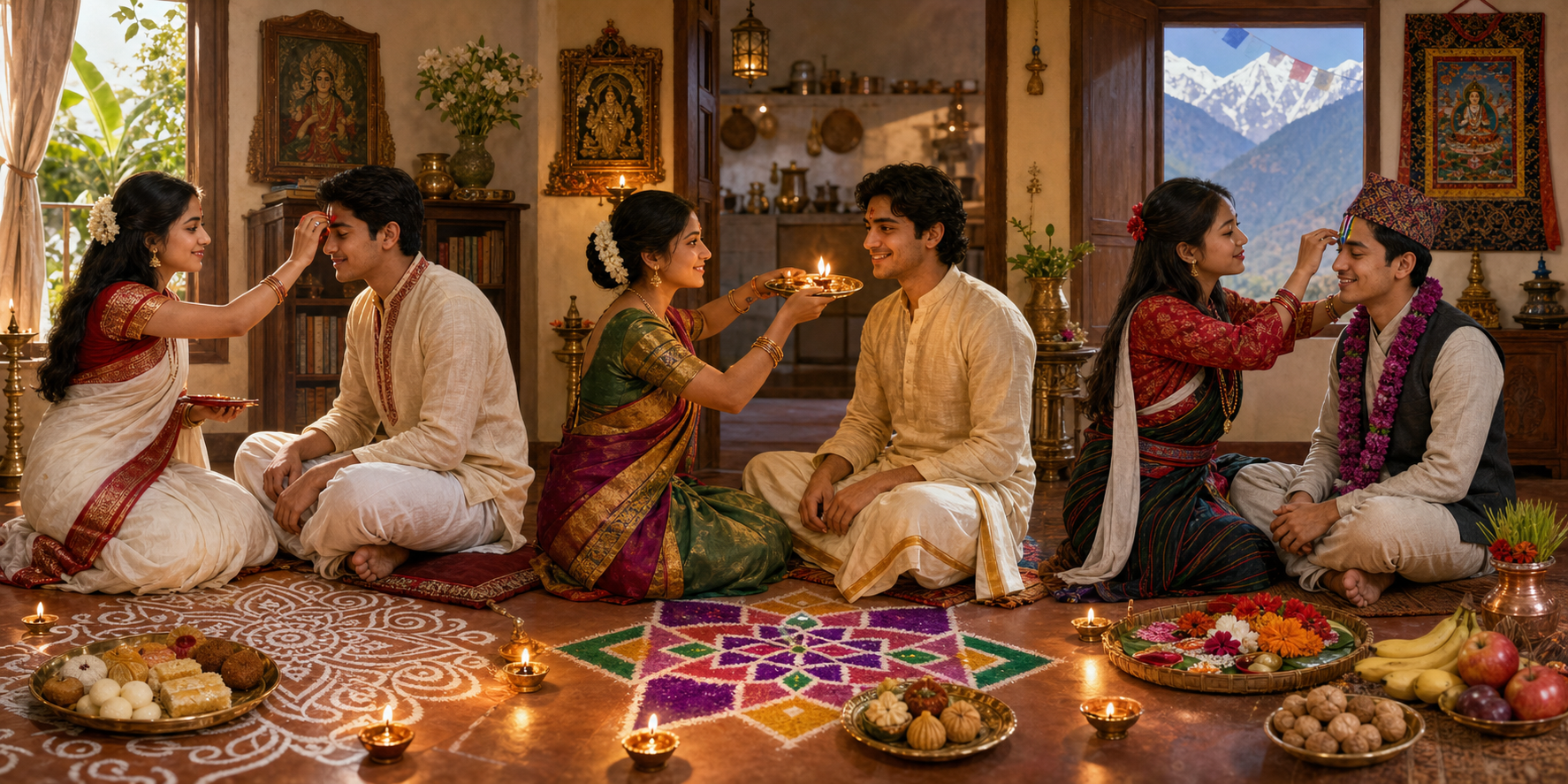
The regional forms share an ethical centre without becoming copies of one another. Use this map to recognise the main distinctions, then confirm the details with the eldest person who actively practises your household’s tradition.
| Region and common name | Recognisable features | What a host should confirm |
|---|---|---|
| North India: Bhai Dooj or Bhai Dhooj | Aarti, roli-kumkum tilak, sweets and gifts commonly shape the home ceremony. | Ask whether the family adds akshata, kalawa, a particular prayer or a customary meal. |
| Maharashtra and Gujarat: Bhau Beej, Bhai Bij or Bhai Beej | The tilak-and-blessing structure remains, often with a special bhog or regional festive food. | Preserve the family’s own name and menu instead of treating the western forms as renamed North Indian Bhai Dooj. |
| Bengal and parts of Assam: Bhai Phota or Bhai Phonta | A sandalwood or ghee-based phota, lamp offering, mishti and dishes such as paayesh may accompany the blessing. | Confirm the phota material, spoken blessing and the foods that the household regards as essential. |
| Nepal and connected communities: Bhai Tika or Bhai Tihar | The ceremony concludes the five-day Tihar or Panchak Yama cycle. Its distinctive elements include a saptarangi, or seven-colour, tika, an auspicious mandala, seasonal offerings and marigolds. | Preserve its place within Tihar and ask how the colours, mandala and offerings are arranged. Do not reduce it to an ordinary single-colour tilak. |
| South Indian households: Yama Dwitiya | Some families give more explicit attention to Yama and Yamuna, sometimes adding a ritual snan or a symbolic water offering. | Ask whether remembrance of Yama-Yamuna or the water observance is central to the family’s practice. |
This is a map, not a warrant to correct another household. Customs vary within states, language communities and extended families. A Bengali family may care most about the precise phota and blessing; another may regard the meal as the chief expression of affection. Two Nepali households may share the seven-colour tika but arrange the surrounding offerings differently.
Before buying supplies, ask three questions: What goes on the forehead? What is spoken or sung during the blessing? Which food marks the completion of the ceremony? Those answers will tell you more about the ceremony you are actually hosting than a generic festival checklist will.
Let the local Panchang decide the clock
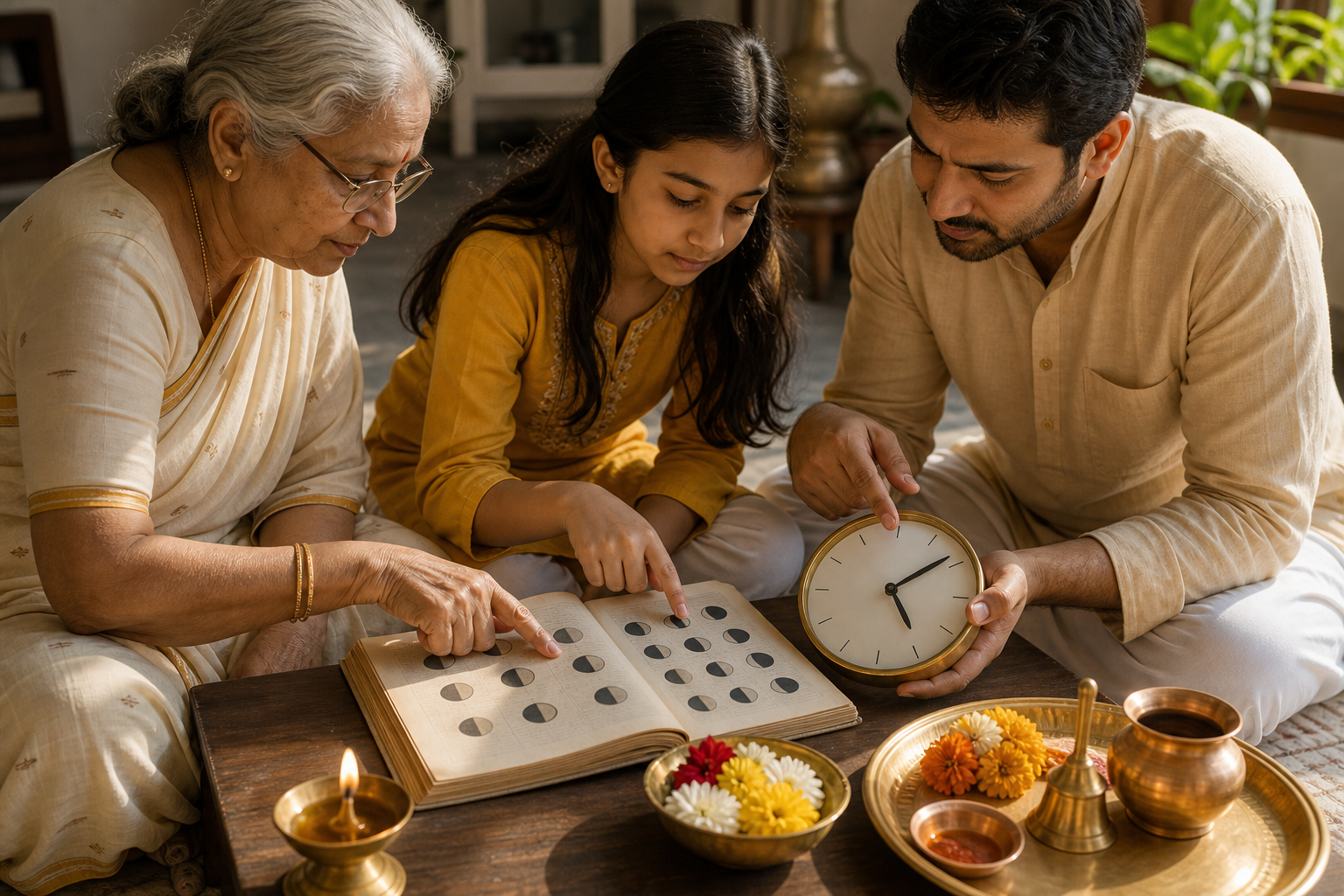
The calendar anchor is Kartika Shukla Dwitiya, the second lunar day of the bright fortnight. It is not a permanently fixed civil date. Dwitiya can begin or end partway through a civil day, and its local presentation depends on location-specific calendar calculations.
Aparahna, the afternoon period, is traditionally preferred in many Bhai Dooj calendars, while some households follow a morning practice. That is a genuine regional distinction, not necessarily a scheduling error. If your family also considers Rahu Kalam, Bhadra Kaal or another restriction, check it within the same local calendar system instead of piecing together times from unrelated cities.
- Search by year and ceremony city. A time calculated for Delhi, Kolkata or Kathmandu should not automatically be applied in another location.
- Use one trusted local Panchang, temple bulletin or community calendar. Record the start and end of Dwitiya as well as the recommended ceremony window.
- Check the inherited preference. Ask whether your household normally performs the rite in the morning or during Aparahna.
- Share the final time with its time zone. This prevents confusion when relatives are travelling or joining from abroad.
Do not copy a previous year’s festival date into a new calendar. Also avoid postponing the timing discussion until the thali is ready; the disagreement usually appears when siblings have already made travel plans. Confirm the city, local Panchang and family preference first, then schedule the gathering.
Build a ceremony that your whole family can recognise
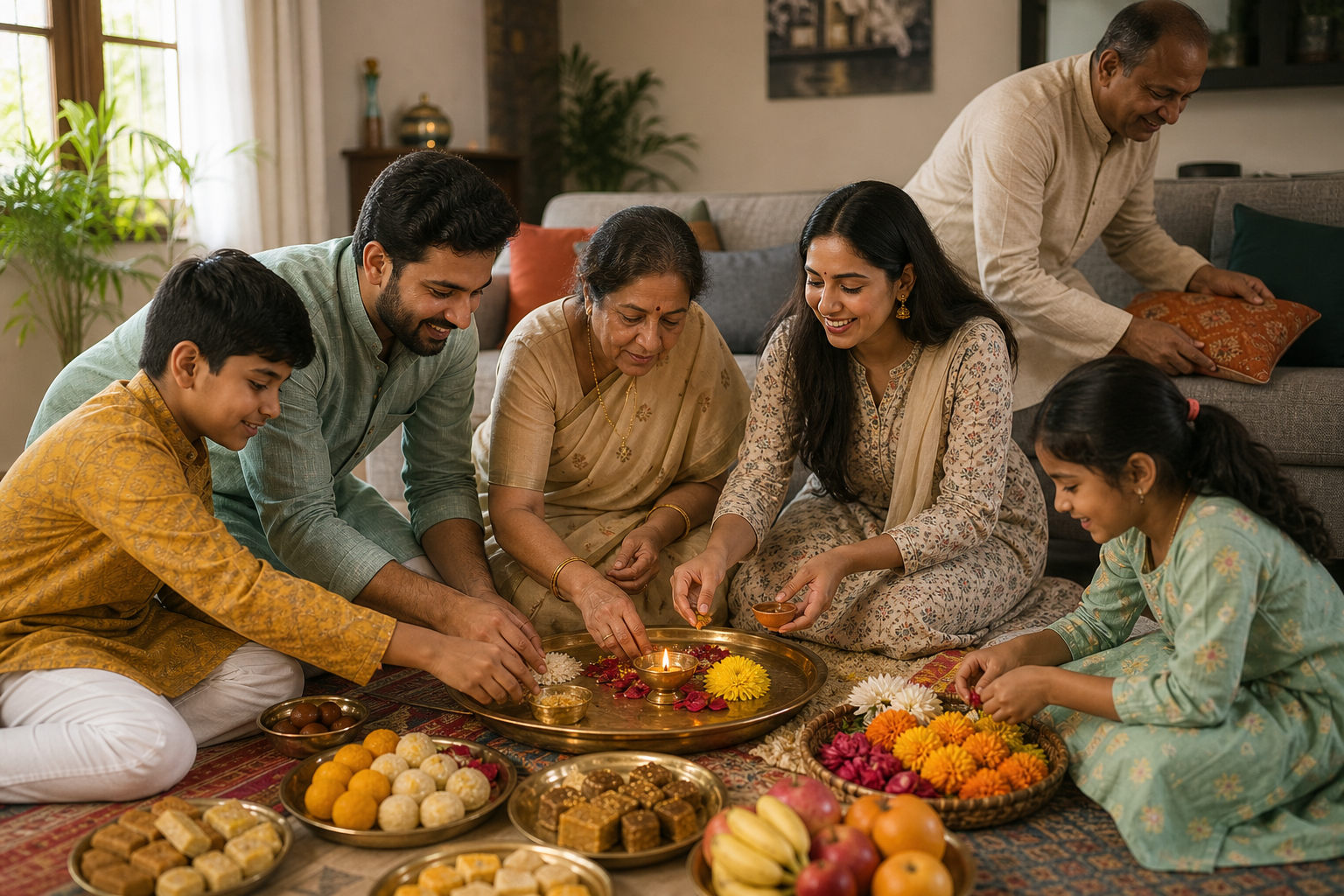
When one inherited tradition leads
Keep the preparation simple enough that the meaning remains visible. The evening before the observance, place the family’s usual materials together: a diya, flowers, the correct pigment or paste, akshata if used, sweets and any customary thread, incense or offering. Prepare the meal early enough that the person performing the rite can participate without rushing between the altar and the kitchen.
Tell children the names of the actions as they occur. Explain that Dwitiya supplies the calendar, the forehead mark carries the blessing, the meal enacts hospitality and the gift answers that welcome with gratitude. That is more effective cultural transmission than asking them to imitate unexplained movements.
When two regional traditions share the room
Choose the base sequence openly. The host household’s practice, the guidance of a respected elder or an agreed yearly rotation can provide a fair rule. Do not choose solely by which ceremony looks most elaborate in photographs.
Then identify one or two elements from the second lineage that can be retained without obscuring the first. A mixed Bengali-Nepali family might keep a recognised ritual sequence while making space for both the Bengali festive food and the Nepali seasonal offerings. If both families regard their forehead mark as central, do not casually blend sandalwood phota and seven-colour tika into an invented paste. Perform the agreed rites distinctly or alternate the leading tradition by year.
Use each regional name when explaining the ceremony. Saying that one side calls it Bhai Phota and the other Bhai Tika teaches unity without erasure. Children can then notice that a shared sibling dharma travels through different languages, foods, colours and sacred gestures.
When siblings are in different cities
A family separated by distance can arrange a synchronised blessing by video call. First choose which household will serve as the ceremonial host; its city and Panchang should provide the announced timing. Each location can prepare a lamp and the locally appropriate materials. Agree beforehand how the physical tilak will be handled so that nobody has to improvise during the call.
If someone cannot join during the chosen window, ask the family’s elder or ritual guide whether the physical observance and the shared call may be separated. Do not pretend that two different local calculations produce one universal clock. State which location’s timing you are following and make the arrangement transparent.
Distance also makes it tempting to turn the day into a gift-delivery exercise. Keep the spoken blessing and promise of care at the centre; a parcel can arrive earlier or later. Clay diyas, natural pigments and locally sourced flowers can keep the material side modest while preserving the festival’s devotional atmosphere.
Bhai Dooj is rooted in Hindu lunar time and the Yama-Yamuna narrative, yet its ethics are readily understood across the broader Dharmic family. Seva, daya and karuna, ahimsa, and the Sikh aspiration of sarbat da bhala all make care for another person’s flourishing morally intelligible. Shared values do not make Hindu, Buddhist, Jain and Sikh practices identical; they show why responsible affection can cross community boundaries without flattening them.
Before the next Dwitiya, call your sibling or family elder and settle three things: the local Panchang, the forehead mark and the meal. Then ask your sibling one direct question: What support from me would matter this year? Let the answer become the vow that survives after the lamp is extinguished.
References
- DharmaRenaissance Blog — Discover the Complete Bhai Tika 2025 Guide: Bhai Tihar Traditions, Date, and Meaning
- DharmaRenaissance Blog — Yama Dvitiya 2025 (Bhai Dooj): The Complete, Essential Guide to Date, Rituals, and Meaning
- DharmaRenaissance Blog — Discover the Complete Muhurat for Bhai Dooj 2025: Yama Dwitiya, Bhau Beej, Bhai Tika
- DharmaRenaissance Blog — Bhai Phota 2025 Complete Guide: Discover Muhurat, Exact Timing, Rituals, and Cultural Significance
