

If you are trying to judge the Hindutva strategy deployed around Bihar’s 2025 Assembly election, don’t stop at the size of a rally or the sharpness of a slogan. The serious question is whether cultural confidence was translated into a programme that a young job-seeker, a woman concerned about safety, a farmer, or a small entrepreneur could recognise in daily life.
That distinction matters if you want a pro-Hindu politics that lasts. Hindutva can generate belonging and political energy, but durable support requires a second move: converting identity into public goods, credible local leadership, disciplined organisation and fair administration. Here is how to tell whether a campaign is making that move.
The strategic choice: convert identity into public goods
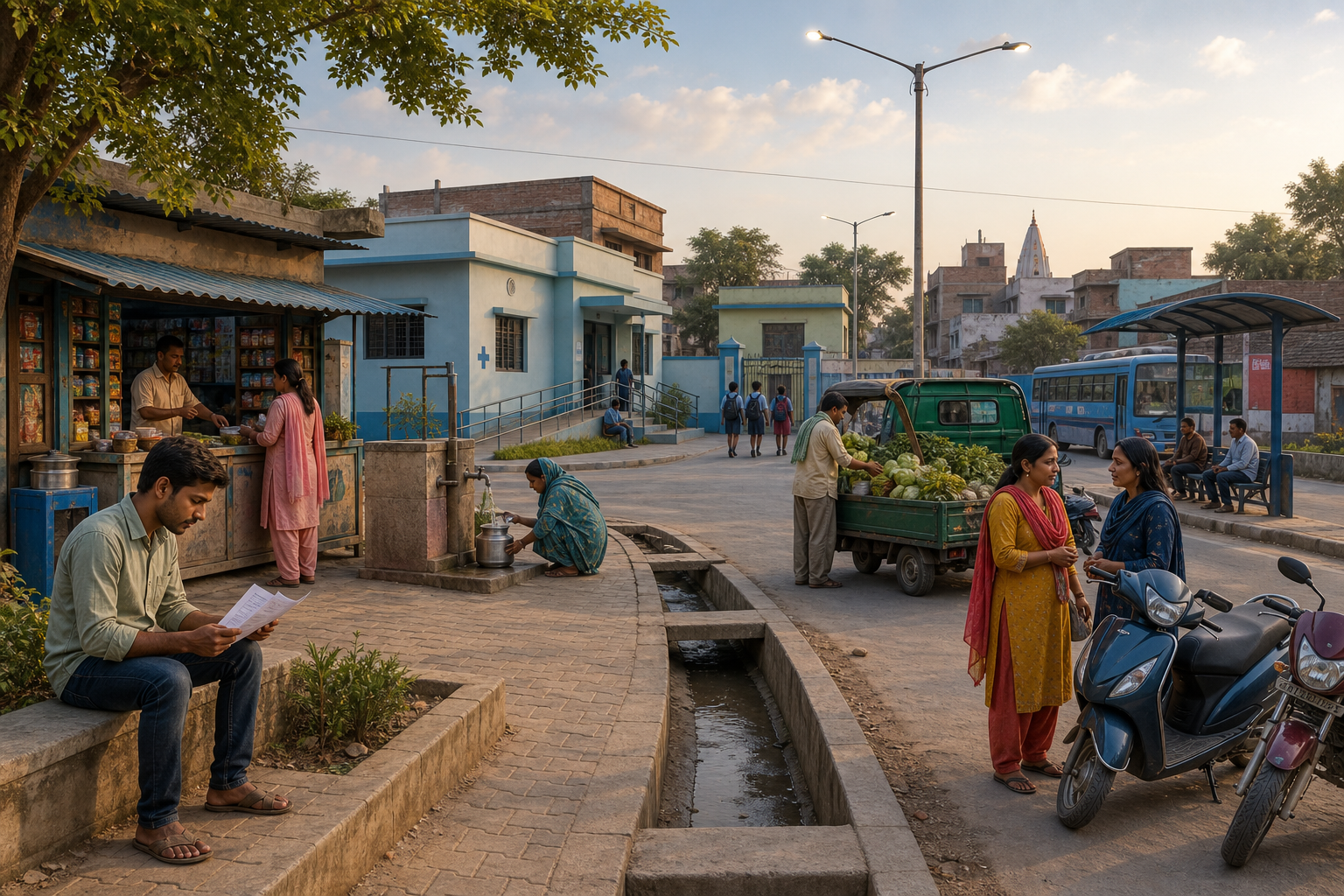
A Bihar strategy built around Hindutva has two possible forms. The narrower form treats cultural identity as a way to keep voters emotionally activated. The stronger form treats civilizational identity as a source of political duty. It asks what a government that speaks of dharma owes to every household under its authority.
That obligation becomes concrete in Bihar because voters are looking for employment, dependable infrastructure, education, affordable healthcare and public safety. None of these concerns is outside Hindutva. A civilizational politics that cannot protect dignity, enable work or administer public resources honestly has separated cultural pride from rajadharma.
The campaign therefore needs more than two parallel messages, one about identity and another about development. It needs a visible connection between them. Cultural heritage should lead to a commitment to conserve temples and other historic sites responsibly. Concern for social order should lead to policing that is prompt, impartial and accountable. Seva should appear not only in speeches but also in the last-mile delivery of welfare, schools, clinics and basic infrastructure.
When you hear a cultural assertion, ask for its governing consequence. What will be protected? Which institution is responsible? How will an ordinary citizen know that delivery has improved? A campaign that cannot answer those questions is using Hindutva as atmosphere. A campaign that can answer them is beginning to make it a governing proposition.
Law and order is the clearest test. It can become a common public good that protects women, traders, pilgrims, religious institutions and vulnerable neighbourhoods. It can also be reduced to coded antagonism. The difference is equal application: the rule must be stated clearly, enforced consistently and kept within constitutional limits. Strength is not arbitrariness.
What Yogi Adityanath contributes, and what he cannot replace
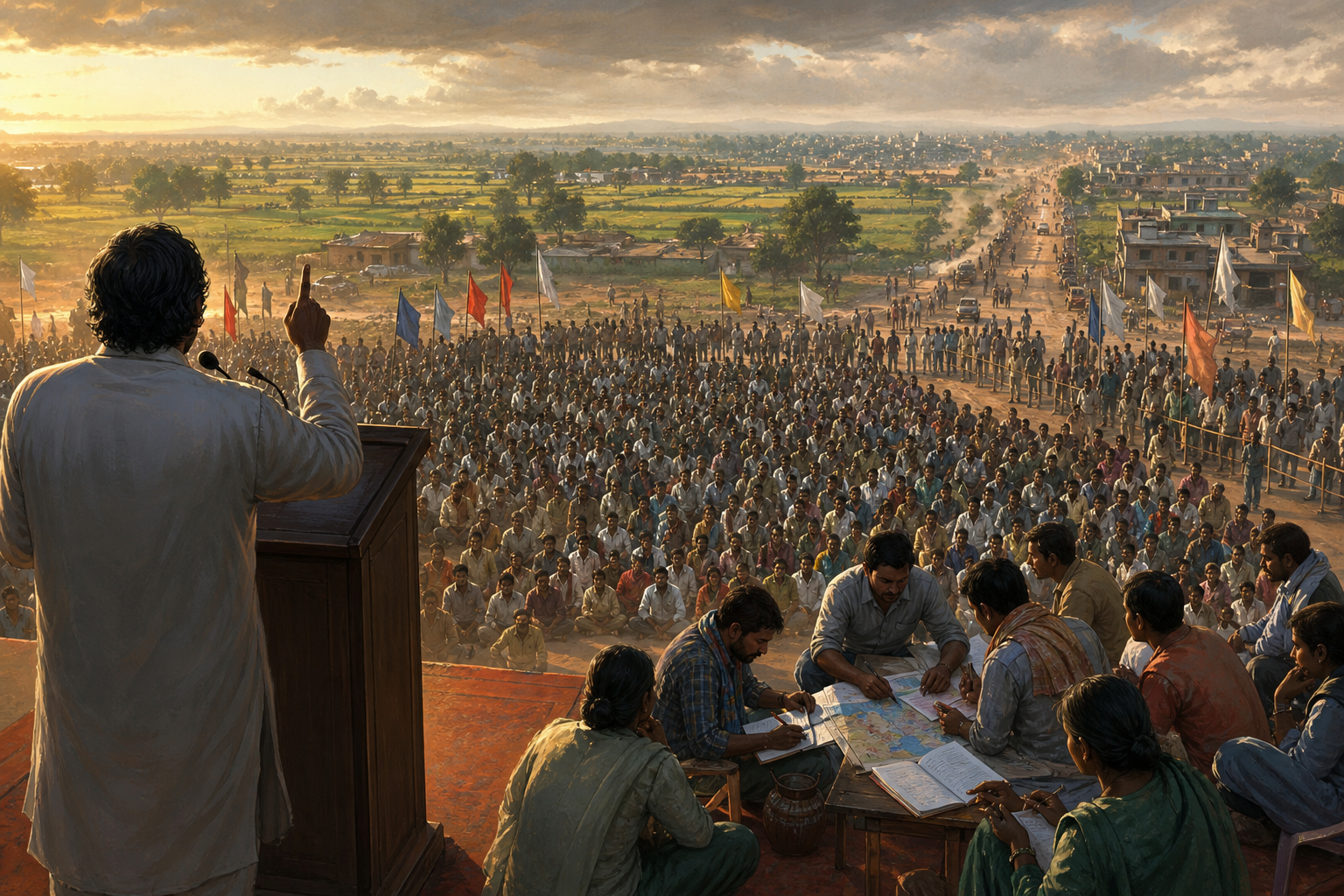
Yogi Adityanath gives the BJP a recognisable grammar for joining cultural symbolism to governance. His campaigning commonly links faith-based language with claims about security, infrastructure and welfare delivery in Uttar Pradesh. That makes him useful as more than a crowd-puller: he personifies the argument that visible Hindu identity and administrative authority can occupy the same political frame.
But Bihar cannot be treated as a blank surface onto which another state’s political model is projected. A prominent outside campaigner can reinforce a narrative; only Bihar’s candidates, workers and prospective administrators can make that narrative locally credible. Voters still need to know who will solve a district’s problems, who will answer when delivery fails and whether the organisation remains present after the rally ends.
You should therefore separate three functions that are often blurred together:
- Symbolic mobilisation: Yogi can give cultural confidence a forceful and easily recognised public expression.
- Governance signalling: References to security, infrastructure and welfare can help the BJP argue that Hindutva is compatible with administrative delivery.
- Local conversion: Bihar’s leadership and booth organisation must turn that broad appeal into trust, constituency by constituency.
The first function can attract attention. The second can establish a standard. The third decides whether the message has roots. If local candidates merely repeat a star campaigner’s language without identifying Bihar-specific responsibilities, the strategy remains borrowed. If they can explain what the governing standard means in their own constituencies, the national and local messages begin to reinforce each other.
This is also where candidate credibility matters. A speech about accountability loses force when the person delivering it avoids scrutiny. Look for candidates who can name a local problem without hiding behind national rhetoric, identify the authority responsible for it and accept that progress must be judged after the election. Hindutva cannot compensate indefinitely for weak representation; it raises the moral expectations placed on that representation.
Read the strategy at the rally, manifesto and booth
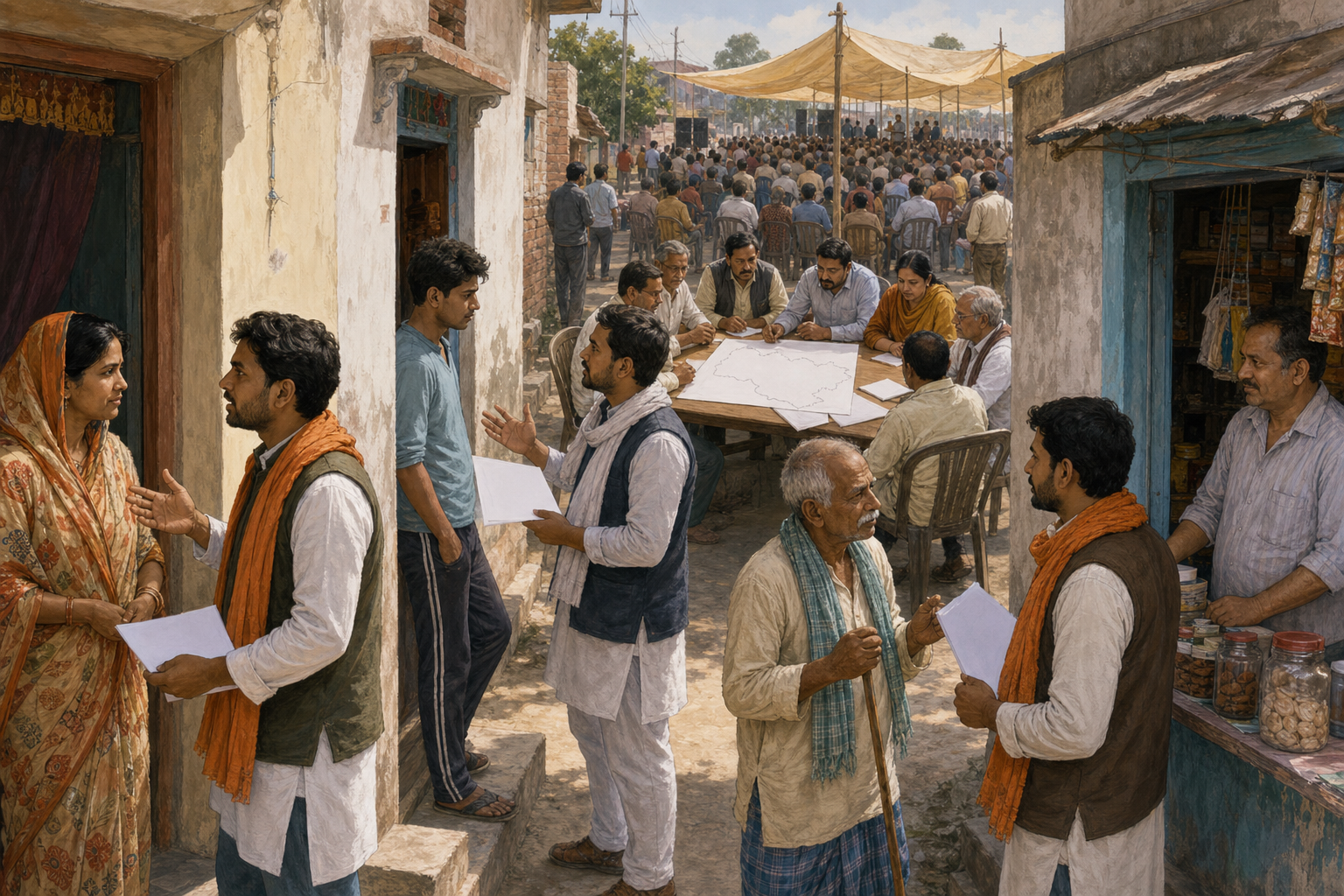
Televised speeches reveal tone, but they do not reveal the whole strategy. To assess whether Hindutva is being used as a durable political framework, follow the message through the campaign’s different layers. The content should become more specific as it moves closer to the voter.
| Campaign layer | What a credible strategy contains | Warning sign |
|---|---|---|
| Rally | Cultural confidence connected to security, opportunity, service and a shared civic purpose | Identity language with no governing consequence beyond applause |
| Manifesto | Clear commitments on jobs, infrastructure, education, healthcare, public safety and heritage | Promises whose responsible institution or accountability mechanism is impossible to identify |
| Local candidate | District-level priorities, visible ownership and a willingness to answer for delivery | Dependence on national personalities to avoid local scrutiny |
| Booth organisation | Workers who understand household concerns and can explain how the larger message applies locally | Mobilisation based only on anger, rumour or social division |
At each layer, ask the same practical questions. What problem is being named? What action is promised? Who owns that action? What would count as delivery? You do not need a technical policy document at every rally, but the answers should become progressively clearer in the manifesto, constituency campaign and local organisation.
This discipline is especially important because the BJP does not compete against a single kind of opposition. The INDIA alliance can make anti-incumbency and coalition arithmetic central to the contest. Jan Suraaj, led by Prashant Kishor, can press a different challenge by emphasising data, local participation and last-mile governance. A Hindutva campaign that answers only ideological criticism may therefore miss the governance-first voter entirely.
The effective response is not to abandon the civilizational case. It is to make that case harder to separate from competence. Evidence-informed commitments, credible local faces and understandable accountability give a voter something more durable than a reaction to an opponent. This is particularly relevant for first-time voters and urbanising constituencies, where measurable outcomes can carry more weight than an exclusively emotive appeal.
Booth strength should also be judged by quality, not merely reach. A booth network is politically valuable when it brings local information upward and explains commitments downward. It becomes a liability when it circulates claims that the public campaign cannot defend. Narrative discipline means that a worker at the neighbourhood level, a candidate in the constituency and a leader on the main stage are offering compatible accounts of what Hindutva is for.
Dharmic unity is a test of strength, not a retreat
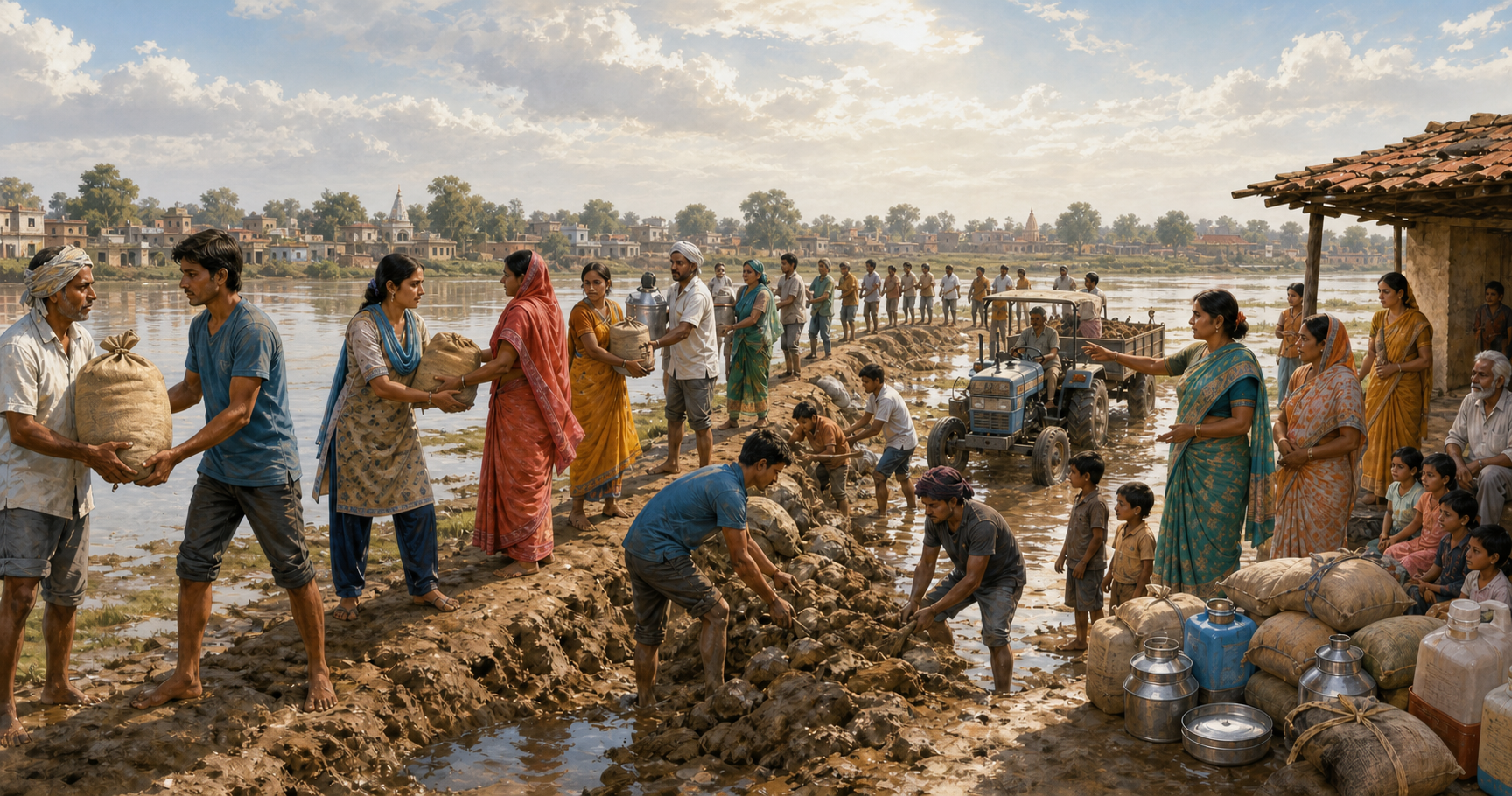
A pro-Hindu campaign does not become stronger by treating every difference as hostility. Bihar’s wider dharmic inheritance offers a more confident foundation: Hindu, Buddhist, Jain and Sikh traditions are distinct, but they share an ethical vocabulary that includes truth, non-violence, compassion, duty, discipline and service. Political unity need not erase theological difference.
Three dharmic principles provide a useful test of campaign conduct:
- Satya: claims should be supportable. If a promise lacks a delivery path, repetition does not make it truthful.
- Ahimsa: political firmness should not become dehumanisation, intimidation or collective blame. Public safety loses its dharmic character when punishment is detached from individual responsibility and lawful process.
- Seva: service must reach the citizen who lacks influence. Welfare that exists only in announcements is not last-mile delivery.
This approach does not require a campaign to hide Hindu concerns. It permits those concerns to be stated with precision: protect places of worship, conserve civilizational heritage, ensure that the law does not discriminate and give communities room to sustain their traditions. It also requires the state to protect all lawful places of worship and uphold the dignity of every citizen. Constitutional conduct and Hindu self-respect do not have to be framed as opposites.
In strategic terms, inclusion widens the meaning of cultural confidence. It tells Buddhist, Jain and Sikh citizens that dharmic unity is not a demand for absorption. It tells non-dharmic minorities that public order will be firm but not vindictive. And it tells Hindu voters that their identity is substantial enough to produce duty, restraint and competent rule rather than permanent agitation.
Watch the campaign’s language when pressure rises. Inclusive phrases used only at formal events are not enough. The real test comes when leaders respond to provocation, local conflict or a tempting rumour. A disciplined campaign verifies before amplifying, distinguishes offenders from whole communities and returns attention to lawful action. That is not political timidity. It is control over one’s own narrative.
Heritage policy offers another practical test. Conservation should not be reduced to ceremonial visits by prominent leaders. Ask whether a proposal protects the physical site, supports responsible access, respects the living community around it and creates a clear administrative duty. The same standard applies to interfaith outreach: it should produce channels for resolving local friction and protecting worship, not merely a photograph.
Key takeaways for judging the Bihar strategy
- Hindutva becomes electorally durable when cultural identity produces visible duties in employment, infrastructure, education, healthcare and safety.
- Yogi Adityanath can supply symbolism and a governance frame, but Bihar’s local leaders must own delivery and scrutiny.
- A rally reveals the campaign’s emotional register; the manifesto, candidate and booth network reveal whether the proposition is operational.
- Law and order is a shared public good only when rules are clear, enforcement is consistent and constitutional limits are respected.
- Dharmic unity should preserve the distinct identities of Hindu, Buddhist, Jain and Sikh traditions while organising politics around truth, non-violence, duty and service.
- The strongest warning sign is a widening gap between the language of civilizational confidence and the quality of local accountability.
Before you accept or reject a campaign speech, write down one cultural commitment it makes and one public outcome attached to that commitment. Then look for the responsible local leader, the delivery mechanism and the standard by which the public can judge it. If those elements remain absent across the manifesto and constituency campaign, the speech is mobilisation without a governing architecture.
Bihar does not need a choice between Hindu civilizational confidence and practical governance. The more demanding choice is to insist on both. That is the standard voters, party workers and dharmic institutions should carry beyond the rally and into every conversation about political support.
References
