
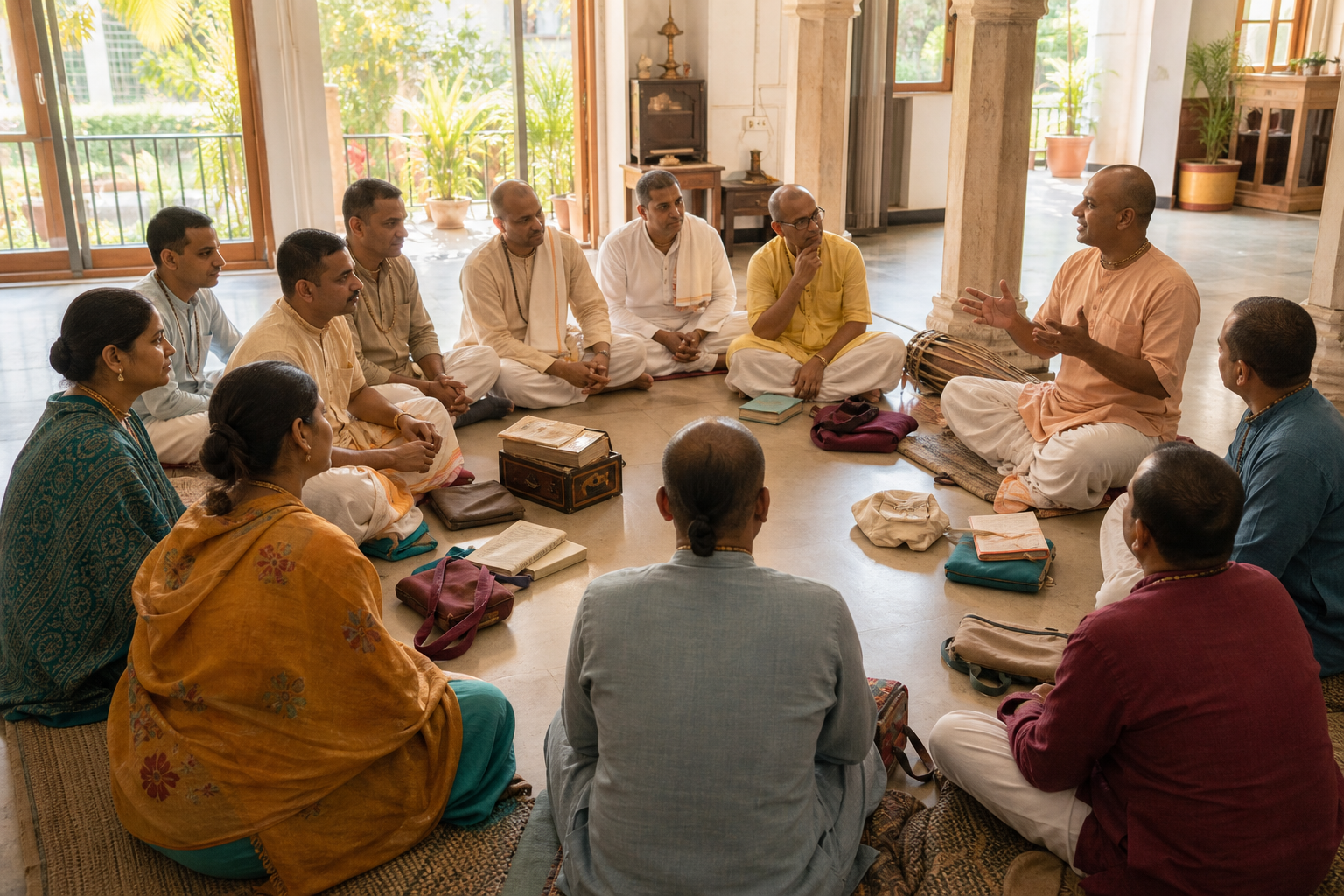
If you lead book distribution at a temple, the difficult part may begin after an inspiring gathering. Everyone returns with renewed enthusiasm, but ordinary responsibilities soon compete for attention. Your real task is not to preserve a mood. It is to turn shared resolve into a practice that your team can repeat.
The Bharat Sankirtan Leaders Sanga 2025 placed continuity, cooperation, mentorship and dignified outreach at the centre of that task. For your temple, this provides a practical standard: sankirtan should become a supported culture of seva rather than an occasional burst of activity.
What the Pune gathering placed before temple leaders
On 23-24 September 2025, the ICC Book Distribution Committee convened the Sanga at ISKCON NVCC in Pune. Approximately 150 temple sankirtan leaders, senior book distributors and preachers from across Bharat participated. That combination matters: the gathering brought leadership, field experience and preaching into the same conversation instead of treating distribution as an isolated activity.
The shared commitment was both local and continuous: enliven sankirtan in every temple and extend access to spiritual wisdom across India. The useful test, therefore, is not how strongly participants felt during the gathering. It is what changes when they return to their temples.
Key takeaways
- Treat sankirtan as a standing temple culture, not merely as a special campaign.
- Keep the purpose of distributing sacred literature visible so that activity does not become mechanical.
- Develop emerging distributors through direct support from experienced devotees.
- Make respectful conduct, humility and cultural sensitivity part of the method itself.
- Share field learning across temples, while adapting each approach to its local setting.
- Look beyond the physical transfer of a book to the quality of the spiritual encounter it makes possible.
Build a year-round sankirtan operating rhythm
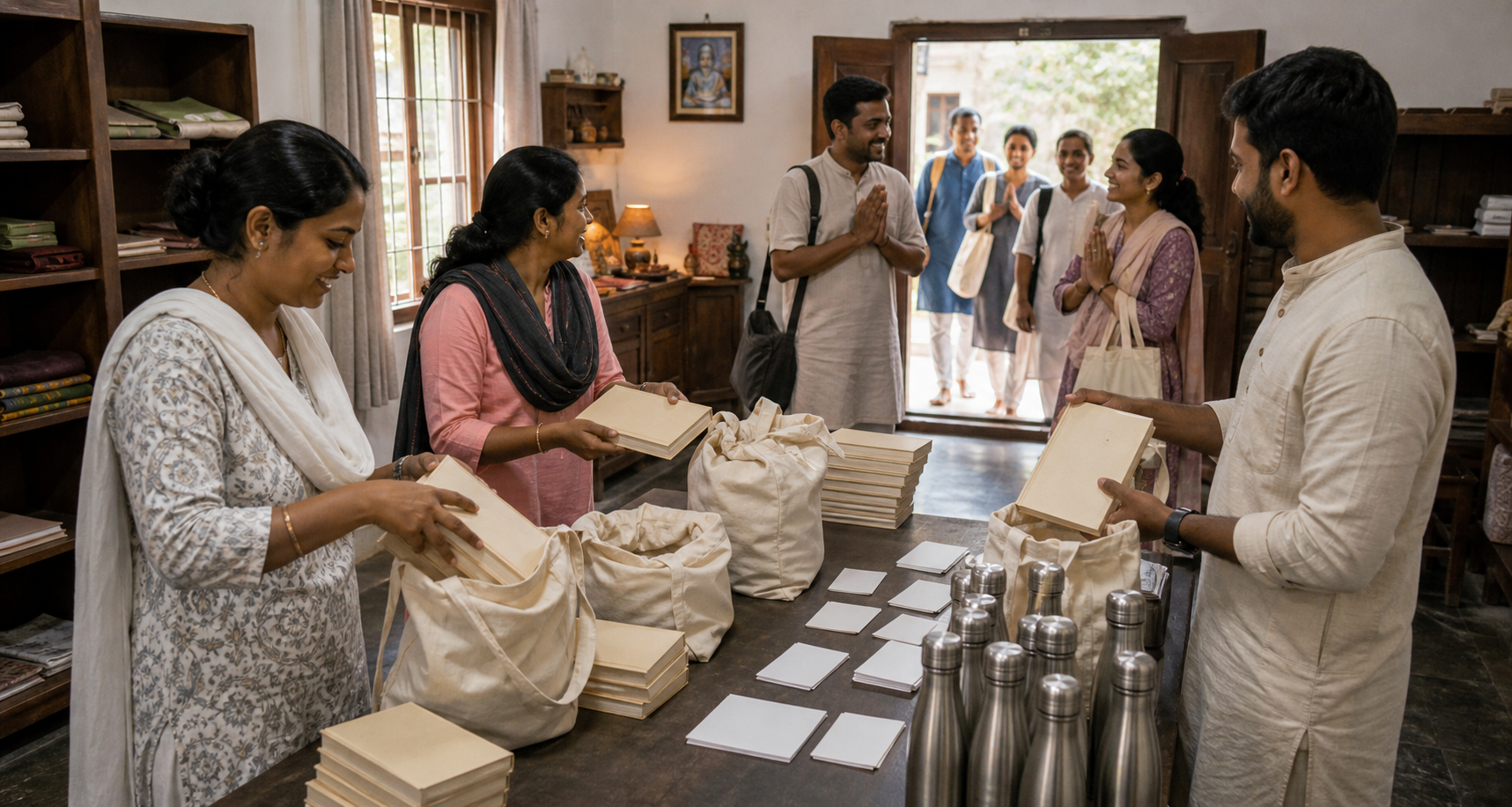
Sustaining momentum requires clarity of purpose, consistent practice and community support. Continuity does not mean maintaining maximum intensity at all times. It means having a stable process that survives changes in enthusiasm, personnel and local circumstances.
Use the same operating loop whenever your team prepares for an outreach opportunity:
- Clarify the purpose. Remind the team that the work is seva: offering access to spiritual wisdom through an honest human encounter. Distribution figures can measure activity, but they should not replace that purpose.
- Prepare for the setting. Consider whom the team is likely to meet, which language will be clearest, which books fit the context and which distributors need support.
- Serve the person in front of you. Ask permission, listen before explaining and respond to the person’s actual interest rather than delivering the same speech to everyone.
- Debrief while the details are still accurate. Discuss which questions arose, which explanations were understood, where the interaction became awkward and how the next team could respond better.
- Carry learning forward. Record useful patterns and bring them into the next preparation. An outreach is operationally complete only when its lessons return to the team.
A useful debrief does not need grand analysis. Ask what people wanted to know before accepting or declining a book, which words created clarity, where the team made assumptions and what should change next time. Record patterns, not private personal details.
Do not let a quantity-only report become the temple’s sole memory of sankirtan. Counts can show that activity occurred. They cannot teach an emerging distributor how to recognise interest, respond to uncertainty or end a conversation respectfully. Preserve both the result and the field judgment behind it.
Make respectful outreach a visible discipline
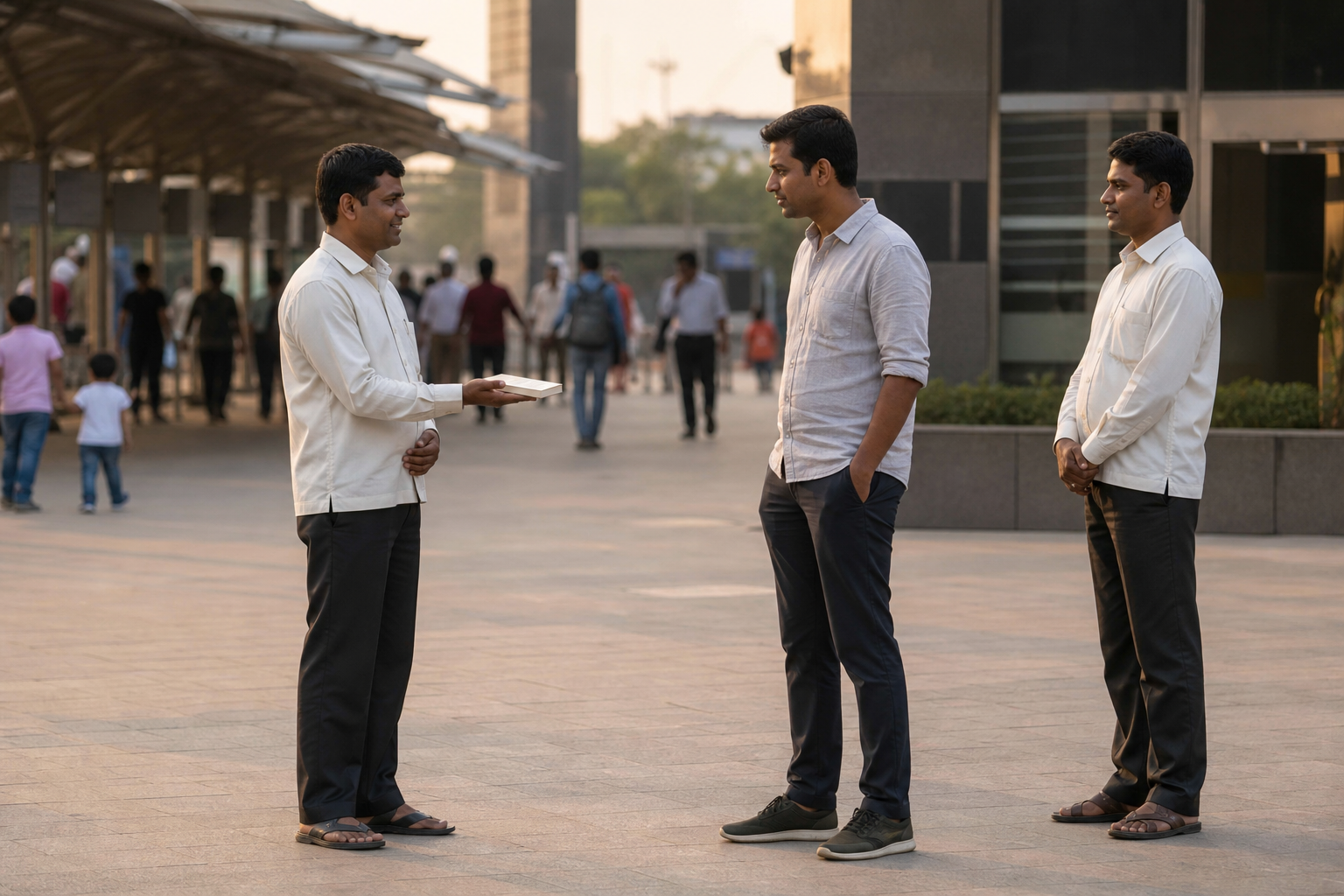
The Sanga connected book distribution with ethical outreach, humility, inclusivity and culturally sensitive engagement. This removes a false choice. You do not have to weaken your conviction in order to be courteous, and you do not have to pressure someone in order to represent the tradition faithfully.
A dignified encounter has a recognisable shape:
- Ask whether the person is open to seeing or hearing about the book.
- Identify the text and its tradition plainly, without making inflated promises.
- Listen for the person’s question before deciding what to explain.
- Allow genuine freedom to accept, decline or end the conversation.
- Close courteously whether or not a book is taken.
Simple language is often enough: “May we show you a book on spiritual life?” If the person declines, “Of course. Thank you for your time” protects both the person’s dignity and the distributor’s spirit of service. If someone follows another path, acknowledge that honestly. You can present your own tradition clearly without pretending that every Dharmic sampradaya teaches the same doctrine.
Watch for signs that outreach is becoming transactional. A distributor continues after a clear refusal. A memorised answer replaces listening. Another tradition is dismissed to make the offered book appear stronger. An exaggerated claim is used to secure acceptance. A leader should correct such conduct even when it appears to produce a short-term result, because it undermines the integrity of the service.
This is also why book distribution is not merely the movement of printed objects. Accessible and compassionate engagement can make sacred literature a pathway to personal reflection and social trust. The manner of the offering is part of what the reader receives.
Develop emerging distributors by transferring judgment
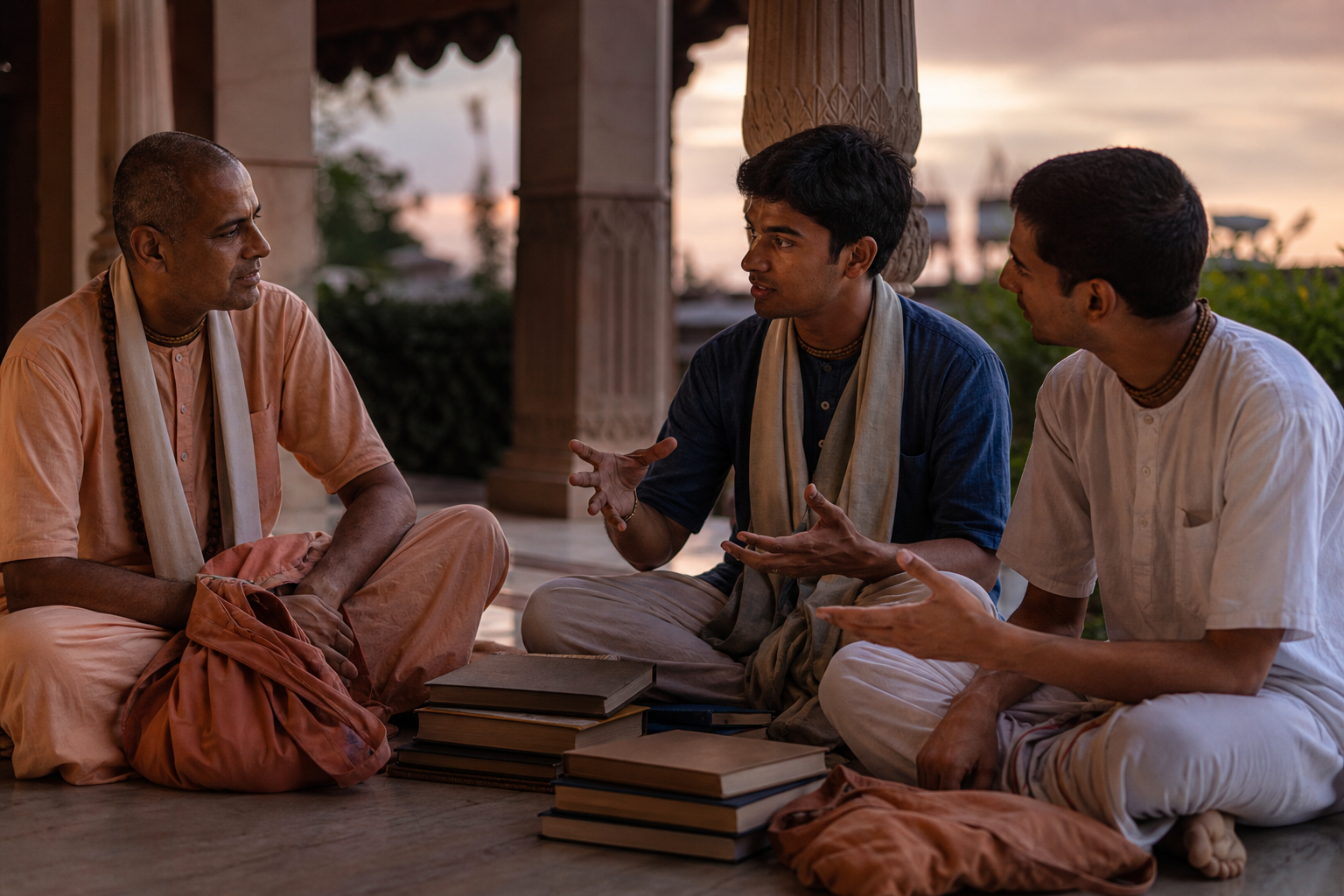
The gathering placed particular value on a supportive environment for both senior and emerging book distributors. That support should do more than give newcomers a script. It should help them understand why an experienced distributor changes an opening, chooses a particular book, pauses to listen or ends an unproductive exchange.
A practical apprenticeship can move through these kinds of experience:
- Preparation: the senior distributor explains the setting, the likely audience and the reasoning behind the chosen approach.
- Observation: the emerging distributor watches not only how conversations begin, but also how questions, hesitation and refusals are handled.
- Supported practice: the emerging distributor takes responsibility for part of the encounter while the senior devotee remains available.
- Reflection: both revisit a concrete interaction and consider what another response might have produced.
- Growing responsibility: the emerging distributor begins preparing, serving and reporting field learning with less direct assistance.
Do not choose mentors solely because they distribute the most books. Choose devotees who represent the literature with steadiness, can explain their decisions and correct others without humiliation. A high-performing distributor who cannot transfer judgment may strengthen an outing; a thoughtful mentor can strengthen the temple’s future capacity.
You can recognise growing readiness when a newcomer can explain the purpose of the service, adapt language without misrepresenting the teaching, accept refusal without agitation and return with useful observations for the team. The aim is not to manufacture copies of a senior distributor. It is to form responsible servants who can exercise discernment.
Turn temple-to-temple cooperation into shared field knowledge
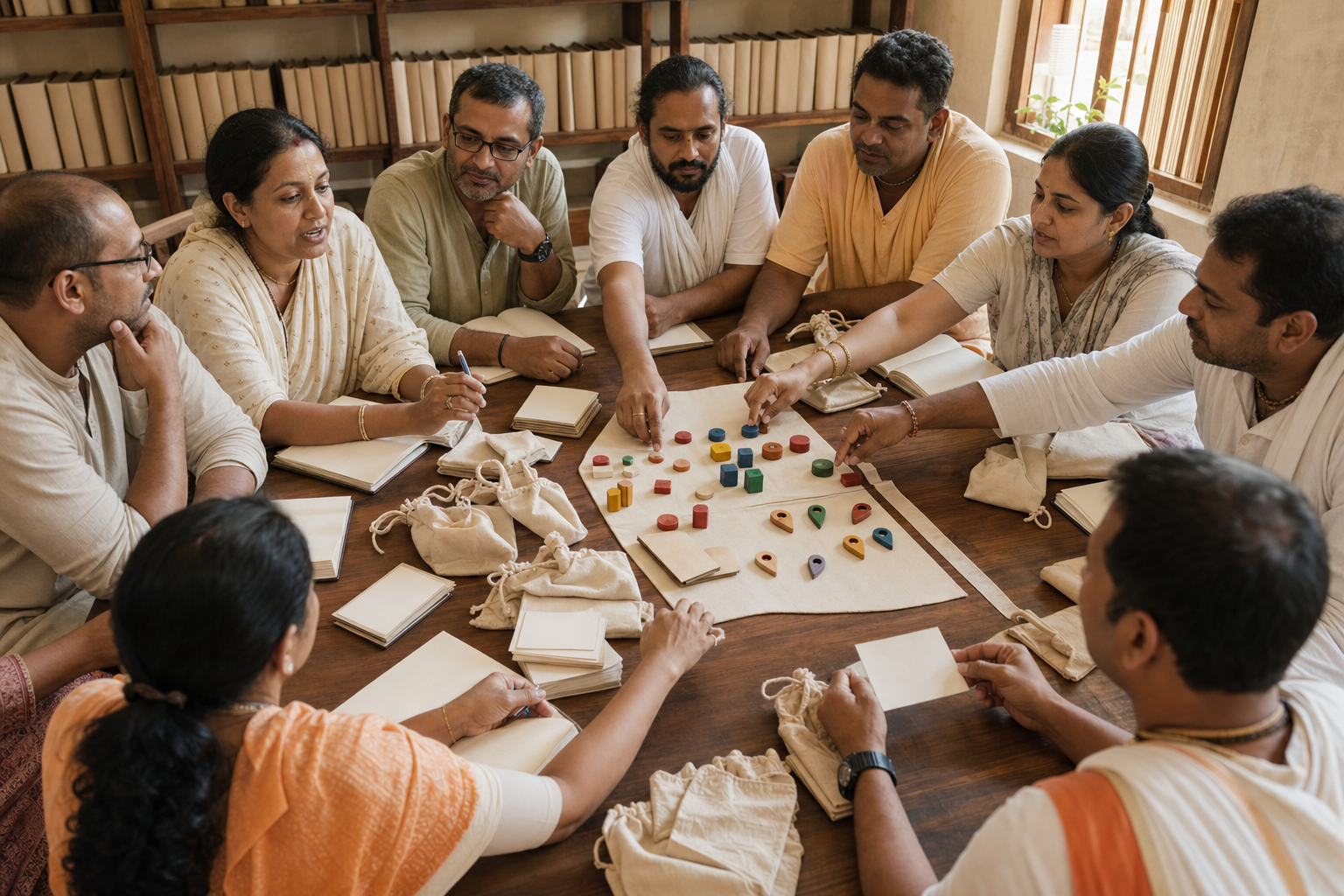
Collaboration among temples and the exchange of field experience were central concerns at the Pune Sanga. That cooperation becomes useful when lessons can travel. If insight remains only in a spoken recollection, another temple cannot readily evaluate or adapt it.
Use a compact field note that captures:
- the type of setting and relevant community context;
- the language and literature offered;
- the opening that helped begin a genuine conversation;
- the questions, misunderstandings or objections that recurred;
- the approach that worked and the approach that did not;
- the lesson another temple may be able to adapt;
- anything that depends on local culture and should not be copied automatically.
Share patterns without exposing private information about the people you met. Before adopting another temple’s method, ask whether it remains faithful to the purpose, protects the other person’s dignity, suits the local language and culture, can be taught to an emerging distributor and can be repeated without depending on a single charismatic individual.
At your next temple meeting, move from aspiration to named responsibilities. Identify the next suitable sankirtan opportunity. Assign a steward for preparation and follow-through. Pair emerging distributors with experienced mentors. Decide how field learning will be recorded. Choose another temple or sankirtan leader with whom useful lessons can be exchanged.
Then use the next scheduled outreach as the starting point. Prepare with purpose, serve without pressure, debrief honestly and pass one useful lesson onward. That is how the resolve of Bharat Sankirtan Leaders Sanga 2025 can become a living temple culture rather than a memory of Pune.
References
