
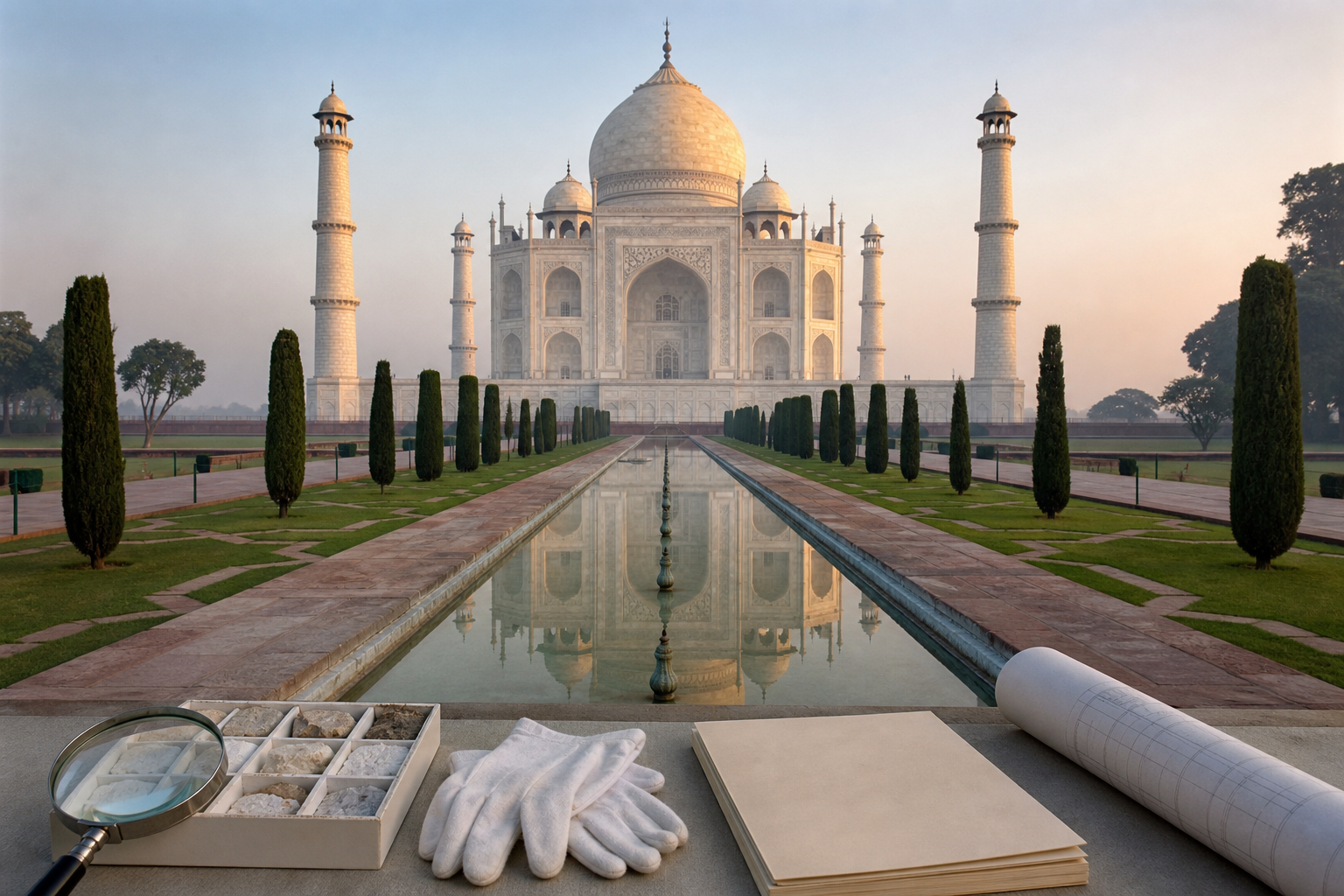
If someone has sent you a confident claim about the Taj Mahal, do not begin by choosing a camp. Begin by asking what, exactly, the claim is meant to prove. A monument can have a documented later history, an earlier history beneath it, reused materials, and disputed interpretations without those questions having the same answer.
This distinction lets you take Hindu concerns about historical erasure seriously without converting a possibility into a fact. A claim may deserve investigation before it deserves belief. The practical task is to know where that line lies.
Separate the questions before judging the answers
The strongest documented baseline identifies the Taj Mahal as a 17th-century mausoleum commissioned by Shah Jahan, while the Tejo Mahalaya, Shiva-temple, and Rajput-palace positions remain hypotheses rather than established verdicts. Its recognition as a UNESCO World Heritage Site and its place in Mughal architectural history do not make every question about the site illegitimate. They do mean that an alternative account must do more than create doubt.
Much confusion disappears when you divide the controversy into four distinct propositions:
- Present identity: Who commissioned the mausoleum, when was it created, and what function did it serve?
- Earlier site history: What occupied the land before the documented Mughal monument?
- Reused structure: Did an earlier building, rather than merely an earlier site, survive within the later complex?
- Earlier sacred identity: If older fabric survived, can it be identified specifically as a Shiva temple called Tejo Mahalaya?
Evidence for one proposition does not automatically prove the next. Prior occupation would not show that a previous building survived. Reused material would not, by itself, identify the original building. A feature compatible with temple architecture would not establish a temple’s name, dedication, or date.
The reverse mistake is just as serious. A well-documented Mughal-era use does not logically establish that the site had no earlier structure. Later history and earlier history can coexist. The earlier claim, however, still requires positive evidence; it cannot be established merely by pointing to an unanswered question in the later account.
Build an evidence chain, not a collection of curiosities
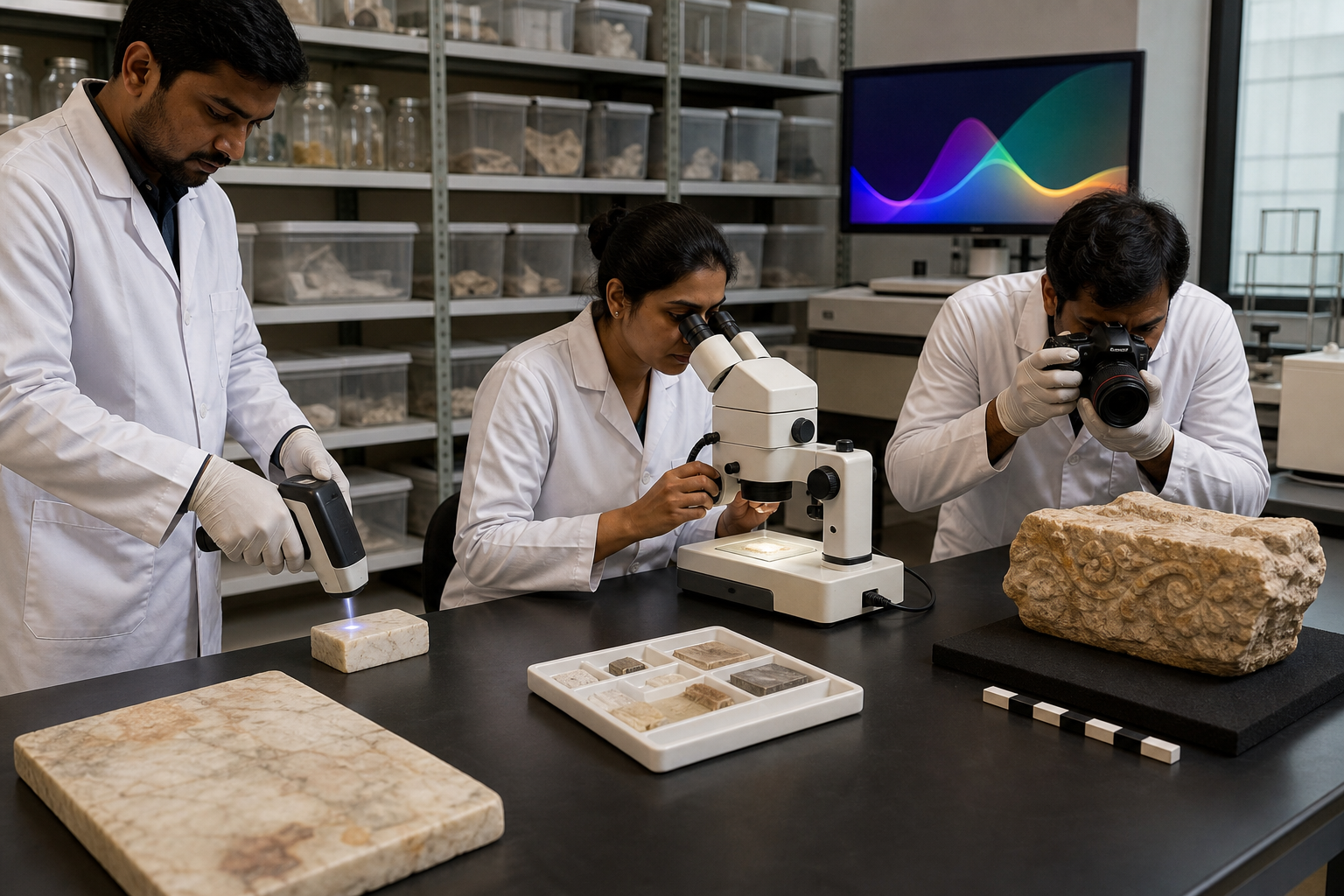
A persuasive historical case normally emerges when independent methods converge. Archaeology can distinguish building phases. Epigraphy can connect words, people, and religious use to a physical setting. Architectural analysis can identify construction relationships. Conservation science can examine materials and sequences. Persian, Sanskrit, and colonial-era records can clarify ownership, patronage, description, and changing use.
None of these methods is automatically decisive. Their value depends on context, dating, provenance, and whether another qualified investigator can inspect the reasoning. Use this sequence when you encounter a new claim:
- Write the claim as one testable sentence. Replace phrases such as “hidden truth” with a precise proposition about date, patronage, construction, ownership, reuse, or religious function.
- Identify the actual evidence. A photograph, inscription, archival entry, architectural plan, laboratory result, and modern interpretation are different things. Do not let commentary stand in for the underlying item.
- Check provenance. Ask where the object or record came from, whether it remains in its original setting, and whether its custody or transmission is documented.
- Check the date and the dating method. A later description can preserve an earlier memory, but it cannot silently be treated as contemporary testimony.
- Look for convergence. A textual claim becomes stronger when material chronology, inscriptions, and architectural relationships independently point in the same direction.
- Test a rival explanation. Ask what else could produce the same feature. If several explanations fit, the honest conclusion remains provisional.
The following distinctions help you see what each class of evidence can and cannot carry:
| Evidence | What it may establish | What does not settle the question |
|---|---|---|
| Archaeological context and building fabric | Construction phases, alterations, foundations, or reuse when properly recorded | An isolated object or feature with no documented location or layer |
| Epigraphy | Names, dedications, patronage, religious language, or dates connected to an authentic setting | A detached inscription, disputed reading, or text assumed to be in its original location |
| Persian, Sanskrit, and colonial-era records | How people described, owned, used, or administered a place during a given period | Late repetition, selective quotation, or silence treated as proof of a preferred theory |
| Architectural comparison | Possible design lineage, related techniques, alterations, and questions for closer examination | Visual resemblance treated as exclusive proof of identity or function |
| Conservation science | Material differences, construction sequence, repairs, and possible phases of alteration | A test result without sampling context, method disclosure, or independent review |
Convergence matters more than volume. Twenty repetitions of the same unsupported interpretation do not become twenty pieces of evidence. One securely dated inscription in its original architectural context may carry more weight than hundreds of circulating images with no provenance.
Catch the shortcuts that make weak claims look strong
Contested monuments attract arguments that feel decisive because they compress a long investigation into one striking detail. Before accepting or rejecting such an argument, check for these recurring shortcuts:
- Resemblance becomes identity. A form that resembles palace or temple architecture can justify comparison. It does not establish who built it, when it was built, or how it was used.
- A symbol becomes exclusive ownership. Motifs can travel across dynasties, workshops, regions, and religious settings. Their evidentiary value depends on combination, context, and date, not recognition alone.
- An unexplained feature becomes proof. A gap in the accepted account is a reason to investigate. It is not positive evidence for whichever alternative happens to be offered first.
- Restricted access becomes confirmation. Limited access may justify a transparent request for qualified examination. It cannot establish in advance what an unopened or unexamined space contains.
- Possible bias becomes total invalidation. Persian, Sanskrit, colonial, nationalist, and modern academic interpretations can each be questioned. Showing that a record has a perspective does not make every statement in it false, nor does it prove a rival account.
- Consensus becomes untouchable. Established scholarship deserves weight because it has accumulated documented support. It should still disclose evidence, methods, uncertainties, and responses to credible challenges.
- Suspicion becomes a verdict. Political misuse of history is real enough as a general concern, but suspicion about motive cannot substitute for dating, provenance, or material analysis.
Apply these checks symmetrically. The mainstream account should not be protected from new authenticated evidence. An alternative account should not receive a lower standard merely because it speaks to a genuine civilizational wound. Historical redress built on fragile evidence can be discredited easily, taking stronger and more necessary claims down with it.
Key takeaways
- The Shah Jahan mausoleum account is the best-established starting point; the Rajput-palace and Shiva-temple accounts remain hypotheses requiring stronger proof.
- The monument’s Mughal-era history and the site’s possible earlier history are separate questions. Evidence about one does not automatically answer the other.
- Give the most weight to dated, contextual evidence supported by more than one method: archaeology, epigraphy, architecture, conservation science, and documentary records.
- A motif, unexplained feature, access restriction, or suspicion of bias may justify inquiry, but none independently proves Tejo Mahalaya.
- Support lawful, conservation-led examination and open publication. Reject damage, harassment, and conclusions announced before the investigation.
Turn a civilizational dispute into disciplined action
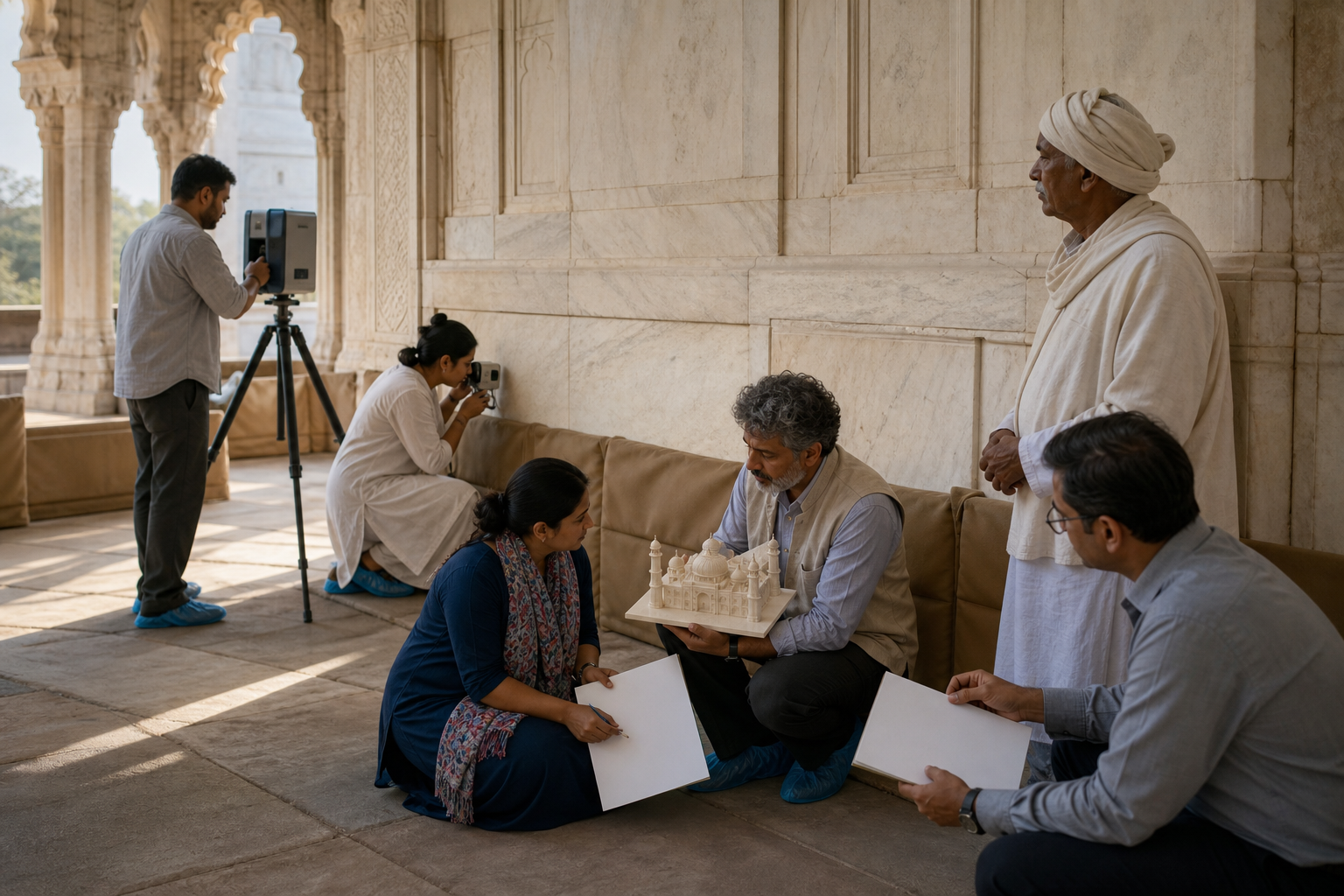
For a dharmic reader, satya and ahimsa provide a demanding standard. Satya asks you to pursue truth even when the result complicates your preferred narrative. Ahimsa asks you to protect people, communities, and the physical monument while that pursuit continues. Neither value requires silence, and neither permits reckless certainty.
Before forwarding the next Taj Mahal claim, perform a short evidence audit:
- Rewrite the claim without emotional or political language.
- Mark each part as documented, inferred, disputed, or speculative.
- Trace the claim to the earliest evidence you can actually inspect.
- Check whether the item has a date, physical context, and clear provenance.
- Ask whether an independent method supports the same conclusion.
- State what finding would weaken or disprove the claim. If no possible evidence could change it, you are dealing with an identity commitment rather than a historical test.
- When sharing, preserve the uncertainty in the wording. Say “this warrants examination” when that is all the evidence supports.
If you advocate institutional action, ask for a heritage research charter rather than a predetermined result. It should define the questions in advance, establish conservation-safe access, include archaeology, epigraphy, architecture, documentary history, and material science, disclose methods, publish the relevant findings, and allow informed criticism. The same rules should apply whether a result supports continuity, reuse, replacement, or the established Mughal account.
The Taj Mahal belongs to Bharat’s cultural memory, so inquiry into its past should deepen public knowledge rather than turn the monument into a weapon between living communities. Intellectual confidence means allowing a claim to be tested without guaranteeing it victory.
The next time a categorical answer reaches your phone, pause before forwarding it. Define the proposition, inspect the evidence, and label the uncertainty. If the case survives those checks, support transparent investigation. If it does not, preserve the question without advertising an answer the evidence has not earned.
References
