
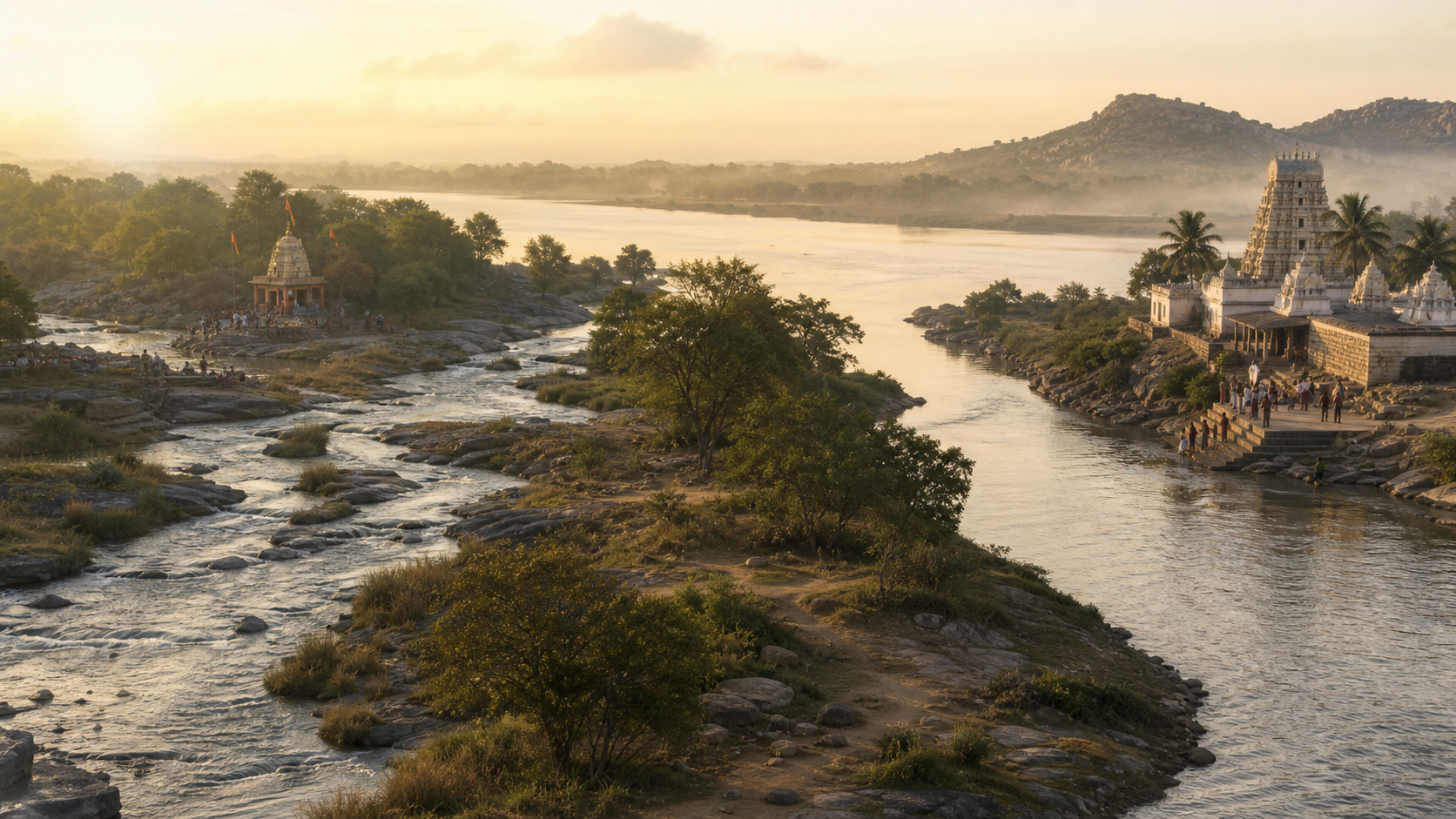
If you want the river to be part of your Telangana pilgrimage rather than merely its backdrop, begin with a sharper question than “Which temple is better?” Are you drawn toward Durga in a seven-stream landscape, or toward Lakshmi Narasimha where the Krishna and Musi meet?
Your answer points to two distinct kshetras. Edupayala is a Shakti pilgrimage shaped by the channels of the Manjeera River. Vadapally is a Vaishnava pilgrimage at a two-river sangamam. Understanding that difference will help you choose the right destination, set an appropriate sankalpa, and avoid reducing either place to a sightseeing stop.
Choose the kshetra that matches your sankalpa
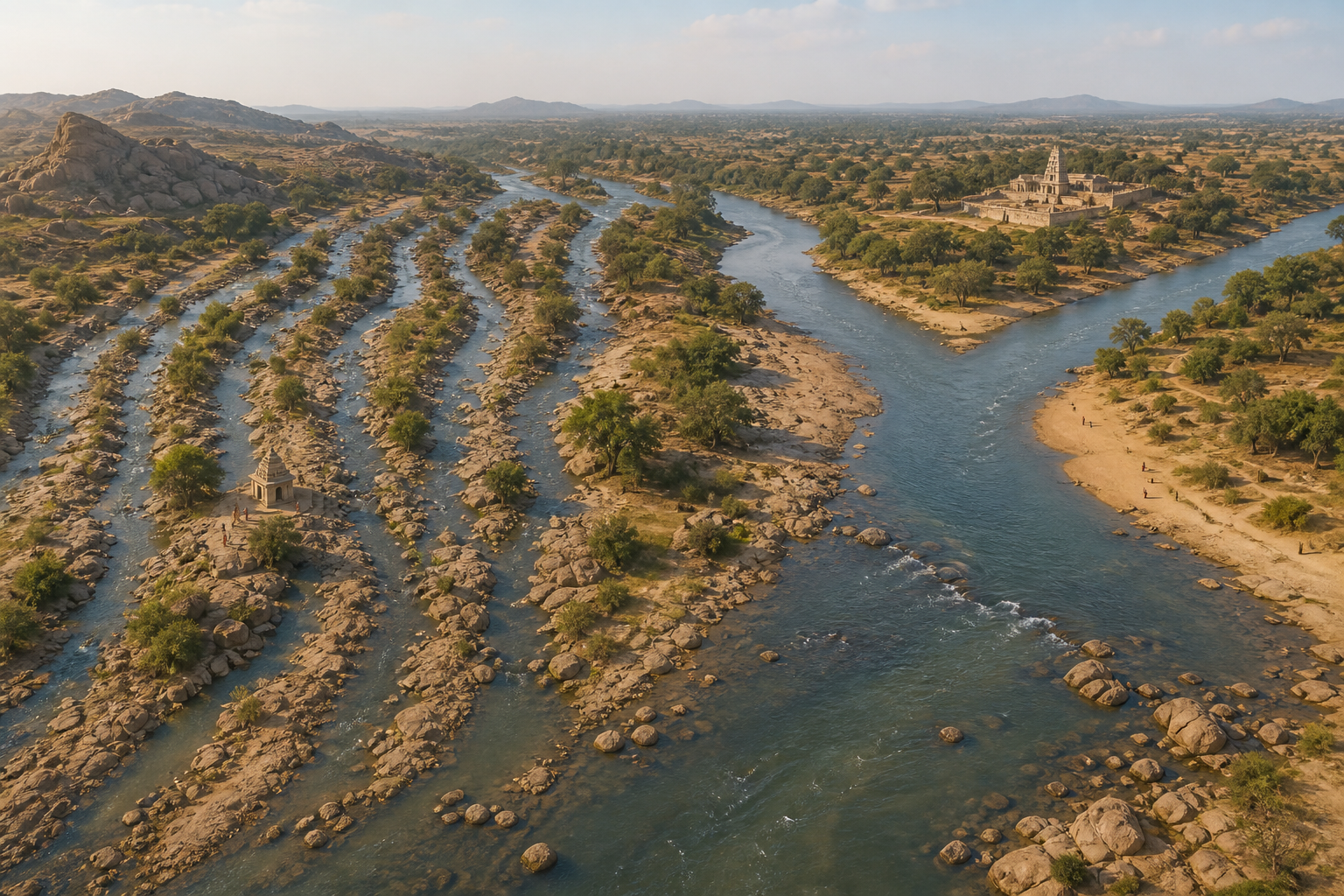
Edupayala: Vana Durga amid seven streams
Sri Edupayala Vana Durga Bhavani Temple stands near Nagasanpally village, approximately 19 kilometres from Medak and about 110 kilometres from Hyderabad. Its name carries its geography: “Edupayala” means “Seven Streams” in Telugu, referring to the seven streams of the Manjeera River that define the sanctuary.
The presiding deity is Vana Durga Bhavani, a forest-associated form of Durga worshipped for protection, courage, benevolence, and inner strength. “Vana” is therefore more than an attractive rural label. The wooded, river-cut setting helps express the character of the Devi: protective power encountered within living nature rather than isolated from it.
Choose Edupayala when your sankalpa concerns resilience, the courage to face a difficult transition, or gratitude for protection already received. The shrine’s modest architecture allows the terrain to remain prominent. If you arrive expecting monumental stonework to provide the whole experience, you may miss the site’s real language: water moving around rock, multiple channels sharing one sacred identity, and the quiet force associated with Durga.
Vadapally: Lakshmi Narasimha at the Krishna-Musi sangamam
Vadapally Sri Lakshmi Narasimha Swamy Temple is located in Vadapally village in Nalgonda district. It stands at the confluence of the Krishna and Musi rivers and is frequently identified among the Pancha Narasimha Kshetras.
Here the devotional centre is Sri Lakshmi Narasimha, understood through the joined qualities of protective strength and compassion. Narasimha is fierce against adharma, but the presence of Lakshmi prevents the devotee from mistaking fierceness for uncontrolled anger. The form directs power toward protection, justice, and the restoration of dharmic order.
Choose Vadapally when your sankalpa is explicitly Vaishnava, when Narasimha upasana already has a place in your life, or when you need to contemplate how courage can remain disciplined by compassion. The customary South Indian temple setting supports an intimate sequence of darshan, mantra, tulasi, prasada, and reflection rather than a visit built around architectural spectacle.
This is not a ranking between Shakta and Vaishnava paths. It is a practical distinction. Edupayala turns your attention toward Durga’s strength in a many-stream landscape; Vadapally turns it toward the protective compassion of Lakshmi Narasimha where two named rivers become one confluence.
Let the water shape the pilgrimage
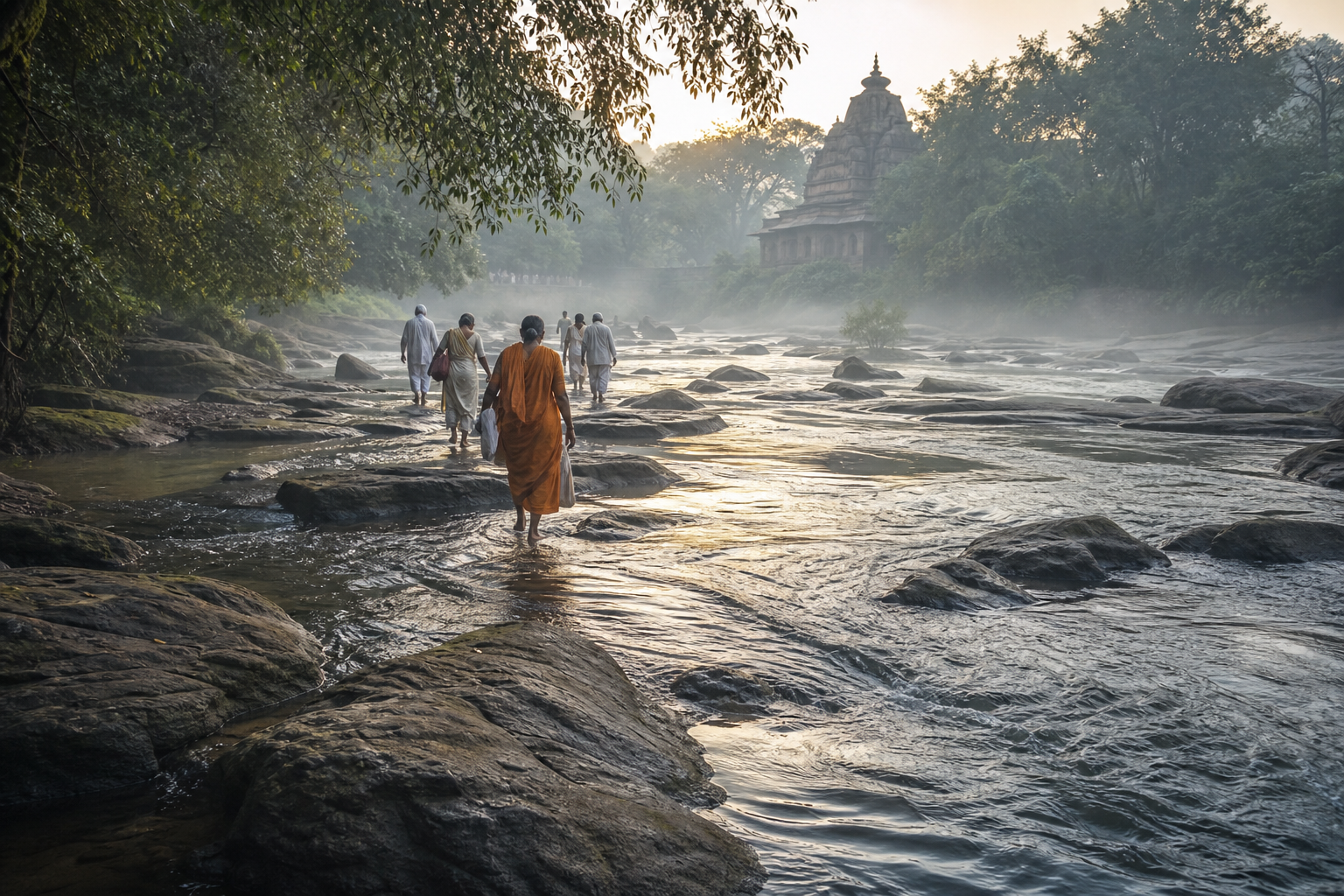
At a river-confluence temple, the sangamam is not incidental scenery. It changes how you approach, observe, and remember the kshetra. Different currents meet without losing the truth of where they came from. That makes a confluence a fitting place to examine divided duties, competing emotions, or relationships that require integration without forced sameness.
Edupayala presents this teaching through multiplicity. During periods of higher flow, sound and movement become more pronounced. In calmer periods, the rivulets, exposed stone beds, and separate channels become easier to notice. The pilgrimage therefore will not look identical in every season. Do not treat a photograph from another month as a promise of what you will encounter.
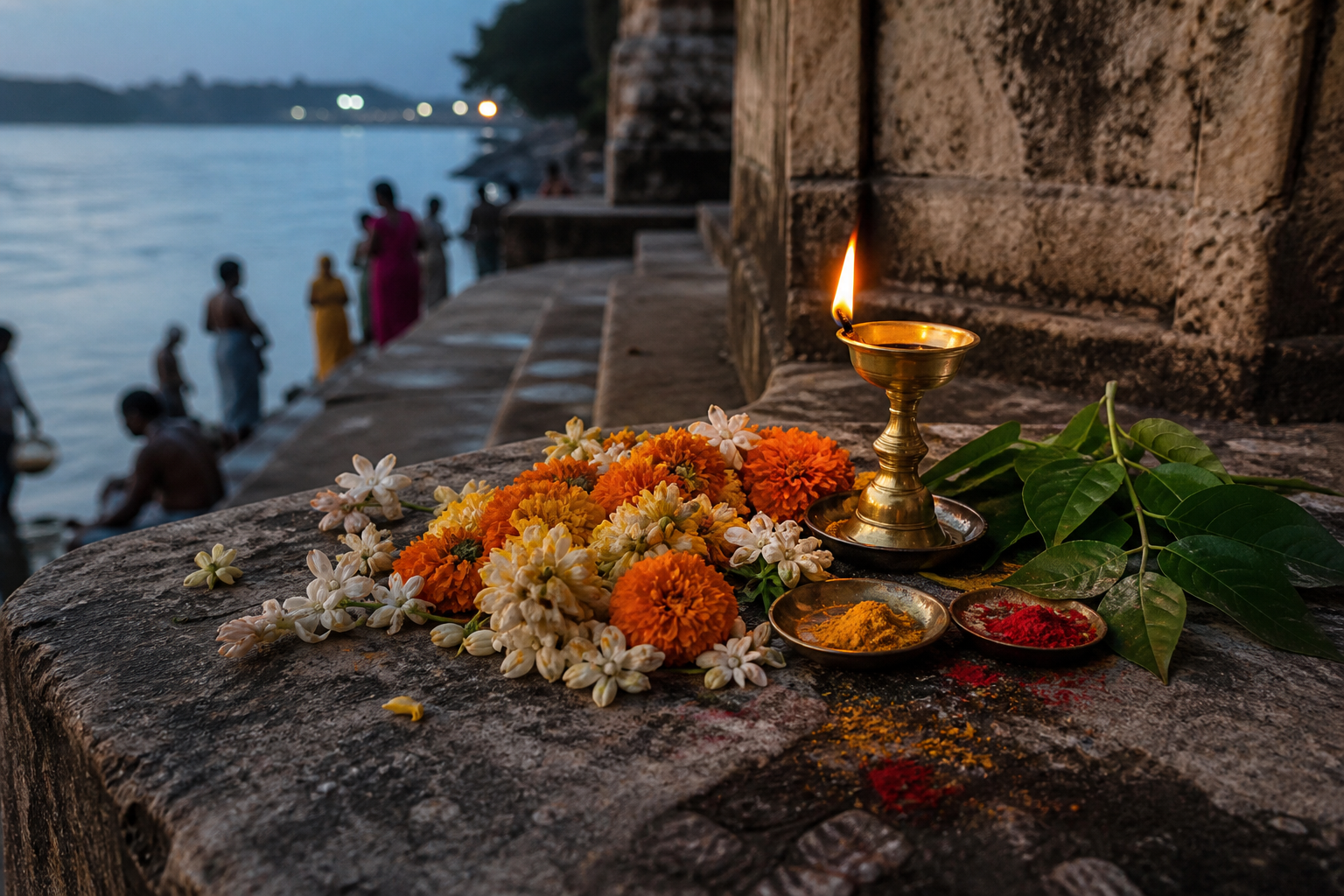
Vadapally offers a different experience: the Krishna and Musi meet at one recognisable sangamam. Devotees may pause near the riverbank, offer deepa in accordance with local practice, or sit with gratitude after darshan. If you intend to make an offering, first observe how worship is being conducted at the site and follow temple guidance. A sacred intention does not justify leaving lamps, packaging, flowers, or other material where it will pollute the water or bank.
A useful sequence is simple. First recognise the river form from a safe, designated place. Then take darshan without rushing. Afterwards, return to the confluence for a few minutes of silence and name the “currents” your sankalpa concerns. End by choosing one dharmic action you can take after returning home. The river symbolism becomes useful only when it changes conduct.
Do not assume that entering the water is necessary for an authentic pilgrimage. River levels, currents, footing, and permitted access can vary. Follow barriers, local instructions, and the practices in effect on the day of your visit. When the water is high, do not try to reproduce a route or photograph from a lower-flow season.
Plan for the character of each place, not just the map pin
Edupayala rewards clear daylight. The approach moves away from the pace of Hyderabad or Medak toward a rural, riverine setting, and daylight gives you time to understand how the shrine sits within its channels and rocky terrain. It also makes changing river conditions easier to assess. Plan enough margin for darshan, permitted circumambulation, and a quiet pause rather than scheduling your arrival at the edge of closing time.
Vadapally is especially suited to early-morning or sunset contemplation. Its devotional calendar becomes more intense during Karthika Masam and Narasimha Jayanti, when observances centred on Sri Lakshmi Narasimha receive greater emphasis. Choose those occasions if collective worship is part of your purpose. If you want an unhurried encounter with the sangamam, do not assume a major observance will feel like an ordinary day.
Do not build a single-day, two-temple itinerary merely because both are described as confluence temples. Edupayala is near Medak, while Vadapally is in Nalgonda district. Whether they fit into one journey depends on your starting point, verified road conditions, current darshan schedules, and the time you are prepared to give each kshetra. Two attentive pilgrimages are better than one hurried collection of photographs.
- Confirm the temple’s current opening and darshan schedule before departure; do not rely on an undated timetable.
- Check road, weather, and river conditions, particularly when planning Edupayala during a higher-flow period.
- Prefer a daylight arrival at Edupayala so you can read the terrain and follow the permitted approach safely.
- At Vadapally, decide whether you want the collective rhythm of Karthika Masam or Narasimha Jayanti, or the quieter pace of a regular visit.
- Leave time after darshan. The riverbank pause is part of the pilgrimage, not disposable time between the temple and the return journey.
- Keep offerings simple, follow local customs, carry away your packaging, and support nearby communities without treating the sacred bank as a picnic ground.
Respect sacred memory without inventing history
Vadapally’s sacred memory associates the kshetra with Sage Agastya’s travels and worship. That tradition deserves to be heard in its proper register, but it does not provide a securely verifiable historical chronology. If you speak or write about the temple, call it local lore, sthala tradition, or sacred memory rather than attaching an unsupported date to it.
This distinction protects rather than diminishes the tradition. Sacred narrative tells you how a community understands the spiritual importance of a place. Archaeological or documentary chronology asks when structures were built, altered, or recorded. Those are different questions, and neither needs to impersonate the other.
Edupayala offers another corrective to a common habit: age and sanctity cannot be measured only by monumental architecture. Its cultural force lies in living worship joined to a specific river landscape. At both kshetras, notice what devotees actually do—the order of darshan, the handling of prasada, the treatment of the water, and the quiet disciplines around the sanctum. Living practice is part of the heritage you came to understand.
If you are uncertain about a ritual, ask a priest or local temple functionary instead of improvising. If photography is restricted, accept the restriction. If access near the water has changed, treat the current instruction as authoritative for your visit. Reverence is expressed through restraint as much as through enthusiasm.
Key takeaways for your Telangana confluence pilgrimage
- Choose Edupayala for a Shakti-centred journey: Vana Durga Bhavani, seven Manjeera streams, and a sankalpa focused on courage, resilience, or protection.
- Choose Vadapally for a Narasimha-centred journey: Lakshmi Narasimha, the Krishna-Musi sangamam, and contemplation of strength disciplined by compassion.
- Treat the river as sacred geography: observe it safely, give yourself silence after darshan, and connect its meeting currents to one concrete dharmic decision.
- Plan according to place and season: use daylight at Edupayala, consider early morning or sunset at Vadapally, and verify schedules and local conditions before travelling.
- Keep sacred memory and historical proof distinct: honour Vadapally’s Agastya tradition as tradition without manufacturing a chronology.
- Practise ecological restraint: follow local rules, leave no packaging or ritual waste on the bank, and never enter moving water merely to make the visit feel complete.
Before arranging transport, write your sankalpa in one sentence and confirm three practical facts: current darshan hours, road access, and river conditions. Then protect enough space in the day for stillness after darshan. When you return, act on the one inner confluence you identified—one conflict to reconcile, one duty to clarify, or one courageous step to take.
References
- DharmaRenaissance Blog — Discover Edupayala’s Seven-Stream Sanctuary: A Complete Guide to Vana Durga Bhavani Temple
- DharmaRenaissance Blog — Complete Guide to Vadapally Lakshmi Narasimha Swamy Temple, Nalgonda: Sacred Confluence
