
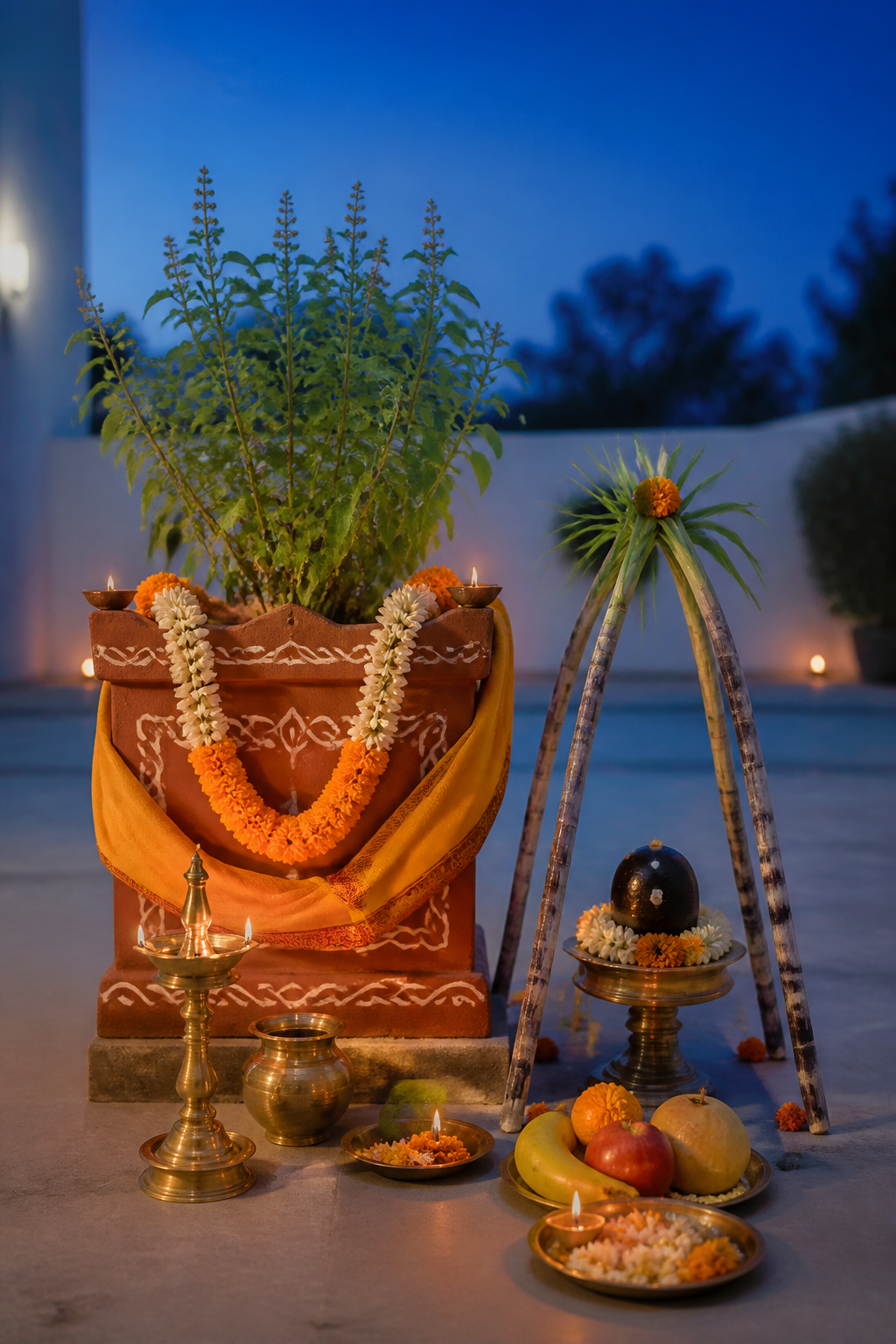
You want to honor Tulasi during Kartika, but one relative says Ekadashi, another says Dwadashi, and someone else insists on Purnima. Then the ceremony checklist begins to resemble a full wedding. You do not need to resolve every regional variation before you can worship with integrity.
First decide whether your household is keeping Tulasi Puja, Karnataka’s Tulasi Habba, or the symbolic Tulsi Vivah. Follow your family tradition and local panchanga, prepare any Tulasi leaves before a restricted plucking period, and choose a form of worship that you can perform attentively rather than elaborately.
Choose the observance before you choose the date
Tulasi Puja and Tulsi Vivah are closely connected, but they are not simply two names for an identical ceremony. Tulasi Puja centers on worship of the sacred plant and Bhagavan Vishnu. Tulsi Vivah adds the marriage symbolism of Tulasi and Vishnu, usually represented by Shaligram, a Vishnu murti, or a picture.
| Observance | Central act | Common Kartika timing | Practical form |
|---|---|---|---|
| Tulasi Puja or Tulasi Habba | Worship of Tulasi with Vishnu remembrance | Ksheerabdi or Uthwana Dwadashi is prominent in Karnataka; some communities use Uthwana Ekadashi or Kartika Purnima | Decorated vrindavana, lamp, offerings, stotra, naivedya, and aarti |
| Tulsi Vivah | Symbolic marriage of Tulasi and Vishnu | Prabodhini Ekadashi, Ksheerabdi Dwadashi, or Kartika Purnima, according to regional and family custom | Tulasi Puja with Vishnu placed before her, a small mandap, marriage symbolism, katha, offerings, and prasad |
These dates are alternatives within living traditions, not stages that every household must complete. The observance varies between Ekadashi, Dwadashi, and Kartika Purnima because regional panchangas, sampradayas, and inherited household customs do not all use one uniform schedule.
Use this decision order:
- Name the observance. Ask whether your family traditionally performed a simple Tulasi Puja, Tulasi Habba, or a formal Tulsi-Vishnu Vivah.
- Identify the family or sampradaya rule. A custom preserved in your household is not a mistake that must be corrected by a generic calendar.
- Check the local tithi. Consult a trusted regional panchanga or the temple whose tradition you follow. A tithi can occupy only part of a civil date, so another city’s date should not automatically be copied.
- Choose one worship window. Morning and evening observances both occur. Use the period supported by your family practice and local guidance.
- Plan Tulasi-leaf use before the day. If your custom avoids plucking after sunset or on Dwadashi, gather only what is required beforehand.
Do not perform the ceremony on several dates merely because you fear choosing incorrectly. Dharma is not strengthened by ritual anxiety. Once the household tradition and local tithi are clear, keep that observance steadily.
Understand the relationship being honored
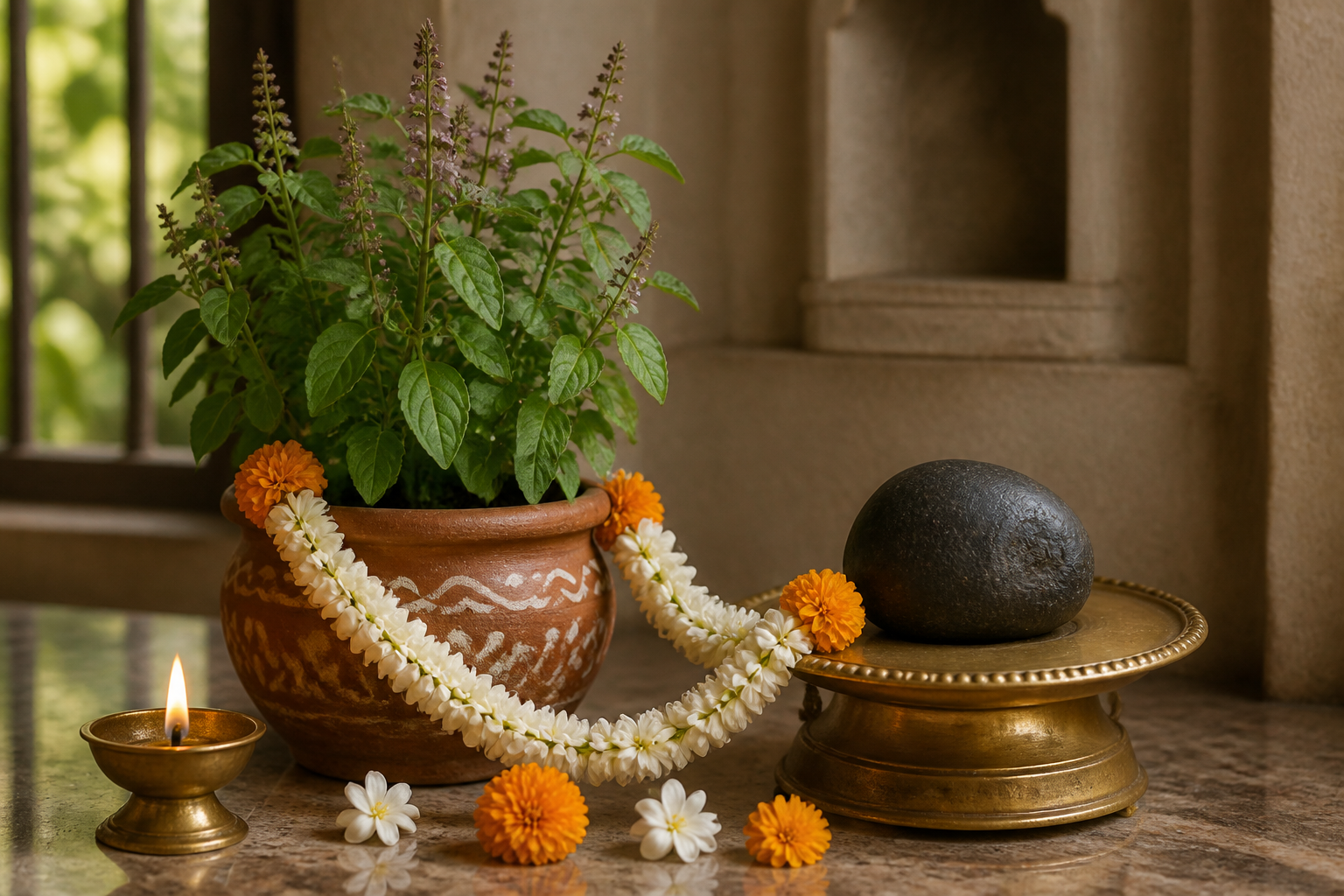
The festival stands at a turning point in Kartika. Uthwana marks the awakening of Maha Vishnu from the yoga-nidra associated with Chaturmasya. It therefore carries the language of renewal, resumed vows, and auspicious beginnings. Tulsi Vivah also marks the cultural reopening of the Hindu wedding season in many communities.
The marriage imagery becomes meaningful through Vrinda’s katha. The asura king Jalandhar was protected by the spiritual power of his wife Vrinda’s unwavering pativrata-dharma. To restore cosmic balance, Vishnu assumed Jalandhar’s appearance and broke the condition sustaining that protection. Jalandhar was then defeated. When Vrinda recognized the divine stratagem, she cursed Vishnu to become stone and endure separation. Her tapas was preserved in the sacred Tulasi plant, while Vishnu, worshipped as Shaligram, granted Tulasi an enduring and beloved place in his worship. The Tulasi-Shaligram marriage remembers this entire relationship, not merely its festive ending.
Tell the katha without making Vrinda incidental
This is not a morally weightless wedding story. It holds cosmic necessity, a devotee’s fidelity, divine strategy, injury, anger, consequence, and eventual sacred remembrance within the same narrative. If you tell it to children or guests, resist turning Vrinda into a background character whose only purpose is to become a plant.
- Begin with Vrinda’s tapas and the protective force attributed to her vow.
- State Vishnu’s disguise plainly rather than skipping the difficult part of the narrative.
- Retain Vrinda’s curse, because it shows that her moral agency survives Jalandhar’s defeat.
- Explain that Tulasi’s consecration in Vishnu worship preserves Vrinda’s devotion and power; it does not erase the conflict that preceded it.
The katha can then become an occasion for reflection: What gives a vow its power? Can the restoration of cosmic order involve a painful moral cost? Why does the tradition preserve the protest of an injured devotee rather than silencing it? Tulsi Vivah does not require you to force these questions into a tidy answer. It asks you to remember them before celebrating the union.
This also changes how you arrange the altar. Tulasi is not floral decoration, and Shaligram is not a theatrical groom. They are the sacred presences at the center of the worship. The mandap, rangoli, music, and wedding gestures should direct attention toward that relationship rather than overshadow it.
Prepare a complete altar without making it excessive
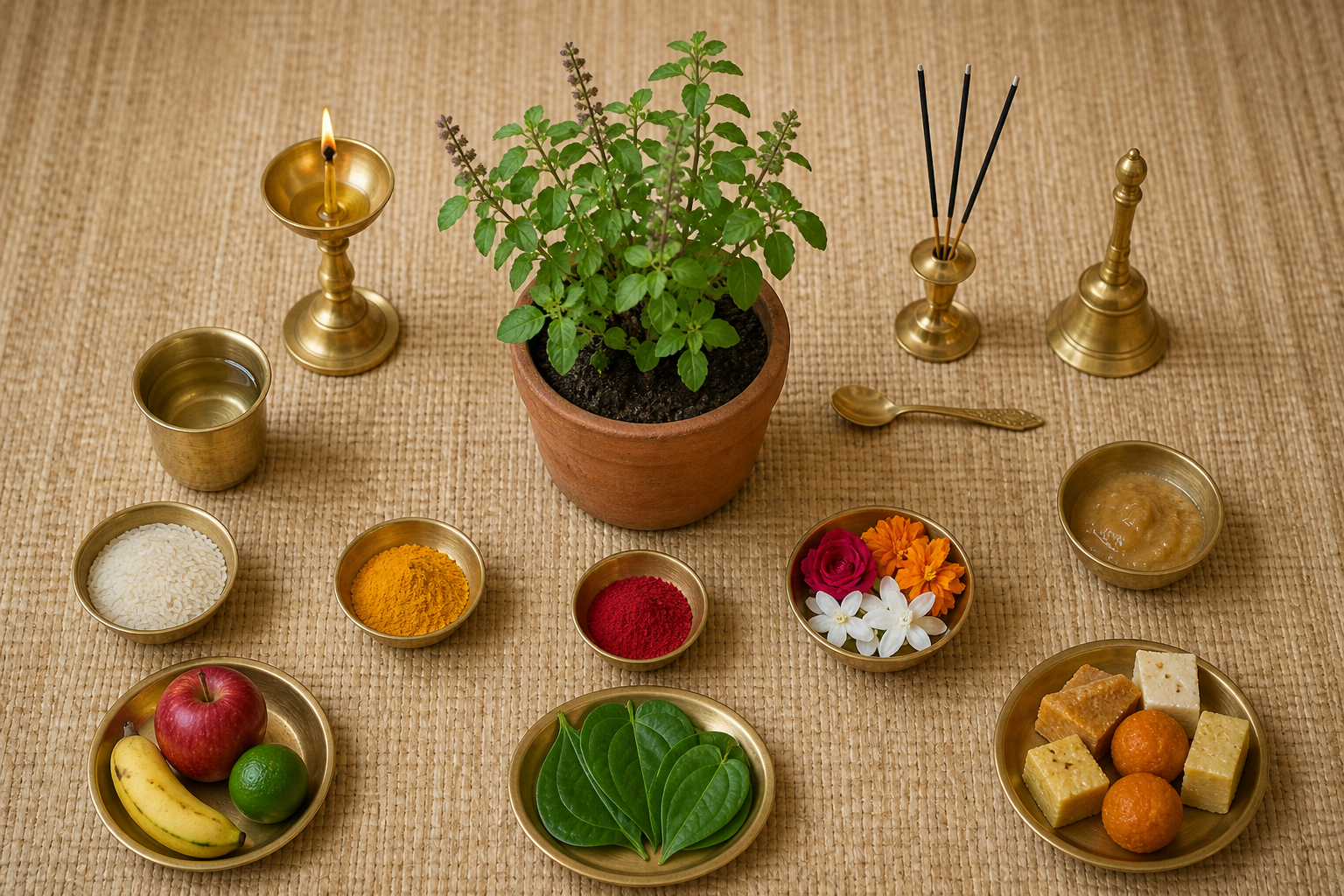
A household puja can be complete without reproducing every feature of a human wedding. Begin with the items that establish worship, then add inherited regional customs. If preparation exhausts the family or damages the living plant, the ceremony has become detached from its center.
Essential preparation
- Tulasi: Clean the vrindavana or pot gently. Remove ordinary clutter and make sure the plant is stable before adding decoration.
- Vishnu’s presence: Place Shaligram, a Vishnu murti, or a Vishnu picture facing Tulasi. If your family does not possess a Shaligram, a murti or picture preserves the central symbolism.
- Sacred setting: Use rangoli, flowers, and one or more lamps. For Tulsi Vivah, a small mandap may be placed over or around the Tulasi vrindavana.
- Offerings: Prepare the gandha, akshata, haldi-kumkum, seasonal fruit, sugarcane, or sattvic naivedya used in your tradition. Not every household needs every item.
- Recitation: Keep ready a Tulasi stotra, Vishnu Sahasranama, the Vrinda katha, a familiar Vishnu prayer, or bhajans that the household can follow.
- Completion: Prepare a clean plate for naivedya and suitable vessels for sharing prasad after aarti.
Decorate with restraint. Heavy ornaments, tight thread, or excessive handling can injure stems and leaves. The ecological meaning of Tulasi worship begins with caring for the actual plant in front of you, not with using it as raw material for decoration.
Prepare leaves before sunset or Dwadashi where required
Many household traditions avoid plucking Tulasi after sunset and on Dwadashi. If that rule applies to you, collect only the needed leaves during the permitted period and keep them respectfully for the offering. If leaves were not prepared, worship the living Tulasi without plucking at the prohibited time. A missed accessory is not a reason to disregard the discipline meant to honor her.
Place lamps on a firm surface away from dry leaves, cloth, paper decoration, and the mandap. Keep children involved, but do not leave them responsible for an open flame. A smaller safely placed lamp serves the puja better than a row of unattended diyas.
Perform the home puja in a clear sequence
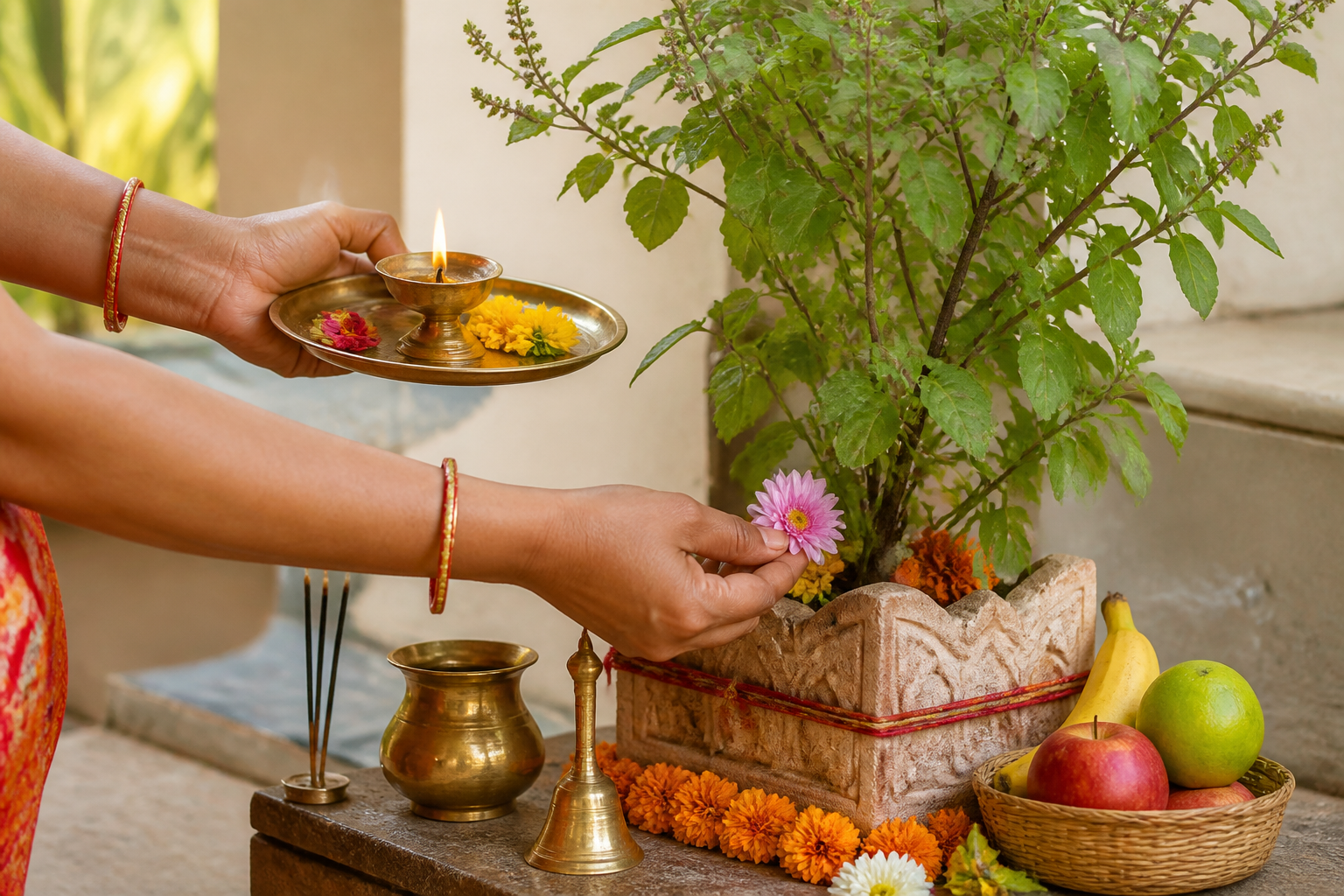
No single household order can represent every regional paddhati. The sequence below gives you a simple working structure using the shared elements of Tulasi Puja and Tulsi Vivah. Where your family’s established procedure differs, retain its order.
- Settle the space. Clean the worship area, wash your hands, place the offerings within reach, and gather the household before lighting the lamp. This prevents the puja from becoming a search for missing items.
- Place Tulasi and Vishnu in relationship. Keep Shaligram, the murti, or the picture before Tulasi. For Tulsi Vivah, arrange the small mandap now.
- Light the lamp. Begin with a moment of quiet attention. The lamp is not merely visual decoration; it marks the household’s movement from preparation into worship.
- Make the sankalpa. State the date and observance according to your practice. In plain language, you may express the intention to worship Sri Tulasi and Bhagavan Vishnu for steadiness in dharma, family well-being, and harmony in society. If your tradition supplies a Sanskrit sankalpa, use that wording.
- Offer the customary upacharas. Present gandha, akshata, flowers, haldi-kumkum, and the other items your family uses to Tulasi and Vishnu with attention.
- Recite or listen together. Read the Vrinda katha for Tulsi Vivah, or recite a Tulasi stotra, Vishnu Sahasranama, a shorter Vishnu prayer, or bhajans. Choose a recitation the household can participate in rather than treating length as proof of devotion.
- Perform the marriage symbolism when keeping Tulsi Vivah. Follow your family’s kanyadaan motif, offer akshata, and honor Tulasi and Vishnu as the sacred pair. If inherited marriage mantras or roles are part of your custom, preserve them. If you are performing only Tulasi Puja, omit this step instead of staging a partial wedding.
- Offer naivedya. Present the prepared fruit, sugarcane, or sattvic food. Keep the offering proportionate to the household so that sacred food is shared rather than wasted.
- Perform aarti. Conclude the formal worship with aarti to Tulasi and Vishnu. Family members may sing or maintain prayerful silence according to custom.
- Share prasad and extend the vow. Distribute prasad respectfully. A charitable act, meal shared with someone in need, or community seva can carry the festival’s intention into conduct.
If several people are participating, give each person one clear responsibility before the puja begins. A child can place flowers or fruit, another family member can lead the bhajan, and an elder can narrate the katha. Participation transmits the tradition more effectively than asking everyone else to watch one person perform it.
Do not measure the ceremony by its duration. A short puja in which the family understands the sankalpa, hears Vrinda’s story, makes the offerings carefully, and shares prasad has a clearer devotional center than an elaborate sequence rushed through for display.
Keep the rite faithful when circumstances differ
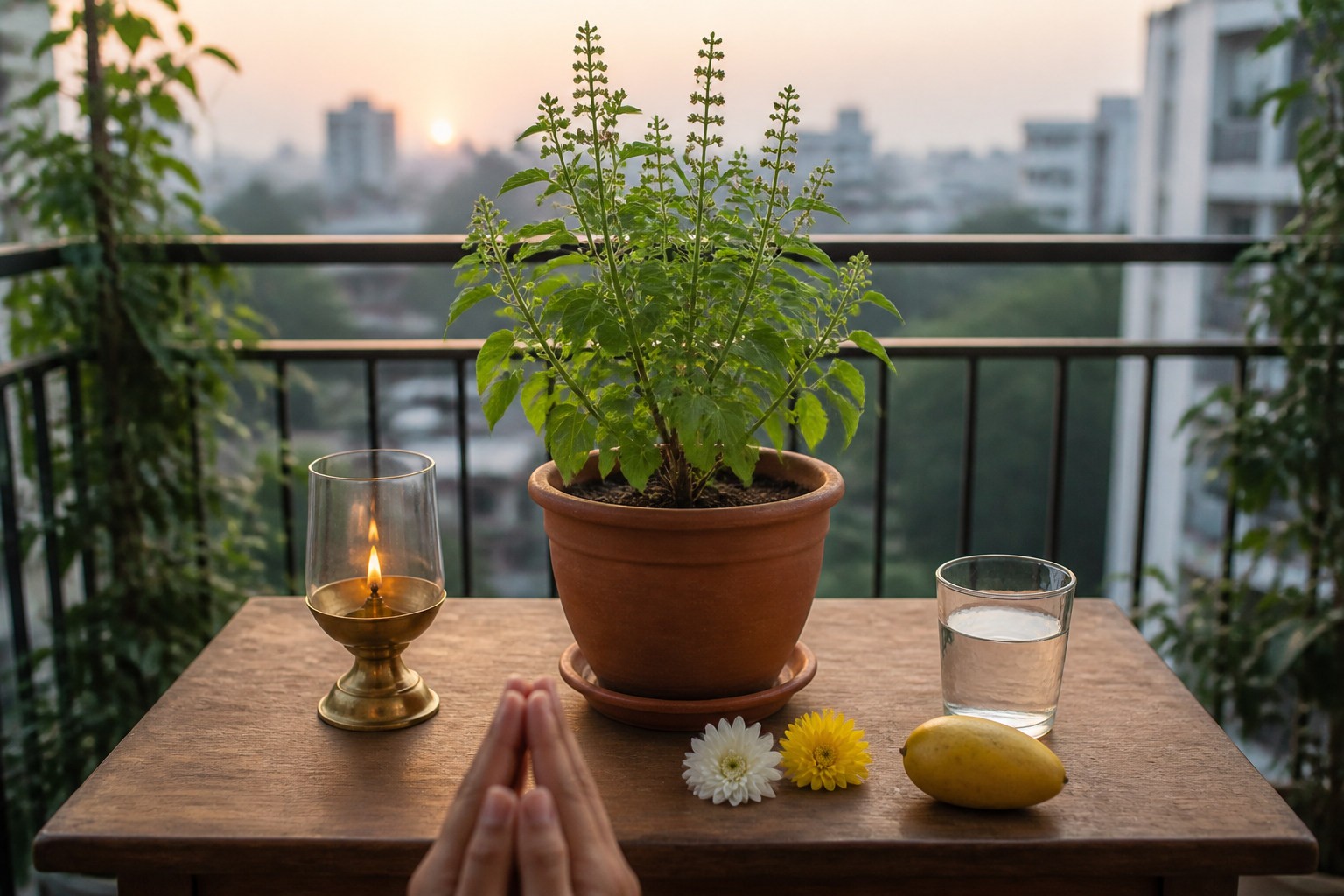
Real households rarely match an idealized ceremonial picture. Space may be limited, Sanskrit may not be familiar to everyone, a Shaligram may not be available, or two branches of a family may follow different dates. These circumstances call for a clear decision, not embarrassment.
- No Shaligram: Use a Vishnu murti or picture. The home rite can retain its meaning with an image of Vishnu when Shaligram is unavailable.
- Limited space: A clean Tulasi pot, a securely placed lamp, Vishnu’s image, and a small offering are sufficient foundations. The mandap can be modest.
- Limited Sanskrit: Use the prayers you know, read the katha in a language the household understands, and sing a familiar bhajan. Do not improvise impressive-sounding Sanskrit as a substitute for intelligible devotion.
- Conflicting family dates: Decide which household or sampradaya tradition the host is observing, then confirm its local tithi. Do not blend several calendars into a new compulsory rule.
- A weak or recovering plant: Worship without loading the branches, stripping leaves, or forcing decoration onto tender growth. Care itself is an offering.
- Children or first-time participants: Explain the difference between Tulasi Puja and Tulsi Vivah before assigning roles. They should know whom they are honoring, not merely imitate wedding gestures.
The ecological lesson should remain concrete after the lamps are extinguished: protect the plant, take only what is needed, avoid waste, and continue its daily care. Ahimsa, disciplined vows, and reverence for living nature resonate across Hindu, Buddhist, Jain, and Sikh traditions. Tulsi Vivah itself, however, belongs to a specifically Hindu devotional setting centered on Tulasi and Vishnu. Dharmic kinship becomes more meaningful when shared values are recognized without erasing the distinct theology of a rite.
Key takeaways
- Tulasi Puja worships Tulasi and Vishnu; Tulsi Vivah adds the symbolic marriage rite.
- Ekadashi, Dwadashi, and Kartika Purnima are regional alternatives, not three mandatory performances.
- Use your family tradition and a trusted local panchanga to select the tithi and worship window.
- Prepare Tulasi leaves beforehand if your custom prohibits plucking after sunset or on Dwadashi.
- A Vishnu murti or picture may be used when Shaligram is unavailable.
- Keep Vrinda’s tapas, protest, and moral agency at the center when narrating the katha.
- Prefer a simple, attentive puja that protects the living plant over elaborate decoration and hurried recitation.
Before your Kartika observance arrives, settle three things: the local tithi, whether you are performing Tulasi Puja or Tulsi Vivah, and who will tell Vrinda’s katha. Once those decisions are made, the materials become manageable and the household can turn its attention from ceremonial anxiety to worship.
References
- DharmaRenaissance Blog — Tulasi Habba 2025: The Complete Guide to Tulasi Puja on Uthwana Dwadashi in Karnataka
- DharmaRenaissance Blog — Ultimate Tulsi Vivah Vrat Katha: Discover the Legend and Master Tulsi-Shaligram Puja Dates
