
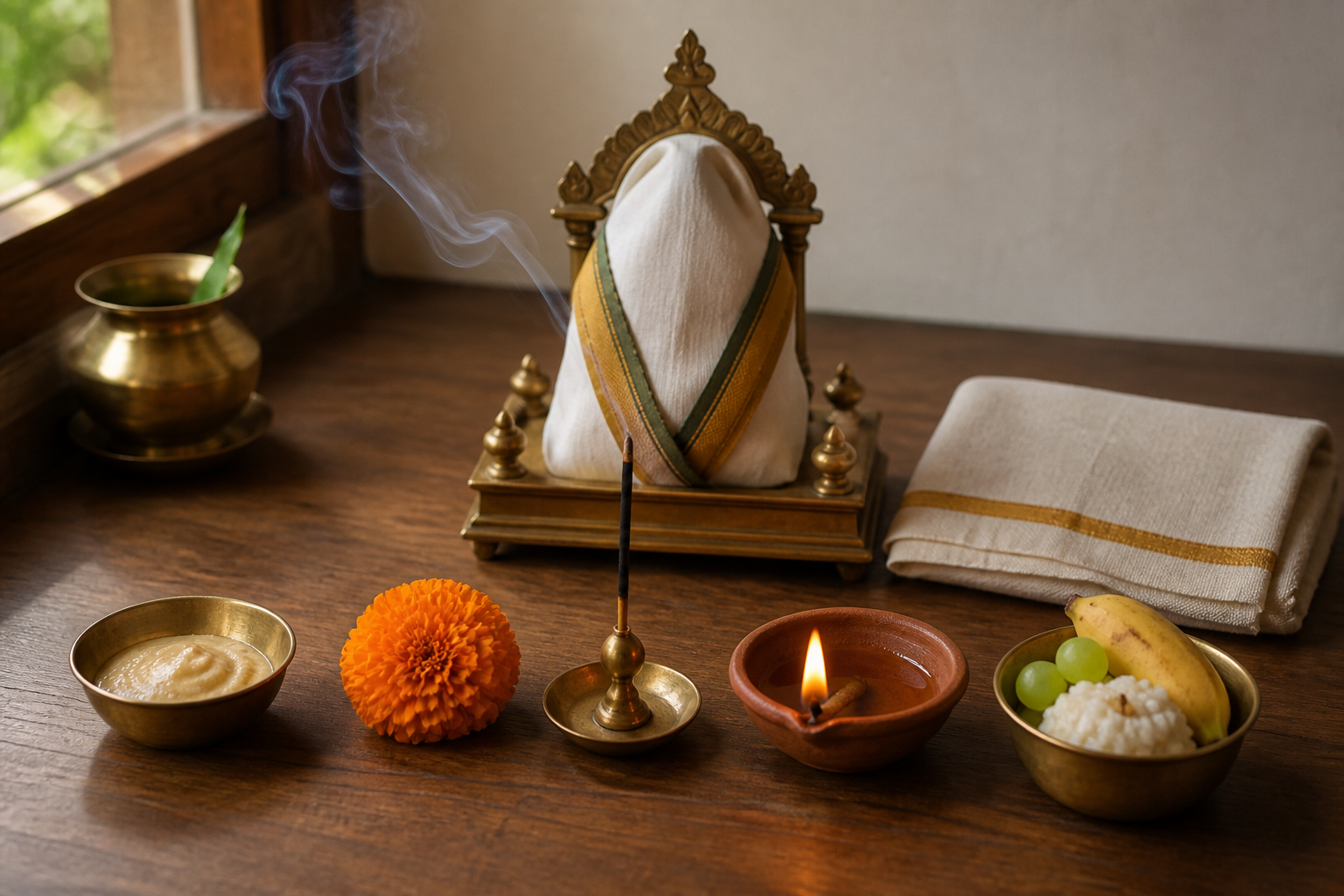
You want to perform a proper puja at home, but you may not have a large altar, elaborate vessels, or enough time for an extended ritual. Panchopachara gives you a disciplined form you can sustain: prepare five offerings, present them to your Ishta Devata in order, and let each action draw your attention away from ordinary distraction.
The rite is compact, but it is not casual. Its completeness comes from reverence, sequence, and bhava rather than abundance. A small amount of fragrance, one flower, incense, a cotton wick in oil, and a modest portion of food can support a coherent daily act of worship.
Begin with a sustainable, complete form
Panchopachara, or pañcopacāra, joins two Sanskrit terms: pancha, meaning five, and upachara, meaning a reverential offering. The five are gandha, pushpa, dhupa, dipa, and naivedya. Think of them as acts of sacred hospitality. You welcome, honor, illuminate, and nourish the divine presence before you.
This shared structure appears across household and temple worship, but its simplicity should not be mistaken for rigid uniformity. Sampradayas, regions, temples, and families may use different mantras or ways of presenting an offering. If you have received a procedure from your family, guru, or temple, keep that procedure. The sequence below is a practical general form, not a replacement for lineage-specific instruction.
Set out all five items before beginning. Place them within comfortable reach and in the order you will use them. That small preparation prevents the puja from turning into a search for matches, flowers, or a serving vessel halfway through.
| Offering | Simple household form | Attention to bring |
|---|---|---|
| Gandha | A small amount of sandalwood paste or another suitable fragrant paste or powder | Welcome, cooling grace, and purity |
| Pushpa | One fresh, preferably unsprayed flower | Beauty, humility, and the willingness to let go |
| Dhupa | An incense stick or another form of incense used in your tradition | Refinement of thought and speech |
| Dipa | A safely placed oil lamp with a cotton wick | Knowledge, clarity, and the removal of inner obscurity |
| Naivedya | A small portion of fruit, cooked grain, or simple water | Gratitude, nourishment, and sharing |
Quantity is not the measure of completeness. One clean, appropriate offering is better than an impressive arrangement that you cannot prepare regularly or present attentively.
Perform the offerings in a deliberate sequence
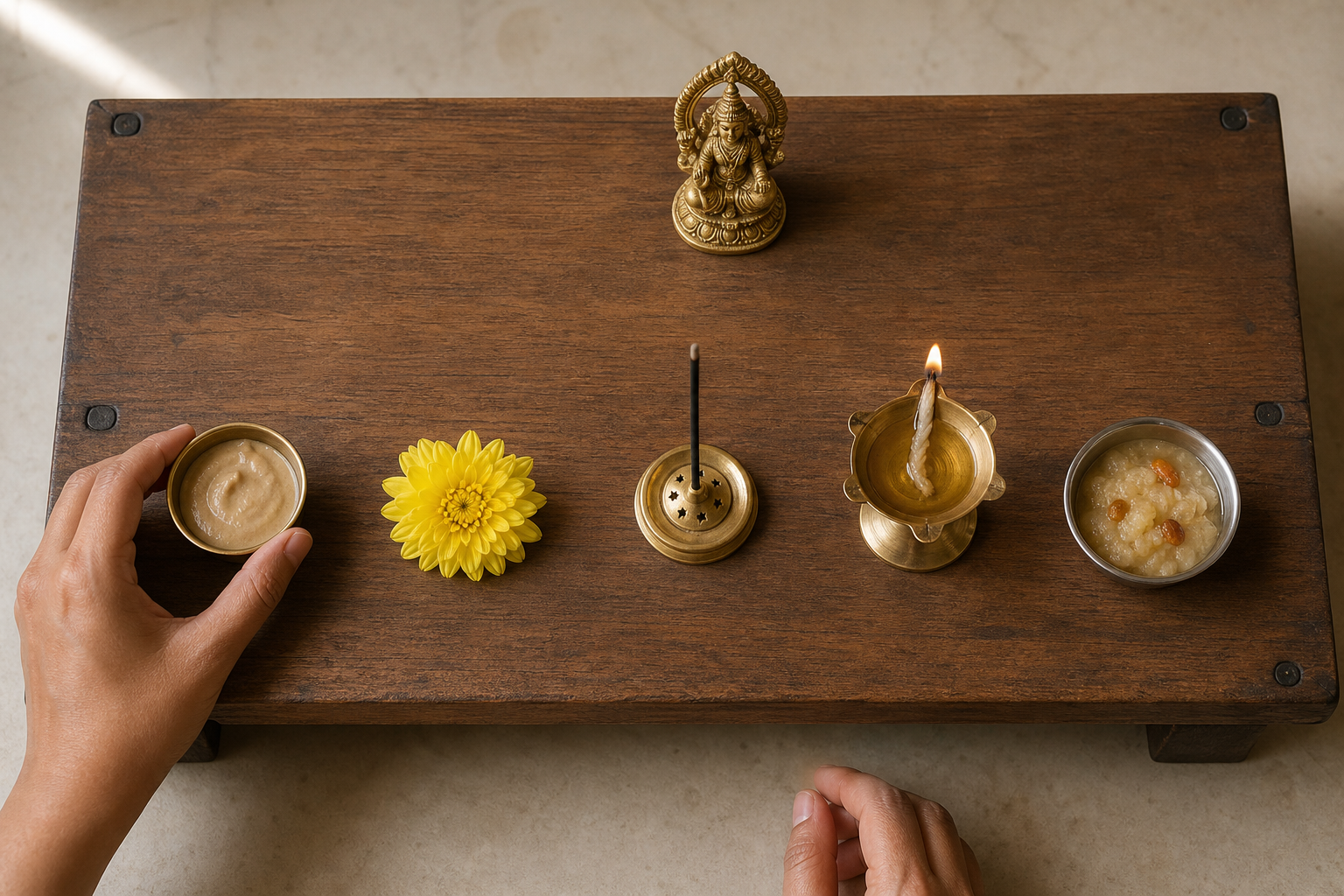
Do not rush directly to lighting incense. Give the puja a clear beginning, middle, and end. The preparatory moments separate worship from the activity that came before it; the closing keeps you from walking away as soon as the final object has been placed.
- Prepare the space. Make the altar orderly, place the five offerings within reach, and remove avoidable distractions. A calm setting supports a calm mind, but the purpose is readiness rather than decoration.
- Make a sankalpa. State your intention and identify the deity to whom you are offering the puja. Keep the intention honest and proportionate: worship, gratitude, remembrance, or the dedication of your actions may be enough.
- Enter dhyana and avahana. Bring the form, qualities, or presence of your Ishta Devata to mind. Invite that presence with the method learned in your tradition. Pause long enough for the altar to become the center of your attention.
- Offer gandha. Present or apply the fragrant paste as appropriate for the murti or sacred symbol. Receive its coolness and fragrance as a reminder to approach without agitation.
- Offer pushpa. Place the flower respectfully before the deity. Do not stop at admiring its color. Let its freshness represent the quality of mind you wish to offer, and let its impermanence loosen your attachment to appearances.
- Offer dhupa. Light the incense safely and present it before the deity. As the fragrance spreads and the smoke disperses, notice which thoughts or words you need to refine rather than carrying them unchanged into the rest of your day.
- Offer dipa. Light the lamp and present its flame in the manner customary to your home. Rest your attention on its steadiness. The flame represents jnana, the clarity by which confusion and inner obscurity are removed.
- Offer naivedya. Place the prepared fruit, grain, or water before the deity and dedicate it with gratitude. This is not payment offered in exchange for a favor. It is an acknowledgment that nourishment is received before it is possessed.
- Close the puja. Perform arati if it belongs to your form of worship, offer a prayer for the welfare of all beings, bow, and distribute the naivedya respectfully as prasad. Do not leave the lamp or incense unattended after you have moved away from the altar.
If you use mantras, use those you have learned correctly. More words do not produce more devotion. When no elaborate formula has been given to you, keep your attention on the deity and on the meaning of the offering instead of reciting unfamiliar sounds merely to make the ritual appear advanced.
Let the outer actions train inner attention
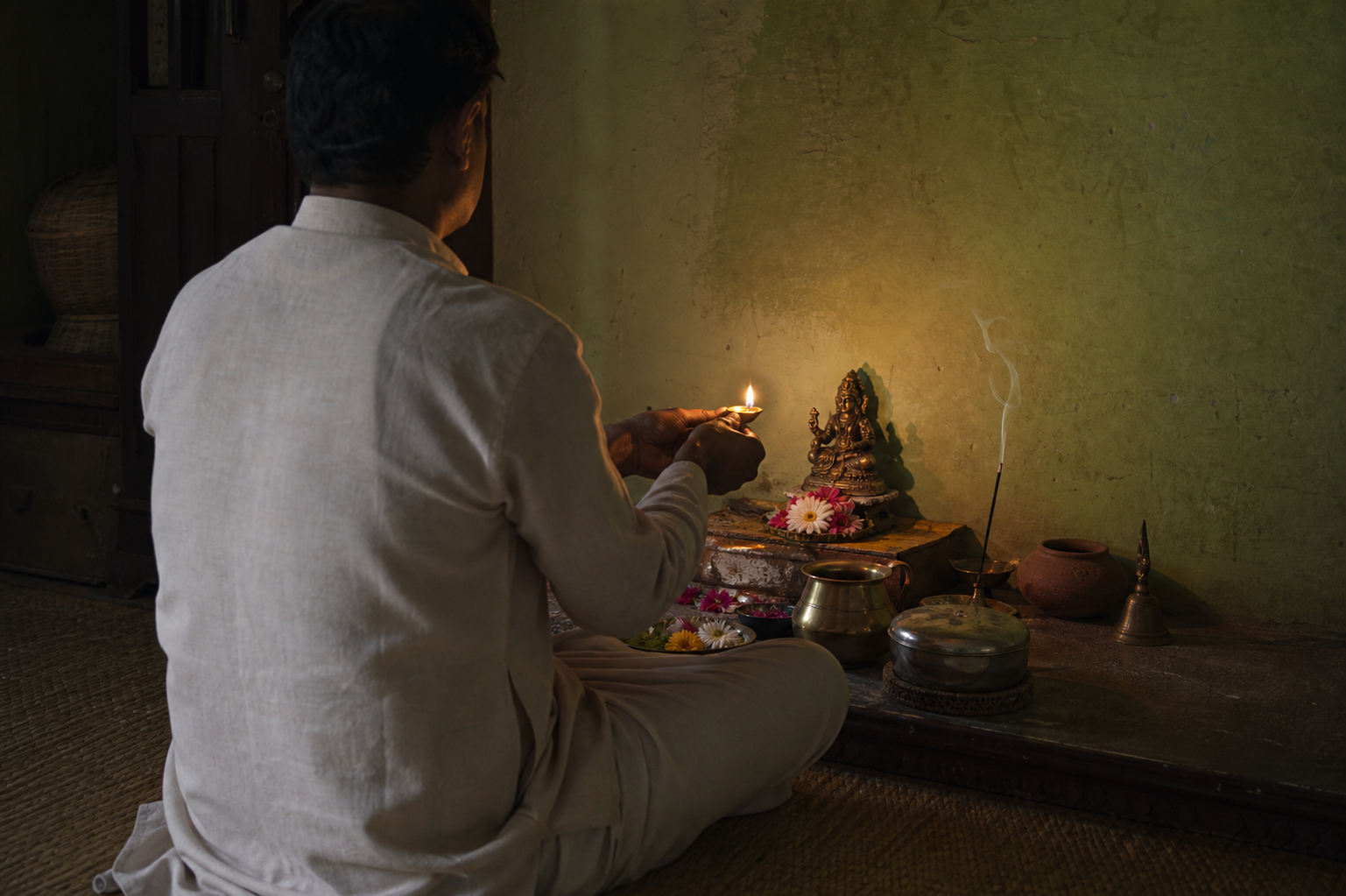
Panchopachara coordinates the senses around one devotional purpose. Fragrance, color, touch, flame, and food would normally pull the mind outward in different directions. During puja, they are gathered around the divine. This is one reason a short rite can become contemplative when it is performed without haste.
Give each offering one unhurried pause. You do not need to manufacture an unusual feeling. Simply know which offering is in your hand, why you are presenting it, and what it asks of you. If you reach naivedya without remembering the previous actions, slow the sequence the next time rather than adding more ritual material.
The meanings become useful when they pass into conduct. Gandha asks whether you can cool irritation before speaking. Pushpa asks what inner quality you are willing to place before the divine. Dhupa turns attention toward the consequences of thought and speech. Dipa asks you to choose clarity over convenient confusion. Naivedya turns private gratitude into sharing through prasad.
This movement from object to conduct prevents puja from becoming a checklist. The flower will fade, the incense will disperse, the flame will be extinguished, and the food will be shared. What remains is the quality of attention those offerings trained.
Lamps, food offerings, mindfulness, and service also carry devotional meaning in other Dharmic paths. Those resonances can deepen mutual respect, but they should not be used to erase real distinctions among Hindu, Buddhist, Jain, and Sikh traditions. Panchopachara is a particular Hindu ritual form even where its values of purity, gratitude, illumination, and care are widely recognizable.
Adapt to household limits without inventing universal rules
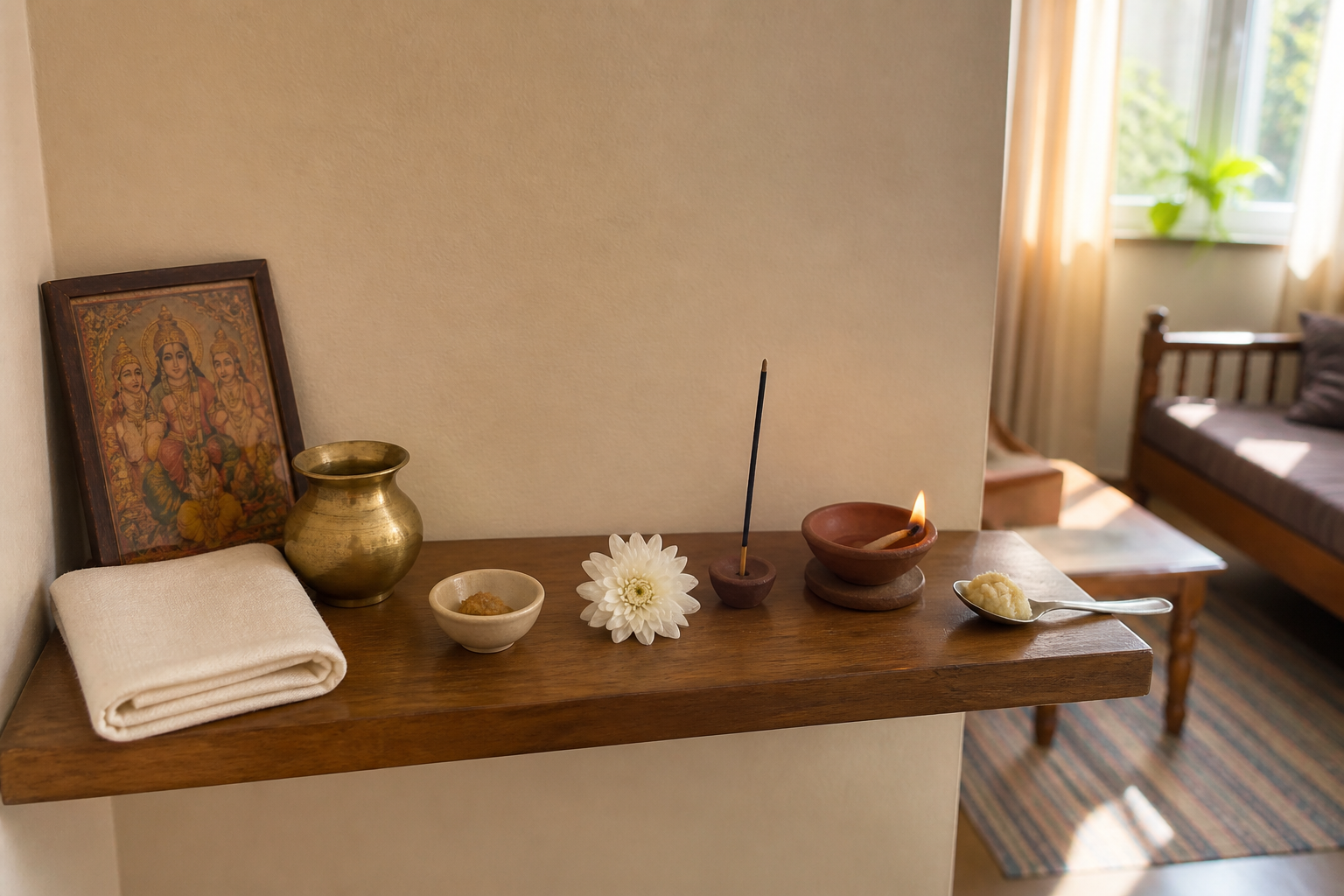
The most common practical mistake is postponing worship until every item looks temple-ready. Panchopachara is specifically suited to a modest home observance. A single fresh flower can serve as pushpa. Naivedya can be fruit, cooked grain, or water. The lamp can be small. Begin with the form you can prepare cleanly and repeat steadily.
Simplicity does not excuse carelessness. Keep the lamp on a stable, heat-safe surface and away from cloth, paper, children, and pets. Place incense in a secure holder with adequate ventilation. If smoke or an open flame is unsafe in your household, do not create a hazard to reproduce someone else’s altar. Ask a knowledgeable family member, priest, or teacher how your tradition handles that limitation; ritual substitutions are not necessarily universal.
Use the same caution with gandha. Some murtis and sacred objects should not be coated with an unfamiliar paste. If you do not know whether direct application is suitable, present the gandha before the deity until you obtain the correct care or ritual instruction. Reverence includes protecting the object through which you worship.
Choose offerings you can treat respectfully after the puja. Use a fresh flower rather than keeping a deteriorated one merely to fill a place. Prepare only as much naivedya as can be received or shared as prasad. This keeps the final offering connected to gratitude instead of waste.
Do not measure one household’s devotion against another household’s materials. Regional beauty and family custom have their place, but neither turns expense into bhakti. Establish the five-part rhythm first. Additional detail becomes meaningful only when it serves attention rather than display.
Key takeaways
- Panchopachara consists of gandha, pushpa, dhupa, dipa, and naivedya, offered in that order within a prepared act of worship.
- A modest form can be complete: a little fragrance, one flower, incense, a small oil lamp, and fruit, grain, or water are enough to establish the sequence.
- Begin with sankalpa, dhyana, and avahana; close with arati where customary, a prayer for all beings, and the respectful sharing of prasad.
- Connect each object to an inner discipline: calmness, humility, refined speech, clarity, and gratitude.
- Follow family or sampradaya instructions where they differ, especially for mantras, presentation methods, and substitutions.
- Never compromise household safety or damage a murti for the sake of outward completeness.
For your next puja, make one practical change: arrange the five offerings in sequence before you sit down. Then move slowly enough to know what you are offering and why. Let the form remain small until it becomes steady; that steadiness will show you where greater detail genuinely belongs.
References
