

If you are helping organize Chhath Puja in Delhi, you should not have to choose between ritual integrity and religious harmony. Devotees need confidence that offerings are satvik, vegetarian, clean, and respectfully handled. Neighbors, volunteers, and vendors deserve rules that judge what they do, not who they are.
The practical answer is to translate dharmic discipline into written, inspectable standards. That protects the vrat, gives suppliers clear expectations, and prevents a disagreement over food or certification from becoming an accusation against an entire community.
Key takeaways for a Delhi Chhath committee
- State ritual requirements positively: name the ingredients, preparation conditions, cleanliness rules, and disclosures you require.
- Ask every supplier the same questions and keep the answers with the procurement record.
- Let vratins and the ritual team decide what enters the offering while opening non-ritual service roles to anyone who follows the event’s code of conduct.
- When an item is doubtful, hold it out of prasad, verify it, and obtain a replacement. Do not begin with a public accusation.
- Redirect identity-based slogans toward a concrete question: which written ritual or hygiene requirement has not been met?
Protect the vrat with standards that can be checked
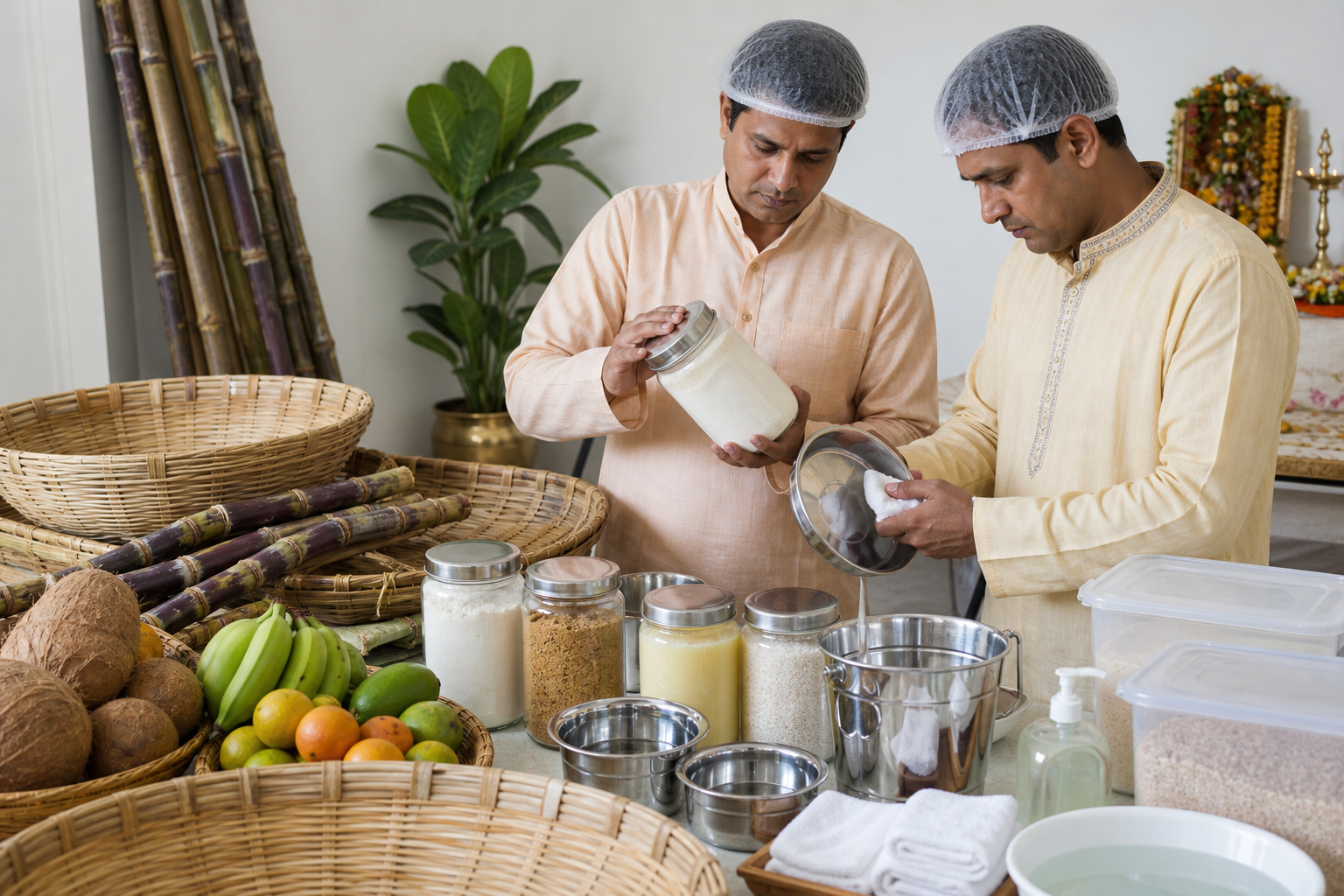
Chhath is a community-centered vrat dedicated to Surya and Chhathi Maiya. Its discipline is expressed through purity, cleanliness, vegetarian offerings, and the care with which prasad is prepared and presented. Procurement is therefore part of the observance, not a minor administrative task.
Words such as “vegetarian,” “vegan,” and “satvik” should not be treated as interchangeable. Vegetarian describes the absence of meat and related ingredients. Vegan addresses animal-derived ingredients. Satvik is a ritual category whose practical requirements may be more specific. If the vratins exclude ingredients that an ordinary vegetarian product may contain, write those exclusions down. A supplier cannot follow a rule that remains unspoken.
Use the same procurement sequence for fruit, packaged ingredients, prepared food, and materials used to serve prasad:
- Define the requirement. The ritual team should specify acceptable ingredients, preparation conditions, storage, and handling. Separate mandatory requirements from preferences.
- Request disclosure. Ask the supplier for an ingredient list, relevant product labeling, preparation information, and confirmation that the order can meet the committee’s stated standard.
- Check the delivery. A designated volunteer should compare the received goods with the order rather than assuming that a familiar package or vendor is compliant.
- Keep doubtful goods separate. If labeling is missing, packaging is damaged, or the preparation method cannot be confirmed, do not place the item in the offering while the question is unresolved.
- Apply the decision consistently. The same missing information should produce the same response regardless of the supplier’s religion, surname, language, or neighborhood.
Clean appearance alone is not proof of hygienic handling. Procurement volunteers should also look for covered storage, intact packaging where applicable, a clean preparation area, and compliance with the food-safety requirements relevant to the event. This keeps ritual purity connected to observable care rather than rumor.
Make harmony a clear division of responsibility

Religious harmony does not require anyone to blur the boundaries of worship. A Chhath committee can preserve Hindu ritual authority while welcoming help with the large body of civic work surrounding a public celebration.
Start by distinguishing ritual responsibility from community service:
- Vratins and the ritual team decide what is offered, how the worship area is maintained, and who performs ritual actions.
- Operations volunteers can support ghat cleanliness, queue movement, crowd guidance, waste collection, and prasad distribution under the committee’s instructions.
- Suppliers and traders meet the same documented standards for quality, disclosure, hygiene, and delivery.
- Residents and property owners can coordinate access where rooftops or shared spaces are used for arghya, while preserving safe movement and the owner’s stated conditions.
- Civic authorities and event leads retain responsibility for public safety, waterfront management, sanitation coordination, and escalation when an informal volunteer cannot safely resolve a problem.
This arrangement respects an important distinction: participation in service is not the same as authority over ritual. A neighbor does not need to share Chhath theology to help keep a lane clear or a ghat clean. At the same time, goodwill does not entitle anyone to overrule the vratins about the offering or worship space.
Give every volunteer a short briefing before service begins. Cover the ritual boundary, the person authorized to answer worship questions, the route for reporting doubtful goods, expectations for speech and photography, and the contact responsible for safety concerns. Harmony works better when people know their remit than when a committee relies on vague appeals to unity.
Address halal concerns without turning identity into evidence
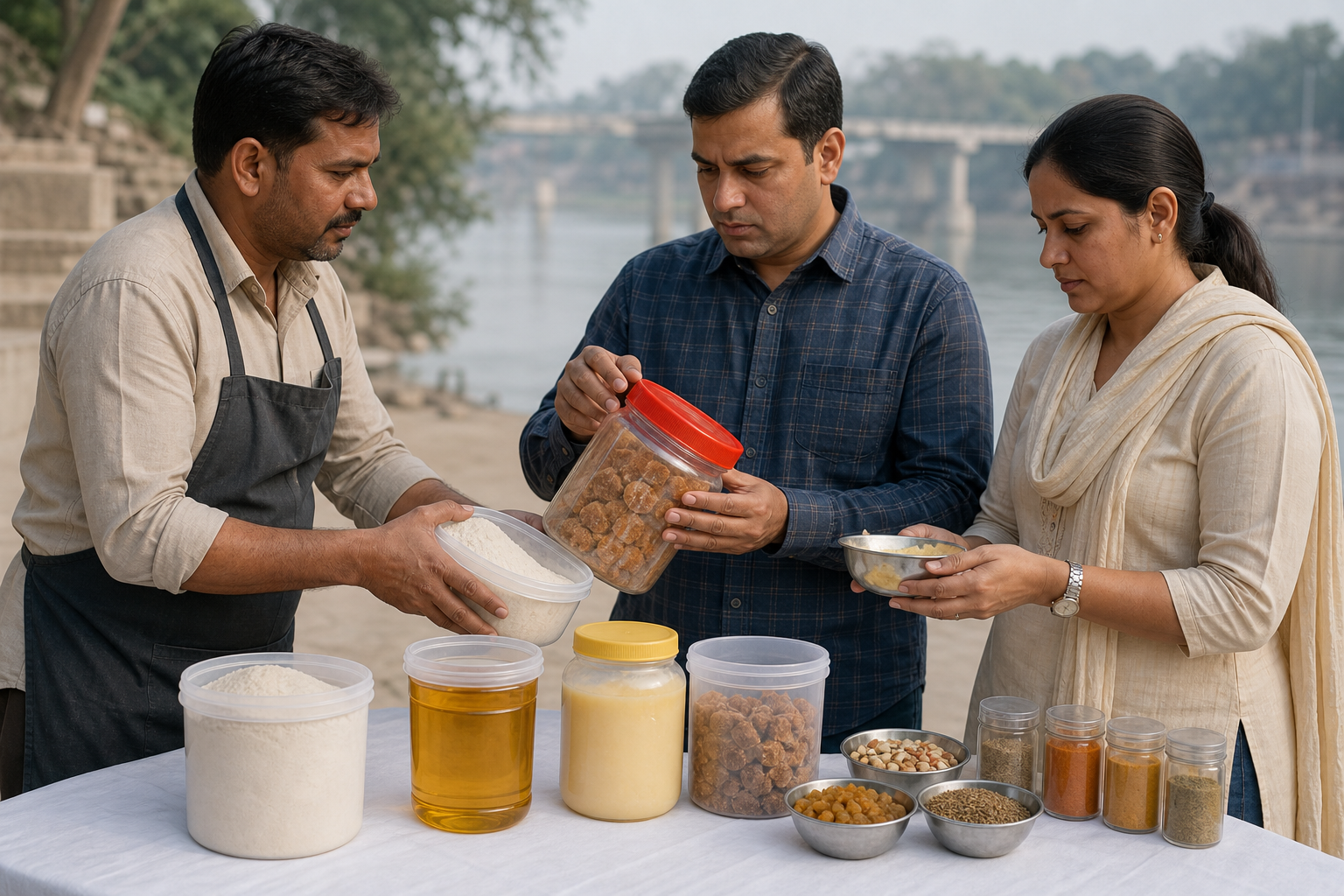
In 2025, a VHP campaign was reported under the label “Jihad-Free Delhi” alongside a proposed certification effort intended to exclude halal in the setting of Hindu festivals. The existence, scope, and implementation of any such plan should be verified locally. A political slogan should not be treated as a universal rule governing every Delhi committee or marketplace.
If your committee has a concern about halal certification, state the precise concern. Is it an ingredient, a preparation method, a certification mark, the absence of disclosure, or a broader procurement preference? Each is a different question. Combining them under a label aimed at a religious community makes the decision less precise and the resulting conflict harder to resolve.
A vendor’s religious identity does not establish how a particular item was produced. The reverse is also true: friendship with a vendor does not prove that an item meets the vrat’s requirements. Check the product and process in both cases. The committee remains free to reject an item that fails its written standard, but it should be able to identify the failed condition without making a claim about the seller’s community.
When rhetoric begins to displace facts, ask a narrowing question: “Which ingredient, label, preparation step, or hygiene condition fails our written requirement?” If nobody can identify one, do not invent a violation from the person’s name or appearance. If a real violation can be identified, replace the item and record the reason in the same terms you would use for any other supplier.
This is not a dilution of Hindu agency. It makes that agency more defensible. The committee is choosing according to a declared dharmic standard rather than allowing rumor, hostility, or inconsistent treatment to decide what enters the puja.
Use a dispute protocol that protects the puja and the person
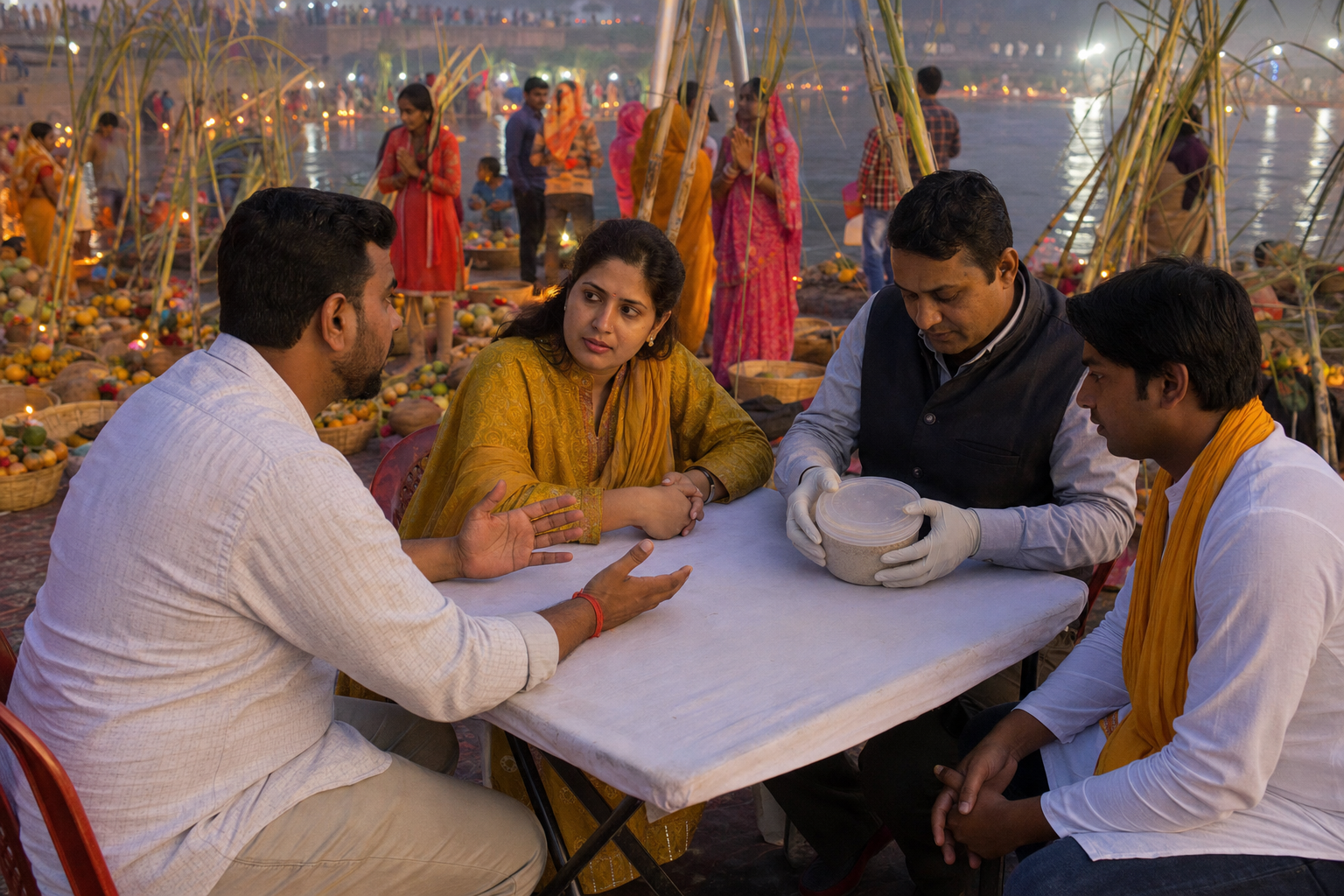
Festival disagreements escalate when several people argue at once, the disputed goods remain in circulation, and nobody knows who may make the final decision. A simple protocol prevents that confusion:
- Describe the concern factually. Say “the ingredient list is missing” or “the delivered item differs from the approved order.” Do not begin with a claim about motive or community.
- Pause use of the item. Move it away from the offering and prasad area without disrupting the rest of the ceremony.
- Verify available evidence. Check the package, invoice, supplier declaration, order record, and preparation information. Do not circulate an allegation while verification is underway.
- Let the authorized ritual lead decide. If compliance cannot be established, use an approved substitute. Protecting the vrat does not require proving that someone acted maliciously.
- Record and communicate the outcome narrowly. Tell the people who need to act what was accepted, rejected, or replaced and why. Avoid naming a person publicly unless safety or an official process genuinely requires it.
If the disagreement turns into abuse, a threat, deliberate disruption, or unsafe crowd behavior, stop treating it as a procurement discussion. Separate the immediate parties where this can be done safely and involve the designated event lead, security personnel, or appropriate civic authority. Informal mediation should not be allowed to delay a response to a real safety risk.
Before the next supplier is booked, draft a short Chhath standard covering ingredients, preparation, disclosure, hygiene, ritual authority, volunteer conduct, and dispute escalation. Share it with vendors and volunteers before they commit. When everyone can see what the vrat requires and how decisions will be made, Delhi’s Chhath celebrations can remain unmistakably Hindu while drawing strength from disciplined, respectful cooperation.
References
