
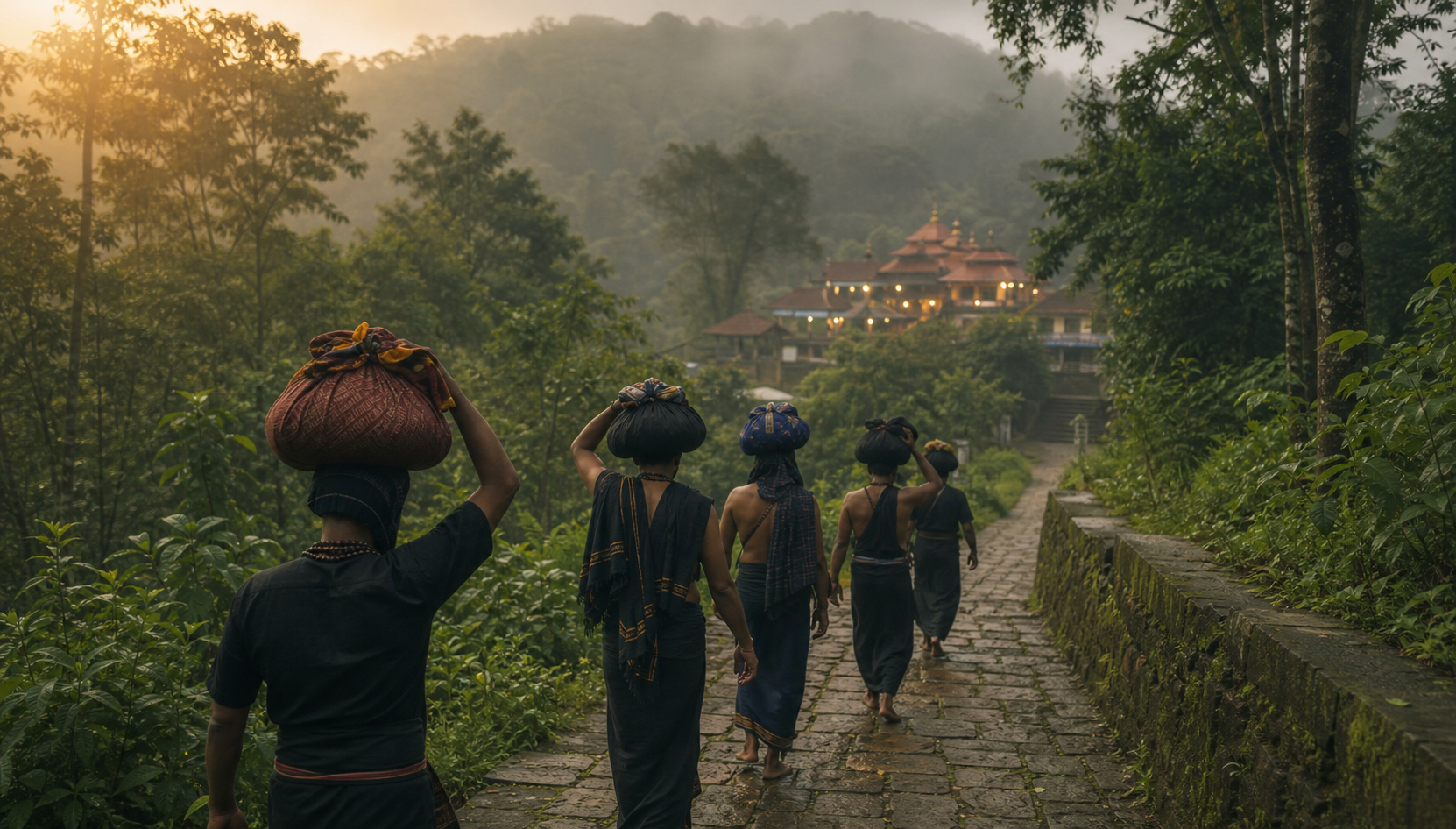
You may feel ready to wear the Ayyappa mala but still be unsure what you are promising. Is black clothing essential? Does a 41-day vrata have to end on Makaravilakku? How should you prepare for the irumudi and the journey to Sabarimala?
The clearest way forward is to treat mala dharana, the vrata, the pilgrimage, and Makaravilakku as connected parts of one discipline without confusing them with one another. Set the vow first. Then build your calendar, clothing, food, worship, service, and travel around it.
Decide what your sankalpa includes before fixing travel
Four terms shape the observance, and each answers a different practical question:
- Ayyappa mala dharana is the ritual beginning of the Deeksha. It is commonly undertaken in a temple setting with a sankalpa.
- Ayyappa vratham is the lived discipline that follows. The customary duration is 41 days, with daily worship, ethical restraint, simplicity, and service.
- Sabarimala yatra is the pilgrimage itself. Devotees commonly prepare the irumudi kettu before undertaking the journey.
- Makaravilakku is the climactic festival of the Mandala-Makaravilakku season. For the 2025-2026 season, it fell on 14 January 2026.
These parts belong together, but they are not interchangeable. In the 2025-2026 calendar, Mandala Kalam began on 16 November 2025 and Makaravilakku fell on 14 January 2026. That seasonal window was longer than 41 days. You therefore should not assume that beginning on the first day of Mandala Kalam automatically makes Makaravilakku the forty-first day of your vrata.
Before wearing the mala, confirm three things with a Guru Swami, an experienced Ayyappa sangham, or the temple guiding you: the day your vrata begins, the disciplines included in your sankalpa, and when and how you will complete it. If you intend to travel to Sabarimala, settle whether the pilgrimage falls within that schedule rather than attaching it later as a separate logistical project.
Regional practice matters. Ayyappa Deeksha is widely observed across Kerala, Tamil Nadu, Karnataka, and Andhra Pradesh, but local customs are not identical. Experienced guidance prevents you from mistaking one family’s convention for a universal rule or treating a widely observed discipline as optional merely because it is inconvenient.
Build a 41-day discipline you can keep every day
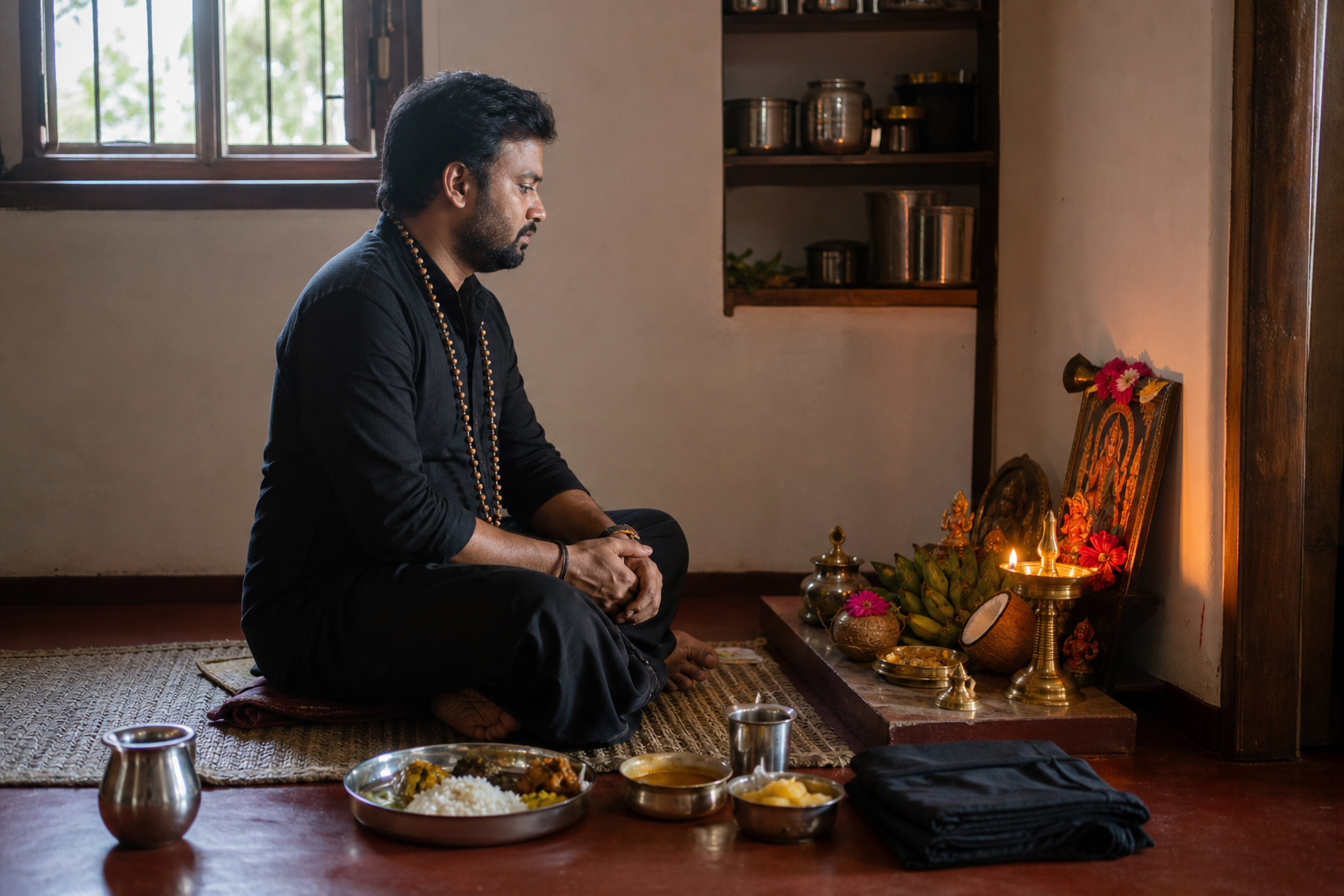
The mala is visible; the vrata is mostly invisible. Its substance lies in what you do at home, at work, while eating, and when no one is watching. A useful preparation is to write your daily rule before the Deeksha begins.
- Fix the calendar. Record the beginning and intended completion of your vrata. Count the days instead of relying on a vague connection with the wider pilgrimage season.
- Reserve a regular time for worship. Daily Ayyappa puja, japa, bhajans, and the remembrance expressed in “Swamiye Saranam Ayyappa” keep the sankalpa present during ordinary life.
- Set your food and abstinence rules in advance. The customary disciplines include sattvic vegetarian food, avoidance of intoxicants, and celibacy. Planning meals and family arrangements before mala dharana removes predictable friction after the vow has begun.
- Simplify your possessions and appearance. Modest black or dark-blue clothing is common, especially among devotees in their earlier years of observance. The point is reduced vanity and distraction, not the performance of severity.
- Give seva a place in the calendar. Annadanam, helping with bhajans, assisting fellow pilgrims, and supporting community preparations turn restraint into service.
- Prepare your household and work routine. Tell the people who share your meals and schedule what the vrata requires. Their practical support can protect daily worship and dietary discipline without making the entire household responsible for your vow.
Do not make the rule so elaborate that its complexity becomes the center of the practice. A stable routine of prayer, sattvic food, abstinence, honest conduct, and seva is more meaningful than adding private austerities you cannot sustain. The discipline should make you more attentive and responsible, not irritable with the people around you.
If you break a part of the sankalpa, do not invent a penance or quietly redefine the vow. Tell the Guru Swami or temple elder guiding you what happened and follow the tradition-specific direction you receive. That preserves both humility and clarity.
Wear black as an anchor, not as a badge of rank
Black clothing has a practical spiritual function during Ayyappa Deeksha. It draws less attention to appearance, discourages ornamentation, and visibly places pilgrims on equal ground. Dark blue is also common. The attire becomes a repeated reminder that the day is being lived under sankalpa.
A widely followed pattern associates black or dark blue with earlier years of Deeksha and saffron with sustained, experienced observance. This is not a licence to read spiritual seniority from color alone. Local customs vary, and saffron should express deepened renunciation rather than a claim to status.
Choose modest, breathable clothing that can withstand daily use, worship, travel, and repeated washing. Avoid ornate accessories and follow the guidance you receive regarding leather. The useful test is simple: does the clothing reduce attention to yourself and support the disciplines of the vrata? If it becomes a fashion project, it is working against its purpose.
Barefoot walking or minimal footwear is also commonly observed, but austerity does not require concealing an injury or worsening a health problem. If the practice is unsafe for you, seek appropriate medical advice and ask your Guru Swami how to preserve the intent of the discipline safely. The same principle applies to fasting, strenuous walking, and the forested approach to Sabarimala: do not improvise around a medical limitation.
Prepare the irumudi and pilgrimage as part of the vrata
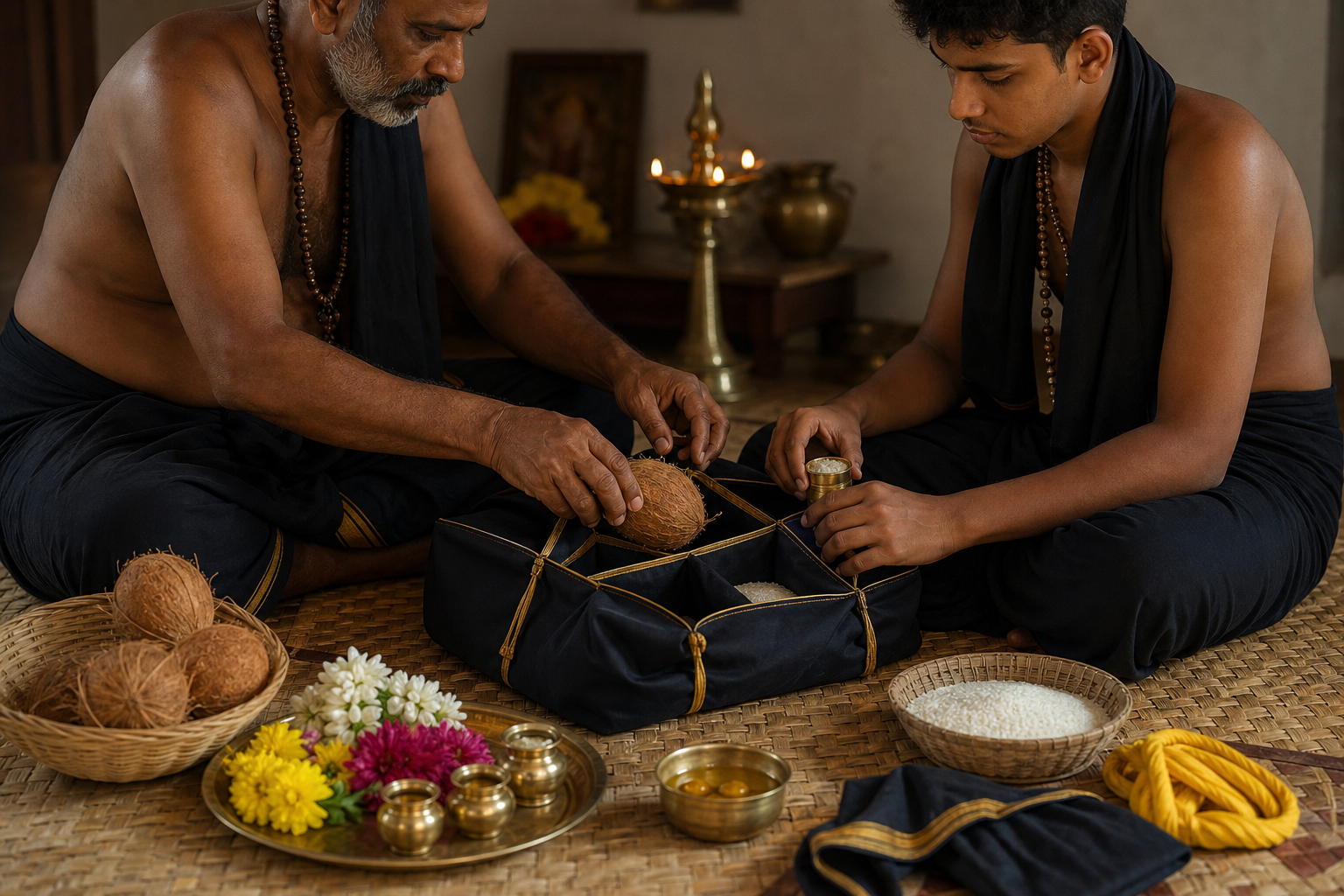
The irumudi is not a costume accessory or a last-minute travel item. Prepare it under experienced guidance, as part of a group or temple process where possible. That allows the ritual preparation, transport plan, and conduct of the pilgrimage to remain aligned with your sankalpa.
Use this practical checklist before departure:
- Coordinate temple visits, group travel, and irumudi preparation early rather than waiting for the most crowded part of the season.
- Confirm current temple timings, entry procedures, designated routes, weather conditions, and other official advisories before travelling.
- Assess your readiness for crowds, prolonged standing, walking, and forest terrain. Address health concerns before the journey begins.
- Carry and discard materials responsibly. Minimizing waste and respecting the forest are parts of dharmic conduct, not optional additions to it.
- Stay with the directions of temple staff and volunteers. Pushing for a better position at darshan transfers your inconvenience to another pilgrim.
- Keep seva visible in your conduct: help your group, protect vulnerable companions, and leave shared spaces cleaner than you found them.
At Sabarimala, the devotional rhythm may include bathing at the Pampa River, pradakshina, bhajans, abhishekam, ney abhishekam, and the rendering of Harivarasanam. Follow temple procedure and the instructions of those guiding your group rather than assembling a private sequence from disconnected practices.
The crowded moments are not interruptions to the vrata. They reveal whether the preceding discipline has produced patience, equality, restraint, and concern for others. A pilgrim who protects the queue, the forest, and fellow devotees carries the sankalpa beyond personal ritual.
Approach Makaravilakku as culmination, not spectacle
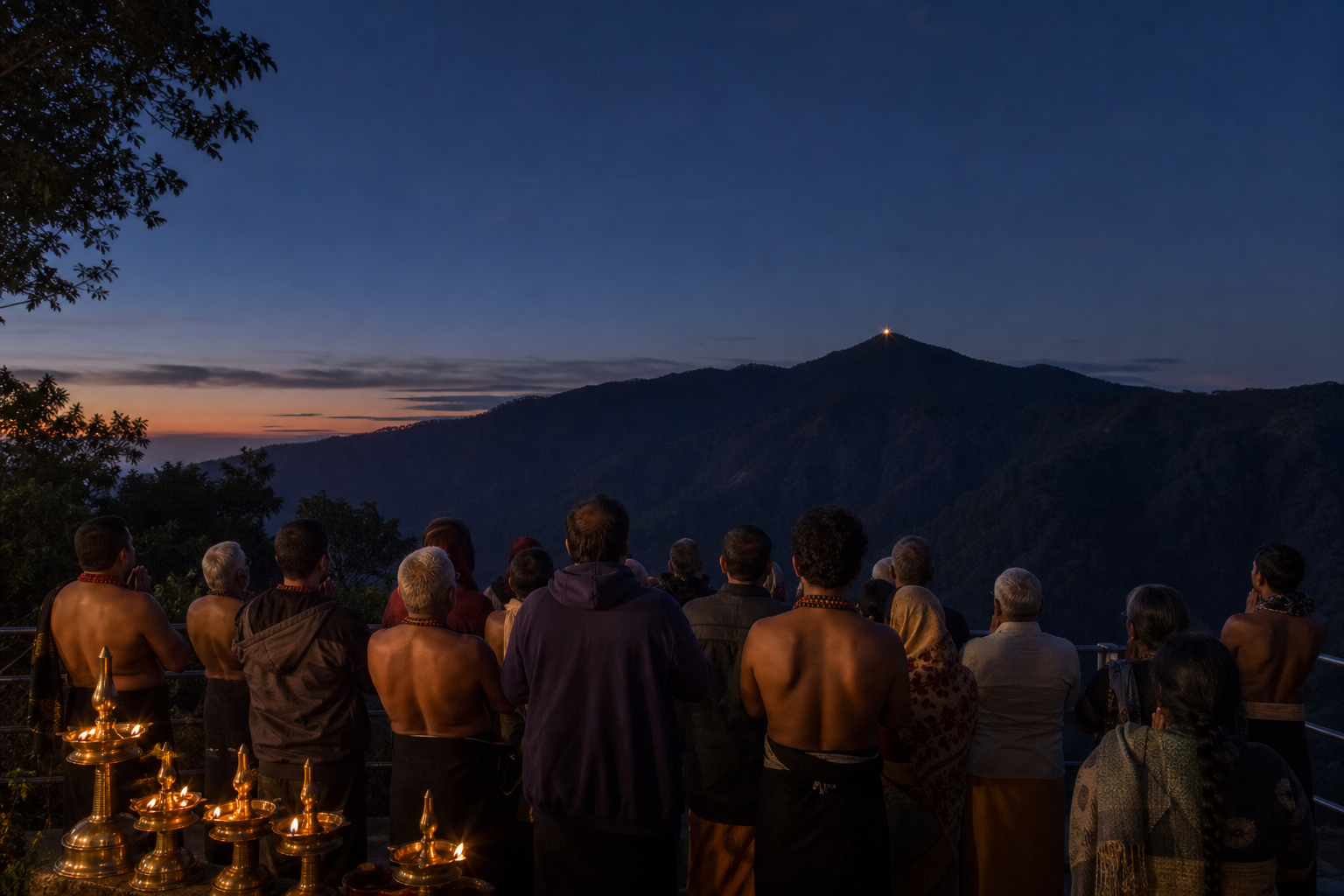
Makaravilakku brings several strands together: the transition of the Sun into Makara, the Thiruvabharanam procession and adornment of the deity, evening deeparadhana, and the revered sighting of the Makara Jyoti on the distant horizon. The week leading to the festival carries heightened ritual activity and continuous demand for darshan.
Makaravilakku and Makara Jyoti are closely connected, but the terms should not be collapsed into one event. Makaravilakku is the festival observance; Makara Jyoti is the sacred light venerated at its climactic evening moment. For the devotee, the light points inward: the restraint of Deeksha is meant to clear attention, reduce ego, and make ethical conduct steadier after the pilgrimage as well as during it.
| 2025-2026 milestone | What it meant for planning |
|---|---|
| 16 November 2025 | Mandala Kalam began. This opened the seasonal period; it did not by itself determine every devotee’s forty-first day. |
| 41-day Ayyappa vratham | The customary vrata duration had to be counted from the devotee’s chosen and guided beginning. |
| Week before Makaravilakku | Ritual activity, the Thiruvabharanam procession, and demand for darshan intensified. |
| 14 January 2026 | Makaravilakku coincided with Makar Sankramana for that season. |
These dates apply specifically to 2025-2026. If you are preparing for a later season, do not reuse them. Confirm that season’s calendar and current temple advisories before choosing your sankalpa or booking travel.
The disciplines surrounding Makaravilakku join calendrical observance, temple ritual, pilgrimage, and collective devotion. Tapas, ahimsa, humility, compassion, and seva also speak to ethical ideals honored across Hindu, Buddhist, Jain, and Sikh traditions. Recognizing that kinship should not erase the distinctive theology and ritual form of Sabarimala; it should sharpen our appreciation of how Dharmic paths can share moral commitments without becoming identical.
Key takeaways
- Set your sankalpa, start date, daily disciplines, and intended completion before wearing the mala.
- Do not confuse the 41-day vrata with the full Mandala-Makaravilakku seasonal window.
- Use black, dark blue, or saffron according to guided custom; treat the color as an aid to simplicity, not a spiritual rank.
- Plan prayer, sattvic food, abstinence, seva, work, and household arrangements as one daily rule.
- Prepare the irumudi under a Guru Swami, temple, or experienced sangham rather than improvising it.
- Follow current advisories, respect the forest, protect your health, and treat orderly conduct toward other pilgrims as part of the vow.
- Approach Makara Jyoti darshan as the culmination of inner discipline, not a contest for position or a spectacle detached from the vrata.
Your next step is concrete: speak with the Guru Swami or temple that will guide your mala dharana, write down the exact disciplines you are accepting, and count your calendar before making travel commitments. A clear sankalpa gives every later choice – food, clothing, prayer, irumudi, pilgrimage, and Makaravilakku darshan – its proper place.
References
- DharmaRenaissance Blog – Ayyappa Deeksha 2025-2026: Essential Dates, Ayyappa Mala Guide & Makaravilakku Insights
- DharmaRenaissance Blog – Discover Why Ayyappa Pilgrims Wear Black: The Complete, Devotional Sabarimala Dress Guide
- DharmaRenaissance Blog – Makaravilakku 2026: Complete Guide to Sabarimala Makara Vilakku – Date, Rituals, Meaning
