
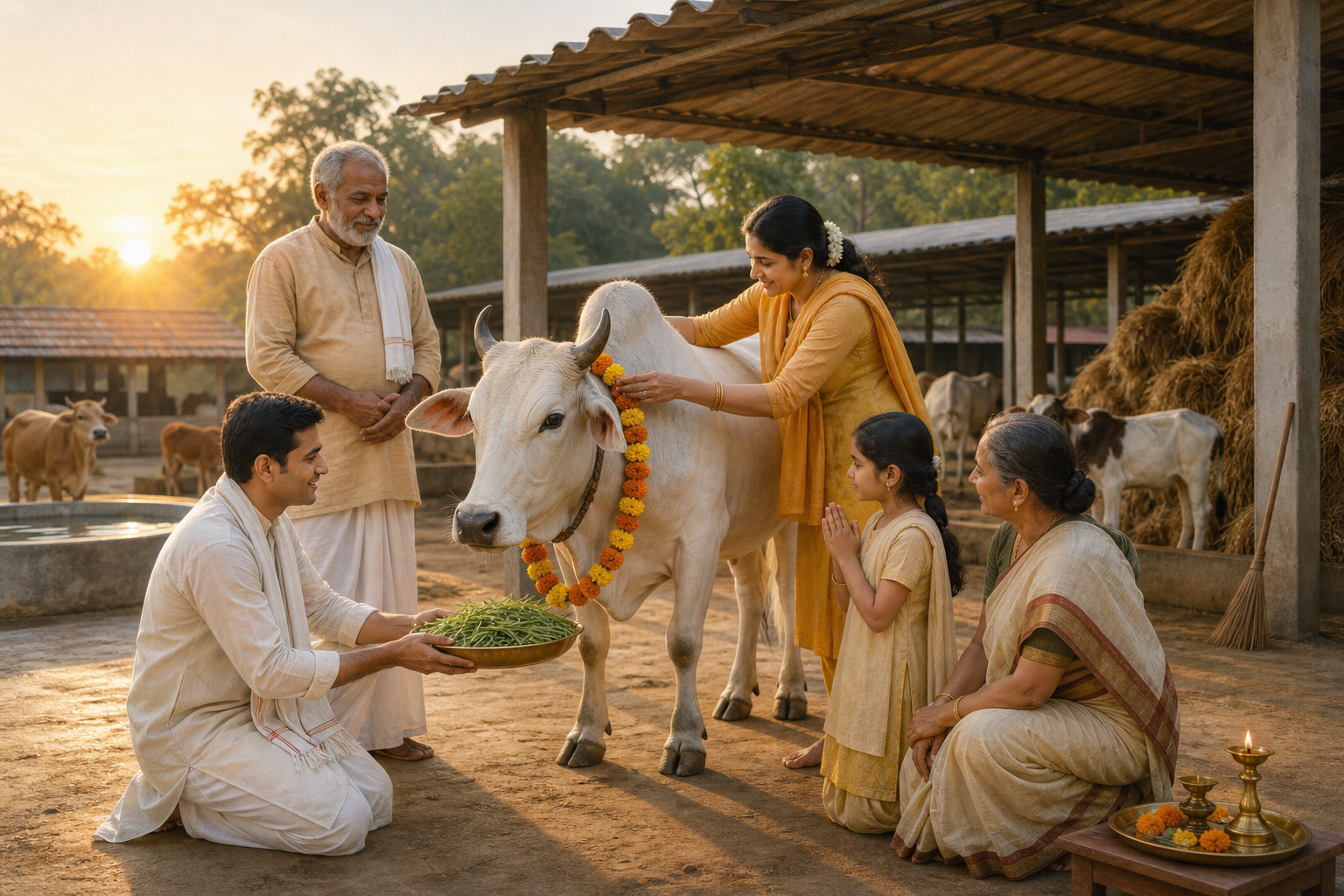
You want to observe Gopashtami with sincerity, but the practical questions come quickly. Must you visit a goshala? What should you offer? Is fasting essential? And if no cow is accessible where you live, does a home observance still carry meaning?
The clearest answer is to keep worship and responsibility together. Gopashtami is not only a day for honoring the sacred cow symbolically. It asks you to turn reverence into careful, useful service: worship without distressing the animal, help a goshala with work it actually needs, deepen your Krishna bhakti, and carry at least one act of care beyond the festival.
Let Krishna’s new duty define the observance
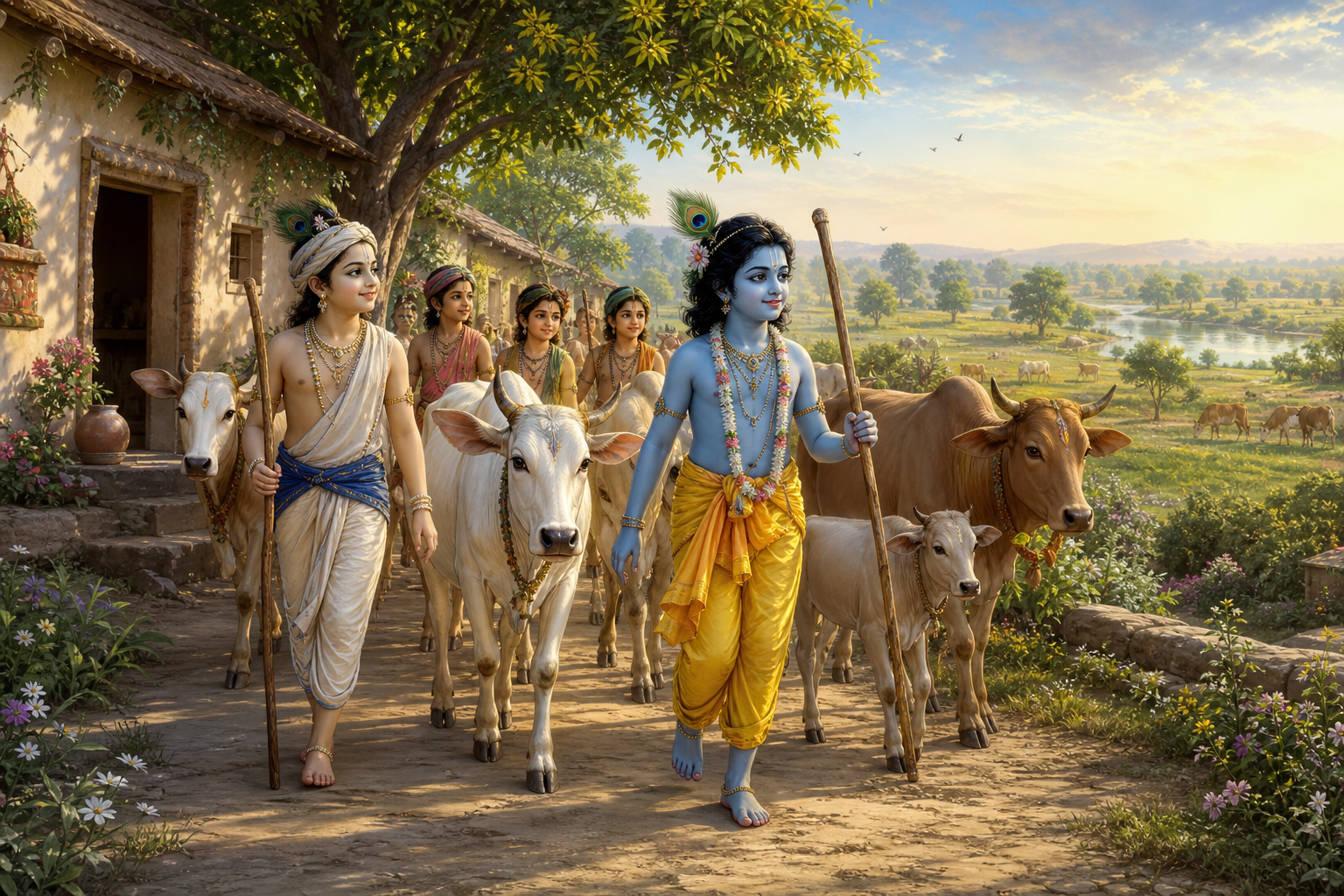
Gopashtami, also called Goshtashtami in several Vaishnava communities, is observed on Kartik Shukla Ashtami. Because the corresponding civil date changes, use the panchanga followed by your temple, family, or sampradaya rather than carrying forward a date from another year.
The festival remembers the occasion when Nanda Maharaj entrusted Krishna and Balarama with herding the cows. They were being given a real duty, not a ceremonial title. Their movement into the pasture therefore gives the vrata its moral center: love becomes mature when it accepts responsibility for another being’s welfare.
This changes how you plan the day. Decorations, photographs, sweets, and festive darshan may support devotion, but they aren’t the measure of it. Before deciding what your celebration will look like, ask a more searching question: what will a cow, a caretaker, or a goshala genuinely receive from my observance?
That question also guards against a common separation in religious life. Gau Puja is the act of worship. Gau seva is the work of care. The vrata is the discipline that binds your intention to both. Gopashtami becomes complete when all three point in the same direction.
Plan Gau Puja around the cow, not the display
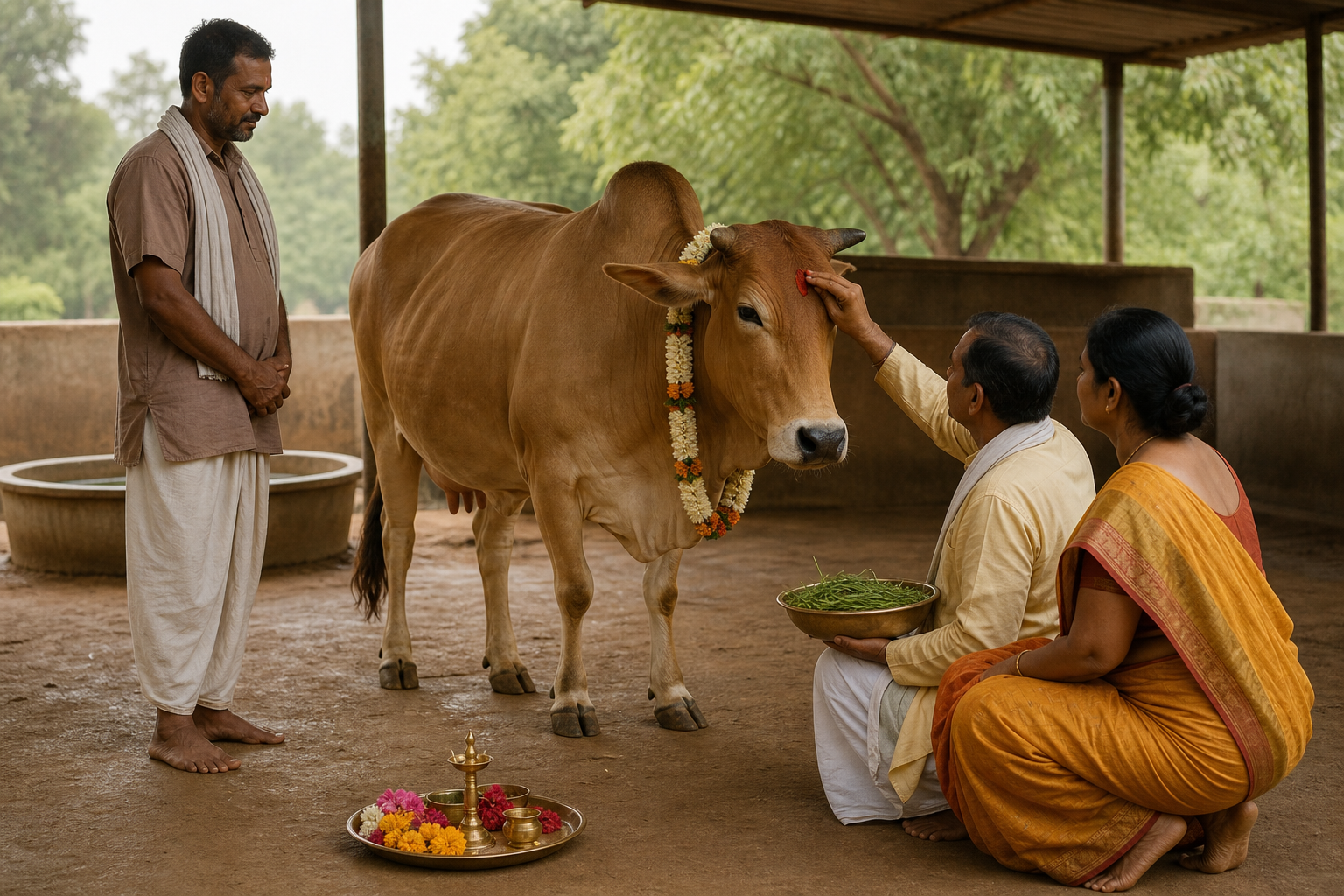
If you will visit a temple goshala or another cow shelter, contact its caretakers before the festival. Ask when visitors are welcome, what kind of help is useful, and which offerings are permitted. Fresh fodder may be customary, but the caretaker knows the animals’ diets. Don’t bring or feed an unfamiliar item simply because it appears festive.
A simple observance can follow this order:
- Begin with a clear sankalpa. State in your own language that you are worshipping Sri Krishna and honoring the cow through gratitude, non-harm, and service. A sincere intention is better than a formula recited without attention.
- Offer only what the goshala permits. Flowers and fresh fodder are common offerings. If bathing or adorning cows belongs to the local custom, do it only with the caretaker’s guidance and only while the animal remains calm. Gau Puja should never become restraint, crowding, or forced contact.
- Perform pradakshina respectfully. Walk around the cow at an unhurried pace if the setting allows it. Give the animal space, remain attentive to the handler, and keep young children beside an adult.
- Remember Krishna as Gopala. Chant the divine names, sing kirtan, or read Krishna-katha connected with the cows and the pastoral life of Vraja. In some temples, the deity is dressed in cowherd attire, making the responsibility of Krishna and Balarama visible through darshan.
- Offer simple sattvic naivedya. Fresh butter and milk-based sweets are customary in many homes and temples, but they aren’t a test of devotion. Follow your household practice and conscience, particularly when choosing dairy products.
- Complete the worship with work or support. Clean part of the shelter, help prepare grass, contribute toward the goshala’s stated needs, or arrange a later service visit if festival-day access is limited.
Don’t assume that more ornamentation produces more punya. A flower offered gently and a shelter cleaned properly express the day better than elaborate adornment that makes the animal uncomfortable. The cow isn’t a ritual prop; she is the recipient of your care.
If you don’t have access to a cow, don’t arrange an artificial encounter merely to reproduce the outward form of the festival. Worship Sri Krishna at home, read the relevant lila, offer a simple sattvic preparation, and support a responsible goshala from a distance. The absence of physical proximity need not become the absence of seva.
Choose goshala seva that solves a real need
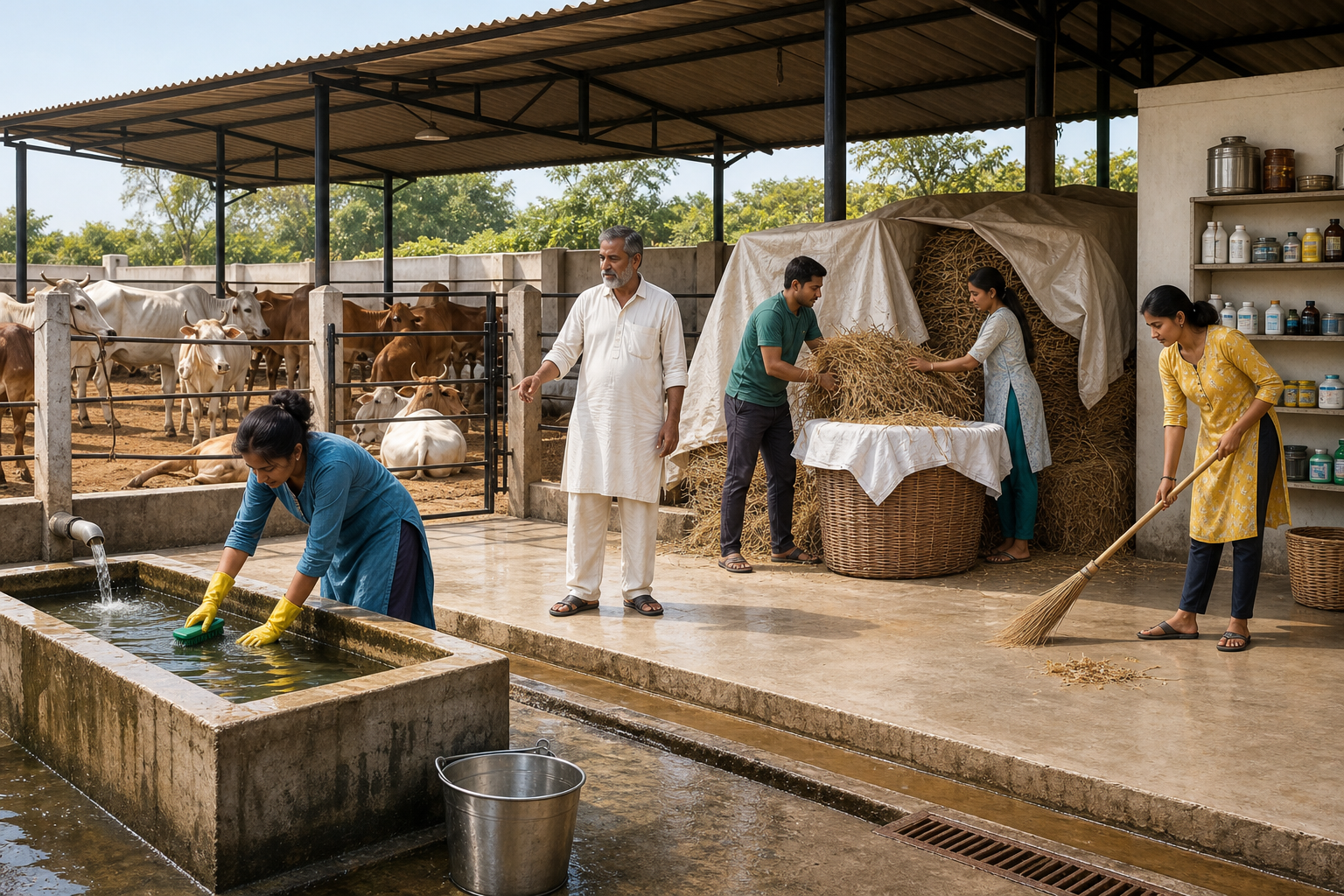
A busy festival can produce plenty of visitors while leaving routine work untouched. Useful seva starts by listening to the people who care for the herd every day. Ask them to name a current need instead of deciding for them. The answer may be shelter cleaning, grass preparation, an approved donation, or help with another ordinary task.
You can think about your commitment at three levels:
- On the day: take one practical assignment and complete it properly. Cleaning a designated area or preparing fresh grass may be less visible than a ceremony, but it directly serves the animals.
- After the festival: return for another service period or meet a need that couldn’t be addressed during the crowded celebration. This prevents your intention from ending when the decorations come down.
- In daily life: examine how your purchasing and food choices affect the animals you claim to revere. Where dairy is part of your practice, ethical sourcing deserves attention. Gratitude for milk has little moral weight if concern for the cow disappears at the point of purchase.
Donations should follow the same logic. A contribution is most useful when it answers a need identified by the goshala. If you are considering continuing support, ask how funds are used and what kind of recurring help is valuable. This isn’t suspicion; it is responsible dana.
Gopashtami is also an unusually practical day for teaching children dharma. Give each child one manageable responsibility: carry flowers, help prepare approved fodder, assist with a cleaning task, or place an offering under adult guidance. Then connect the action to Krishna’s example. Krishna and Balarama were honored not merely for loving the cows but for becoming accountable for them.
Keep the vrata devotional and within your capacity
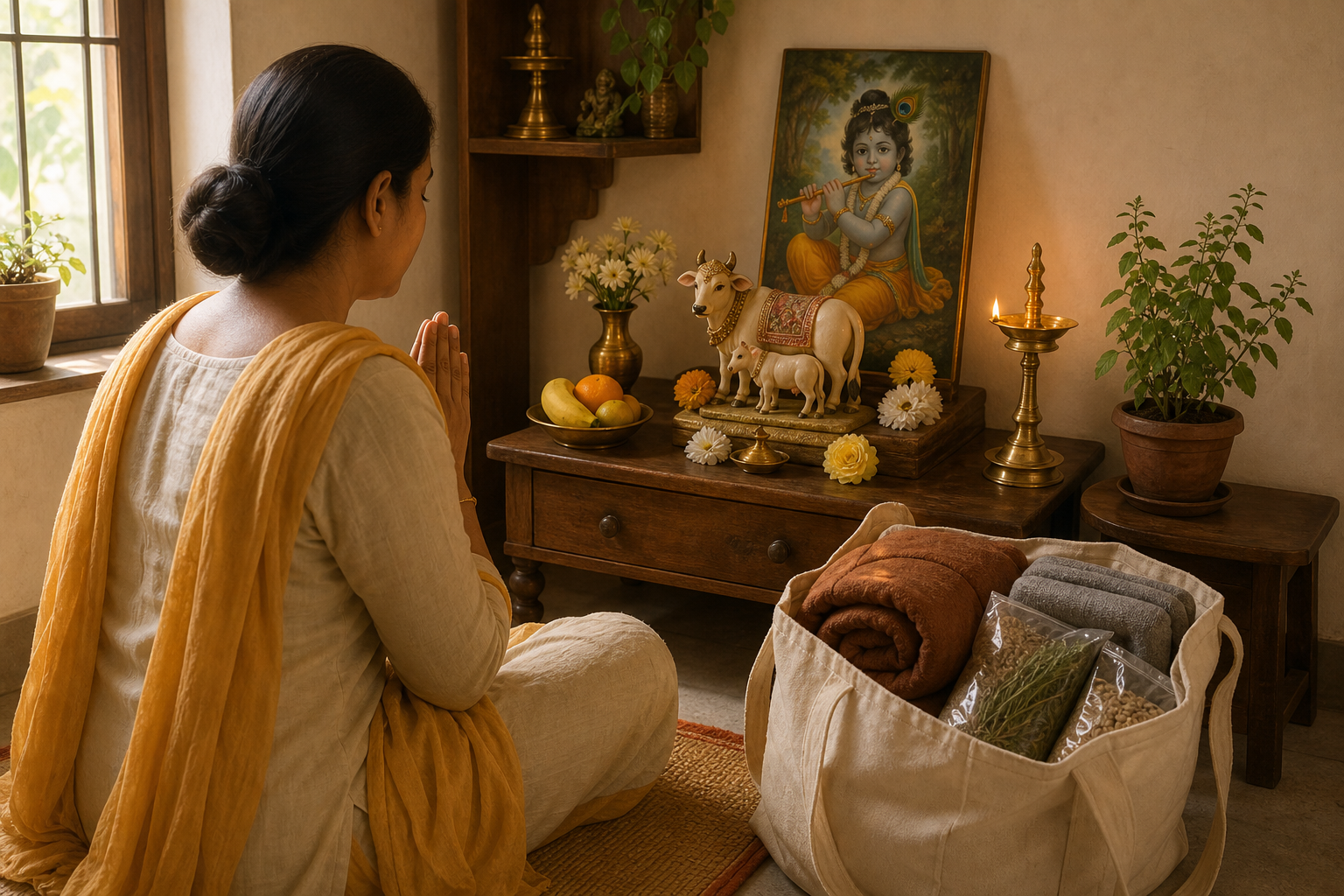
Fasting may be part of Gopashtami, but the vrata shouldn’t be reduced to whether you ate. Fasting according to one’s capacity, chanting, Krishna-katha, Gau Puja, and goshala service can all belong to the observance. Follow the discipline taught in your family or sampradaya, and don’t turn fasting into a competition.
If a fast isn’t appropriate for your health or circumstances, keep a simple sattvic discipline and place the emphasis on prayer, restraint, and seva. The purpose is to purify intention and conduct, not to make an unsafe display of endurance.
Regional expressions also differ. Vrindavan and Gaudiya Vaishnava centers commonly emphasize special darshan, kirtan, and service in the goshala. Another temple or household may order the rites differently. Preserve the heart of the observance without treating one regional form as the only legitimate form.
The festival’s wider Dharmic resonance should be handled with similar care. Gopashtami is a Vaishnava Hindu observance centered on Krishna, Balarama, and the cows of Vraja. Its ethical commitments nevertheless meet values cherished across Dharmic traditions: ahimsa, compassion, disciplined responsibility, and seva. Recognizing that kinship doesn’t require flattening distinct paths into one practice.
Your vrata can therefore include a quiet examination of habits as well as a ceremony. Notice where convenience has weakened compassion, where reverence has remained verbal, or where responsibility has been delegated entirely to others. Choose one correction small enough to continue and meaningful enough to matter.
Key takeaways for your Gopashtami
- Confirm the civil date through the panchanga followed by your temple or sampradaya; the tithi is Kartik Shukla Ashtami.
- Remember the central lila: Nanda Maharaj entrusts Krishna and Balarama with the responsibility of herding the cows.
- Arrange Gau Puja through the caretaker when visiting a goshala, and feed only approved fodder.
- Keep all bathing, adornment, touch, and pradakshina calm and respectful to the animal.
- If no cow is accessible, combine home worship of Sri Krishna with practical support for a responsible goshala.
- Fast according to your capacity, and let prayer, katha, restraint, and seva carry the vrata.
- Give children a real, supervised duty so the festival teaches responsibility rather than passive spectatorship.
- Carry one act of care beyond the day through another visit, ongoing support, or more conscientious daily choices.
You can begin before the tithi arrives. Identify the goshala or temple you intend to support, ask what it needs, and choose one task you can actually complete. On Gopashtami, let your puja express reverence and your seva prove it.
References
