
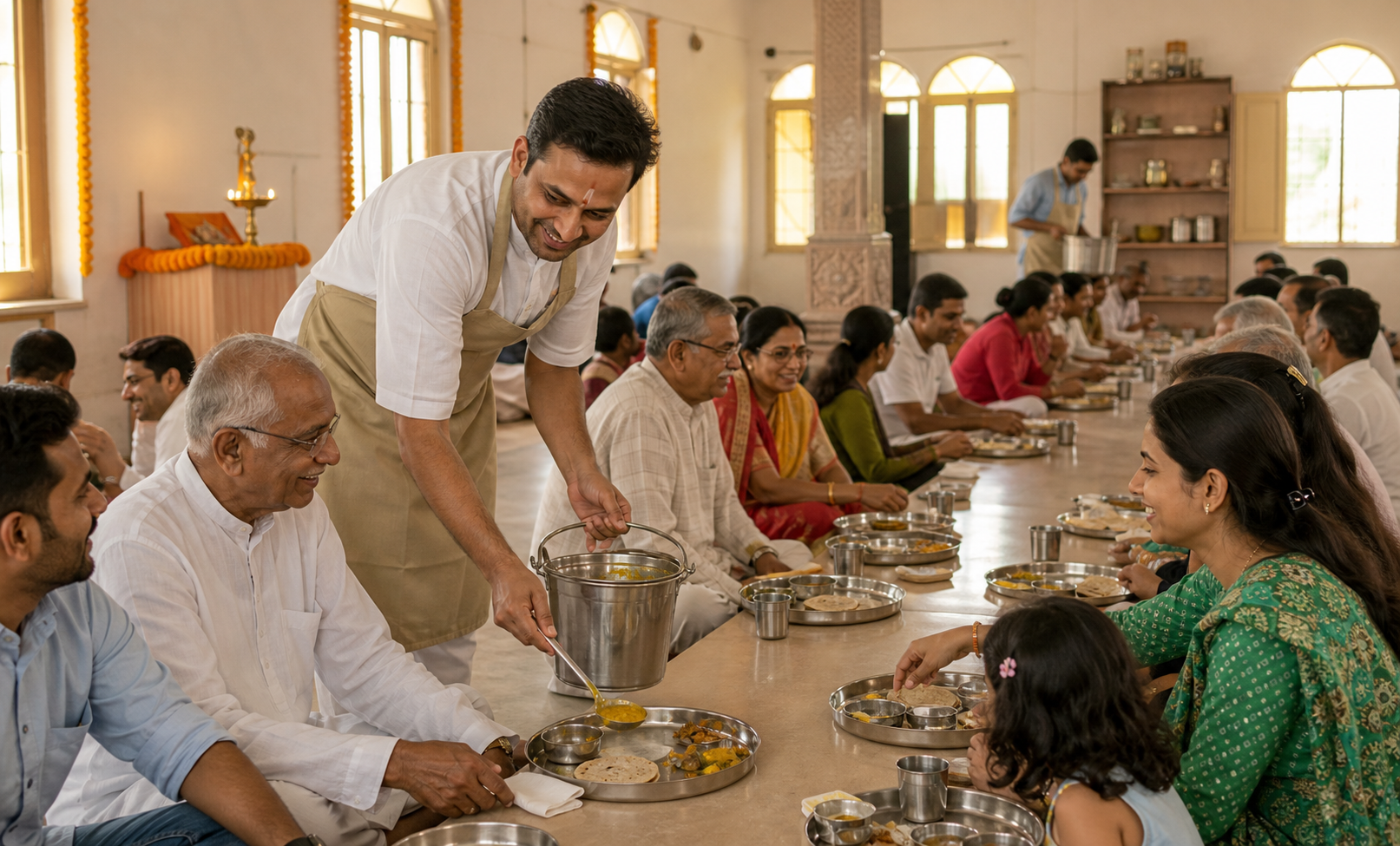
If you want to observe Jalaram Jayanti but aren’t sure what meaningful service looks like, begin with one practical question: whom can you feed with care and without distinction? The meal doesn’t need to be elaborate. It needs to be wanted, safe, and offered with dignity.
This approach turns the day from a devotional event with a charitable add-on into a disciplined practice of dharma. You can use it at home, through a mandir, with a community kitchen, or alongside an organization that already knows where food is needed.
Why the meal belongs at the centre of Jalaram Jayanti
Jalaram Jayanti commemorates Jalaram Bapa, who was born in 1799 in Virpur, near Rajkot in Gujarat. His remembered way of life joined devotion to hospitality: pilgrims and people in need were to be fed, and service was not to be restricted by social identity or religious affiliation.
That is why anna-dāna, the offering of food, is more than a customary activity on this occasion. Food answers an immediate human need. Sharing it also places giver and receiver in a direct relationship, which tests whether generosity is truly free of pride, preference, and expectation.
The observance falls on Kartik Shukla Paksha Saptami, the seventh lunar day of the bright fortnight after Diwali. Do not reuse a previous Gregorian date when planning: in 2025 it fell on October 29, but a tithi-based observance must be checked against the relevant year’s regional panchang. Local tithi timings can vary slightly, so confirm the date before announcing a puja or public meal.
Key takeaways
- Choose the people and place you intend to serve before deciding what to cook.
- Ask an established kitchen, shelter, mandir, or community group what it can actually receive and distribute.
- Keep the menu or grocery donation simple enough to handle safely from procurement through cleanup.
- Offer food without requiring worship, publicity, or gratitude in return.
- Use Jalaram Jayanti to begin a sustainable pattern of seva, not merely a larger one-day gesture.
Plan from the recipient backwards, not from the menu forwards
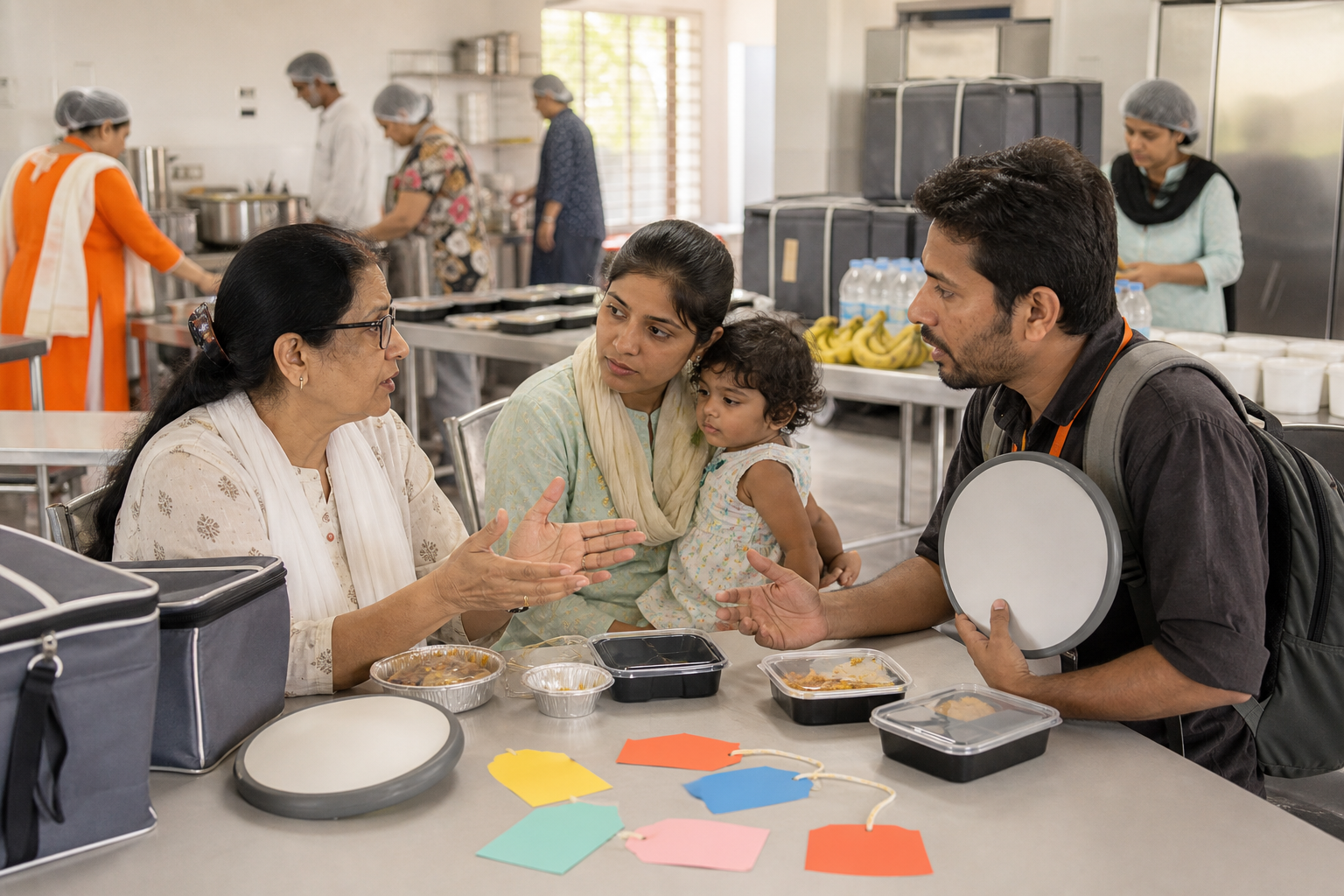
The most common planning mistake is to begin with a dish the volunteers want to prepare. That can leave you with food that is difficult to transport, unsuitable for the receiving organization, or ready at the wrong time. Begin instead with the service setting.
You have several workable forms of food-centred seva. You can volunteer in an existing community kitchen or langar, sponsor ingredients requested by an established group, distribute prepared meals through a trusted partner, assemble grocery provisions for households, or support an initiative that redirects usable food instead of wasting it. The right form is the one you can complete responsibly.
- Confirm the observance date and the partner’s schedule. A Jayanti meal only helps if the receiving site is open, staffed, and ready for it.
- Ask what is needed. Confirm whether the partner wants cooked meals, grains, fresh ingredients, packaged food, volunteers, or financial support. Also ask what it cannot accept.
- Choose a manageable commitment. Match the menu and volume to your kitchen, transport, volunteer capacity, and the partner’s ability to distribute the food promptly.
- Identify dietary information. Make ingredients and common allergens clear. If an organization has specified dietary or packaging requirements, treat them as part of the seva rather than as optional preferences.
- Assign responsibility by function. Name who will procure ingredients, supervise preparation, manage hygiene, transport the food, coordinate service, and handle cleanup. Good intentions do not replace ownership.
- Plan the final portion before cooking the first. Decide in advance how undistributed food will be handled. If safe storage and transport cannot be assured, reduce the amount or work through a kitchen equipped to manage it.
If cooking is beyond your safe capacity, do not force a cooked-meal project for the sake of appearance. Donating the grains or supplies an experienced kitchen requested can be the more useful form of anna-dāna. The purpose is nourishment, not proof of effort.
Protect dignity at every point of distribution
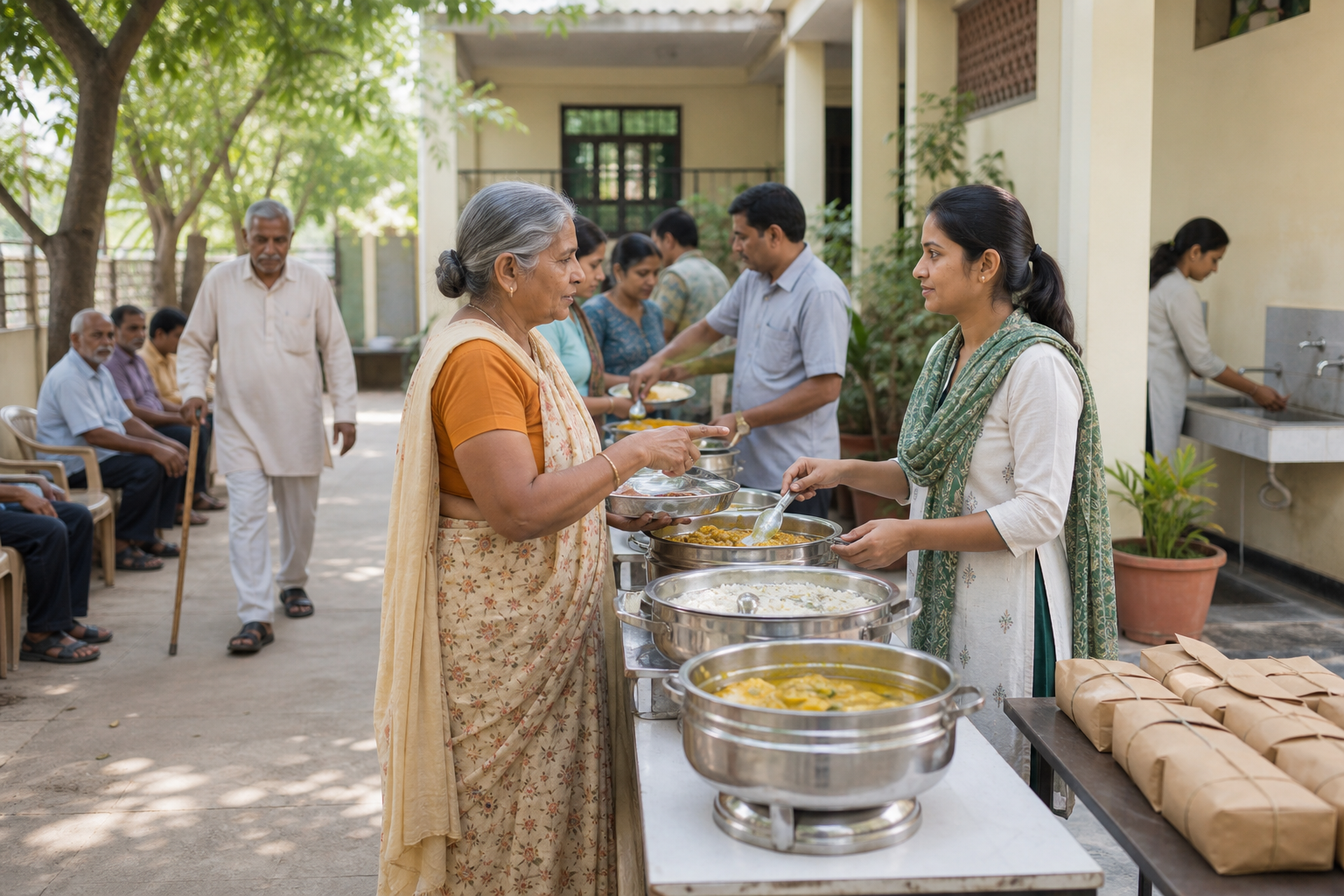
Jalaram Bapa’s example is not fulfilled merely because food changes hands. The manner of giving matters. A person should not have to perform devotion, explain hardship, display gratitude, or become promotional material in exchange for a meal.
Use one standard of welcome for everyone. Avoid separate treatment based on caste, community, occupation, appearance, or familiarity with the organizers. If prasad is being offered in a devotional setting, explain that plainly while allowing people to receive food without pressure to participate in a bhajan or ritual.
- Make the distribution point easy to identify and keep the queue orderly without speaking harshly to people.
- Arrange service so children, elders, and people with mobility limitations are not pushed to the back by a faster crowd.
- Do not photograph recipients without permission. A volunteer record can focus on the food, the team, and the work rather than on identifiable people receiving assistance.
- Give the same portion and attention consistently unless a recipient has a practical need that calls for accommodation.
- Keep drinking water, waste collection, and cleanup within the service plan instead of leaving them as someone else’s problem.
- Thank the people who receive the meal as participants in the observance. They are not props in a story about the organizers’ generosity.
This discipline also changes the inner quality of dāna. You stop measuring success by visibility and begin asking better questions: Was the food useful? Was anyone embarrassed? Did the service create avoidable waste? Would the receiving partner work with us again?
Join puja, family participation, and service into one practice
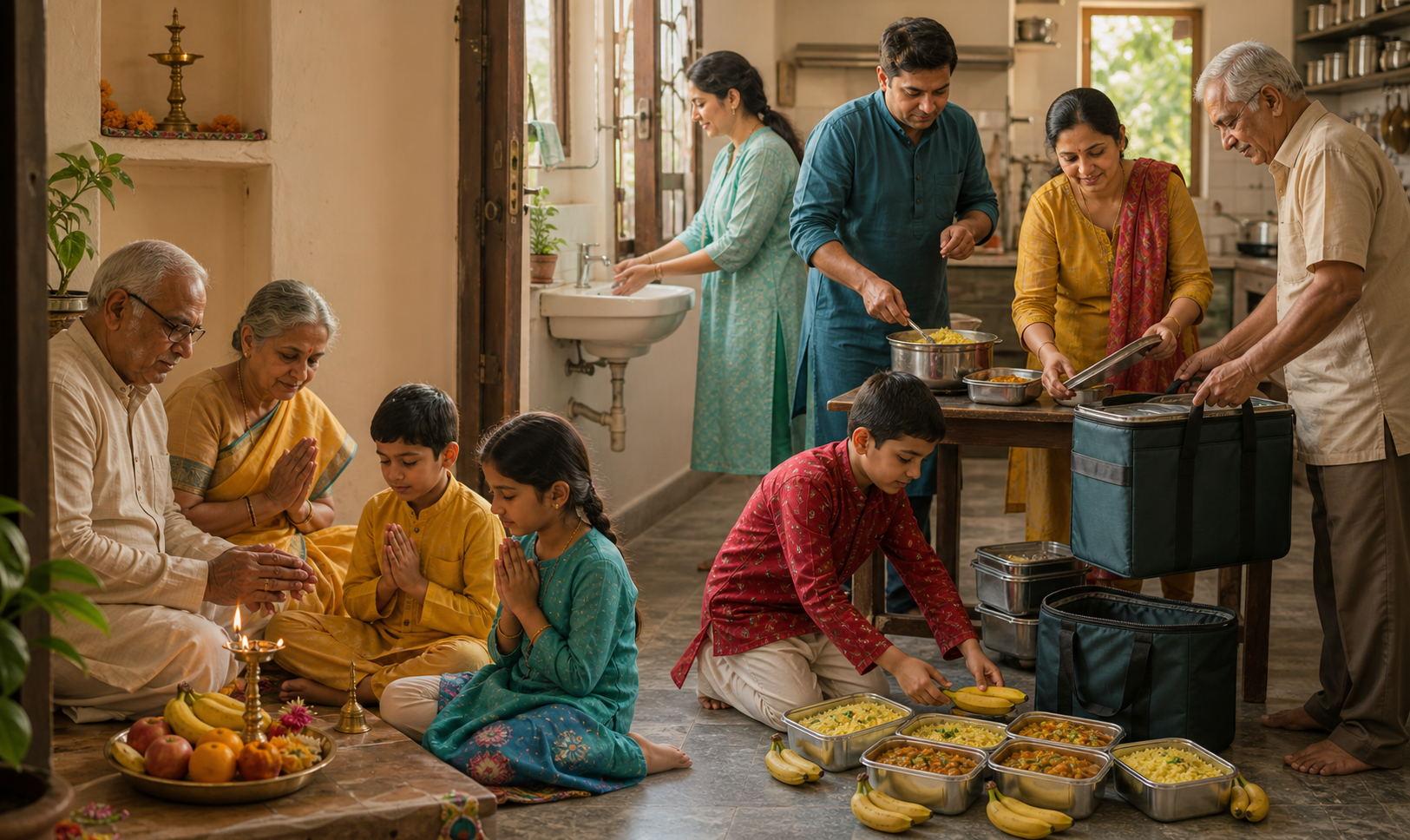
A home or community observance can include morning puja, bhajans, the recitation of “Jai Jalaram,” and a short account of Jalaram Bapa’s life. These acts give the service its devotional frame. The meal then gives that devotion a visible ethical consequence.
You do not need to manufacture a rigid universal schedule. Preserve your family’s or mandir’s established practice, then connect each element to the seva commitment. A simple sequence is enough:
- Confirm Kartik Shukla Saptami through the local panchang.
- Begin with the customary puja, remembrance, or bhajan.
- State a clear sankalpa for the service: what will be offered, through whom, and with what responsibility.
- Prepare, collect, or deliver the food according to the receiving partner’s instructions.
- Serve without distinction and complete the cleanup.
- Close by reviewing what remained, what was wasted, and what should change next time.
Children can participate without turning the day into a lecture. Give them a real, age-appropriate responsibility: checking labels, placing packaged items into bags, making a clear ingredients card, greeting guests, or helping sort recyclable waste. Keep them away from hot vessels and other tasks they cannot safely manage. Afterwards, ask what they noticed about giving food respectfully. That question teaches more than asking them to repeat a definition of seva.
The wider dharmic family offers useful points of recognition. The generosity expressed through anna-dāna resonates with dāna in Buddhist and Jain practice and with the Sikh institution of langar. These traditions should not be flattened into one practice; each has its own discipline and religious setting. Their shared insistence that ethical life must take material form, however, gives families a valuable way to discuss dharmic kinship without erasing difference.
If your observance includes Virpur
The Jalaram Mandir at Virpur is closely associated with continuing anna-dāna and draws substantial gatherings around the Jayanti. Check current temple guidance before travelling, especially if you hope to volunteer or contribute food. At the shrine, follow the service system already in place, keep passageways clear, minimize disposable waste where possible, and treat cleanliness as part of the pilgrimage rather than an inconvenience after it.
Make the next act of seva smaller and repeatable
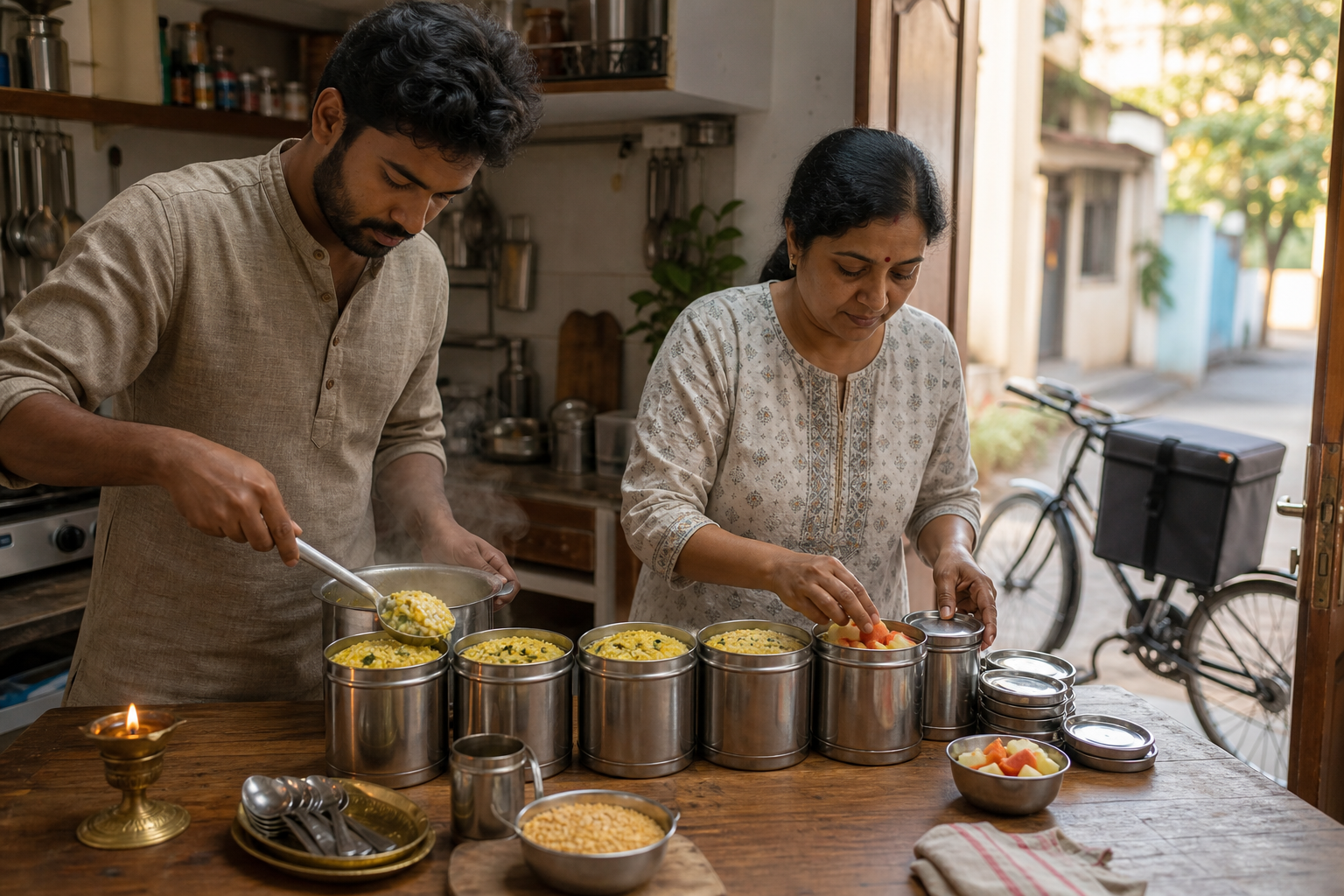
A festival can generate more enthusiasm than a volunteer team can sustain. That is not a reason to do less carefully; it is a reason to distinguish the Jayanti offering from the practice that follows it. Let the festival meal be the beginning of a relationship with a kitchen, mandir, food-recovery initiative, or neighbourhood group.
Before the team disperses, choose one repeatable next action. It might be a regular volunteer shift, a recurring contribution of requested staples, responsibility for one part of a community meal, or a household rule for redirecting usable surplus food. Record the partner’s actual needs, one coordinator’s contact details, and the improvement identified after distribution. Do not collect or publish recipients’ private information merely to demonstrate impact.
If you are planning Jalaram Jayanti now, make the first call before choosing the menu. Ask a trusted local kitchen or community organization what would help, then build the puja, procurement, volunteers, and cleanup around that answer. A meal offered well is already a complete expression of the day.
References
