
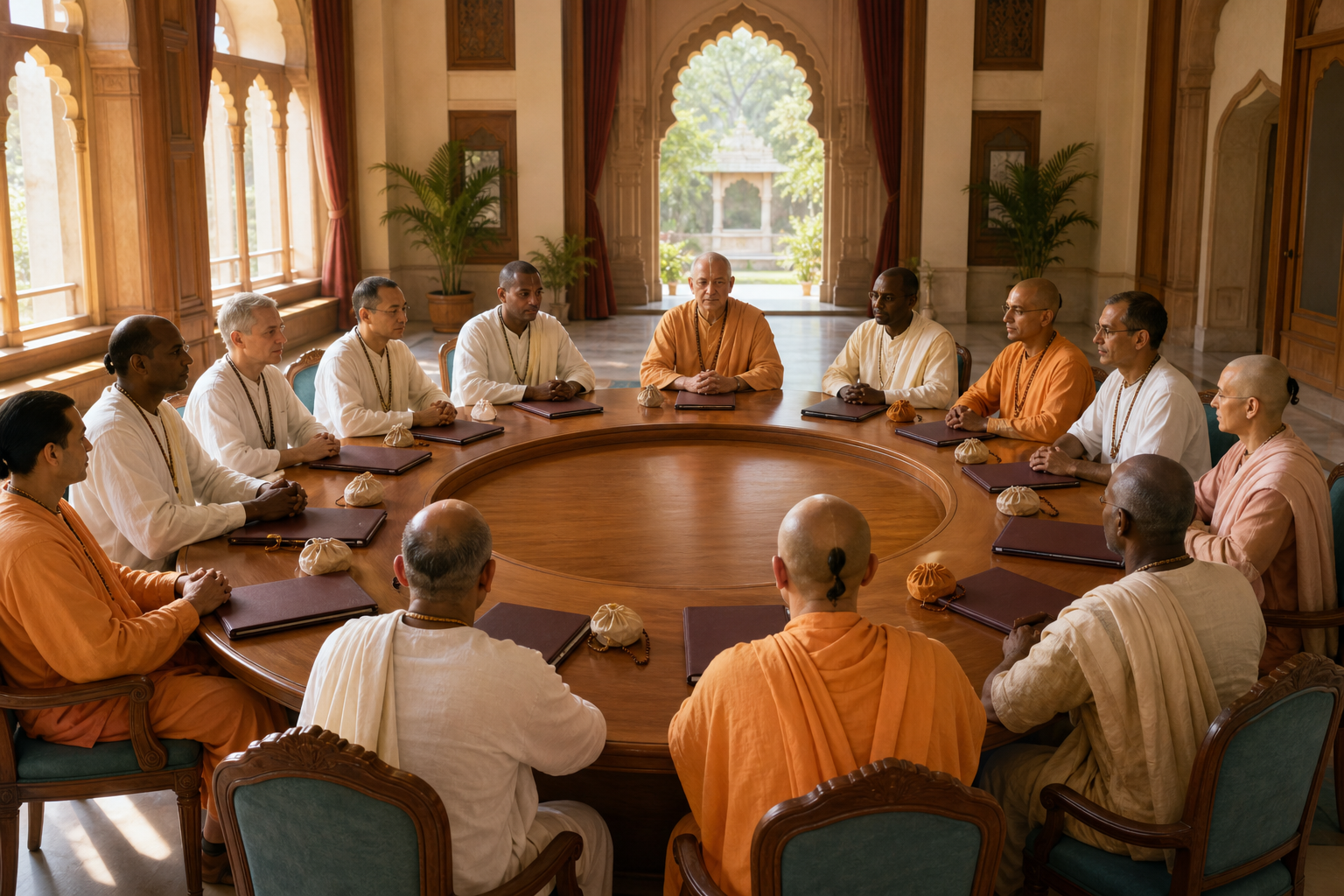
If you are trying to understand what the 2026 GBC agenda means, or why a concern from your temple has not become a governance matter, begin with one distinction: a call for proposals is not a list of policies already adopted. It is an entrance into a deliberative process.
The 2026 process set a concrete threshold: a proposal needed two GBC sponsors and submission to the GBC Secretariat by January 1, 2026. That deadline has passed, but the framework remains useful. It tells you how to distinguish a serious governance proposal from a general appeal, how to read claims about the agenda, and how to prepare a concern for a future governance cycle without assuming that its procedures or dates will be identical.
What the agenda process does and does not establish

An agenda is a docket for deliberation. It is not, by itself, a statement of settled policy. This sounds elementary, yet much confusion inside religious institutions begins when proposal, sponsorship, agenda placement, and approval are treated as if they were the same event.
When you hear that an issue is “before the GBC,” separate four questions:
- Was an idea merely circulated among devotees or leaders?
- Was a formal proposal prepared and supported by the required two GBC sponsors?
- Was that proposal actually accepted for deliberation on the relevant agenda?
- Did the GBC approve a final decision, and if so, what wording was adopted?
A yes at one level does not prove a yes at the next. Sponsorship shows that a proposal cleared an entry requirement; it does not show that every clause was endorsed or that the GBC adopted it. Agenda placement shows that a matter reached deliberation; it does not make the proposal binding.
This distinction gives you a practical test for announcements, social-media claims, and temple discussions. Ask to see the status and the exact operative wording. “A proposal seeks” and “the GBC decided” are materially different statements. If the available information establishes only the submission gateway, do not infer a final inventory of agenda items or approved resolutions.
The two-sponsor rule changes how a proposal should be built

The requirement for two GBC sponsors is more than a hunt for signatures. It creates an early test of whether the problem can be explained clearly, whether it belongs at the GBC level, and whether another leader can defend the value of deliberating it.
Approaching a potential sponsor with a broad concern such as “temple governance needs improvement” transfers all the analytical work to that person. A stronger approach is to bring a one-page brief that answers the questions a sponsor will reasonably ask:
<!– wp:list {