
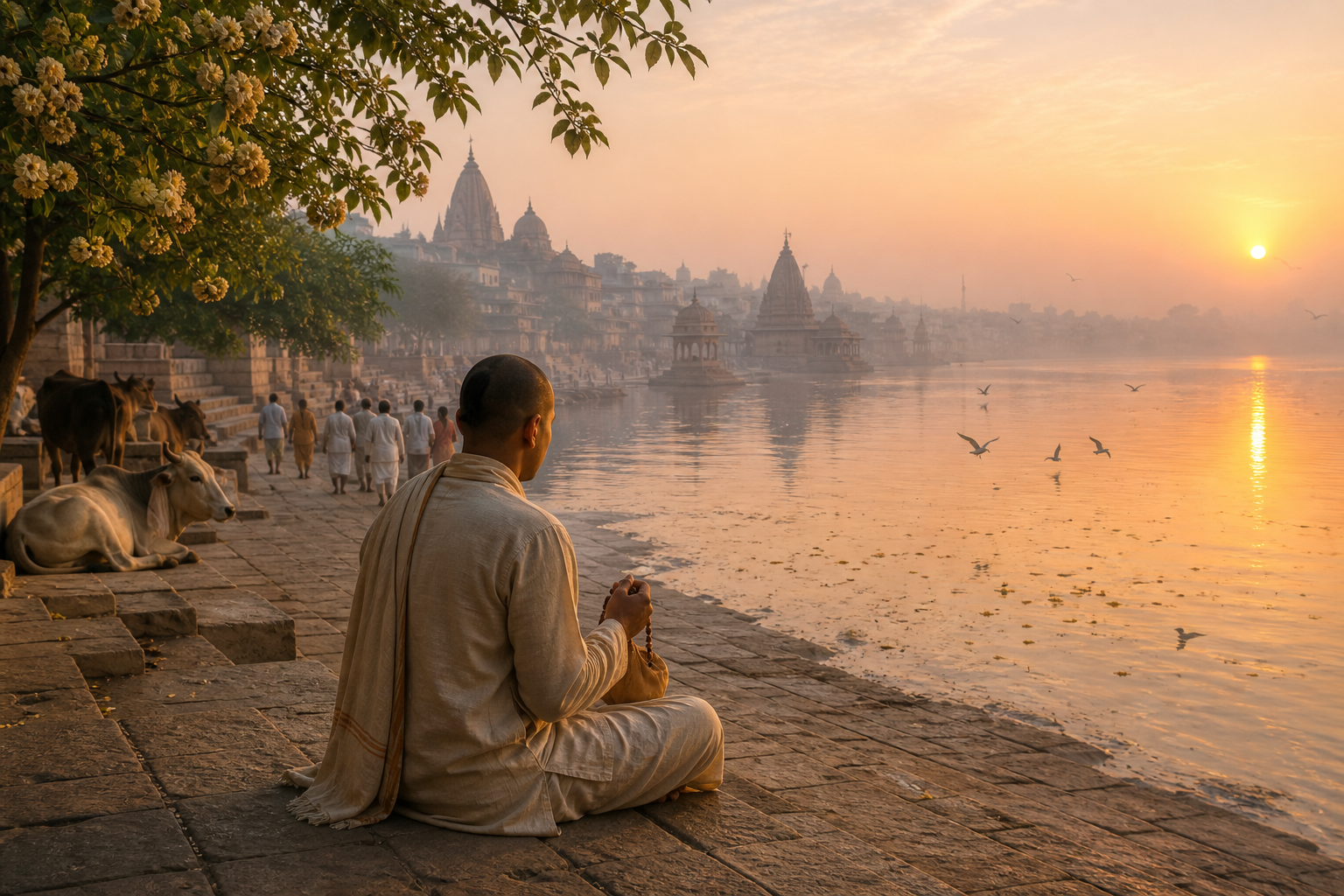
You may reach Jagannath Puri, Mayapur or Vrindavan with sincere anticipation, then discover that a pilgrimage can disappear into queues, photographs, conversations and the pressure to see everything. The question is not whether the place is sacred. It is whether you will become inwardly available to what the place asks of you.
A fruitful Gaudiya Vaishnava pilgrimage brings three things together: the memory held by the dhama, a practice appropriate to that memory, and guidance that carries the practice into ordinary life. You do not need to manufacture an extraordinary experience. You need to arrive with a clear intention, offer steady attention and leave with a commitment you can actually keep.
Begin with a sankalpa, not a longer itinerary
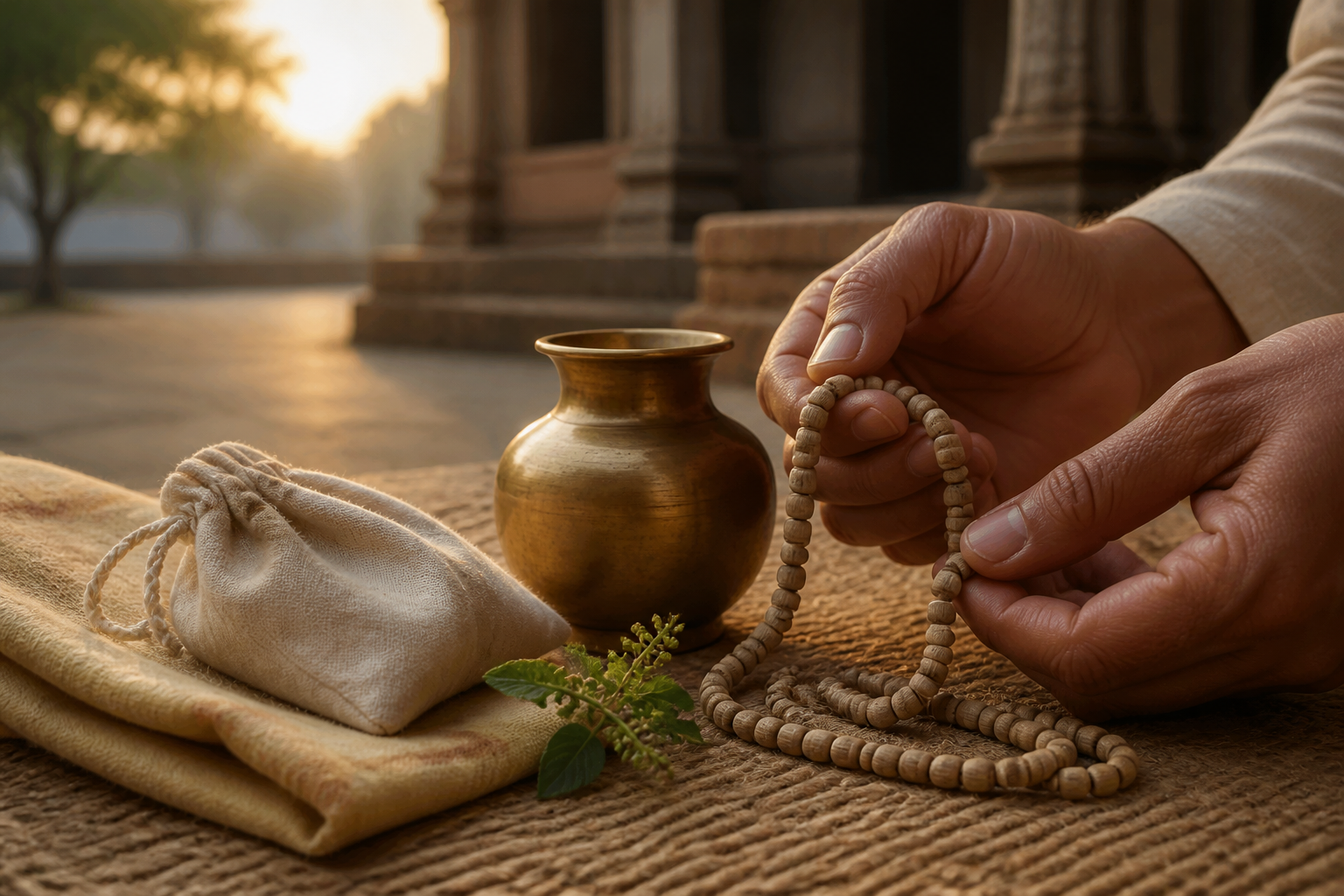
Sacred geography easily becomes religious sightseeing when every destination is treated as another item to complete. A sankalpa changes the governing question. Instead of asking, “How much can I cover?”, you ask, “What relationship am I here to deepen?” The first question produces movement. The second produces attention.
- Name the relationship. You may be approaching Krishna for remembrance, the holy name for steadiness, the guru-parampara for guidance or a Vaishnava acharya for the courage to practise faithfully.
- Choose the practice that will carry that relationship. It may be japa, kirtan, attentive hearing, prayer, lamp offering or an assigned form of seva.
- Identify the distraction most likely to take over. Decide in advance when the phone will remain away, when conversation will stop and which optional activity you are willing to miss.
- Leave space to receive the place. Do not schedule your departure so tightly that the final moments become a hurried exit.
Keep the sankalpa modest enough to govern your behaviour. “I want spiritual advancement” is too vague to shape an afternoon. “I will chant without checking my phone and listen for the instruction I need to carry home” tells you what to do when distraction arrives.
Let each sacred place teach its own mode of devotion
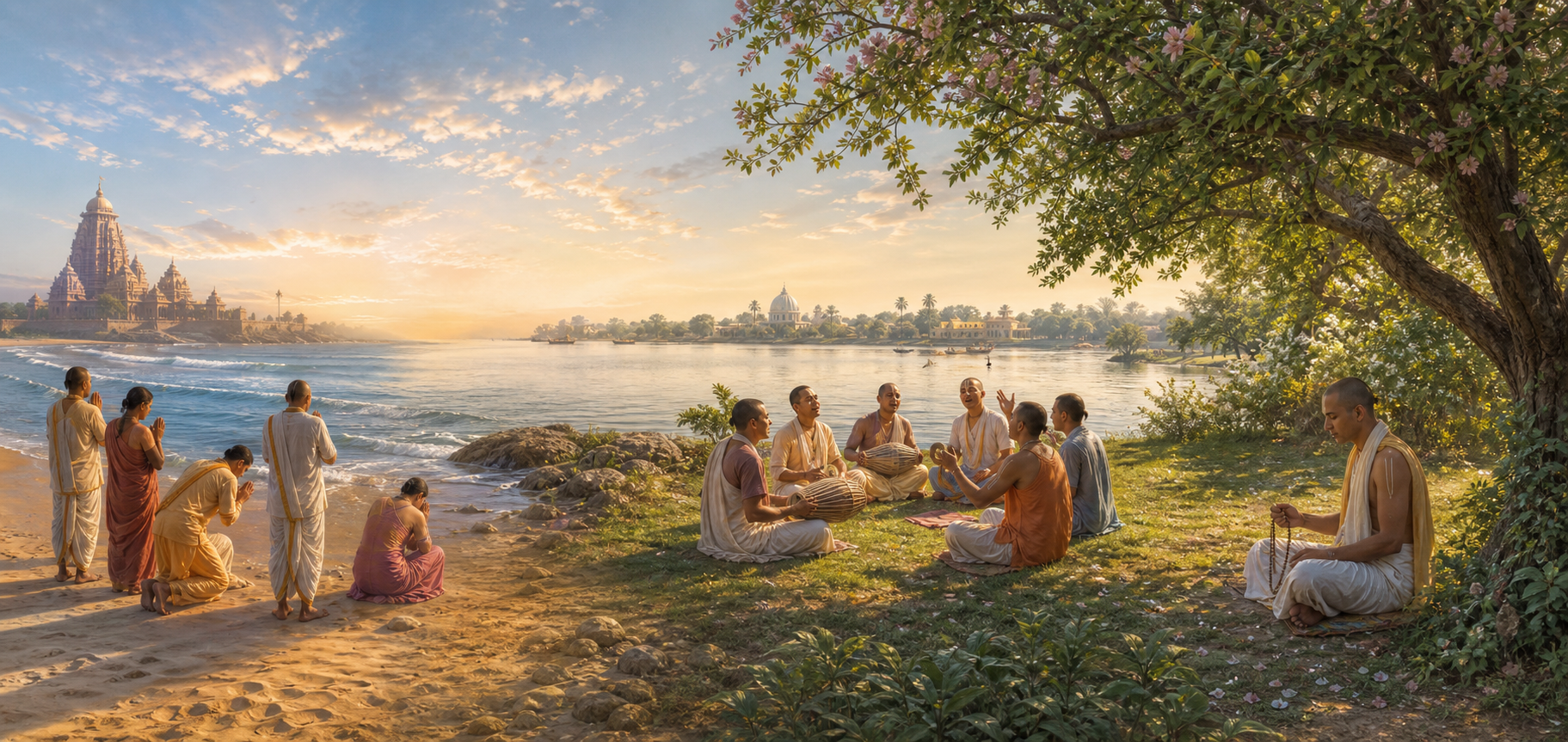
A Gaudiya pilgrimage is not made deeper by performing the same routine everywhere. Sacred places preserve particular relationships, lives and acts of surrender. Learn what is being remembered, then let that remembrance determine how you participate.
At Siddha Bakula, learn steadiness from Haridas Thakura
Beneath the venerable Bakula tree in Jagannath Puri, tradition remembers Haridas Thakura chanting 192 rounds of the holy names each day. The number is astonishing, but the central lesson is not numerical ambition. It is sustained fidelity to nama-sadhana.
If you are permitted to remain beneath or near the tree, settle before beginning japa. Let your breathing become unforced. Hear the mantra you are presently chanting rather than anticipating the next round. When the mind wanders, return without turning the lapse into a private drama. That quiet return is part of the practice.
Do not use Haridas Thakura’s discipline as a quota to imitate impulsively. A sacred exemplar reveals the direction of a life; he does not give a visitor permission to abandon proportion, guidance or existing duties. Imitate his constancy before attempting to imitate his scale. If your regular commitment is small, let Siddha Bakula make it dependable.
Katha and kirtan also belong naturally here, but they should serve remembrance rather than fill silence. Listen for what Haridas Thakura’s life exposes in your own practice: irregularity, inattentive speech, discouragement after a lapse or the habit of waiting for a better mood. Choose the obstruction you can address when you return home.
At Mayapur, let a visible offering become inward surrender
During the Damodar month of Kartik, Sri Dham Mayapur gathers devotees for deepa offerings to Lord Damodara amid kirtan and recitation of Damodara prayers. The lamps are beautiful, especially when offered collectively, but their meaning is directed and personal: light, attention and love are being offered to Sri Krishna.
Follow the sequence given by the temple sevakas and handle the flame carefully. When your turn comes, resist the urge to watch the crowd watching the ritual. Bring the mind back to the Lord before whom the lamp is moving. The external act is brief; its devotional content depends on where your attention rests.
You can also use the offering as an examination of intention. What are you asking Krishna to illuminate: a neglected duty, a concealed attachment, resentment toward another devotee or a practice that has become mechanical? Do not turn the flame into a generic symbol detached from Lord Damodara. Let its radiance reveal something specific that devotion now requires of you.
Mayapur’s collective worship also shows how tradition is transmitted. Elders guide children, devotees sing together and individual offerings enter a shared rhythm. Participate without treating other worshippers as scenery. Make room, follow directions and allow families, residents and fellow pilgrims to worship without becoming part of your photographic record.
At Vrindavan, turn reverence for guru into obedience to instruction
Guru Puja in Vrindavan directs gratitude toward the guru-parampara, but gratitude becomes spiritually formative only when teaching enters conduct. Shiksha and diksha belong to a continuum of instruction, disciplined practice and consecrated commitment. Hearing prepares you to live differently; formal commitment does not remove the need to keep hearing.
After Guru Puja or katha, identify an instruction you already understand but have postponed. It may concern daily sadhana, study, service, speech or conduct toward other devotees. Write it plainly and decide what obedience will look like in your next ordinary day. Collecting another inspiring statement is of little use if an earlier instruction remains deliberately untouched.
If you are still exploring the relationship between shiksha and diksha, let the sacred place make you patient rather than presumptuous. Ask, listen, serve and observe how instruction is lived. Formal spiritual commitments belong within a genuine relationship of guidance and accountability, not in a mood created by a single intense visit.
Practise deeply without performing spirituality
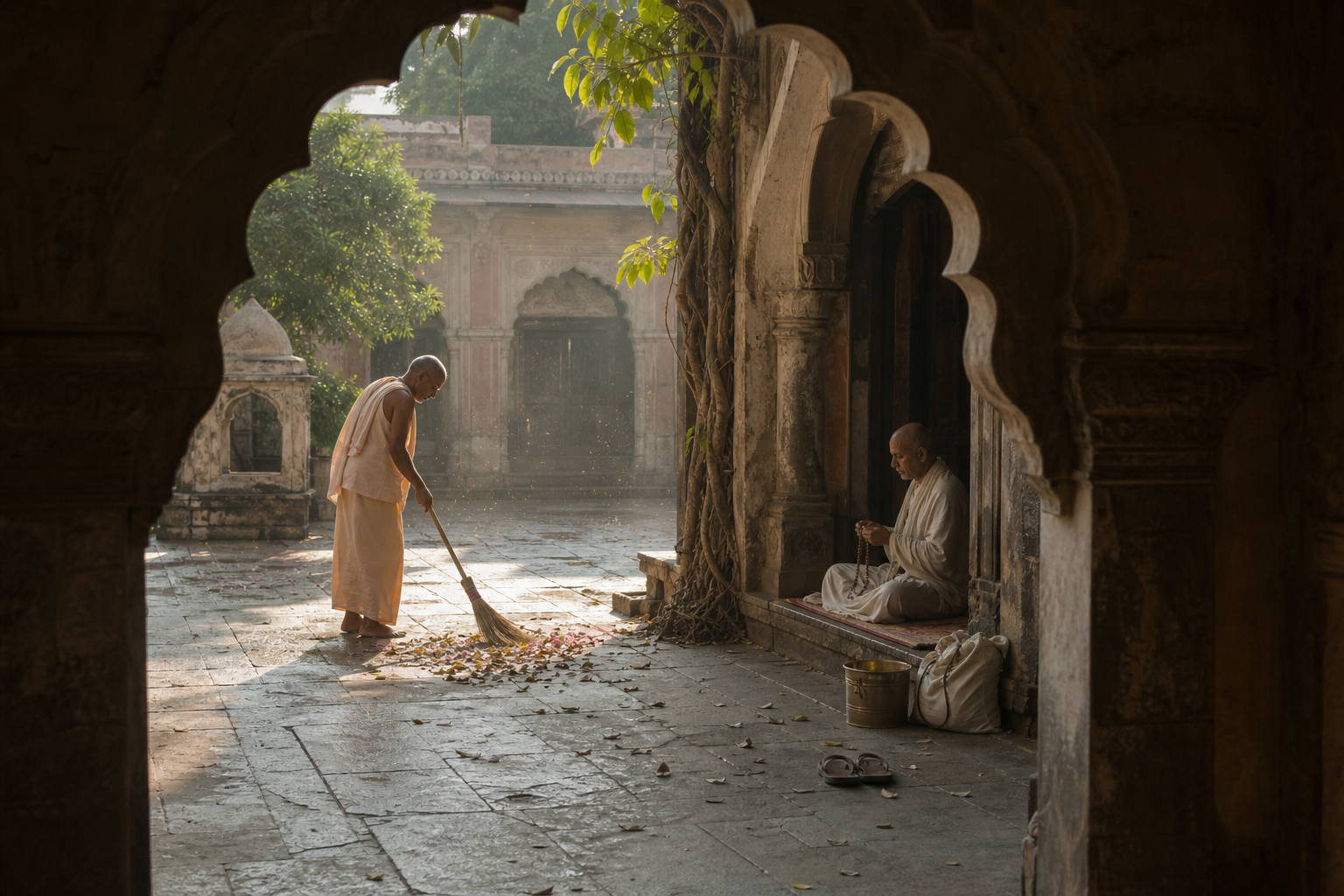
Sacred places intensify sound, beauty, memory and emotion. That can help the mind turn toward Krishna, but it can also create a borrowed sense of advancement. The safeguard is simple: protect the practice from display and test the experience by what it changes.
- In japa, hear the holy name you are chanting. Do not accelerate merely because the setting feels auspicious, and do not interrupt absorption to document it.
- In kirtan, listen before responding. Join the devotional current of the congregation instead of using volume or movement to advertise intensity.
- In katha, retain an instruction rather than a collection of memorable phrases. Ask what it corrects in your present conduct.
- In seva, accept the actual need of the place. Humble, authorized service is more useful than inventing a conspicuous role for yourself.
This also changes how you handle difficulty. A noisy mind does not mean the visit has failed. Fatigue, distraction or an underwhelming emotional response may expose how dependent your practice has become on ideal conditions. Return to the mantra, the prayer or the service in front of you. Steadiness is often learned precisely when the atmosphere does not carry you.
Respect the physical place as part of the discipline. Follow posted rules and the directions of resident sevakas. Avoid obstructing worship or damaging what others are responsible for preserving. Siddha Bakula is a living shrine, while Mayapur and Vrindavan are living devotional communities. They are not sets arranged for a visitor’s private experience.
Let guru, sadhu and seva correct private religion
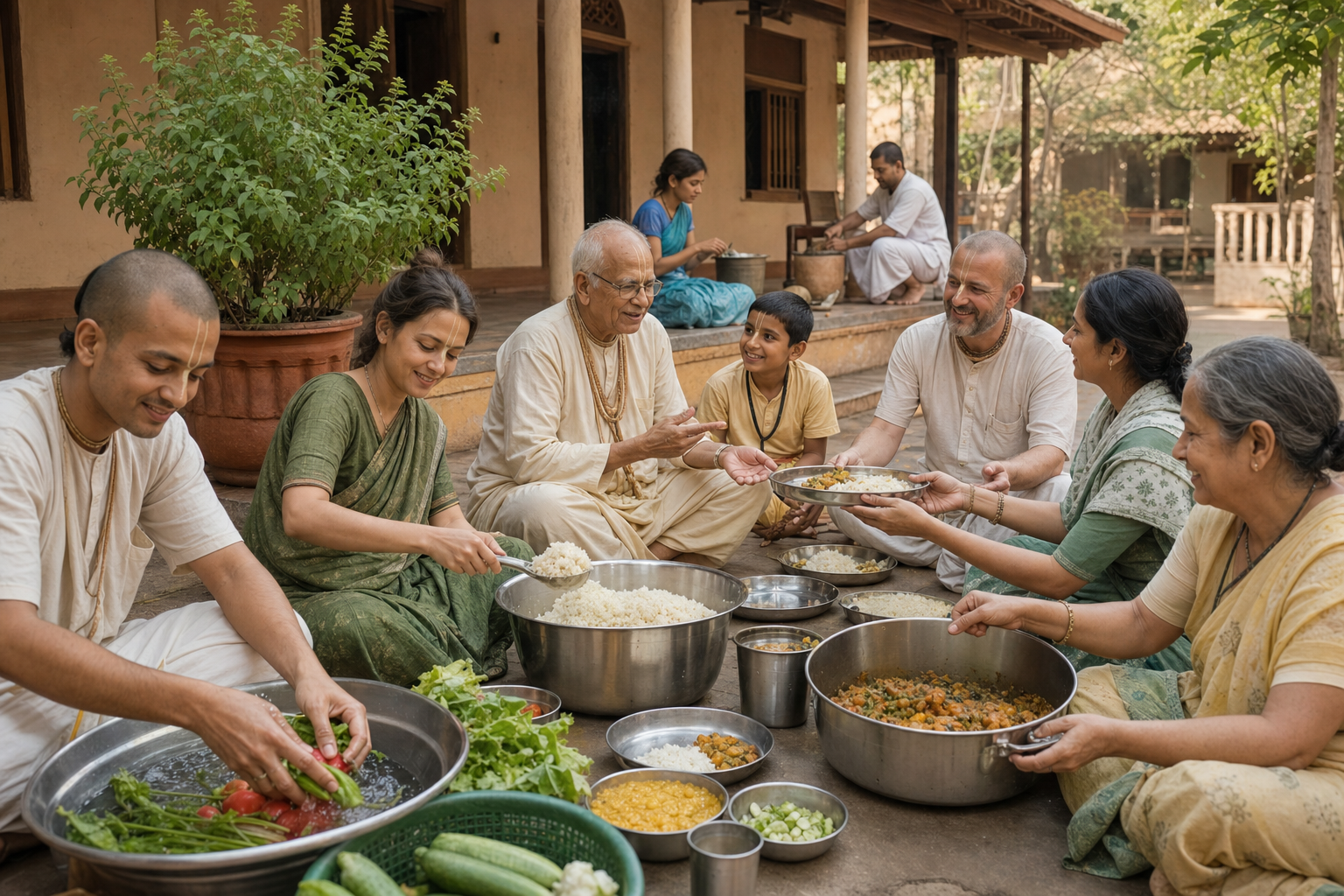
An inward experience can be sincere and still be misread. Sacred company gives it a test. The guru offers instruction, sadhus show how teaching is embodied, and seva reveals whether devotion survives inconvenience. Together they prevent pilgrimage from becoming a form of self-authorization.
When you can seek qualified guidance, ask practical questions rather than requesting a verdict on how advanced you are:
- Is the practice I want to adopt suitable for my present responsibilities and level of steadiness?
- What should consistency look like when enthusiasm falls?
- If I break the commitment, how should I resume it without either excuses or despair?
- Which form of study or seva will keep this practice connected to the wider path of bhakti?
Good guidance moves from inspiration to implementation: hear, practise, receive correction and deepen commitment. That movement also gives guru-puja its moral seriousness. Reverence is not confined to flowers, song or ceremony. It appears in the willingness to be taught and changed.
The same seriousness should shape our relationship with the wider dharmic family. Hindu, Buddhist, Jain and Sikh traditions each honour disciplined contemplation, ethical conduct, compassionate service and guiding teachers in their own ways. Those resonances invite respect; they do not make the traditions interchangeable. A Gaudiya Vaishnava can recognise shared dharmic values without diluting devotion to Krishna or borrowing practices without understanding their lineage.
Test the fruit in conduct. Are you more truthful after chanting, more patient after kirtan, more teachable after Guru Puja and more considerate after joining collective worship? If sacred feeling never reaches speech, duty or relationships, it remains incomplete.
Key takeaways: carry the dhama into your daily rule of life
- Enter with a specific sankalpa that names the relationship and practice you want to deepen.
- Let the place choose the emphasis: steady nama-sadhana at Siddha Bakula, directed offering in Mayapur and accountable instruction in Vrindavan.
- Imitate the fidelity of great devotees before attempting to imitate the scale of their austerity.
- Protect japa, kirtan, katha and seva from distraction, display and the pressure to manufacture an emotion.
- Seek guidance that fits devotional enthusiasm to your responsibilities and turns inspiration into sustainable practice.
- Judge the pilgrimage by the habit and conduct that survive after you return home.
Before your next visit, write a compact sankalpa naming the relationship you seek, the practice you will offer and the habit you intend to bring home. Make that home practice concrete by attaching it to a normal daily cue: chant before opening messages, read before beginning entertainment or offer a prayer before the household settles into sleep.
Then perform the practice on the first ordinary day after your return, before deciding what the pilgrimage meant. A sacred place has begun to do its work when its remembrance quietly reorders an ordinary morning.
References
- Dandavats — Under Siddha Bakula’s Canopy: Tracing Haridas Thakura’s 192 Rounds in Jagannath Puri
- Dandavats — Kartik Deep Daan in Sri Dham Mayapur: Luminous Devotion and Dharmic Unity on Day 25
- Dandavats — Timeless Guru Puja at ISKCON Vrindavan: Diksha–Shiksha Wisdom with H.G. Mukunda Datta Prabhu
