
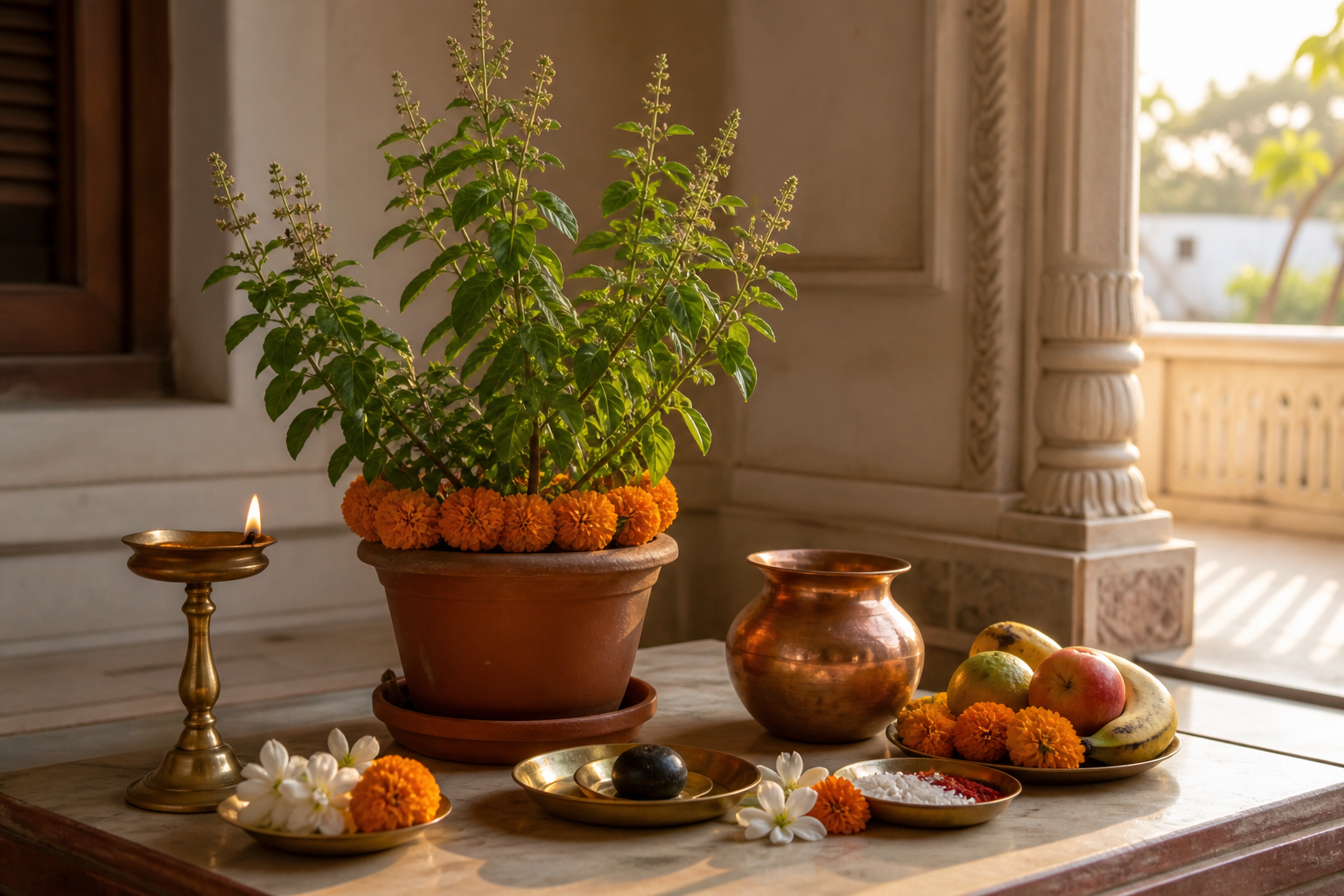
You want to honor Tulsi and Vishnu at home, but the details can quickly become confusing. Is this a regular puja or a wedding ceremony? Must you have a Shaligram? Should you observe Ekadashi or Dwadashi? How elaborate does the altar need to be?
Begin with one decision: choose the observance you can perform attentively and sustain afterward. Tulsi-Shaligram worship is not measured by the cost of the decorations. Its measure is whether devotion, household responsibility, and care for a living Tulsi plant remain connected.
First decide whether you are holding a puja or Tulsi Vivah
Regular Tulsi-Shaligram puja and the annual Tulsi Vivah belong to the same devotional world, but they are not identical. Making this distinction before you gather supplies prevents most of the uncertainty.
| Question | Regular Tulsi-Shaligram puja | Tulsi Vivah |
|---|---|---|
| What is being observed? | Ongoing household worship of Tulsi and Vishnu | The sacred union of Tulsi as the bride and Shaligram or Sri Krishna as the groom |
| When is it performed? | According to the household’s established devotional rhythm | During Kartik Shukla Paksha, commonly on Prabodhini Ekadashi or the following Dwadashi, depending on parampara |
| What is the basic form? | Sankalpa, offerings, prayer, parikrama, aarti, and prasad | The basic worship extended with bridal adornment, marriage symbolism, family participation, and bhajans |
| What should receive the most attention? | Regularity, reverence, and daily care | The sanctification of household life, relationships, and shared responsibilities |
Prabodhini Ekadashi and Dwadashi are both established dates for Tulsi Vivah. Some community observances continue toward Kartik Purnima. This is a matter of regional and family tradition, not evidence that one household must be correcting another.
Before inviting relatives or announcing a date, confirm which day your family, temple, or sampradaya follows. Use the Hindu calendar trusted by that community for the relevant year and location. A generic date detached from local tithi observance is less useful than a consistent parampara.
The date carries a wider ritual meaning. Tulsi Vivah marks the close of Chaturmas and the opening of the auspicious wedding season. It therefore stands at a threshold: disciplined withdrawal gives way to renewed household and community activity.
The identities of the sacred pair should also shape your sankalpa. Tulsi is revered as Lakshmi or Vrinda, while the Shaligram from the Gandaki River is honored as a manifestation of Vishnu. In Tulsi Vivah, a murti of Sri Krishna may serve as the groom where that is the household practice.
This is more than a decorative imitation of a human wedding. It places the principles of Lakshmi and Vishnu within grihastha life. Prosperity is joined to right conduct. Affection is joined to fidelity. Devotion is joined to the work of caring for people, obligations, and the natural world.
Puranic tellings about Vrinda, Jalandhar, Vishnu, and the emergence of Tulsi and Shaligram contain real moral complexity. Their details vary among texts and regions. If you narrate the story to children, do not force every version into one seamless plot. Explain the stable teaching instead: steadfast devotion needs moral discernment, and sacred remembrance can restore direction after rupture and grief.
Build an altar that supports worship rather than display
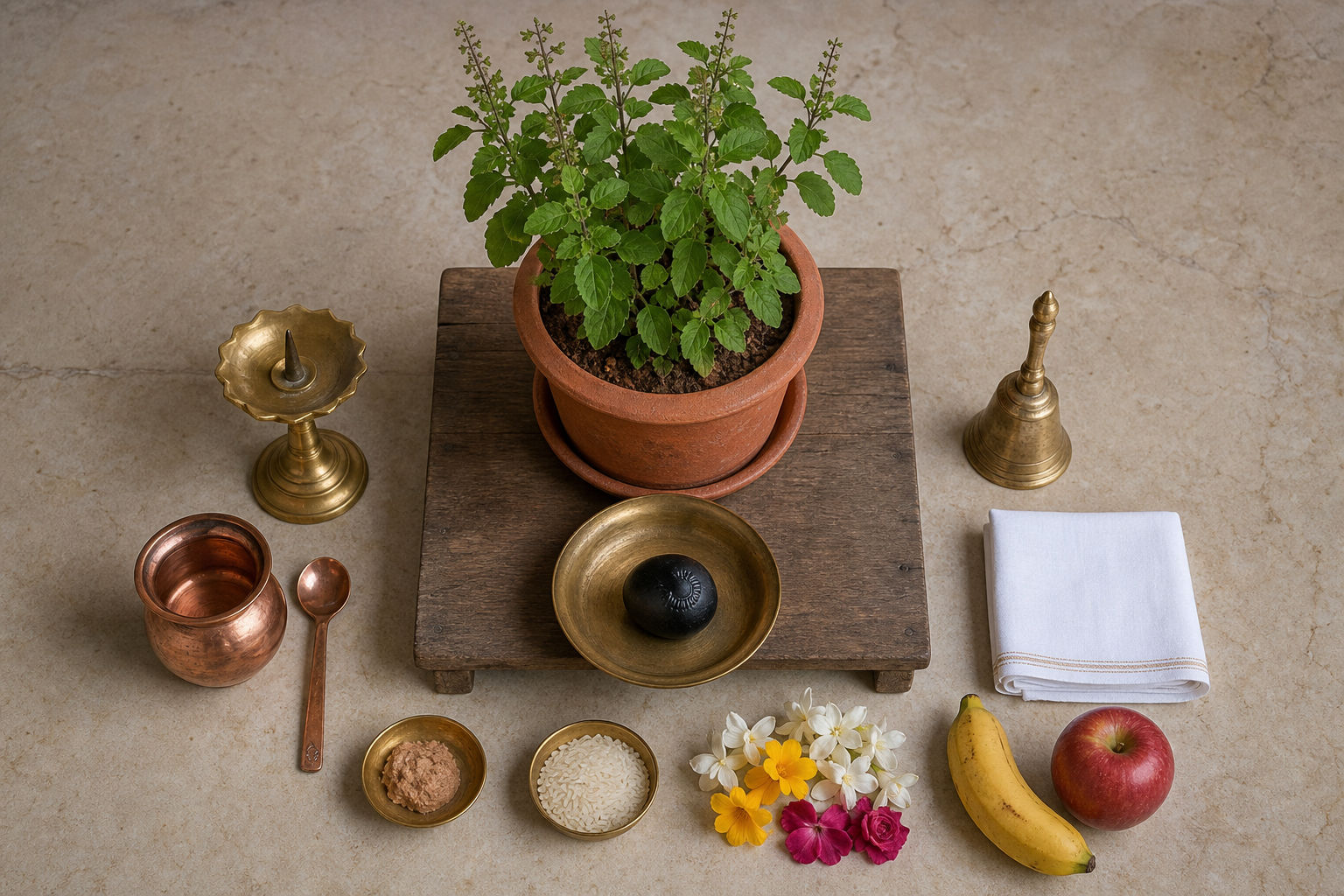
A workable home altar begins with cleanliness, stability, and enough room to complete the offerings without moving objects constantly. Prepare it before the puja so that the family can remain attentive once the sankalpa has been taken.
- A healthy Tulsi plant in a clean, stable planter or Tulsi pedestal
- A Shaligram already worshipped by the household, or a murti of Sri Krishna where that is your practice
- A clean altar, platform, or tray for the groom
- Clean water and a small vessel for offering it
- Gandha, akshata, and flowers
- Dhupa and a diya for fragrance and light
- Naivedya appropriate to your household custom
- Tulsi leaves to offer respectfully to Vishnu
- The stotra, Vishnu Sahasranama, bhajan, or aarti your family will recite
- A clean plate or bowl for receiving and distributing prasad
For Tulsi Vivah, optional wedding adornments can include a small sari or cloth, bangles, kumkum, flowers, a miniature mandap, or a small swing for the groom. Attach decorations to the planter, railing, or supporting structure wherever possible. Cloth and jewelry should not bend the stem, crush branches, or remain wrapped around damp foliage.
If your household does not already worship a Shaligram, you need not treat the ceremony as invalid. Sri Krishna may be honored as the groom in this household form. If a Shaligram is present, follow the handling, bathing, and offering rules received through your family or sampradaya rather than improvising from an unfamiliar ritual script.
Keep the diya on a stable, heat-resistant surface, away from the Tulsi leaves, loose fabric, garlands, and children’s reach. Do not leave the flame unattended. The beauty of the altar should never make the living plant or the household less safe.
Use a simple sequence that your family can complete attentively
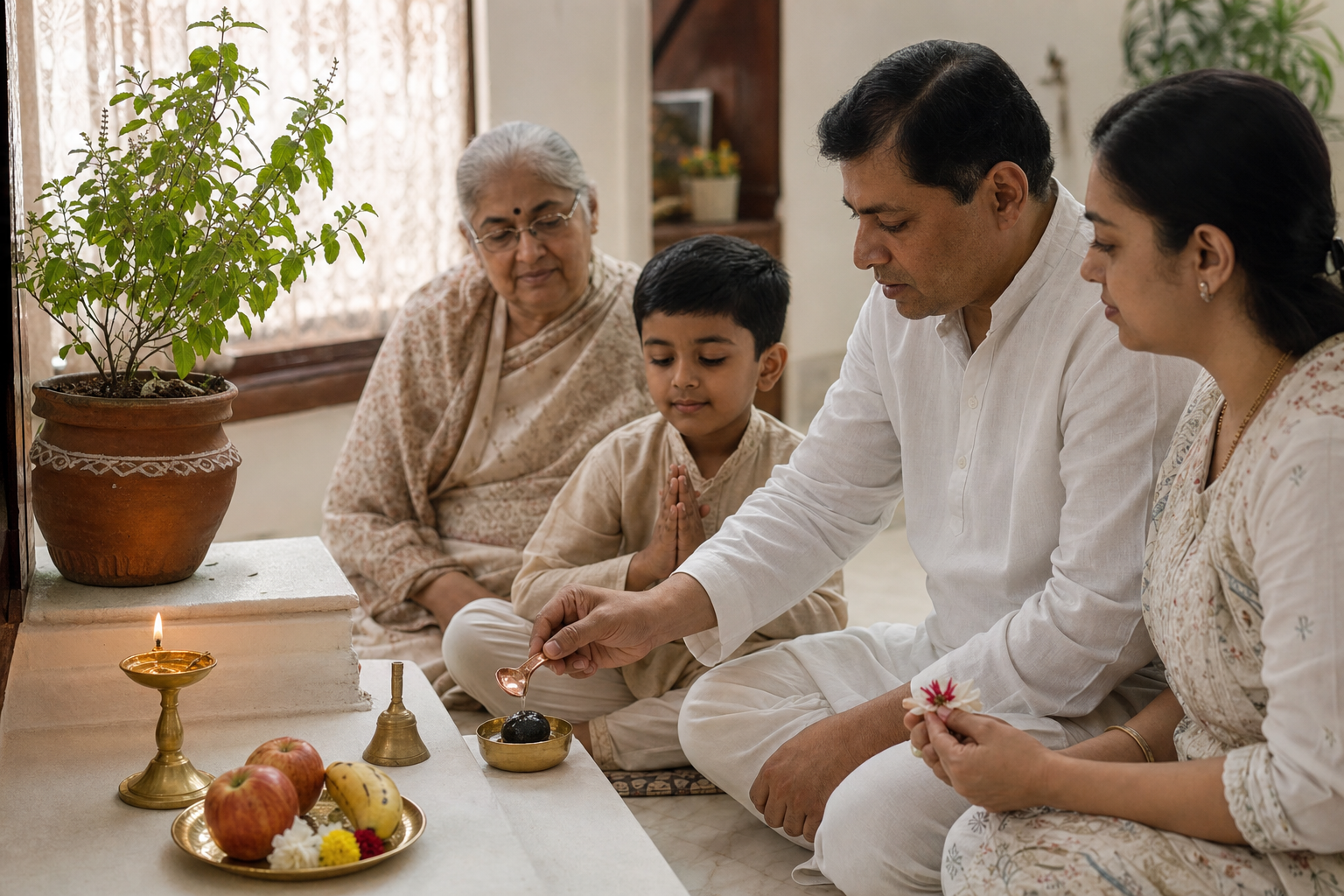
A household puja does not become more meaningful merely because its sequence is longer. Panchopachara and Shodashopachara represent shorter and fuller modes of honoring the deity, and their precise implementation can follow sampradaya. Choose one coherent form. Do not combine fragments from several traditions just to make the ceremony appear elaborate.
The following order gives a family a clear, manageable framework while leaving room for inherited mantras and regional customs:
- Clean and settle the space. Place Tulsi and the Shaligram or Sri Krishna murti securely, arrange the offerings, and quiet the room before beginning.
- Take a sankalpa. Name the observance and hold a specific intention: devotion to Vishnu and Lakshmi, harmony in the household, ethical prosperity, or the strength to fulfill family responsibilities well.
- Offer pranam and invite the sacred presence of Vishnu and Lakshmi. Use the invocation known in your household rather than rushing through words no one understands.
- Present clean water in the manner permitted by your tradition. If your Shaligram worship has an established abhisheka procedure, retain that procedure.
- Offer gandha, akshata, and flowers with attention. Each item should be presented as an act of welcome, not placed mechanically to finish a checklist.
- Offer dhupa and deepa. Let the fragrance and light mark the shift from ordinary household activity to worship.
- Offer Tulsi leaves respectfully to Vishnu. This expresses the intimate devotional relationship embodied by Tulsi and Shaligram.
- Present naivedya and pause before moving on. The offering should precede its later distribution as prasad.
- Recite Vishnu Sahasranama, a familiar regional stotra, or devotional bhajans. A shorter prayer recited with understanding is preferable to an ambitious text abandoned midway.
- Perform parikrama around Tulsi where space and ability permit, conclude with aarti, offer pranam, and share the prasad with everyone present.
This sequence preserves the central pattern of sankalpa, purification, offerings, Tulsi, recitation, circumambulation, aarti, and prasad. It is a practical household framework, not a replacement for a detailed paddhati transmitted by your family, guru, or temple.
How to extend the puja into Tulsi Vivah
For the annual Vivah, retain the core worship and add the wedding elements in the form recognized by your parampara:
- Adorn Tulsi as the bride with cloth, flowers, kumkum, and other customary ornaments without injuring the plant.
- Place the Shaligram or Sri Krishna murti as the groom on a decorated altar or small swing.
- Welcome the sacred pair with the prayers and songs used in your household.
- Perform the symbolic kanyadaan if it belongs to your family tradition.
- Complete the customary circumambulation while family members sing bhajans or recite the known marriage prayers.
- Conclude with aarti, pranam, and the sharing of prasad.
If the household knows the relevant Vedic or regional marriage mantras, use them carefully. If it does not, do not let pressure to stage a complete wedding turn unverified pronunciation into the center of the observance. Retain the prayers you know and seek the remaining details from a trusted elder, acharya, or temple before the next celebration.
Give each family member a real role. One person can tend the diya, another can lead the recitation, children can place flowers, and an elder can explain the meaning of Vrinda and Vishnu. Explain the symbolism before the ceremony begins so that younger participants understand why Tulsi is being dressed, why the groom is welcomed, and why prasad is shared.
Carry the sacred union into the days after the ceremony
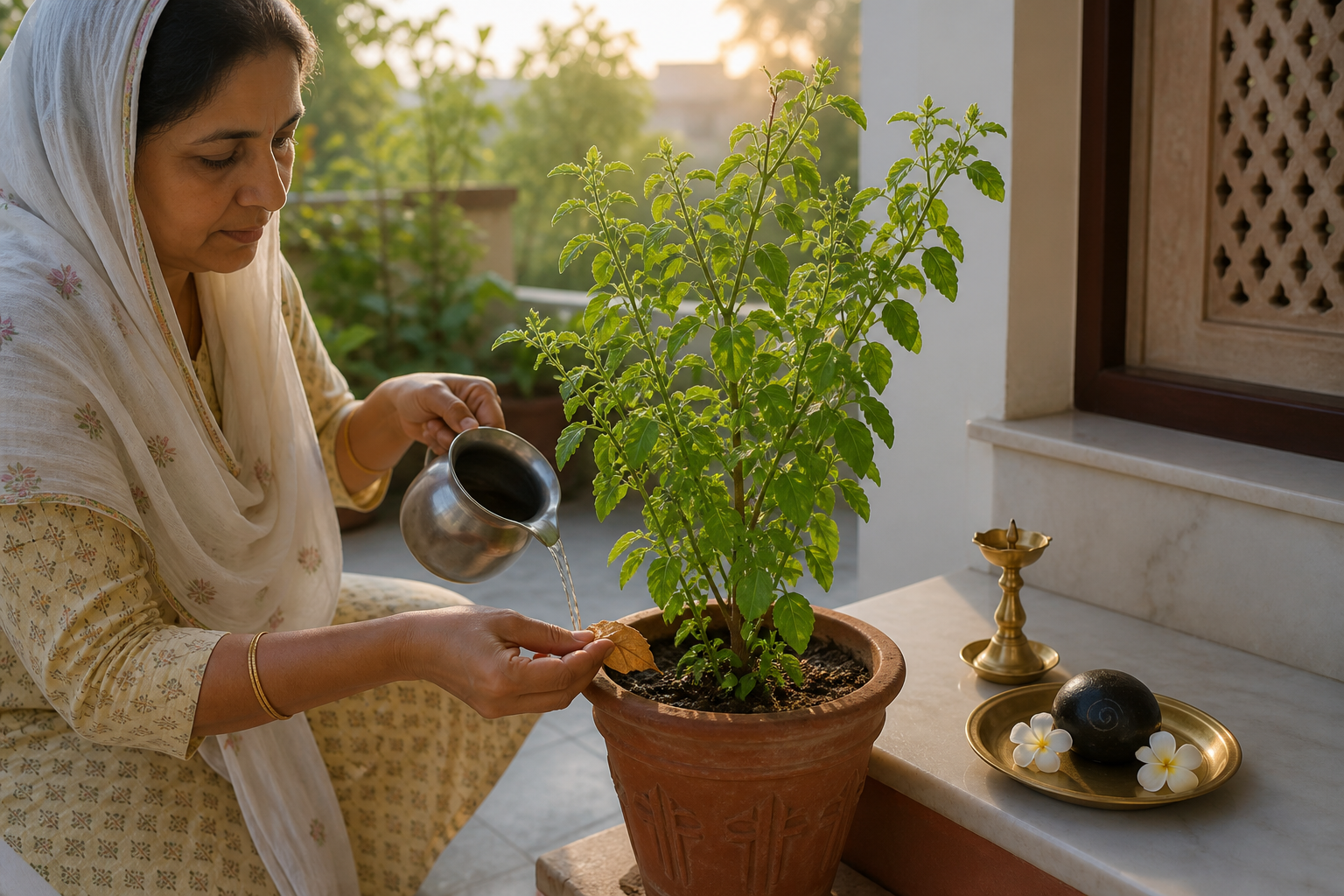
The condition of the Tulsi plant after the decorations come down is part of the worship. Remove cloth and ornaments that could trap moisture or strain the branches. Water and prune according to the plant’s actual condition and local climate; reverence does not require a fixed watering quota that ignores the soil, season, and growing environment.
A brief daily pranam or parikrama can keep the relationship alive without recreating the entire Vivah. Assign responsibility for watering, checking the leaves, cleaning the surrounding space, and safely lighting the lamp. If everyone reveres Tulsi but assumes someone else will provide the care, the ritual’s teaching about household duty has been missed.
Where Tulsi grows outdoors and flowers, its presence can support pollinators. More broadly, caring for a living plant places ecological responsibility inside the rhythm of worship. Nature is not treated as scenery around the altar; living nature is present at the altar and responds visibly to attention or neglect.
Carry the same test into household conduct. If you invoke Lakshmi for wellbeing and prosperity, pair the prayer with honest earning, responsible spending, generosity, and care for dependents. If you ask for harmony, identify one neglected conversation or obligation that requires repair. If you honor Vishnu as the sustaining principle, sustain something entrusted to you.
The observance can also become a cultural classroom, especially in diaspora homes. Let younger family members hear the story in a language they understand, then invite them into the Sanskrit or regional-language prayers. Sing together, share prasad with neighbors, and allow elders to explain which parts of the ceremony came through the family’s own region or sampradaya. That combination transmits both belonging and respect for Hindu diversity.
Tulsi-Shaligram worship remains a distinctively Hindu and Vaishnava sacred form, yet its discipline of care resonates across the wider dharmic family. Ahimsa toward living beings, mindfulness of interdependence, and seva through responsible action are deeply recognizable to Jain, Buddhist, and Sikh traditions. Recognizing that resonance need not erase the theological differences that give each tradition its integrity.
Four practical questions before you begin
Which day should we choose if calendars or relatives disagree?
Follow the calendar and parampara of the family or temple conducting the observance. Prabodhini Ekadashi and the following Dwadashi are both recognized, while some community festivities continue toward Kartik Purnima. Decide before sending invitations and explain the family custom without declaring other regional practices incorrect.
Is a Shaligram mandatory for Tulsi Vivah?
A Shaligram is the traditional manifestation of Vishnu in the sacred pairing, but Sri Krishna may also be honored as the groom. Use the form established in your household. Do not acquire or handle a sacred Shaligram casually merely because you believe the wedding cannot proceed without one.
What if we cannot perform an elaborate wedding ceremony?
Use a consistent, respectful household form: prepare a clean altar, take sankalpa, offer water and the available upacharas, recite a known prayer, perform aarti, and share prasad. Add wedding adornment, kanyadaan, and marriage mantras only to the extent that your parampara and knowledge support them. Simplicity is different from carelessness.
How should we explain the Vrinda narrative to children?
Tell them that Puranic and regional versions differ, then keep the discussion focused on devotion, moral discernment, broken trust, responsibility, and restoration through sacred remembrance. Invite questions instead of using the story as a flat lesson in obedience. Its value lies partly in helping a family think about what fidelity to dharma requires when duties become morally difficult.
Your next step is small and concrete: confirm the Kartik date followed by your household, choose the simple or extended form, and assign responsibility for Tulsi’s care after the gathering. When the plant is still being tended and the household intention is still being practiced a week later, the sacred union has moved beyond ceremony.
References
