
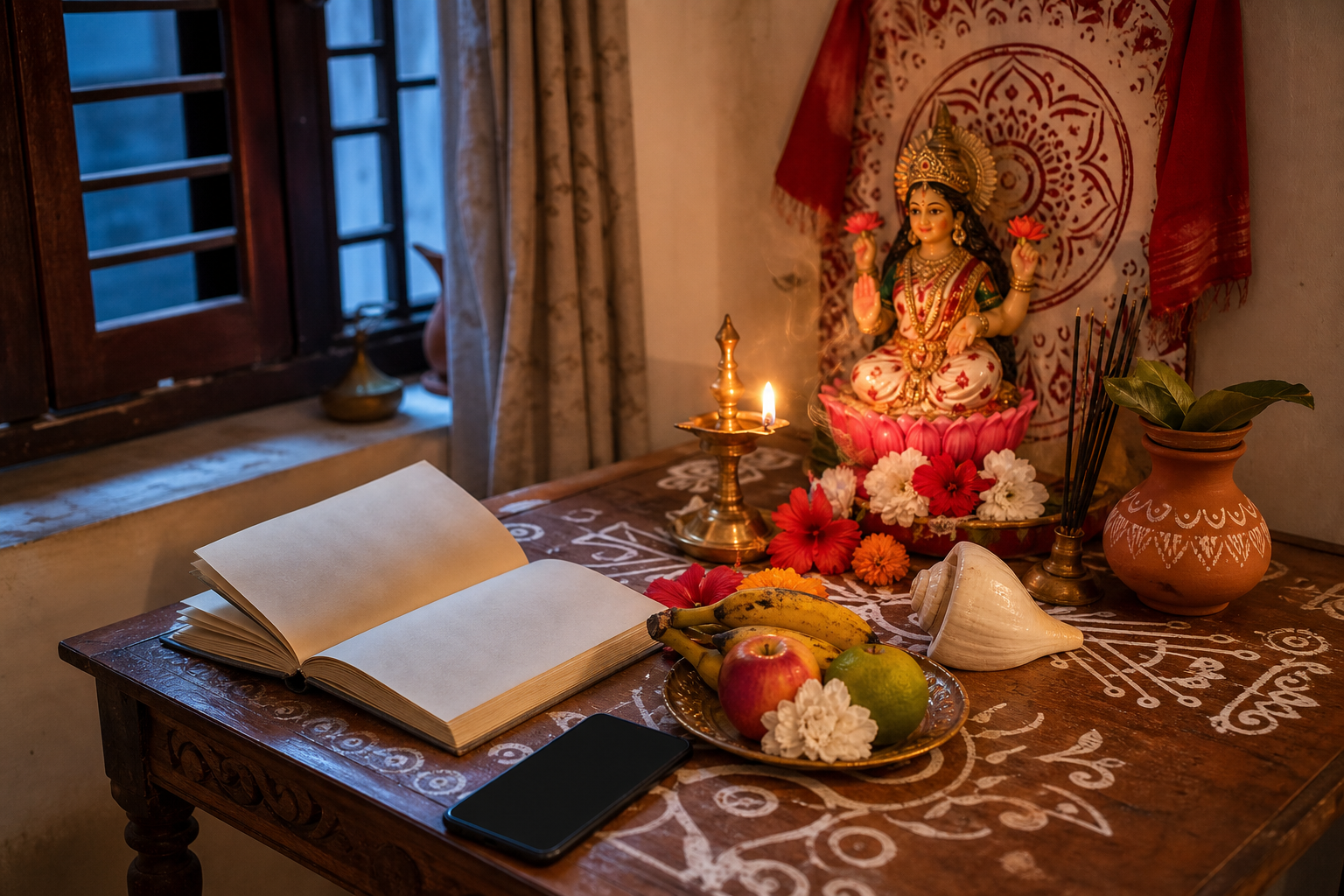
It is Thursday, the altar is ready, and then the Panchang seems to complicate what should have been a simple household puja. A tithi changes partway through the day, two apps show different times, or a relative insists that the family has always followed another rule. You are left wondering whether to proceed, postpone, or start calculating.
The practical answer is to separate two things that often get mixed together: the recurring rhythm of household worship and the precise timing of a tithi-bound observance. Once you know which one governs the puja in front of you, the Panchang becomes a useful clock rather than a source of anxiety.
Give each observance the right kind of calendar authority
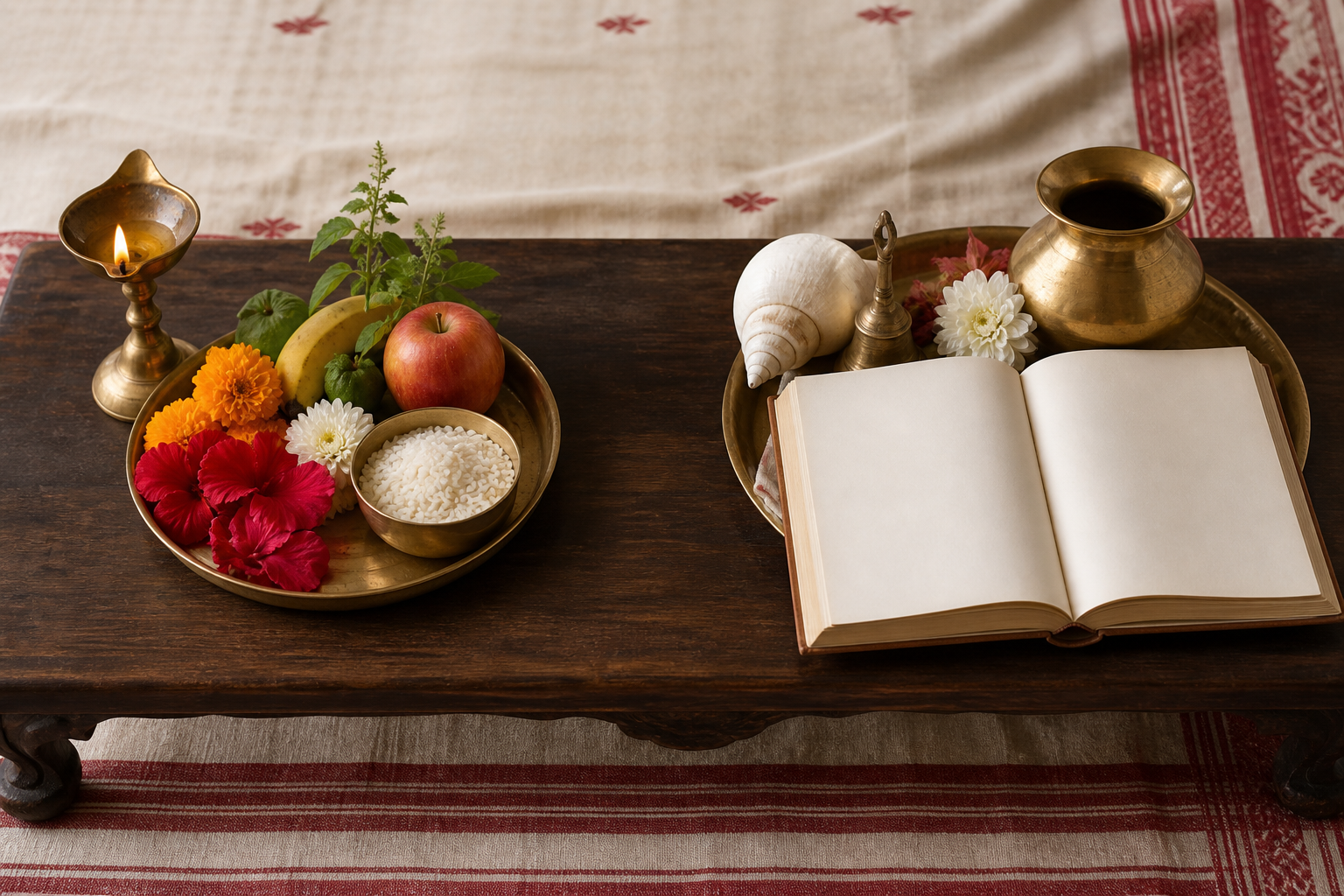
Not every act of worship needs the same level of calendar calculation. A Bengali home may maintain a weekly practice, observe a vrata tied to a lunar tithi, and consult a muhurat for an occasional ceremony. Treating all three as though they were identical creates most of the confusion.
- Weekly household worship is anchored to a weekday and inherited family rhythm. Thursday Lakshmi Bar, for example, is maintained through cleanliness, a calm altar, modest offerings, prayer, aarti, and the sharing of prasad.
- Tithi-bound worship depends on the relevant lunar day. Here, the name printed beside a civil date is not enough; you need the local start or end time of the tithi.
- Special timing may require nakshatra, muhurat, or another rule recognised by the family, temple, or regional tradition. Check these only when the ceremony actually calls for them.
Begin by asking one direct question: what makes this observance this observance? If the answer is “we worship Lakshmi every Thursday,” the weekday supplies the regular frame unless your ancestral practice adds another condition. If the answer is “this vrata must be kept on a particular tithi,” the Panchang boundary matters.
This distinction also prevents unnecessary rigidity. You do not need a special muhurat to place a flower before the deity, recite a familiar prayer, or offer gratitude. At the same time, you should not casually move a formal tithi-based vrata merely because another time is more convenient. Ordinary devotion can remain flexible; a binding observance deserves an accurate local check.
Read tithi as a local interval, not a midnight label
A civil date begins at midnight. A tithi does not have to do so. It may continue through only part of the morning or change later in the day. That is why a calendar can correctly show two tithis on one date.
On Sunday, November 9, 2025, for instance, Krishna Paksha Chaturthi continued until 10:00 AM and Panchami followed. Someone looking only at the date label could easily assume that the entire day belonged to Chaturthi. Someone reading the transition time would see a two-part day.
Use this routine whenever timing matters:
- Set the place where the worship will occur. Panchang timings are location-sensitive. If you live outside Bengal, do not automatically reuse a time printed for a town in West Bengal. Configure the almanac or app for your actual locality unless your family consciously follows a different convention.
- Read the complete tithi line. Note the tithi in force and its ending time. Do not stop after seeing its name beside the date.
- Identify the period your observance uses. The controlling period may be morning, evening, or another prescribed window. That rule should come from the vrata tradition, a trusted regional Panchang, a knowledgeable elder, or the temple guiding the observance.
- Check additional factors only when required. Nakshatra, rashi, and muhurat can also vary by locality and calculation method, but they do not need to be added to every simple household puja.
- Record the decision. Write down the location, tithi boundary, chosen observance window, and the family rule you followed. Next year, you will have a precedent rather than the same argument.
If two apps disagree, do not average their times. First confirm that both use the same location. Then check whether one is following a different regional convention or calculation method. Select one trusted regional Panchang for the complete decision instead of taking the tithi from one service and the muhurat from another.
The Panchang tells you when a relevant interval occurs. It cannot decide which inherited rule your household follows. That second question belongs to the living tradition of the family.
Make Lakshmi Bar repeatable enough to become family memory
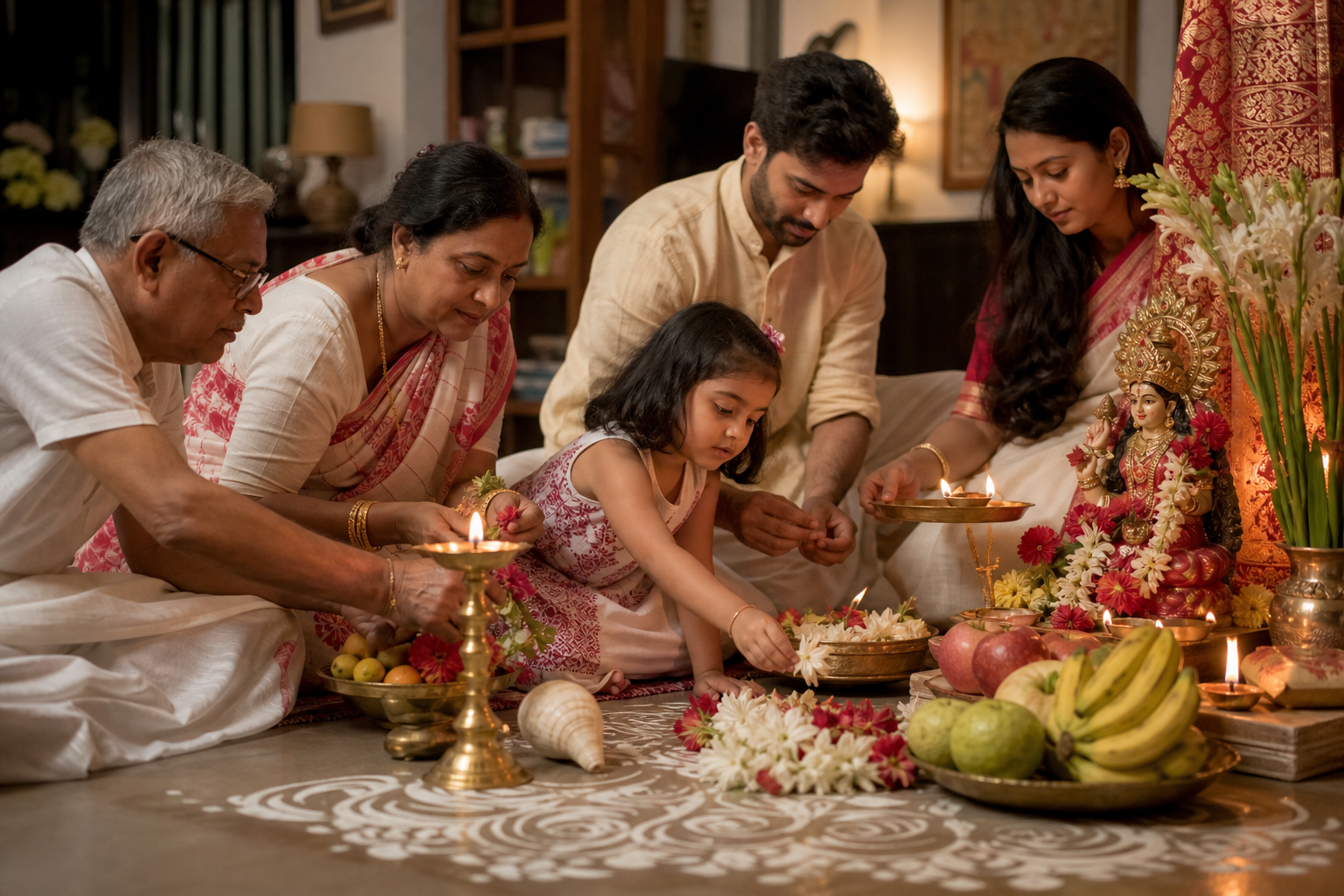
A weekly observance survives because it is calm and repeatable, not because the family recreates a festival-scale altar every Thursday. The aim is to establish a recognisable rhythm of cleanliness, gratitude, ethical prosperity, and shared worship.
Prepare the home without turning puja into shopping
Sweep and wipe the worship area, arrange the altar, and keep the kitchen sattvic according to your household practice. If time permits, make a small alpana with rice paste. Lakshmi’s footprints leading toward the shrine can mark her welcome, but an elaborate design is not a condition for sincere worship.
At the altar, begin with what you can maintain: an image or murti of Lakshmi, a lamp, incense, flowers, and a clean place for the offering. A fuller arrangement may include a kalash containing water and topped with mango leaves and a coconut, grains of rice or paddy, and a lotus when available. Turmeric, kumkum, and akshata can be set out before the puja begins.
Do not make unfamiliar or unavailable objects the measure of devotion. A reusable diya, locally available flowers, and plastic-free offerings are entirely consistent with the household ethic of care. The altar should express order and reverence, not anxious consumption.
Use a sequence the whole household can remember
- Clean the worship space and settle the kitchen before beginning.
- Arrange the image or murti, lamp, incense, flowers, grains, and food offering.
- Light the lamp and incense with steady attention. Children can place flowers or help arrange prasad, but an adult should supervise them around the flame.
- Offer fruit or familiar Bengali items such as muri, khoi, batasha, narkel naru, or payesh. A simple offering made carefully is preferable to an ambitious preparation that makes the evening frantic.
- Recite the Lakshmi Ashtottara Shata Namavali or passages of the Sri Sukta where these are already familiar. If they are not, use a prayer you can offer attentively rather than racing through unfamiliar words.
- Keep a brief silence for gratitude, honest livelihood, family responsibility, and the wise use of wealth.
- Perform aarti, offer pranam, and distribute prasad.
- Carry the worship beyond the altar by sharing food, giving what you reasonably can, or performing a small act of service.
Some households keep a partial fast until the puja is completed or avoid onion and garlic on Thursday. Follow the rule your family actually observes; do not impose it retroactively on everyone as a universal Bengali requirement. An optional household fast should never override medical needs or prescribed treatment. If fasting is unsafe for you, eat as needed and retain the devotional discipline in a safe form.
Give each person one stable role. An elder may lead the prayer, another person may prepare the altar, and a child may place flowers or distribute prasad. Repetition is what allows a practice to move from instruction into memory. The scent of incense and the sight of a familiar alpana matter because they return at a dependable time in family life.
Settle disagreements without flattening family tradition
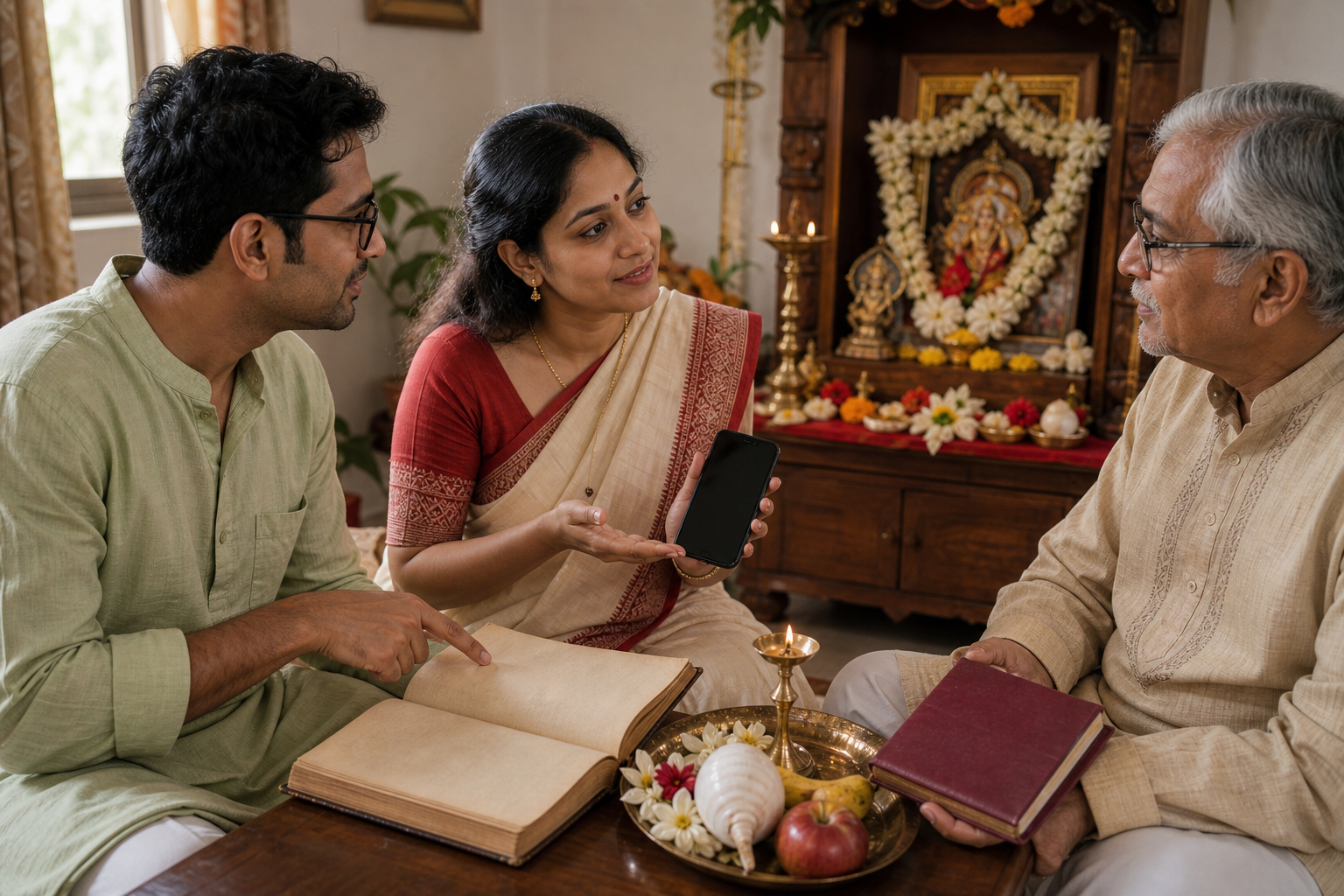
Bengali household customs vary by family and locality. Variation is not automatically an error. The mistake is to turn one household’s convention into a universal command, or to abandon an inherited rule because an app presents a different default.
When relatives disagree, ask for the controlling rule in a form that can be checked: Is the puja governed by Thursday, by a tithi, by a particular part of the day, or by a regional calendar? “This is how we do it” is valuable evidence of family practice, but it still helps to record exactly what “it” means.
A one-page household note can preserve that knowledge. Record the deity, weekday or tithi, location used for the Panchang, required offerings, familiar mantras, fasting custom, who leads the worship, and any timing rule remembered by the elders. Mark optional elements as optional. This protects the tradition from both forgetfulness and accidental embellishment.
If no elder can resolve a strict vrata question, consult a trusted regional almanac or a knowledgeable temple practitioner before changing the observance. In the meantime, you can continue ordinary prayer, cleanliness, gratitude, and charity without claiming that your temporary adaptation is an ancient universal rule.
In a household that includes people from different Dharmic traditions, participation need not mean erasing distinct forms of worship. Cleanliness, mindful attention, restraint, compassion, food sharing, and service offer genuine points of cooperation. Hindu dharma-guided prosperity, Buddhist mindfulness and compassion, Jain aparigraha, and Sikh seva can meet in household conduct while each tradition retains its own teachings and liturgy.
This is especially important in Lakshmi worship. Prosperity is not merely the accumulation of possessions. The discipline of the observance directs wealth toward responsibility, hospitality, generosity, and family wellbeing. If the lamp is lit but the household’s dealings remain careless or exploitative, the ethical center of the practice has been missed.
Key takeaways
- Use the weekday for a weekly household practice such as Lakshmi Bar unless your family has an additional inherited rule.
- For a tithi-bound vrata, read the exact local transition time rather than relying on the civil date label.
- Configure the Panchang for the place where worship occurs and use one trusted regional method consistently.
- Keep Thursday worship sustainable: a clean altar, modest offerings, familiar prayer, aarti, pranam, and prasad form a dependable core.
- Ask elders to state the timing rule precisely, then write it down for the next generation.
- Let prosperity become conduct through honest livelihood, restraint, food sharing, charity, and seva.
Before the next observance, choose one locale-correct Panchang and ask the eldest available family member one precise question about what governs the puja. Write the answer beside your simple altar checklist. That small act will make Thursday calmer now and preserve something valuable for the person who leads the worship after you.
References
- DharmaRenaissance Blog – Lakshmi Bar on Thursdays: A Bengali Devotional Guide to Invite Prosperity, Purity, and Peace
- DharmaRenaissance Blog – November 9, 2025 Panchang: Krishna Paksha Chaturthi to Panchami Timings and Auspicious Guidance
