
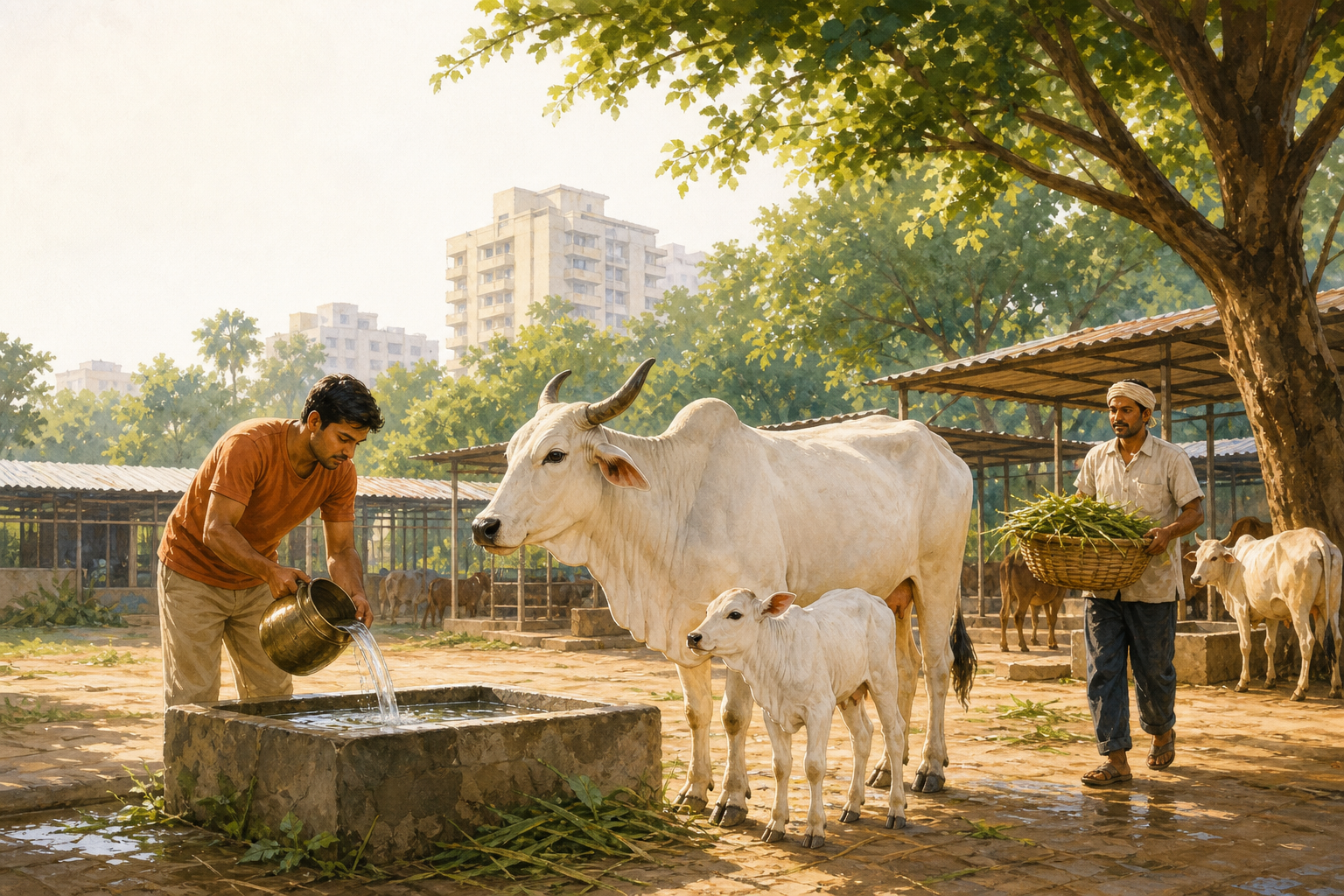
How do you honour Gau Mata if you live in an apartment, buy food through a shop, and rarely encounter a cow? The answer isn’t to imitate a village life you don’t have. It is to let reverence govern the relationships you do have: what you consume, what you waste, which forms of care you support, and how you behave when an animal is in front of you.
This turns Gau Mata from an admired symbol into a discipline of daily dharma. You don’t need a grand gesture. You need honest questions, verifiable care, and habits that reduce harm rather than merely display devotion.
Gau Mata turns gratitude into obligation
Gau Mata holds together abundance, protection, harmony, moral responsibility, and ecological care. Calling the cow mata, or mother, therefore does more than confer honour. It changes the moral question from “What can I obtain?” to “What care do I owe in return?”
This is the practical force of the Puranic image in which Gau Mata gathers many forms of divinity into one living presence. The image portrays the cow as a microcosm of the sacred whole: life, nature, nourishment, restraint, and human duty belong together. You may receive that image devotionally or contemplate it symbolically, but its ethical demand is difficult to evade. You cannot honour interdependence while acting as though benefits arrive without obligations.
Begin by examining reciprocity. When you benefit from an animal, a caregiver, agricultural land, or a community institution, ask what your side of the relationship supplies. Payment alone may complete a transaction, but it doesn’t necessarily complete a duty. Dharma asks whether your choices also support care, restraint, and the continuity of what sustains you.
This distinction matters because reverence can remain emotionally sincere while becoming ethically inexpensive. A sacred word, image, or ritual may express gratitude, but it cannot do the work of feeding an animal properly, maintaining a clean enclosure, reducing waste, or questioning an opaque supply chain. Bhava should lead to conduct. Otherwise, the symbol has touched your feelings without yet shaping your life.
Let auspiciousness sharpen your observation
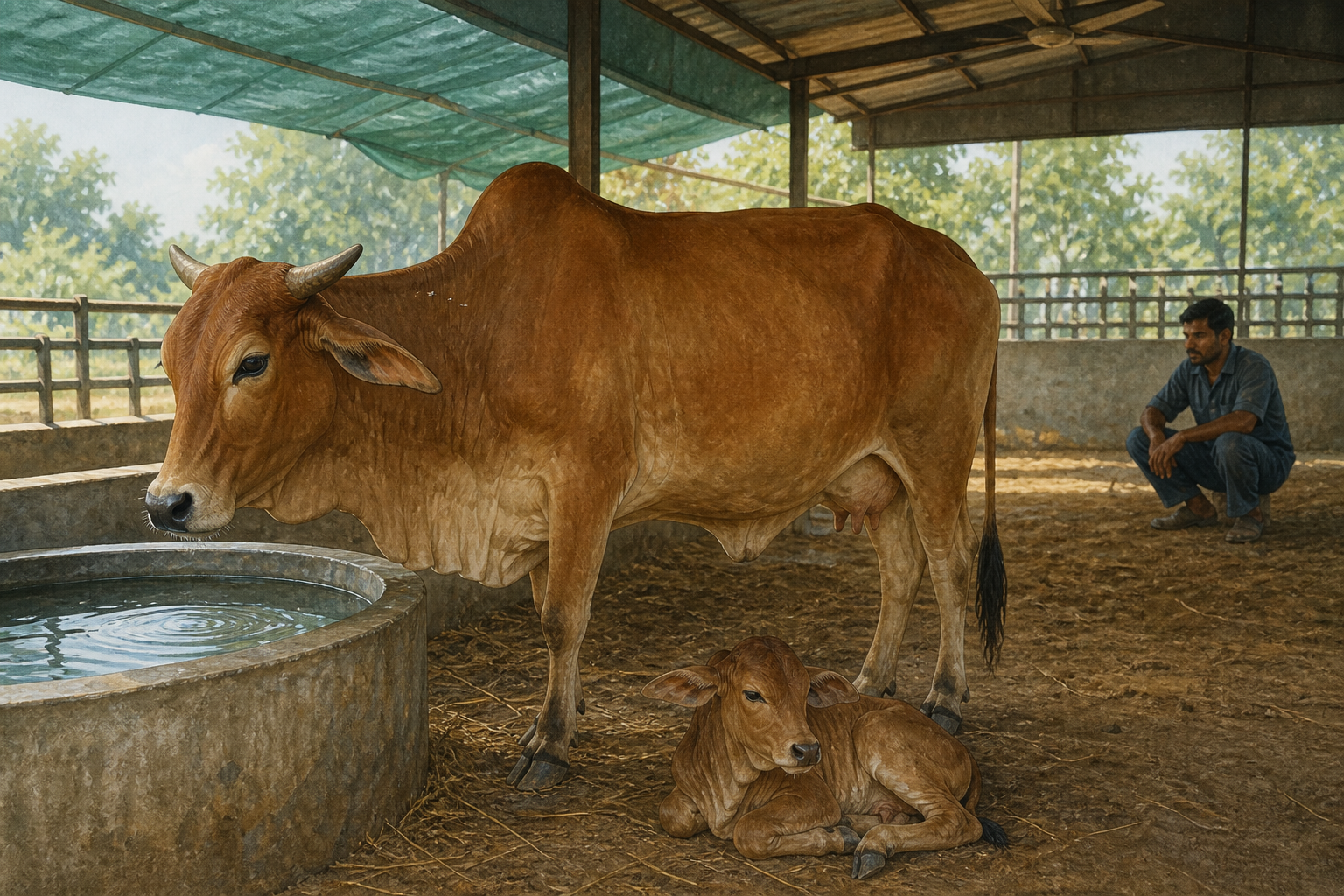
The calm presence of a contented cow is traditionally associated with auspiciousness and Vastu harmony. Read carefully, that association gives you a demanding standard: harmony should be visible in the conditions surrounding the animal. Is there gentleness rather than coercion? Is the space cared for? Does the animal appear able to rest without being harassed?
A living cow should never be reduced to a Vastu object. Bringing an animal near a property, touching it ceremonially, or invoking Gau Krupa does not relieve anyone of responsibility for its actual condition. A spiritual belief and an observable obligation are different kinds of claim. You can honour the former without using it to conceal failure in the latter.
- Notice the animal before performing the gesture. Calmness, agitation, injury, hunger, and fear matter more than the appearance of a devotional moment.
- Look at the surroundings. Accessible water, suitable food, a place to rest, cleanliness, and protection from dangerous waste are part of the moral setting.
- Watch the human interaction. Gentle care is consistent with reverence; forcing an animal into a photograph, procession, feeding opportunity, or fundraising display is not made ethical by religious language.
- Respond to what you observe. Contact a responsible local caregiver or animal-welfare service when an animal appears injured or in serious distress, rather than assuming that someone else will act.
This is a useful way to understand sacred symbolism without emptying it of faith or turning it into a mechanical guarantee. The auspicious presence of Gau Mata points toward sattva: tranquility, balance, care, and right relationship. Your responsibility is to help create those conditions, not merely to claim their blessing.
Turn devotion into decisions you can verify
Most people meet the ethics of Gau Mata indirectly. The encounter happens through a purchase, discarded packaging, a donation, or a public space shared with animals. That distance makes it easy to assume that somebody else has examined the conditions. Ethical living begins when you stop treating distance as innocence.
When you buy
If a food or household good depends on cattle, ask the seller or producer what can actually be verified about animal care. A premium price, pastoral image, religious name, or claim of purity does not answer questions about housing, feeding, medical attention, handling, or what happens when an animal is no longer economically productive.
You may not always receive a complete answer. Don’t replace missing information with a comforting assumption. Treat openness as relevant evidence, favour providers willing to explain their practices, buy with restraint, and avoid wasting what you choose to consume. The immediate goal is not a performance of personal purity. It is a more accountable relationship between benefit and responsibility.
When you feed or approach a cow
Feeding should meet an animal’s needs, not serve as a disposal method or a momentary devotional experience. Ask a known caregiver what is appropriate. Do not leave food inside plastic or other packaging; a packet containing food is not itself food. Avoid drawing an unfamiliar animal into traffic or a crowded place, and don’t approach in a way that causes fear or conflict.
If you cannot verify what is suitable, support a competent caregiver instead of improvising. Restraint can be a form of ahimsa when acting on impulse may create a risk for the animal.
When you support a goshala or care group
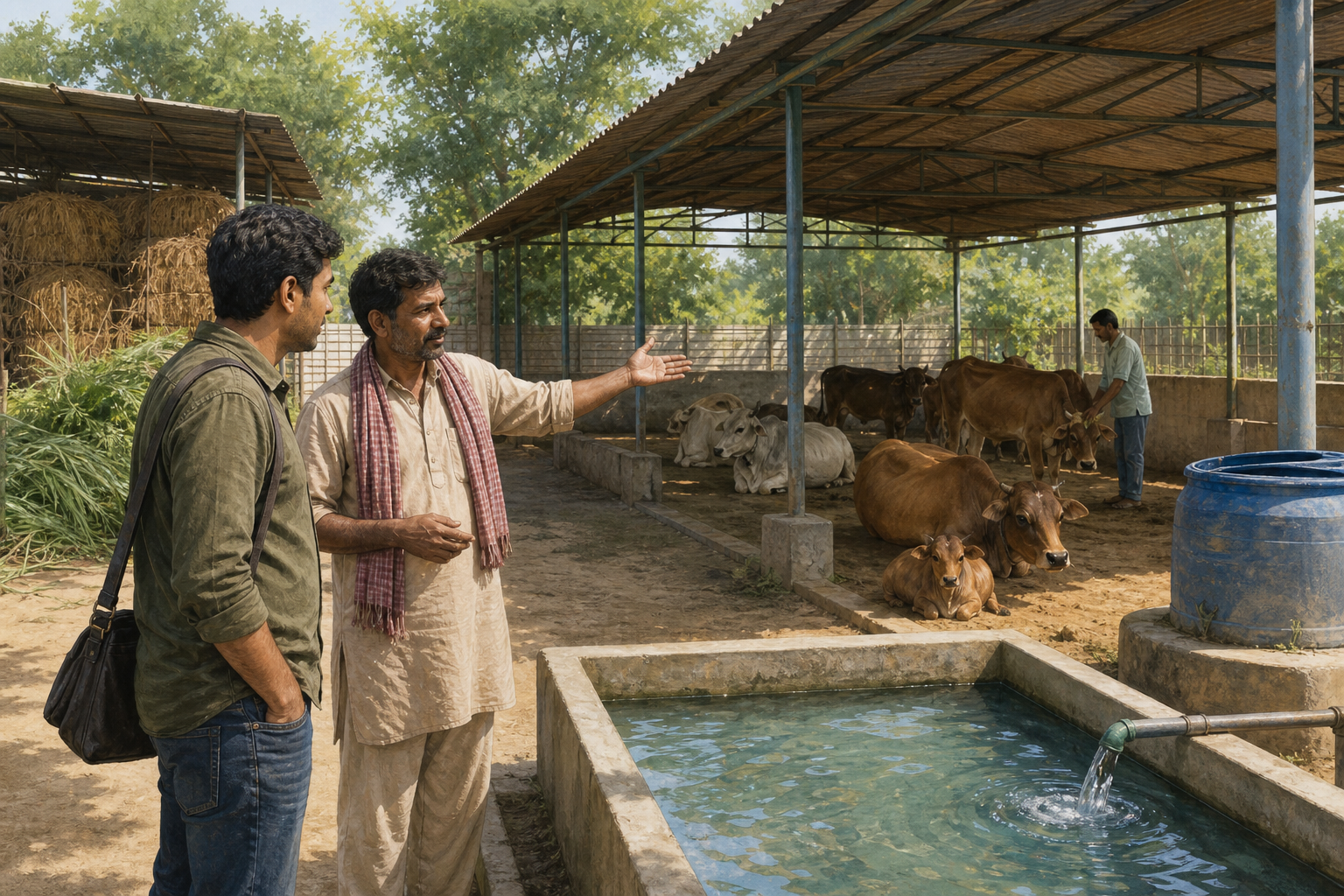
A donation is an ethical decision, not only a devotional offering. Before giving, look for evidence of routine care. Who is responsible each day? Can the organisation explain how it provides food, water, shelter, hygiene, and treatment? Does it discuss the needs of all animals in its care, including those that are old, ill, or less likely to attract donors? Can supporters visit, ask questions, or receive meaningful updates?
Judge care by conditions and practices, not by devotional branding alone. After giving, remain interested. A receipt proves that money changed hands; it doesn’t prove what the money accomplished. Thoughtful seva includes attention to the unglamorous work that keeps an animal safe and cared for every day.
When you manage your household and neighbourhood
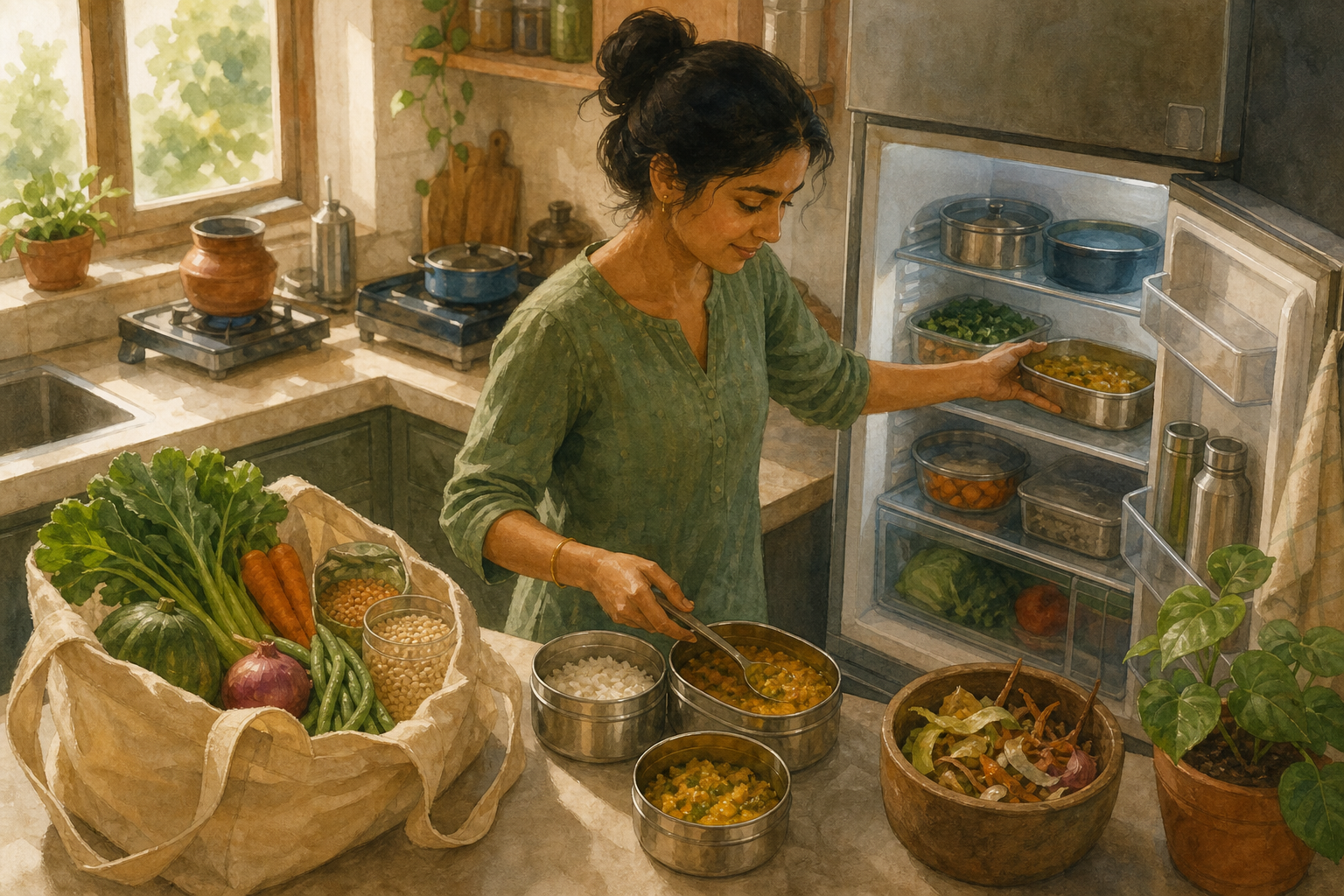
The agrarian meaning of Gau Mata connects animal care with soil health, household economy, and the responsible cycling of resources. You can honour that relationship even when you don’t keep cattle. Separate edible material from plastic and other dangerous waste. Reduce unnecessary consumption. Compost only where it is appropriate and properly managed. Keep shared spaces free of material that animals may ingest or be injured by.
These habits may look ordinary beside a ceremony, but that is precisely their value. They operate when no one is watching. They also restore the connection between reverence for a life-giving animal and responsibility for the land and resources on which life depends.
Use the shared dharmic compass without flattening traditions
Hindu reverence for Gau Mata has its own sacred imagery and forms of devotion. Jain ahimsa, Buddhist karuna, and Sikh seva and sarbat da bhala are not interchangeable theologies. Yet each can sharpen an ethical response to living beings: avoid needless harm, recognise suffering, serve without vanity, and consider the welfare of more than yourself.
That shared compass is especially useful when slogans pull in one direction and observable conditions pull in another. Before defending, buying, donating, feeding, or organising in the name of Gau Mata, ask:
- What preventable harm could this choice cause, including harm hidden from my immediate view?
- What benefit am I receiving, and what care or restraint am I returning?
- Can I verify the welfare claim, or am I accepting sacred language as a substitute for evidence?
- What happens to the waste, land, water, and shared space involved in this choice?
- Would I still call this conduct dharmic if there were no public recognition for it?
The questions expose common contradictions without demanding impossible perfection. If a devotional gathering leaves packaging where animals can reach it, improve waste handling before enlarging the ceremony. If a seller invokes Gau Mata but refuses basic questions about care, don’t let vocabulary settle the matter. If a care institution is transparent about difficulties, examine its actual work rather than judging it only by polished presentation.
Ethical consistency also affects how you speak. Advocacy for Gau Mata loses moral coherence when it becomes an excuse for cruelty toward human beings. Protection rooted in dharma should discipline anger through truthfulness, proportion, and responsibility. Ahimsa is not selective courtesy toward the beings with whom we already identify; it is a restraint placed on our own power.
Key takeaways
- Calling the cow mata creates a duty of reciprocity: ask what care you return for every benefit you receive.
- Treat a contented cow as a sign of conditions worth creating, not as an object that mechanically fixes a home or blesses neglect.
- Verify welfare practices when you purchase cattle-derived goods or support a goshala; price, imagery, and religious branding are not proof.
- Feed only with appropriate guidance, keep packaging away from animals, and act when you observe serious distress.
- Extend reverence to soil, resources, waste, shared spaces, and human conduct through ahimsa, karuna, seva, and restraint.
Start where your life already touches Gau Mata: a purchase, a waste stream, a donation, or a community space. Ask a question that can be answered with evidence, then change the repeated habit behind it. When reverence changes how you consume, discard, give, and share the world with other beings, Gau Mata is no longer only a symbol before you. She has become a standard within your conduct.
References
