
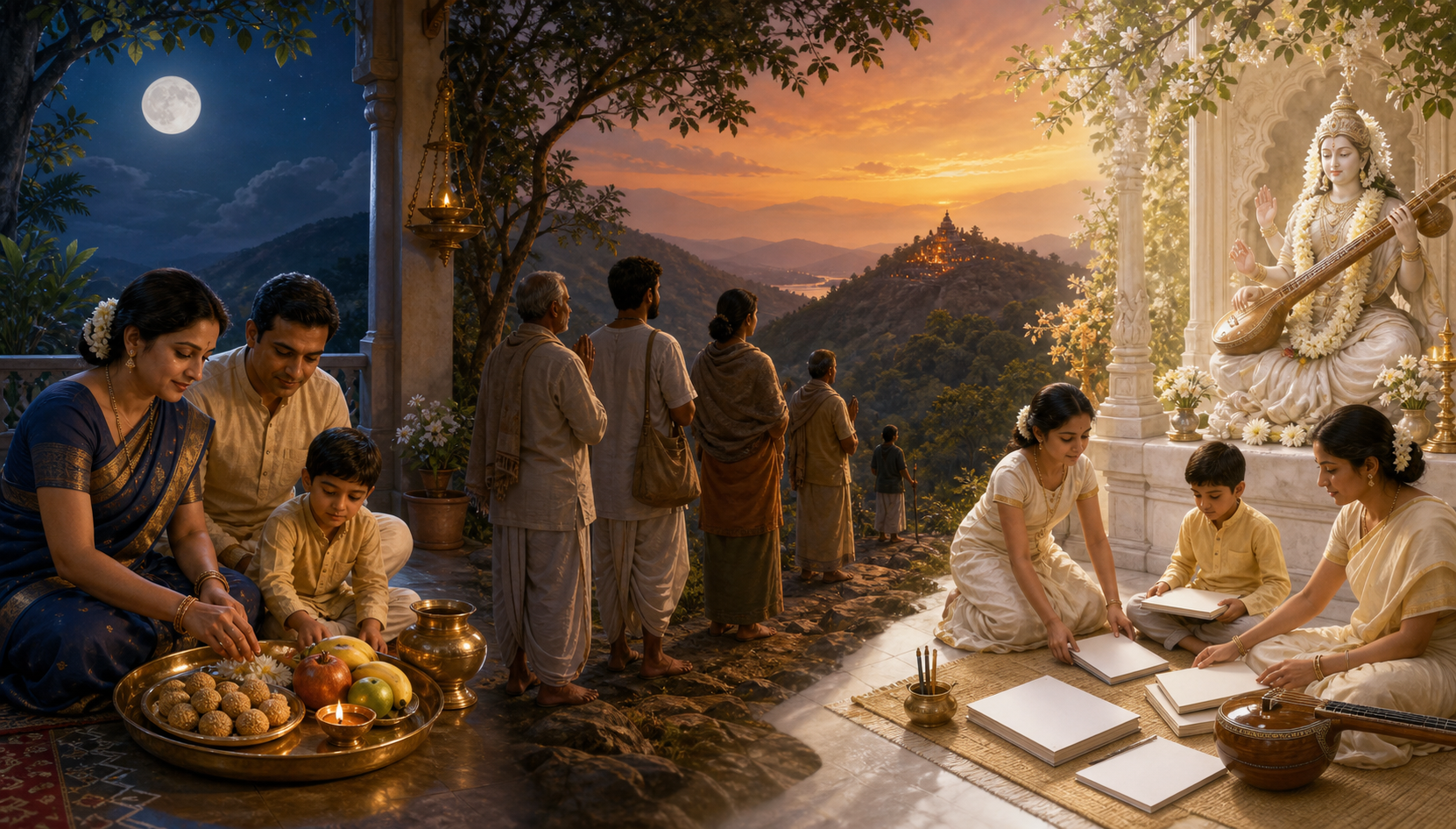
If you are setting a family, temple, school, or community calendar for January 2026, three dates call for three different kinds of preparation: January 6, January 14, and January 23. The first depends on a lunar tithi and local moonrise, the second centers on a solar transition and an evening darshan, and the third is a lunar observance dedicated to Mata Saraswati. Treating them as identical all-day calendar entries can obscure what makes each one meaningful.
You can use this focused guide to decide what must be verified locally, what to prepare at home, and where the observance should lead after the ritual ends. It is not an exhaustive regional calendar; Hindu calendars include additional local and sampradaya-specific dates, while a reliable local panchang remains necessary for precise tithi and moonrise timings.
The three dates, and what each date actually tells you
| Date | Observance | Calendar basis | What you should verify or prepare |
|---|---|---|---|
| January 6, 2026 | Sakat Chauth | Magha Krishna Paksha Chaturthi | Check the local tithi and moonrise; prepare the household puja and til-jaggery offerings. |
| January 14, 2026 | Makara Sankranti and Makarajyothi | Makara Sankramana, a solar transition | Decide whether you will observe through pilgrimage, a local congregation, or prayer at home; the focal darshan is in the evening. |
| January 23, 2026 | Vasant Panchami and Saraswati Puja | Magha Shukla Panchami | Clean the study or practice space and arrange books, instruments, or other tools of learning. |
The Gregorian date is a planning anchor, not a complete ritual timetable. Sakat Chauth requires particular attention to local moonrise because evening worship and the conclusion of the vrata may depend on it. Vasant Panchami is also tithi-based, so the operative interval can differ with location and time zone. Makarajyothi is tied to Makara Sankranti, but pilgrims and organizers still need the applicable schedule and local instructions.
That distinction should change how you use your calendar. Do not merely enter the festival name. Add a second reminder to check your regional panchang, contact the temple or community organizer, and settle any family-specific practice before the day arrives.
January 6: Keep Sakat Chauth centered on family care
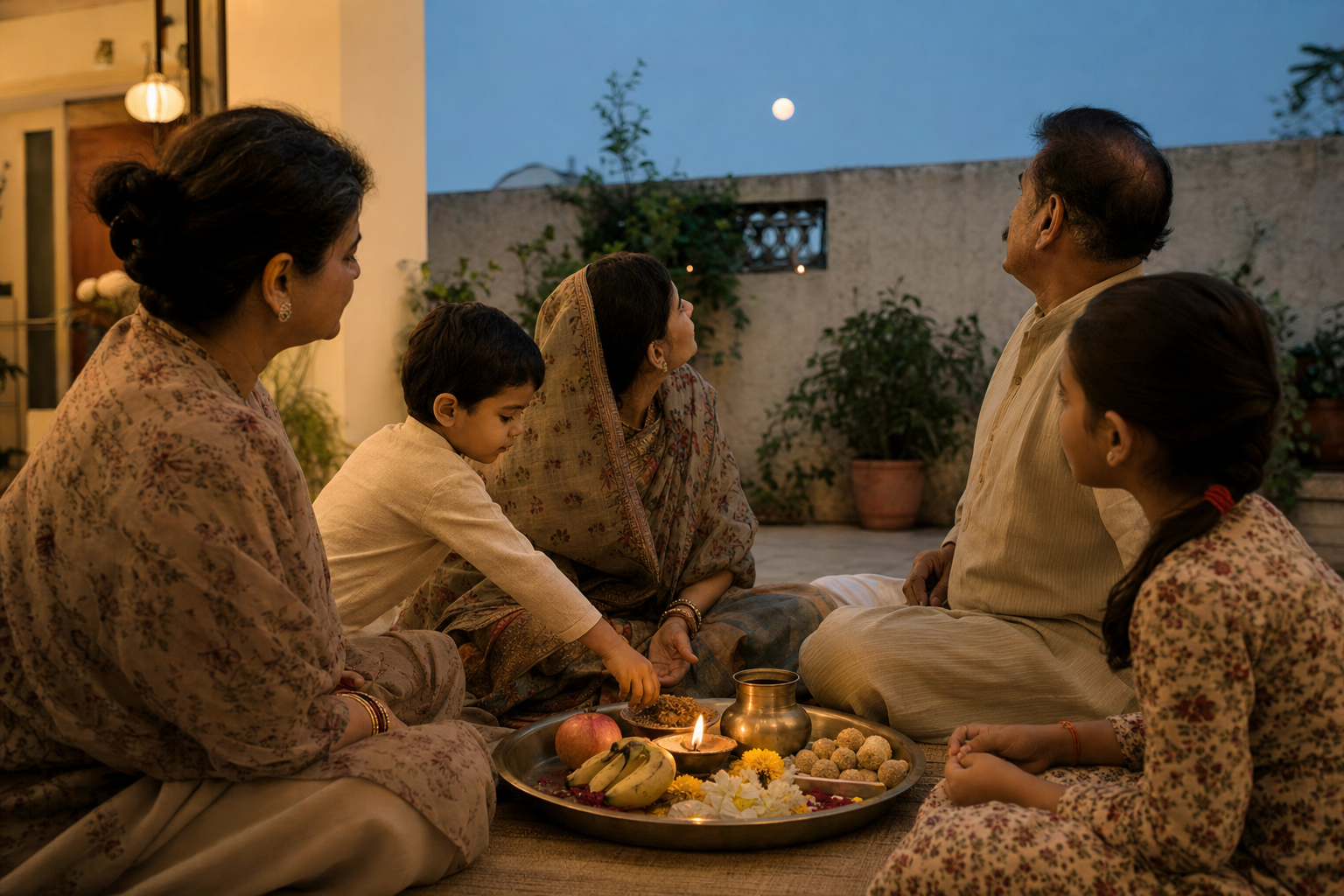
Sakat Chauth is especially prominent in North Indian traditions, including those of Uttar Pradesh, Madhya Pradesh, and Himachal Pradesh. The vrata is dedicated to Goddess Sakat, while many households also worship Shri Ganesha as Vighnaharta, the remover of obstacles. Its emotional center is not prosperity in the abstract but prayerful concern for the household, particularly the well-being of children.
Many families understand the observance within the wider Sankashti Chaturthi tradition, which honors Ganesha on Krishna Paksha Chaturthi. That connection should not erase the regional identity of Sakat Chauth or the place of Goddess Sakat in household practice. Follow the form transmitted in your family or community rather than replacing it with a generic ritual assembled at the last minute.
A practical home sequence can remain simple:
- Begin with a clear sankalpa for the welfare of the family. Name the concern you are carrying rather than using protection and prosperity as empty formulas.
- Prepare a clean worship space for Goddess Sakat and, where customary, Shri Ganesha. Sesame and jaggery are characteristic winter offerings associated with the vrata.
- If your household undertakes the day-long fast, follow its received discipline. If fasting is not part of your practice or is inappropriate for you, do not perform it merely for appearance; preserve the devotional intention through prayer, restraint, and service.
- Use the local moonrise time, not a time copied from another city. Many devotees perform evening worship, offer arghya to the Moon, and then conclude the fast.
- Share the family narrative associated with the vrata, especially with younger members. End by choosing a concrete act of care for the person whose well-being shaped your sankalpa.
The final step prevents the observance from becoming a transaction in which an offering is made and protection is expected in return. A vrata trains attention and steadiness. If your prayer concerns a child, the follow-through might be patient listening, help with a difficulty, or more responsible care within the household. Ritual discipline and practical responsibility should reinforce each other.
January 14: See Makarajyothi as the culmination of discipline
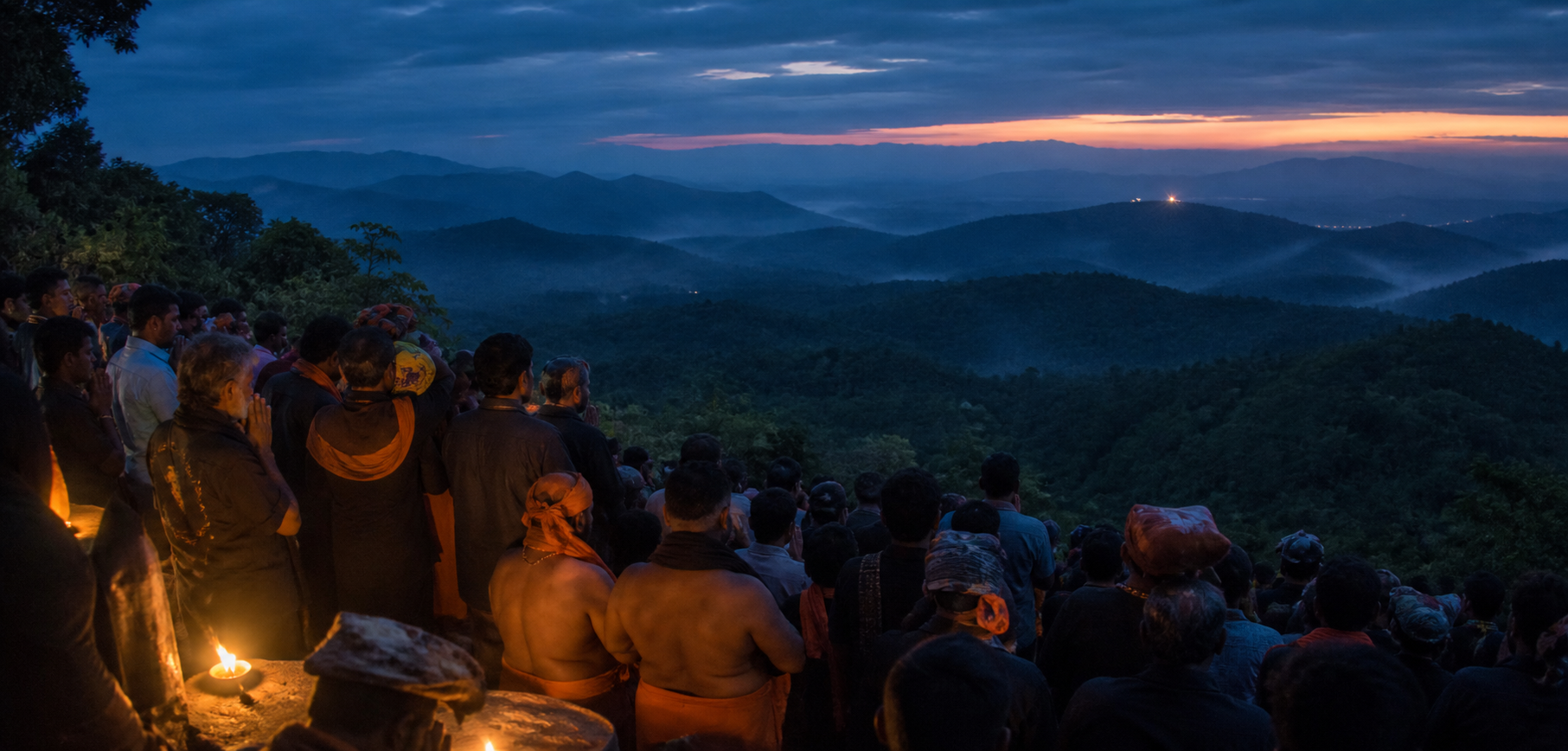
Makarajyothi can be misunderstood when it is reduced to a brief moment of seeing a light. The January 14 evening darshan belongs to the culmination of the Mandala-Makaravilakku pilgrimage season at Sabarimala. The observance traditionally extends across a week, while vrata, bhajans, humility, and seva give the culminating moment its spiritual depth.
At dusk, devotional attention turns toward the hill ranges beyond Sabarimala traditionally associated with Ponnambalamedu. Temple deeparadhana and the collective chant Swamiye Saranam Ayyappa bring light, sound, and surrender into a common rhythm. The discipline before the darshan matters because it changes the devotee from a spectator into a participant.
Choose your mode of participation early enough to prepare for it:
- For a Sabarimala pilgrimage, follow the instructions issued by the relevant authorities and temple administration. Respect crowd controls, safety requirements, the dignity of fellow pilgrims, and the vulnerable forest environment.
- For a local congregation, confirm the evening program rather than assuming it follows the Sabarimala schedule exactly. Ask when bhajans, deeparadhana, and collective prayer will begin.
- For a home observance, reserve the evening for prayer instead of merely watching the darshan while continuing an ordinary routine. A lamp, Ayyappa bhajans, the traditional chant, and an act of seva can give the observance a coherent form.
Eco-sensitive conduct is part of the responsibility of pilgrimage, not an optional modern addition. A sacred landscape should not bear the cost of our devotion. Carry that principle into local and home celebrations as well: avoid unnecessary waste, keep offerings manageable, and make service to the community part of the day’s discipline.
January 23: Turn Saraswati Puja into a real learning reset
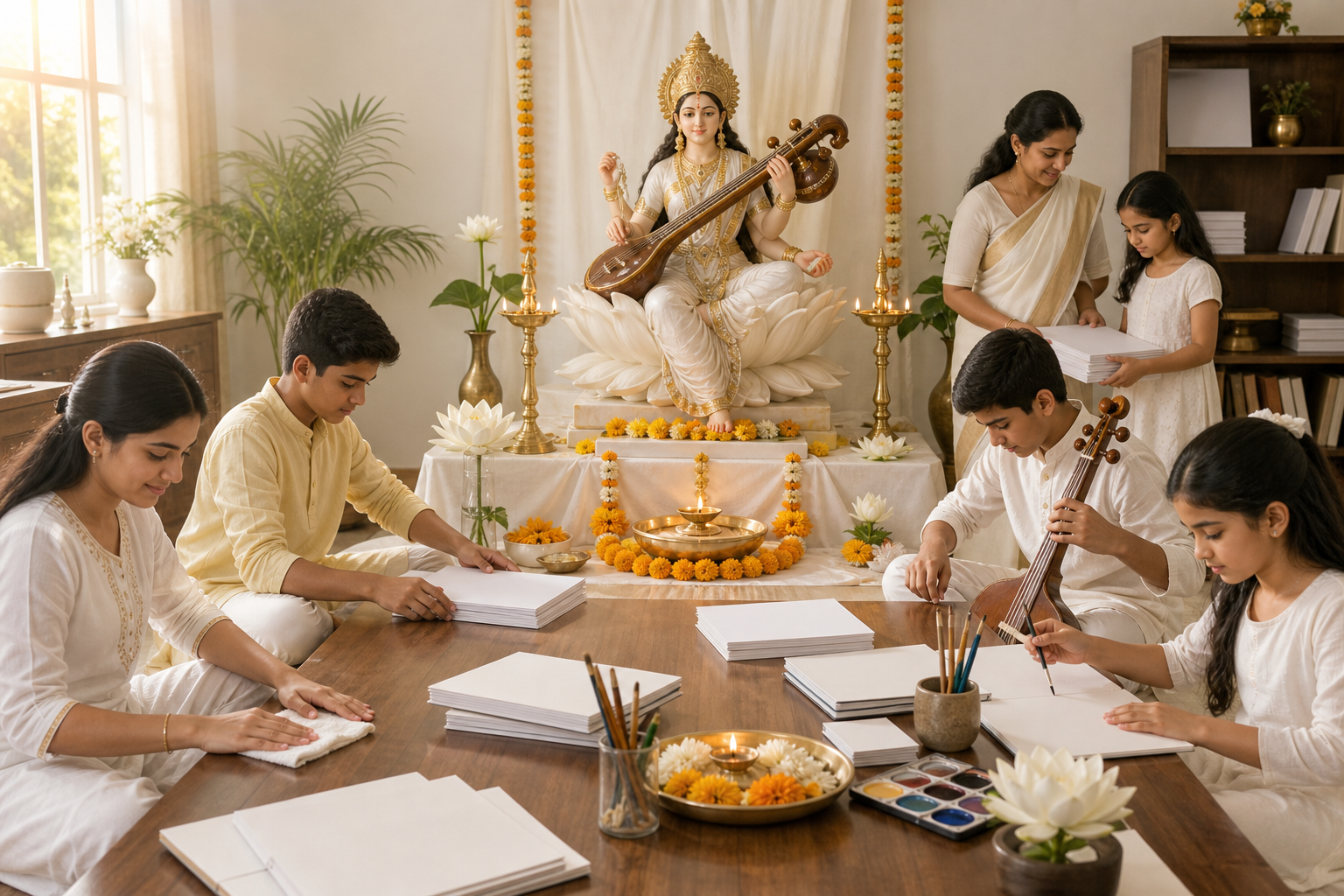
Vasant Panchami, also known as Basant Panchami, Shree Panchami, and Saraswati Puja, falls on Magha Shukla Panchami. It welcomes the gentle turn toward Vasant Ritu while directing attention to Mata Saraswati as the embodiment of vidya, kala, and vani: knowledge, the arts, and eloquent expression.
Yellow attire, flowers, and foods recall the warmth of the approaching season and the yellow of mustard blossoms. Yet the color is a sign, not the substance of the day. The decisive question is what you will place under Saraswati’s discipline: a child’s first letters, a neglected book, an instrument awaiting regular riyaaz, or a skill that requires patient practice.
A meaningful home observance can follow this order:
- Clean the study, music, or creative workspace. Remove the clutter that makes concentration harder.
- Arrange books, notebooks, musical instruments, or other genuine tools of learning before Mata Saraswati. Handle them respectfully rather than using symbolic objects that have no place in your actual practice.
- Offer yellow flowers or sweets and light a lamp.
- Recite ॐ ऐं सरस्वत्यै नमः with steady attention. A short invocation performed attentively is more coherent than an elaborate sequence you cannot sustain.
- Read a passage from scripture, undertake focused study, or complete a period of riyaaz. Let the worship include the activity for which you are seeking clarity.
- Write down the learning discipline you will continue after the festival, such as a regular reading period, a defined practice schedule, or the resumption of an unfinished course of study.
Families beginning a child’s formal journey into learning may mark the day through Aksharabhyasam or Vidyarambham. Coordinate the ritual with your family tradition, teacher, or temple, and verify the local Panchami timing instead of assuming that the whole civil day is equally applicable.
Schools and cultural institutions play a particularly visible role in Saraswati Puja in Bengal and Assam. Community observances may include collective prayer, reading, music, and other artistic presentations. Devotees also offer prayers for clarity and excellence at the Basar Gnana Saraswati Devi Temple in Telangana. If you are organizing a school program, keep learning itself at the center: give students time to read, perform, create, or honor their teachers rather than allowing decoration to consume the entire event.
This focus also gives the day a natural place within the wider dharmic family. Hindu, Buddhist, Jain, and Sikh paths differ in doctrine and practice, but disciplined learning, ethical conduct, compassionate action, and service can be honored without flattening those differences. A community celebration can be confidently Hindu while extending respect to neighbors who recognize the civilizational value of knowledge.
Build one January plan instead of three disconnected rituals
These observances can give your month a practical movement: care for what is vulnerable, discipline the self, and renew the pursuit of knowledge. This is a planning lens rather than a claim that the calendar prescribes a formal three-stage theology. Its value is that each festival produces a different kind of follow-through.
Key takeaways
- Sakat Chauth falls on January 6 and requires a local check of Magha Krishna Paksha Chaturthi and moonrise. Keep its household focus on protection, children, and responsible family care.
- Makarajyothi falls on January 14, with the focal darshan in the evening. Approach it as the culmination of vrata, bhajan, seva, and the Mandala-Makaravilakku pilgrimage season.
- Vasant Panchami falls on January 23, on Magha Shukla Panchami. Prepare books and instruments, worship Mata Saraswati, and begin a learning discipline that continues beyond the puja.
- A Gregorian date is not a substitute for a regional panchang. Verify local tithi, moonrise, temple schedules, and pilgrimage instructions wherever they affect the observance.
Put the three dates into your calendar with four fields beside each one: the local timing to verify, the people who need to be involved, the objects or offerings to prepare, and the action that should continue afterward. The day before each observance, check the relevant timing and clear the practical obstacle most likely to make you rush. That small act of preparation leaves the festival free to do its proper work.
References
- HinduPad — Vasant Panchami 2026: Celebrate Saraswati Puja with Date, Sacred Significance, Traditions
- HinduPad — Makarajyothi 2026: Sacred Makara Jyoti Darshanam at Sabarimala on January 14, Makara Sankranti
- HinduPad — Sakat Chauth 2026: Date, Rituals, and Magha Traditions for Protection and Prosperity
