
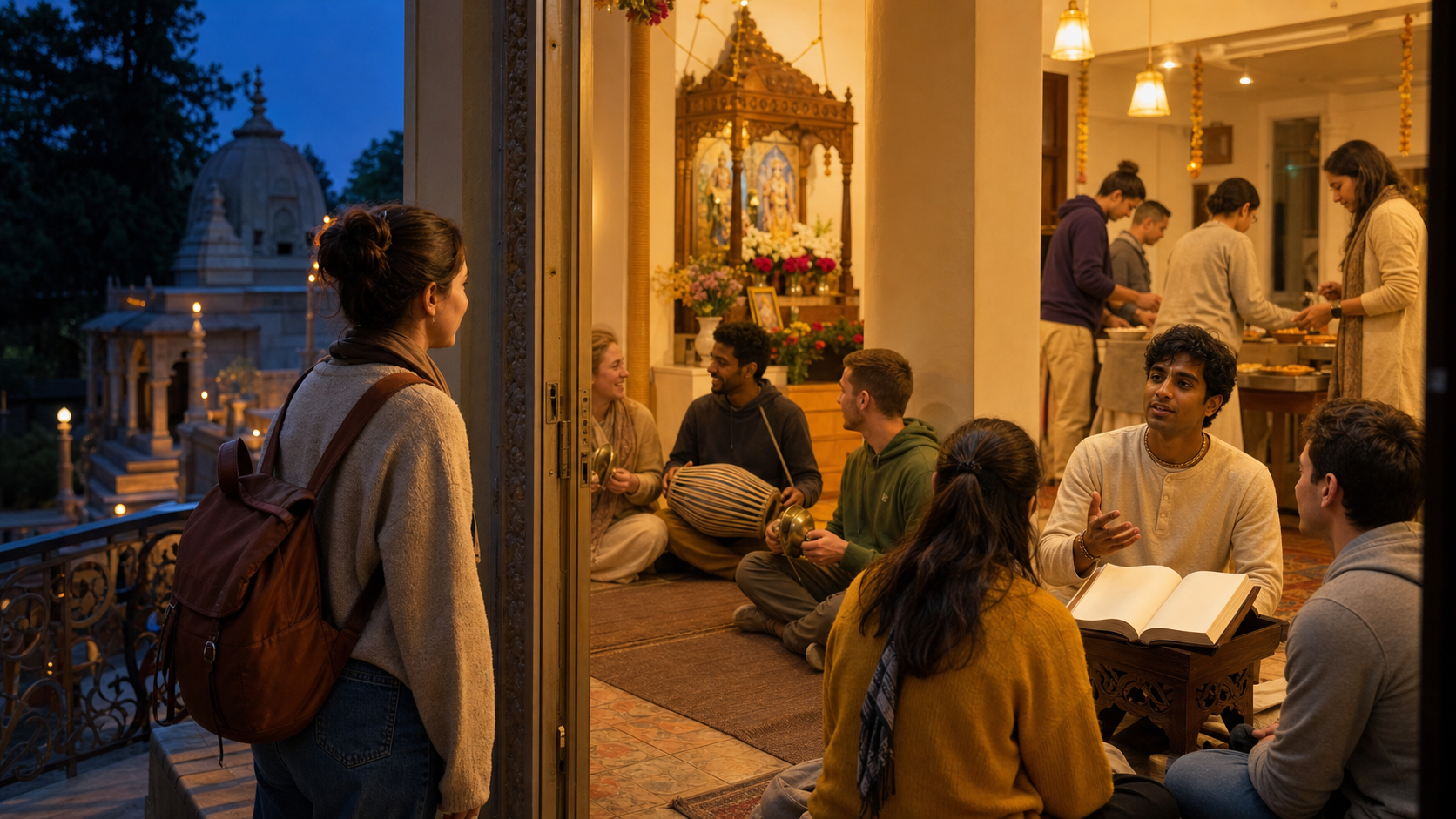
You may have met ISKCON through a campus kirtan, a temple class, or an invitation from a friend and wondered what you were actually being invited into. Is it a cultural gathering, a contemplative practice, a student community, or a commitment to Gaudiya Vaishnava theology?
The honest answer is that contemporary ISKCON outreach can contain all four. You do not have to collapse them into a single decision. You can participate respectfully, identify the claims being made, observe the community around them, and then decide whether you want another visit, a regular practice, or deeper study.
The accessible doorway still leads to a definite tradition
ISKCON’s university outreach has developed across decades, with Srila Prabhupada welcoming reports from academic initiatives. Contemporary gatherings in Philadelphia combine kirtan, study circles, and guided discussion. The format lets a student encounter bhakti through sound, conversation, and community before mastering a large philosophical vocabulary.
That accessibility is a strength, but it can also create confusion. A person may enjoy the music and companionship without realizing that kirtan is devotional practice, not merely a performance. Another person may hear universal ethical language and assume that no particular theology is involved. Neither reading is complete.
Treat your first gathering as an encounter rather than a referendum on the whole movement. Stay long enough to see how practice, explanation, and questions fit together. During or after the event, do four simple things:
- Join or attentively hear one complete portion of the kirtan instead of judging it from the doorway.
- Write down the name of any scripture, commentator, or teacher used in the discussion.
- Ask one sincere question about a claim you did not understand.
- Notice whether the answer distinguishes devotional conviction from a point that people of several Dharmic traditions can share.
Some students have described a greater sense of belonging and mental clarity in this setting. Such reports explain part of the appeal, but they are not a promise that every gathering will produce the same experience. The more reliable question is whether the program helps you understand what you are doing, why you are doing it, and what kind of life the practice is meant to cultivate.
The theology is deeper than music, wellness, or belonging

Bhakti can calm the mind and create fellowship, but contemporary ISKCON teaching does not present it merely as a wellness technique. Within Gaudiya Vaishnava thought, devotion is also a way of knowing Krishna. Love is not treated as decoration added after philosophy; purified devotion is understood to refine spiritual perception.
A 2025 Srimad-Bhagavatam reflection at ISKCON Vrindavan, attributed to Hari Sauri Prabhu, develops this through a commentary by Srila Visvanatha Cakravarti. In the episode, the gopis recognize Krishna’s divine identity through the intimacy of their love, while Krishna responds playfully. His majesty, or aisvarya, recedes from view so that the sweetness of intimate relationship, or madhurya, can become more fully manifest.
This is devotional epistemology: a claim about how spiritual truth becomes known. It is also a pedagogy of lila, in which relationship, action, concealment, and recognition carry theological meaning. If you approach such a class only as a search for abstract propositions, you may miss what the narrative is doing. If you treat every strong feeling as self-validating revelation, however, you have gone too far in the other direction.
Listen for three layers whenever a teacher explains a lila:
- Narrative: What happens in the scriptural episode?
- Commentarial interpretation: How does a named acharya explain its theological significance?
- Application: What does the present teacher ask a practitioner to notice or do?
A good class may move smoothly among all three, but you should still be able to tell them apart. Ask which conclusion comes directly from the narrated exchange, which comes through the commentator, and which is the speaker’s practical application. That one distinction protects you from confusing a teacher’s persuasive illustration with the full authority of scripture and lineage.
The practical disciplines associated with this understanding include attentive chanting, hearing and studying Srimad-Bhagavatam, remembrance, saintly association, and service without expectation. You do not need to pretend that one evening has given you the gopis’ vision. The immediate task is steadier: hear carefully, learn the interpretive framework, practise with sincerity, and examine what the practice does to your conduct.
A four-part test for an ISKCON outreach program
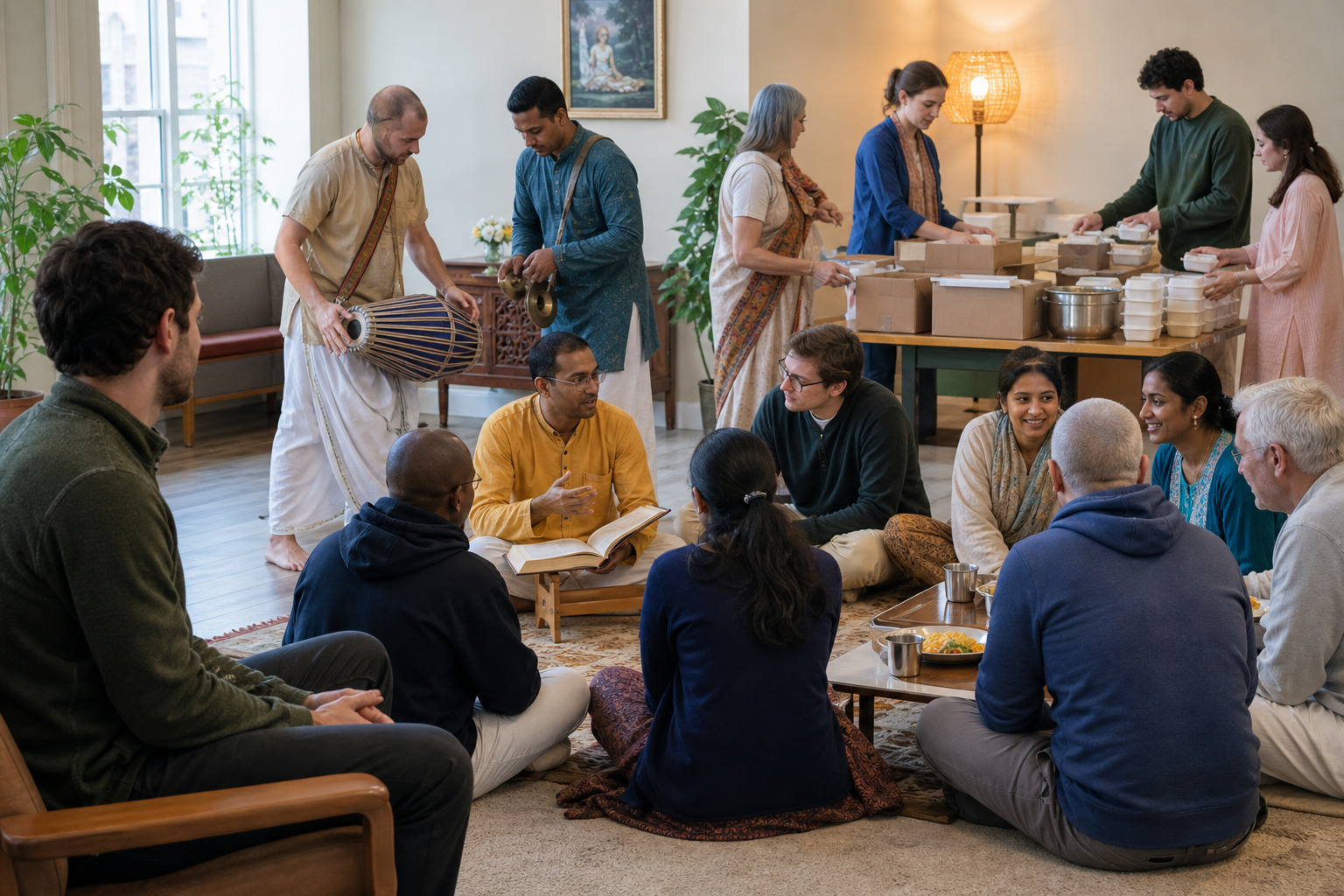
A charismatic speaker, an uplifting kirtan, or a friendly meal can make a strong first impression. None is enough by itself to show whether a program is teaching responsibly. Use four tests over several encounters rather than making your decision at the emotional peak of one gathering.
- Textual clarity: Can the facilitator name the scripture and commentary behind a claim? Can they separate the original narrative, the acharya’s interpretation, and their own contemporary example? You should not need an advanced Sanskrit education to receive a clear answer.
- Room for inquiry: Does the group welcome good-faith questions, including questions about difficult theology? Campus outreach is most valuable when contemplative practice and rigorous inquiry strengthen one another. Evasion, ridicule, or pressure to agree are not signs of philosophical confidence.
- Ethics embodied in conduct: Do humility, compassion, ahimsa, truthful living, and seva appear in how people treat newcomers and one another? A refined explanation of prema loses force when ordinary conduct is manipulative, contemptuous, or careless.
- Honest invitation: Is it clear when you are being invited to attend, to try a practice, to study a doctrine, or to make a commitment? These are different steps. Healthy outreach can be confident about its tradition without pretending that hospitality already equals assent.
This test works in both directions. Do not dismiss serious theology merely because it is presented through music and hospitality. Do not accept a theological claim merely because the room feels warm. Accessibility and depth can coexist, but clarity is what keeps one from impersonating the other.
If you help organize outreach, make those distinctions visible from the beginning. Name the Gaudiya Vaishnava setting, explain the devotional purpose of kirtan, identify the text used in discussion, reserve time for questions, and offer the next step without manufacturing urgency. A newcomer should leave knowing what happened even if they have not decided what they believe.
Dharmic harmony requires clarity, not theological blur
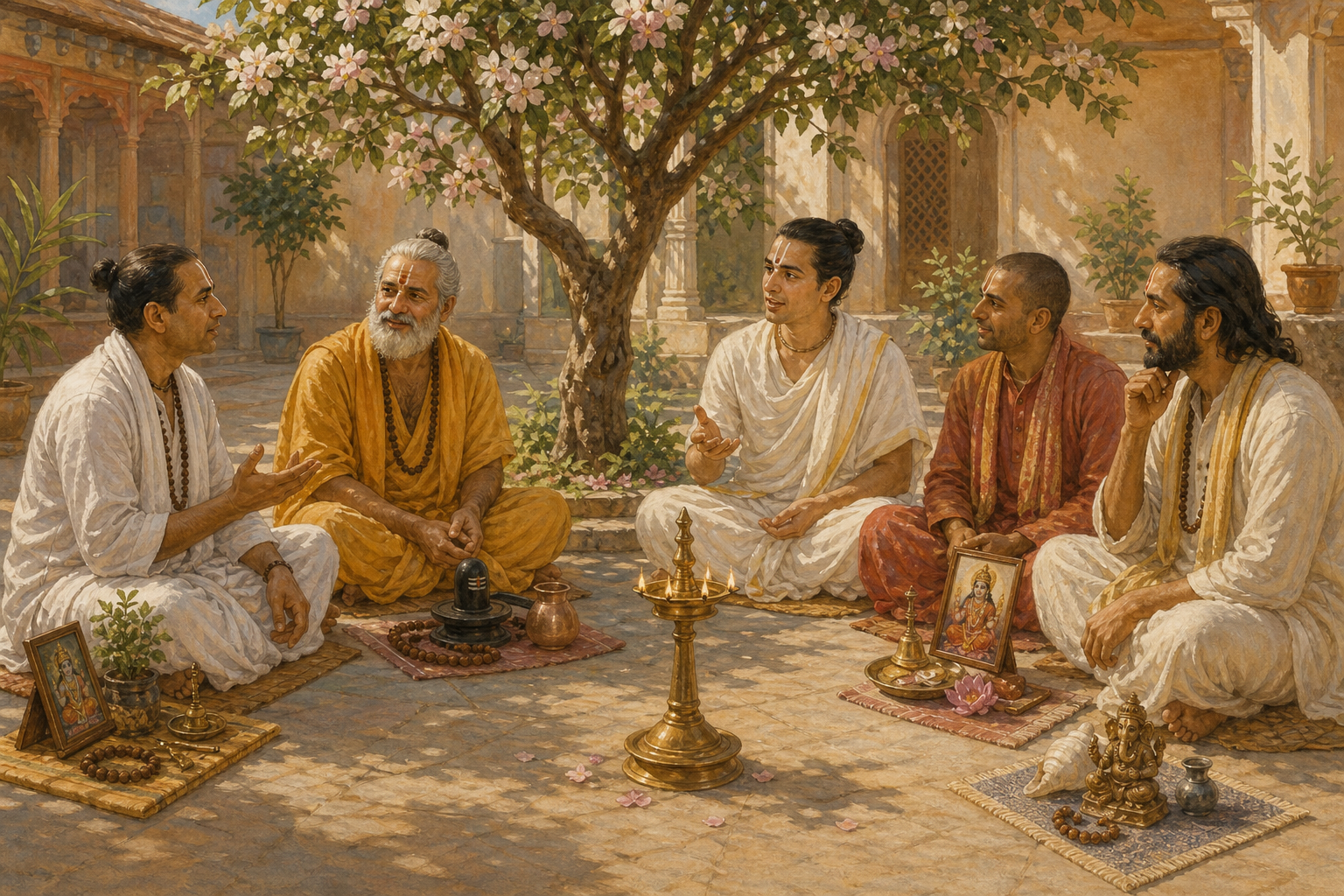
Dialogue among Hindu, Buddhist, Jain, and Sikh participants can begin from substantial ethical ground. Dharma, compassion, ahimsa, truthful living, seva, humility, and disciplined practice give people real subjects for conversation and cooperation. Campus outreach can therefore support intercultural learning and respect among Dharmic communities.
Shared ethical ground does not establish identical theology. ISKCON teaches a Krishna-centered Gaudiya Vaishnava path in which bhakti and loving relationship with the Divine are decisive. Buddhism, Jainism, Sikhism, and other Hindu sampradayas must be allowed to describe their own ultimate claims in their own voices. Unity becomes fragile when it depends on pretending that every lineage means the same thing by devotion, liberation, self, or the Divine.
You can tell whether an inter-Dharmic gathering has achieved respectful unity by asking:
- Can the ISKCON speaker state the distinct Gaudiya Vaishnava claim without disguising it as a universal consensus?
- Can participants describe another tradition without reducing it to an analogy from their own?
- Can the group cooperate around compassion, nonviolence, service, or truthful conduct without demanding metaphysical agreement?
- Can someone disagree with a theological conclusion and remain a respected participant in the conversation?
This balance serves both outreach and Dharmic solidarity. If unity is used to prevent serious questions, it becomes vagueness. If doctrinal identity is used to deny every shared value, it becomes isolation. The better course is precise difference joined to disciplined respect.
Key takeaways
- Enter a campus or temple program as both a participant and a careful listener; you do not need to make a total commitment at the first encounter.
- Distinguish the scriptural narrative, the acharya’s interpretation, and the present teacher’s application.
- Understand that ISKCON presents bhakti as a way of knowing and relating to Krishna, not merely as music, stress relief, or social belonging.
- Judge outreach over time by textual clarity, openness to questions, ethical conduct, and honesty about commitment.
- Build Dharmic harmony on shared practice and ethics while allowing every lineage to retain its theological voice.
At your next ISKCON program, stay for both the kirtan and the discussion. Before leaving, ask two questions: Which text and commentary shaped tonight’s teaching? What practice or service is this teaching asking of me now?
If the answers are clear and the community’s conduct matches them, return long enough to test the path through steady, voluntary practice rather than one emotional evening. That is a fair way to meet contemporary ISKCON: open enough to learn, grounded enough to discern.
References
- Dandavats – Campus Bhakti in Philadelphia: ISKCON Outreach Unites Students Through Vedic Wisdom
- Dandavats – Hari Sauri Prabhu at ISKCON Vrindavan: Gopis Reveal Krishna’s Divinity, Love and Paradox
