
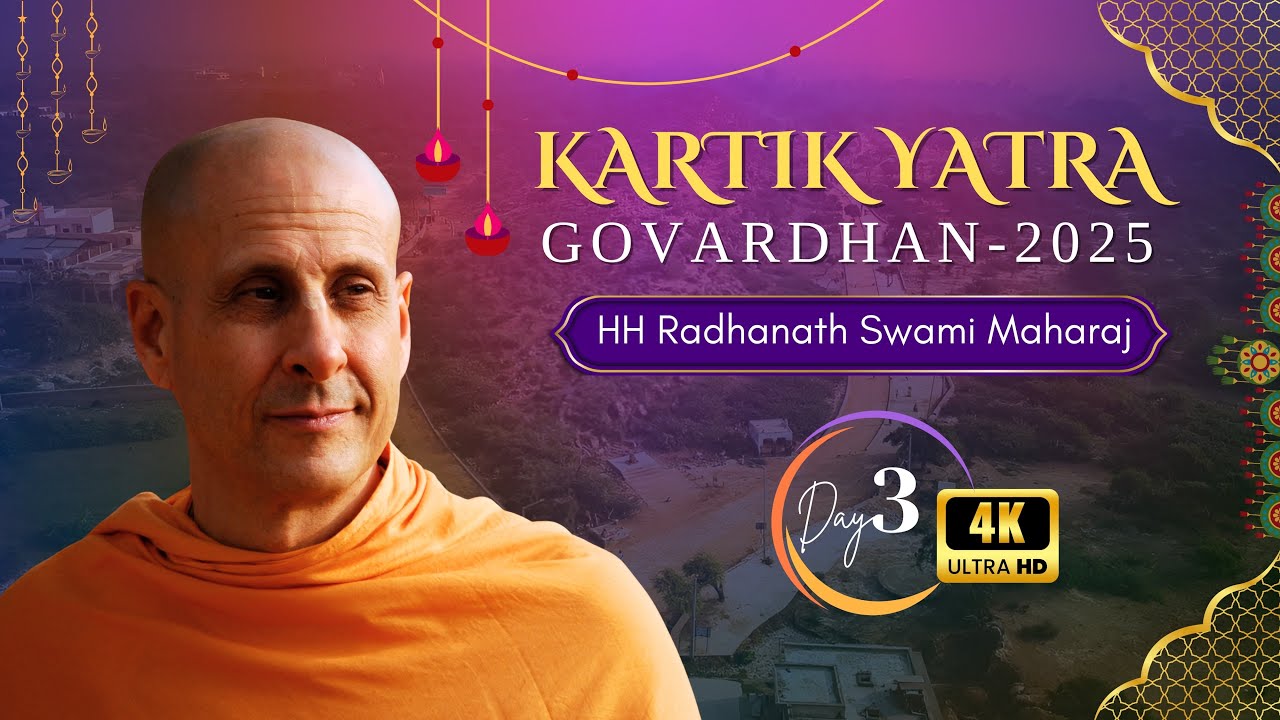
Kartik Yatra 2025 at Govardhan offered a contemplative immersion into the spirit of Govardhan Puja, where the deeper meaning of the festival was articulated with clarity and devotion by Radhanath Swami at ISKCON Chowpatty. This sacred observance, rooted in the Bhakti tradition, centers on gratitude, humility, and service, inviting participants to internalize the protective and compassionate ethos symbolized by Sri Krishna’s lifting of Govardhan Hill.
The festival’s essence emphasizes an inner realignment from pride to seva, encouraging practices that cultivate reverence for nature and community cohesion. Govardhan Puja, with its offerings and collective prayers, frames ecology as sacred dutyhonoring land, animals, and community through actionable gratitude. This ecological reverence resonates across dharmic traditions, aligning with shared values of ahimsa, compassion, and mindful stewardship.
Throughout Kartik Yatra 2025, devotional practices such as kirtan, kathas, and parikrama shaped a steady rhythm of remembrance and introspection. Many pilgrims reported a heightened sense of belonging during Govardhan parikrama, noting how the simple acts of chanting and listening to kathas transformed the journey into a moving classroom of lived wisdom. The atmosphere of collective devotion strengthened bonds and elevated everyday spiritual disciplines.
Radhanath Swami’s exposition illuminated the theological and practical dimensions of Govardhan Puja: humility as protection from arrogance, gratitude as the basis of prosperity, and service as the natural expression of love. These insights highlighted how the festival is not merely commemorative but pedagogicaloffering a framework for ethical living and community harmony that transcends ritual formalism.
The mood of the celebration invited participants to contemplate inner protectionseeking refuge in values rather than external assurances. This contemplative posture aligns with broader dharmic wisdom: in Hinduism, Buddhism, Jainism, and Sikhism alike, inner discipline, compassion, and service are seen as reliable pathways to peace and unity. The festival thus becomes a living bridge among traditions, affirming shared spiritual aspirations.
Experiences shared during the yatra point to a tangible transformation: kirtan fostering emotional resilience, kathas deepening scriptural understanding, and parikrama integrating knowledge with movement and breath. These practices enhanced clarity, softened interpersonal boundaries, and fostered a sense of sacred geographywhere Govardhan is not only a place, but a teacher.
In this spirit, Govardhan Puja emerges as a complete sadhana: honoring nature, elevating community through prasada and collective offerings, and nurturing inner stability through remembrance. By situating devotion within ethical action and interfaith respect across dharmic lineages, the celebration models a sustainable and inclusive path forwardrooted in humility, strengthened by unity, and guided by wisdom.
Inspired by this post on Dandavats.
