

You have a vrata, puja, temple programme, or family gathering to schedule, but two calendars appear to give different answers. One names Trayodashi while another shows Chaturdashi. One says Agrahan while relatives elsewhere speak of Kartik or Margashirsha. The difference does not automatically mean that one calendar is wrong.
The practical solution is to separate four layers: the civil date, the tithi transition, the local Panchang calculation, and the regional month or season. Once you know which layer answers which question, you can choose a time confidently without flattening Bharat’s calendrical diversity into a single national label.
Start by asking what each calendar is measuring
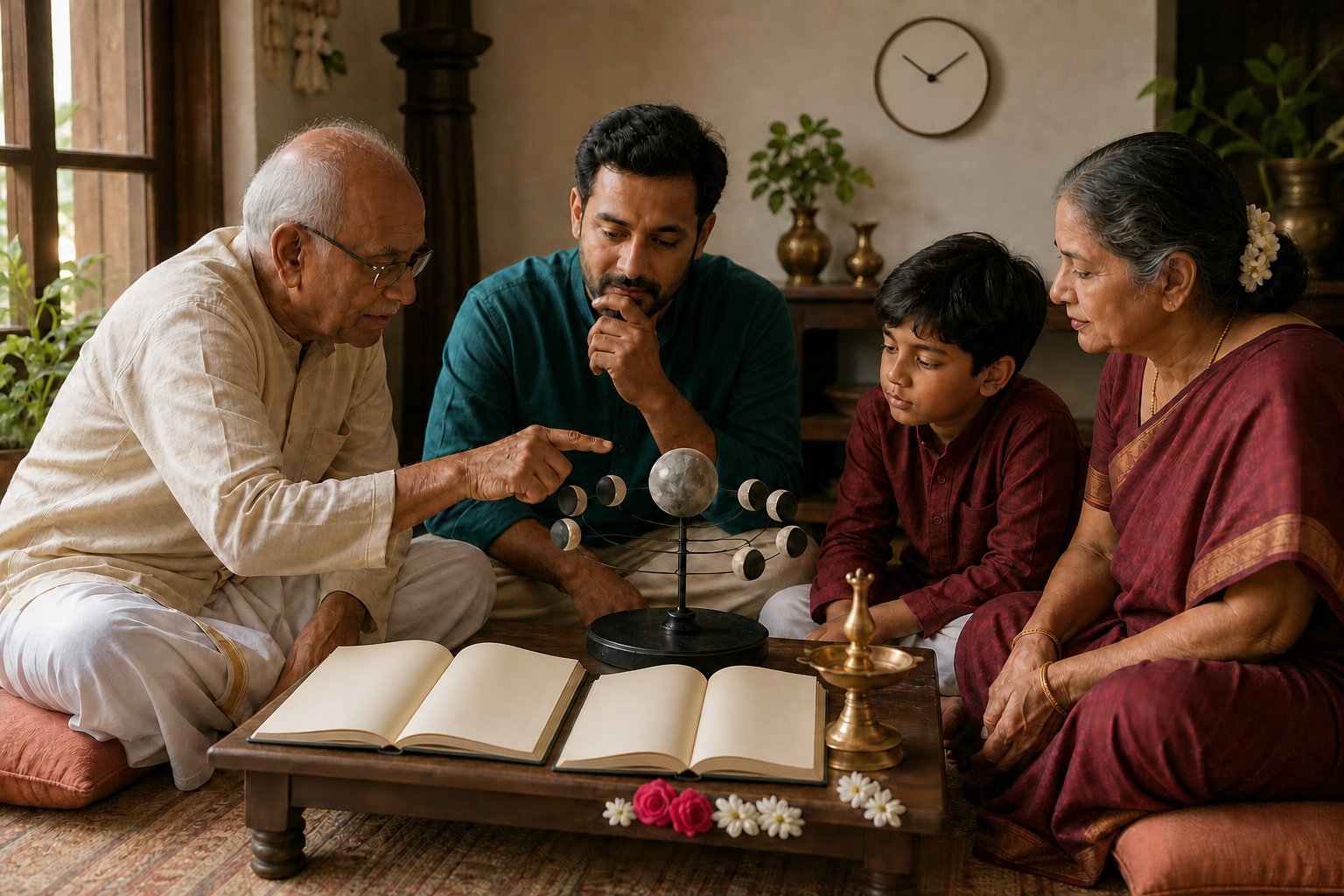
A Panchang is not merely a list of dates. It places several forms of time beside one another. The civil date helps people coordinate ordinary schedules. Paksha and tithi locate the day within the waxing or waning lunar cycle. Nakshatra, Rashi, and muhurta add other timing considerations. A regional month gives the period a cultural and seasonal identity.
Confusion begins when an answer from one layer is used to settle a question from another. A month name does not give you the precise hour of a tithi change. A tithi name does not by itself establish the correct ritual interval. A civil date printed on a phone does not replace a Panchang calculated for your location.
| Calendar layer | What it helps you decide | What to notice |
|---|---|---|
| Civil date | Which numbered date to place on invitations and schedules | A single civil date can contain a tithi transition |
| Paksha and tithi | Where the observance falls in the lunar cycle | Record the ending time, not only the tithi present at the start of the day |
| Nakshatra, Rashi, and muhurta | Whether a particular interval suits the intended ritual | Use calculations prepared for the place where the observance will happen |
| Regional month and season | How a community names and culturally understands the period | Related months in different systems need not begin and end together |
Key takeaways
- Do not reduce a transition day to a single all-day tithi label.
- Use the location of the actual observance, especially when you live away from your family’s home region.
- Read regional month names as living cultural frameworks, not as interchangeable translations.
- Before announcing a time, check which tithi or muhurta the ritual itself requires.
Treat a transition day as a timeline, not a label
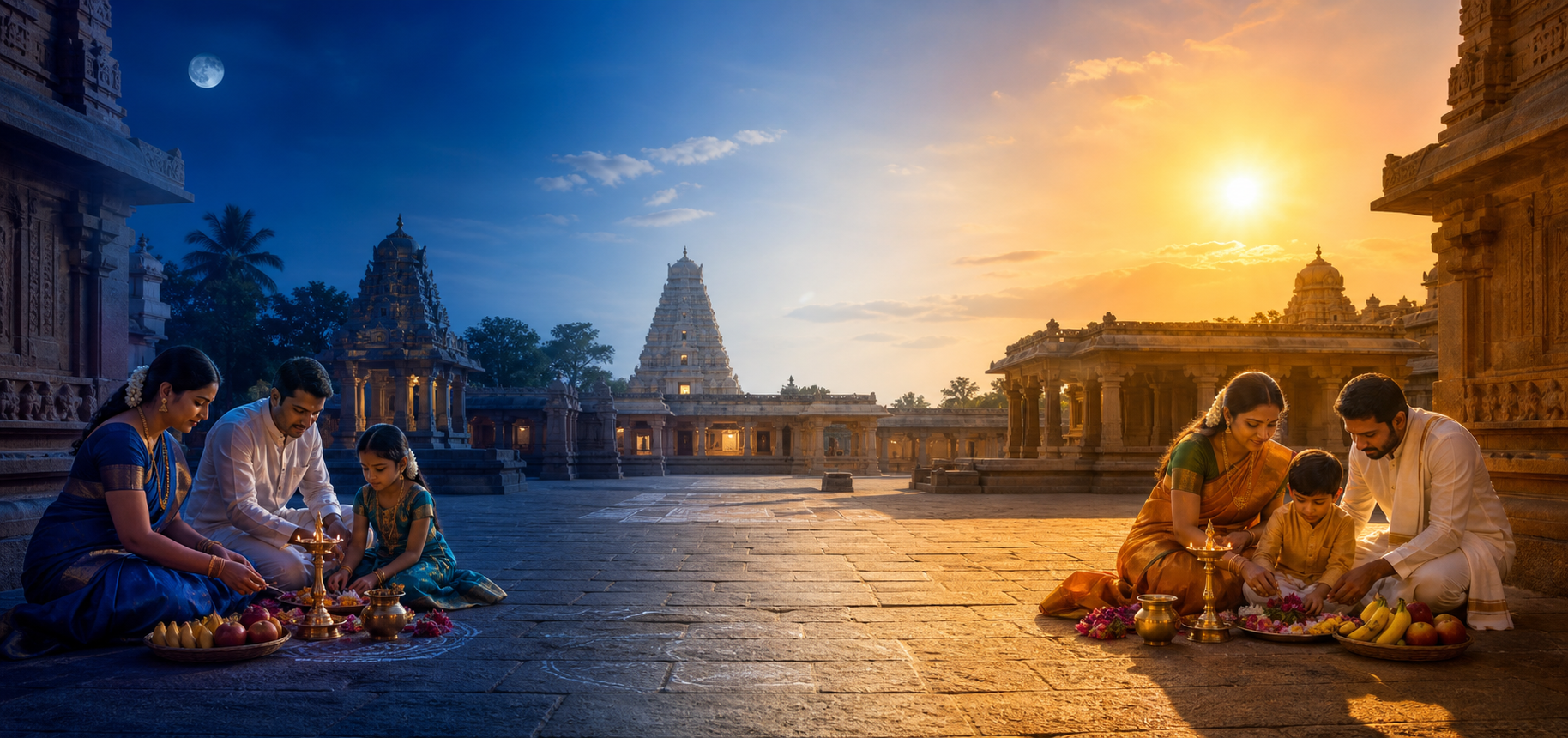
Tuesday, November 18, 2025 gives a clear example. In the stated calculation for most regions, the day begins in Krishna Paksha Trayodashi: Trayodashi continues until 7:02 AM, after which Krishna Paksha Chaturdashi prevails. Calling the whole date Trayodashi loses the later portion. Calling the whole date Chaturdashi erases the morning transition.
The useful way to write the date in your notes is: “November 18: Krishna Trayodashi until 7:02 AM; Krishna Chaturdashi afterward.” That one line preserves the sequence and immediately shows whether a planned practice falls before or after the change. Before treating 7:02 AM as your own cutover, verify that the Panchang is configured for your locality.
Next, identify the rule attached to the observance. Some practices care about the tithi present at sunrise. Others require the relevant tithi during a particular ritual interval. A household custom may also follow the Panjika, temple calendar, or sampradaya traditionally used by the family. Do not invent a universal rule from the tithi name alone. If the observance has a prescribed interval, that prescription must be matched against the local transition time.
The spiritual tone can still guide the rest of the day. Krishna Paksha is associated with withdrawal and introspection; Trayodashi can support preparation and simplicity, while the move into Chaturdashi can deepen japa, meditation, or a modest vrata. That is a contemplative rhythm, not a substitute for the formal timing rule of a specific rite.
Muhurtas need the same care. Abhijit Muhurat is commonly treated as a balanced interval, while Rahu Kalam is generally avoided, but neither label excuses you from checking the local times. Nakshatra and Rashi may also matter to the practice being planned. Read the complete local entry rather than extracting one favourable word from it.
Map the season without forcing month names to match
Regional month names do more than divide the year. They hold agricultural memory, food customs, devotional habits, and community expectations. That is why a Bengali family can be entering Agrahan while another Hindu calendar is moving from Kartik toward Margashirsha. These are related ways of inhabiting the season, not necessarily duplicate labels with identical boundaries.
In the Bengali calendar, Agrahan is the eighth month. In Agrahayan 1432, it began on November 18, 2025 and ended on December 16, overlapping the Kartik-to-Margashirsha transition used elsewhere. If you are preparing a Bengali programme, “Agrahan” is therefore not decorative regional vocabulary. It is the correct cultural frame for the event.
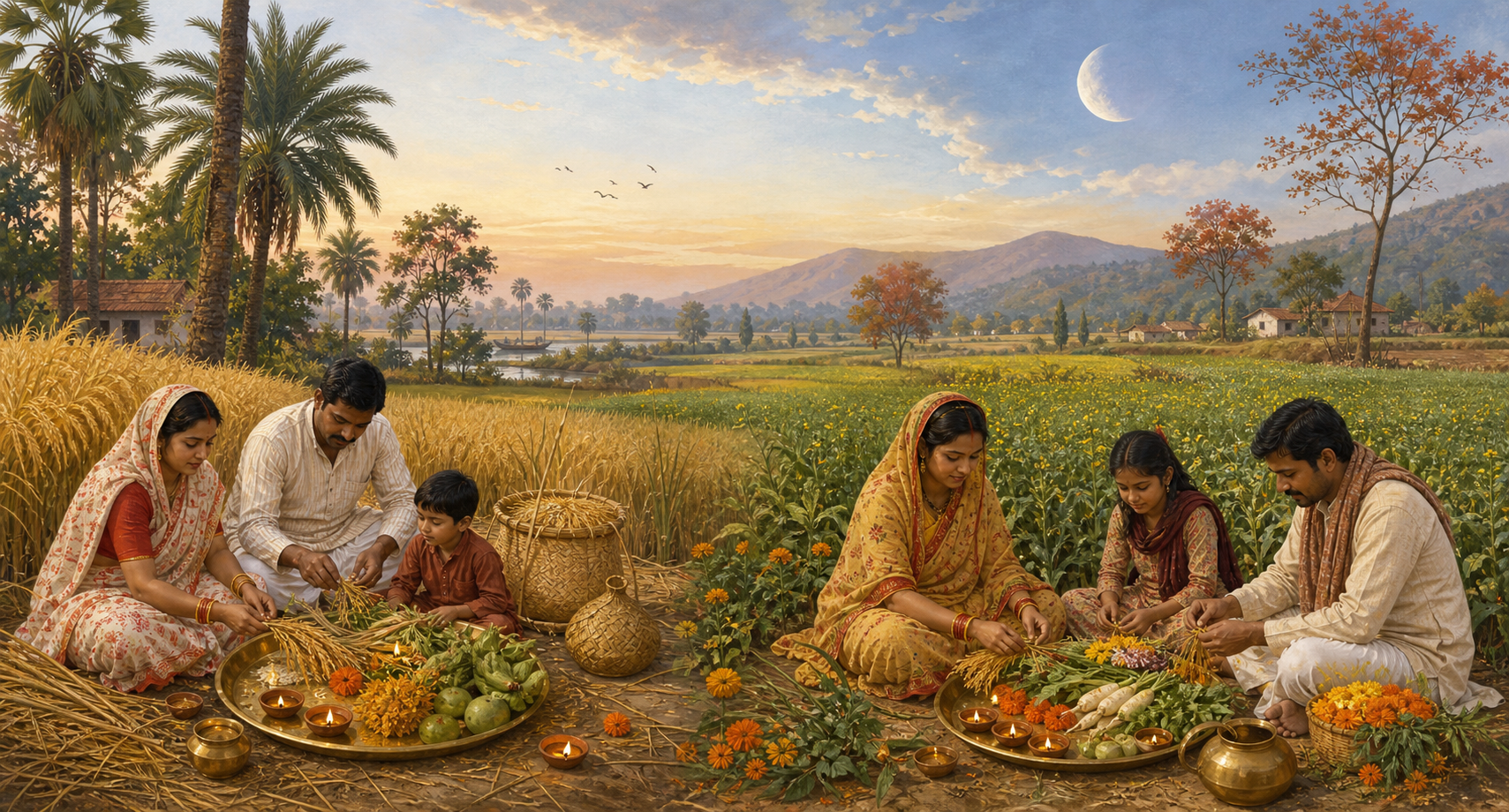
The seasonal meaning matters as well. Agrahan carries the harvest atmosphere of Nabanna: new rice, shared food, gratitude for the fruits of labour, and neighbourhood gathering. Those associations tell you what kind of programme belongs naturally in the month. A food offering, community meal, distribution effort, or gathering around gratitude fits the season more closely than an event that merely attaches the month name to an unrelated agenda.
When coordinating across regions, keep both names instead of choosing one and suppressing the other. A clear notice might say: “During Bengali Agrahan, corresponding to the late-Kartik and Margashirsha seasonal transition in other calendars.” Then add the civil date and local ritual timing. This gives every participant an entry point without pretending that the underlying systems are identical.
Use this five-step check before fixing an observance
You do not need to master every calendrical school to make a careful decision. You need a disciplined sequence that prevents the most common category errors.
- Set the place first. Write down the city where the ritual or event will occur. If you are in the diaspora, do not automatically reuse a time printed for a city in Bharat. The relevant location is where the observance happens.
- Name the decision. Are you identifying the regional month, finding the tithi at sunrise, choosing a puja interval, or avoiding a particular period? Each question requires a different part of the Panchang.
- Copy the transition. Record the tithi and its ending time, followed by the tithi that succeeds it. Avoid notes such as “November 18 is Chaturdashi” when the change happens within that date.
- Apply the observance rule. Check whether your vrata, puja, or temple tradition requires sunrise prevalence or another specified interval. If your household follows a particular Panjika or lineage, keep that authority consistent rather than switching calendars to obtain a preferred answer.
- Publish enough detail to be checked. Give the civil date, city, regional month where relevant, paksha, tithi cutover, and chosen ritual window. For a public programme, name the local temple calendar or Panjika used so that a regional variation is understood rather than mistaken for carelessness.
If two trusted local calendars still differ, inspect their assumptions before debating the final date. Are both set to the same city? Are they answering the same ritual question? Are they following the same regional or lineage convention? If those inputs differ, the outputs are not true contradictions. If the inputs match and the timing still differs, follow the established authority of your household or temple and state that choice plainly.
Let the seasonal transition shape what you actually do
A calendar becomes useful when it changes conduct. On a Trayodashi-to-Chaturdashi day, you might place household cleaning and a simple offering in the earlier period, then reserve later time for japa, quiet study, or meditation. During Agrahan, a household can set aside some new-season food for sharing. A temple or cultural association can connect recitation and worship with a meal, food distribution, or another concrete act of service.
This approach also lets different Dharmic communities meet without claiming that their calendars or rites are the same. Hindu, Buddhist, Jain, and Sikh disciplines have distinct authorities and observances. Gratitude, restraint, ethical conduct, compassion, study, and seva can still provide an honest field of cooperation. Shared service is strongest when difference is respected rather than blurred.
Before your next observance, make a five-line calendar note: place, civil date, regional month, tithi transition, and required ritual interval. Confirm it with the local Panchang or temple authority before sending invitations. That small habit preserves both accuracy and regional tradition while allowing the calendar to guide a living practice.
References
- DharmaRenaissance Blog – November 18, 2025 Panchang Guide: From Trayodashi to Chaturdashi for Peaceful, Auspicious Rituals
- DharmaRenaissance Blog – Agrahan Month 2025 (Agrahayan 1432): Auspicious Dates, Harvest Spirit, Bengali Calendar Guide
