
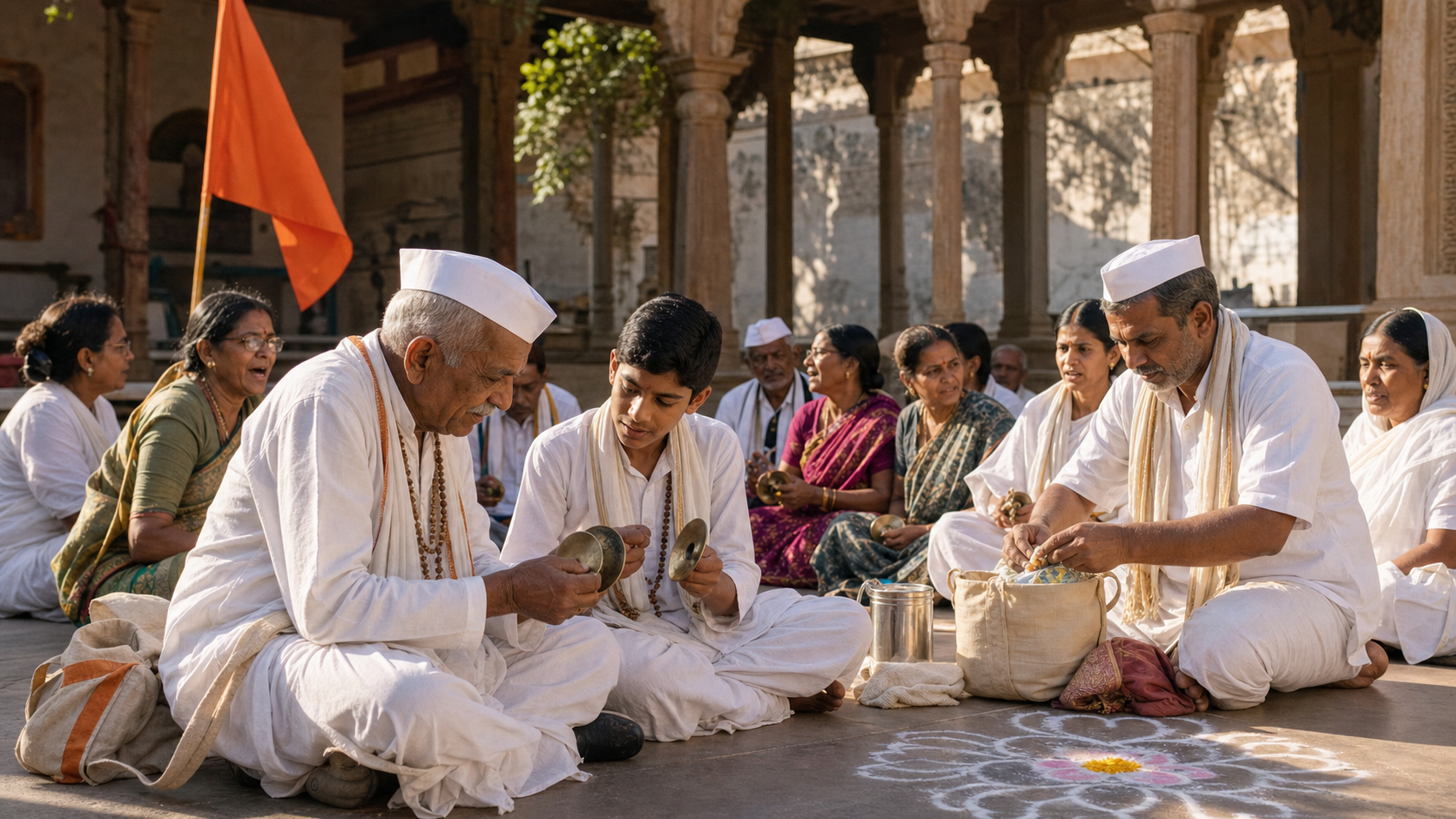
If you are trying to protect Warkari heritage in your family, mandal, temple, or town, do not confuse visibility with continuity. A well-attended gathering can display devotion, but it does not by itself ensure that someone will be able to lead nama-smarana, uphold the discipline of kirtan, organise seva, or teach the meaning of these practices when today’s custodians step back.
Your practical goal is to keep a complete chain alive: practice, practitioner, learner, sacred setting, community support, and freedom to observe the tradition with dignity. Once you examine each link, heritage protection becomes a series of concrete responsibilities rather than a vague appeal to preserve culture.
Protect the chain that makes each practice possible
Nama-smarana, kirtan, and seva form the living devotional core of Warkari heritage. Abhanga, pilgrimage, sacred places, collective worship, ethical conduct, and service belong to an interconnected way of life. Protecting only the most visible expression while neglecting the people and relationships behind it leaves that heritage vulnerable.
Begin with a local practice register. This is not an inventory of possessions. It is a working account of what your community must still be able to do. Create a separate entry for every practice you want to transmit, and record:
- The local name of the practice and what participants actually do.
- The person or group currently trusted to guide it.
- The occasion, sacred setting, and community relationships it requires.
- The words, melodies, stories, etiquette, or practical skills a learner must know.
- The people who are learning now, not merely attending.
- The next occasion on which the practice will be performed or taught.
- The present obstacle: lack of learners, uncertain access, weak organisation, missing documentation, or an administrative barrier.
Then apply a simple local triage. Treat a practice as urgent when its knowledge rests with a single custodian, no learner is preparing to assume responsibility, or access to its setting is uncertain. Keep a practice under watch when it still occurs but depends on informal arrangements that could easily lapse. Regard it as stable for now only when it recurs, has capable custodians, and has learners moving toward responsibility.
This distinction changes where you spend effort. An event that already attracts people may need less publicity than a quiet teaching relationship that is about to disappear. Heritage work should follow vulnerability, not prominence.
Turn younger participants into practitioners, not spectators
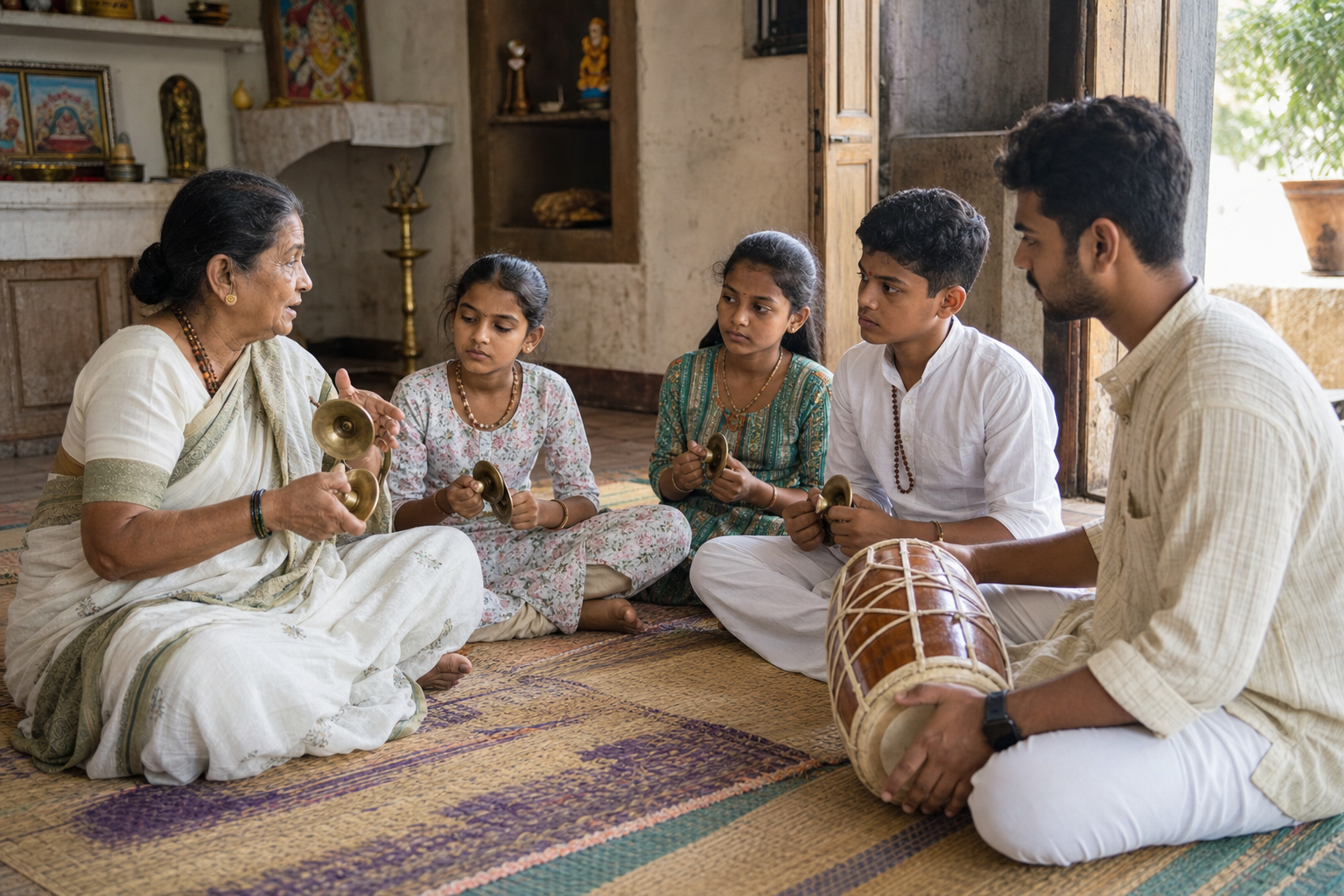
Intergenerational transmission fails when young people are invited to watch but never entrusted with a defined part of the practice. Attendance can create familiarity. Continuity requires guided participation, correction, understanding, and eventually responsibility.
Use a learning path that moves through observable stages:
- Observe the complete practice, including preparation, conduct, and closure.
- Perform a limited part under the guidance of a recognised custodian.
- Receive correction in pronunciation, melody, sequence, etiquette, or meaning as relevant.
- Explain the purpose of the practice and its important Warkari terms in the learner’s own words.
- Support the practice in a real community setting rather than only in rehearsal.
- Teach a small element while an experienced practitioner remains present to correct mistakes.
A learner is becoming dependable when they can do more than reproduce words. They should understand when the practice belongs, how participants are expected to conduct themselves, which elements may be adapted for accessibility, and which elements the community regards as integral.
Give elders and younger members complementary authority. The experienced custodian should set the standards of fidelity and explain the parampara. Younger participants can help with scheduling, transliteration, audio cataloguing, outreach, and accessible explanations. Digital competence is useful, but it should support the tradition’s custodians rather than silently replace their judgement.
Inclusive outreach does not require dilution. Retain key terms such as nama-smarana, abhanga, kirtan, and seva, then explain them clearly instead of substituting thinner labels. Tell newcomers about expected conduct before an observance begins. Provide context without turning worship into a performance designed primarily for an audience. A person can be welcomed into learning without being told that every boundary is negotiable.
Document the tradition without taking it away from its custodians
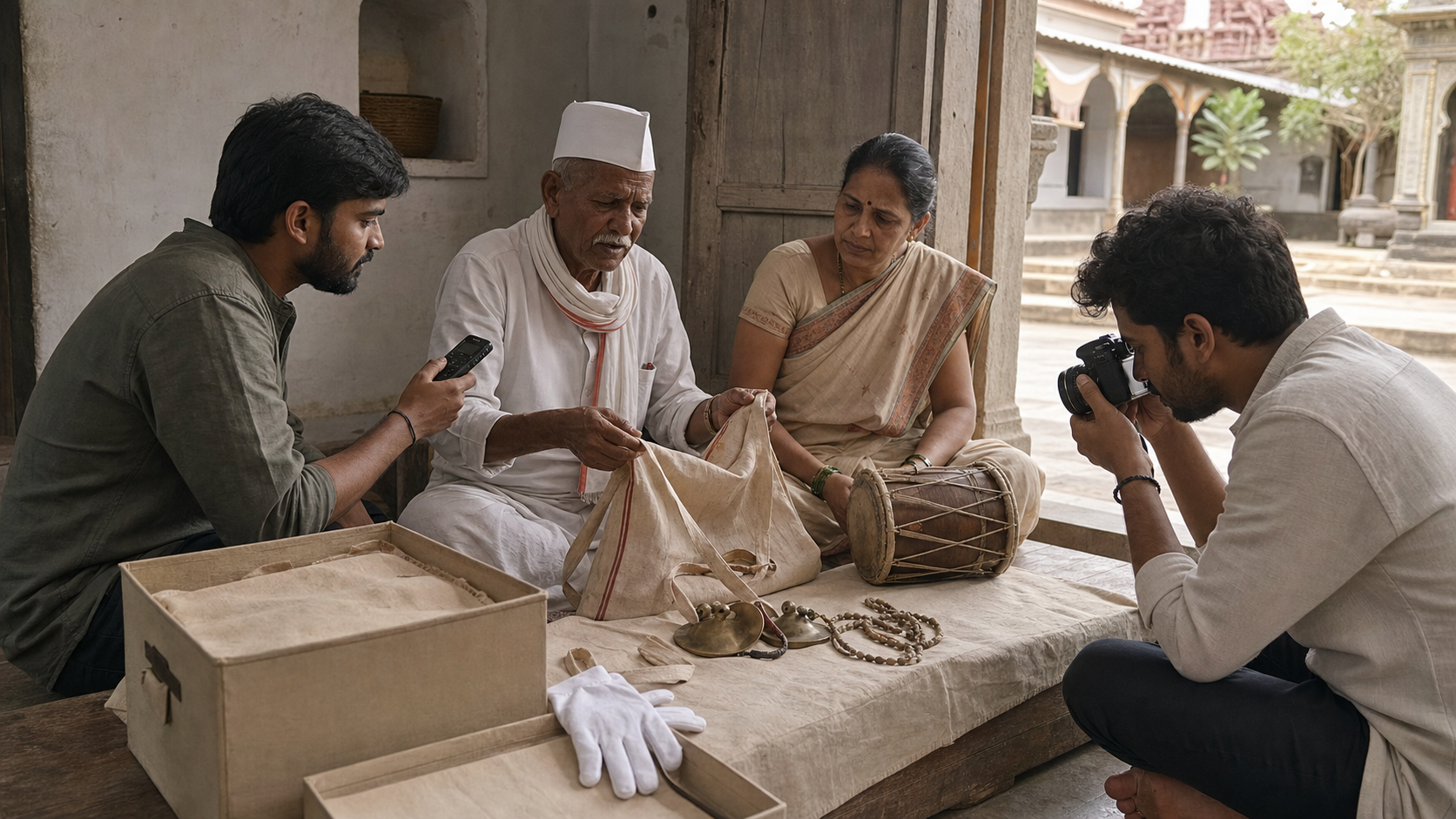
A recording can survive even while a practice disappears. Documentation is therefore a support for transmission, not a substitute for it. Its value lies in helping a community remember accurately, teach responsibly, and recover knowledge when a practitioner or local institution is no longer available.
Before recording an abhanga, kirtan, oral explanation, procession, or sacred observance, settle the questions that a camera cannot answer:
- Who has the standing to permit the recording?
- Is the material public, community-only, or restricted?
- How should the practitioner, lineage, place, and local variant be identified?
- May the recording be edited, translated, excerpted, or published online?
- Who will keep the original and decide how later requests are handled?
- What should happen if a custodian asks for access to be changed?
Do not publish sacred or restricted material merely because it was technically possible to record it. Loss of community trust can damage transmission more deeply than the absence of a video. Where permission is uncertain, preserve written notes about the practice and return to the appropriate custodian before making any public copy.
Every preserved item needs enough context to remain intelligible. Record its original title, language or script, practitioner, teacher or lineage where known, place, occasion, role within the observance, explanation of meaning, permission status, and relationship to any other version. If local variants differ, identify them as variants. Do not manufacture a single supposedly authentic form unless the recognised custodians themselves make that judgement.
Keep the preservation copy separate from the version prepared for convenient sharing, and maintain a backup under accountable community control. Most importantly, connect every archive entry to teaching: name the person who can explain it, the learner using it, and the occasion when the knowledge will next be practised. Otherwise the archive risks becoming a cultural storehouse that no living community opens.
Convert heritage concerns into requests institutions can act on
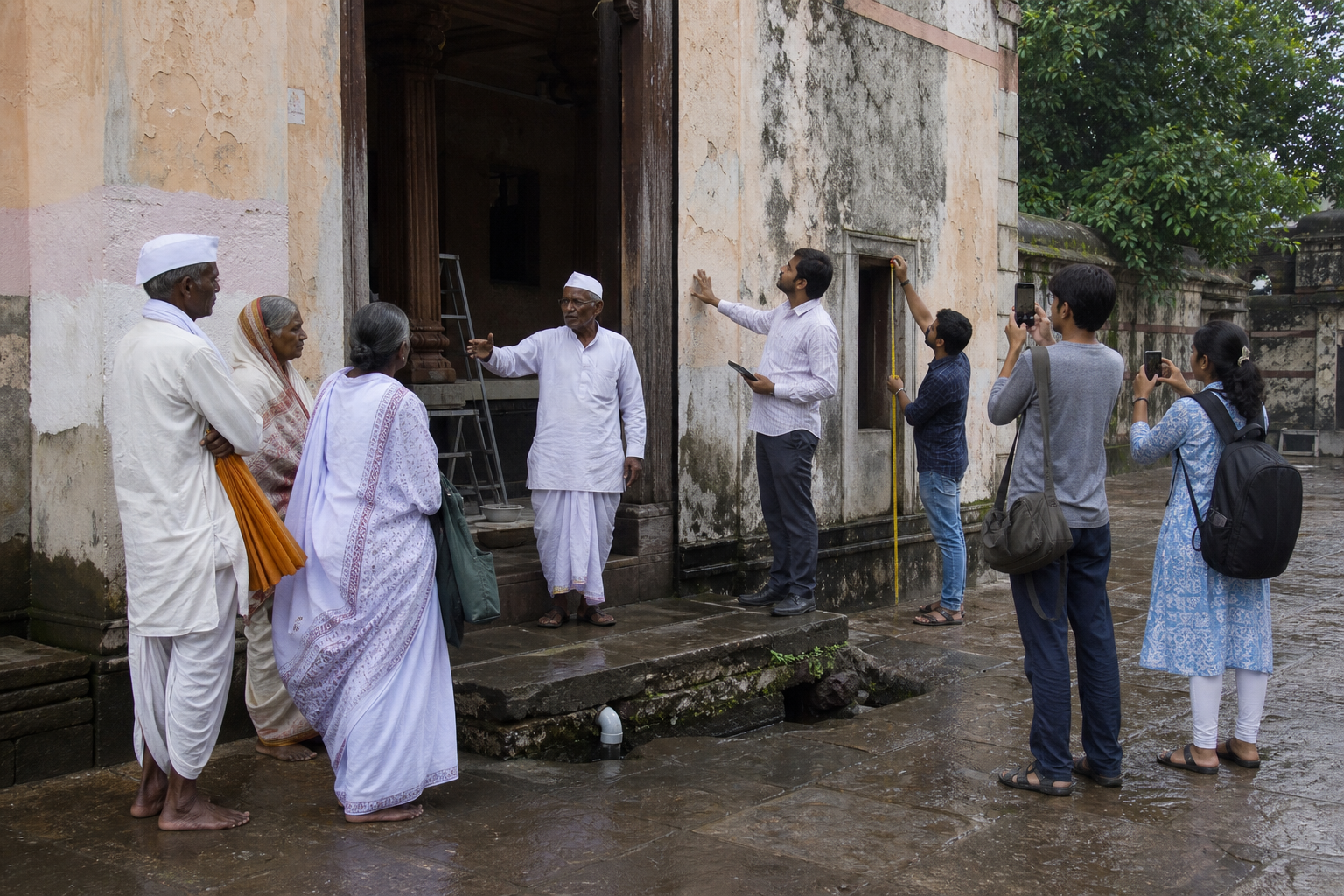
Warkari heritage has a public dimension. Yatras, sacred sites, community events, education, and access to traditional observances often depend on cooperation between devotees, civil society, and public administrators. Advocacy associated with the 19th Warkari Maha-adhiveshan has foregrounded community institutions, freedom of practice, intergenerational learning, documentation, education, and constructive policy engagement. Local groups can make those priorities actionable by replacing a broad grievance with a bounded request.
Prepare a short representation that answers these questions:
- Which Warkari practice, observance, institution, or sacred setting needs protection?
- What specific barrier is preventing or weakening it?
- What administrative action is being requested?
- Which elements are religiously integral, and which operational details can be adjusted?
- How will the proposed arrangement support orderly participation and public welfare?
- Who is authorised to speak for the participating community and answer follow-up questions?
- By what point in the ritual or event calendar is a decision needed?
For a yatra or major community observance, bring custodians and administrators together before routes, timings, access arrangements, or public services become fixed. The community should explain the observance’s non-negotiable requirements. Organisers should identify volunteer responsibilities and clear points of contact. Administrators should state any operational constraint early enough for a respectful solution to be considered. This is where cultural rights become practical rather than ceremonial.
Keep a dated record of the request, the supporting material, the person who received it, and the response. After the observance, record what worked and what must change before the next one. Institutional memory matters because the same issue can return when office-bearers, officials, or volunteers change.
Where property, permissions, public-order powers, or constitutional rights are genuinely disputed, do not assume that devotional importance by itself resolves the legal question. Preserve the facts, separate the religious concern from the legal claim, and obtain advice from a qualified legal professional before committing the community to an irreversible course.
Build alliances around defined contributions. Devotees and recognised practitioners should describe the tradition and its boundaries. Scholars and documenters can help organise knowledge. Educators can prepare explanations that retain Dharmic vocabulary. Volunteers can strengthen seva. Administrators can facilitate lawful, dignified observance. Other Dharmic communities may share experience grounded in values such as seva, ahimsa, and langar, while respecting that distinct traditions are not interchangeable. Unity becomes durable when it protects particular practices instead of dissolving them into generic spirituality.
Key takeaways
- Measure continuity by capable practitioners and active learners, not attendance alone.
- Audit each practice as a chain of custodian, learner, setting, occasion, knowledge, and support.
- Give younger participants supervised responsibility and teach meaning alongside performance.
- Record consent, context, custodianship, and access rules before publishing cultural material.
- Ask institutions for a specific, workable action tied to an identified barrier.
- Use shared Dharmic values for cooperation without erasing Warkari language, authority, or boundaries.
At your next family, temple, or community meeting, choose the Warkari practice most at risk. Leave the meeting with a named custodian, a committed learner, a next occasion for guided practice, and one obstacle assigned to someone who can address it. That small chain of responsibility is where heritage protection becomes living parampara.
References
