
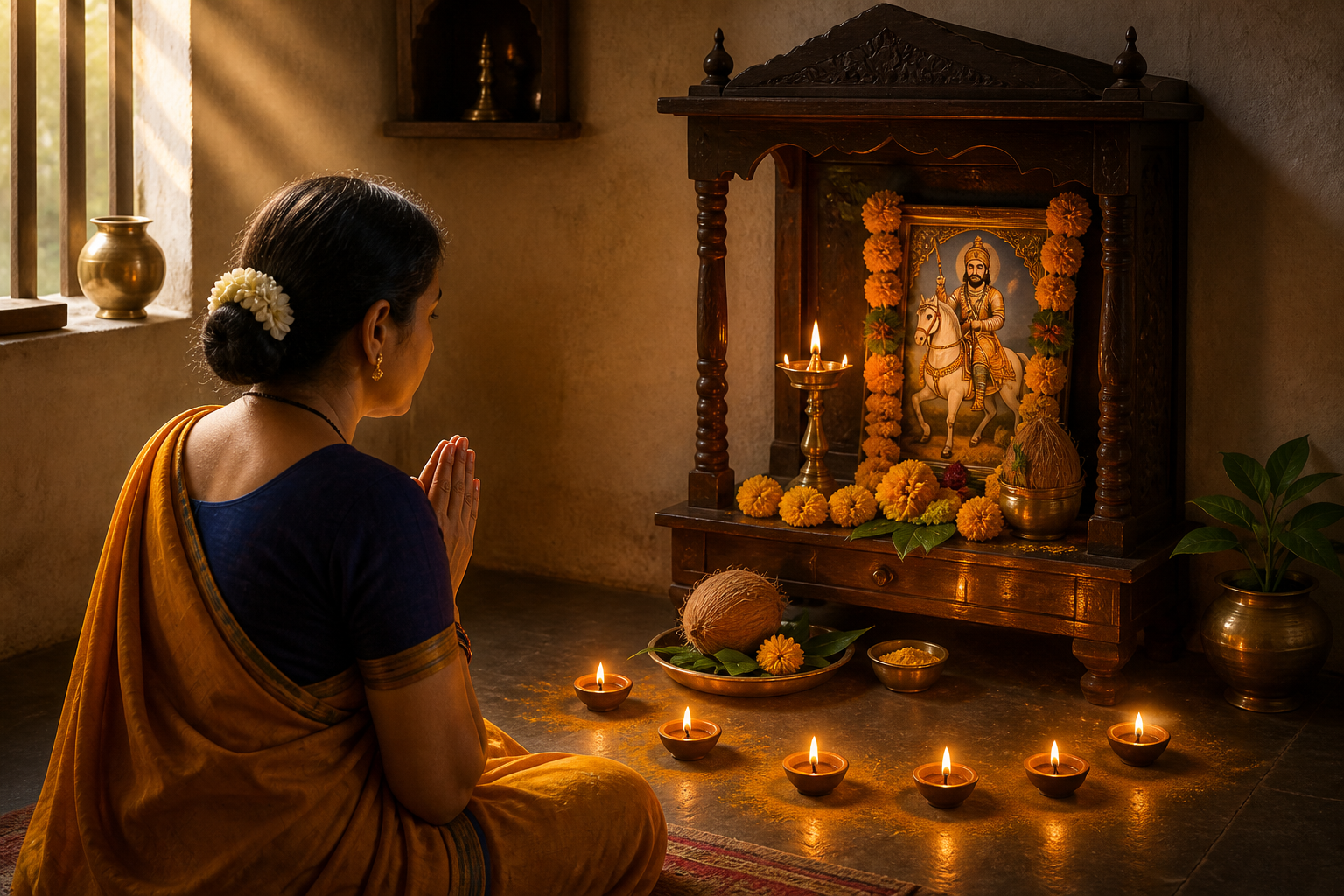
If you want to observe Champa Sashti but have only fragments of the family practice, you do not need to invent an elaborate ceremony. You need the correct six-day calendar window, a daily discipline you can sustain, and a clear plan for Sashti.
The observance can be modest without becoming casual. A lamp, a sattvic vrata, Khandoba japa, the account of Mani and Malla, and a deliberate act of daan can give the six days a coherent devotional shape.
Key takeaways
- Champa Sashti is a six-day observance, not only the final festival day. It begins on Shukla Paksha Pratipada and culminates on Sashti in the month of Margashirsha.
- Lord Khandoba is worshipped as a powerful form of Shiva whose victory over Mani and Malla represents the triumph of dharma over adharma.
- A practical home observance can combine a sattvic diet or customary fast, diya and flower offerings, japa, the Khandoba narrative, aarti, and daan.
- You do not need to assign an invented ritual or meaning to every day. A stable daily practice followed by a fuller Sashti observance is more faithful than an unsupported day-by-day scheme.
- If your family or local temple has an established custom, let that living tradition guide details that a general checklist cannot settle.
Put the correct six days on your calendar
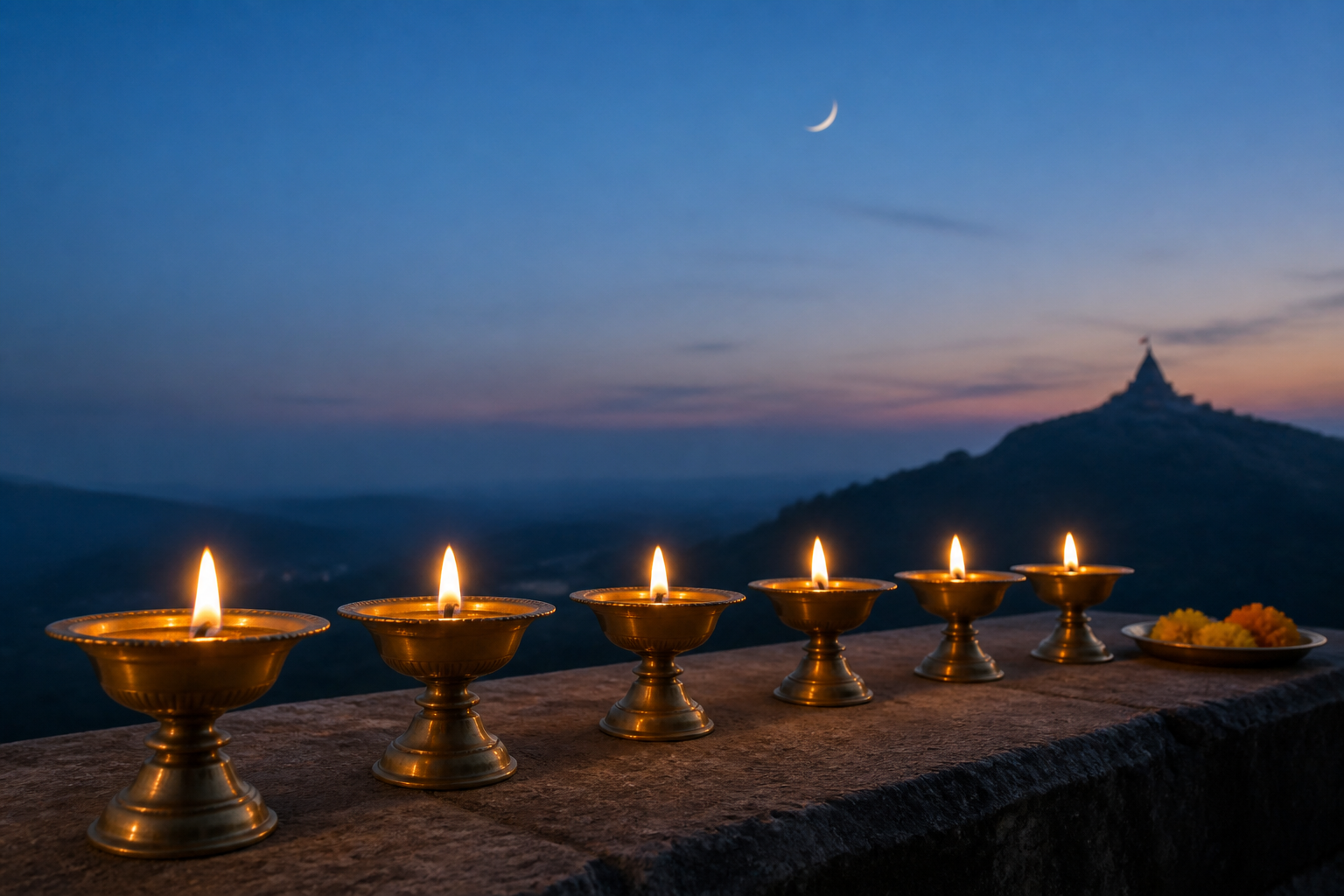
The first common mistake is to treat Champa Sashti as a single-day appointment. The vrata extends from Shukla Paksha Pratipada through Sashti in Margashirsha. Sashti is the culmination, but the preceding days create the discipline that gives the culmination its force.
Because this sequence follows the Hindu lunar calendar, its Gregorian dates move. In 2025, the six days fell from November 21 through November 26. Those dates are an example, not a permanent annual schedule. For another year, check a trusted local panchang or a Khandoba temple announcement before arranging leave, travel, fasting, or a family gathering.
Once the dates are confirmed, decide the scope of your vrata before the first day. Write down three things: the daily practice you will not skip, the food discipline you will follow, and what you will do on Sashti. This prevents the observance from becoming ambitious on the first evening and irregular by the middle.
Your daily minimum might be a diya, flowers, a known Khandoba mantra or name-japa, and a short aarti. If your household normally performs abhishekam, include it according to that custom. If work or caregiving limits your time, keep the sequence shorter but stable. Continuity across the six days matters more than adding unfamiliar procedures that you cannot maintain.
Make Khandoba’s victory the centre of the vrata

Khandoba, revered as a powerful form of Shiva, triumphs over the demons Mani and Malla. The narrative gives Champa Sashti its ethical direction: dharma must be protected, and adharma must be confronted rather than accommodated within us.
Do not leave that meaning at the level of a remembered battle. At the beginning of the vrata, identify one habit that weakens your dharmic life. It may be careless speech, neglected worship, avoidable anger, indifference to family duties, or reluctance to help when help is within your reach. Choose one concrete correction to practise for all six days.
This is where courage, compassion, discipline, and integrity become more than festival vocabulary. Courage helps you face what needs correction. Discipline keeps the vrata intact after its initial enthusiasm fades. Compassion prevents firmness from turning cruel. Integrity joins the worship performed before the deity to the conduct shown after the lamp is extinguished.
A simple household sequence can keep that inner and outer work together:
- Prepare one clean place for worship and gather only the materials you will actually use.
- Begin with a brief sankalpa stating the discipline you intend to keep through Sashti.
- Offer flowers and light a diya safely. If abhishekam belongs to your household practice, perform it in the customary manner.
- Chant the Khandoba mantra, prayer, or name received through your family or temple tradition. A general observance should not manufacture a supposedly authoritative mantra.
- Read or listen to the account of Khandoba’s victory over Mani and Malla, then perform aarti or sing a bhajan.
- Close by reviewing the ethical commitment you chose and setting aside time or resources for daan.
You may repeat this sequence on each of the six days. Repetition is not a lack of imagination; it is how a vrata becomes steady. The final day can then carry a fuller puja, a temple visit, family participation, and completion of your charitable intention.
Fast with discipline, not competition
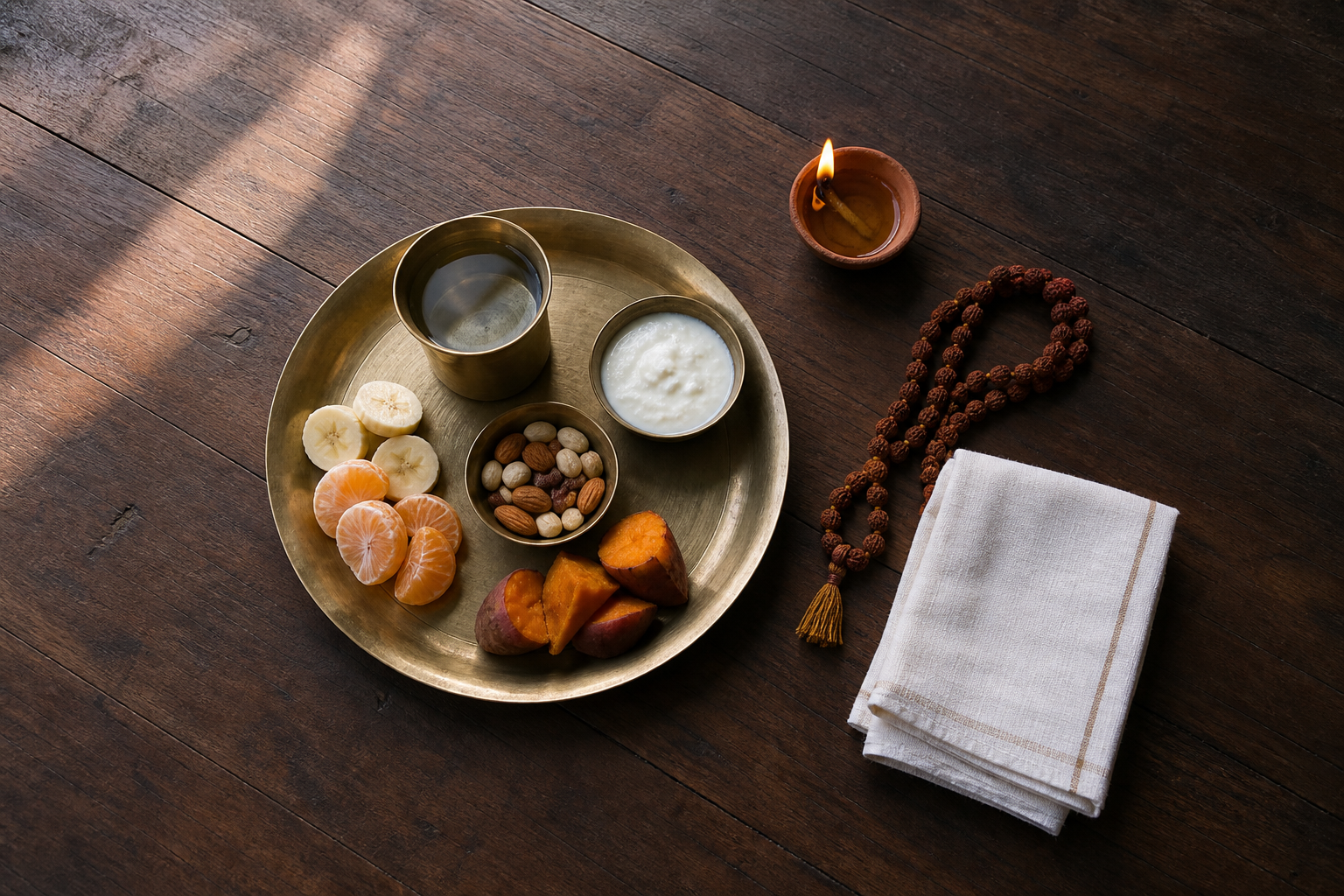
Fasting and a sattvic diet are established parts of Champa Sashti observance, but the exact rule should come from your family tradition, temple guidance, and what is safe for you. Do not copy a severe restriction from another household merely because it appears more demanding.
If you know the customary fast and can undertake it safely, prepare for it before Pratipada. If a complete fast is not part of your tradition or is unsuitable, a simple sattvic diet can still give the six days a clear boundary. Decide in advance what you will eat rather than renegotiating the vrata whenever hunger or convenience intervenes.
Food restriction should never conflict with necessary medical care. If fasting would interfere with a health condition, medication, or professional dietary advice, keep the necessary food routine and place the discipline in prayer, simplicity, japa, conduct, and daan. Devotion does not require preventable harm.
Also watch what the fast does to your behaviour. A restricted menu accompanied by irritability, contempt, or avoidable conflict has lost contact with the virtues the vrata is meant to strengthen. Simplicity at the table should make attention available for worship and service, not become a contest of endurance.
Plan the practical side at the same time. Obtain simple ingredients before the observance begins, reuse puja vessels and decorations where appropriate, and buy flowers or other offerings in quantities you can use. Minimising waste is a direct way to keep reverence connected to responsibility.
Let Sashti turn devotion toward family and community
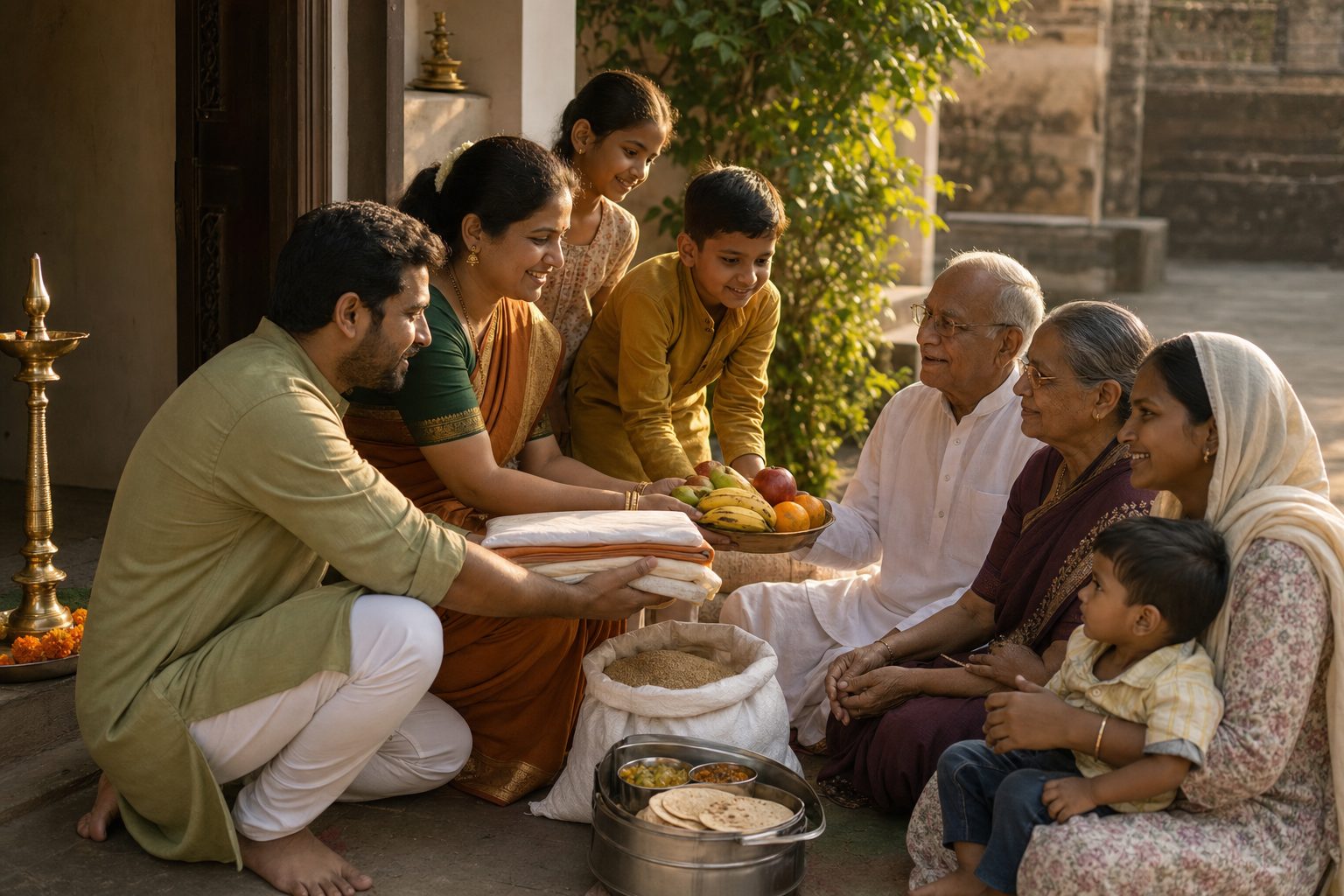
Sashti should feel decisive, but it does not have to become elaborate. At home, perform the fullest version of the worship your family knows, listen again to the victory narrative, offer aarti, and pray specifically for protection, moral courage, and the well-being of your family and community. Complete the daan you planned rather than leaving charity as a vague intention.
If you are going to a Khandoba shrine, confirm its timings and local requirements directly. Jejuri is among the renowned centres of Khandoba devotion, and major observances can draw substantial collective participation. Early darshan may make it easier to worship attentively, but you should still expect queues and follow the directions of temple workers.
- Carry only the offerings the temple accepts, and respect local practice rather than insisting on your household procedure.
- Keep entrances and movement routes clear, especially when stopping for prayer, conversation, or photographs.
- Use reusable containers where practical and do not leave packaging, discarded offerings, or food waste at the sacred site.
- Join bhajans, aarti, and community worship without treating the gathering as a spectacle.
- If you cannot travel, support a local temple, participate in a nearby bhajan, or gather your household for the concluding worship.
Champa Sashti also links personal vrata to living heritage. Temples remain strong when devotees observe local customs, care for sacred spaces, contribute responsibly, and bring younger family members into the meaning of the occasion rather than only its outward activity.
Before Pratipada arrives, record the six dates, choose your daily minimum, settle the fasting rule, decide whether Sashti will be observed at home or at a temple, and name the daan you will complete. Once those decisions are made, you can give the six days to Khandoba with attention instead of last-minute negotiation.
References
