
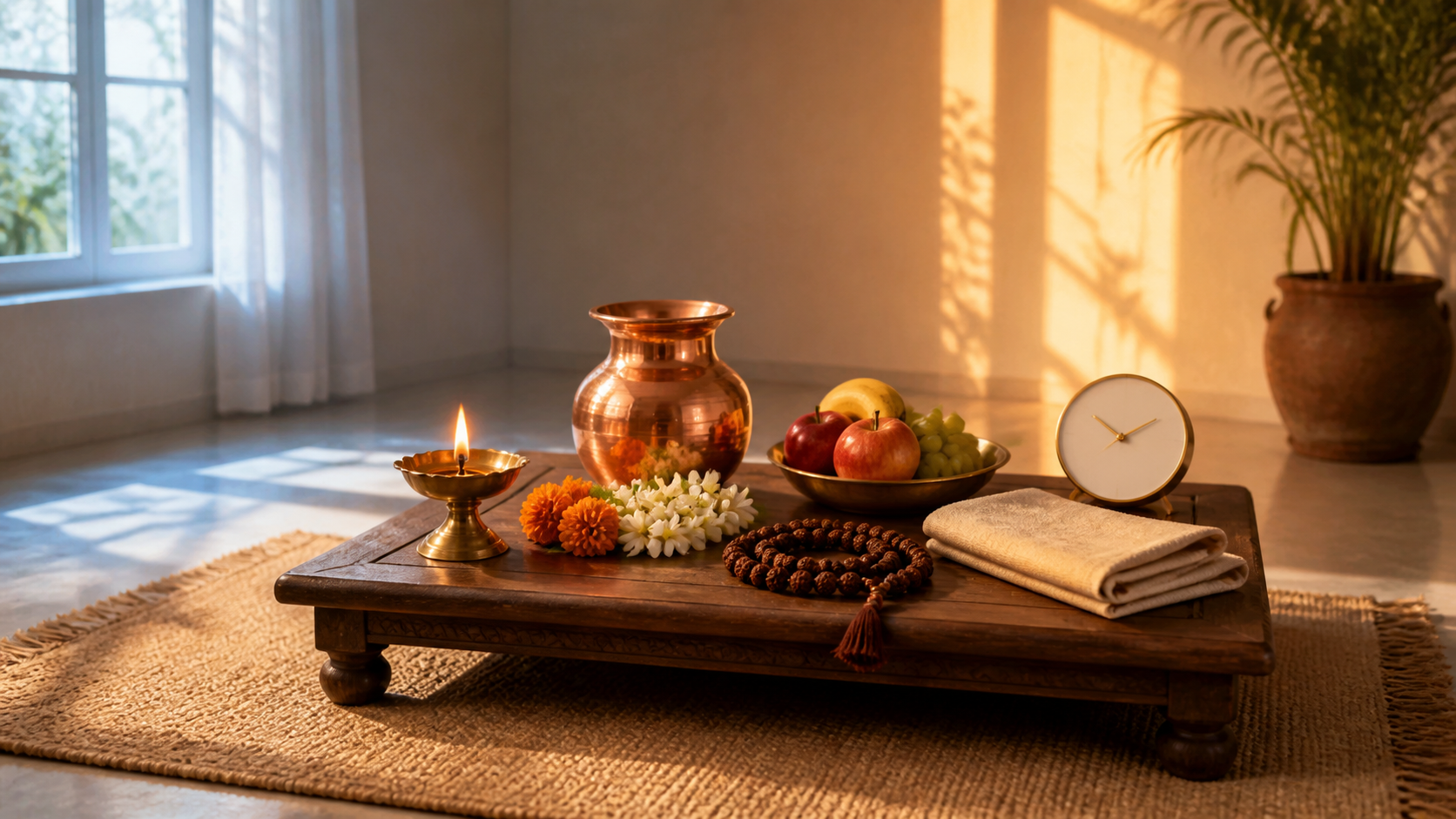
If you are arranging a home puja, japa, temple visit, charitable act, or family sankalpa for November 22, the main question is not whether the whole day is auspicious. It is which tithi is active at your location when you begin the observance.
The date moves from Shukla Paksha Dwitiya to Shukla Paksha Tritiya during the afternoon. That gives you a simple working plan: use Dwitiya for a measured beginning or renewed intention, then use Tritiya to continue, refine, and support what has been started. The approximate transition is useful for planning, but your city-specific Panchang must supply the operative time.
The tithi change that organizes the day
Saturday, November 22, 2025 begins under Shukla Paksha Dwitiya, the second lunar day of the waxing fortnight. Dwitiya lasts until approximately 3:11 PM local time, after which Shukla Paksha Tritiya, the third lunar day, continues for the rest of the day.
Do not treat 3:11 PM as a universal cutoff that can be copied into every calendar. Tithi is determined through the relationship of the Sun and Moon, while the clock time displayed for its end depends on the observer’s location and time zone. A Panchang configured for another city can therefore show a time that is wrong for your ritual even when its underlying calculation is sound.
The practical distinction is more important than trying to declare one half of the day superior to the other. Dwitiya is traditionally used for steady beginnings, study, family harmony, seva, japa, and the affirmation of an intention. Tritiya supports continuity, devotional work, constructive planning, generosity, and the careful strengthening of something already underway.
| Local period | Tithi | Useful ritual emphasis | Concrete action |
|---|---|---|---|
| From local sunrise until the local tithi transition | Shukla Dwitiya | Beginning with steadiness | Make the sankalpa, begin japa or study, repair a family strain, or initiate a defined act of seva. |
| After the local tithi transition | Shukla Tritiya | Continuity and consolidation | Continue the chosen practice, refine a devotional routine, complete creative planning, or carry the intention into charitable action. |
This is a devotional framework, not a claim that every activity requires a muhurta. Ordinary prayer, ethical conduct, reading, meditation, and service do not need to be abandoned because an ideal window is unavailable. Exact electional timing matters more when a rite is explicitly tithi-bound, when a priest is conducting a homa, or when a family tradition requires a particular nakshatra or planetary period.
Verify the usable time in the right order

A common mistake is to search for an attractive muhurta first and check the location later. Reverse that order. A precise-looking clock time has no ritual precision if the Panchang is set to the wrong city.
- Set the place of observance. Configure the Panchang for the city where the ritual will physically occur, not your birthplace, family hometown, or the location of a website publisher.
- Confirm local sunrise and the Dwitiya ending time. Make sure the page is showing Saturday, November 22, 2025 in the correct time zone. Use the displayed local transition rather than importing 3:11 PM without verification.
- Mark Rahu Kalam and Yamaganda. If your sampradaya avoids starting important work during these periods, treat them as exclusions before selecting a preferred window. Their clock times derive from the local day and should not be copied from another region.
- Check Abhijit Muhurat if it is relevant to your practice. Abhijit generally falls around local solar noon. That does not mean a fixed 12:00 PM civil-clock slot; use the interval calculated for your city.
- Inspect nakshatra and rashi when the rite requires them. These details matter for more exact muhurta selection, personal sankalpa, and formally guided rituals. If they are decisive for your observance, confirm them with the local temple, officiating priest, or a trusted regional almanac.
Keep all five checks within one Panchang system. Taking sunrise from one city, Rahu Kalam from a second calendar, and the tithi ending from a third creates a schedule whose parts do not belong to the same local day. Consistency is more useful than collecting several isolated times.
If your chosen observance must be completed during Dwitiya, do not plan to finish at the exact displayed transition. Complete it comfortably before the local cutoff. This avoids turning a devotional act into a race against a minute hand and gives you room for an invocation, offering, or closing prayer that takes longer than expected.
A workable home observance before and after the transition
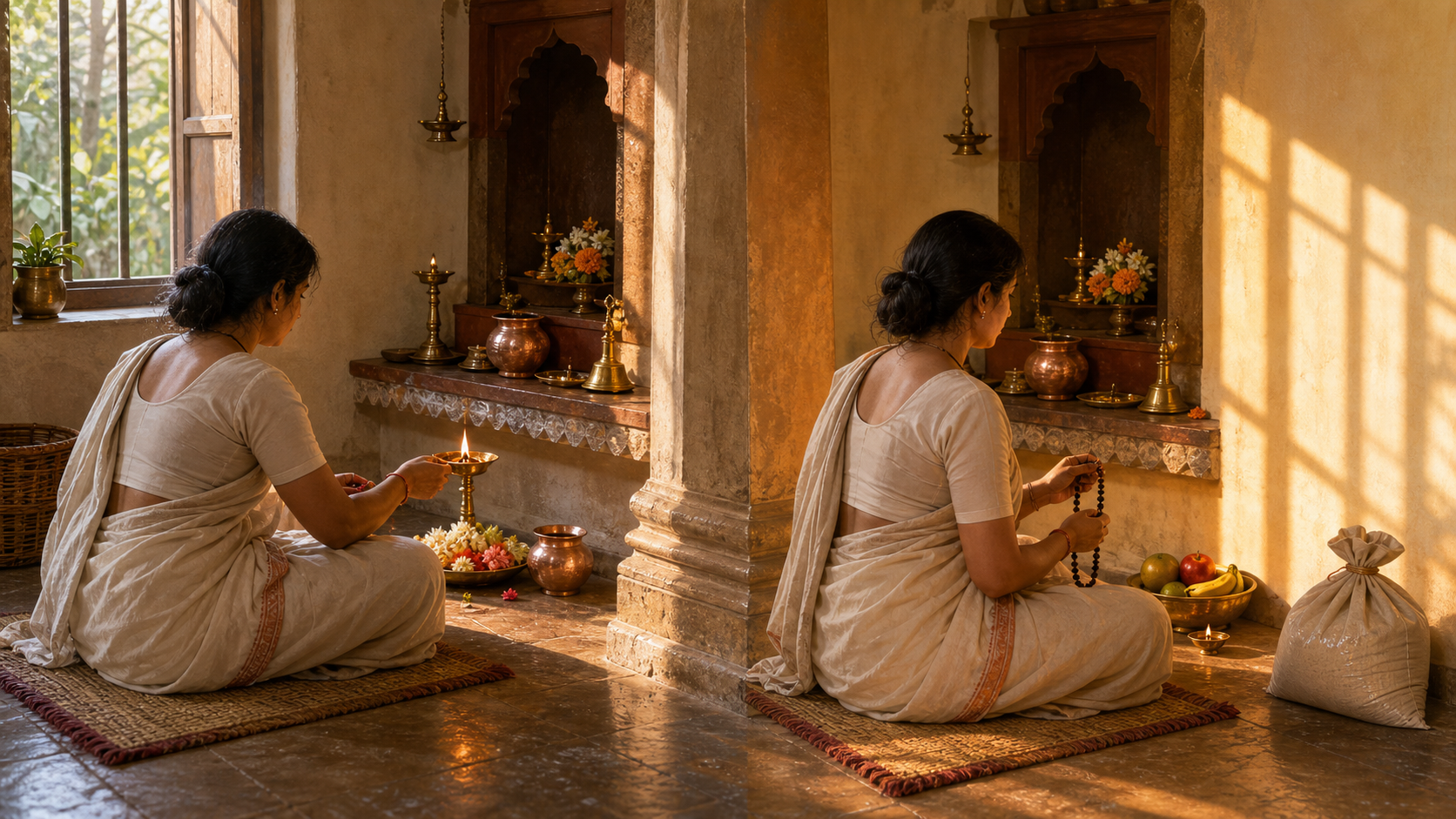
You do not need to perform every possible practice. Choose one devotional discipline and one outward act of dharma. The tithi change can then give the day a clear movement: establish the intention under Dwitiya, embody it under Tritiya, and close with gratitude at dusk.
- Begin with a specific sankalpa during Dwitiya. State what you will actually do. Instead of a broad wish to become more disciplined, resolve to resume a neglected japa, read from a text honored in your household, serve an elder, support education, or provide food to someone in need.
- Perform the practice without unnecessary complexity. Japa, meditation, sacred reading, deepa-lighting, or simple offerings are sufficient for a home observance. Use Panchopachara only where it belongs to your family or sampradaya practice; do not improvise a formal ritual from fragments found in unrelated traditions.
- Carry the same intention into Tritiya. Do not replace the morning resolution with a new collection of goals. Continue the mantra count you began, write a realistic devotional routine, complete the promised act of service, or make the charitable contribution you had merely intended.
- Close the day at dusk. Light a deepa where appropriate, offer a brief prayer, and identify the next occasion on which you will continue the practice. The value of Tritiya’s consolidating emphasis lies in continuity after the date, not in accumulating more observances before bedtime.
If you can only observe in the morning, work within Dwitiya and complete a modest practice well. If you are free only after the transition, Tritiya remains suitable for devotion, planning, kindness, and service. Missing the earlier phase does not make the later practice meaningless.
A temple, vihara, derasar, or gurdwara visit can also express the day’s upward ethical movement, but each place should be approached through its own discipline. Maitri, dana, ahimsa, and seva create genuine points of kinship across Dharmic paths; they do not make their liturgies interchangeable. A Hindu Panchang should not be used to impose one ritual vocabulary on Buddhist, Jain, or Sikh observance. Follow the established practice of the community you are visiting.
What to do when Panchang times disagree
Two displayed times can differ because the calendars are configured for different cities, time zones, or local sunrise data. Check those settings before deciding that one calculation is defective. The city name printed beside the result matters more than the familiarity of the website or app.
- For a home practice: use a trusted Panchang set to the place where you will sit for the ritual.
- For a temple ceremony: follow the temple’s announced schedule. Its officiants are coordinating the rite under the convention used by that institution.
- For an online group observance: ask the organizer which location governs the shared start time. Participants may still use their own local Panchang for private, tithi-specific acts.
- For a formal homa or exact sankalpa: give the officiant your location and ask which tithi, nakshatra, rashi, and exclusions are being applied.
- For ordinary japa, meditation, reading, or charity: do not let a minor calendar disagreement prevent the practice. Choose one reliable local calculation and proceed consistently.
The tithi transition also does not require you to interrupt a general prayer at the exact minute. If the rite is not explicitly prescribed for Dwitiya alone, complete it respectfully. If its validity depends on beginning or ending within a particular tithi, settle that requirement with the officiant before the day rather than trying to interpret competing screens during the ceremony.
Saturday by itself is not a reason to add every practice associated with the weekday. Include a Saturday-specific vrata, deity worship, mantra, or offering only when it belongs to your lineage, vow, or household custom. The Panchang helps you place an observance in time; it does not erase the ritual authority of sampradaya and family tradition.
Key takeaways for November 22
- Shukla Dwitiya governs the earlier part of the day; Shukla Tritiya begins at approximately 3:11 PM in the cited timing.
- Verify the tithi transition for the city where the observance will occur. Do not assume 3:11 PM applies everywhere.
- Use Dwitiya to begin or reaffirm one clear devotional or service commitment.
- Use Tritiya to continue that same commitment through practice, planning, generosity, or community engagement.
- Calculate Rahu Kalam, Yamaganda, and any Abhijit Muhurat from the local day rather than a generic national timetable.
- Check nakshatra and rashi, and seek local ritual guidance, when conducting a formal or personally specific muhurta-based rite.
Before setting the day’s schedule, open your local Panchang and write down three things: the Dwitiya ending time, the periods your tradition avoids, and the practice you intend to carry from Dwitiya into Tritiya. That small preparation turns November 22 from a collection of calendar labels into a coherent day of sadhana and seva.
References
