

If you are deciding whether a puja, vrata, sankalpa, or family observance on Monday, August 17 falls under Panchami or Shashthi, the answer changes during the evening. Shukla Paksha Panchami continues until 6:50 PM, after which Shukla Paksha Shashthi begins.
Use that cutoff as a planning reference, not as a universal local time. Before fixing a ritual near the transition, confirm the tithi ending time in a Panchang configured for the place where the observance will actually be performed.
What the evening transition means

A tithi is a lunar-calendar division, so it does not have to begin or end at midnight. That is why one civil date can contain parts of two tithis.
August 17 begins its relevant calendar span under Shukla Paksha Panchami, the fifth tithi of the waxing half of the lunar cycle. At the stated transition, Panchami ends and Shukla Paksha Shashthi, the sixth tithi, takes over. These are not alternative names for the whole day. They identify the tithi prevailing at different times.
For a practice that specifically requires Panchami, the useful part of August 17 is therefore the interval before the locally verified Panchami ending time. If the practice specifically requires Shashthi, its relevant interval begins only after the local transition. The change does not make the remainder of the day inherently unsuitable; it changes which tithi is in force.
Keep the weekday and tithi separate in your notes. Monday describes the civil weekday, while Panchami and Shashthi describe the lunar day. Both can be true of the same date, and a ritual instruction may care about one, the other, or both.
Why 6:50 PM needs a local check
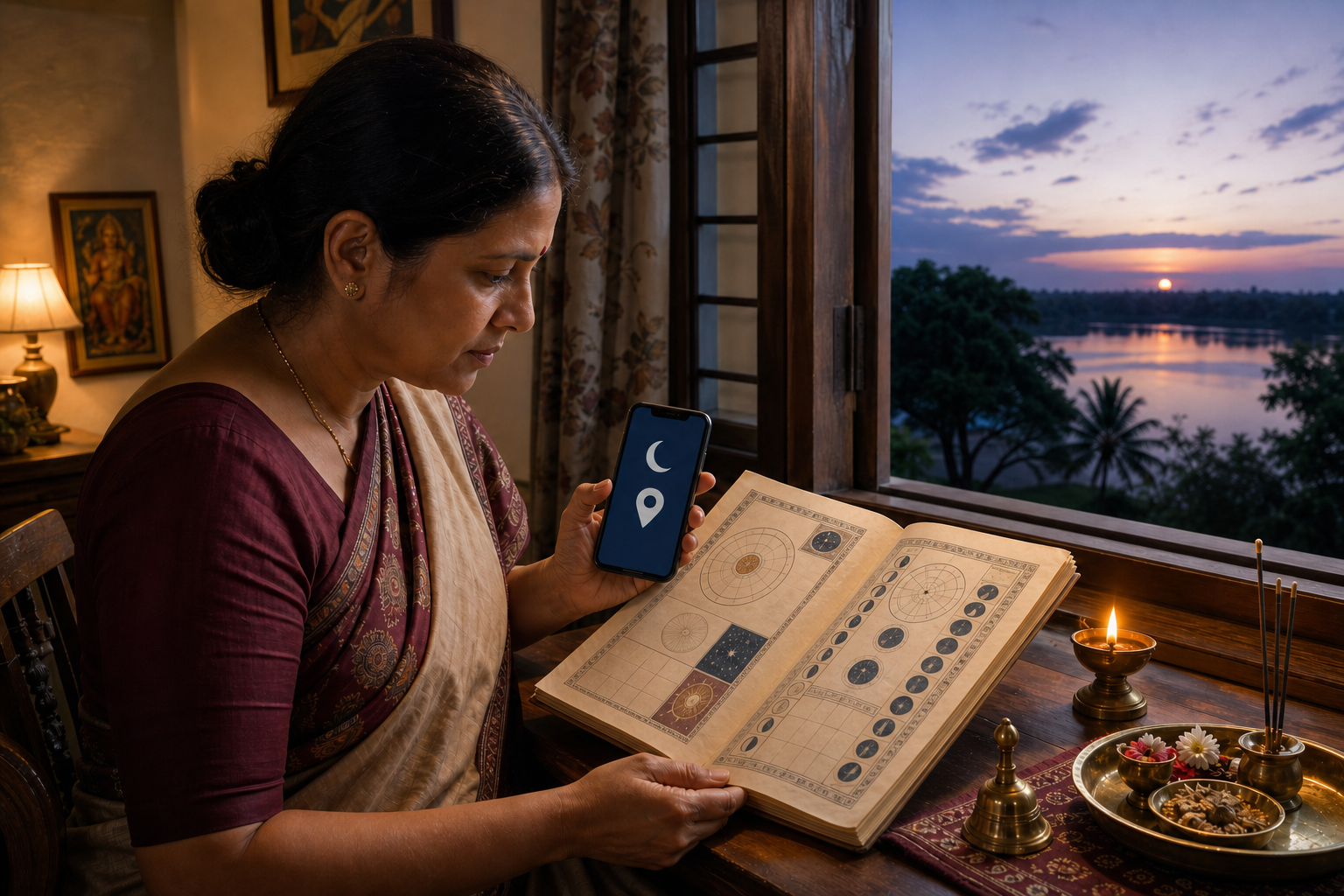
The displayed clock time in a Panchang is meaningful only with its location and time zone. If you live in another region, copying 6:50 PM directly into your calendar can place the ritual on the wrong side of the tithi boundary. Local sunrise conventions and the calculation method used by your family, temple, or sampradaya may also affect how an observance is assigned to a date.
Before relying on the cutoff, make these four checks:
- Set the Panchang location to the city where the puja or sankalpa will be performed, not the city of the host, priest, or online audience.
- Confirm that the calendar is showing Monday, August 17, 2026 in that location’s time zone.
- Look specifically for the local ending time of Shukla Paksha Panchami and the beginning of Shukla Paksha Shashthi.
- If the observance has a formal vrata rule, verify whether the tradition assigns it by sunrise, by the tithi’s presence during a required part of the day, or by another sampradaya-specific convention.
The last check matters because a tithi being present for several hours on a civil date does not, by itself, settle the observance date for every vrata. A family paddhati, temple calendar, or trusted purohit should decide a tradition-specific conflict.
How to plan an observance on August 17
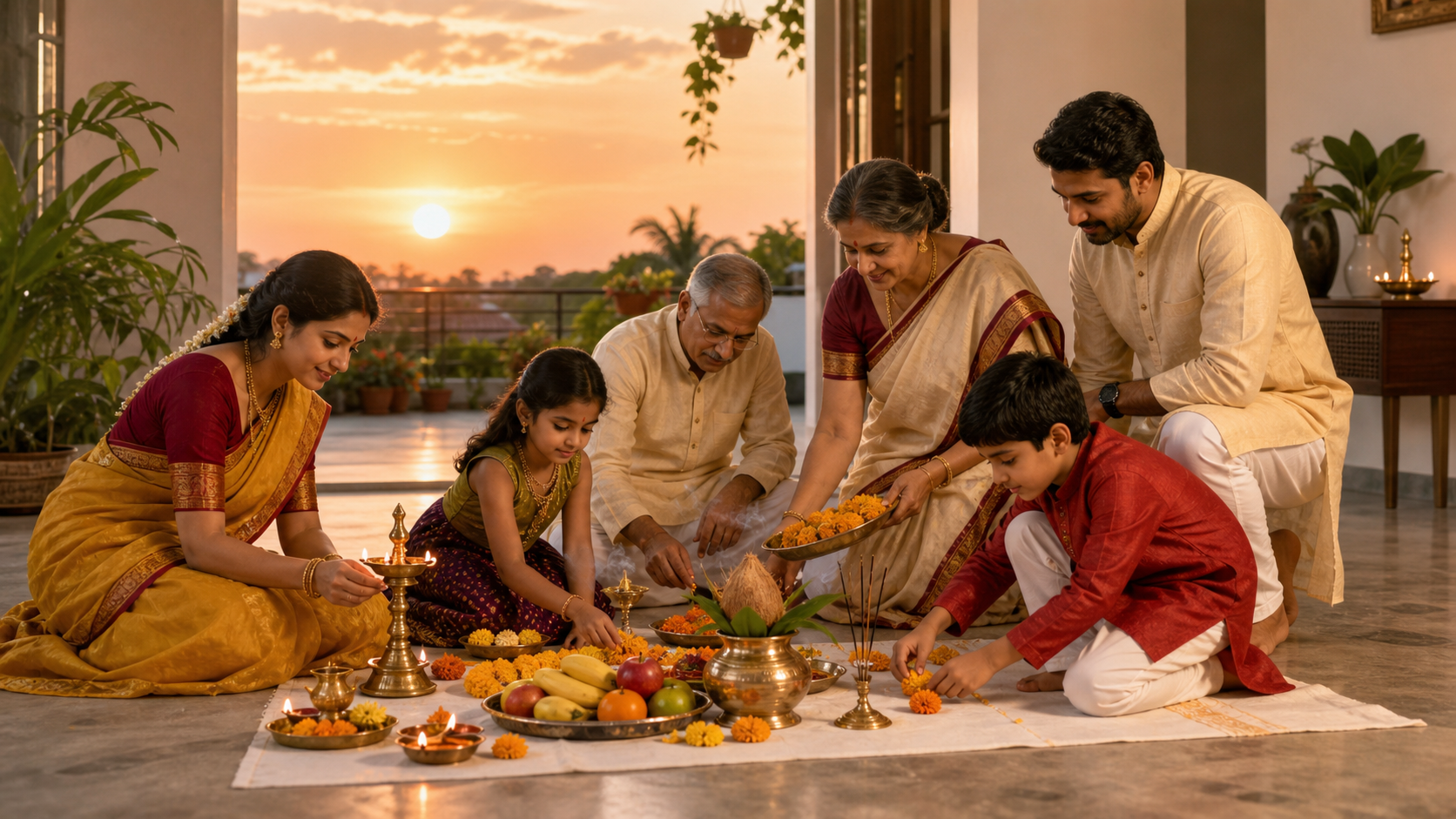
Start with the requirement of the observance rather than asking whether the date is simply “good.” Tithi is one factor in Hindu calendrical planning, and the Panchami-to-Shashthi transition alone cannot establish a complete muhurta.
- Name the requirement precisely. Determine whether the puja, vrata, samskara, temple visit, or household practice actually calls for Panchami, Shashthi, Monday, or merely a convenient time for worship.
- Verify the local transition. Use a city-specific Panchang and note the local end of Panchami. Do not silently substitute the published 6:50 PM time when your location differs.
- Choose the correct side of the boundary. Place a Panchami-dependent act before the verified local cutoff and a Shashthi-dependent act after it, subject to the observance’s traditional date-selection rule.
- Avoid scheduling at the exact change. Leave a practical buffer around the transition so that a delayed start, a long sankalpa, or a difference between Panchang calculations does not create uncertainty.
- Check the rest of the muhurta when the occasion requires one. For a formal samskara or another consequential ceremony, do not declare the entire date auspicious from its tithi alone. Ask for a complete local assessment using the calendrical factors followed by your tradition.
If a priest or temple is guiding the observance, send the exact city and ask a bounded question: “Which local interval on August 17 satisfies the required tithi and our observance rule?” That will produce a more reliable answer than asking whether August 17 is generally auspicious.
For ordinary daily worship with no Panchami- or Shashthi-specific requirement, there is no need to treat the transition as a prohibition. Note the prevailing tithi if your practice uses it, then perform the worship at the time your household can observe it with steadiness.
Key takeaways
- Monday, August 17, 2026 carries Shukla Paksha Panchami until the stated 6:50 PM transition and Shukla Paksha Shashthi afterward.
- The date contains two tithis because a lunar tithi does not follow the civil midnight boundary.
- Confirm the cutoff in a Panchang configured for the place of observance before scheduling a tithi-dependent ritual.
- A vrata may have a sunrise-based or tradition-specific rule, so the presence of a tithi during part of the date may not settle the observance date.
- Tithi alone is not a complete muhurta and cannot justify calling the whole day universally auspicious or inauspicious.
Put the city-specific verification first. Once the local Panchami ending time and your tradition’s observance rule agree, you can choose the ritual window without guessing at the boundary.
References
