
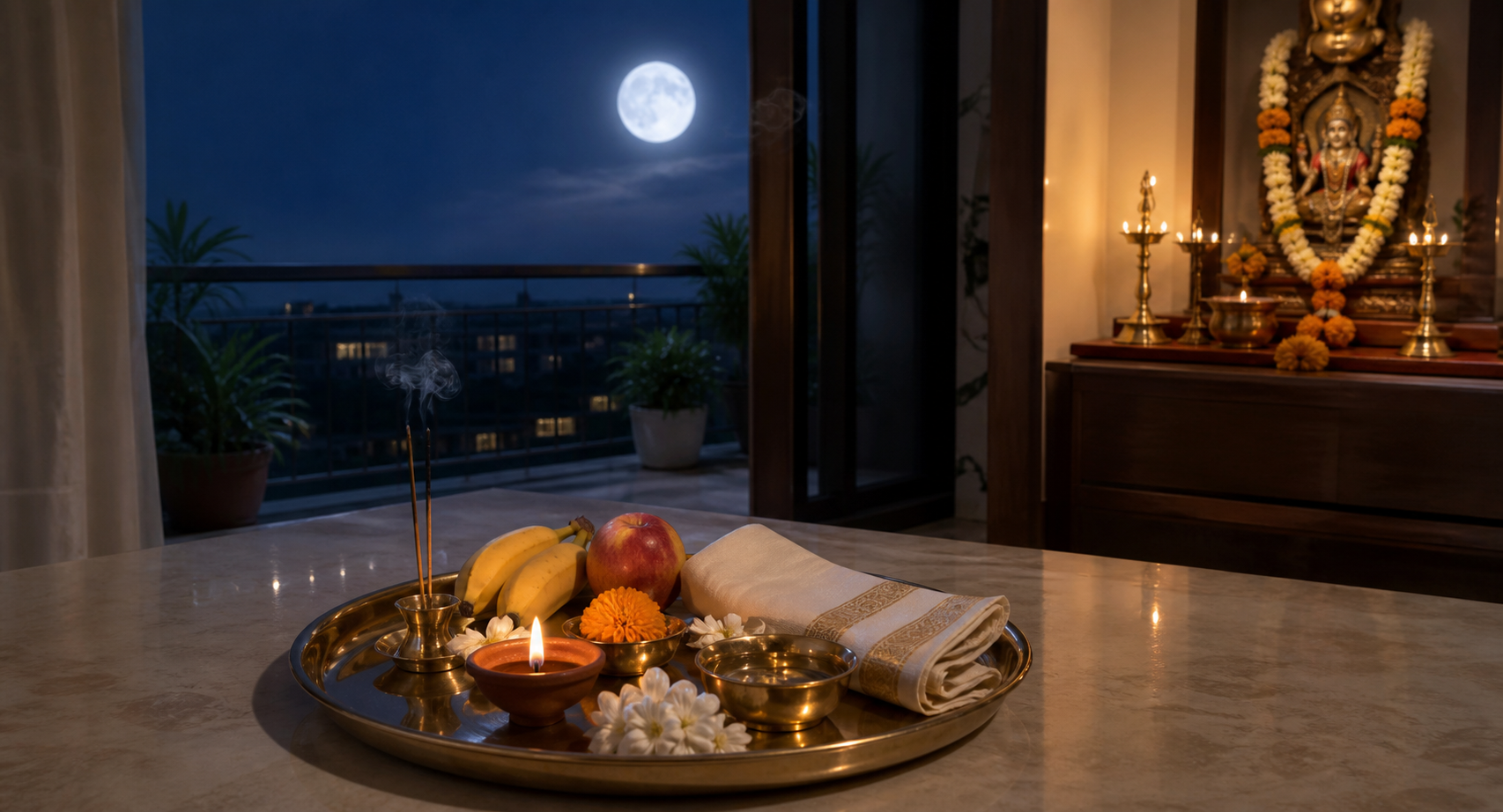
If you are planning your January vrata and puja, the first point to settle is easy to miss: Purnima Vrat falls on January 2 in this IST calendar, while Purnima and the related full-moon observances fall on January 3. Treating those dates as interchangeable can leave you fasting, shopping, or visiting the temple on the wrong day.
Use the calendar below as a practical plan for the key observances covered here. It separates the vrat from the following day’s celebrations, shows how several traditions meet on January 3, and tells you what to confirm locally before making firm arrangements.
The January 2-3 calendar at a glance
| Date in IST | Observance | What to plan |
|---|---|---|
| January 2, 2026 | Purnima Vrat | Choose your fasting discipline according to family tradition; arrange morning snana and sankalpa, evening puja, deepa, katha or japa, and dana. |
| January 3, 2026 | Purnima | Keep the full-moon worship distinct from the previous day’s vrat unless your own tradition directs otherwise. |
| January 3, 2026 | Shakambari Purnima and the conclusion of Shakambari Navratri | Prepare vegetables and greens for the Devi offering, select a stotra, and arrange food-centred seva or another suitable act of service. |
| January 3, 2026 | Arudra Darshanam | Check the local Shiva temple’s Nataraja abhishekam and alankaram schedule; Tamil households may also plan Thiruvathirai kali and ezhu kari kootu. |
Key takeaways for your calendar
- Reserve January 2 for Purnima Vrat and January 3 for the associated full-moon observances.
- January 3 carries more than one devotional emphasis. You do not have to merge every practice into one crowded ritual; follow your sampradaya, temple, or family custom.
- All dates here use Indian Standard Time. If you live outside India, confirm the local civil date rather than mechanically copying an IST entry.
- Decide your fasting niyama before the morning sankalpa. Do not wait until midday to choose between upavasa and a satvika meal.
January 2: Keep Purnima Vrat deliberate and manageable
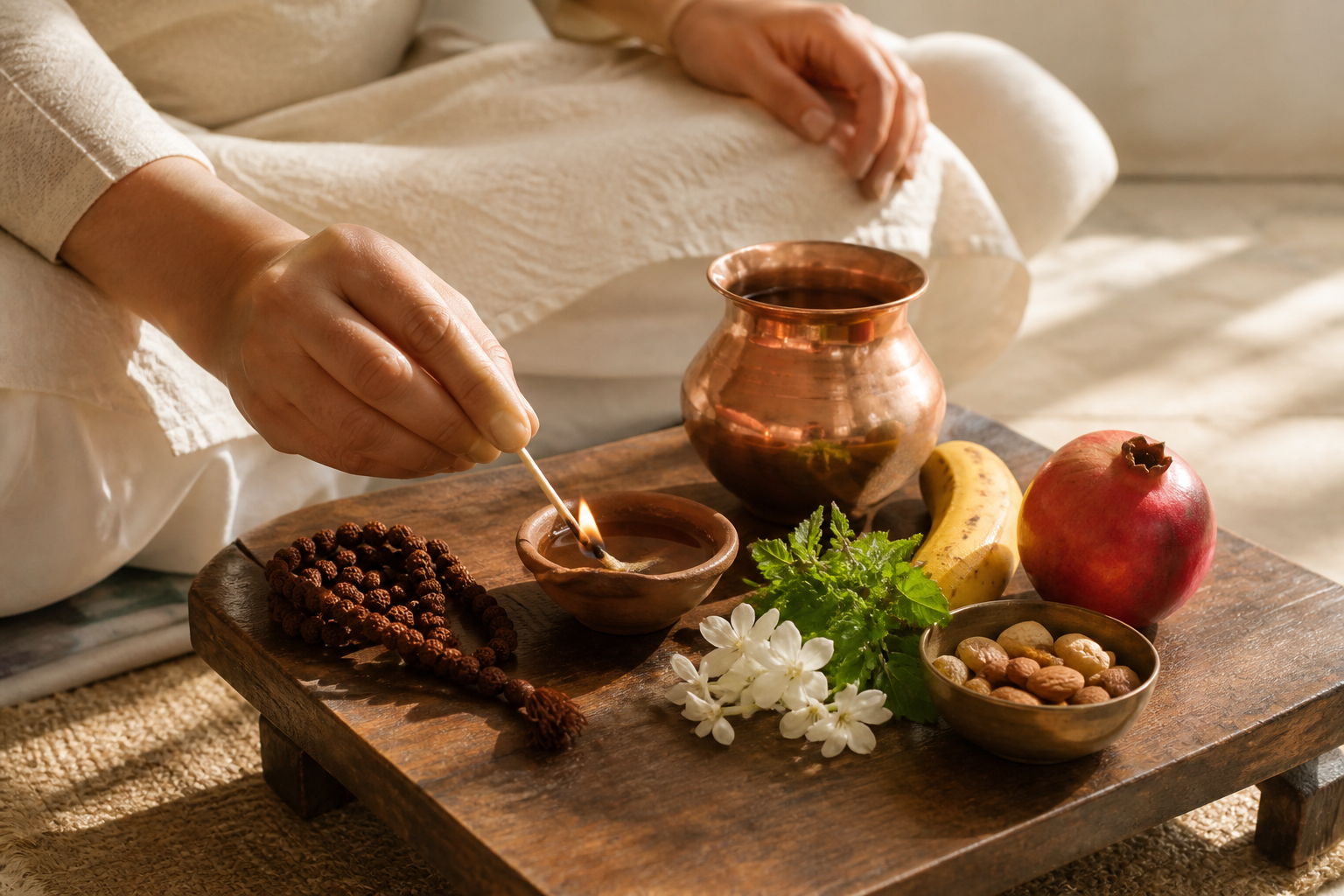
Purnima Vrat is observed on January 2 in anticipation of the full-moon rites on January 3. For this calendar, the two dates serve different purposes. Mark the fast on January 2 instead of assuming that every practice carrying the word Purnima belongs on the following day.
The form of the fast is not identical in every household. Some devotees undertake upavasa, while others take satvika food under established family rules. Set your niyama according to the tradition you actually follow. A stricter fast is not automatically a more faithful one.
- Begin with snana and a clear sankalpa. State the vrata you are keeping and the discipline you intend to follow.
- Keep the day’s food practice consistent with that sankalpa. If your custom permits a satvika meal, do not describe it as a complete fast; clarity is part of discipline.
- Prepare the evening worship before the day becomes busy. The customary options include Satyanarayana Katha, deepa lighting, japa, and a simple naivedya.
- Complete the observance with dana. Anna-dana is especially fitting because it turns personal restraint into nourishment for someone else.
If restricting food is unsafe or inappropriate for you, do not improvise a severe fast. You can retain the sankalpa, puja, japa, meditation, and dana while following appropriate health guidance. The purpose of vrata is disciplined devotion, not preventable harm.
January 3: Give each observance its proper emphasis
January 3 brings Purnima, Shakambari Purnima with the conclusion of Shakambari Navratri, and Arudra Darshanam. Their coincidence does not require every devotee to perform every regional or sectarian practice. Choose the devotional centre appropriate to your family and use the other observances as context rather than as a checklist.
Shakambari Purnima: Let the offering express gratitude for food
Devi Shakambari is honoured as the nourisher associated with vegetation and sustenance. On Shakambari Purnima and the concluding day of Shakambari Navratri, vegetables and greens become more than decorative offerings: they direct attention toward the food that sustains the household and the natural conditions that make it possible.
Make that meaning visible. Select clean vegetables and greens for naivedya, arrange them respectfully, and recite a Devi stotra already accepted in your tradition. Then connect worship with service. A food-centred act of seva or anna-dana carries the altar’s gratitude into the community instead of letting the ritual end at the household door.
Arudra Darshanam: Plan around Nataraja worship
Arudra Darshanam is especially prominent in Tamil Nadu during Margazhi and honours Shiva as Nataraja, the Lord of the cosmic dance. Temples commonly give the day a distinct form through special abhishekam and alankaram for Nataraja.
If temple darshan is central to your observance, check the temple’s notice before setting your travel time. A general calendar can identify the date, but it cannot tell you when a particular temple will conduct abhishekam or open darshan. Confirming that schedule is more useful than arriving on the right date after the principal worship has ended.
At home, Tamil custom may include Thiruvathirai kali and ezhu kari kootu. If these dishes belong to your household practice, buy the ingredients early enough that cooking does not displace puja. The contemplation behind the day is equally important: Nataraja’s dance holds movement and stillness together, giving you a precise theme for japa or silent meditation.
Purnima: Do not assume a second strict fast
January 3 is the Purnima date in this IST calendar. If you kept Purnima Vrat on January 2, do not assume that seeing Purnima again means you must repeat the same food restriction. Keep the full-moon puja on January 3, but let your family convention or guru-parampara determine the fasting rule. This distinction prevents a calendar label from silently becoming a new obligation.
Build one coherent home puja instead of three competing ones
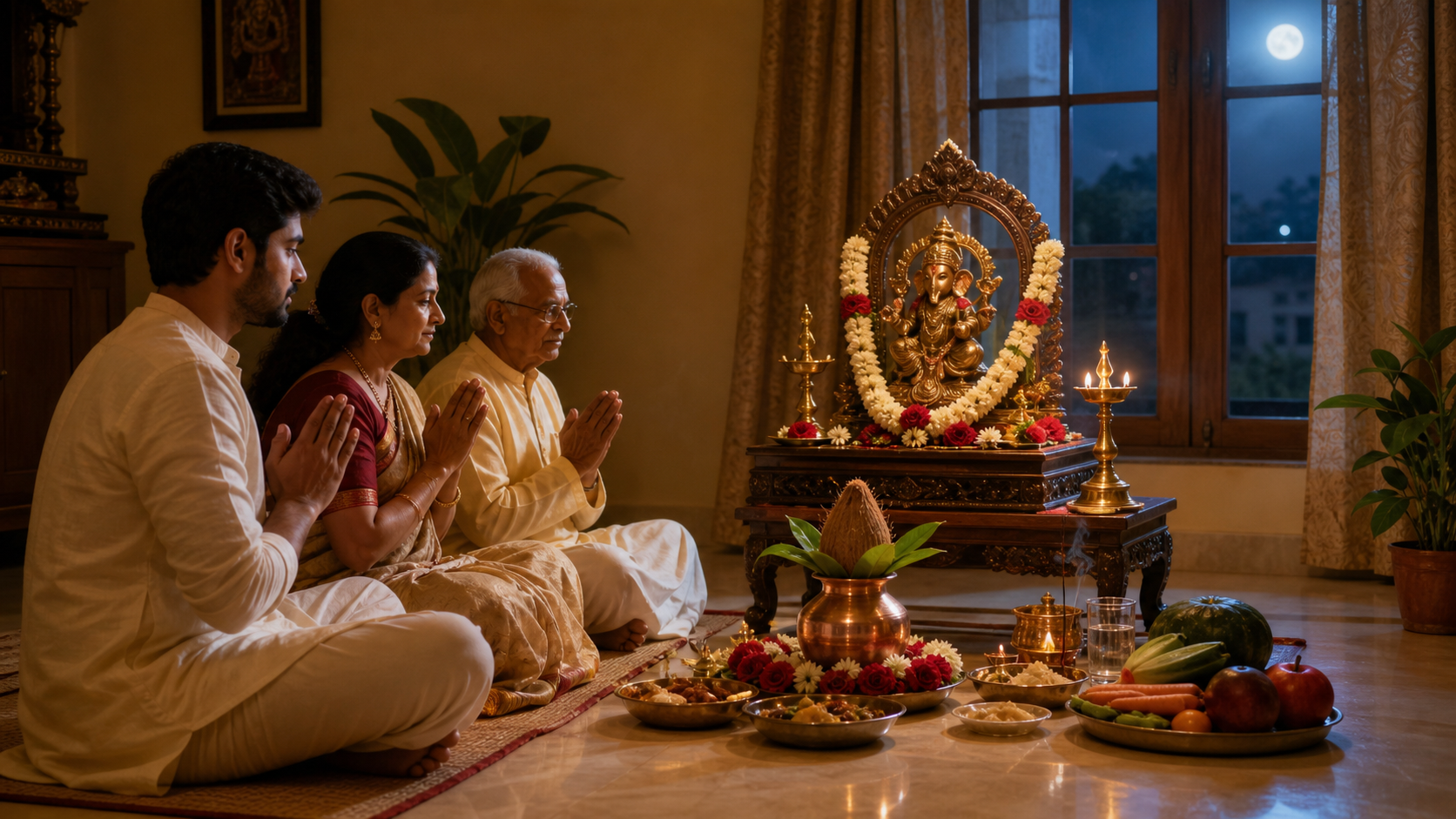
When several observances share a date, more ritual activity does not necessarily produce more attention. Decide which tradition governs your household worship, then use a simple sequence that can accommodate the appropriate deity, offering, recitation, and act of service.
- Snana: begin with physical purification and prepare the worship space.
- Sankalpa: name the observance, date, intention, and vrata discipline you are actually undertaking.
- Deepa: light the lamp and settle your attention before adding further actions.
- Naivedya: offer food suited to the observance. Vegetables and greens are particularly meaningful for Shakambari worship.
- Japa, dhyana, katha, or stotra: choose the form accepted by your tradition. One attentive recitation is better than rushing through several unrelated ones.
- Dana or seva: complete the movement from personal worship to care for others.
This sequence also gives a mixed or extended family room to participate without pretending that all customs are identical. One person may centre Devi Shakambari, another may attend Nataraja abhishekam, and the household can still share deepa, naivedya, prayer, and dana. Unity in dharmic life does not require erasing regional or sampradaya distinctions.
Verify four details before you commit to the date
Hindu observances are governed by the Panchang and living tradition, not by the civil date alone. Regional calendars, temple schedules, family customs, and time zones can therefore produce practical differences. The dates above are stated in IST; use them as your planning base, then make these checks.
- Location: if you are outside India, consult a Panchang calculated for your city and time zone.
- Temple schedule: ask when the special puja, abhishekam, alankaram, or darshan will actually occur.
- Family convention: confirm how your household distinguishes the January 2 Purnima Vrat from the January 3 Purnima worship.
- Sampradaya priority: establish whether Shakambari Purnima, Arudra Darshanam, general Purnima worship, or a combination is customary for you.
Before January begins, mark January 2 for the vrata and January 3 for the full-moon observances, contact your temple, and settle your household niyama. Then obtain only what your chosen worship requires and reserve something for dana. That small amount of preparation leaves the two days available for attention rather than last-minute calendar disputes.
References
