

After a bridge failure makes the news, you may hear that inspections are being conducted. That reassurance is too vague if you cross a bridge to reach work, school, a market, or a place of pilgrimage. You need to know which bridge was examined, what was found, whether its operating limits changed, and who is responsible for the next action.
A workable national safety regime would pair periodic structural audits with a centralized digital record for every bridge. The audit identifies deterioration and risk. The digital Bridge Health Card keeps the findings, restrictions, repairs, deadlines, and responsible authorities connected. If either half is missing, a serious finding can disappear into paperwork while the public continues using the structure.
Key takeaways
- A Bridge Health Card should be a living asset record, not a permanent certificate that a bridge is safe.
- Every audit finding should lead to a recorded decision: continue normal use, impose a restriction, monitor a condition, undertake repairs, or close the route.
- The public record should identify the bridge, its owner, its current operating status, its load rating, the latest audit, pending work, and the next due action.
- Geospatial mapping, automatic alerts, and a visible change history make it harder for overdue audits or repairs to remain hidden.
- If you notice an apparent hazard, report it from a safe location. Do not enter traffic lanes, climb onto structural elements, or treat a public dashboard as permission to disregard an on-site closure.
A Bridge Health Card must answer practical questions
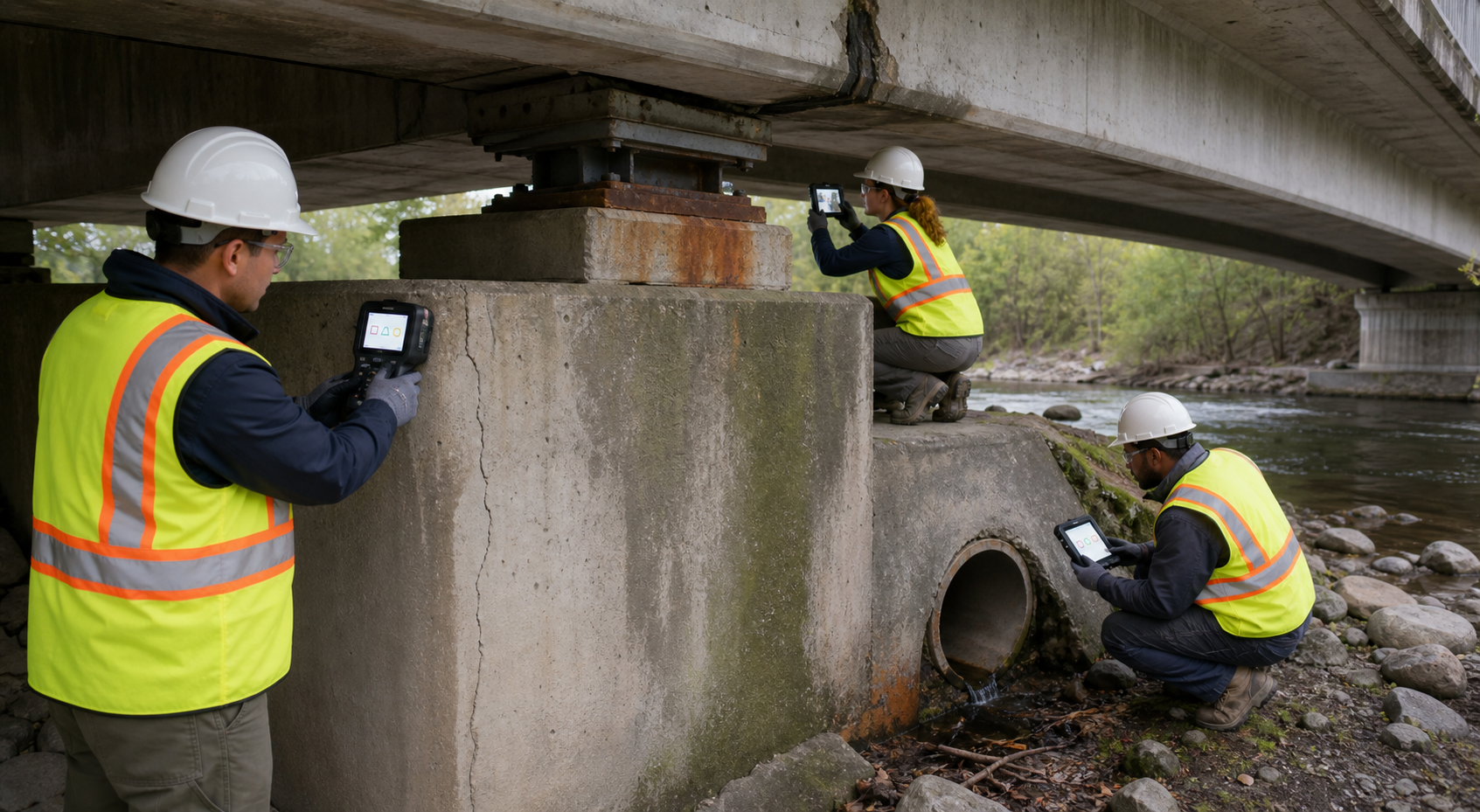
The term can be misleading. This is not a medical card, a biometric identity system, or a one-time fitness certificate. Its subject is the bridge. It should provide a continuing record from construction and inspection through restriction, repair, verification, and the next assessment.
The card becomes useful only when its fields answer decisions that people and authorities actually face. A long technical report may still be necessary for engineers, but the public record needs a concise operational layer.
| Question | Health Card field | Why it matters |
|---|---|---|
| Which bridge is this? | Unique asset identifier, mapped location, route, and commonly used name | Prevents reports, complaints, and repair records from being attached to the wrong structure. |
| Who is responsible? | Owning authority and the unit responsible for maintenance | Shows where an audit finding must be acted upon instead of leaving responsibility ambiguous. |
| What is known about it? | Age or commissioning information, design specifications, and relevant construction details | Provides the context needed to interpret deterioration and plan maintenance. |
| What may use it? | Current load rating and any operating restrictions | Allows restrictions to be communicated clearly to transport operators and ordinary users. |
| What was found? | Inspection and audit dates, scope, principal findings, and present condition status | Distinguishes a recent structural assessment from an old or limited visual inspection. |
| What happens next? | Required intervention, responsible unit, target date, completion record, and next audit due | Turns an engineering finding into a traceable obligation. |
Missing information should be marked as missing, not left as an unexplained blank. If a bridge’s age, design record, or load rating has not been established, the card should say so and assign the work needed to resolve the gap. An explicit unknown can trigger action; an empty field is easily ignored.
The date matters beside every status. A label such as satisfactory or usable has little meaning when you cannot see when the underlying assessment occurred, what it covered, or whether subsequent restrictions were imposed. No public status should appear to outlive the assessment and operating decision that support it.
The audit must lead to action, not another filed report
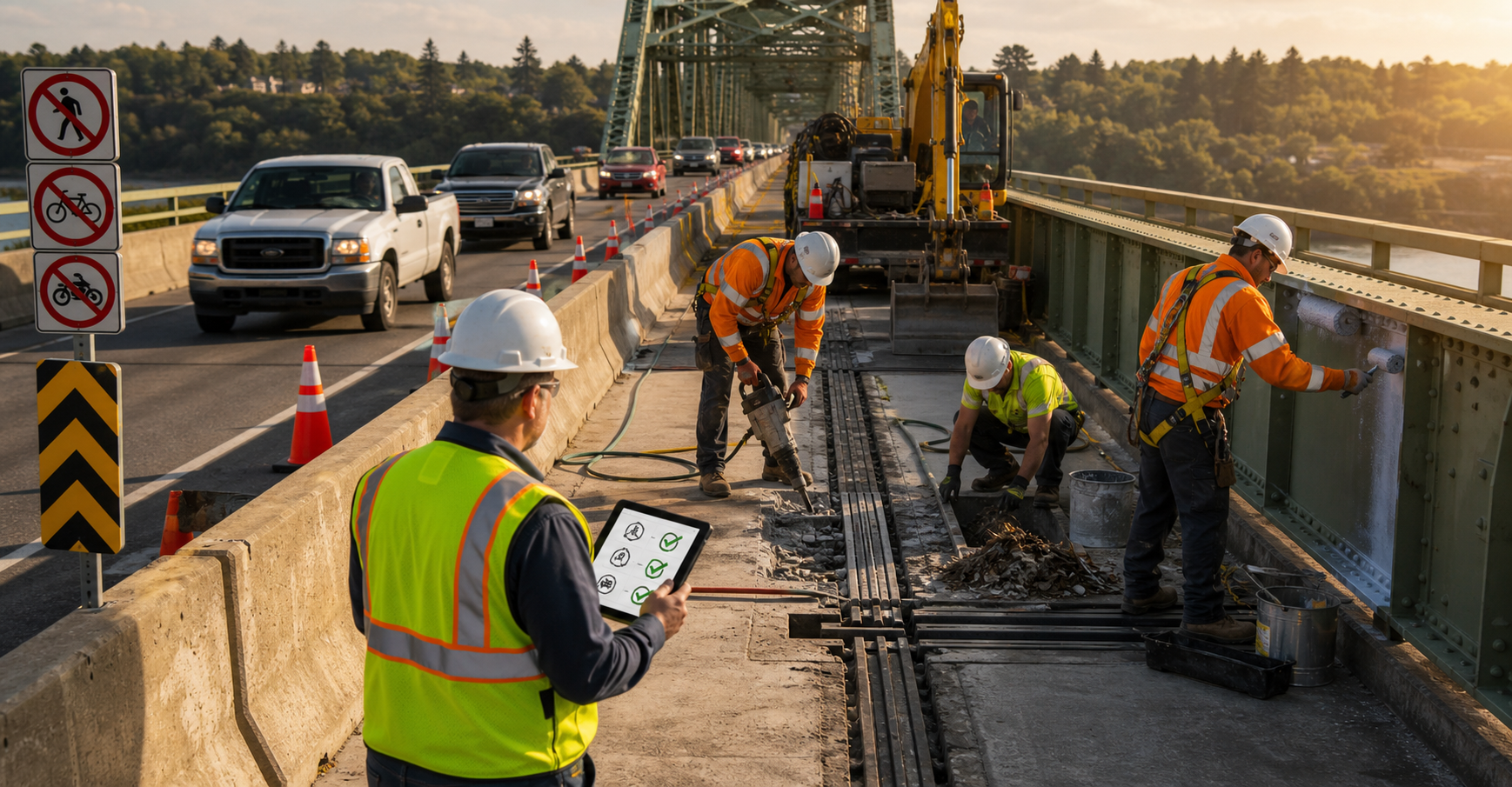
A routine observation, a structural audit, a repair, and verification of that repair are different stages. Treating them as interchangeable creates false reassurance. A routine inspection can record observable conditions. A structural audit should evaluate matters such as load-bearing capacity, material degradation, and environmental stresses through an appropriate professional assessment. Maintenance addresses the resulting defect. Verification establishes whether the required work was completed and whether any restriction can change.
The digital card should preserve that chain. A disciplined process would look like this:
- Register the bridge with a stable identifier, mapped location, owning authority, basic design information, and current load rating.
- Set the audit schedule under a published regime with defined assessment methods. The card should display the next due date rather than merely recording completed audits.
- Record the audit’s scope, findings, date, responsible professional, and supporting technical record.
- Translate each material finding into an operating or maintenance decision. If restrictions or closure are required, the competent authority must issue and publish them promptly.
- Assign each intervention to a responsible unit with a target date and an alert level. A finding without an owner and deadline is only an observation.
- Record completed work with verification evidence. Do not erase the earlier finding; retain it in the bridge’s history.
- Update the operating status and next assessment date after verification, while preserving a visible change log.
Condition, operation, and work status should remain separate. Engineers may find deterioration while the competent authority permits continued use under a defined restriction. A repair may be completed while verification remains pending. Compressing all three facts into one green, amber, or red badge can hide the very distinction a commuter or administrator needs.
The card must also generate alerts that somebody is required to receive and resolve. Useful triggers include an overdue audit, a critical intervention awaiting action, a missed repair deadline, and a change in load or access restrictions. Each alert should identify the bridge, the pending decision, the responsible authority, and the relevant date. A notification with no accountable recipient merely digitizes neglect.
A public dashboard should make delay visible

Centralization does not mean that every engineering drawing must be placed on one crowded public page. It means that every bridge has one authoritative record and that information does not fracture across unrelated offices, contractors, paper files, and disconnected software systems.
Authorities need the detailed layer for engineering review, maintenance planning, budgeting, and emergency coordination. You need a public layer that answers immediate questions without requiring specialist interpretation. That layer should be available on an ordinary web page without forcing a commuter to install an application or create an account.
- Search by bridge name, asset identifier, route, locality, or point on a map.
- Filter by owning authority, current operating status, overdue audit, pending intervention, and active restriction.
- Display when each field was last updated and which authority supplied the update.
- Show current alerts prominently while retaining earlier statuses and completed actions in a change history.
- Provide data in a reusable format so oversight bodies, journalists, researchers, and community groups can examine patterns instead of checking bridges one at a time.
Geospatial mapping is more than a convenient display. It helps authorities identify the exact structure involved in an incident, connect nearby routes and communities to the same operational picture, and allocate inspection or repair resources where they are most urgent. It also lets the public distinguish between similarly named bridges.
Timely public information is especially important when a load restriction, partial closure, or critical intervention changes. The dashboard, field signage, and official operating order must agree. If they do not, the safer course is to follow the on-site restriction and notify the responsible authority of the discrepancy. An old online status must never be treated as permission to bypass a barrier or closure.
Five signs of cosmetic compliance
A system can carry the Health Card label and still fail its purpose. Watch for these weaknesses:
- Scanned reports are uploaded, but there is no current status, next due date, or searchable asset record.
- A bridge is labelled safe without showing the date, scope, and authority behind that decision.
- An audit identifies work, but the record gives no responsible unit, deadline, or completion status.
- A repair is marked complete without recording verification or preserving the original finding.
- The dashboard publishes totals for a district or state but does not let you examine the record of an individual bridge.
A good test is simple: can the system show the difference between a problem being discovered, an authority deciding what to do, the work being carried out, and the result being verified? If not, it is an archive rather than a safety-management system.
What you can ask of the responsible authority
You do not need to make an engineering judgment to demand accountable engineering. Whether you are a commuter, local representative, journalist, transport operator, temple committee member, or community organization, put precise questions to the relevant road, municipal, railway, or other bridge-owning authority:
- Does every bridge under your control have a unique identifier, mapped location, and named owner?
- What assessment schedule and methodology govern periodic structural audits?
- When was this bridge last audited, what was the scope, and when is the next audit due?
- What is its current load rating, and are any restrictions in force?
- Which interventions remain pending, who owns each action, and what are the target dates?
- How is completed repair work verified before restrictions or condition statuses are changed?
- Who receives alerts for overdue audits, critical findings, and missed maintenance deadlines?
- Can the public see the bridge’s current record and earlier changes without requesting separate files from several offices?
These questions make vague assurances harder to repeat. We would start with one bridge you regularly use and ask for its identifier, last audit date, current restriction status, pending interventions, responsible unit, and next due action. If those basic facts cannot be produced from one record, the administrative gap is already visible.
If you observe an apparent hazard, damaged barrier, conflicting closure information, or unauthorized use of a restricted route, report the observation to the owning authority or emergency services as the urgency requires. Record the location and asset identifier from a safe public place if they are available. Do not step into traffic, climb onto the bridge, enter a closed area, or attempt your own structural inspection. Your role is to report what you can safely observe, not to certify whether the bridge can carry traffic.
For Bharat’s Dharmic communities, this is not a narrow technical concern. Bridges carry families, students, workers, pilgrims, and supplies across the routes that bind temples, gurdwaras, Buddhist centres, Jain tirthas, markets, and settlements. Protecting those connections requires more than construction ceremonies or emergency repairs after failure. It requires continuing stewardship: duties named in advance, evidence preserved, risks acted upon, and public officials answerable for delay.
Choose the bridge that matters most to your daily or pilgrimage route and seek its six essential facts: identity, owner, latest audit, current load status, pending work, and next deadline. Then press for the same public record across the network. That is how a call for safer bridges becomes a system that can be checked before another preventable failure.
References
