
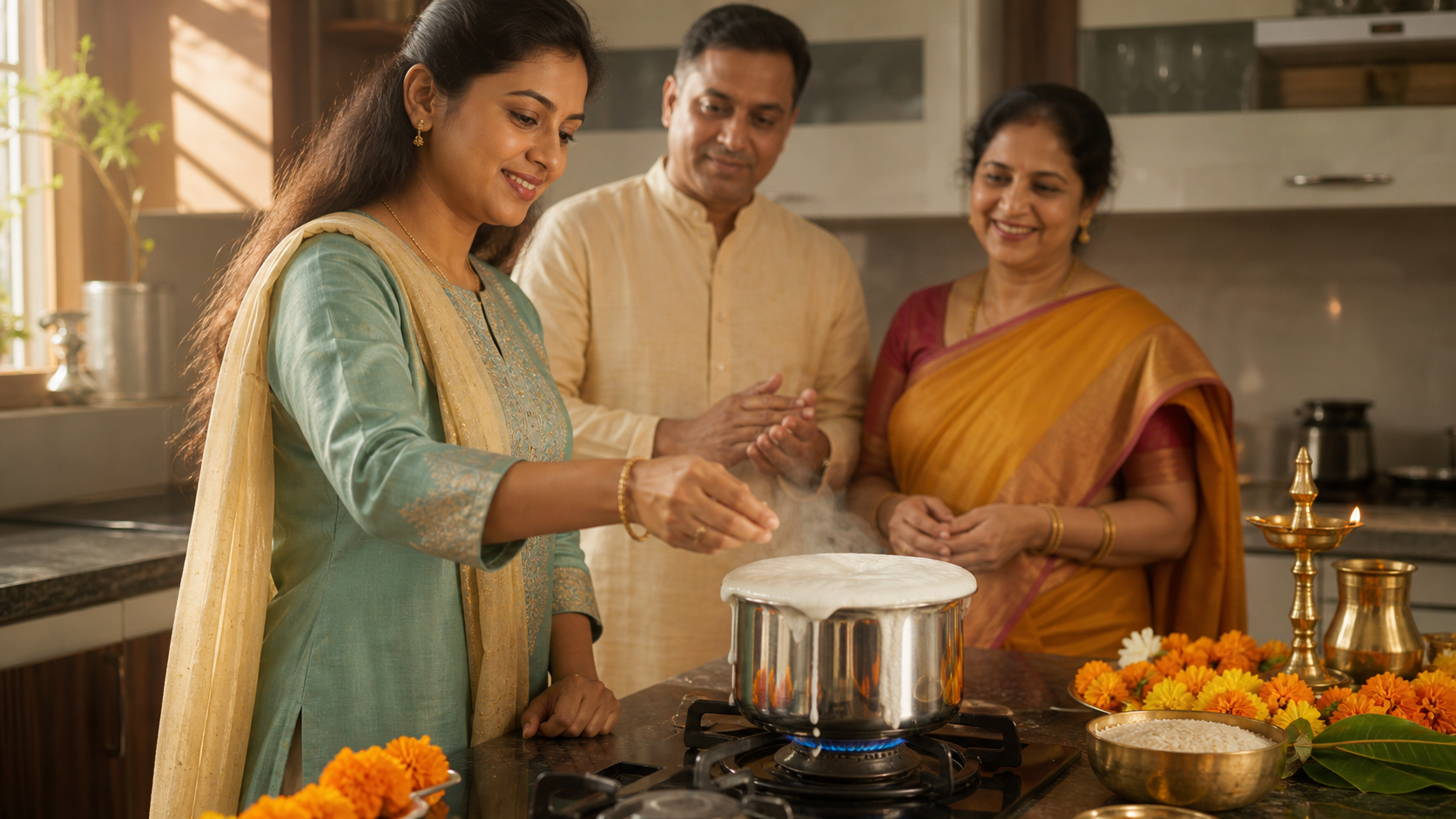
If you are preparing for Griha Pravesh, boiling milk may look like one small item on a crowded ceremonial checklist. It is better understood as the household’s first declaration of intent: nourishment before display, gratitude before consumption, and prosperity that becomes meaningful through sharing.
Once you understand that intention, the custom becomes easier to perform without anxiety. You can respect your family’s particular method while keeping your attention on what the rising milk is meant to express.
The rising milk expresses a complete household ideal
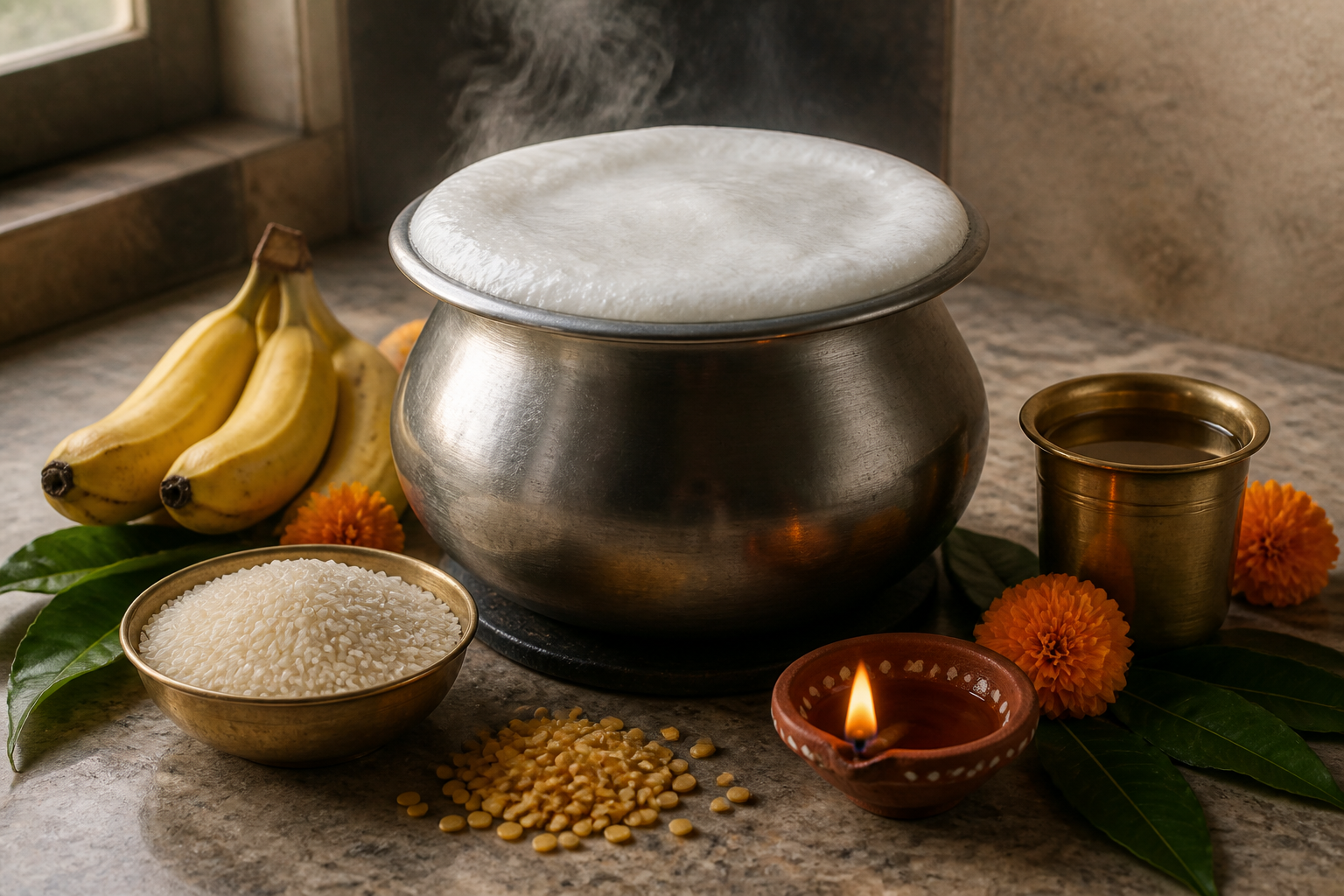
Milk carries several meanings at the same time. As a sattvic food, it is associated with clarity, gentleness, and life-sustaining nourishment. Its whiteness evokes purity, while its natural sweetness suits an occasion meant to begin domestic life on an auspicious note. Letting it rise turns those quiet qualities into a visible movement toward fullness.
The symbolism becomes clearer when you read the whole act rather than isolating the overflow:
- The pot represents the household. It is the vessel within which different people, duties, resources, and aspirations must be held together.
- The milk represents nourishment. The home is being founded as a place where life will be sustained, not merely as property to be occupied.
- The heat represents tapas. Raw intention is transformed through disciplined effort, just as the household’s hopes will require work.
- The fire invokes Agni. The first use of the cooking fire places domestic life in the presence of a sacred witness.
- The rise represents increase. The family prays for well-being, sufficient resources, affection, and the capacity to fulfil its responsibilities.
- The overflow points toward generosity. Abundance reaches its Dharmic purpose when it moves beyond private possession and supports hospitality, dana, and seva.
This is why the custom is associated with Lakshmi. Her presence should not be reduced to money alone. In the life of a home, prosperity also includes wholesome food, orderly relationships, ethical livelihood, peace, and the ability to care for another person. The ritual gathers purity, nourishment, transformation, and generosity into one memorable act.
The overflow is therefore an enacted prayer, not a prediction. It does not guarantee wealth, and a larger spill does not promise greater prosperity. Treating it as a test of future fortune turns a meaningful sankalpa into superstition. What matters is the kind of household you undertake to build after the ceremony.
Why the first act happens in the kitchen
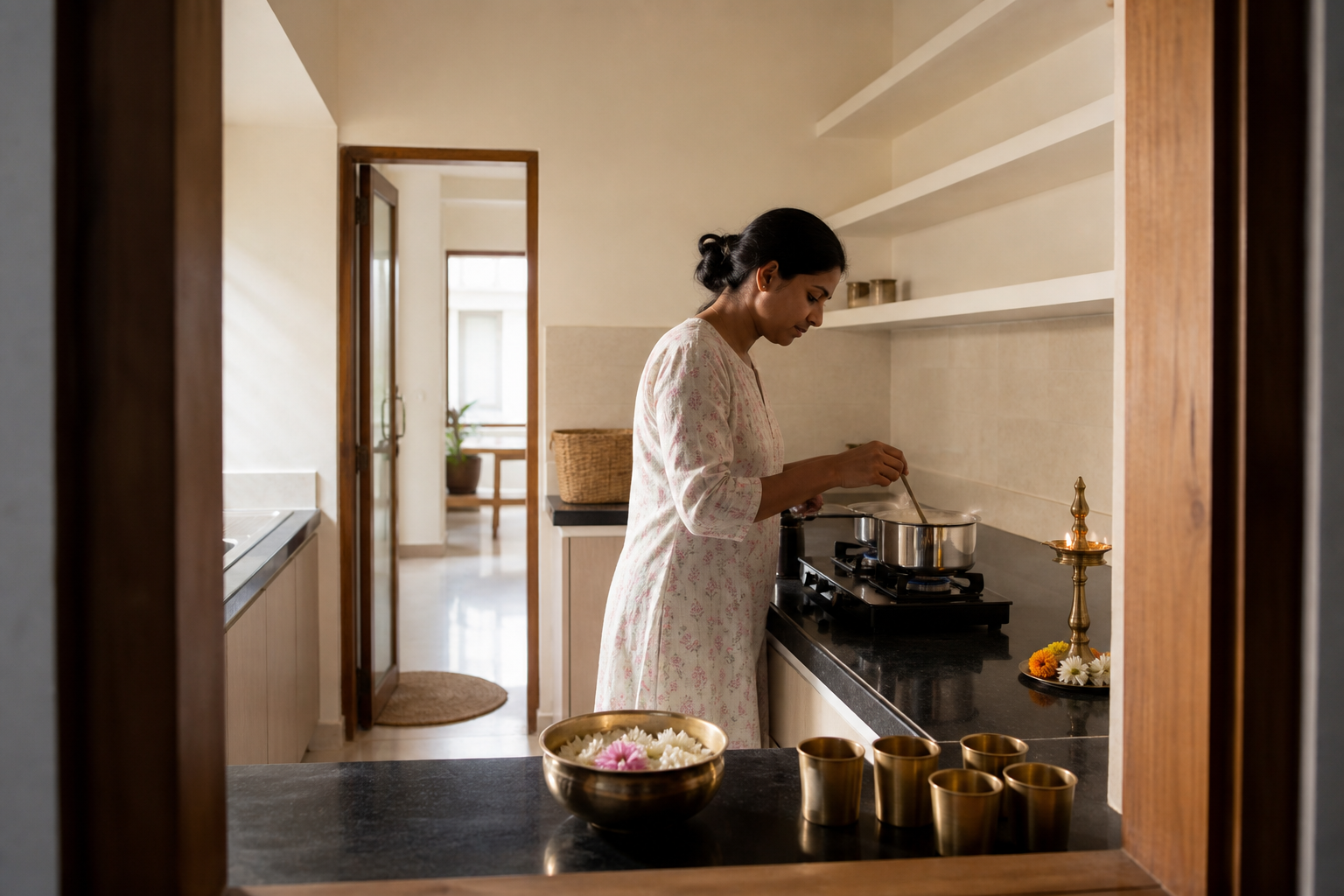
The kitchen is not chosen merely because that is where a stove happens to be. It is where the home repeatedly converts resources and labour into care. A kitchen can feed family members, welcome a guest, prepare an offering, help a neighbour, or serve someone in need. Awakening that space first establishes food as a responsibility as well as a blessing.
The sequence contains a practical household ethic: form an intention, apply effort, produce nourishment, offer it with gratitude, and share it. When the sweet preparation is first offered and then distributed as prasada, the family completes the movement from private possession to sacred participation. Children can understand this without a lecture. They see that the first food cooked in the home is not consumed thoughtlessly or kept only for oneself.
There is practical wisdom here too. The ceremony makes you use the stove, handle the vessel, observe the heat, and begin the kitchen’s daily work in a deliberate way. That first use can reveal whether the cooking area is clean, functional, and safe. Sacred intention and ordinary household competence reinforce each other.
Do not let that practical benefit flatten the ceremony into an appliance check. Agni, offering, and sharing give the act its ritual character. Conversely, do not let ritual excitement excuse unsafe handling of boiling milk. Attention is itself part of the discipline the occasion asks from you.
How to perform the custom with attention and safety
There is no need to invent a universal script. Family, regional, and sampradaya practices can determine the prayers, vessel, ingredients, direction, and exact place of this act within Griha Pravesh. If an elder or priest is guiding Vastu Shanti, confirm the sequence beforehand. That prevents a meaningful moment from becoming a hurried discussion beside a hot stove.
- Clarify your family’s practice. Ask whether the milk is expected merely to rise or to cross the rim, which prayer accompanies it, and whether it will become kheer, paal payasam, or another sweet preparation. Settle these questions before the ceremony begins.
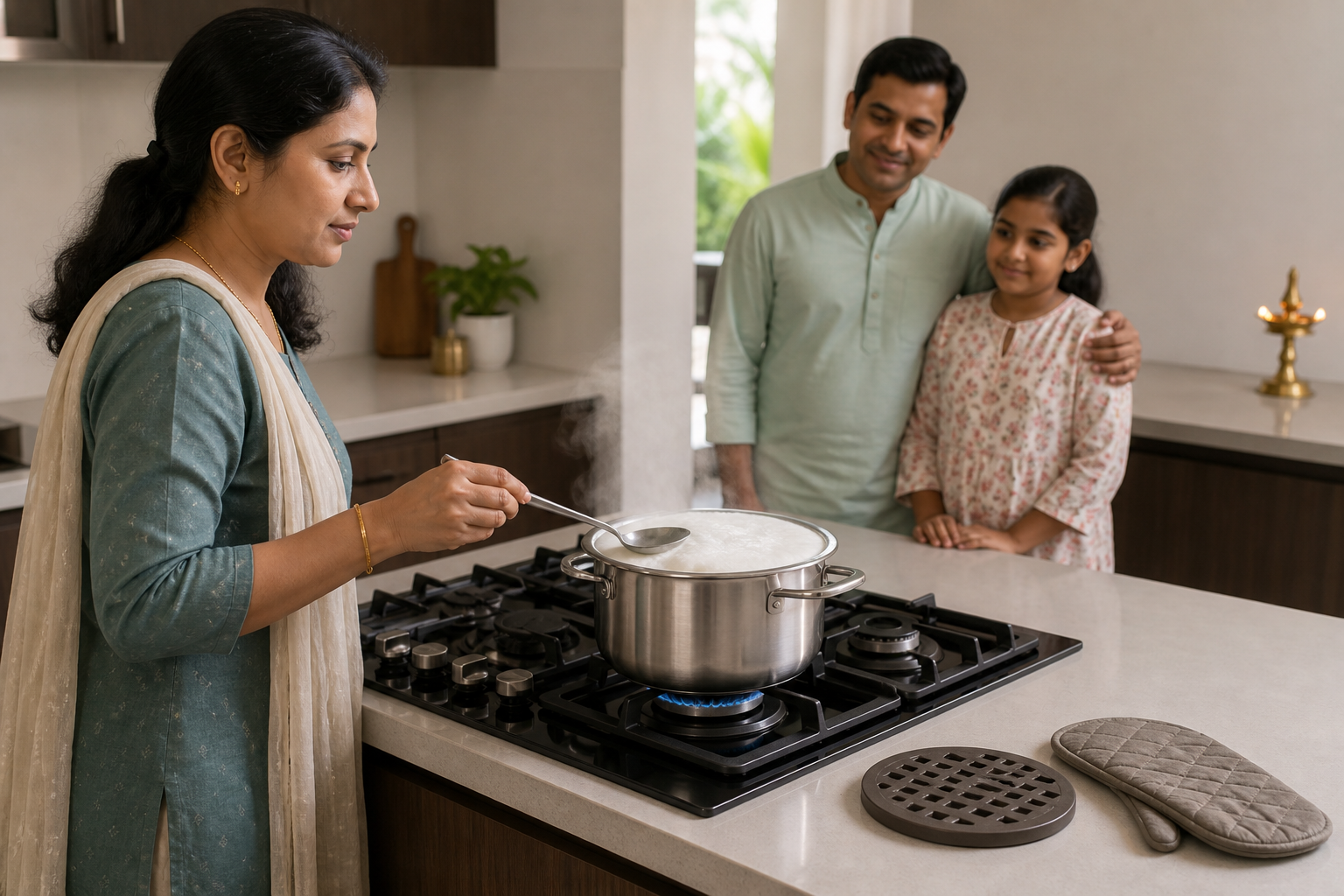
- Prepare the kitchen. Clean the cooktop, pot, surrounding surface, and serving vessels. Check that the stove works and that the pot sits securely. Keep a trivet and cleaning cloth nearby, but away from the flame.
- Create a safe boundary. Boiling milk can rise suddenly. Keep children and loose clothing away from the cooktop, never leave the pot unattended, and make sure one responsible adult is watching it throughout.
- State the sankalpa. Your prayer can hold the purposes of the new home: peace, honest livelihood, nourishment, hospitality, mutual respect, and the strength to fulfil household duties. Use the mantra or wording customary in your tradition rather than improvising a supposedly universal formula.
- Kindle or activate the stove. Where a flame is used, receive Agni as the sacred witness to the household’s intention. In a residence with an electric or induction cooktop, follow the method accepted by your family or officiant without violating building or fire-safety rules.
- Watch the milk rise. Stay present as the heat transforms it. If your custom calls for an overflow, allow a controlled rise across the rim and then reduce or switch off the heat promptly. Auspiciousness does not require a hazardous spill across the cooktop.
- Complete the sweet preparation. Continue with the recipe used by your family or region. The sweetness marks the desired tone of the beginning; the exact dish is secondary to the offering and intention.
- Offer and share it. After the customary offering, distribute the prasada among family, guests, and, where practical, neighbours. Check dietary needs before serving. Sharing gives the image of abundance its ethical completion.
- Clean the area promptly. Prevent waste, residue, burns, and damage to the cooktop. Care for the new kitchen does not diminish the ritual; it continues the same spirit of respect.
If your family specifically values visible overflow, you can protect the cooking surface with a suitable heat-safe arrangement while preserving the ritual moment. Do not crowd the burner, cover ventilation, place flammable material near a flame, or attempt a dramatic overflow for photographs. The symbol is fullness under attentive care, not loss of control.
Keep the core meaning while allowing regional variation

Regional differences are not mistakes that need to be corrected into one standard form. South Indian families may turn the milk into paal payasam. Many North Indian homes prepare kheer. Coastal customs may favour a jaggery-sweetened preparation. Your inherited form can be fully meaningful without being identical to a relative’s or neighbour’s observance.
What should remain recognisable is the underlying movement: sanctify the space, acknowledge the household’s sacred responsibilities, begin the cooking fire, let nourishment rise, offer the first preparation, and share it. Recipe, language, vessel, and local sequence may vary around that core.
This distinction is especially useful in the diaspora. A rental apartment, smoke alarm, induction cooktop, small kitchen, or building rule may limit how closely you can reproduce an elder’s setting. Do not create a fire risk to prove authenticity. Speak with the person guiding the ceremony, preserve the intention and offering, and choose a safe expression suited to the home you actually have.
Questions about dairy also deserve deliberate handling. If milk conflicts with a health need, dietary discipline, or the family’s understanding of ahimsa, consult the officiant or a trusted elder before substituting another ingredient; ritual acceptability can differ across traditions. Whatever is used, source it responsibly, prepare only what can be offered and shared, and avoid turning auspicious overflow into needless waste.
Boiling milk at Griha Pravesh is a Hindu household rite. It should not be presented as though Buddhists, Jains, and Sikhs all perform the same ceremony. Its ethical themes nevertheless meet values honoured widely across Dharmic life: non-harm, generosity, mindfulness, service, nourishment, and community care. That resonance allows unity without erasing real differences in practice.
The most important adaptation happens after the guests leave. A flawless ceremony cannot compensate for a kitchen where food is wasted, guests are unwelcome, labour is taken for granted, or household relationships are neglected. The rising milk sets a standard. Daily conduct must keep returning to it.
Key takeaways
- Boiling milk represents purity, nourishment, disciplined transformation, abundance, and generosity within the new household.
- The overflow is an auspicious prayer, not a financial prediction; more spilled milk does not mean more future wealth.
- The kitchen matters because it turns household resources into food, hospitality, prasada, and service.
- Follow your family or regional sequence for the prayer and sweet preparation; variation does not make the observance less authentic.
- Keep the rise controlled, supervise the stove continuously, obey building rules, and minimise waste.
- Complete the symbolism by offering and sharing the food, then carry its values into the household’s daily conduct.
Before your Griha Pravesh, decide who will watch the pot, what prayer your family will use, how the sweet will be offered, and with whom it will be shared. Those four decisions will let you meet the rising milk calmly and begin the new kitchen as you mean the home to continue.
References
