
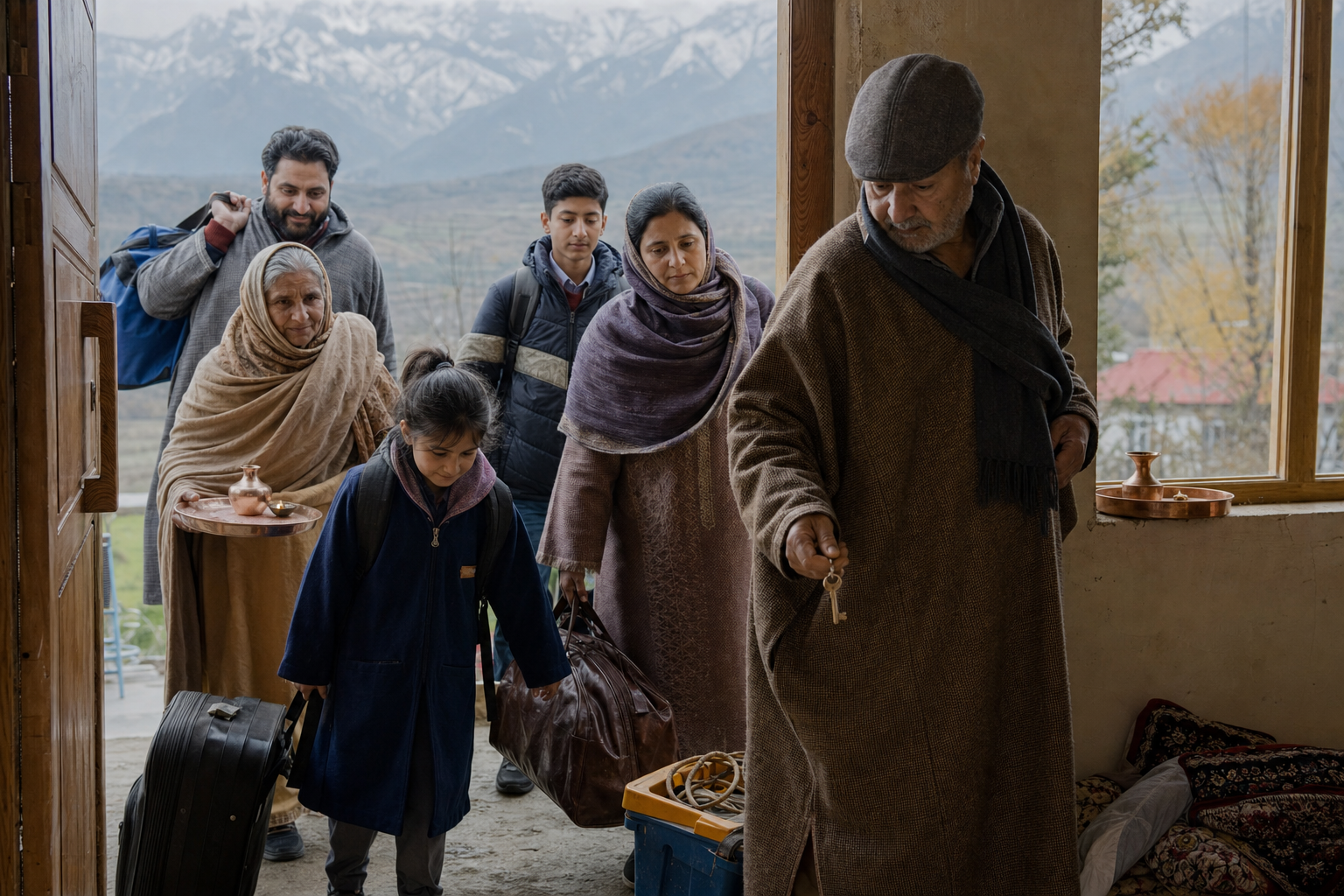
If your family is weighing a return to Kashmir, the decisive question is not whether the longing is real. It is whether you can move without being forced to trade safety for belonging, a livelihood for memory, or your children’s future for a symbolic homecoming.
Treat every rehabilitation proposal as a household decision, not merely a public cause. Ask for written answers, identify what would make the move sustainable, and decide in advance which gaps are inconvenient and which are unacceptable. The same discipline will help you judge a public campaign, support a displaced family, or press policymakers for something more substantial than a housing announcement.
Return is a move; rehabilitation is a durable condition
Return answers a geographical question: where will the family live? Resettlement answers a practical one: how will the household establish itself there? Rehabilitation goes further. It asks whether the family can recover security, agency, economic stability, education and a living relationship with its traditions.
That distinction matters because a house can be completed while a family’s displacement continues in every other sense. If the residents cannot work, send children to school with confidence, obtain reliable services, practice their faith or resolve a legal dispute, possession of an address has not produced a viable home.
For families displaced across decades, rehabilitation reaches beyond housing to security, livelihoods, education, public services and cultural continuity. These are not optional benefits to be added after relocation. They are interdependent conditions. A failure in one can make all the others unusable.
You can expose a merely symbolic plan with a simple test: what will enable the family to remain after the initial attention, temporary support or public ceremony has passed? If the answer is only a building, the plan describes relocation rather than rehabilitation.
Test every proposal against the conditions of ordinary life
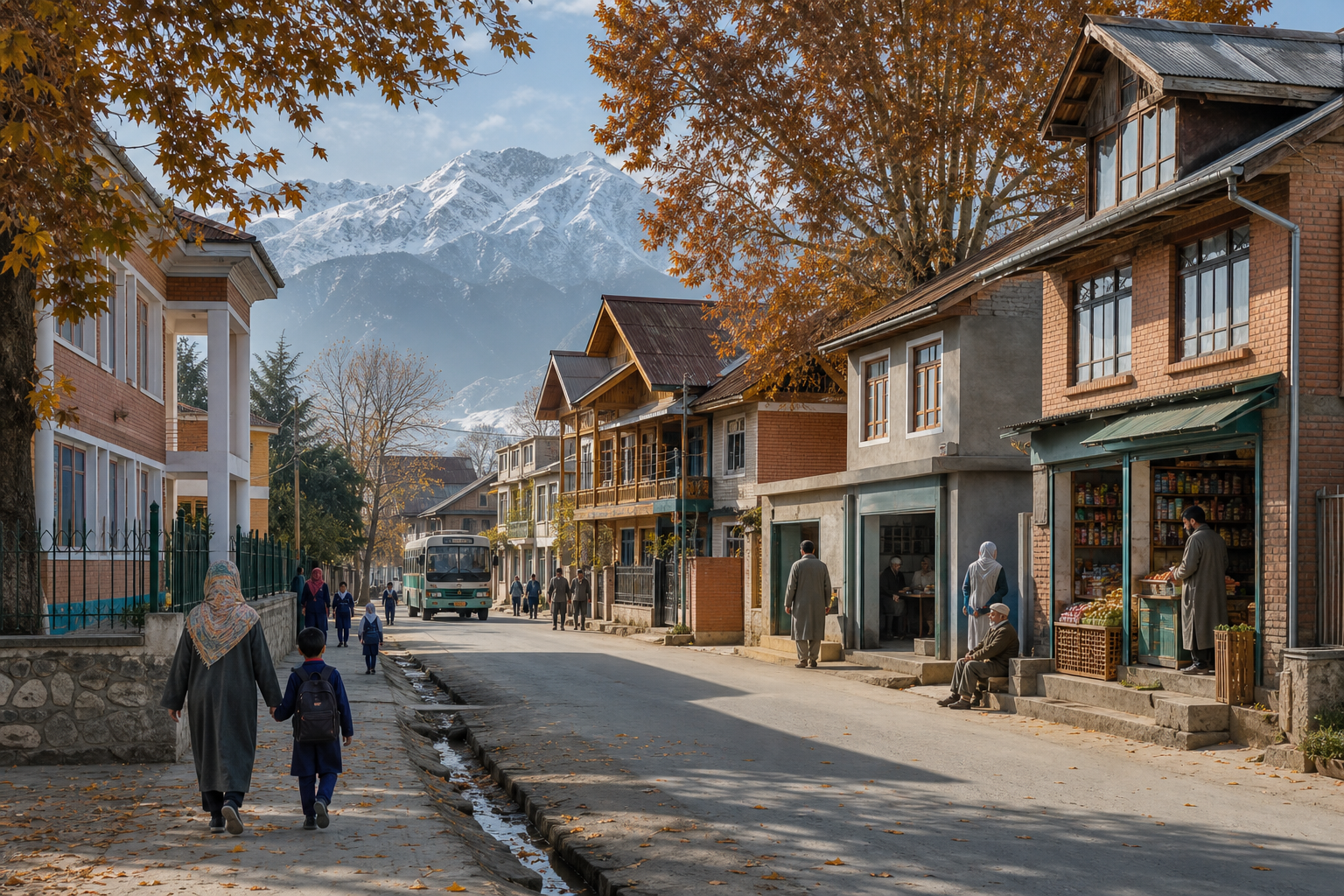
A credible proposal should let a family trace an ordinary week from home to work, school, worship, public services and community life. Use the following questions before treating any promise as complete.
- Choice and consent: Can each household assess the offer without coercion or a political loyalty test? A collective right of return does not erase differences in age, employment, schooling, care responsibilities or risk tolerance. Record the needs and non-negotiable conditions of every person who would move.
- Legal clarity: What exact right is being offered: ownership, tenancy, allotment, temporary accommodation or something else? Which authority issues the relevant instrument, and what process applies if the record is disputed? A slogan cannot substitute for an enforceable document.
- Security: Which institution is responsible for protection at the proposed location? How will a threat be reported, escalated and reviewed? Who communicates with residents during an incident? General assurances are weak when responsibility, response and accountability remain unnamed.
- Housing: Is the home habitable when possession is offered, and who is responsible for defects and maintenance? Verify access, occupancy terms and the condition of essential facilities. Do not treat the existence of a structure as proof that a household can live in it.
- Public services: Confirm how water, electricity, transport, communications and routine administration will work at the actual location. A plan should distinguish services that already function from services that are only promised.
- Livelihoods: What will replace or preserve the household’s present income? Look beyond the headline offer to commuting, market access, professional continuity and the risk of an income gap. Employment cannot be treated as a later problem when it determines whether the family can stay.
- Education: How will children enter or continue schooling without avoidable disruption? Admission, documents, travel and continuity should be settled before the move date. An available building is not the same as an accessible education.
- Cultural continuity: Can the community gather, observe festivals, transmit traditions and practice its faith with confidence? Rehabilitation should restore Kashmiri Hindus as participants in a living culture, not reduce their presence to private memory or an occasional commemorative event.
For every commitment, write down the responsible body, the promised result, the evidence that it has been delivered and the remedy if it fails. Words such as “facilitation,” “support” and “coordination” are not outcomes. Ask what will be provided, by whom, under what authority and how an affected family can challenge non-performance.
This also prevents one visible benefit from concealing several unresolved risks. New housing does not answer an employment question. A security deployment does not settle property rights. A cultural programme does not repair unreliable services. Judge each condition separately before judging the package as a whole.
Sequence the decision so one missing promise cannot undo the move
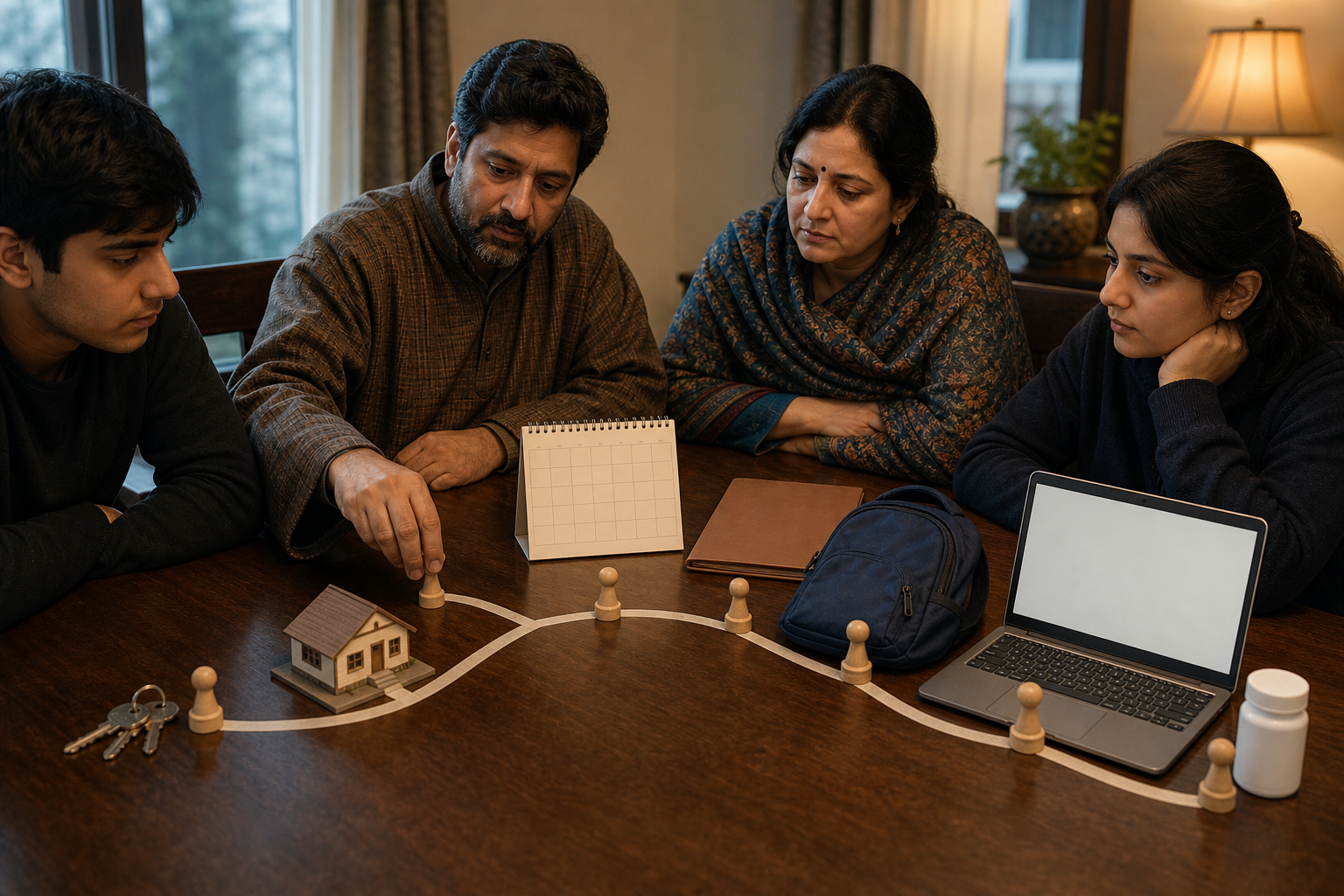
A campaign launch date, an allotment ceremony and a family’s move date are different events. The safest sequence ties commitment to verified conditions rather than public momentum.
- Before saying yes, define the household’s decision criteria. List who would move, who would remain elsewhere, what income and education must continue, which legal questions are unresolved and which security conditions are essential. This turns an emotional argument into a decision that every affected family member can examine.
- Before moving, verify the enabling commitments. Obtain the applicable housing or tenure documents, confirm service status, identify the responsible security and administrative contacts, and settle the practical route for employment and schooling. Separate written commitments from verbal assurances and completed work from future work.
- After arrival, preserve a remedy and a fallback. The plan should identify where residents report failures, who must respond and when performance will be reviewed. Families also need a practical contingency if a critical service, livelihood arrangement or security commitment does not function as represented.
A staged decision does not weaken a family’s commitment to return. It protects that commitment from an avoidable second displacement. Moving first and solving essential problems later places the cost of institutional failure on the household least able to absorb it.
Legal promises deserve particular care. Do not sign an instrument affecting property or settlement rights solely because a campaign or public representative describes it as routine. Read the exact terms and obtain independent legal advice where the document could alter your rights. The safe alternative to a rushed signature is a documented review, even when that slows the public timetable.
When a family cannot obtain every answer at once, classify the gaps. A cosmetic defect may be manageable. Unclear tenure, an unusable livelihood plan or an unidentified security responsibility may make the move fundamentally unstable. That distinction helps you negotiate improvements without pretending all deficiencies carry the same consequence.
Make public campaigns earn trust through disclosure
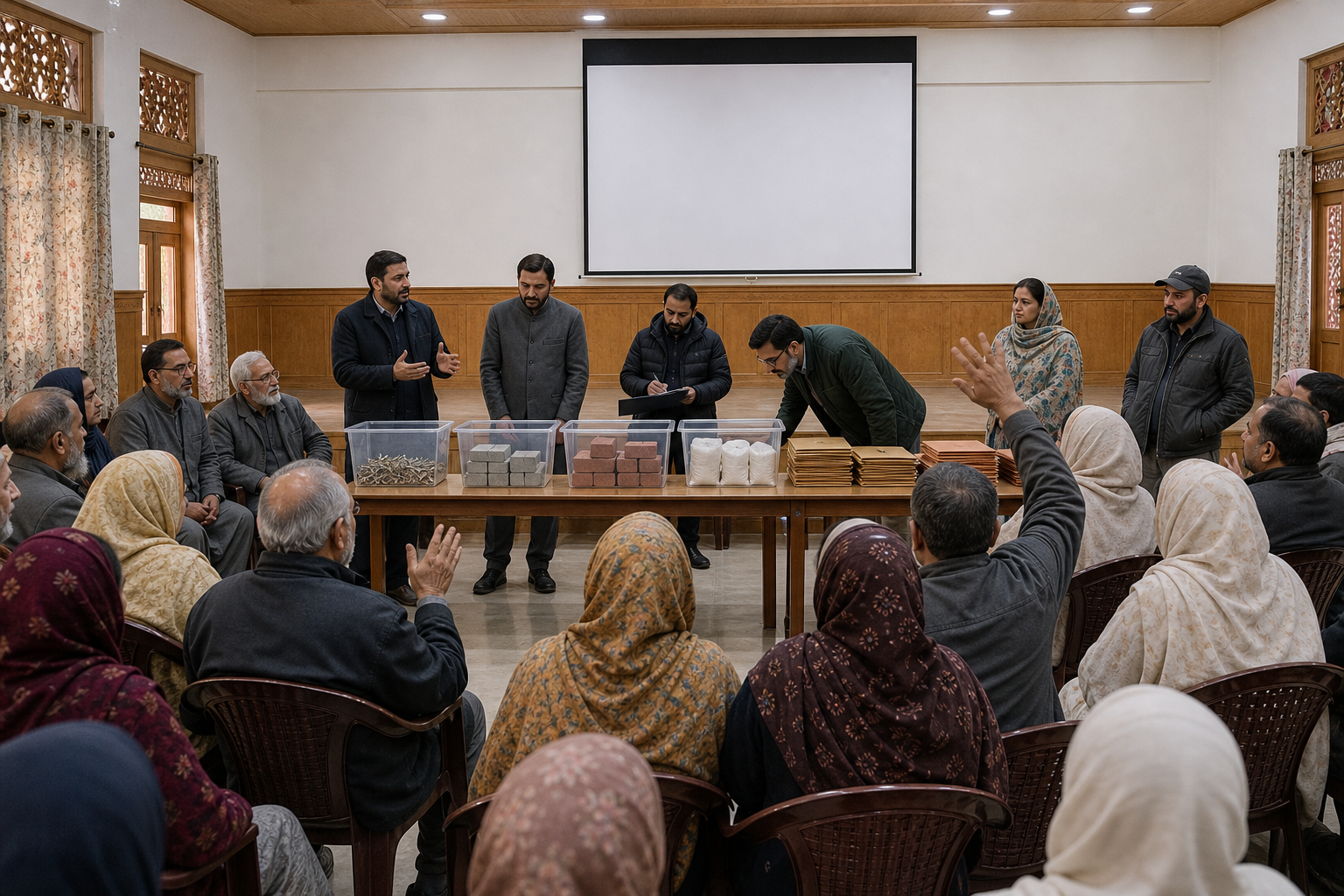
The announcement of Maha Abhiyan Avhan 2026 by Youth for Panun Kashmir, with a 16 January 2026 start date, creates an opportunity to turn a longstanding demand into documented needs, institutional commitments and measurable work. Its value, like that of any rehabilitation campaign, should be judged by what becomes clearer and more achievable for displaced households.
A serious campaign can collect needs, convene families and institutions, explain legal and administrative routes, and keep neglected commitments visible. To do that credibly, it should publish enough information for supporters and affected families to distinguish activity from progress.
- Define success publicly. State whether the immediate aim is documentation, policy change, housing, return, resettlement or a complete rehabilitation pathway. Different aims require different evidence.
- Show how families shape decisions. Consultation should allow displaced people to state disagreements, decline unsuitable options and identify needs that campaign leaders may not share. Attendance at an event is not the same as consent to a policy.
- Map institutional responsibility. Name the civil-society groups, local institutions, scholars, policy practitioners and public bodies expected to act. Make clear who advises, who decides, who implements and who can provide a remedy.
- Use a public scorecard. Convert each major promise into a deliverable, responsible institution, evidence of completion and review point. Report obstacles and revisions as well as achievements. Transparency is most valuable when progress is slower than expected.
- Create a correction route. Families need a way to report inaccurate records, unsuitable arrangements, exclusion or non-delivery without having to oppose the wider cause. A rehabilitation process becomes stronger when it can correct mistakes.
- Protect personal information. Documenting needs does not require publishing identities, legal records or security-sensitive details. Share aggregate findings where possible and obtain consent before disclosing a household’s circumstances.
Security and social trust should appear as separate workstreams. Security is institutional and operational: it concerns protection, responsibility, response and accountability. Trust is relational: it grows through honest dialogue, predictable civic conduct and the rejection of intimidation. Trust cannot replace protection, and protection alone cannot create a shared social future.
A dharmic approach should hold dignity, truth, non-coercion and mutual responsibility together. Solidarity among Hindu, Buddhist, Jain and Sikh traditions can sustain cultural confidence, while interfaith engagement can establish clear expectations for peaceful coexistence with every community in the region. Supporting Kashmiri Hindu rehabilitation does not require making their rights conditional on social approval; it requires combining firm rights with a workable civic order.
The real test of a campaign is not whether its language is stirring. Ask whether a family can use its work to make a safer decision, secure a right, resolve an obstacle or hold an institution accountable. If none of those become easier, visibility has not yet become rehabilitation.
Key takeaways
- A house is one input to rehabilitation, not proof that rehabilitation has occurred.
- Test consent, legal clarity, security, housing, services, livelihoods, education and cultural continuity separately.
- Do not set a family move date until the conditions that make the move viable can be verified.
- Get independent legal advice before signing documents that could affect property or settlement rights.
- Demand named responsibility, evidence of delivery, a remedy for failure and transparent progress reporting.
- Treat institutional security and inter-community trust as complementary but distinct requirements.
If a proposal is in front of you, turn it into a one-page decision sheet now. Create columns for the promise, responsible body, evidence, failure remedy and review point. The blank cells will show you where the real work remains. Fill those gaps before treating return as ready, and support campaigns that are willing to make the same discipline public.
References
